


Three SSPAI editors report on an oversized enclosed litter box, Li Auto’s display-free Livis AI glasses, and budget adjustable dumbbells—what each product gets right, where it frustrates, and whether it earns a place in daily life.
***
Editor’s note: A version of this co-authored article appears on August 27, 2026 on SSPAI with the title “新玩意 250|少数派的编辑们最近买了啥?”. Translated and published by agreement. USD equivalents are approximate and use CNY 1 = USD 0.1488, the August 27, 2026 reference rate.
Extra-Large Enclosed Litter Box
Approx. price: CNY 109 (US$16.22)
After struggling for the umpteenth time to clean up wet cat litter stuck to the floor, I decided it was time to buy my cat a new litter box. I had bought the old one when she was just over six months old. Now that she is more than a year old, its sides are clearly too low: every trip to the bathroom sends litter flying like confetti, and even an 80 × 140 cm litter mat cannot contain the mess. This time, I was determined to get an enclosed box.

After a few days of research, I settled on a large, 66 cm litter box that can switch between fully and partially enclosed configurations. Remove the top, and it becomes a partially enclosed box. Assembly is simple: you only need to install the small door and handle according to the instructions. I have used it for about a month now, and the biggest change is that I no longer have to sweep up litter every day. Hardly any litter escapes during normal use, much less collects on the trapping mat, and however furiously my cat digs, the spray remains manageable.

It is not without drawbacks. The biggest is that scooping has become more cumbersome. Because of the enclosed design, the top incorporates a litter-trapping grate and lid, while the cat enters through an opening below. For routine cleaning, I have to remove both the top and the grate before scooping. If I am rushing out the door, my only option is to reach through the opening from above. Because I cannot see inside, the job becomes rather awkward.

If your cat is like mine and loves to dig furiously every time it uses the litter box, a large enclosed model like this really can solve much of the litter-scatter problem. If your cat is better behaved in the bathroom, though, an ordinary open litter box with higher sides should be enough.
I do not have a particular brand to recommend. If you want one, use visual search to find a similar model and focus on whether its dimensions and structure suit your cat.
– Kui
Li Auto AI Glasses Livis
Approx. price: CNY 2,340 (US$348.19)
A new car is like a new home—especially the Li Auto i6, from a brand that puts “home” right in its slogan. When I first took delivery, I bought quite a few things from the Li Auto store. The Li Auto AI Glasses Livis were my largest single purchase.
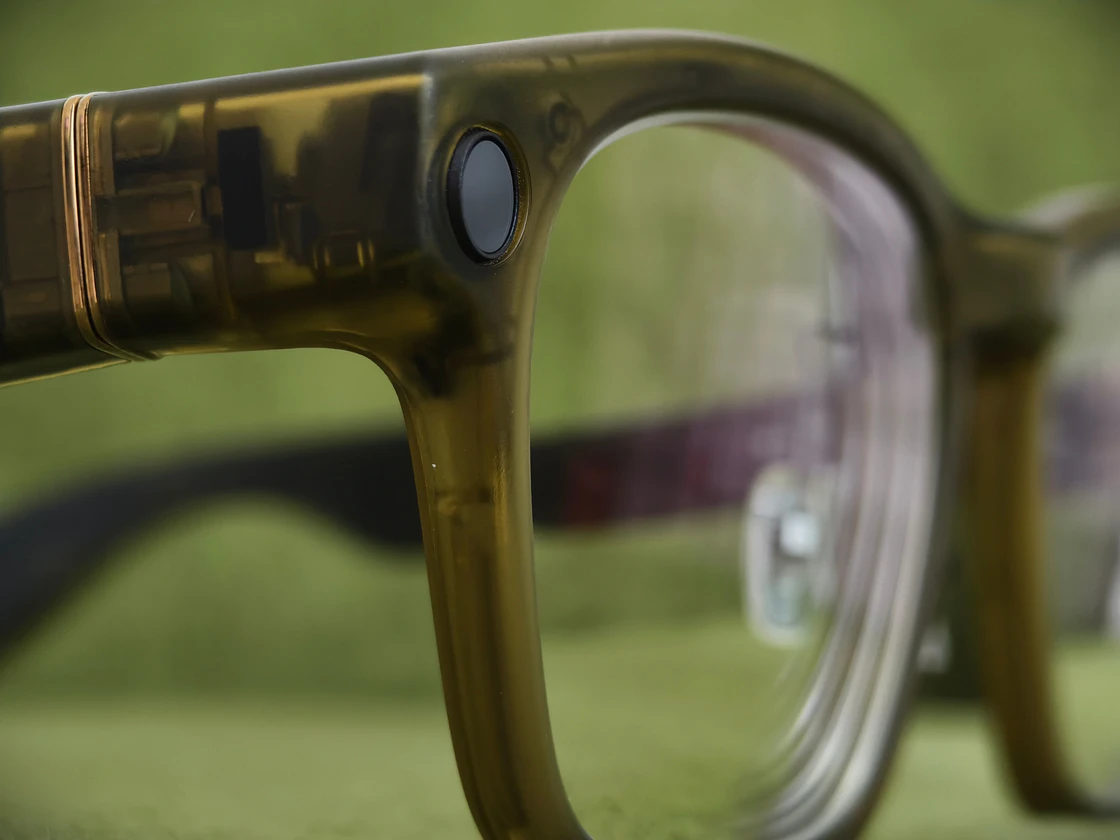
Unlike smart glasses that project a large virtual screen or display AR information in your field of view, the Livis offer no augmented display at all. That makes them more of an accessory, and their design consequently tries to stay as close as possible to ordinary eyewear. The rounded-at-the-top, squared-off-at-the-bottom frames look youthful. Both the matte and glossy versions are available in a translucent “Explorer Edition” style that should appeal to plenty of tech enthusiasts.

If you treat the Livis as an ordinary pair of glasses, they offer a healthy range of optical options. I chose Li Auto’s custom ZEISS Superb lenses. When ordering through the Li Auto app, you submit a recent prescription from a professional optometrist, then choose options including a blue-light filter and a freeform toric design. The resulting lenses are clearer than ordinary ones and give me a view that feels closer to unassisted vision. The frames are also forgiving of different face and head shapes. I particularly like the hinges’ 15 degrees of outward flex. The Livis are still fairly chunky compared with ordinary glasses, and that extra give lets me handle and wear them more casually—and with more confidence.

The temples house speakers. Although they are made from lightweight TR90 and do not put heavy pressure on my nose or ears even after long periods, their large surface area still feels noticeably warm and clammy—especially in hot summer weather. The right temple also accommodates a large number of gesture controls, so I doubt there is an easy fix.
I do not have much to say about the speakers themselves. They are clear enough for music or navigation, both indoors and while driving. I once used the glasses for a meeting, and in a blind test, our office’s resident Apple diehard said the microphone sounded better than the one in the AirPods Pro. Still, the glasses-plus-headphones form factor feels like the right direction. Unless you are somewhere that demands serious noise cancellation, you can simply put on your glasses and listen to whatever you want without disturbing anyone around you. Wearable companies short on ideas should at least consider making non-smart glasses with speakers.

The same goes for the cameras. Although the glasses have one on each side, their maximum output of 12 megapixels or 1440p at 30 fps limits them mostly to recording everyday life. Electronic image stabilization and the crop used for vertical video also make the recorded field of view much narrower than what you actually see. When shooting first-person video at close range, it is easy for the subject to drift toward the bottom edge of the frame. I therefore use the still camera more often: to remember where I parked, document something I see on the road, or keep a video record when something unexpected happens.
Compared with similar smart glasses, the Livis’ biggest differentiators are probably MindGPT and vehicle control. Beyond useful extras such as Deep Research, customizable voices and wake phrases, simultaneous interpretation, and OpenClaw integration, Li Auto has released seven major updates for the glasses since January 2026. Almost every one has added one or two notable vehicle-control features. If you wear the glasses whenever you go out, they can handle most vehicle controls hands-free as you approach the car: opening the front or rear trunk, configuring Task Master automations, and even summoning the car to park, move straight forward or backward, or pull out to the left or right. All it takes is saying “Li Xiang Tong Xue,” Li Auto’s Chinese wake phrase—provided the glasses have a network connection. When I use them with an iPhone, the phone occasionally has a connection while the glasses still report that they are in “offline mode.” I have yet to decide whether to blame the iPhone or the glasses.
MindGPT is also quite fast. When Li Auto Assistant receives a request that requires some thought, it cleverly fills the pause with a phrase or two such as “Let me think” or “Let me check.” That makes the voice assistant feel light and responsive. Its ability to solve real problems also improved markedly after it gained access to Xiaohongshu, also known as RedNote.
There are, however, a few things I need to get off my chest.
First is the “driver-only audio zone.” While driving, you can now route most in-car voice output and even media playback through the glasses, so neither navigation nor music has to disturb your passengers. You can choose separately whether the glasses take over music. Yet inside the car, Li Auto Assistant will respond only through the vehicle, never through the glasses. The experience feels disjointed when the navigation instructions are coming through your eyewear. Worse, if you cannot conveniently press the shutter button on the temple but want to capture something on the road, you cannot ask the assistant in the car to trigger the glasses’ camera or video recorder.

Second, although Li Auto has improved parts of the media-transfer experience through over-the-air updates, data transfer between the Livis and a phone is still less than ideal. Video files take a long time to process after being transferred to the device. Media captured while the glasses are connected to Android and iOS devices can be synchronized to the client on the other platform, but the synchronized content remains segregated. It cannot be combined into a single, chronological media library, so the whole experience is still confusing.

Third is the appalling quality control in the apps. I will set aside the duplicated vehicle controls in the Li Auto and Li Auto Assistant apps. My bigger concern is Android: on the Android 17 QPR Beta, both apps crash, making remote vehicle control and unlocking completely unusable. It has been nearly three months since I reported the problem through multiple channels—even supplying detailed instructions for a fix—yet Li Auto still has not resolved what should be a top-priority issue. Meanwhile, a connection problem on the iOS 27 Beta was fixed at breakneck speed. Perhaps I should tell Android users not to buy a Li Auto at all. Its Android team apparently cannot even be bothered to vibe-code.

– Clyde
Adjustable Dumbbells
Approx. price: CNY 582.94 (US$86.74)
Lately, I have developed a mild fear of death and decided that getting some exercise might be necessary if I want to stay alive. I did not join a gym, mainly because I used to be all fat and no strength. Even lifting a large water jug to pour a drink would take me to failure, never mind wrestling with an empty barbell at the gym. In addition to walking a few kilometers for cardio, I bought a pair of plate-loaded dumbbells for under CNY 100 (about US$14.88); together, they weighed about as much as an empty barbell. After wrestling with them for a few months, I finally had enough. The weight I needed for some movements had already exceeded their range, while smaller exercises such as triceps work still required me to unscrew the collars and remove plates. It was maddening.
There is not much unusual about the new dumbbells themselves. The interesting part is how I bought them: from a merchant on Xianyu, Alibaba’s resale marketplace, in a transaction that was probably much like buying wholesale on Alibaba.com. They were certainly far cheaper than the recognizable brands on Taobao. A pair of dual-dial adjustable dumbbells rated at 24 kg each costs close to CNY 1,000 (about US$148.80) on average there. Mine came to less than CNY 600 (about US$89.28), including shipping for nearly 50 kg of equipment. I probably could have found an Alibaba.com supplier willing to drop-ship just two units for even less, but I truly could not be bothered to screen factories all over again.

The dumbbells themselves are actually quite good, in the classic style of no-name OEM gear made for export and then sold domestically. Open the box and you are greeted by two English instruction sheets. The shipping carton is emblazoned with the word “DUMBBELL,” with no brand, trademark, or Chinese text anywhere. The adjustment gears turn smoothly, and changing the weight is wonderfully easy. Only now do I understand what it means to adjust the load according to how you feel in the moment: switching weights takes ten seconds. It makes me wonder what I was accomplishing with all the time I used to waste changing plates.

There are drawbacks. Adjustable dumbbells are not as solid as fixed-weight or plate-loaded models, and the plates wobble noticeably when lifted. They also feel mechanically vulnerable during movements such as goblet squats, where you have to support the dumbbell by its side. Nothing is going to fall off, but the movement undermines your stability. My view is that the dumbbells do not judge me for being weak, so I might as well treat the wobble as some bonus stability training.

When I ordered, the seller said a version adjustable up to 40 kg was available, along with a more convenient single-dial model whose handle adjusts both sides at once. I kept worrying that it would be less stable than the dual-dial design. Besides, if I could work with a 40 kg dumbbell, I would be going to the gym. In the end, I chose the more basic model.
If you do not want to join a gym and only plan to exercise at home, I strongly recommend adjustable dumbbells. They are extraordinarily convenient. For people who are not especially fond of exercise, saving even a few seconds can reduce the barrier to getting started by an order of magnitude. At the very least, the value proposition is compelling: if you give up, you will not feel too guilty about what you spent, and you can resell them without losing much. My old pair of cheap dumbbells has already been promised to a friend who is every bit as weak as I am. I am now pestering him to come and collect them so that he, too, can join the struggle against the empty barbell.
– Owl
Share: