

From GamePark’s GP32 and a hacked Dingoo A320 to OUYA, Anbernic, and the Steam Deck, this talk-turned-essay traces the cultures behind open-source handhelds across Korea, Europe, Silicon Valley, and Shenzhen—and why “open source” came to mean “open platform.”
***
Editor’s note: A version of this article by 蓬岸 appears on September 30, 2026 on SSPAI with the title “开源掌机简史:开源掌机的“5W””. Translated and published by agreement.
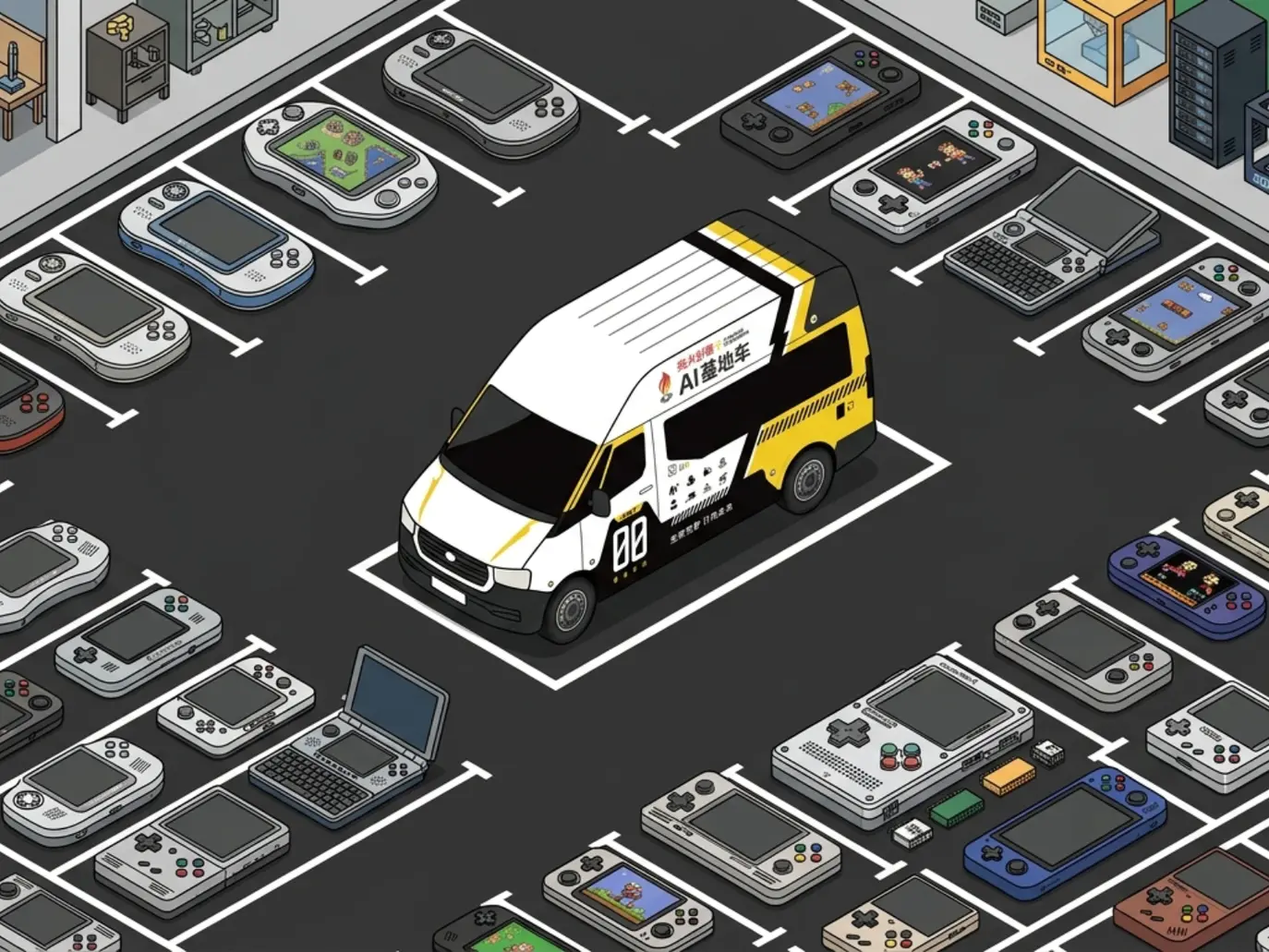
This article is adapted from the talk “A Brief History of Open-Source Handhelds,” given at the “Designing Open-Source Gaming Handhelds” workshop hosted by the Chaihuo AI Base Vehicle and the Institute of Network Society at the China Academy of Art.
Why Tell This Story?
Today’s workshop is called “Open-Source Handhelds: From Theory to Practice.” My part leans a little toward the theory side, but it isn’t too heavy—it’s more of a storytelling session, which I’ve called “A Brief History of Open-Source Handhelds.” While preparing it, I realized how new this topic is. There isn’t much reference material to draw on, and a lot of what I’ve pieced together comes from my own experience, so some of it may not be rigorously researched. Think of it as listening to a story.
Why do I think the story is worth telling? A big part of it is that the open-source handheld didn’t just appear out of nowhere. It has its own culture. That’s easy to overlook in China: when people here mention open-source handhelds, the impression they get from ads, traditional gaming media, or typical players is basically a platform for running emulator ROMs—especially pirated ones. In reality, open-source handhelds come in many schools, each with its own technical lineage, users, and product culture. That’s what this talk sets out to untangle: the cultural threads behind this particular kind of product.
History easily turns into a laundry list of dates, and since I put this together in a hurry, parts of it probably will. There are also so many open-source handheld models that I kept wondering which ones to pick, and on what basis. In the end I went with a framework anyone with a business-school background will know well: the “Five Ws and One H”—What, Why, Who, Where, When, and How.
I’ll leave the How to the hands-on part of the workshop that follows. Throughout this talk, I’ll keep stepping back to ask: what are the Five Ws of what we’ve just described?
My First Clue: Open Handhelds
It wasn’t until quite late—around March or April this year—that I started asking myself some questions: How should we actually describe the open-source handheld? What does the full picture look like?
My first clue had been there all along; I just hadn’t noticed it. It was a website called Open Handhelds. It’s where I first learned the concept, and later, whenever I bought a new device to tinker with or went looking for development resources, I’d end up there in one way or another.
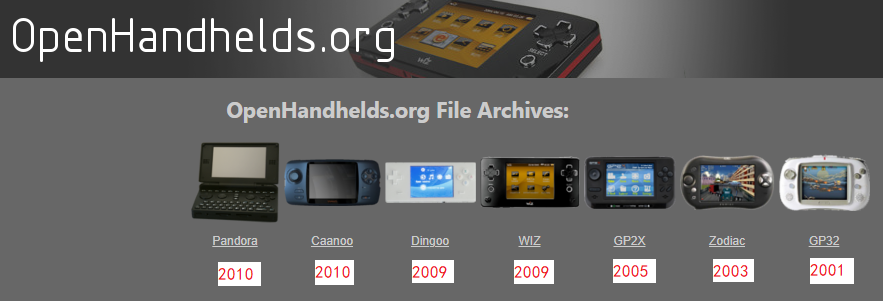
The site lists seven open-source handheld models. It’s no longer updated and now serves as an archive. The earliest point on its timeline is a machine called the GP32. Its backstory is easy to trace on Wikipedia: it’s tied to a Korean company called GamePark (and GamePark Holdings). GamePark went through a staff walkout and reorganization along the way,1 but the GamePark name stuck. You can think of the seven models on Open Handhelds as the main storyline of the open-source handheld’s first decade, from 2001 to 2010.
2001–2005: Programmable Handhelds at the Turn of the Millennium
Back to the starting point: the GP32. Its design was actually pretty conventional—a lot like Nintendo’s Game Boy Advance at the time, just a little rounder. Interestingly, its processor was made by Samsung, which later got me reasoning backward: why did open-source handhelds originate in Korea? One important reason is that Samsung was among the most important ARM processor suppliers at the time. But in 2001 Intel was still making ARM processors, and Samsung’s share wasn’t yet as large as it would later become. As a challenger, Samsung wanted a showcase application, so it approached GamePark, a little-known small company, and the GP32 was the result.
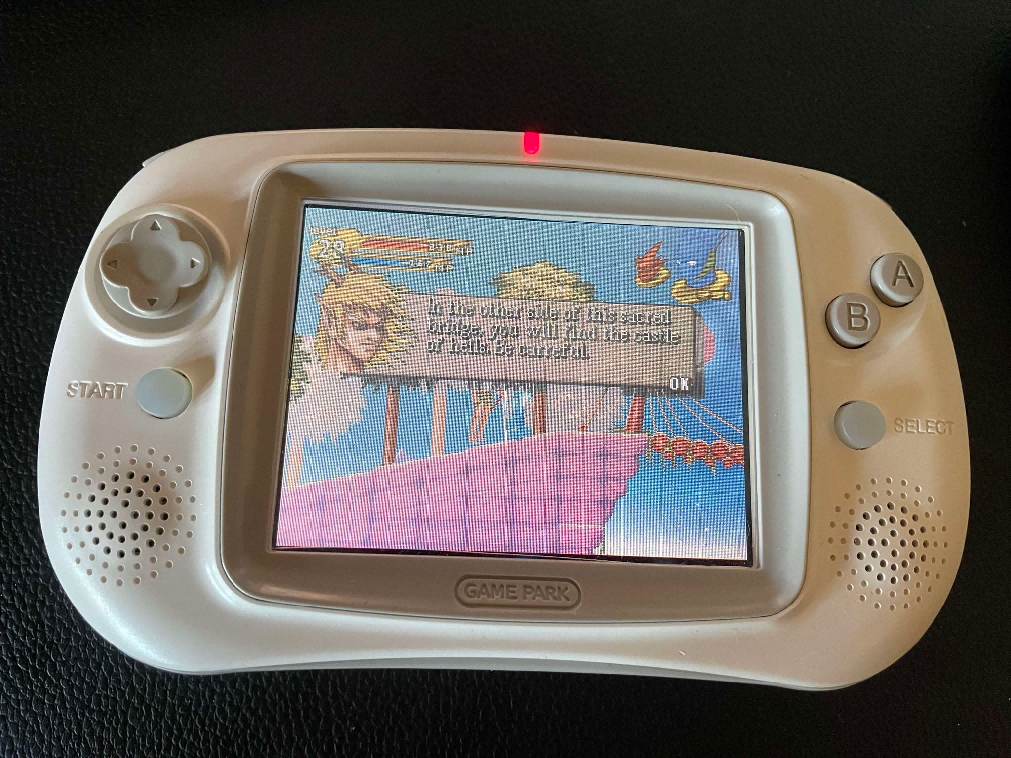
I should point out that when GamePark launched the GP32, it didn’t actually market it as an “open-source handheld.” It simply took a more open stance than the Japanese companies then regarded as the “mainstream”—Nintendo, Sega, Bandai. It offered a standard C SDK, and hobbyists could run their own applications after a fairly simple process: register on the website and download a launcher.
But the GP32’s firmware wasn’t open source. Even though it’s often considered the starting point of open-source handhelds, it doesn’t fully fit the “open-source handheld” concept that would run through the rest of the 2000s.
Who Needs a Programmable Game Console?
From a product manager’s point of view, the obvious question is: who is this thing for?
Even today, many gaming fans, especially hardcore console fans, don’t acknowledge this market at all and consider it extremely niche. But this niche isn’t as tiny or as obscure as core gamers make it out to be.
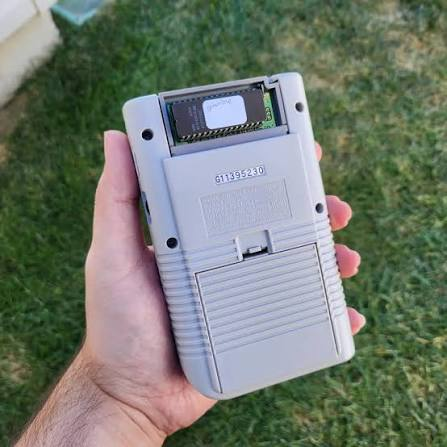
Who needs a programmable game console? Here’s the key: before GamePark launched the GP32, there was already a sizable community of amateur handheld developers, and the machine they mainly used was the Game Boy. The Game Boy is one of the most successful handhelds ever, selling over a hundred million units. Development tools such as GBDK (Game Boy Development Kit) appeared as early as 1995. But flash carts didn’t exist yet, so many hobbyists had to physically modify existing Game Boy cartridges, replacing the original chips with ones they’d written themselves, just to run their own programs on real hardware.
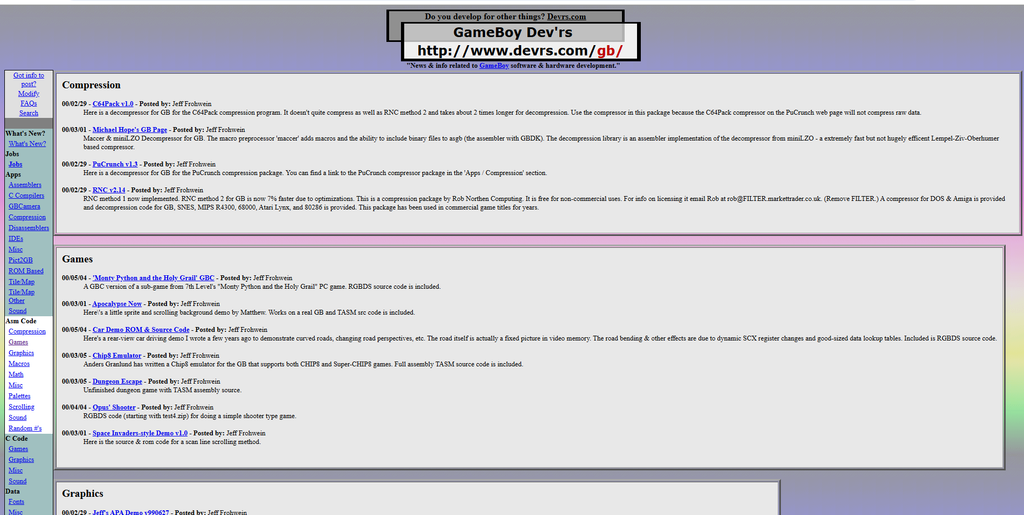
By around 2000, the Game Boy community had already released quite a lot of software on sites like DevRS. Its most far-reaching legacy, one that’s still alive today, is in the chiptune scene: Nanoloop (1998) and LSDj (2000), two programs for making music on the Game Boy, are still among the easiest tools for chiptune newcomers to pick up, and the ones most often used in live performance. Game Boys were cheap and widely cloned, and compared with home computers like the Commodore 64, they were easier to use and to buy. So this community’s most important legacy lives on in chiptune.
Besides the Game Boy indie-game community, the products listed on Open Handhelds include a 2003 machine from a company called Tapwave: the Zodiac. I’ve used this line myself—in 2006 I had the second-generation model.
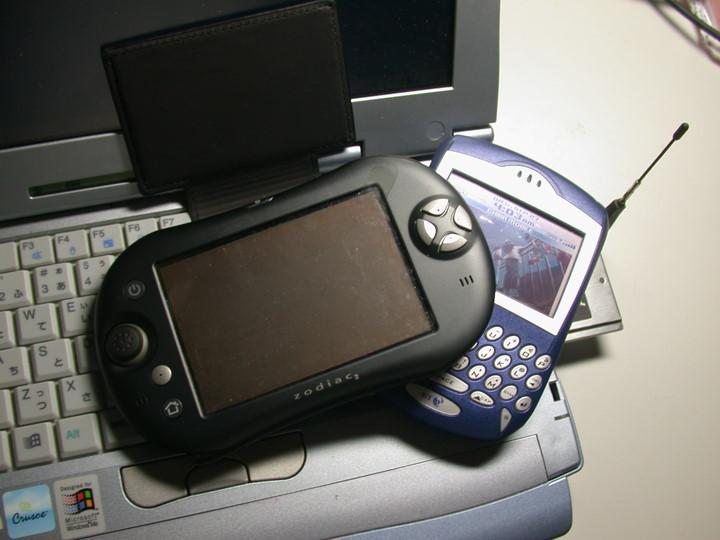
It was really a crossover product: a full-featured handheld computer running Palm OS, but built in the shape of a game console, with an analog stick and four buttons, and it was genuinely sold as a game console. Since Palm OS had a fairly mature development environment and an active developer community, the Zodiac was naturally developer-friendly. It also inherited the Palm shareware ecosystem wholesale, offering a business model closer to today’s phones: download a free trial from software stores such as Handango or PalmGear, then buy a registration code online. You can see it as a forerunner of the Android handheld’s business model.
Phase One in Summary (2001–2005)
Between 2001 and 2005, the concept of an “open-source handheld” barely existed yet, but there were already handhelds that users could program themselves.
- What: GP32 (a game console with an officially open SDK), Game Boy (officially closed, but with a thriving hobbyist ecosystem, modified cartridges, and third-party flash carts), Tapwave Zodiac (a handheld-computer ecosystem with open apps in its DNA)
- Why: It met the needs of the homebrew community.
- Who: Partly the homebrew scene: the Game Boy homebrew community, fan-translation communities (many Chinese hobbyists wanted to play games translated into Chinese—with RPGs, for example, the language barrier was pretty steep), the chiptune community, and handheld-computer users (the classic PDA form factor wasn’t great for gaming).
- Where: GamePark’s hardware came from Korea; the developer community was in Europe.
- When: The clear starting point is 2001. The GP32 didn’t sell much and was only sold in small numbers in Korea and Europe.
2005–2010: The Purist Era
By the mid-2000s, true open-source handhelds had appeared.
In 2005, GamePark launched the GP2X, a game console built on an ARM processor running Linux. It offered a far more relaxed environment than the GP32: you didn’t even need to register an account—the stock system was open for development as is. That set off a wave of ports, with developers bringing over huge numbers of game emulators, though most of the development work was still happening in Europe.
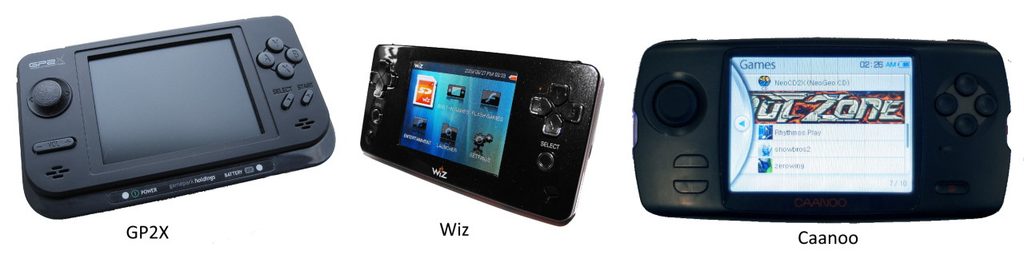
GamePark went on to release the Wiz and the Caanoo, which shared essentially the same architecture as the GP2X with upgraded hardware specs.
The “Game MP4”: Dingoo A320
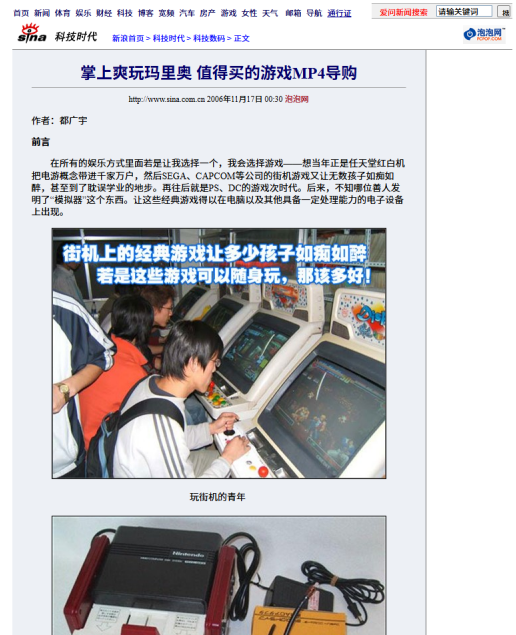
An important change in this period was the arrival of Chinese MP4 makers, with the Dingoo A320 as the most typical example. (In China, “MP4” was the catch-all term for cheap portable media players with a video screen.) At the time, the A320 wasn’t actually a standout in the domestic MP4 market: around 2006, a flood of “game MP4s” hit the market, all very much alike, and the A320 never really shone during its main sales run in China.
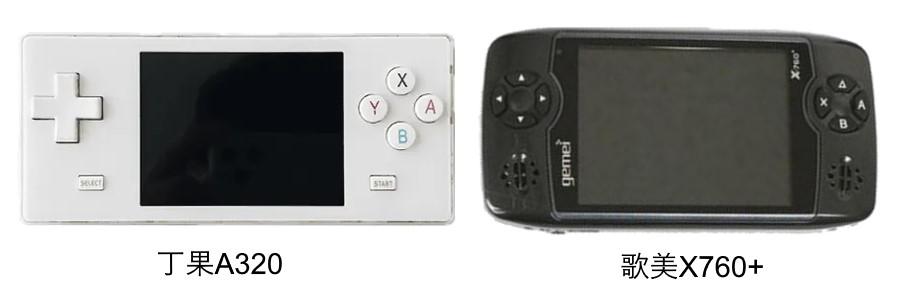
Technically, the Dingoo A320 used one of the reference designs from ChinaChip, a major ODM at the time; models such as the Gemei X760+ used the same technical core. Dingoo itself was a software development team. It made some native games but never built a real ecosystem. As I noted in “The Overlooked Game Consoles of the Chinese-Speaking World: Expanding the Timeline of Chinese Home Consoles” (in Chinese), Chinese hardware makers tend to treat an open-source handheld as a standalone product and pay little attention to building an ecosystem around it.
So when did the unexpected happen? In Europe, once again. Europe had long had an MP3 and MP4 hacking community called Rockbox. Its best-known exploits in popular culture involved cracking Apple’s iPod—tricks like running Doom on an iPod actually came out of the Rockbox community.
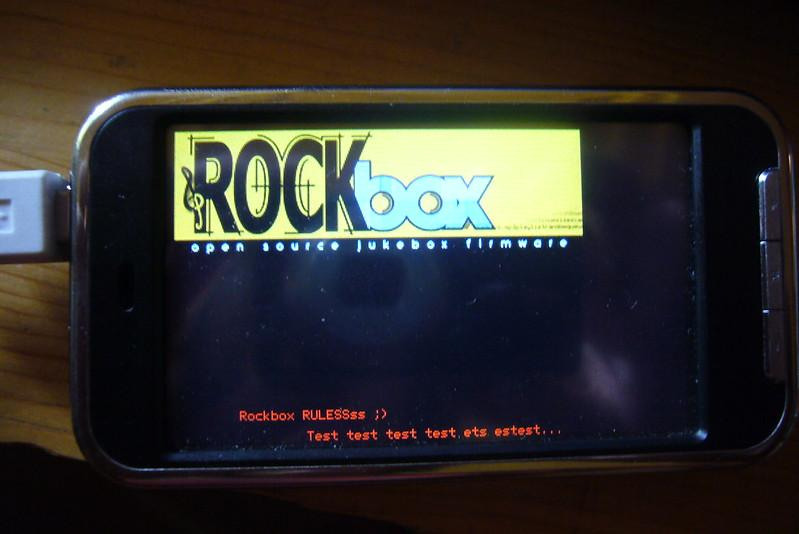
The Rockbox community’s work centered on the Onda VX747, which used the same Ingenic processor as the Dingoo A320 and was one of the better-selling export models of its day. In 2008, developers in the community began trying to port Rockbox to the VX747,2 doing a great deal of hardware reverse engineering and driver work for the processor. That indirectly helped Zhou Yajin—another well-known figure in the open-source community, who later founded the blockchain security company BlockSec and was then a Linux kernel hacker. In 2009, he ported Linux to the Onda VX747.3 In other words, a working Linux solution for the processor platform inside the Dingoo A320 already existed.
In May 2009, three months after Zhou Yajin’s successful port, a Spanish developer, Ignacio Garcia (known online as Booboo), ported the Linux kernel to the Dingoo A320.4 Most importantly, he adapted the drivers for the screen and buttons, which gave rise to an entirely new ecosystem. None of this was in the plans or expectations of the developers at Dingoo or ChinaChip. It was a windfall nobody saw coming.
Open-Source Hardware: OpenPandora
Over in Europe, some GP32 and GP2X distributors wanted to produce a machine that continued the GP2X architecture. The result was called the Pandora, and it later became open-source hardware, with its entire hardware design, schematics included, released openly: the OpenPandora.
This was closely tied to the open-source hardware movement of the time, which I won’t go into here for lack of space. In form, besides continuing the game-console shape of the GP32 and GP2X, it was also influenced by Sharp’s Linux PDA, the Zaurus.
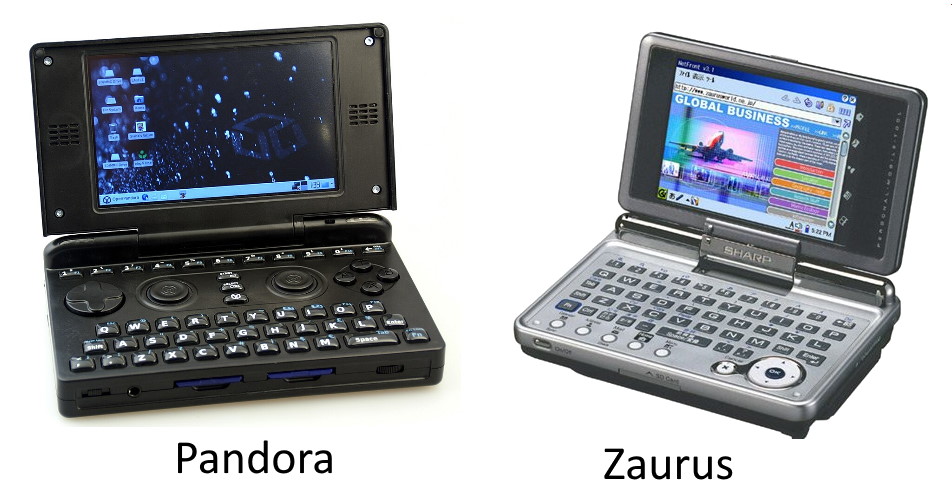
The Zaurus was hugely popular among Linux hackers in the 2000s. But when this European team actually tried to bring the OpenPandora to market, they found they had nowhere near enough manufacturing capacity, and the whole supply chain was a disaster. Preorders opened in 2008, yet only around 6,000 units had shipped by 2013—and that was just through the German distributor. Buyers who had ordered from the UK distributor never received their machines at all; the distributor simply vanished with the money. Supply-chain disasters like this happened several times among these European teams, and they’ll keep coming up.
Phase Two in Summary (2005–2010)
That covers every machine listed on the Open Handhelds site. The years 2005 to 2010 can be considered the “purist era” of open-source handhelds: every representative model ran Linux, making them open source in the truest sense.
- What: GP2X (plus Wiz and Caanoo), Dingoo A320, Pandora—all Linux! “Open source” in every sense of the word
- Why: The backdrop was the boom in embedded Linux. The DD-WRT and OpenWrt communities flashing routers, the NAS community, all sorts of communities putting Linux on PDAs—they all sprang up in that era. Linux was spreading from the desktop into embedded devices, and the later arrival of products like the Raspberry Pi was in fact an echo of that era
- Who: Linux enthusiasts of every stripe
- Where: Korean hardware and European software developer communities, with Chinese hardware suppliers emerging in between, along with the Chinese kernel developer mentioned above
- When: 2005–2010
Two points are worth noting here.
First, Chinese hardware really was the cheapest in the whole ecosystem: the Dingoo A320 sold for ¥599, roughly $80-something. European machines, by contrast, were the most expensive—buyers with “more money than sense” could bear a higher premium—while Korean machines sat in between, typically priced at around ¥1,000.
| Model | Price |
|---|---|
| GP2X | $170 |
| Wiz | $179.99 |
| Caanoo | $150 |
| Dingoo A320 | $83.99 / ¥599 |
| Pandora | $600 / €445 |
Second, Chinese developers in this period basically had no sense of the open-source handheld as a product category. Dingoo built the A320 simply to carve out a somewhat differentiated path in a cutthroat domestic game-MP4 market; it wasn’t aiming at the open-source handheld market and had no concept of an “open-source handheld” at all. Zhou Yajin, meanwhile, was a researcher at the time, and he did his port for research purposes, not to build a product.
Over my many years of tracking and studying Chinese consumer electronics, I’ve noticed one pattern again and again: whether it’s product managers or developers, China has no shortage of first-rate solutions and hands-on practitioners when it comes to specs and features, but it is slow to register shifts in community structure, community culture, and product trends.
It wasn’t until the second half of the 2010s that Chinese developers clearly realized that what they were making was a kind of open-source handheld. And how they arrived at that awareness had a lot to do with the sweeping changes the whole ecosystem went through after 2010.
2010–2015: The Android Era
The obvious trend of the 2010s was the explosion of mobile gaming. This period produced a run of hit games better suited to touchscreens—Angry Birds, Fruit Ninja, Temple Run, and so on. At the same time, several pieces of infrastructure were maturing:
- On the business-model side, crowdfunding sites were coming of age, above all with the arrival and runaway success of Kickstarter. Indiegogo was founded earlier, but in its early days it focused mainly on independent film and paid little attention to maker products; it was Kickstarter that really tied creative hardware to crowdfunding
- On the hardware side, Chinese application processors (known in the trade as APs, a class of chip weaker than a PC processor but more powerful than a microcontroller) became mature and cheap. Rockchip’s RK2808 was the flagship, and the typical product was the “domestic pad,” also called the “smart MP4.” Besides Rockchip, MediaTek and Actions Semiconductor had similar competing chips, which fueled a wave of Chinese “smart MP4s.” A “smart MP4” was really just a small-screen Android tablet
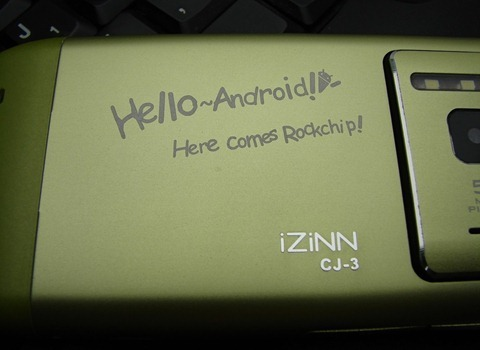
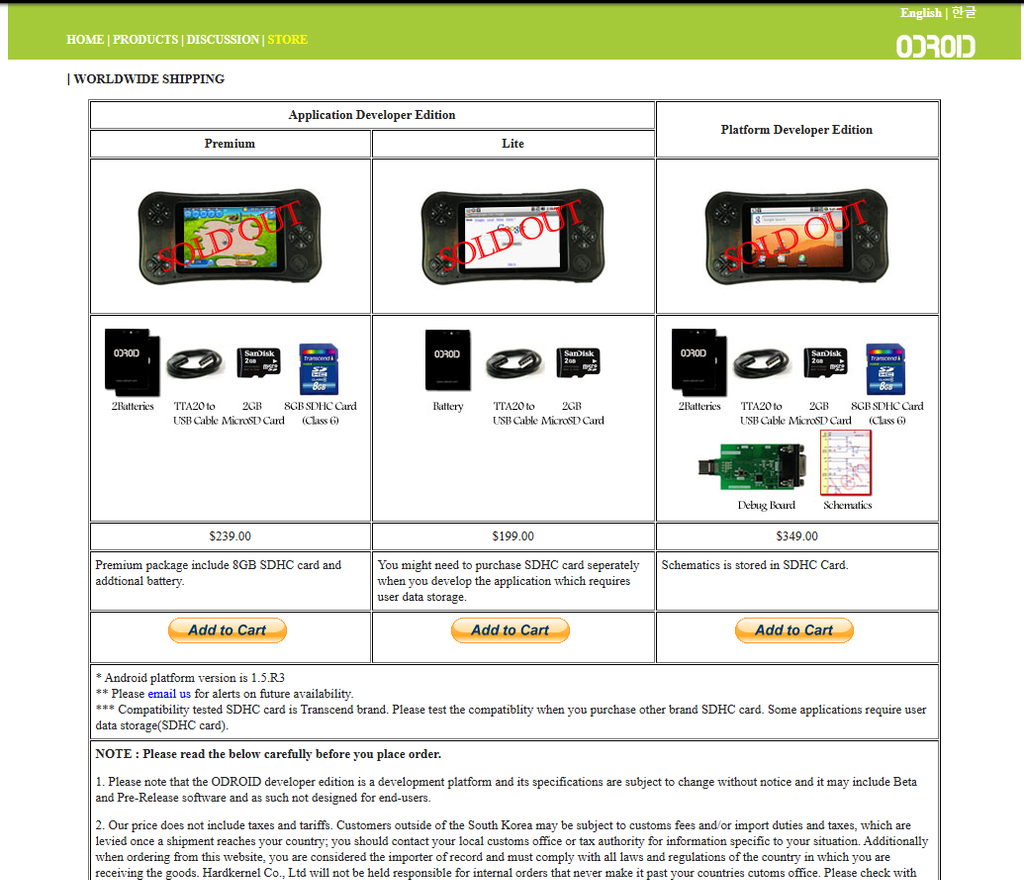
Strictly speaking, though, the first Android handheld was still made by a Korean company: ODROID, which later pivoted to selling mainly maker development boards. It sold for less than a year and went through two generations before being discontinued. For the next seven or eight years, ODROID switched tracks entirely and made almost nothing but Raspberry Pi–style development boards.
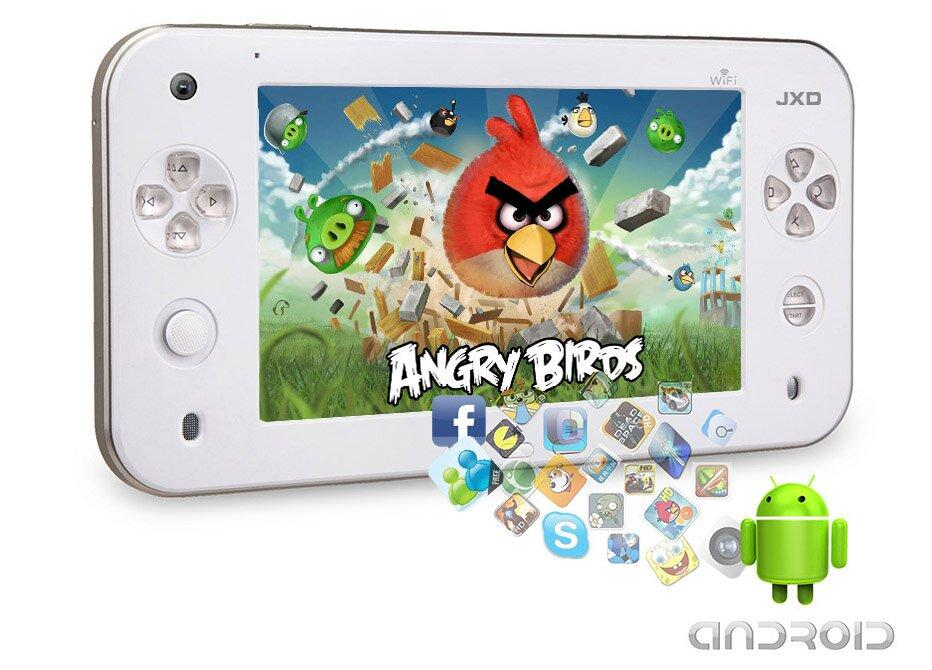
The ones who really brought the “Android game console” concept to market were Chinese manufacturers, starting with JXD’s S7100 at the end of 2010. The JXD S7100 had a heavy whiff of shanzhai, China’s copycat electronics culture: take the size and shape of the Wii U GamePad, bolt on the button layout of the PSP Go, and you had the S7100. The upside was that it held the Dingoo A320’s price point: ¥599 for an Android handheld anyone could pick up and use, combining emulators and mobile games in one device.
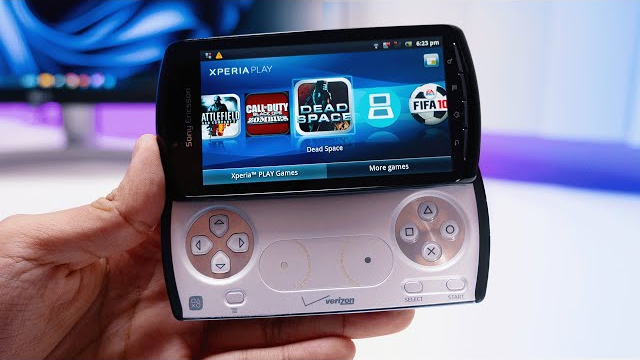
The first Android gaming product Western enthusiasts saw, on the other hand, was Sony Ericsson’s Xperia Play. Its retail price was very high—around €649 without a contract, more than ten times the price of the Chinese machines. It had its own proprietary PlayStation game ecosystem, but it still wasn’t much of a commercial success.
OUYA: Bringing the Open Console into the Mainstream
Next comes the product that truly established the “open-source handheld” concept among Western enthusiasts: OUYA.
OUYA matters a great deal. It wasn’t a handheld but a living-room console, yet its Kickstarter pitch video was really a manifesto—a product manifesto for an open game console. Even now that video still moves me, so you can imagine how stunned I was when I first saw it.
Watch the OUYA video on Bilibili
On one hand, OUYA spelled out the core tensions in the console market of the time with great clarity:
- The gap between the big TV screen and the mobile ecosystem
- The “walled garden” and high barriers to development of the traditional console ecosystem
- The disruption “free to try” posed to traditional pricing models
- The inherent tension between open-source geek culture and commercialization
On the other hand, at the level of the smaller story, it completely broke with the image Chinese—and even Korean—products had in Western markets. The West held a prejudice against the typical “Asian product”: cheap and packed with specs, but often crude in industrial design and poor in ergonomics. OUYA, by contrast, brought in Yves Béhar, a top industrial designer in Europe and America, to design the hardware. The product felt polished and complete, with none of the cobbled-together shanzhai feel, in stark contrast to Chinese products.
Even more important was the narrative. At the time, many products from China, Korea, and Europe alike were telling an emulator story of “I can run pirated ROMs.” But OUYA sidestepped pirated ROMs entirely and talked instead about an indie-game revolution: anyone could develop, with no barriers to entry, no need to partner with big studios, no hefty entry fees.
OUYA also championed a hacker ethic. Its crowdfunding page read: “For hackers: root it. Go ahead. Your warranty is safe.” Other manufacturers guarded fiercely against rooting and jailbreaking, and jailbreaking usually meant losing your warranty. OUYA took a hands-off attitude to hacking: rooting didn’t affect the warranty. As OUYA founder Julie Uhrman declared in the video, it was a rebellion against a mature industry monopolized by giants.
OUYA was one of the highest-funded projects on Kickstarter that year and one of the platform’s early star products. You could say OUYA carried out a profound reframing of the whole “open-source handheld” concept:
- It turned a small group of geeks entertaining themselves into a commercial story
- It destigmatized the homebrew and DIY-software communities long associated with pirated ROMs
- It moved the concept from the fringe story of Chinese and Korean makers into the core story of Silicon Valley
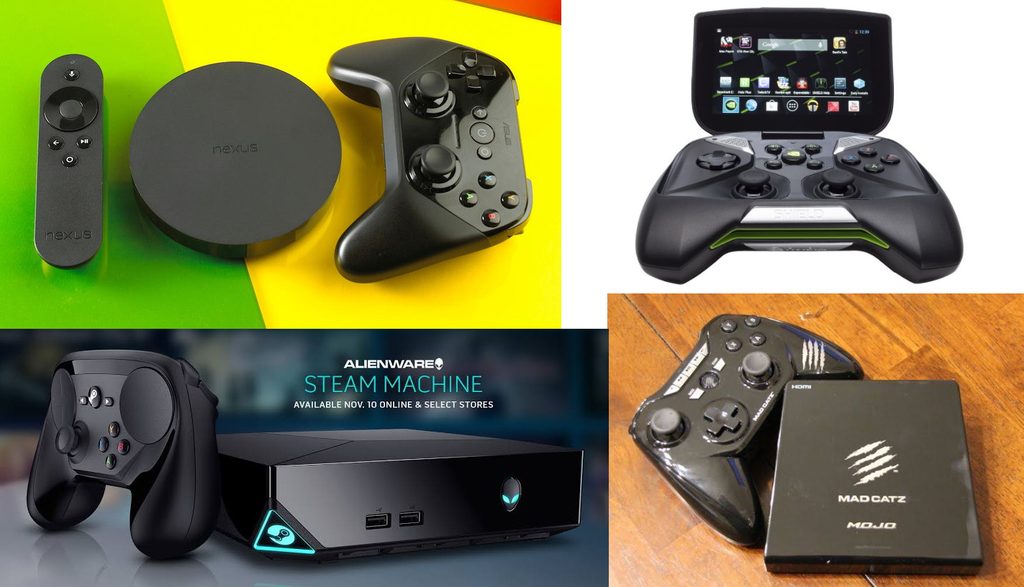
OUYA’s influence ran deep. A string of major Silicon Valley companies then entered the microconsole ecosystem built on open-source software, especially Android. In 2013, Nvidia stepped in itself with the Shield, an Android handheld; Mad Catz, best known for keyboards, mice, and other peripherals, made the M.O.J.O., an Android set-top game console, to compete with OUYA; in 2014, Google itself launched the Nexus Player; and then there were the Steam Machines—rather than building hardware itself, Valve partnered with Alienware, Gigabyte, ASUS, and others, licensing SteamOS for their branded boxes.
A category that once involved only marginal small Asian makers became one with mainstream Silicon Valley giants. OUYA succeeded in pushing the “Android game console,” and the broader “open game console,” into mainstream tech discourse and public narrative.
The Linux Ecosystem Breaks Down
Meanwhile, alongside the bustling Android scene, the Linux ecosystem essentially broke down in this period.
The main problem for the Asian teams was that their business models weren’t sustainable. GamePark Holdings held on until 2013 and then closed. The Dingoo team split with its parent company ChinaChip over strategy: ChinaChip wanted the team to use its graphics technology to build 3D interfaces for MP4 devices, while the Dingoo team wanted to keep making games, so it left and became a pure software team making mobile games.
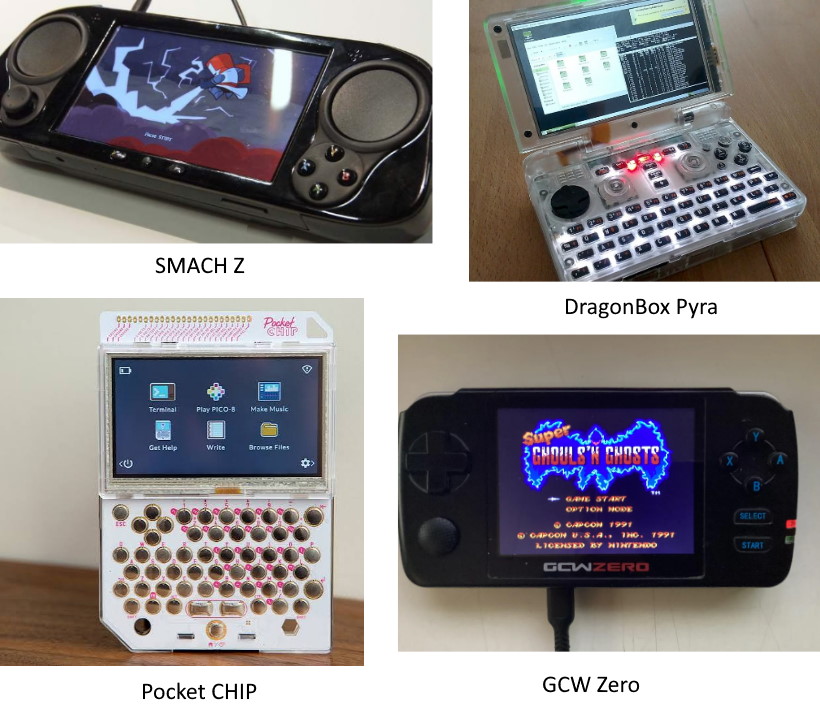
For the Western teams, the problem was once again the supply chain: from Europe to the United States, apart from the big companies, every startup kept running into supply-chain trouble. This PocketCHIP in my hand is the only one I ever received out of a whole pile I preordered back then—I’m one of the victims. In 2013 the GCW Zero was successfully crowdfunded on Kickstarter, but a large share of the crowdfunded orders never shipped. The Pandora’s successor, the Pyra, also failed to ship in volume; only a few buyers ever got one. Then there was the SMACH Z, which could be considered a forerunner of the Steam Deck: it was successfully crowdfunded on Kickstarter in 2016 but never actually went into production, and many backers lost everything they had put in.
Phase Three in Summary (2010–2015)
The first half of the 2010s was the Android era of open game consoles. In China, domestic game-MP4 makers moved en masse to smart MP4s; across the Pacific in Silicon Valley, a group of companies led by OUYA made Android-based “microconsoles.” Neither Sony’s Xperia Play nor the SteamOS ecosystem succeeded: SteamOS was still too early, and the Xperia Play was, first, too expensive and, second, told a far weaker story than OUYA—it was still pitching PlayStation’s closed ecosystem, while OUYA played an entirely different narrative card.
That’s why OUYA achieved a measure of success while the Xperia Play quietly disappeared. That is the power of narrative.
- What: China’s “game MP4s” → “smart MP4s,” OUYA and the Android microconsoles from Silicon Valley giants, plus two weaker directions: the Xperia Play (not considered “open”) and the SteamOS ecosystem (never very popular)
- Why: The driving force of this era was the ideology OUYA championed: fighting monopoly, independent development, and the hacker-maker spirit. On the commercial side, it was the boom of the mobile-game ecosystem and the convergence of the game-console form with mobile gaming
- Who: Korean and European players gradually sank below the surface; Chinese manufacturers, Google’s Android, Silicon Valley entrepreneurs, and mobile-game developers formed a “Shenzhen–Silicon Valley alliance” that became the backbone of the era
- Where: A “made in China, branded in Silicon Valley” structure took shape
- When: 2010–2015
2015–2020: The China Era
Around 2014 and 2015, a trend of open-source handhelds built on maker hardware gradually emerged. There had actually been plenty of prelude—the Raspberry Pi and Arduino, for a start; ODROID’s pivot to development boards was also related to the Raspberry Pi’s explosive popularity. The maker wave of the 2010s gradually created a crossover space, a niche market, between maker culture and the game-console form.
The first landmark product in this space was the Arduboy (2015), incubated by HAX in Shenzhen. Its founder was American, but because it was incubated in Shenzhen and closely tied to the Shenzhen supply chain, it avoided the supply-chain crises that had struck one Western maker after another.
Let me make a sweeping judgment here: from 2015 on, most Western startups without close ties to the Shenzhen supply chain would fall into supply-chain crises and fail. OUYA may have been one of the last startups with no Shenzhen element in its brand image to launch successfully—and even it never found a sustainable business model.
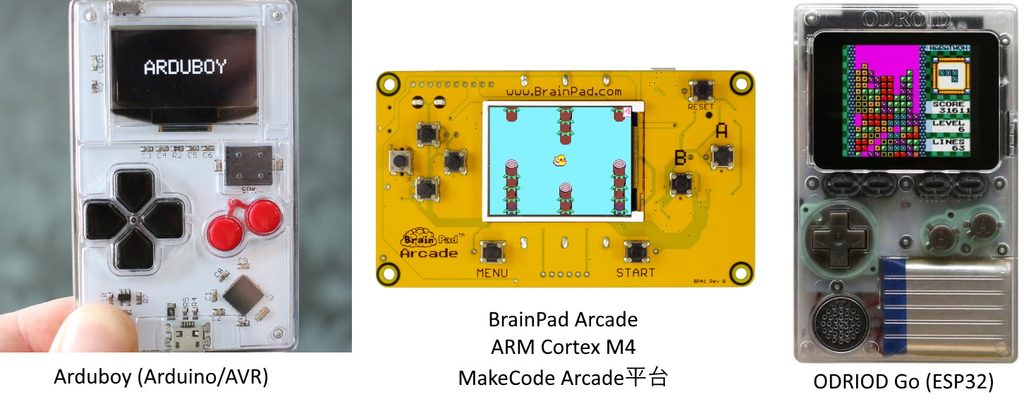
Around 2019, open-source handhelds based on maker hardware grew from the single Arduboy plus scattered DIY projects into an ecosystem. In 2018, for example, Korea’s ODROID released the ODROID-GO for its tenth anniversary. This open-source handheld, built on the ESP32 microcontroller, was the company’s second game console since it stopped making them in 2010. Microsoft launched the MakeCode Arcade platform, around which a series of open-source handhelds more focused on the education market appeared. The earliest of them was the BrainPad Arcade (2019) from GHI Electronics, which used an ARM Cortex-M4 MCU.
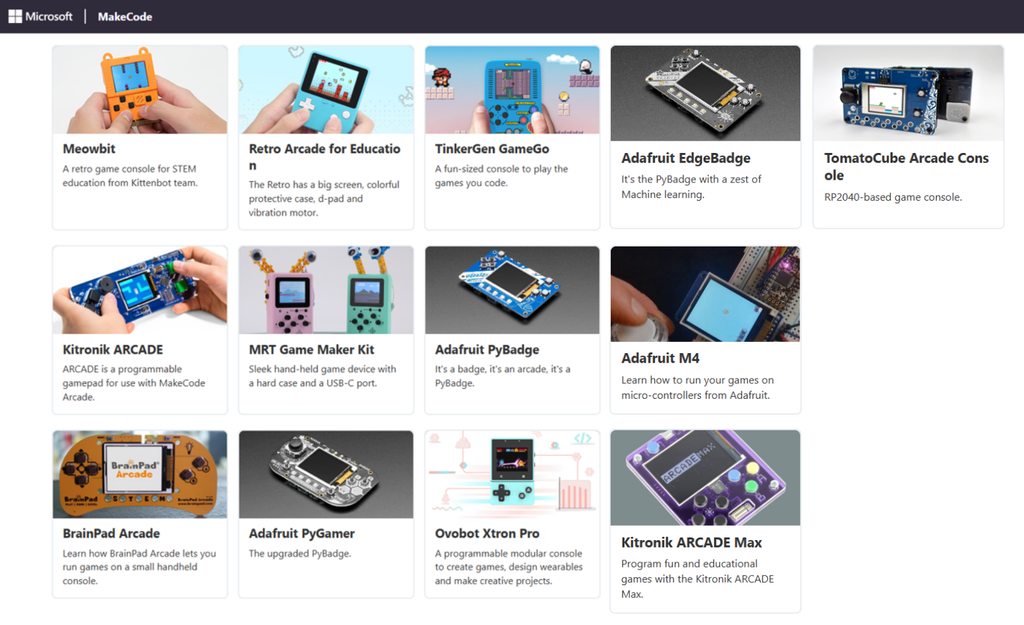
These maker handhelds have no application processor and no operating system; games run directly on the MCU and a highly stripped-down firmware. Within MakeCode Arcade, an ecosystem led by Microsoft, you can also find products from Chinese makers, such as the Meowbit from Shenzhen’s Kittenbot and Chaihuo Maker’s GameGo. I first heard about GameGo three or four years ago at the Chaihuo Makerspace in Chengdu—and by a lovely coincidence, it’s Chaihuo again that has invited me here today to tell this story in full.
GPD Win: Is This an “Open-Source” Handheld?
Another trend was closely tied to Chinese brands. In 2014, Intel launched its CTE (China Technology Ecosystem) program and partnered with Rockchip, steering MP4 makers from smart MP4s and Android tablets into the small Windows 8 tablet market. So don’t assume shanzhai manufacturers are lightweights—they are very capable. And by now the shanzhai tablet had finally shaken off the stigma of piracy: Microsoft licensed Windows 8.1 for free on tablets under eight inches, so although people still casually called them shanzhai tablets, by this point they were proper, branded Windows tablets.
The Cube iWork8 was the internet-famous hit of its day: ¥799, with a year of Office 365 thrown in. I have a Teclast X80H too, which sold for ¥588 at the time. The Windows tablet price war meant players back then could get a fully functional PC for a few hundred yuan, and the whole market’s horizon shifted.
In the process, makers that used to build Android handhelds also turned to Windows, and the Windows handheld form factor emerged naturally—this is GPD’s line from the GPD XD to the GPD Win. There’s a clear ecosystem shift here: even if, to open-source purists, a Windows handheld may not count as an open-source handheld, it is often discussed in the same context. Windows isn’t open source as a technical architecture, but its software ecosystem is as open as an Android handheld’s—anyone can develop software to run on it.
Watch the GPD Win video on Bilibili
The GPD Win was crowdfunded on Indiegogo, raising over $700,000—quite a success. Its biggest breakthrough was finally delivering on the concept the SMACH Z had promised but failed to deliver: running PC AAA games on a handheld-sized device.
The Linux Ecosystem’s Revival
As the GPD Win took off, the Linux ecosystem was gradually reviving too, splitting into two branches by audience: one geared more toward retro gamers, represented by Anbernic’s RetroGame, and one geared more toward makers, represented by the GameShell (made by ClockworkPi, a team based in Hangzhou). Although both products run Linux underneath, their design philosophies and the values of their communities are completely different.
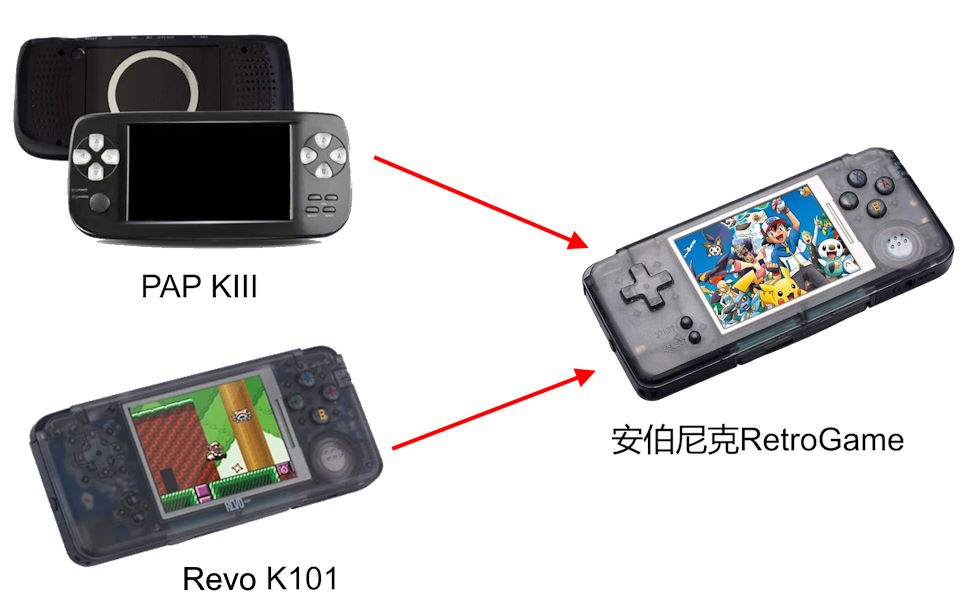
Anbernic (Yanglimeng Electronic Technology) came more out of the shanzhai lineage. Technically, it carried on the Ingenic architecture of the Dingoo era. Between 2012 and 2015, it had already developed a series of shanzhai PSPs (models such as the PAP K2, K3, and K4 can still be found online), and the shape of the Revo K101, a GBA clone by Anbernic’s technical collaborator, the veteran retro-console developer known as “Zhou Ge” (Brother Zhou), was also worked into the product. Its core audience was still the retro gaming community closely tied to pirated ROMs.
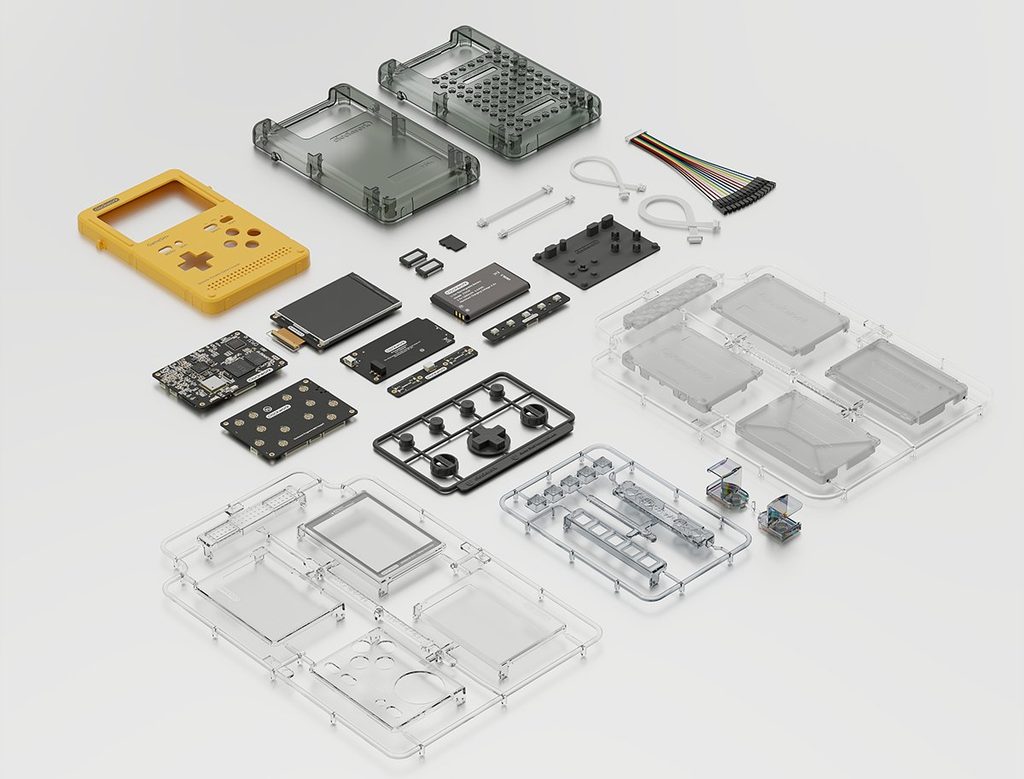
The GameShell’s whole product philosophy, by contrast, leaned more toward the OUYA lineage: it hoped to reach indie game developers and played down the emulator angle. As a product it also leaned more toward the maker crowd: it shipped as a semi-assembled modular kit and even offered a GPIO ribbon-cable interface, making it something like a fusion of maker hardware and the OUYA concept.
Phase Four in Summary (2015–2020)
In the second half of the 2010s, almost every form of open-source handheld—maker handhelds, Windows handhelds, and Linux handhelds in both their emulator and maker branches—took root in China.
A few points stand out. First, export brands completed their branding: JXD, Cube, Teclast, GPD, Anbernic, all of which once had fuzzy brand images, now had much clearer ones. Second, a maturing supply chain meant that the goals the bankrupt, never-shipped, and vanished Western makers of the previous five years had failed to reach were all reached by Chinese brands.
- What: Maker handhelds, Windows handhelds, a new generation of Linux handhelds
- Why: White-label export manufacturers built brands, and the supply chain matured. Anbernic achieved what the GCW Zero couldn’t (continuing the OpenDingux ecosystem); GPD Win achieved what the SMACH Z couldn’t (a portable gaming PC); GameShell achieved what the PocketCHIP couldn’t (a Linux dev-board handheld)
- Who: Essentially an alliance of technology platform suppliers like Microsoft and Intel with Chinese device makers and chipmakers carried out this transformation—Chinese brands plus Chinese manufacturing. The trend continues unbroken today; a great many Chinese brands still make these products, inheriting the landscape that took shape after 2015.
- Where: Made in China, branded in China
- When: 2015–today
After 2020: A More Fragmented Ecosystem
After 2020, the open-source handheld market has largely kept the three-way landscape of the 2010s—maker MCU, Windows, and Linux devices—but Western brands have achieved targeted breakthroughs by borrowing concepts from nontraditional hobbyist communities.
Take the Playdate. It somewhat continues the story of maker handhelds like the Arduboy, but it adds a crank, tapping into the concept of alternative controllers. The Analogue Pocket takes the route of FPGA-based hardware emulation, which comes from an emulation community adjacent to, but distinct from, the software-emulator scene; compared with software emulators, FPGAs usually reproduce the original hardware more accurately.
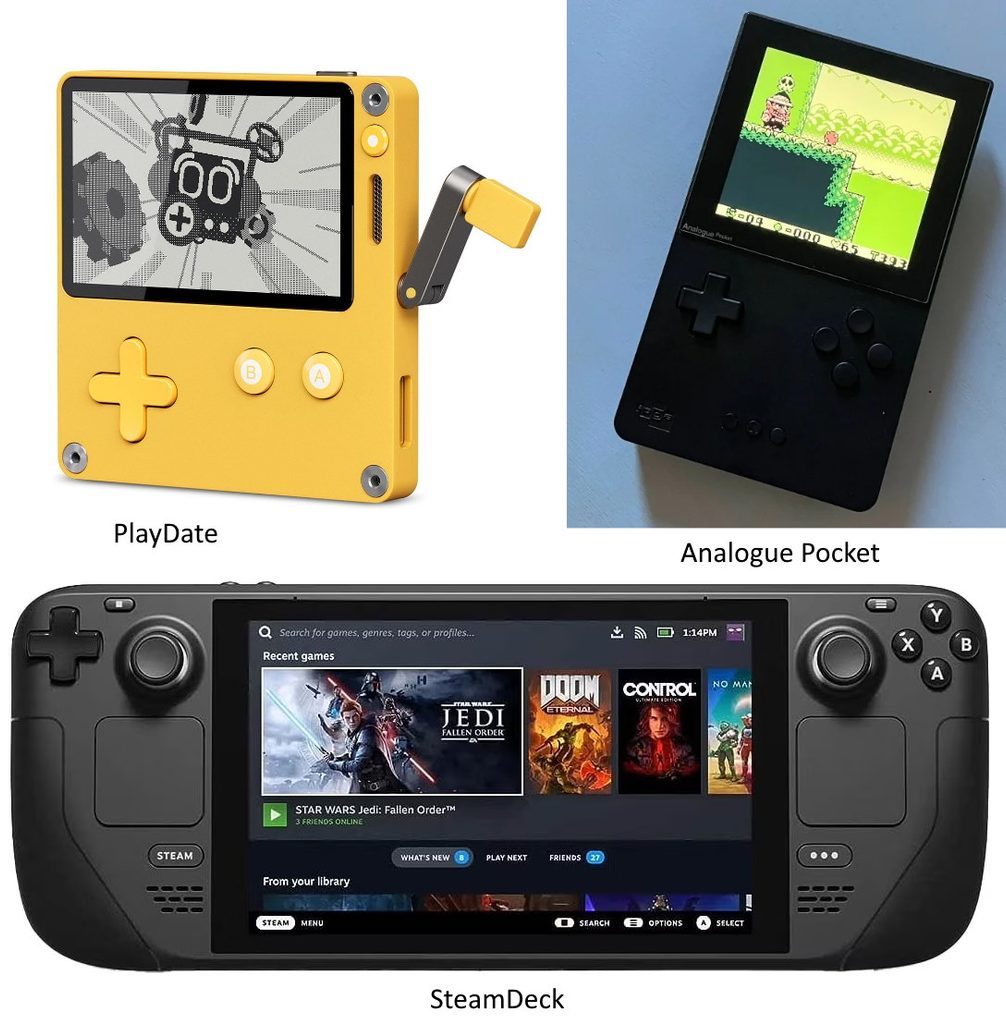
Then there’s Valve, which took the initiative with the Steam Deck, a SteamOS handheld in mini-PC form. Rather than relying, as in the Steam Machines days, on hardware partners like ASUS, MSI, and Gigabyte, over whom it had little control and whose design thinking varied wildly, Valve now tightly controls the hardware specs itself while keeping the software open. All of these are still discussed under the banner of “open-source handhelds,” to the point that who gets to define the term is now highly fragmented.
Epilogue: Revisiting the Five Ws
What Is an Open-Source Handheld?
Today the open-source handheld is so fragmented that it’s hard to sum up in a word. But the defining feature of this period is that the “open-source handheld” is less about being open source than about being open. We still use the term “open source,” but what it really means leans toward an open platform rather than open-source software in the usual sense. On this spectrum are open-platform, open-content devices—Linux handhelds, the Steam Deck, and MCU maker handhelds—and closed-platform, open-content devices—Windows handhelds, including Android handhelds with locked bootloaders (which make it hard to change the system). All of them are filed under the “open-source handheld” concept.
“Open platform + walled content” has so far produced almost no successful example. The Fuze Tomahawk F1 is one attempt, but it failed quickly and left almost no commercial or community legacy. As for “closed platform + walled content,” that’s the classic non-open device, such as the Nintendo Switch; Apple’s iOS ecosystem is sometimes discussed in this category too.
| Open content | Walled content | |
|---|---|---|
| Open platform | Linux handhelds, maker handhelds, Steam Deck, Android handhelds (that allow root) | Not viable: the Fuze Tomahawk F1 tried an open-source base with a closed content business, but left no commercial or community legacy |
| Closed platform | Windows handhelds, Android handhelds (with locked bootloaders) | Nintendo Switch, Apple iOS devices |
Why Play with Open-Source Handhelds?
The greatest common denominator isn’t whether you have a hacker spirit or whether you’re a developer, but whether you want to run things that aren’t controlled by someone else. Running software without being controlled is the shared desire of every group.
Who Plays with Open-Source Handhelds?
Open-source handheld users are really a spectrum, falling into four broad groups. People move between them, but each group’s values and real interests still differ enormously.
- Hardcore emulator players: tinkering with ROMs, making fan translations, flashing firmware, playing games
- Educators, from primary school to university, running creative-coding courses built around maker hardware
- Hardware makers, exploring applications such as sensor-based interaction and indie game development
- Low-level hackers: Linux hackers and emulator developers
How Has the Industry Chain Shifted? (Where & When)
It can be broken into four threads:
| Region | Characteristics | Period |
|---|---|---|
| Korea | Early pioneer; starting point of the ARM + Linux paradigm; early Android experiments; GamePark dissolved; ODROID the lone survivor, but with limited influence | 2001–2013 (fading noticeably afterward) |
| Europe | A hub of software hackers and thriving communities (Open Handhelds, Dingoonity); contributed an extremely rich body of open-source emulator cores, homebrew ports, and Linux system optimization; fragile supply chains and crowdfunding delivery disasters | 1990s–today |
| China | The hardware manufacturing hub; after 2015, the only region delivering hardware sustainably, reliably, and fast; chips, devices, and accessories all made domestically; turned geek toys into mass-market consumer goods at unbeatable value | 2000s–today |
| United States | Cultural narrative-building, capital, and big-company ecosystems; repackaged the “pirated ROM player” as an “indie-game revolution” and “maker spirit”; big-company participation; Kickstarter crowdfunding became the industry’s main marketing model | 2011–today |
The Korean thread has faded noticeably since 2013. The ODROID-GO line is still around, but its influence is more marginal now.
The European developer community remains the main contributor to low-level firmware and the open-source emulator ecosystem (for example, the Libretro and RetroArch communities). It is dense with software hackers, but its supply chains are fragile; for many years now, we’ve seen essentially no successful hardware products come out of Europe.
China forms a striking contrast with Europe: it has relatively few low-level developers and its software is comparatively weak, but its hardware manufacturing is unbeatable. As I see it, since 2015, China’s industrial chain, with Shenzhen at its heart, has been the only place that can deliver hardware sustainably, reliably, and fast. From chips to finished devices to accessories, it can rely almost entirely on domestic components and deliver unbeatable value for money. The weakness is that few people have a full understanding of product culture—which happens to be my specialty, and that’s why I’m here today to tell you the whole story.
America is strong, and what we lack is the cultural factor. The United States has enormous culture-shaping power. It doesn’t just have world-class games, films, and animation IP; more importantly, it has a powerful drive and energy to create IP in the first place—not just among startups, but among investors and big companies too. It is precisely this ability that repackaged what many saw as a “pirated ROM player” into a vehicle for the indie-game revolution and the maker spirit. Add big-company participation and Kickstarter crowdfunding, and you have a very mature business model, one that has kept enormous momentum from the 2010s to today.
- In early 2005, GamePark staff split over the company’s product direction, and some left to found GamePark Holdings (GPH). The GP2X and later products were developed by GPH; the original GamePark closed in early 2007. ↩
- Maurus Cuelenaere ported Rockbox to the Onda VX747. ↩
- An archived copy of Zhou Yajin’s original post on porting the Linux kernel to the VX747. ↩
- dingoo-linux went live in May 2009. ↩
Share: