



From a monitor-mounted Qi2 charger and fit-over sunglasses to a food-themed picture book and a transparent electric toothbrush, four SSPAI editors share recent Chinese-market finds worth a closer look.
***
Translator’s note: This article presents selected product reviews by SSPAI staff editors from an article published on August 20, 2026. Product details and RMB prices may have changed; approximate USD conversions use CNY 1 = USD 0.1488 as of August 23, 2026. Translated and published by agreement.
This article is part of a series reviewing Chinese products that may be of interest to readers outside China. Each installment is curated for an international audience, so it includes only selected products from the original Chinese articles.
Disclosure: SSPAI labels sponsored entries as “Advertisement” and products supplied for review as “Review unit supplied by the manufacturer”; brands have no editorial input. None of the entries below carries either label.
Ulanzi CW15 Dynamic Wireless Charger
Approx. price: RMB 175 (US$26.04)
Having had the good fortune to use a Pixel Stand, I’m especially fond of the iPhone’s StandBy feature. Taking advantage of OLED display technology, StandBy turns a charging phone into a second screen that you can glance at for plenty of information about your devices and surroundings. The only wireless charging stand I had on hand was SSPAI’s earlier “Maginstone,” whose angle was too shallow to activate the feature. When Ulanzi’s CW15 Dynamic Wireless Charger appeared in my social-media feed, I ordered one almost immediately.
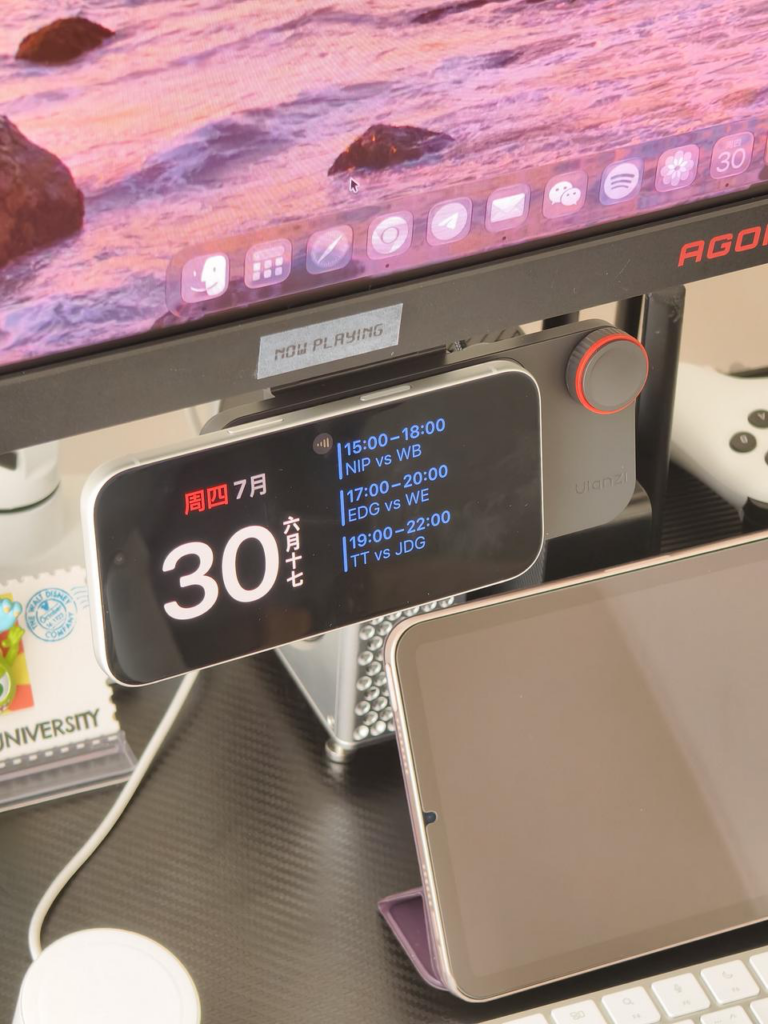
The CW15’s defining feature is its form. It is designed for landscape charging and moves the experience off the desk and onto a surface more directly in your line of sight. A nano adhesive pad and press-fit latch let you attach the mount to the back of a monitor and power it from the monitor’s USB-C port, turning the CW15 into a second screen that seems to grow straight out of the display. The interlocking mount also gives it some portability, and the package includes two adhesive pads. You can keep one at your usual workstation and install the other anywhere with power where you might want to use the iPhone’s StandBy feature.
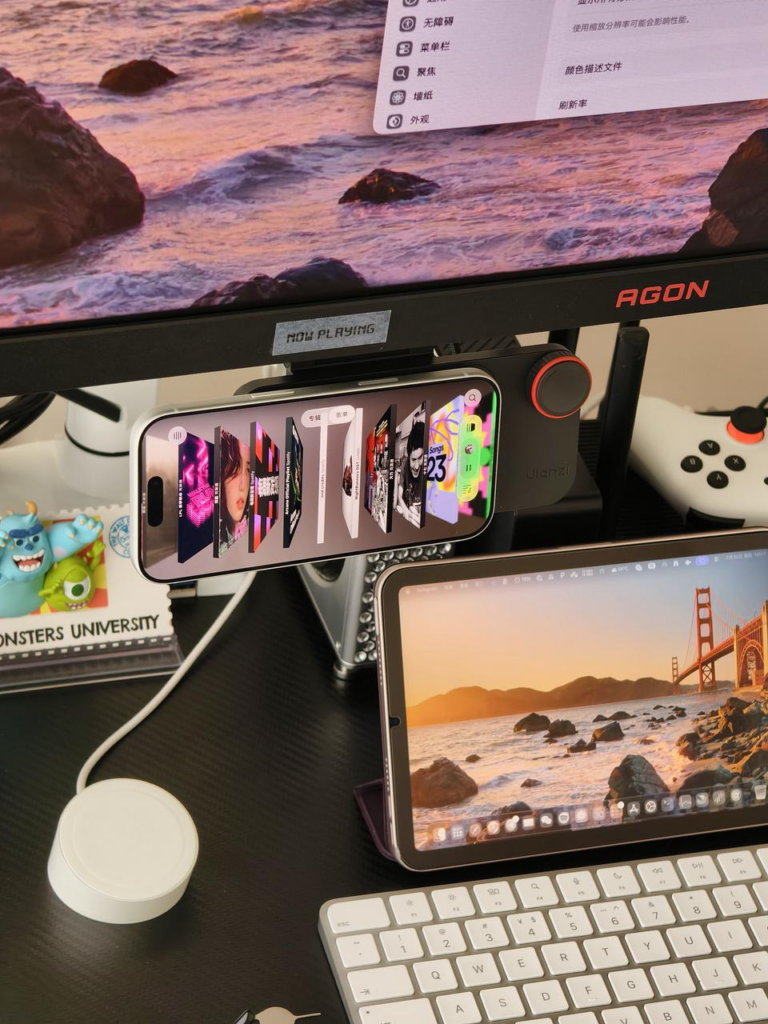
The CW15 also offers some tilt adjustment, allowing you to set the StandBy screen’s viewing angle to suit your monitor height and installation environment. The only detail to watch during installation is that the nano pad is 4 cm tall. Check the width of the usable edge on the back of your monitor before ordering, because it directly affects the stability of the charging mount.
The rotary media control is a nice bonus beyond the CW15’s unusual form. The knob’s resistance feels merely average: it is neither loose and rattly nor one of those cheap controls that spins away at the slightest touch, but there is plenty of room to improve the interaction. When adjusting volume, the size of each change depends on how quickly you turn the knob rather than on its physical detents. Rotate it carefully through a given angle and the volume may barely move; flick it through the same angle and the volume may jump dramatically. It is rather baffling.
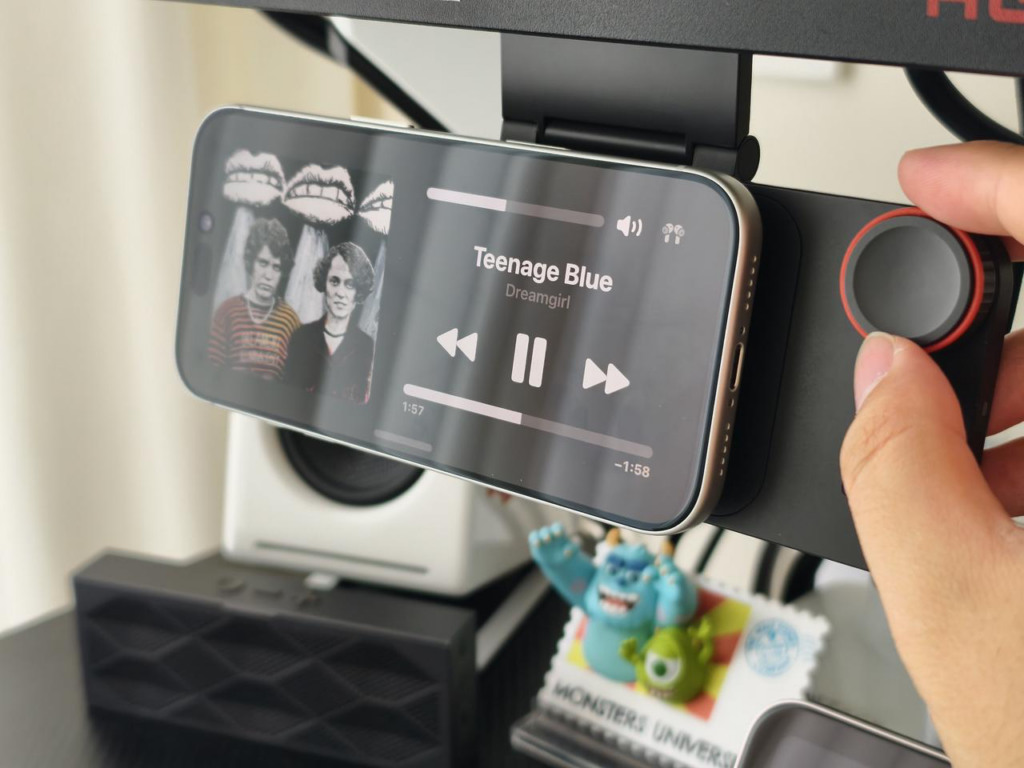
The volume knob connects to your device over Bluetooth. StandBy is particularly well suited to music playback—especially with an app such as MD Vinyl—so pairing the knob with the phone turns the CW15 into a media-control panel with hands-on volume adjustment. It certainly delivers a sense of occasion. If your workstation is fixed and you do not use StandBy’s media view, you can instead use the CW15 purely for charging and information while pairing the volume knob with your computer.
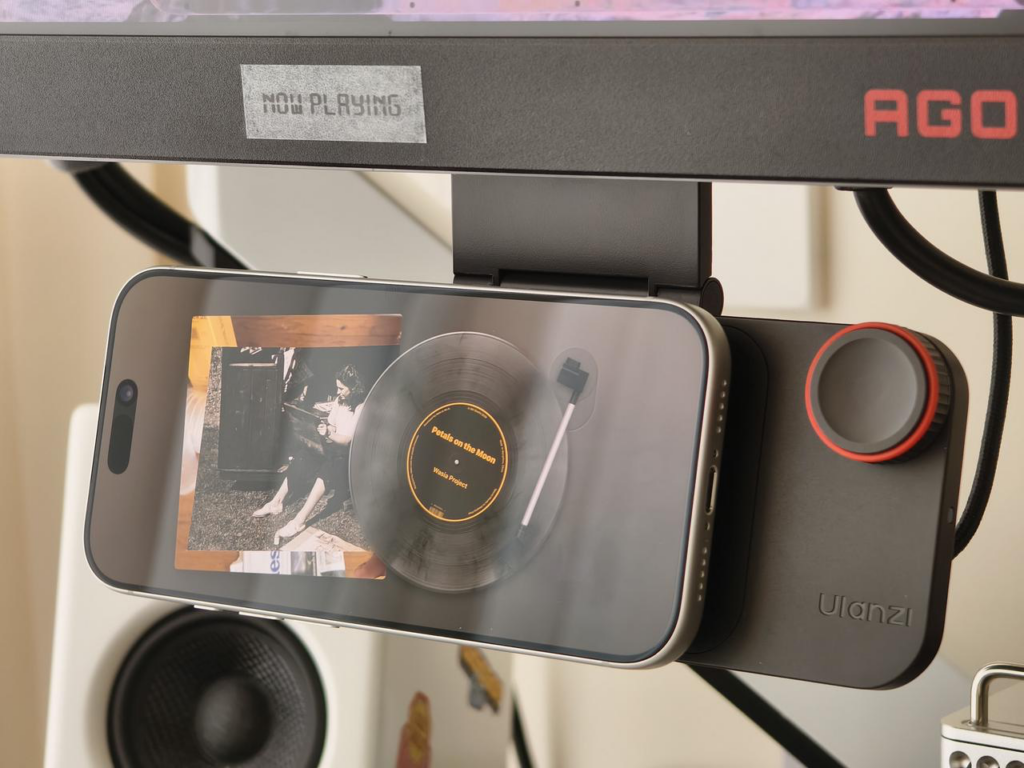
Finally, for a wireless charging panel with an inventive form and some thoughtful touches, charging itself is the least remarkable part of the CW15 experience. It supports 15 W Qi2 charging but has no active cooling. That is fine for topping up a phone in its downtime while using it as a second screen, but I would not expect much speed. With an interface that has not been optimized for iOS StandBy—or with a Pixel mounted instead—the phone can become uncomfortably warm. I hope future products in this category give more attention to cooling.
– Clyde
JINS Fit-Over Sunglasses
Approx. price: RMB 113 (US$16.81)
Driving in summer while glare bounces off the car ahead is torture. I am severely nearsighted, so wearing ordinary sunglasses means putting in contact lenses first—and wearing contacts for long periods is another form of torture when your prescription is that strong. I could put sunglasses over my regular glasses, but all of mine are colorful fashion frames that cannot fully cover my large, thick-lensed prescription pair. Light leaks in around the edges, and the glare from the car ahead still finds its target.
JINS has been my dependable eyewear brand in recent years. Its frames are generally restrained, suitable for commuting, and well made enough to last two or three years. Every so often, the brand also produces a cleverly designed frame or collaboration that makes you look as if you have stepped out of an anime. Its recent Barbie and Ghost in the Shell collections, for example, are very much to my taste. When I decided to buy fit-over sunglasses, JINS was still the first brand I considered. I put the pair in my Taobao cart and stacked a RMB 20 (US$2.98) discount coupon for orders over RMB 200 (US$29.76), bringing the final price down to RMB 113 (US$16.81) from an already modest list price of RMB 179 (US$26.64).
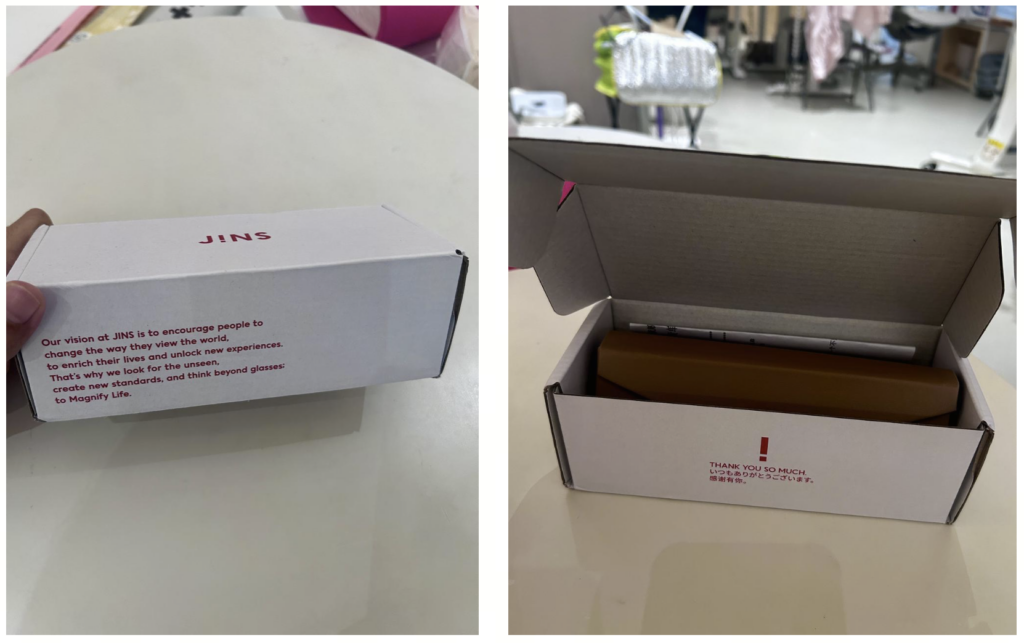
I had not tried them in person before ordering, so the real thing was a pleasant surprise. The frame is exceptionally thin and light, placing no pressure on my ears or nose. The round version I chose is particularly flattering and looks stylish even when worn by itself as an ordinary pair of sunglasses. It has none of the middle-aged-dad vibe I had feared from a large fit-over frame. Most importantly, the light transmission is just right: even looking straight at glare from the car ahead does not feel dazzling. For someone as nearsighted as I am, they are a godsend.
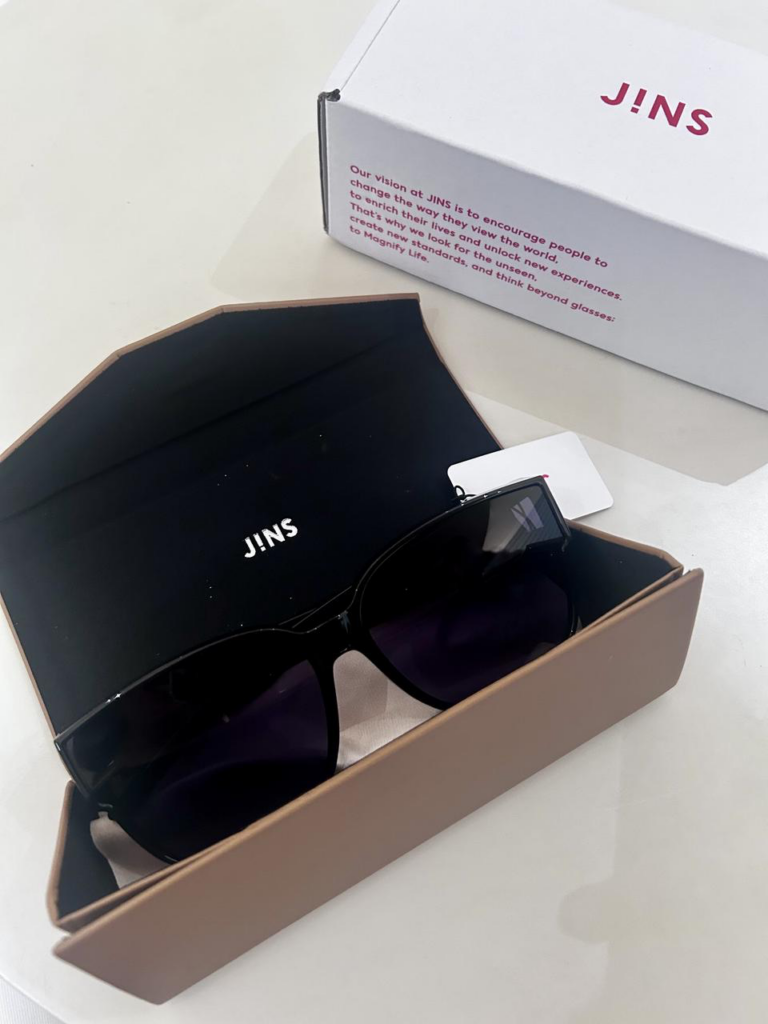
If you are currently looking for fit-over sunglasses, there are not many choices on a small budget. If Xiaomi’s overly technological dad-gadget look does not appeal to you, and neither does Beneunder’s relentless marketing, JINS is worth considering.
– Macy
The Pull of a Good Meal
Approx. price: RMB 36 (US$5.36)
You wake up hungry, work all morning until lunchtime finally arrives, reach for an afternoon snack when drowsiness sets in, and wonder whether dinner should be a reward for making it through a hard day. Deciding what to eat can be the easiest small pleasure to find in an ordinary day. I cannot cook anything particularly elaborate and would not call myself a gourmet, but most people can relate to the happiness food brings. The Pull of a Good Meal (饭有引力) is a picture book about exactly that, casually gathering small moments involving food from everyday life.

Following People Who Love Their Homes, the Simplified Chinese edition of Chiaki Ida’s 2024 picture book Gohan ga Tanoshimi has arrived as expected. Curiously, the Taiwanese publisher—usually fond of pun-based titles—went with the relatively literal Looking Forward to Digging In. The Simplified Chinese publisher instead chose The Pull of a Good Meal, a pun on the Chinese term for universal gravitation. Otherwise, the cover design and interior layout match the Japanese original. The pages still turn from right to left, and the book comes with two stickers and three postcards.

The book is divided into four chapters, covering everything from three daily meals at home and coffee and tea to visits to artisan-run shops and the many kinds of tableware in Ida’s home. The dishes span Chinese, Japanese, and Western cooking: familiar favorites such as mapo tofu and tomato-and-egg stir-fry, the pizza toast previously seen in People Who Love Their Homes, and the always entertaining “baking disasters.” It is a loose collection of vignettes without a rigid story line, but many readers will recognize the pleasures it describes—collecting snack tins, hunting for the right tableware as if searching for treasure, or trying coffee beans with different flavor profiles. Together with artwork that shifts between delicate realism and cute fantasy, it makes almost any page you open an instant mood lift.

– Lotta
Laifen i2 Electric Toothbrush
Approx. price: RMB 307 (US$45.68)
This year marks exactly a decade since I started using electric toothbrushes, and I have stuck with Oral-B throughout. I hold the admittedly unprofessional stereotype that its mechanical oscillating-and-rotating system cleans more efficiently. I have no idea how to evaluate that objectively; all I know is that when I had my teeth cleaned after using my first one for two or three years, the dentist asked whether I used an electric toothbrush and said my teeth were quite clean. So when I moved six years ago, I replaced that still perfectly functional brush with the flagship Oral-B iO9.
After six full years, the iO9 remained stable apart from occasionally acting up and refusing to charge. This seems to have been a common fault in one production batch, and I could have contacted JD.com for a replacement, but I procrastinated until the warranty expired and missed my chance. I originally bought it for all its flashy features: seven brushing modes, a color display, excessive-pressure warnings, and a 3D tooth-tracking animation in the phone app. In reality, once the novelty of the first few uses wore off, I almost never opened the app. Even the elaborate modes stayed permanently set to the most powerful cleaning option.
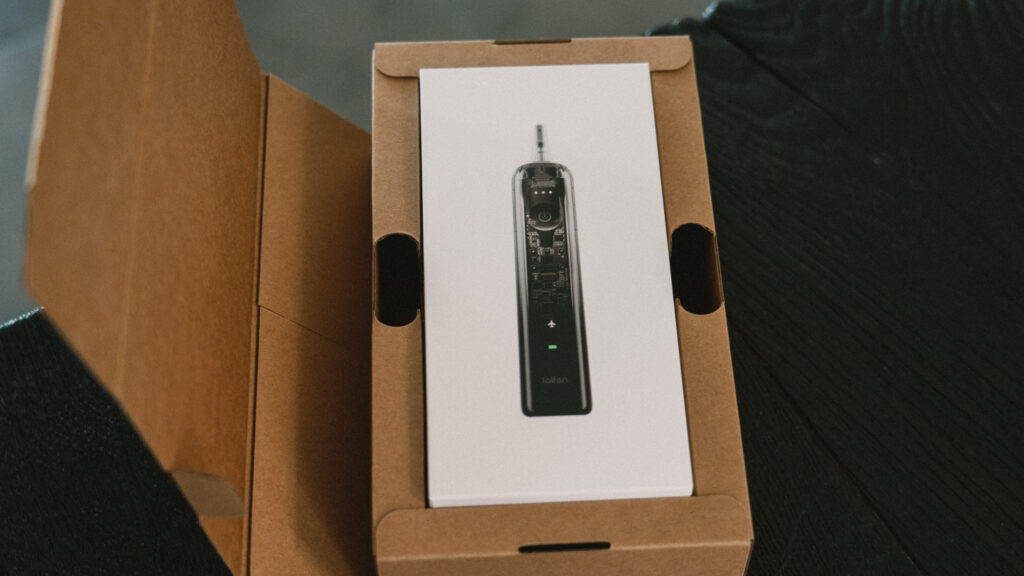
I finally decided to replace it because I could no longer stomach the price of replacement heads. Oral-B heads were already expensive, and those for the iO9 series often cost around RMB 60 (US$8.93) apiece. That works out to only RMB 20 (US$2.98) a month, which is not especially costly, but ads for domestic electric toothbrushes were everywhere, and their consumable prices were tempting. During one sleepless night, I accidentally ordered the transparent Laifen i2. I also bought six brush heads during the promotion, at roughly RMB 15 (US$2.23) each. I had long heard that Laifen was full of die-hard Apple fans and paid homage to the company at every turn. Once the package arrived, I had to admit that it looked excessively premium for a RMB 300 (US$44.64) toothbrush.

You can adjust the i2’s power settings through a WeChat Mini Program, including vibration amplitude, sweeping range, and speed. I turned everything up to maximum and can now forget the settings exist. Its key distinction is that the brush head sweeps from side to side while vibrating. Moving from the iO9’s small round head to the i2’s long one most obviously changes how brushing feels in the mouth. The round head wraps around and rotates against one tooth at a time, which feels reassuringly thorough. The i2’s combined sweeping and vibrating motion felt very pronounced at first, and the head would easily knock against my rear teeth. I adapted quickly, however. Whether my technique improved or I simply got used to it, I no longer find it uncomfortable.
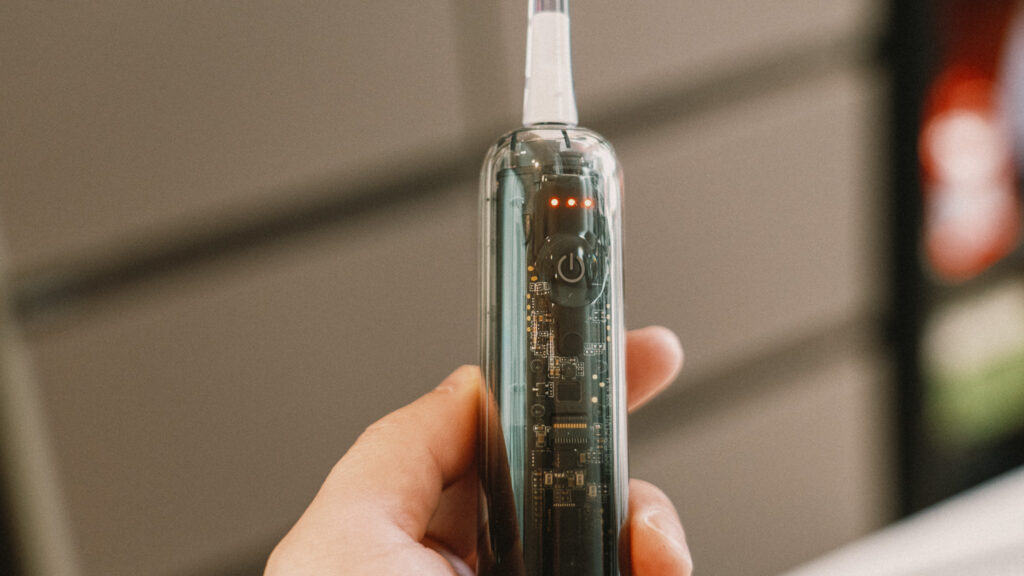
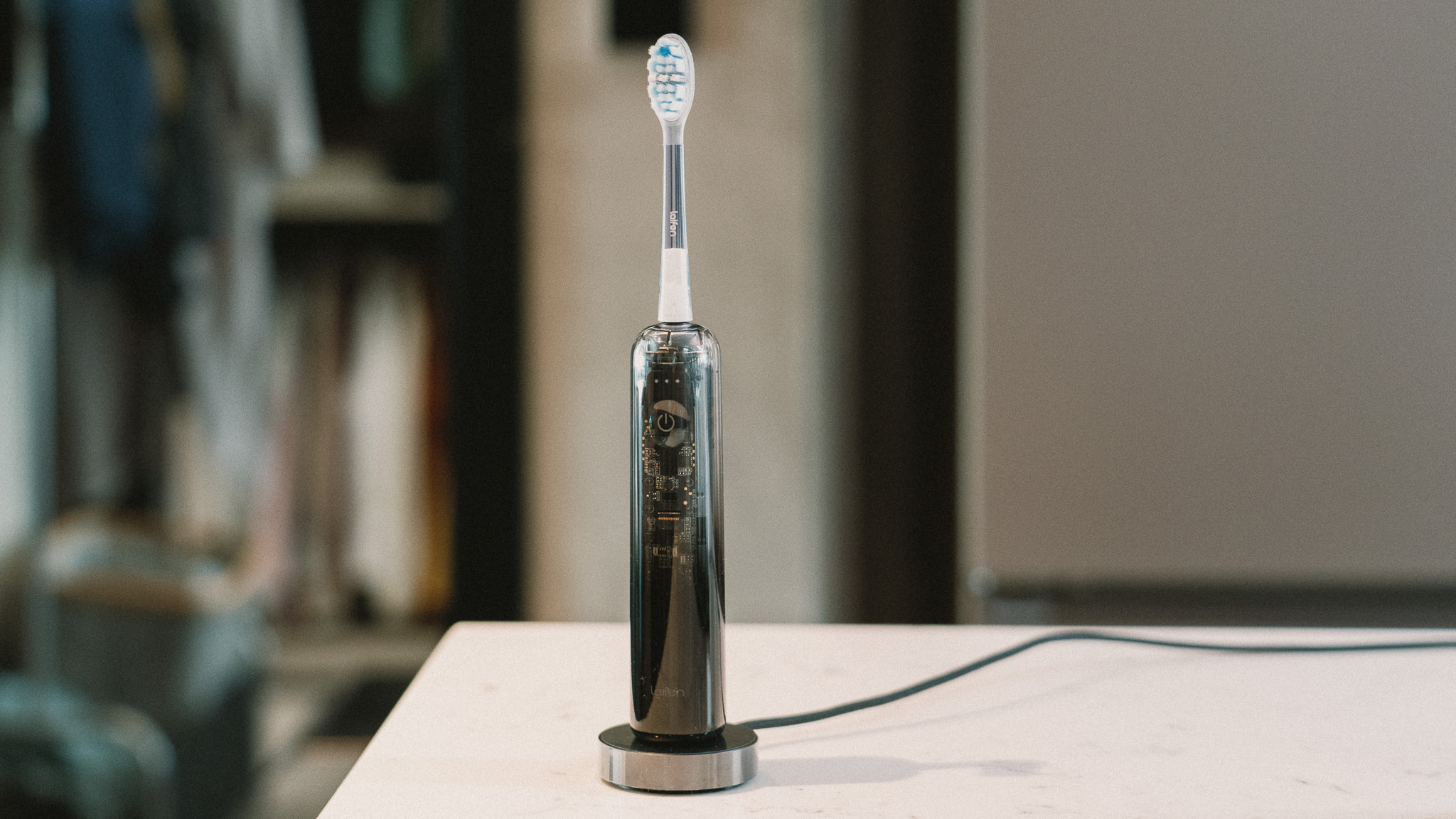
I bought the Transparent Explorer Edition, the more expensive version in the i2 line. It offers no extra cleaning performance. A highly transparent polycarbonate shell with an anti-fingerprint coating simply leaves the circuitry and internal structure visible. I chose it purely for its looks: sitting on the bathroom counter, it resembles a tiny mechanical specimen, and seeing it twice a day makes me happy.
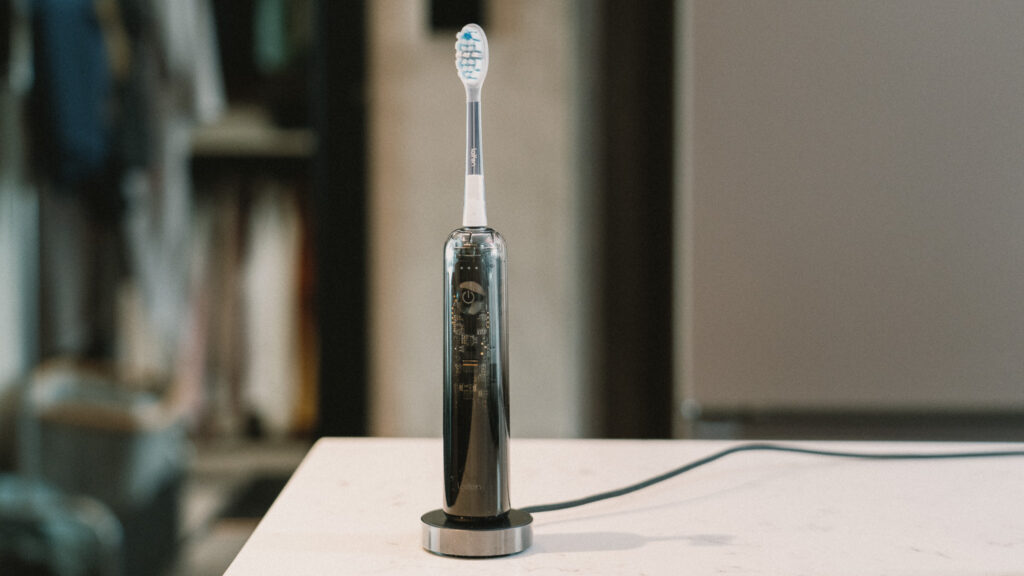
As for durability and cleaning performance, I cannot offer much of an objective assessment. It does not feel noticeably better or worse than the Oral-B, so this replacement does not really count as an upgrade. If my experience proves anything, it is that some things do not need to be quite so smart or premium; value for money can matter most.
Here’s to healthy teeth for everyone.
– Microhoo
Share: