After four years with an iPhone 13 mini, a small-phone enthusiast tries the opposite extreme. The iPhone 17 Pro Max delivers battery life, cameras, and a screen worth keeping—but living with its size is another matter.
***
Editor’s note: A version of this article by 北鸮 appears on September 9, 2026 on SSPAI with the title “我一定会回来……吗?小手用户与 iPhone 17 Pro Max 的一年”. Translated and published by agreement.
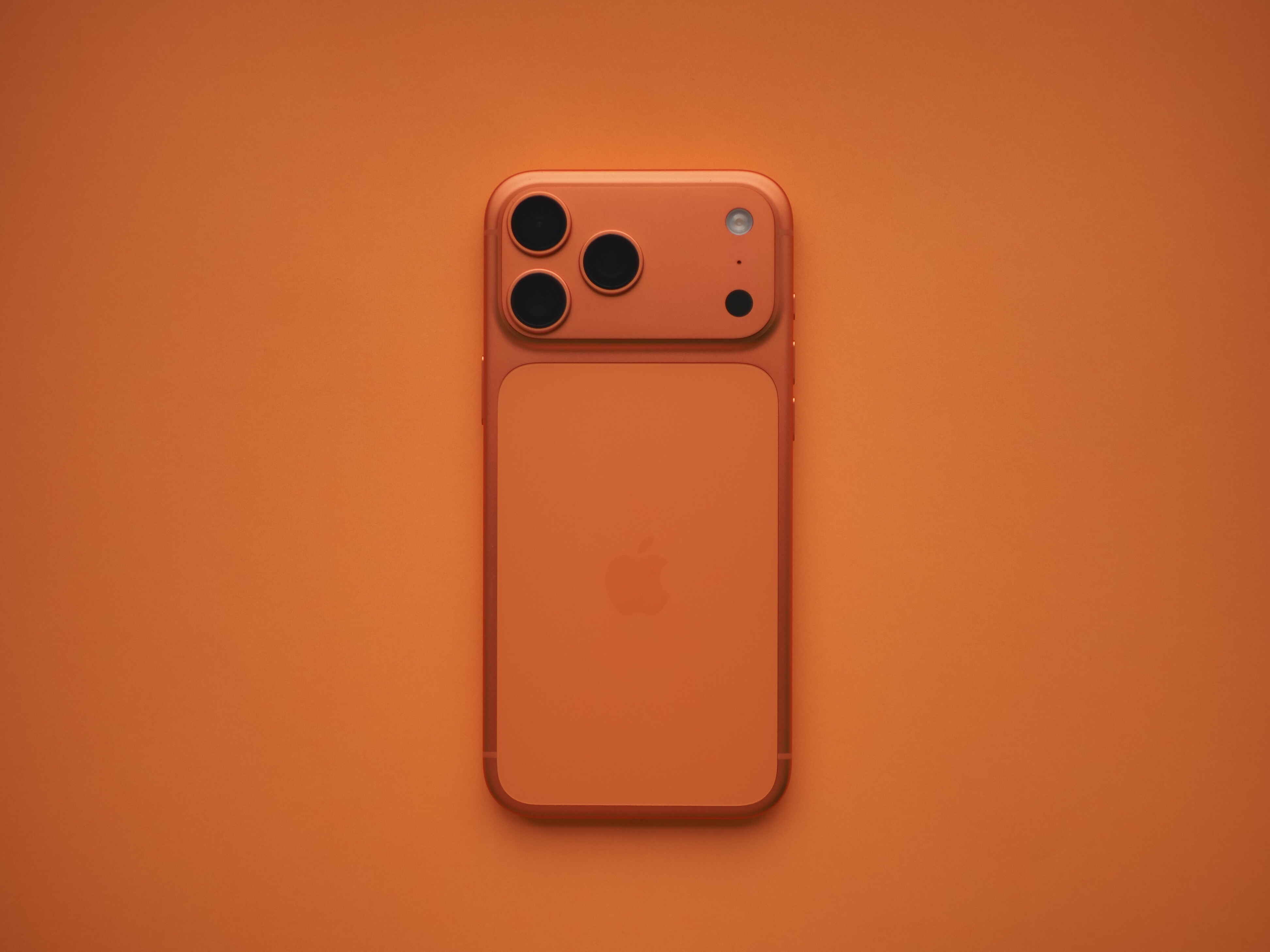
My orange iPhone 17 Pro Max arrived on October 17, 2025. It was a Friday. I was delighted that, with a friend’s help, I’d beaten the scalpers to one—until I learned it was a restock day. I could have walked into a store and walked straight out with a phone, in pretty much any color or model I wanted.
That didn’t dampen my excitement. I really wanted a new phone. I’d been using my iPhone 13 mini for four years, during which it had worked alongside all sorts of odd colleagues. In the end, only an iPhone SE (3rd generation) had earned a place beside it. The others were just more aggravating to use. The mini was getting old. Even with a replacement battery, it couldn’t make it through a working day. But I have small hands, and width had always been my main consideration when buying a phone. To hold one securely and actually use it, I needed it to be under 70 mm wide. My options had clearly all but disappeared.
At first, I planned to buy an iPhone 17. It was a substantial upgrade, and more than enough for a light user like me. But just as I was about to order, a thought lodged itself in my head:
Why do so many people like big phones? If I can’t get a proper grip on anything over 70 mm anyway, why not try a Pro Max?

That may have turned out to be an accidentally good decision. A few months later, memory prices went through the roof, making a flagship with 12 GB of RAM and dual physical SIM slots look like an even better deal. Having bought it, I felt I ought to write something. But 100 days passed, then six months, then 200 days, and I still couldn’t put pen to paper. I had no idea where to begin.
To me, it was just too boring.
A Flagship, After All This Time
For the past few years, my main phones have mostly been the unconventional ones. I’ve used Sonys and old BlackBerrys, book-style and clamshell foldables, tiny smartphones and flip phones—pretty much everything furthest from a conventional flagship. Whenever I wrote about those phones, whether to praise them or complain, the words came easily. The 17 Pro Max is different. Perhaps it’s been too long since I last used a flagship. When a phone has everything covered, I find myself at a loss for what to say.

In the world of gadgets, “boring” isn’t necessarily an insult. When a phone is the best its ecosystem has to offer, it fades into the background under a light workload. And in the repetitive routines that make up most of daily life, a device you stop noticing becomes a boring one.
Creative people use powerful phones to shoot spectacular films and capture breathtaking scenery. I use mine to photograph a bird that lands in front of me, scan QR codes, and browse food delivery and local deals apps. It handles either kind of work with ease. That’s what flagship hardware is supposed to do, and it’s also why I have so little to say. I don’t play games or make video or audio content. Everything I do sits so far inside its performance envelope that, however much I poke around, I can’t get anywhere near its limits.
Instead, it quietly becomes a way to get things done, slipping into my life without friction. The experience is more “normal” than it was on my small phones, and I no longer have to keep being reminded of which phone I’m holding. Large screens are treated as the default, and with this much performance behind one, even the most ill-conceived app workflows and website layouts feel remarkably smooth. Over the past year, I haven’t run into the interfaces spilling off the screen, heat buildup while taking photos, or laggy keyboards that used to trouble me almost daily. All of this comes from having better specs and more power. Yet most of the time, those improvements feel less immediately obvious than the high refresh rate of the ProMotion display.

Thinking about it, the most tangible performance upgrade this year has been finally getting to use Adobe’s camera app, Project Indigo. No more staring wistfully at a message saying my phone doesn’t have enough memory to run it. Apple Intelligence, the one thing I can imagine really making this phone work up a sweat, is still a slogan in Chinese mainland. I won’t be putting it to work anytime soon, so I’m a long way from wringing everything out of this hardware. That’s not necessarily a bad thing. After a year of easy shifts, my Pro Max still reports 100% battery health, with only 234 charge cycles in 321 days. Put on a fresh case and, close enough, I’ll still have a new phone when Apple Intelligence arrives here.

Everything I Like Comes from Its Size
Let’s talk about the advantages that matter to me.
First, battery life.
If your phone is fairly “normal”, or fairly new, you may have no idea what battery life on a small phone can be like. Over the past few years, I’ve become very accustomed to carrying a small bag whenever I go out, mainly because I have three power banks to bring along. Two are small: one magnetic, one with a built-in cable, both small enough to fit comfortably in a pocket while attached to a phone. The third is a big one, with enough power to feed both my little devices. Sometimes I’d head out for a walk after dinner with a full charge, listen to music, reply to a few messages, wander a little farther than planned, and get home with 1% left. Simply streaming in an area with poor reception was enough to make those old phones warm up.
After switching to the Pro Max, it took me a long time to notice that the power banks only came out of my bag when a friend wanted to borrow one. My bag had become the equivalent of those power bank rental stations outside restaurants. On several trips, as long as I left with a full charge each morning, the power bank flew home untouched. Two rounds of airport security for nothing.
This certainly isn’t a victory for battery capacity alone. Apple’s restraint when it comes to milliamp-hours is astonishing. But my light usage is easy work for the new processor, improved cooling, and larger battery. These days, I consistently use about 65% of a charge each day. Battery anxiety has disappeared from my life.

Second, the cameras.
This is probably the most effortless phone camera I’ve ever used. It isn’t quite fair to say that small phones have had their cameras “cut back.” A telephoto lens needs more physical space because of its optical design, and space is a luxury a small phone can scarcely afford. Sony aside, few manufacturers would actually downgrade the camera hardware from one generation to the next. Besides, unlike a wide-angle lens, where you only get the field of view the lens can give you, telephoto can be approximated with a digital crop. As AI-assisted computational photography has spread across brands, manufacturers have become even more comfortable leaving out the telephoto lens. Unless photography is a phone’s main selling point, you generally get an ultrawide and a wide camera. Want telephoto? Just zoom in. The software will work something out. Don’t mind how proper it would work. It works. That’s all.

The iPhone 17 Pro Max naturally has room to fit everything it wants inside. It doesn’t have an elaborate optical zoom mechanism, and its telephoto sensor isn’t the largest I’ve used, but a 1/2.55-inch sensor is hardly tiny. The “optical-quality zoom” that became a punch line at launch is actually quite useful. It produces respectable photos at equivalent focal lengths up to 200 mm. At least, when everyone is relying on algorithms to help, the iPhone’s results still look like photographs. For a phone—and given my limited photographic ability—that’s more than satisfactory. The new Photographic Styles are useful too, though I always forget to adjust them while shooting and usually end up applying them in editing.

Third, the screen.
Honestly, the larger screen is much easier to get used to than the larger body.

I really did have a use for a screen this size: bigger than my old phone, smaller than a tablet or computer, striking a balance between portability and enjoying videos and games. The clearest change is that my daily iPad Pro usage has plummeted. It’s practically become a writing pad that spends most of its time sitting idle. My desire for an iPad mini has disappeared too. On the occasions when I need to handle work documents on my phone, the larger keyboard and the extra room to see what I’m doing are also more convenient.
The screen takes up so much of the front that the phone still looks well proportioned even in a case. That matters more than I expected. Given how much it cost, this is the first time in years I’ve used both a screen protector and a case, and I’ll probably keep them on for the next few months. I’ve also finally got to use the Dynamic Island. It really is an elegant way to display live notifications. With the black area needed for Face ID taking up a smaller share of the screen, the front sometimes feels less visually heavy than the 13 mini’s broad forehead.

What I Hate Is the Size
If only the phone could be nothing but that screen.
Never mind the obvious problems, like dragging down my pockets. Over the past year, I’ve lost count of how often I’ve appreciated the cases I bought. Whether the phone hits the floor or my face, a case at least saves my wallet from joining in the emotional and physical pain. The phone weighs 233 g; add a case and you’re looking at a quarter of a kilogram at least. Every time it lands on my face, the whole thing feels absurd. Even if I remember not to doomscroll in bed before going to sleep, it can still ambush me when I groggily reach to turn off the alarm in the morning. Though, to be fair, it does wake me up more effectively than the alarm alone.
At 78 mm wide, it inevitably exceeds 80 mm with a case on. Even without one, it’s well outside the range I can use with one hand. Initially, I was most worried about my little finger. In practice, my body’s ability to adapt sidestepped that particular danger: there’s simply no opportunity for my little finger to support the weight by itself. The moment I pick the phone up, I instinctively clamp down on it. Even resting the entire length of my little finger along the bottom edge becomes a struggle after a while. The pulling and twisting make me wonder whether everyone who uses a big phone has evolved a little finger of steel.

Reachability doesn’t help. It only brings the top half of the screen down—I have to shift my grip just to swipe up from the bottom and unlock the phone. I keep joking that this advanced device takes me back in time. Anything remotely involved requires both hands. Holding it in one hand and prodding the screen with a carrot of a finger on the other, I look much like someone using a PDA in the late 1990s. Fortunately, by PDA standards, the iPhone 17 Pro Max is rather thin and light. Something to celebrate, then.
The size and weight affect more than those basic interactions. On this generation of iPhone Pro, for example, the bottom speaker is on the left. I wouldn’t normally think much of that. But the phone is so large and heavy that, in landscape, I have to brace both hands firmly against its sides. Turned the way I’m used to, my hand covers the speaker openings perfectly. I still haven’t got used to turning it the other way.

Then there’s the camera system I like so much. At first, because using the phone with one hand was so awkward, I even found a rationale for Camera Control: perhaps combining a physical shutter with swipe controls was meant to make a big phone easier to use. More time with it put that theory to rest. In landscape, a phone this size is already difficult to balance in one hand, and Camera Control is especially easy to trigger accidentally. In portrait, I can no longer adjust the zoom and press the shutter with one hand as I used to. After missing a few beautiful views and amusing moments, I gave up on using the camera one-handed altogether. When traveling, I now spend more time with a proper camera hanging around my neck.

There are upsides. I’d never fully appreciated just how many accessories are available for a popular phone. In the past, I didn’t choose accessories; whatever happened to fit chose me. Even with accessories built to the same MagSafe standard, I had to check whether they would stick out beyond the edges of the iPhone 13 mini. My magnetic power bank attaches with magnets but doesn’t support MagSafe, because it was the only one I could find small enough to fit within the mini’s footprint. With the 17 Pro Max, I get to choose—and shop around.
The only problem is that I didn’t need these accessories in the first place. Beyond cases in all sorts of materials, with different features and different feels in the hand, I’ve mostly been buying stands and grips: PopSockets, MOFT, cases with finger rings, cases with kickstands. All of them were attempts to make the phone easier to hold and use with one hand. Watching videos and shooting things did become more comfortable. But the phone still digs into my hand just as much, and I still have to keep shifting my grip, leaving this heavy object that cost close to RMB 10,000 perched precariously on my fingertips. Eventually, whenever I went out, I mostly left it in my pocket and avoided using it if I could.

A Small Phone, After All This Time
I often wonder whether spending so much on this experiment was worthwhile. Judged purely as a tool, the big, comprehensive iPhone 17 Pro Max excels at everything I care about. If its size and weight didn’t keep announcing themselves, it would be an excellent all-round device.
I’ve been very happy using it. That hasn’t stopped me from disliking it.

Having hands that are small, but not quite small enough, is frustrating. If they were a little bigger, ordinary phones wouldn’t be a problem. I might even be able to manage a Pro Max with one hand. If they were a little smaller, every phone would require two hands, and I’d probably have got used to keeping mine in a bag long ago. Instead, I’ve known devices that fit my hands, and I’ve watched them disappear one by one.
The small phone of my dreams is surely gone for good. No phone can squeeze a hot flagship chip, adequate cooling, excellent cameras, and a sufficiently large battery into a body under 70 mm wide while remaining thin enough to feel “modern”. In today’s market, where price tends to scale with size, either the costs don’t work or the design doesn’t. More importantly, the market itself won’t allow it. Phones have become the primary gateway to the internet, so of course bigger is better. A 6.9-inch screen gives video, photos, text, and games the room to feel comfortable and natural. Why turn that down?

Perhaps getting into smart devices so early has limited me. You can form a fixed idea of what a “mobile phone” should be. From the little Nokias I started with to the devices I use now, I’ve watched phones grow to accommodate larger screens, shrink as their frames and bezels narrowed, then swell again as the screens grew larger still. For you and me, the specific need for “a screen somewhere in the middle” may be easy to understand. When you already own other electronic devices, what matters in a mobile phone is how “mobile” it is. For the much wider market, what matters is how it is as an all-around smart device, an utmost modern “phone”.
With a small phone, handling the device is a pleasure in itself. Whether that comes from expressing a little individuality, enjoying easier operation, or simply clinging to old habits, it rests on something more fundamental: I’ve never imagined my phone as a big device that does everything. If a 5.4-inch device meets my basic needs, expanding it to 6.9 inches won’t transform the experience. Taking on half a tablet’s weight for half a tablet’s experience isn’t a particularly good trade for me. To persuade me to accept a bigger phone, there needs to be a more compelling, more distinctive change.

As I write this, I’ve already dug out my 13 mini and third-generation SE. I can’t wait to rediscover how good they feel in the hand, and what it’s like to have pockets that don’t sag. I’ll probably be back on the 17 Pro Max in a few days, though. However fond I am of them, it’s hard to give up the comforts you’ve grown used to. The good news is that, after so long with a big phone, even the 6.3-inch models and clamshell foldables I once thought were too big now feel rather compact. Perhaps I could accept something a little wider than 70 mm next time—as long as I leave the case off.
If possible, I’d like my next main device to be comfortable to hold and have a large screen: the kind of large screen that could change my stubborn phone habits. When will it arrive? Who knows?
Share: