


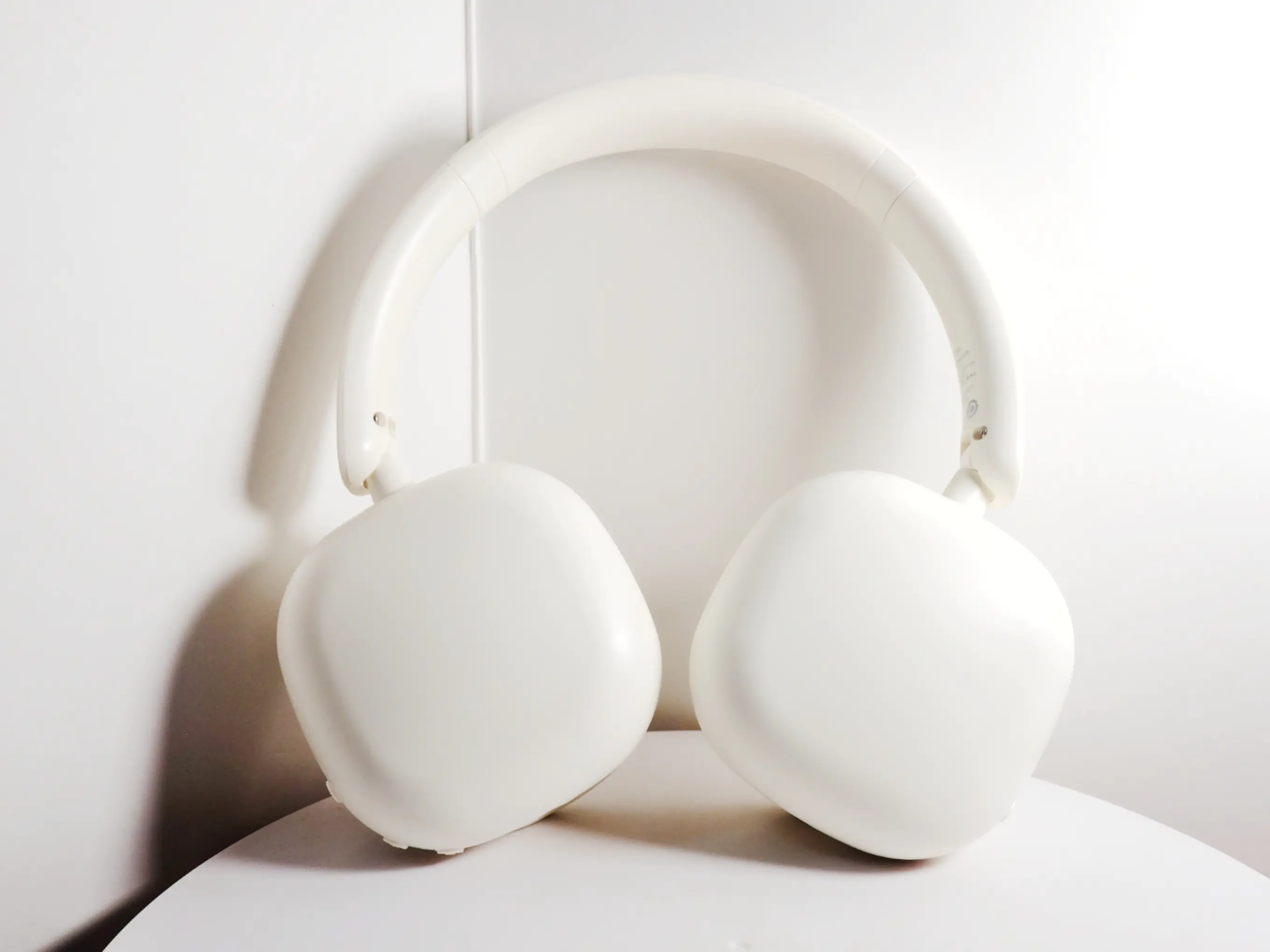
MUJI’s unusual MH1 wireless headphones offer understated styling, dependable connectivity, long battery life, and modest ANC. After three months of intermittent use, TDS Studio finds a competent emergency purchase rather than a product worth seeking out.
***
This is TDS Studio’s 30th article on SSPAI, and once again it is making its debut across all platforms.
Why did we suddenly decide to write about a pair of MUJI headphones? We have long overlooked headphones from lifestyle brands and general-goods retailers. Yet when an urgent need arises—especially while travelling—MUJI, MINISO, and even convenience stores may be the quickest places to find a tech organiser, charging cable, headphones, or something similar. The first two usually offer traceable warranty coverage as well.
We previously mentioned MINISO’s compact Bluetooth headphones in our New Products & Reviews programme. They are a representative example—not because they are particularly good, since both their technical performance and overall sound are thoroughly average, but because MINISO’s retail presence overlaps neatly with the audience looking for small headphones that fit the retro trend. Earlier this year, a reader told us they had spotted a pair of full-size headphones at MUJI, which made us very curious. After using them intermittently for three months, we are making a rare exception to discuss a brand whose digital products we would never previously have considered.
Package & Accessories
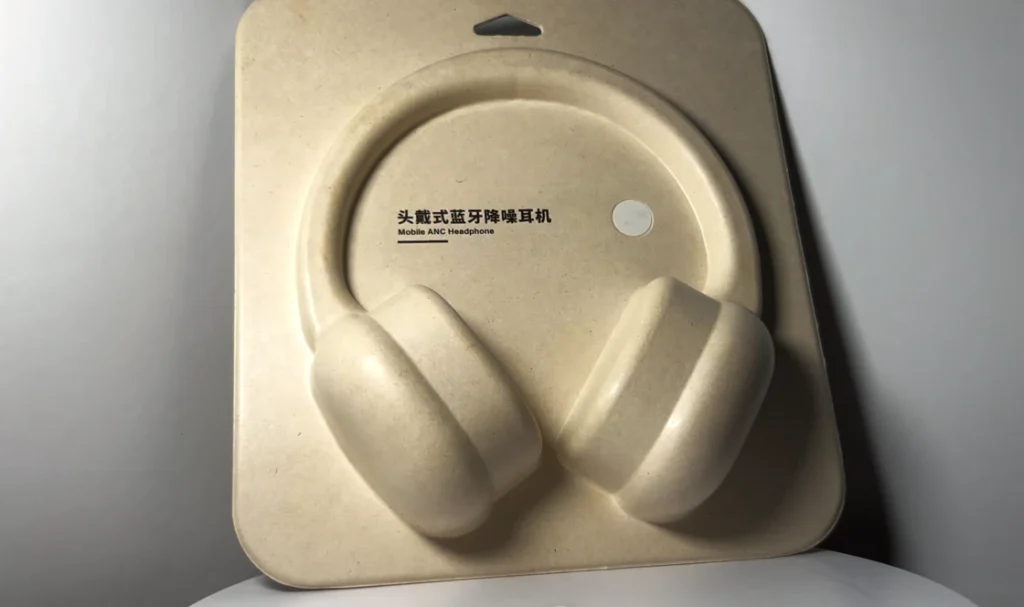
The packaging is unmistakably MUJI. It is essentially made from two layers of kraft card bonded together and cut around the outline of the headphones, much like the packaging for batteries or small tools. It is better suited to hanging from a shop rack than sitting in a display case. Fortunately, opening it does not require destroying the whole package: the contents slide out from the side. The only accessory is a USB-C-to-USB-A charging cable. Since the headphones appear as “MUJI-MH1” in the Bluetooth device list, we will refer to them simply as the MH1 from here on.
Design, Fit & Acoustic Structure
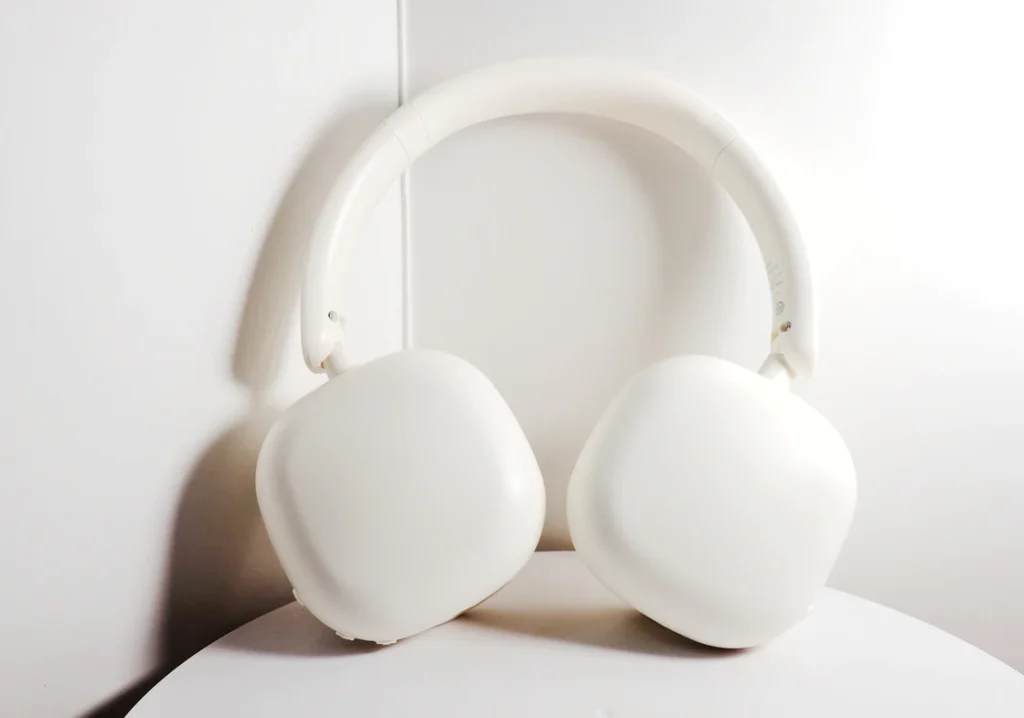
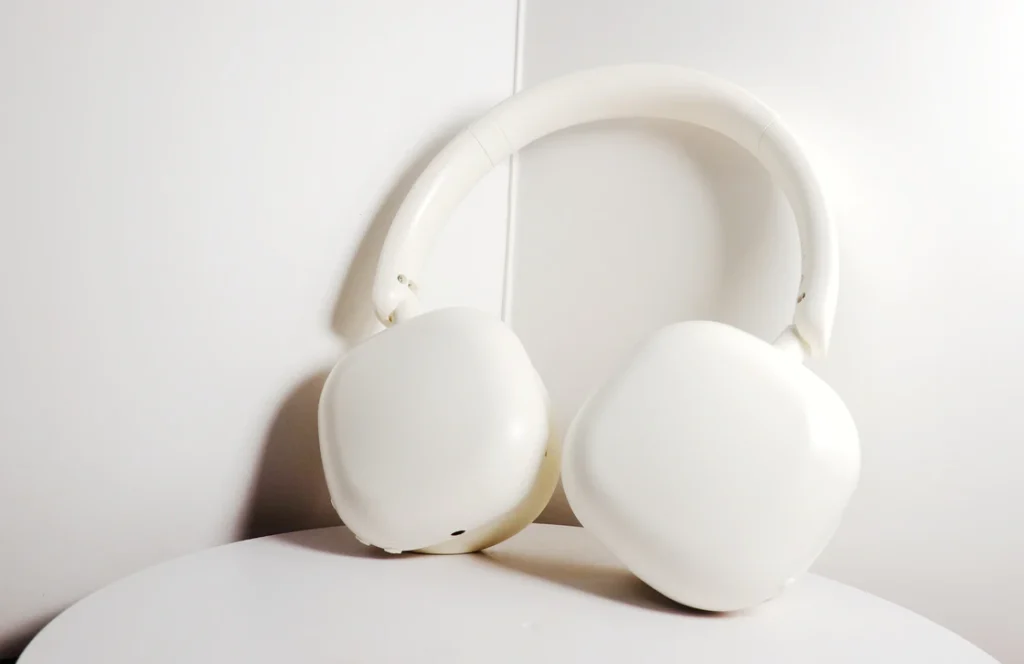
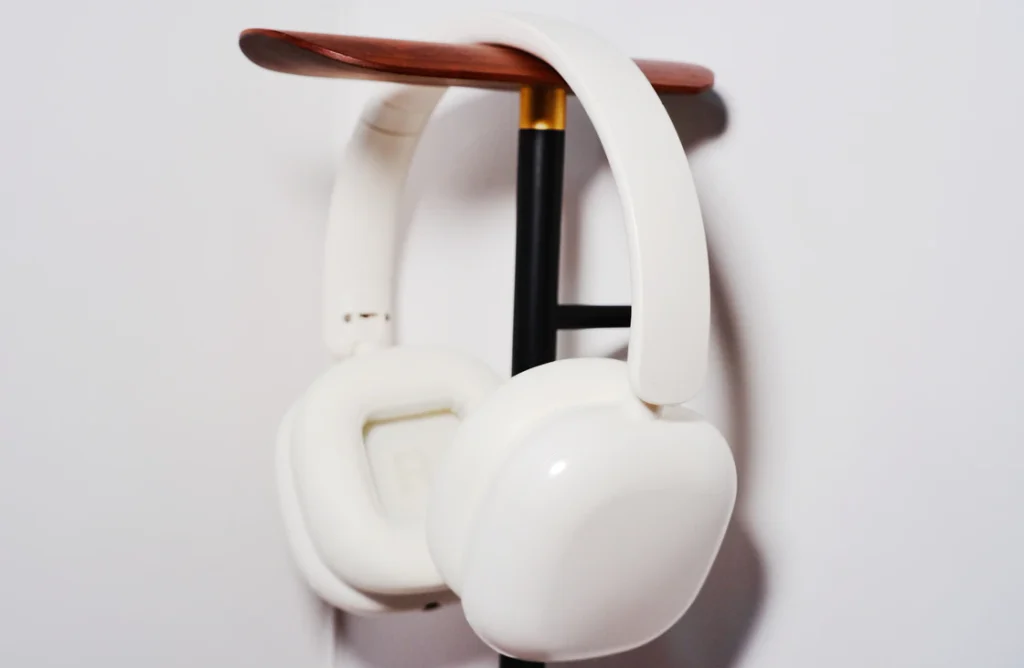
The MH1 comes in two colours: a concrete-like grey and the white version shown here. This white has a slightly warm cast rather than the cleaner white used for MUJI’s tech organisers. It has shown no obvious signs of ageing over the past few months, though longer use will be needed to confirm its durability. The grey version, in person, is very much not to my taste.
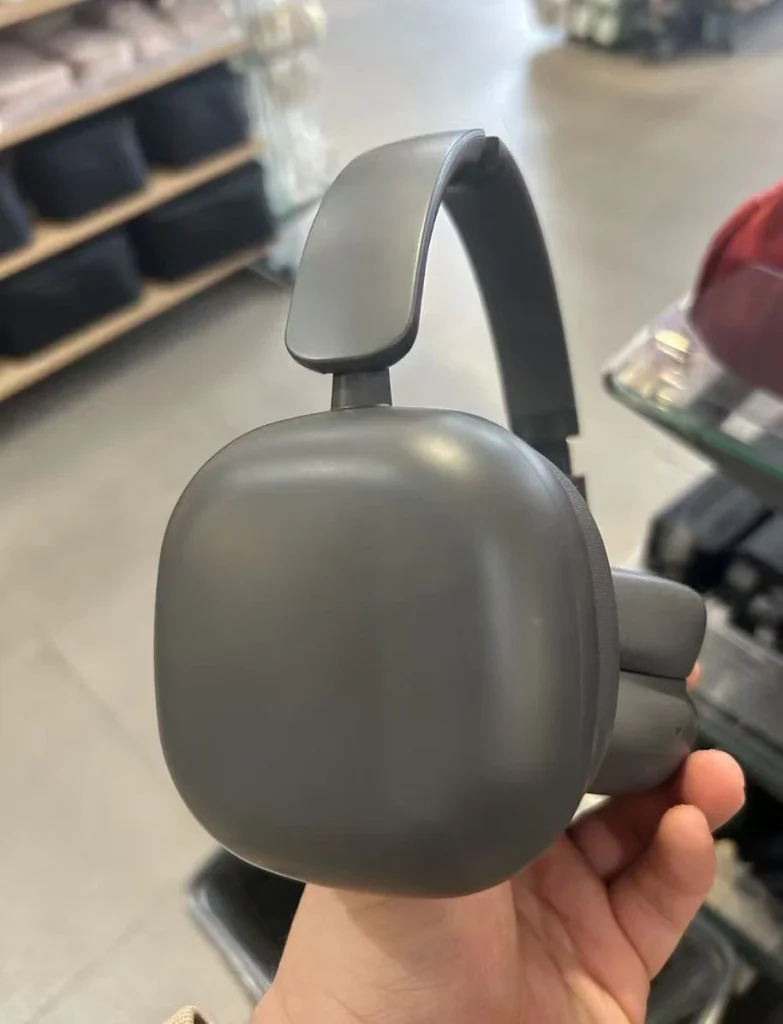
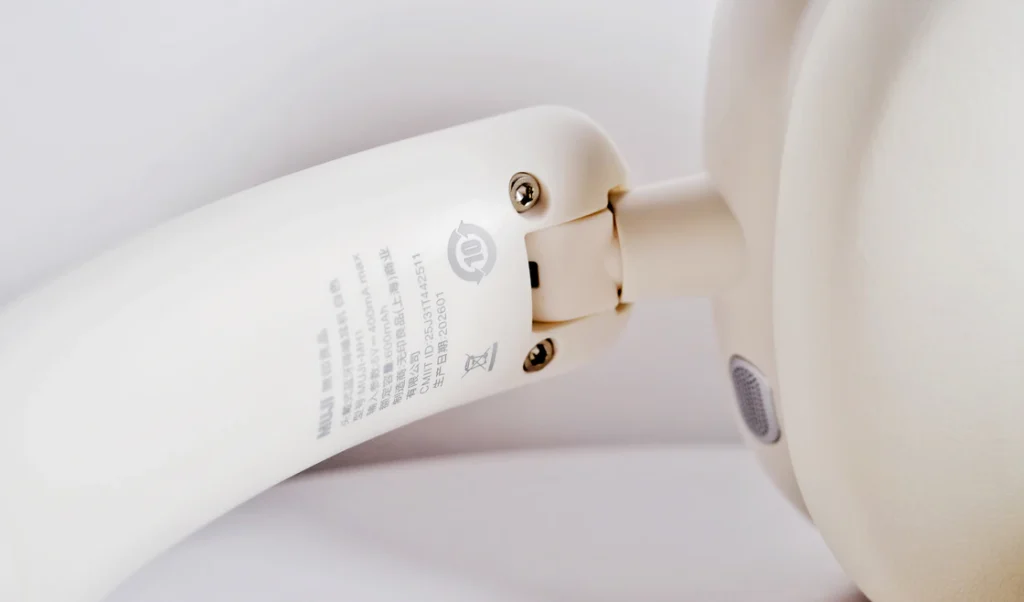
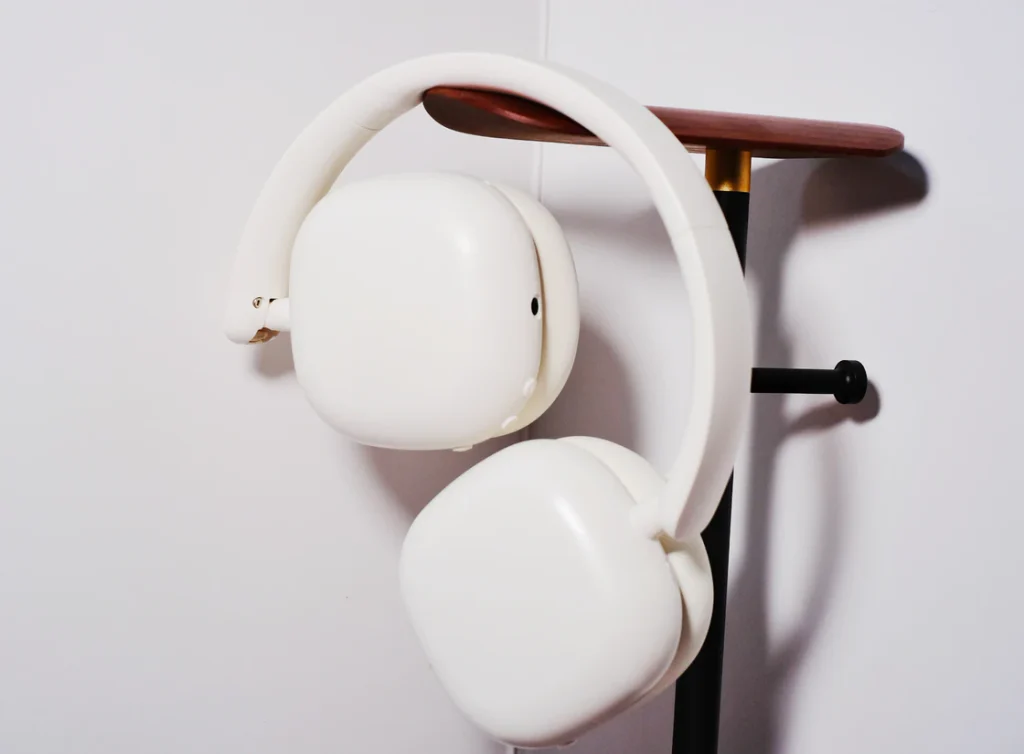
The MH1 is a fairly large on-ear design—an oversized on-ear model, in fact. Its earcups look even larger than those on something like the DT 270 PRO, yet most people will still be unable to fit their ears inside the pads. The plastic joints probably will not be especially durable, but they do let the headphones fold flat as well as collapse inwards. The headband combines metal and plastic, avoiding the cheap, crack-prone all-plastic construction found on some entry-level models.
The headband pad is less convincing. It is just a strip of rubber set into the centre, offering little cushioning or pressure relief. Unless the top of your head is relatively flat, the MH1 is therefore likely to create some degree of pressure at the crown. Each side of the headband extends by 3 cm, so it should accommodate larger heads reasonably well.
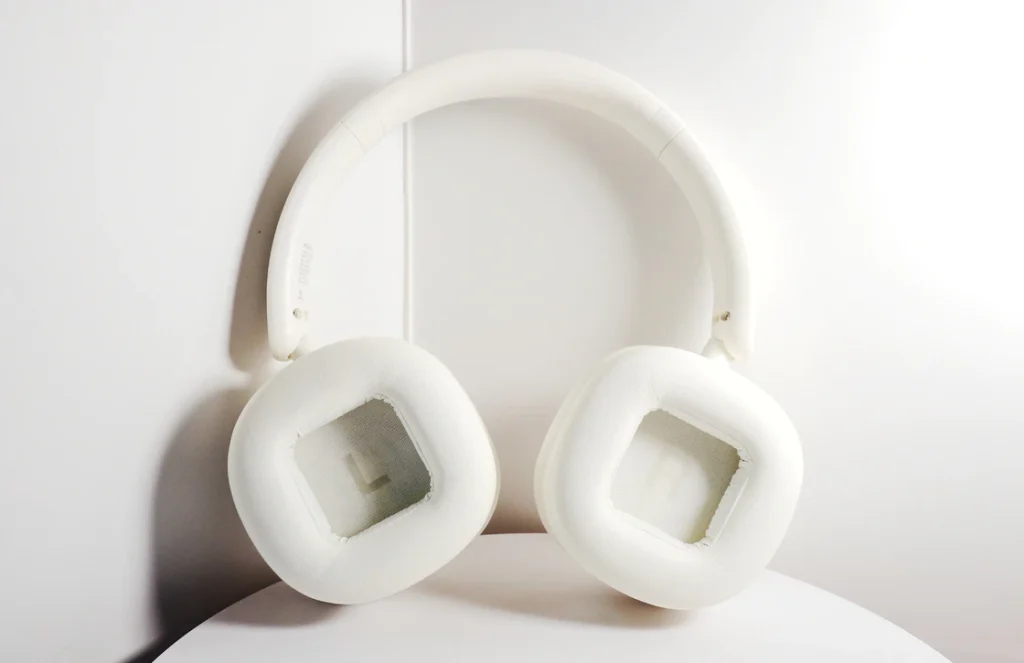
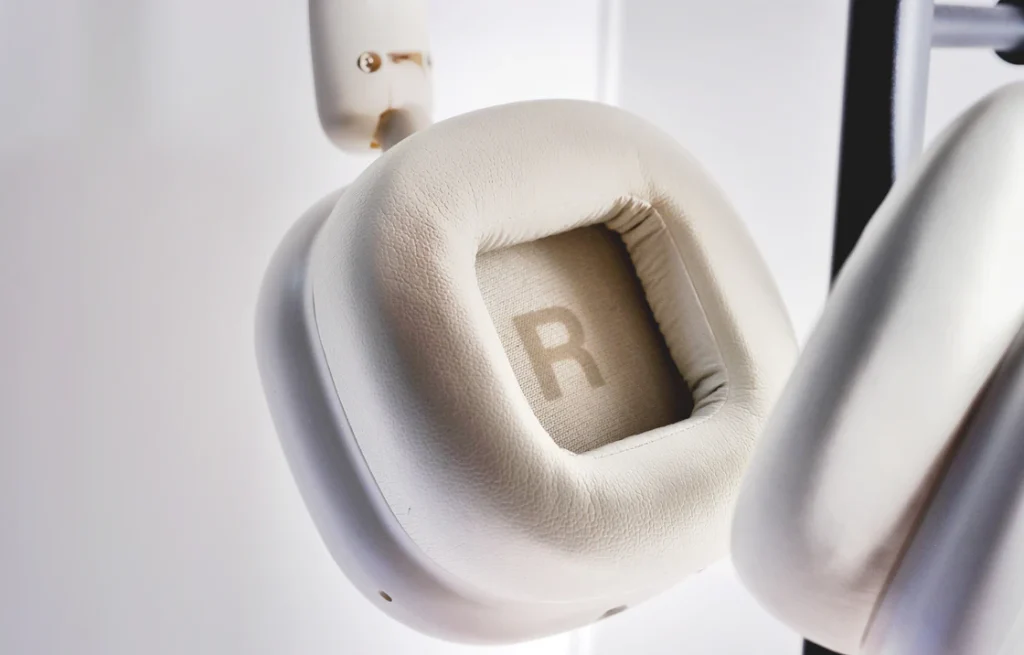
The plastic character of the earcups is still obvious. Their rounded rectangular shape is rather like a steamed bun. The earpads are removable, relatively soft, and have some slow-rebound cushioning. Compared with other on-ear models, they work reasonably well with the arms of glasses.
Clamping pressure is strong on both sides. We suspect the joint design directs additional force towards the inside of each earcup. On smaller heads, this can produce an extreme case where the lower part of the ear is squeezed while the top fails to seal. We therefore recommend trying the MH1 at a nearby MUJI shop before deciding whether to buy it.
Controls
All controls are located on the headphones themselves. The physical buttons feel like the springy metal dome switches used in game controllers. The ANC button sits on the side of the left earcup; double-pressing it switches between Music and Game modes. The right earcup carries the power and volume buttons. Double-pressing the power button calls up the voice assistant, while holding either volume button skips tracks.
The basic control scheme is clear and simple, and the headphones respond quickly. The voice prompts, however, are not intuitive. It can be difficult to tell whether ANC is active or whether the headphones are currently in Game or Music mode.
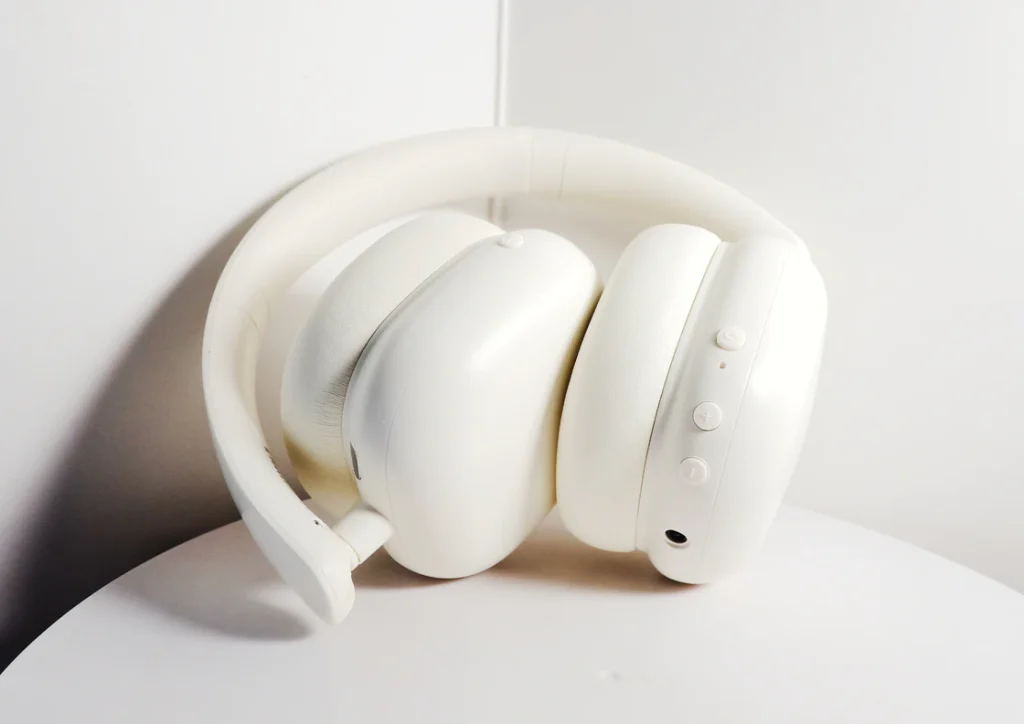
There is no wear detection, no app, and no way to update the firmware. What ships from the factory is what you get—an increasingly rare arrangement in today’s market. We followed the trail to the website of the OEM that makes these headphones for MUJI, but even its app does not recognise the MH1, which is a shame.
ANC, Transparency & Calls
Passive isolation is actually quite good. The MH1’s oversized on-ear fit, relatively soft and substantial pads, and firm lateral clamping pressure allow it to block more sound than most small on-ear headphones, filtering out a fair amount of high-frequency noise. It still falls short of some tightly sealed over-ear models.
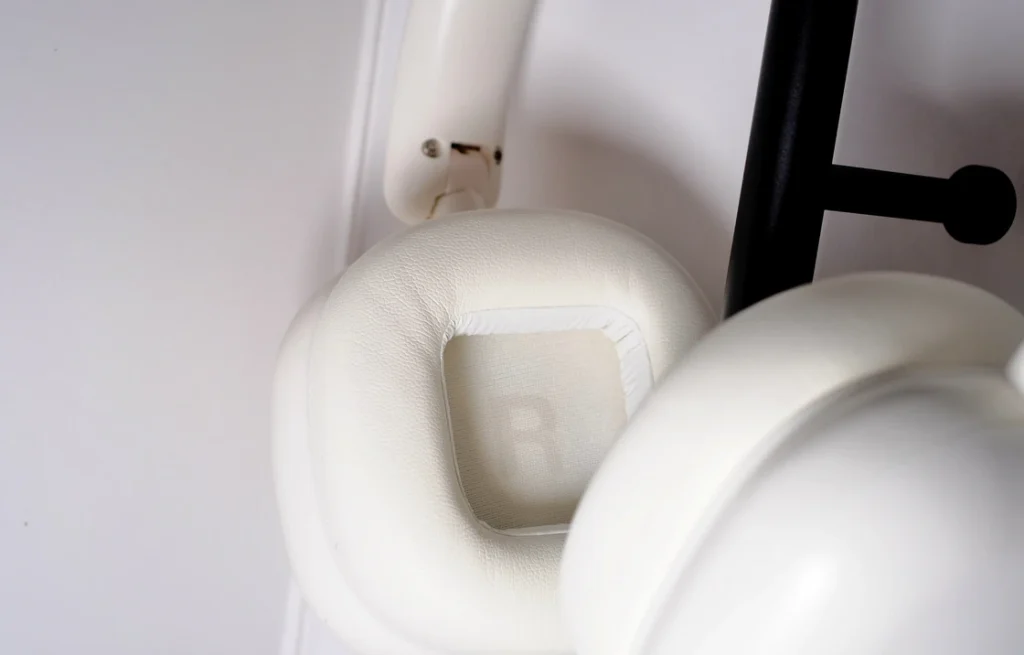
Whatever else you might say, MUJI is at least more honest about the claimed depth of its noise cancellation than many brands selling wildly inflated claims in the RMB 100–200 price range. Once ANC is enabled, it is genuinely difficult to notice much difference in a café or a similar setting. You need somewhere a little noisier, such as a road junction, before the effect becomes apparent.
The depth of attenuation is indeed limited. Even at a price just over RMB 200, it is not a standout performer, providing little more than mild filtering of low-frequency noise and relying chiefly on the physical seal. Its attenuation bandwidth is not bad for the price, however: you can clearly hear some suppression in the lower registers of human voices. For a feedforward ANC system, this is a respectable result.
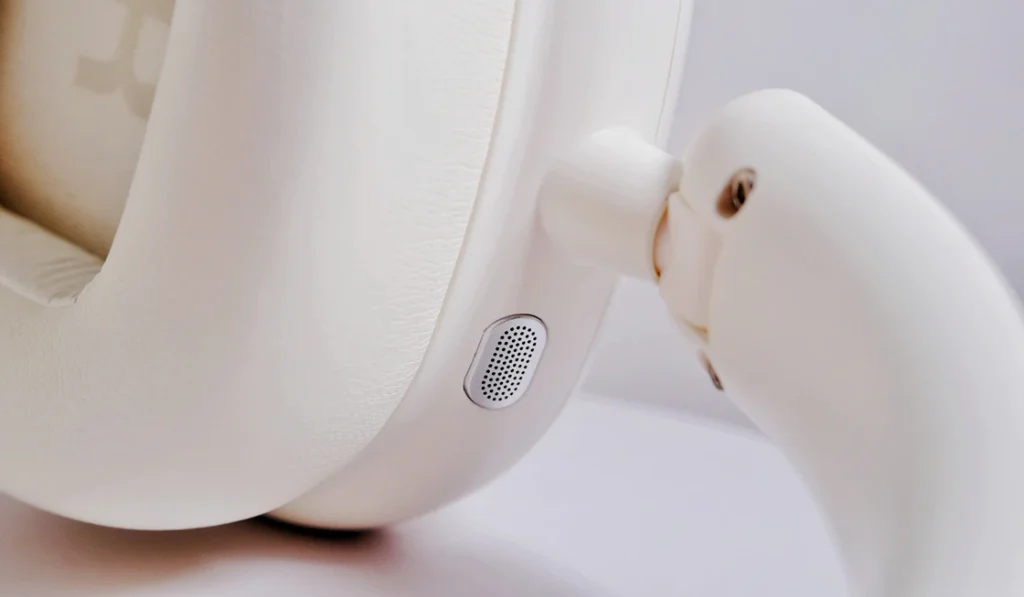
The sensation of ANC pressure is acceptable. It is perceptible, but not pronounced. Wind also has little effect: whether the source is in front of, beside, or behind the headphones, the MH1 introduces very little wind noise. A mild effect becomes audible only when air is blown directly towards the microphone opening on top.
Transparency mode? Naturally, there is none, so let us move straight to call quality. As usual, we tested calls over a mobile carrier network. The default microphone level is moderate and intelligibility is unremarkable, with an obvious muffled quality. Noise reduction becomes fairly aggressive in loud surroundings and may interrupt the continuity of speech. Wind noise, on the other hand, has relatively little effect on the call microphone.
Connection & Battery
Because the MH1 does not support a high-bitrate codec, we once again tested it using AAC. In our standard wireless test environment, with AAC connections to a Sony Xperia 1 V and an iPhone 14, dropouts and packet loss were rare regardless of whether WLAN was enabled. There was no obvious increase in stuttering at a distance of 9.5 metres through a load-bearing wall, and stability in open space was acceptable throughout the first 10 metres.
The MH1 has a dedicated low-latency mode. Following our usual procedure, we enabled it, connected the headphones to our reference iPhone 14 over AAC, and played streaming video. Subjectively, the delay was roughly half a spoken syllable at a normal speaking pace—just about tolerable for most video viewing. Without low-latency mode, the delay exceeded half a syllable and was readily noticeable.
MUJI claims 35–58 hours of continuous playback at 60% volume, without specifying any other conditions. We do not conduct a single-run battery test on over-ear or on-ear headphones. In charging tests, USB PD worked without issue, supplying approximately 1.4 W. The MH1 also supports emergency fast charging, with five minutes of charging claimed to provide five hours of playback.
Driver, Sound Modes & Codecs
MUJI provides no detailed information about the driver, and visual inspection alone is not enough for us to determine whether there is anything unusual about its diaphragm. The supported codecs are SBC and AAC. The sound changes slightly between noise-cancellation modes. The MH1 also supports a wired 3.5 mm connection and powers itself off automatically when the cable is inserted.
Subjective Sound Description
Based on Music mode over AAC with ANC disabled.
Bass quantity is elevated, with ample weight and fullness, moderate punch, and acceptable extension for the price. Attack and decay are not especially fast, leaving some reverberation behind. There is an obvious sense of bloom and density in the atmosphere it creates. The MUJI MH1 uses a typical quantity-first approach to bass rather than a refined one. It sounds coarse, with accumulated energy and little sense of layering, but its atmosphere may appeal to listeners of Western pop. Instruments whose fundamentals sit in the lower midrange are brought slightly forward.
In the midrange, vocals sit close to the listener and their image is also presented at close range, without much refinement. Vocal note definition receives slightly more emphasis than texture. Those outlines stand out, yet the amount of bass tends to mask the vocals, forcing the upper range to be brightened to preserve their presence. Some grain remains and smoothness is only average.
There is also audible tonal colouring. A touch of supposed “sweetness” has been added to the upper range to create a younger presentation. Throat resonance sits slightly high, while the proportion of breathiness is moderate. Mouth noises are mildly pushed forward, and sibilance has not been completely smoothed away. The vocal range is not especially transparent, but it has been deliberately brightened; as a result, its timbre carries an unnatural metallic quality.
With instruments, those whose fundamentals lie mostly in the upper midrange tend to prioritise note definition, while lower-frequency instruments prioritise body and texture. The contrast feels rather disjointed. Violins, guitars, violas, and other string instruments have a coarse texture, with limited bowing and plucking detail, although their presentation can be prominent and attention-grabbing. The cello has a vague physical outline and occupies a large proportion of the space.
Brass instruments gain a little extra grandeur, and brighter instruments such as trumpets receive stronger attacks. The air around woodwinds does not sound especially natural, while instrumental overtones lack both naturalness and richness. Among percussion instruments, the kick drum has a prominent presence and the snare does not decay particularly quickly. Cymbals are brightened, with mild metallic colouration and a slightly aggressive edge.
Overall treble brightness is not excessive, but two peaks reduce its smoothness. Extension in the uppermost treble is fairly ordinary, rolling off both early and quickly.
The soundstage does not feel cramped, but its sense of distance is unnatural—as though the image has been forcibly stretched sideways while depth remains limited. Combined with a modest sense of height, the MH1 produces a space shaped somewhat like a flattened spindle.
Separation between vocals and instruments is average and acceptable for the price, although generous bass quickly turns the presentation muddy. Overall coherence is not particularly strong. There is little to say about actual resolution in the RMB 100–200 range: technical ability is limited, though the MH1 does create an artificial emphasis on detail. Dynamics are acceptable and transient performance is average.
Overall Impression
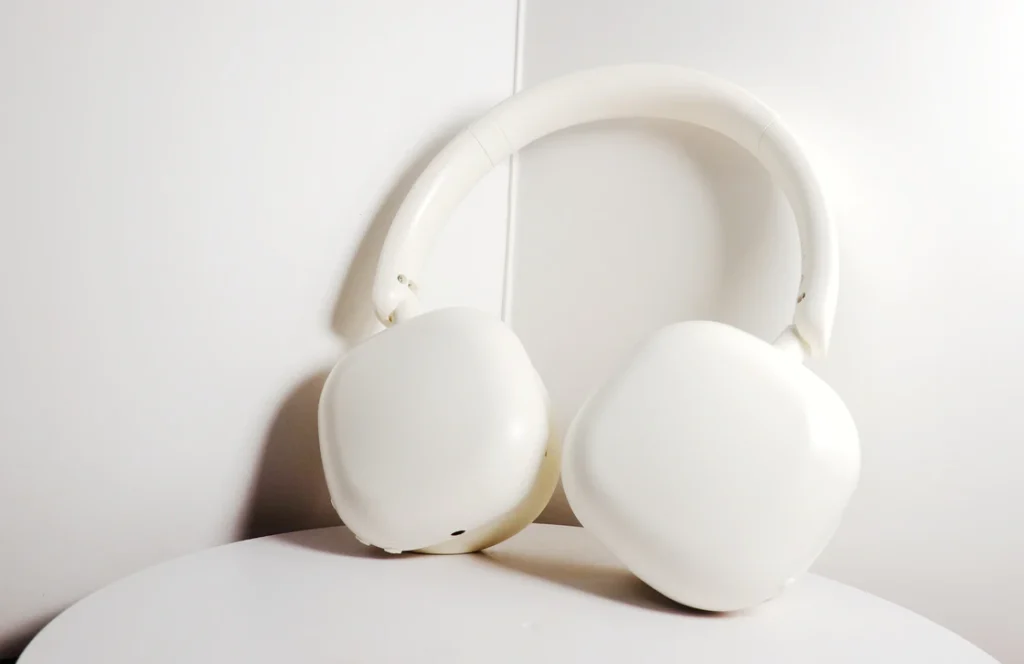
As one of MUJI’s rare digital products, the MH1 fits my existing impression of many MUJI products rather well. It combines basic practicality with a less-is-more design and meets fundamental needs. Wireless stability is acceptable, battery life is solid, and the appearance is genuinely understated. Its materials, however, are no better than should be expected in the RMB 100–200 bracket. This is an entry-level product that clears the threshold for competence.
The driver itself is not especially poor—general standards at this price are modest anyway—but the tuning is populist and coarse, while comfort is far from perfect. We therefore see no reason to seek out the MH1. Its value lies mostly in stumbling across it at a shopping centre and discovering that MUJI commissions OEMs to make products like this—and that this one is not even particularly bad. That is about it.
KT MARK rating for the model covered in this article, in the context of the market at the time:
MUJI MH1: III (Average)

TDS ANC Pyramid:
MUJI MH1: Headband Medium Level
For details of the KT MARK rating system and its “non-interference principle” regarding conflicts of interest, search for TDS Studio Rating Standards and Content Notes V202502 using any major search engine.
KingTsui, TDS Studio.
August 2026
It’s a TDS production.
All content is independently created. Plagiarism, including the imitation of the article’s structure, is prohibited. All rights reserved.
Review Notes
- No cultural references or analogies were substituted.
- The source’s omitted currency was rendered as RMB where price bands are discussed, based on its mainland Chinese retail context.
- “减少主义” was rendered as “less-is-more design” to preserve the intended description rather than reproduce the source wording literally.
- The two SSPAI promotional blocks at the end of the source were omitted as publisher-inserted boilerplate.
Share: