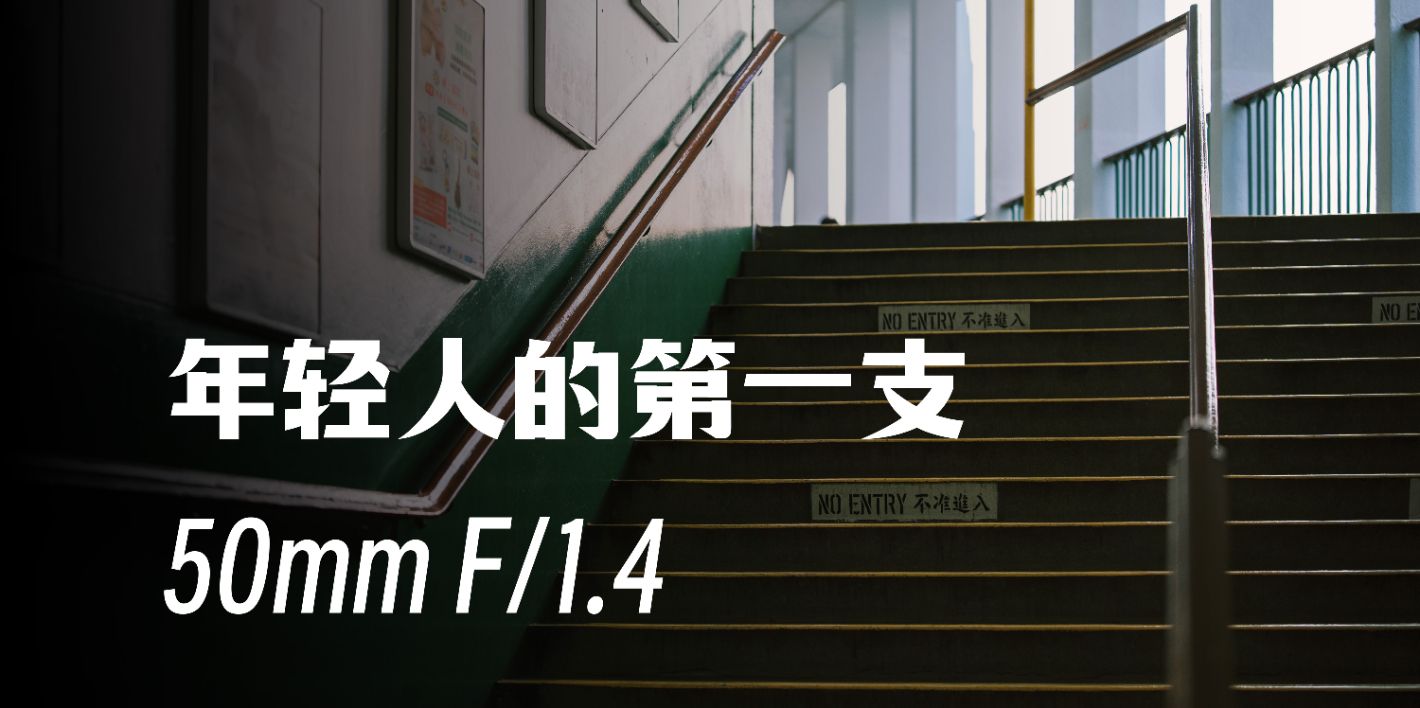
50mm is one of the most classic—and most frequently discussed—focal lengths in photography. It doesn’t have the wide-angle tension of 35mm, nor the spatial compression of 75mm and above. Its perspective is straightforward and close to what the human eye sees, making it adaptable to a wide range of shooting scenarios. For many photography enthusiasts, it’s an indispensable lens.
My 50mm Journey
I’ve always had a soft spot for 50mm lenses. In 2018, I bought the much-talked-about Sigma 50mm F1.4 DG HSM. With its excellent optical design, it significantly improved image quality at wide open apertures, challenging the then-common belief that “large apertures must be stopped down to be usable.” That experience left a deep impression on me.
After that, however, I went a long time without buying any new lenses. Despite a steady stream of new releases, as an ordinary consumer I didn’t feel that my choices had really increased. The 50mm market seemed to have settled into a fixed pattern: if you wanted top-tier image quality, you had to choose a Japanese-brand original lens priced above 5,000 RMB; if your budget was limited, your only options were lenses around the 1,000 RMB range—lightweight, but requiring compromises in handling and build quality, typically domestic F1.8 lenses. For users with a 2,000–3,000 RMB budget who wanted a well-balanced lens in terms of image quality, handling, and build, the middle ground was almost completely empty. That changed with the arrival of the Viltrox AF 50mm F1.4 Pro FE. It gave me the same eye-opening feeling I had seven years ago when I first used that Sigma lens, to the point where I started to think that this lens really could be young photographers’ first 50mm F1.4.
Differentiated Competition
To explain why this lens stands out, it helps to start by comparing it with original-brand lenses. A few years ago, domestic autofocus lenses were often seen as mere “budget alternatives.” They lagged noticeably behind originals in autofocus performance, coatings, and overall experience, and were chosen only out of necessity. The Viltrox 50mm F1.4 Pro represents a different approach: instead of focusing solely on low price, it aims to match Sony’s mid-to-high-end original lenses in key areas like image quality and build.
Its competitive strategy is quite clear. In terms of handling, for example, it features a metal barrel, a physical aperture ring, and customizable buttons—configurations usually reserved for high-end original lenses. This clearly sets it apart from entry-level lenses that use plastic bodies and simplified controls (such as Sony’s own FE 50mm F1.8 or some domestic lenses). In hand, it feels solid, with precise and reassuring operational feedback. Its self-developed dual HyperVCM autofocus motors also deliver noticeably better quietness, speed, and decisiveness than the FE 50mm F1.8.
When it comes to the most important aspect—image quality—especially background blur at large apertures, it performs very well. The out-of-focus transitions are smooth, highlights are clean, and I didn’t notice obvious “double-line” bokeh or “cat’s eye” shapes. This places it ahead of some early domestic fast lenses, and even certain original-brand entry-level lenses, bringing it closer to high-end performance. These aspects of the shooting experience and image rendering will be discussed in more detail later.
Of course, compared with the Sony FE 50mm F1.4 GM, it still falls short in autofocus speed and overall system integration—but it also costs less than one-third of the price. It has found its position with remarkable precision: offering a compromise for users who are dissatisfied with the image quality and feel of entry-level F1.8 lenses, yet find flagship original F1.4 lenses too expensive. It proves that domestic lenses can win photographers’ active choice through solid performance and accurate positioning—not merely through low prices.
Lens Design Language
Opening the box, its design language feels very similar to that of Japanese manufacturers: clean and restrained, with no unnecessary information. Three sides of the box are printed with the English brand logo, while the other two display illustrations of this Viltrox 50 Pro lens, along with the specific model and corresponding mount information. A serial number label and the manufacturer’s contact details are affixed to the bottom.
The lens itself is tightly secured in thick foam. The package also includes a lens pouch with a pleasantly solid feel, as well as a lens hood.
In the hand, the lens barrel feels smooth, yet after being tested by someone like me who tends to have sweaty hands, it doesn’t easily retain fingerprints. A closer look reveals a finely textured surface that enhances grip stability while reducing the risk of slipping. The lens features an aperture ring near the base, with clear, well-defined clicks when rotated. There is also an orange weather-sealing gasket around the mount, further improving protection and reliability. For users who value operational efficiency, the lens is equipped with customizable buttons that can be assigned according to personal shooting habits.
Mounted on a Sony camera body, the lens gives a strong sense of cohesion. From the materials used to the overall shape and even the logo design, everything feels well integrated. Without prior knowledge, it would be hard to tell it apart in overall build quality from products made by major international brands.
The lens uses a 77mm filter thread. For a 50mm F1.4 lens, it is indeed slightly on the larger side. That said, considering the image quality and autofocus performance it delivers, I find this compromise in size acceptable. After all, for many users, this will be their “first F1.4 autofocus standard prime,” and such a minor inconvenience is easy to live with.
That said, the aforementioned sense of “slight imbalance” mainly applies to compact bodies without a pronounced viewfinder hump, such as the A7C. When mounted on models like the A7M4 or A7R5, the overall proportions are likely to feel much more balanced.
Optical Design
Item
Specification
Focal Length & Format
50mm, full-frame
Maximum Aperture
F1.4
Optical Construction
15 elements in 11 groups, including 3 ED (Extra-low Dispersion) elements, 1 UA (Ultra-high-precision Aspherical) element, and 8 HR (High Refractive Index) elements
Autofocus
Equipped with a self-developed dual HyperVCM motor, supporting face/eye detection and tracking
Minimum Focusing Distance
0.45 m
Filter Thread
77mm
Weight
Approx. 800 g (E-mount version)
Professional Features
Dust- and splash-resistant construction, customizable Fn button, clicked/de-clicked aperture ring, and a Type-C port for firmware updates
According to the official MTF charts, this lens performs exceptionally well at its maximum aperture of F1.4. The field curves are relatively flat, and overall performance remains stable. In particular, at the center of the frame, the MTF values approach the theoretical limit of 1, in some cases even outperforming the results at F8, demonstrating outstanding resolving power.
As the image field transitions toward the edges, from the center to roughly the mid-frame area, the MTF values at maximum aperture remain above 0.8. Even at the extreme edges of the frame, overall MTF values largely stay above 0.6, indicating that edge performance degradation is well controlled.
It is also worth noting that at maximum aperture, the solid lines representing contrast and the dashed lines representing resolution closely track each other and follow similar curves. This suggests that the lens is capable of delivering smooth transitions and pleasing bokeh with good texture. Its real-world image rendering will be demonstrated in detail in the upcoming shooting samples section.
Q&A Before You Start Shooting
Q1: Why does the lens often hesitate after pressing the shutter, or sometimes not respond at all?
A1: Follow the instructions in the manual to check whether the latest firmware is installed. I encountered this issue as well. After updating to the newest firmware, it was largely resolved. Autofocus responsiveness can reach about 80–85% of original-brand lenses. There is still slight lag, but since I don’t mainly shoot sports or other scenarios that demand extremely low latency, the overall experience is acceptable to me.
Q2: Why can I hear a slight sound inside the lens barrel when slowly shaking the lens?
A2: This lens uses Viltrox’s self-developed HyperVCM floating focus structure. When the lens is not powered on, the internal lens group is not locked in place and may produce a slight sound when the lens is moved. This is a normal physical phenomenon, similar in principle to the loose sound of a camera’s in-body stabilization mechanism when the camera is powered off. Once the lens is powered on, the sound disappears. If you still hear obvious abnormal motor noise during normal powered-on shooting, it is recommended to contact Viltrox customer support for inspection.
Real-World Shooting Experience
I tested this lens in both portrait and documentary-style shooting scenarios, hoping to provide some useful reference for everyone.
Portrait photography: Even at maximum aperture, images remain sharp with clear detail, fully meeting the sensor demands of bodies like the A7C. I believe it can also handle high-resolution sensors such as the A7R5 with ease. When placing the subject at one-third of the frame (for example, using a golden ratio composition), the lens’s excellent field flatness still delivers solid image quality, with no need to worry about edge degradation.
The lens also performs consistently across different focusing distances. Some lenses look fine at around one meter but start to show weaknesses at very close or very distant focusing ranges. This is mainly because their optical designs are optimized for common shooting distances; at extreme close-up or long-distance focus, the balance of aberration correction (such as spherical aberration and field curvature) can be disrupted, leading to a drop in sharpness. With this lens, however, whether shooting close-up facial portraits or distant full-body shots, the subject remains consistently clear.
Soft out-of-focus rendering: In actual shooting, I could clearly feel that the out-of-focus highlights are round, with smooth edge transitions and almost no harsh “double-line” bokeh. This is thanks to the ultra-high-precision UA aspherical element, which effectively suppresses spherical aberration and “onion ring” artifacts. At the same time, the inclusion of three ED elements ensures clean, color-pure bokeh, while the 11 rounded aperture blades allow highlights to remain nicely circular even when stopped down. Even in complex scenarios such as rows of figurines, the lens is able to deliver smooth and pleasing background transitions. It can be said that Viltrox’s comprehensive balancing of aberrations in its optical design allows the F1.4 aperture to represent not just light-gathering capability, but a high-quality expression of bokeh.
Night scenes and low light: The F1.4 aperture shows a significant advantage at night. I can lower ISO for cleaner images, or increase shutter speed to capture motion while keeping noise under control, giving me much greater creative freedom. I strongly agree with the view of a certain Bilibili creator: in creative work, the only thing that should limit you is your imagination. This lens gives me a tool to explore more possibilities.
Humanistic and Landscape Photography:50mm is a true “sweet spot” focal length. In real-world shooting, I’ve noticed that when something catches my attention and I raise the camera, the distance is usually around 2–3 meters. At this range, photographing people allows for half-body compositions that include environmental context; photographing architecture lets you focus on specific structural details. When using a 50mm lens for landscapes or architecture, I find myself less obsessed with capturing the entire scene (since it’s often impossible anyway), and more focused on the relationships between lines and structures, and between structure and light and shadow—often resulting in unexpected perspectives.
Backlit Performance:In backlit situations, thanks to excellent coating technology, the lens controls chromatic aberration very well. Image contrast and detail remain strong, and even when the light source enters the frame directly, there is no obvious purple fringing or color dispersion at the edges. Overall performance is impressive.
Expectations and Conclusion
Looking back on the time spent with the Viltrox AF 50mm F1.4 Pro FE, what it brought me was far more than just satisfying images—it was a long-missed sense of things being “just right.”
At the 3,000 RMB price point, it precisely enters a market segment that had been vacant for a long time. It does not compromise the core experience because of labels like “domestic” or “high value for money.” Instead, with Pro-level optical performance, professional-grade handling and protection, and a mature design language, it convincingly demonstrates that domestic lenses are fully capable of breaking free from the stereotype of being merely “cheap substitutes,” and can become creative tools that photography enthusiasts actively choose—and take pride in using.
Of course, I have no intention of putting it on a pedestal. After using it for some time, I do hope that its size can be further reduced without sacrificing image quality, and that firmware tuning can continue to mature. But no matter how much one talks about performance, ignoring the reality of budget may be theoretically correct, yet practically unhelpful. For a beginner photographer who wants to step into the world of large apertures and explore the layers of dreamlike beauty hidden behind glass elements, it is hard to avoid considering this “first 50mm F1.4 for young photographers.”
This lens opens a door to a much broader creative space for enthusiasts on a limited budget. When evaluating whether a lens is worth buying, the meaning of “budget” goes far beyond the number itself. When you own a lens that offers strong performance at a reasonable price, you naturally feel more at ease—you don’t have to constantly worry about whether the oils on your hands might seep into the barrel through tiny gaps every time you hold it, nor imagine that every accidental bump could cause hidden internal damage. Instead, you can devote yourself fully to creating, confidently leveraging its strengths: creamy bokeh, richly detailed subject rendering… everything serving the single purpose of capturing that precious moment in your mind.
Within a limited investment, it delivers an almost complete professional-level experience and performance. For users searching for a versatile standard prime—whether newcomers looking to move beyond a kit lens, or experienced photographers in need of a high-quality backup—this Viltrox lens offers an option that is hard to ignore and highly persuasive. Its release clearly shows that the path forward for domestic lenses lies not in blindly piling on specifications or racing to the bottom on price, but in directly competing on key aspects of the user experience while maintaining sincerity in pricing.
For me, this lens feels more like a clear signpost, marking the moment when domestic lenses have finally crossed the difficult exploratory stage of “the long road as hard as iron,” and truly stepped onto a new starting point of renewal and progress. From the Sigma 50mm F1.4 DG HSM | Art a decade ago to this AF 50mm F1.4 Pro FE today, I’m glad to witness the continuous growth of domestic lenses—gradually shedding the labels of “cheap” and “imitative,” and earning their place in the market through genuine competitiveness and quality. The road ahead is still long, but with this solid first step, we have good reason to believe that the future will bring more products with distinctive character, excellent performance, and reasonable prices—offering users truly rich choices. For the future of Made in China, we can hold even higher expectations.
As What to Watch This Week enters its sixth year alongside you, we look back on our shared journey across the screen in 2025. Over the course of the year, we encountered hundreds of works—some stunned us with exquisite visual effects, others dissected reality through gripping narratives. Some viewers found resonance and healing here, while others used the lens to examine the times and question themselves. These films and series have documented, created, and accompanied our lives.
This year’s annual What to Watch This Week · Awards Ceremony presents a total of 10 awards, ordered by each work’s release or premiere date. Our selections remain highly subjective, so we warmly invite you to join us in the comments: share the work that moved you most in 2025, and present an award to the one closest to your heart. Through these titles and moments, let’s preserve together the cinematic memories that belong to 2025.
(Note: All works mentioned in this article were released, premiered, or made available online in 2025.)
@Snow: Pittsburgh Medical Frontline — Season 1
Work details: 2025-01 / United States / TV series / Drama / 50 minutes × 15 episodes / Douban link
Reason for the award: Since its premiere, Pittsburgh Medical Frontline has consistently ranked among the top three most-watched series globally on HBO Max, averaging over 10 million viewers per episode, and leading the 77th Primetime Emmy Awards with wins including Best Drama Series and two other major awards. It has likely already become many viewers’ “Drama of the Year.” And yet, despite all this acclaim, I nearly quit after the very first episode, dragging my way through the rest over almost half a year—because it is too real in its suffering.
The “hardship” of Pittsburgh lies in the sheer intensity and duration of public hospital emergency work. A typical daytime shift that starts in utter chaos: a woman pushed off a platform, a man severely injured while trying to save someone, an athlete with recurrent ventricular fibrillation, a patient whose teeth have been knocked out, a boy who accidentally ingested “candy”…… The number of cases covered in just the first episode alone could probably fuel an entire season of another medical drama. The series leaves almost no breathing room for slacking off—where would there be time for romance or melodrama? Watching the characters crack tired memes in front of patient monitors is about as relaxed as it ever gets. A 12-hour, multi-threaded, high-intensity shift is already suffocating enough, and then they’re forced into overtime by a mass shooting, all while having to call back medical records from hours earlier. If you start feeling stressed and overstimulated, congratulations—you’re officially on the same wavelength as the three interns.
The “realness” of Pittsburgh comes from the people it portrays—people we might actually encounter in everyday life. They work diligently to save lives, but they also gossip, bicker, and spam bad jokes; when they see bizarre cases, they can’t help snapping photos. My favorite little angel is Mel: mildly autistic, with a solid theoretical foundation, but not framed as a headline-grabbing “genius” like Murphy in The Good Doctor. She’s simply a slightly awkward, ordinary doctor who does her job earnestly, cares deeply about her patients, and tries hard to fit in with her colleagues. Collins, whose inner strength is off the charts, can keep working even after fetal biochemical pregnancy loss—yet completely falls apart at the sight of a mouse. Santos, sharp-tongued and arrogant, is the kind of top-tier “problem colleague” we occasionally run into in real life, but she’s never reduced to a mere clown or villain; when something happens, she genuinely steps up.
For many people, watching shows after work is about finally catching their breath. Pittsburgh Medical Frontline, however, makes you feel as if you’re clocking into yet another, even more intense shift alongside these overworked medical staff. It’s precisely this high-density, unvarnished, yet occasionally tender viewing experience that allows you to truly feel the scarcity of medical resources, the surge of social conflict, and the fundamental kindness that still underlies most people.
@宽治: Hot Spot
Work details: 2025-01 / Japan / TV series / Sci-fi, Comedy / 45 minutes × 10 episodes / Douban link
Reason for the award: Fans of Bakarhythm will probably catch a whiff of that unmistakable “Bakarhythm flavor” the moment they start Hot Spot. In terms of character writing, it carries over the subtlety and everyday texture of Fictitious OL Diary; in terms of narrative ideas, it pushes the imagination even further than Rebooting Life; and it continues Bakarhythm’s consistent interest in anti-genre storytelling.
Before watching Hot Spot, it was hard for me to imagine that a series centered on employees at a hot spring hotel would feature aliens at all. Even less imaginable was that this alien story would completely abandon ultimate questions like interstellar warfare or the fate of humanity, and instead focus on workplace gossip, friendships, and the small troubles of everyday life. Even Takahashi himself—the alien in question—looks like nothing more than an utterly ordinary middle-aged man, with none of the traditional aura of a “chosen one.”
What’s more, the problems Takahashi uses his superpowers to solve—aside from the occasional life-saving moment—are mostly trivial things: helping catch a thief, retrieving a volleyball stuck on a rooftop, quickly applying a screen protector, delivering an exam admission ticket. These “missions” not only appear out of nowhere, but using his powers also comes with various side effects (running too fast causes a fever, boosting intelligence leads to hair loss), which can only be alleviated by soaking in a hot spring.
We’re used to thinking that life consists of “highlight moments” and “everyday moments,” and that the people around us fall into the roles of “protagonists” and “NPCs.” Film and television, as dream-making machines, usually focus on the protagonist’s shining moments. What makes this series interesting is precisely how it dissolves that distinction, bringing the often overlooked B-side of life into view. Through its close attention to the mundane, it paradoxically creates a sense of the surreal—a fleeting, everyday kind of wonder hidden in domestic trivialities.
And so, idle chatter becomes different because of that small spark of wonder. And so, we not only accept the alien’s “ordinariness,” but also begin to accept the “strangeness” of ordinary people. In that process, we draw a little closer to one another. And that, truly, is something worth cherishing.
@潘誉晗: Adolescence in Chaos
Work details: 2025-03 / United Kingdom / TV series / Drama / 60 minutes × 4 episodes / Douban link
Reason for the award: At dawn, multiple police cars drive into a residential neighborhood and stop in front of an unremarkable detached house. Armed officers move in an orderly fashion, smash open the door, and storm inside with guns drawn. The Miller family of four lives here. Mr. Miller, the father, stands at the staircase with his hands raised, insisting he’s done nothing wrong—his two children are upstairs. The police, however, are very clear about why they’ve come: “Jamie Miller, I am arresting you on suspicion of murder.” On this day, 13-year-old Jamie Miller is charged with murder.
At this year’s 77th Primetime Emmy Awards, the British series Adolescence in Chaos went six-for-six, winning Best Limited Series, Director, Writer, Lead Actor, Supporting Actor, and Supporting Actress. Owen Cooper, who plays Jamie Miller, became the youngest male acting award winner in Emmy history. After its release, the series was met with overwhelming acclaim. The UK government announced plans to include it as an educational film to be screened in secondary schools, and even Prime Minister Keir Starmer admitted that watching it with his children was deeply shocking. The reason behind all this recognition and impact is simple: this four-episode series captures a pathological sentiment that has become alarmingly prevalent among teenagers today—misogyny.
From the very first episode, the series makes it clear that the police have ample evidence and have arrested the right person. As a result, the story isn’t about finding the real killer, but about why Jamie did what he did. Over the remaining three episodes, the narrative unfolds from three perspectives: the police investigation at the school, Jamie’s psychological counseling sessions, and the Miller family’s experience. What emerges is a startling realization—that what many assume to be an innocent school environment has, without notice, long been breeding serious social issues; and that so-called masculine ideals have already formed an invisible hierarchy and crushing pressure, leading adolescent boys to develop deeply misguided perceptions.
This is truly a work of profound significance.
@知道分子吴先先: Marry My Husband, Please
Work details: 2025-06 / Japan, South Korea / TV series / Drama / 60 minutes × 10 episodes / Douban link
Reason for the award: Marry My Husband, Please is a classic rebirth-and-revenge wish-fulfillment drama. The female lead is terminally ill, discovers that her best friend and husband are having an affair, and is then brutally killed by the two. She unexpectedly reincarnates ten years into the past, resolves to defy fate, deliberately matchmake this “perfect couple,” take revenge on her ex-husband and former friend, and ultimately begin a new life—and a new romance.
Marry My Husband was originally a Korean webtoon, later adapted by tvN into a Korean drama that received a positive response. In 2025, Amazon struck while the iron was hot and released a Japanese version. The adaptation was written by Satomi Oshima, starring Fuka Koshiba and Takeru Satoh, with Korean director Ahn Gil-ho and a Korean production team also on board.
The collaboration between Japanese and Korean teams allows the series to truly shine. On one hand, Japanese dramas are known for their delicate character portrayals. Oshima, who previously adapted 1 Litre of Tears and Nagi’s Long Vacation, adds rich and believable backstories to what were originally more archetypal characters, giving everyone a coherent and convincing motivation for their actions. In addition, aside from Takeru Satoh, the entire supporting cast delivers strong performances. In particular, Sei Shiraishi’s portrayal of the second female lead stands out: through textbook-level facial control (subtle twitching when angry) and rapid, page-flipping-like expression changes, she brings to life a tragic, deeply love-deprived, control-obsessed “dominant best friend” whose feelings toward the heroine oscillate between love and hate. Some viewers have even remarked that they’ve met someone exactly like her in real life.
On the other hand, the Korean team’s meticulous attention to set design, lighting, costumes, and music gives the series an exceptionally polished look, far surpassing many contemporary Japanese dramas that have become lackluster due to limited budgets, talent shortages, and declining production values. Because of this, I found myself watching it again and again: the first time for the story, the second and third for the lighting, makeup, and composition. I’ve watched it at least five times, and every rewatch has been a joy.
Marry My Husband, Please is a show you can watch without overthinking—but it’s also more than just a simple guilty pleasure. I sincerely hope that domestic dramas will produce more high-quality, visually pleasing wish-fulfillment series like this, ones that respect the audience’s intelligence.
@SHY: Chainsaw Man the Movie: Reze Arc
Work details: 2025-09 / Japan / Animation / Fantasy / 100 minutes / Douban link
Reason for the award: There’s a certain irony here. The Chainsaw Man TV anime once strained to achieve a “cinematic” feel and fell short; yet its follow-up, which stops blindly imitating live-action techniques and instead reclaims the essence of animation, turns out to be a true film. Under new director Tatsuya Yoshihara, the adaptation fully internalizes the spirit of the original manga, making numerous subtle but effective adjustments. Through lavish animation and restrained direction, it composes a dazzling yet heartrending ode to love and heartbreak.
Stories always begin with the meeting of a boy and a girl. A phone booth in the rain, a roadside café, a school campus at night, fireworks at a festival—the rippling surface of a swimming pool tinted with ambiguity draws two lonely souls into quiet intoxication. Having never been loved, perhaps they see themselves in one another. Even if the relationship begins with lies, they still cling to the fantasy of brief comfort, tasting a youth they never had.
Yet in the end, they wear collars. A blood-stained deep kiss rips apart the tender illusion, and the freshness of everyday life explodes into the chaos of a B-movie battlefield. At full throttle, MAPPA delivers a rousing action spectacle: chainsaws and bombs roar, blood sprays in every direction, the scenes growing ever more unhinged. The show-stopping arrival of the “Sharknado” pushes absurdity to its limit, embodying a violent aesthetic as sudden and ferocious as a storm.
Would you rather be a country mouse or a city mouse? This fable, running through the entire film, sets its tragic tone. A protagonist yearning for an ordinary life is ultimately revealed as a used and discarded outcast, denied even the right to a humble wish. Choosing romance over reason is fated to exact the price of life itself. Petals wither, fireworks fade, footsteps halt abruptly at the end of an alley—light and darkness standing in stark opposition.
When what was once within arm’s reach becomes untouchable, countless unspoken thoughts condense into a murmured line—“Actually, I never went to school either”—leaving behind an oblivious boy to wait alone. After living through a love so overwhelming, everything else in the world pales into insignificance; joy and sorrow alike fall silent. This ineffable blend of tenderness and cruelty is precisely what the much-anticipated first season of the anime should have been all along.
@宛潼: The Girl
Work details: 2025-11 / Taiwan, China / Film / Drama / 124 minutes / Douban link
Reason for the award: The Girl carries a certain autobiographical undertone. To be honest, its narrative is relatively flat, without dramatic twists or conventional “plot highs.” But Shu Qi’s approach feels remarkably deft: she uses imagery to fill the gaps in the narrative. Those delicate, flowing shots and the play of light and shadow are themselves telling a story. They form the film’s very framework, bringing an otherwise understated plot vividly to life.
What moved me to tears most was how the film strips away the “strong female lead power fantasy” and instead presents the quiet, restrained life texture that most women inhabit—and this, in fact, is reality. There are no reversals, no triumphant comebacks, only prolonged endurance. At times there’s a desire to break free, only to find there is no way out; after despair comes nothing but continued endurance. This suffocating sense of powerlessness is heartbreaking. To me, the mother in the film understands everything. She knows which path should be taken, but she herself is trapped and can no longer walk it. The greatest kindness of her life is sending her daughter away with her own hands, cutting off this cyclical fate.
The film hides a detail of profound significance: throughout the entire story, only the girl has a name—no one else does. The others are faceless symbols, representing countless small families submerged under gendered and patriarchal narratives, and the suffering silently borne by women across generations. But starting with the girl’s generation, the old narrative finally comes to an end. They are no longer nameless shadows; they finally have names of their own.
At the end, during the post-screening Q&A, Shu Qi broke into a genuinely happy smile. It reminded me of a line from the film and made me feel its deeper meaning: letting smiles no longer look so bitter, but truly be smiles.
@利兹与青鸟: All Her Fault
Work details: 2025-11 / United States / TV series / Drama / 45 minutes × 8 episodes / Douban link
Reason for the award: If the hallmark of a top-tier thriller is the ability to make viewers “binge the entire series in one go,” then All Her Fault can safely be called this year’s most successful suspense drama. Centered on the accidental disappearance of a child, the series does not stop at unraveling a mystery; instead, it precisely dissects the terrifying truths lurking beneath so-called perfect families and a rigidly stratified society.
The series opens with Marissa, a successful working mother, heading out to pick up her five-year-old son Milo based on a text message from another mother, Jenny—only to discover that the address is fake and her child has vanished without a trace. This fear, born from the collapse of everyday trust, instantly pulls the audience into a deeply empathetic state. What sets the series apart, however, is its construction of successive “narrative traps” that constantly overturn themselves. Suspicion first falls on Jenny’s family nanny, Kelly; then the husband Peter’s suspicious movements, followed by hidden secrets among family and friends, gradually come to light. Everyone seems like the culprit, yet every clue only leads deeper into the fog.
The ambition of All Her Fault goes far beyond telling a twisty story. The title itself is a massive irony. Just as viewers grow accustomed to locating blame among female characters, the series sharply captures a collective subconscious reflex: whenever something goes wrong with a child—from everyday bumps and bruises to kidnapping cases—the mother is almost always seen as the primary party at fault. In the show, both Marissa and Jenny, no matter how successful they are professionally, cannot escape all-around scrutiny and blame from their husbands, the media, and even themselves once they are defined by the role of “mother.” Through their experiences, the series reveals how society at large molds motherhood into an identity that must be perfect—or else be burdened with original sin.
As one incisive line in the series puts it, “It looks like a group of good people killing each other.” When the narrative perspective shifts to the tragic story behind the nanny Kelly, as well as a subplot in which a detective takes desperate risks for his autistic son, the series gradually peels back the cold chasm of class divisions. What emerges is a more universal—and more powerless—predicament: in the face of overwhelming structural injustice, anyone can be a victim, and anyone can, often unconsciously, become a link in the chain of harm.
@Voyager_1: Strange Tales of the Tang Dynasty: Chang’an
Work details: 2025-11 / Mainland China / TV series / Mystery / 50 minutes × 40 episodes / Douban link
Reason for the award: There’s an old saying that “sequels are doomed to fail,” but Strange Tales of the Tang Dynasty is an exception. If the first season was a surprising dark horse, the second a solid and conscientious follow-up, then the third season—Chang’an (2025)—finally completes the transformation from a “niche gem” into a fully fledged series familiar to a broad audience.
This time, the investigation duo led by Su Wuming and Lu Lingfeng brings their long westward journey to an end and finally returns to Chang’an—a city both prosperous and seething with undercurrents. The most captivating element of the show remains that single word: “strange.” The writers not only continue their precise excavation of Tang-dynasty zhiguai (records of the uncanny), but in this third season, they more deeply intertwine these “strange cases” with the political landscape of Chang’an itself.
From “The Golden Peach of Kang Kingdom” to “Polo in a Prosperous Age,” the bizarre cases this season are no longer mere curiosities of the jianghu, but point directly to the darkness of the human heart and the heights of the court. Avoiding flashy, studio-style excess, Tang Tales uses light and shadow to construct a distinctly Tang-era “Chinese Gothic” aesthetic—where the ecstatic dances of night banquets and the crimes lurking in sewers fold together into a three-dimensional vision of a flourishing Tang dynasty.
The most award-worthy aspect lies in its unwavering commitment to using the “strange” as bait, Tang-era stories as the connective thread, and characters free of filler subplots. What remains is tightly interlocked reasoning, meticulous investigations, and the growing默契 and maturity of the investigative team when faced with matters of right and wrong. As we watch Su Wuming once again stroke his beard in contemplation and Lu Lingfeng break the deadlock with his spear, that long-missed, pure binge-watching thrill is the best possible reward—and the clearest proof that good money truly can drive out bad.
@Sholmes: Knives Out 3
Work details: 2025-11 / United States / Film / Mystery / 144 minutes / Douban link
Reason for the award: Judd is a Catholic priest who is reassigned to the rural parish of Our Lady of Eternal Perseverance after assaulting a deacon for making disrespectful remarks. There, he assists Wicks in managing the parish. During the Good Friday service, Wicks steps into a storage room near the pulpit to rest, only to suddenly collapse. Judd discovers that Wicks has been stabbed in the back and is bleeding profusely. Police Chief Scott summons private detective Blanc to investigate the case, and the police consider Judd—who had been preaching alongside Wicks—as the prime suspect.
On a rainy night, Judd witnesses Wicks emerging from a mausoleum. He gives chase, is knocked unconscious, and later awakens to find the body of the cemetery caretaker Samson lying on the ground. Just as Judd is about to confess to the crime, Blanc stops him and claims that he already knows who the real killer is.
Structurally, the film adheres rigorously to the rules of classic fair-play detective fiction—ingenious tricks, the careful planting and payoff of clues, and a logically coherent process of deduction. Every clue, every misdirection, and every shot choice serves the central puzzle. The first case in the film is a locked-room murder, and Blanc explicitly references the famous “locked-room lecture” from The Three Coffins, with the solution unfolding strictly through logical reasoning.
The film enhances the pleasure of deduction through multiple layers of foreshadowing. For example, the parish administrator Martha stops Samson from listening to a live sports broadcast during the sermon, forcing him to record the game instead—this recording later becomes one of the key clues in solving the case. Although Blanc and Judd hold opposing positions in matters of religious belief, they share an unshakable commitment to the pursuit of truth. This coexistence of shared goals and ideological conflict creates a strong chemistry between them, continually heightening the narrative tension.
Cinematographer Steve Yedlin turns the imagery itself into a tool of misdirection and revelation—hiding clues in long shots, and using shifts between warm and cool lighting to hint at characters’ inner states. At a time when genre films are increasingly diluted, this movie remains steadfast in its devotion to the principles of classic detective fiction and achieves impressive results, proving that fair-play mysteries are far from outdated.
@阿斯巴_甜: Yesterday’s Youth
Work details: 2025-12 / Japan / Film / Drama / 113 minutes / Douban link
Reason for the award: This film tells the story of five high school friends from different social classes and ethnic backgrounds, and the life choices they make about their futures amid an increasingly harsh social and school environment after an earthquake. Although both Hao and Yuta are high school students who love electronic music, Hao’s marginalized identity and impoverished background gradually make it impossible for him to tolerate Yuta’s game-like attitude toward life. As conditions continue to deteriorate and under the influence of his classmates, Hao ultimately chooses a path different from Yuta’s—while Yuta, in turn, grows more mature through Hao’s influence.
As a first-time director, Sora Otomo cannot escape the label of being Ryuichi Sakamoto’s son, and his multicultural upbringing has meant that he has never shied away from expressing political issues directly—much like how he often wears a keffiyeh associated with Palestine as a form of protest. But if the core of this film is the director’s political expression, what I find even more compelling are the vibrant, youthful gestures layered on its surface.
This is a fearless, rebellious posture: from collaborating on pranks against the school principal to flipping off the campus surveillance cameras. Their defiance becomes a flash of color in a fractured, oppressive environment, while music serves as their final utopia. Compared with clichéd, melodramatic youth films, the way Otomo portrays high school students responding to the outside world through resistance and escape conveys a sense of authenticity and an unbroken vitality of life.
🙋: Share your 2025 viewing report—what films or series did you love most or find most memorable, and what awards would you want to give them? Feel free to join the discussion in the comments!
Xiaomi responds to reports of a loose Leica master zoom ring on the Xiaomi 17 Ultra
Samsung releases the Galaxy A17
TCL Note A1 NXTPAPER announced
NVIDIA completes a $5 billion investment in Intel
Rumors You Can Just Glance At
The 2026 “National Subsidy” plan is unveiled
On December 30, the National Development and Reform Commission (NDRC) and the Ministry of Finance released a notice on the implementation of large-scale equipment upgrades and consumer goods trade-in programs in 2026. The notice includes the following measures:
Support for home appliance trade-in programs. Individual consumers who purchase products meeting Level 1 energy efficiency or water efficiency standards in six categories—refrigerators, washing machines, televisions, air conditioners, computers, and water heaters—will receive a subsidy equal to 15% of the product’s sale price. Each consumer may receive a subsidy for one item per category, with a maximum subsidy of 1,500 yuan per item.
Support for new purchases of digital and smart products. Individual consumers who purchase products in four categories—smartphones, tablets, smartwatches or fitness bands, and smart glasses—will receive a subsidy equal to 15% of the product’s sale price. Each consumer may receive a subsidy for one item per category, with a maximum subsidy of 500 yuan per item.
Support for subsidies on new smart home product purchases. Specific subsidized categories and subsidy standards will be independently and reasonably determined by local governments based on local conditions.
The 2026 “National Subsidy” plan further optimizes the scope of support. On the basis of continuing overall equipment upgrade policies, it expands to include areas such as adding elevators to old residential communities, elderly care institutions, firefighting and rescue, inspection and testing, and offline commercial consumption facilities. In terms of consumer goods trade-ins, the plan supports vehicle trade-ins, while home appliance trade-ins focus on six categories: refrigerators, washing machines, televisions, air conditioners, computers, and water heaters. It also supports new purchases of digital and smart products, including smartphones, tablets, smartwatches (bands), smart glasses, and smart home products (including age-friendly home products).
The state has recently allocated in advance the first batch of 62.5 billion yuan in ultra-long-term special treasury bonds for 2026 to local governments, earmarked to support consumer goods trade-in programs and meet peak consumption demand during periods such as New Year’s Day and the Spring Festival. Source
Luo Yonghao hosts an annual technology innovation sharing event
On the evening of December 30, Luo Yonghao held the “Luo Yonghao’s Crossroads” Annual Tech Innovation Sharing Conference at the Shanghai West Bund International Convention and Exhibition Center. The event is widely seen as the return of his signature “Tech Spring Festival Gala” after a seven-year hiatus. At the conference, Luo introduced a range of innovative tech products, including the DJI Neo 2, Jike exoskeleton robot, Bambu Lab desktop 3D printer, Yingling panoramic drone, Qingxian ergonomic chair, and Like dishwasher, and also presented awards to outstanding video creators on the Douyin Featured platform. Source
Image from the news source
It is also worth noting that Thin Red Line’s app Qie Ting officially debuted at the event. Positioned as “an AI-era audio library for in-depth interpretation and analysis of great books,” Qie Ting is now available for download on major app stores. Source
On December 30, the 2026 GAC Trumpchi Xiangwang M8 was officially launched. A total of three variants are available, with official guide prices ranging from 309,900 to 389,900 yuan.
The 2026 Xiangwang M8 features the brand’s “Yipin Qilin front fascia” design and comes equipped with electric sliding doors, a floating roof, and hidden B-, C-, and D-pillars. It also offers features such as a 192-line LiDAR, intelligent welcome projection, and more. Inside, the cabin uses soft-touch materials and wood-grain trim, and is fitted with a 12.3-inch dual-screen setup, the ADiGO intelligent system, and the HarmonySpace 5 HarmonyOS cockpit, along with a rear-seat entertainment screen. In terms of comfort, the second row offers five-star SPA dual zero-gravity seats, while the third-row power seats support freely adjustable backrest angles.
For power, the 2026 Xiangwang M8 is equipped with a 2.0T plug-in hybrid system, delivering a combined maximum output of 300 kW and a combined peak torque of 645 Nm. It offers a CLTC-rated pure electric range of 248 km and a WLTC-rated combined driving range of 1,177 km. Source
Xiaomi responds to reports of a loose Leica master zoom ring on the Xiaomi 17 Ultra
On December 30, Xiaomi’s official smartphone Weibo account published “Xiaomi 17 Ultra Series: Answers to Questions from Users,” responding to recent online reports claiming that the “Master Zoom Ring on the Xiaomi 17 Ultra Leica Edition is loose.”
According to the statement, the Master Zoom Ring on the Xiaomi 17 Ultra Leica Edition is designed with allowable movement in both the radial and axial directions. This is intended to prevent deformation of the phone’s outer frame in the event of a drop, as well as to avoid jamming caused by dust or liquid ingress. As a result, slight movement may be felt when shaking the Master Zoom Ring, and a faint sound may be heard when tapping it—both are considered normal phenomena. These do not affect the functionality of the Master Zoom Ring, nor do they compromise the device’s dust and water resistance. The statement also addressed topics such as optical zoom focal length selection, the so-called “clicking” sound from the lens, and product availability issues. Source
Samsung releases the Galaxy A17
On December 30, Samsung unveiled a new A-series smartphone, the Galaxy A17. It is powered by the Exynos 1330 processor, paired with 4GB of RAM and 128GB of storage, with support for microSD card expansion. The device is rated IP54 for dust and water resistance, and features a 6.7-inch 90Hz FHD display, a 5,000mAh battery, and 25W wired charging. In terms of imaging, it comes with a triple rear camera setup consisting of a 50MP main camera, a 5MP ultra-wide camera, and a 2MP macro camera, along with a 13MP front-facing selfie camera.
Samsung promises six years of Android OS version updates and security patches for the Galaxy A17. It will be available in blue and black color options, and is set to go on sale first in the United States on January 7, 2026, with a price tag of $199. Source
TCL Note A1 NXTPAPER announced
On December 30, TCL unveiled the TCL Note A1 NXTPAPER, an e-reading device based on its NXTPAPER display technology. It features an 11.5-inch NXTPAPER Pure screen using an LCD panel, with a resolution of 2200 × 1440 and a 120Hz refresh rate. The device is equipped with an 8,000mAh battery, 256GB of storage, and support for TCL’s own T-Pen Pro stylus. It also includes eight built-in microphones, as well as a 13MP rear camera dedicated to document scanning.
Unlike previous NXTPAPER tablets, the TCL Note A1 NXTPAPER is positioned as a note-taking and productivity assistant. It runs the Android operating system and supports AI-powered real-time translation and handwriting beautification. The device is currently live on Kickstarter and is scheduled to officially go on sale by the end of February 2026, priced at $549. Source
NVIDIA completes a $5 billion investment in Intel
According to regulatory filings disclosed on December 29, NVIDIA completed a $5 billion investment in Intel on December 26 by acquiring 214.7 million Intel shares through a private placement at a price of $23.28 per share.
The transaction was first announced in September and is regarded as one of the most significant strategic shifts in the semiconductor industry in 2025. As a result, it drew the attention of the U.S. Federal Trade Commission, with the relevant approvals ultimately granted on December 18.
In addition, under the agreement, Intel will provide NVIDIA with customized x86 CPUs for its AI infrastructure platform, and the two companies will also develop a new type of processor featuring integrated NVIDIA RTX graphics and NVLink technology, with transmission bandwidth reaching up to 1.8 TB per second. Source
Rumors You Can Just Glance At
According to a report from Calcalist, NVIDIA is planning to acquire the Israeli AI startup AI21 Labs for between $2 billion and $3 billion. Source
Well-known leaker @OnLeaks released a hands-on video of a Galaxy S26 Ultra dummy unit. The video shows that, compared with the S25 Ultra, the overall design has not changed much, though the rear camera module has been slightly redesigned and appears to protrude more noticeably.
Marvel Entertainment’s official YouTube channel has released the second teaser trailer for Avengers: Doomsday. Similar to the previous teaser, this one focuses on Thor and his adopted daughter Love from Thor: Love and Thunder.
As in previous years, toward the end of the year I reviewed my annual spending using Qianji’s statements and a Notion database. Based on my actual usage throughout the year, I then consolidated everything into this annual favorites list. On the one hand, this serves as part of my year-end self-review; on the other, it’s also a relaxed and enjoyable way to share and exchange thoughts with everyone in the sspai Matrix community.
Before officially getting started, I want to clarify four points:
All of the products mentioned were purchased with my own money; there is no brand collaboration involved, so please feel free to read with confidence;
“Lightweight” is a new idea I introduced this year. Before buying anything, I ask myself: if I had to move to a new city and start a new life next month, would I bring this item with me;
When selecting my annual favorites, I try to prioritize products that are either “highly cost-effective” or genuinely “eye-opening.” Expensive products don’t really need my recommendation—everyone already knows how good they are;
This year, I experimented with using AI to create the accompanying images, making the article look a bit more polished overall. Of course, this also has its downsides: the lack of real-world photos makes the piece feel slightly less “human.” I’d really appreciate any feedback you have on this.
Digital Products
Since this is an article for the sspai Matrix community, let’s start with what many of you are probably most interested in: digital products.
Angry Miao Infinity Mouse
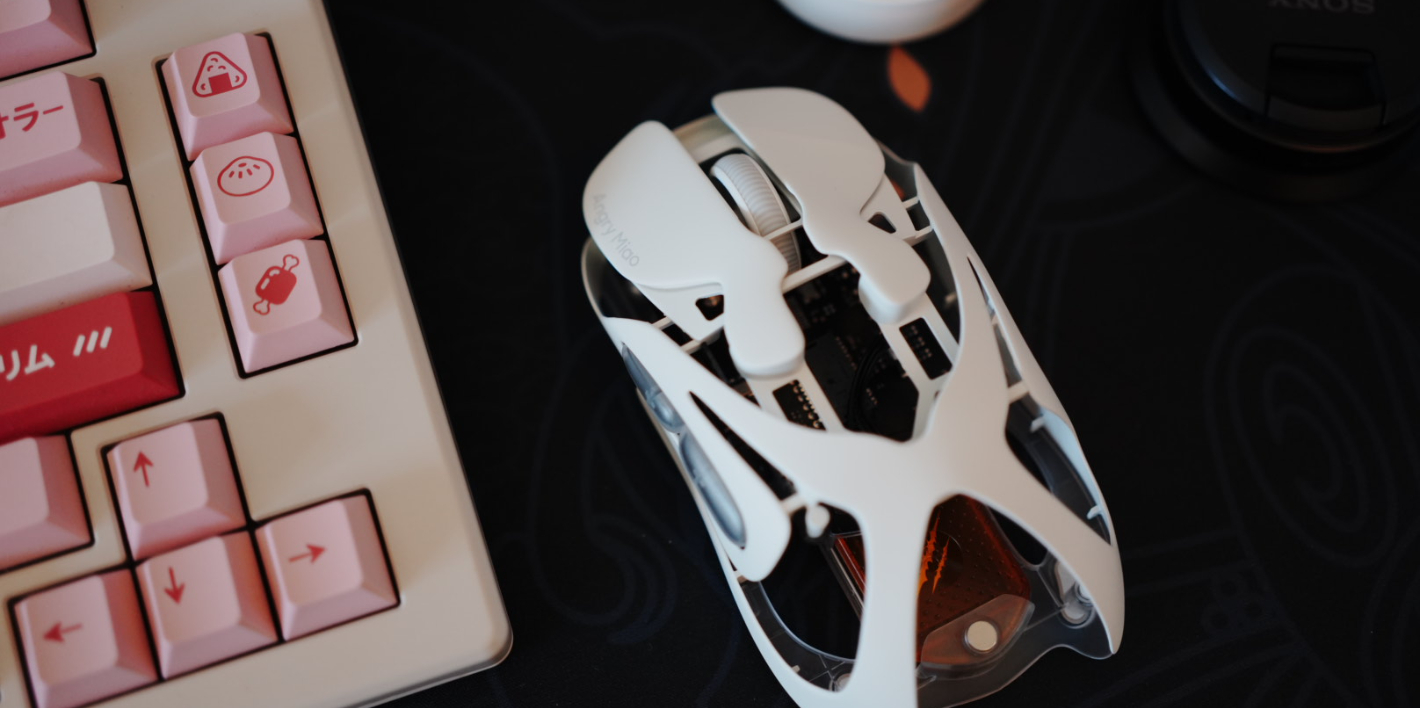
I put the Angry Miao Infinity Mouse in first place because it’s my personal choice for hardware of the year. I also want to give a quick shout-out to Tao—back in early August, he managed to snag the new Cloud White version as a birthday gift for me. Nearly five months have passed, and every time I use the Angry Miao Infinity Mouse, I still get that “can’t put it down” feeling.
The biggest difference between the Angry Miao Infinity Mouse and a typical mouse lies in its battery-swap design (something NIO car owners will probably appreciate even more). Angry Miao designed two hot-swappable magnetic batteries: one attaches to the mouse for normal use, while the other attaches to the 2.4G receiver module and charges in real time. Swapping batteries takes less than two seconds from start to finish, so you never have to worry about the mouse running out of power. I’d go so far as to call it a “genius-level design.”
Beyond the core battery-swap system, the design of the Angry Miao Infinity Mouse also hits my aesthetic sweet spot. Inspired by the Cloud White colorway from Isle of Dogs, it features a UV-coated finish and a hollowed-out magnesium-aluminum alloy body. Combined with its ultra-light weight of 49 grams (39 grams in wired mode), it delivers top-tier performance in both looks and hand feel.
If you’re considering the Angry Miao Infinity Mouse for gaming, there’s no need to worry about performance. It’s equipped with the PAW3950 sensor, offering 30,000 CPI native sensitivity, 750 IPS tracking speed, and 50G acceleration. The 2.4G receiver supports up to an 8000 Hz polling rate. As for the switches, it uses TTC Orange Dot optical switches V2, with the switch lifespan extended to hundreds of millions of clicks. The Angry Miao Infinity Mouse also supports the AM Master driver platform, allowing you to customize button mapping, RGB lighting effects, DPI settings, macros, and more.
NuPhy Node 75
Because my daily workflow involves both a desktop computer (for work) and a MacBook Air (for personal use), I needed an external keyboard that could connect to two machines at the same time. This not only saves what is already limited desk space, but also avoids the hassle of constantly swapping keyboards. Last month, I happened to see someone on Weibo sharing NuPhy’s low-profile keyboard, the Node 75. Both the price and the design fit my needs perfectly, so I picked it up for 325 RMB.
The biggest drawback of the WOB Rainy75 I used before was its weight. It was inconvenient to move around on the desk and couldn’t be placed on top of the MacBook Air’s keyboard area for use. As a result, I was constantly picking up and putting away this heavy chunk of aluminum, occasionally bumping into other items on the desk in the process. The NuPhy Node 75, on the other hand, is made entirely of plastic, which naturally makes it much lighter and a perfect fit for my needs. It’s easy to pick up and store, and in daily use I simply place it directly on the MacBook Air’s keyboard area, saving desk space. Even when I occasionally need to use Touch ID, lifting such a lightweight keyboard is effortless. I connect it to the MacBook Air via Bluetooth and to the desktop via the 2.4G receiver, switching quickly with FN + number keys, which is very convenient. One thing worth mentioning is that switching to 2.4G mode is almost instantaneous, with virtually no latency. Switching to Bluetooth takes about one to two seconds to reconnect, which is still acceptable.
I chose the low-profile version of the NuPhy Node 75 (Super Red switches, 45 gf). The typing feel is well-balanced: quiet enough for office use, yet not as soft and bouncy as the low-profile optical switches on the ROG Azoth RX LP. The retro white design is also very clean and understated, making it low-key enough for an office environment without drawing too much attention from colleagues. The dot-matrix design on the top of the keyboard is another highlight. The dot-matrix light on the left indicates the currently connected device, while the dot-matrix area on the right can be slid to adjust the system volume. It’s genuinely practical rather than a gimmick.
Anker Capsule Power Bank
As iPhone batteries have grown larger and battery life optimization has continued to improve, I’ve found that iPhones released in recent years can basically cover a full day of use for me. As a result, power banks have become more of an optional accessory—something I only really need for occasional business trips or travel. A product in the form factor of the Anker Capsule Power Bank fits this kind of usage perfectly.
This Anker power bank measures 77 × 36 × 25 mm and weighs just 100 grams, so it’s no burden at all even when carried in a pocket. The 2900 mAh capacity isn’t enough to fully charge an iPhone, but it’s more than sufficient for an emergency top-up. It also comes with a built-in Type-C connector, allowing you to plug it in and charge directly, eliminating the need to carry a cable and avoiding the awkward “dangling power bank” situation.
Mac mini M4
Since its launch last year and its subsequent inclusion in national subsidies, the Mac mini M4 has enjoyed an excellent reputation. I bought the “16 GB + 256 GB + 10-gigabit Ethernet” version earlier this year for around 4,000 RMB, which I already thought was a great deal. I didn’t expect that during the 618 shopping festival, with national subsidies and education discounts stacked together, the price would drop to below 3,000 RMB—arguably the most cost-effective Apple product ever.
Turning to the Mac mini M4 itself, performance upgrades are clearly the main highlight. With the M4 chip and a 16 GB base memory configuration, the Mac mini has transformed from an entry-level macOS experience machine into a standard Mac that’s powerful enough for most people. On top of that, the Mac mini M4 now supports HDMI-CEC and HDMI 2.1. For LG C4 users like me, this means enjoying a 4K HDR display with a 120 Hz variable refresh rate, along with synchronized sleep and wake control between devices—an excellent overall experience.
Pixel 9 Pro
The Pixel 9 Pro I bought in January may be the most emotionally conflicted piece of tech I’ve owned this year. In fact, before buying a Pixel, I had already managed my expectations—and that’s also why, despite being a long-time Google fan, I had put off buying a Pixel phone for so many years. Next, I’ll talk in detail about my love-hate relationship with the Pixel 9 Pro.
First of all, a major reason I finally decided to buy the Pixel 9 Pro was its design. In my view, this is the first generation where Pixel can truly be called “good-looking.” I don’t like large foreheads, and I don’t like rear fingerprint sensors. While it’s true that the Pixel 9 series’ display (uniform narrow bezels on all four sides, flat panel) and frame design (flat edges, polished metal) look very similar to the iPhone 14 Pro series, good design often converges. At the same time, the Pixel 9 Pro is lighter and has more rounded edges, making its in-hand feel far superior to Apple’s Pro lineup.
Second, stock Android is undoubtedly the core selling point of this phone. On the Pixel 9 Pro, I get to experience the latest features and UI interactions of pure Android. Every time I unlock the phone, there’s a refreshing, almost uplifting feeling. Gemini deserves special mention here: the leading model combined with deep, system-level integration turns Pixel phones into a benchmark for AI hardware in today’s market. The only issue is that, as someone deeply invested in the Apple ecosystem, it’s very difficult for the Pixel to become my primary phone. The lack of seamless sharing, the inability to pair with an Apple Watch, and the absence of certain ecosystem-exclusive apps are all very real constraints. Of course, this isn’t a problem with Pixel or Android itself, but rather an ecosystem choice dilemma faced by me as a regular consumer.
Finally, there’s the unavoidable and unsolvable issue of localization. As everyone knows, Pixel has never officially entered the mainland Chinese market, so 5G doesn’t work properly. Google also tightened restrictions even further in an October system update this year. Initially, with help from @Clyde, I enabled 5G connectivity through Root and tools like PixelIMS and Network Signal Guru. Later, I managed to “keep it alive” using Shizuku and an IMS plugin. The problem is that 5G enabled through these methods is unstable, and I frequently encountered dropped data connections and call failures. The final straw for me was emergency calling: once, after getting into a traffic accident while driving and needing to call the police, I discovered that my Pixel couldn’t dial emergency numbers like 110 or 122 at all.
As a result, the Pixel 9 Pro became my favorite phone—yet one I rarely use. Eventually, I restored it to factory settings, with no OEM unlocking and no Root. This way, I can normally use features like Google Wallet and Pixel Studio, and easily update to the latest version of stock Android without flashing. I take the Pixel 9 Pro with me when traveling abroad, using it for contactless payments, navigation, photography, and public transportation. But once I’m back home, the Pixel 9 Pro’s greatest role may simply be serving as an emotional connection between me and Google.
Clothing & Accessories
This year can be considered the first year in which I seriously reflected on my personal style, everyday outfits, and systematically learned about fabrics, materials, and functional use cases. With Tao’s help, I carried out a “carpet-bombing” cleanup of my wardrobe, recycling everything that didn’t fit, was worn out or faded, or had strange, mismatched styles. What remained were only the pieces I genuinely like and am willing to wear. When adding new clothing, in addition to brand, price, and fit, I also consider fabric characteristics and how each piece fits into an overall layering system. Using the “three-layer clothing system” as a foundation, I make targeted additions to fill specific gaps.
Watch the Wind — Three Pieces
I’ve actually known for a long time that Uncle Bo has been running his own clothing brand, but due to price and design considerations, I never pulled the trigger. During this year’s Singles’ Day sale, however, a post he shared on social media gained some traction and reminded me of the brand. I checked out this year’s releases on the Taobao store and found a few pieces that suited me quite well, so I ended up ordering three items over time. None of these are from this autumn/winter’s new releases, though—I haven’t managed to snag anything since Drop 5. Hopefully Uncle Bo will produce more in the future.
The piece I’m most satisfied with is the WtW half-placket pullover fleece mid-layer. It uses a 160 gsm lightweight fleece fabric that balances warmth and lightness very well. I especially like the half-placket collar design: it looks distinctive, and the snap closure is more convenient than either zippers or buttons.
The second piece is the WtW stretchable, machine-washable merino wool fitted base layer. The fabric is composed of 96% merino wool and 4% elastane, and with a fiber diameter of 19.5 microns, it’s very comfortable even when worn directly against the skin, without the itchiness commonly associated with regular wool. In terms of fit and design, this piece is more stylish than comparable products from Icebreaker, and it works fine even when worn on its own—unlike Icebreaker pieces, which tend to look more like thermal underwear. That said, the construction quality isn’t as good as Icebreaker’s. After one hand wash, I noticed significant seam tape peeling at the edges. At 350 RMB, it’s about 130 RMB cheaper than the Icebreaker Oasis 200, so it really comes down to personal trade-offs.
The third piece is the WtW garment-dyed lightweight dynamic insulated half-placket sweatshirt. It uses the increasingly popular PrimaLoft Active Evolve fabric (95 gsm version) from the past couple of years. As a mid-layer, it’s impressively lightweight while still offering decent warmth. For me, though, the half-placket design on this piece feels a bit restrictive, and visually it’s not as appealing as the half-placket pullover fleece mid-layer mentioned earlier.
Lululemon ABC Flannel Elastic-Waist Pants
Lululemon is a brand that offers almost no value at full retail price, but once you pick things up at deep discounts during shopping festivals, it becomes a clear “worth it.” After reorganizing my wardrobe this year, I realized that all the pants I had left were either too thick or too thin—nothing suitable for temperatures around 10°C. That’s when I set my sights on these Lululemon ABC flannel elastic-waist pants. I paid 479 RMB after the Singles’ Day discount; the regular price outside of promotions is 1,080 RMB. Even more interestingly, this pair is actually a new release for the winter of 2025.
In terms of fit, these pants lean toward a business-casual style. They’re made from brushed flannel fabric with a small amount of wool added, giving them a soft and comfortable feel. When worn directly against the skin in winter, they don’t have that “instant chill” sensation. I especially like wearing them on workdays: the relaxed cut is particularly important for long hours of sitting at a desk, and they’re also very easy to style. The “Heathery Black Pine” color looks more like black indoors, but under bright outdoor light, it takes on a subtle dark green tone.
OriginalGear Evolve Multi-Purpose Pants
In winter in the Jiangsu–Zhejiang–Shanghai region, I try to get by with just a single pair of pants. Only when temperatures drop to around freezing and I really can’t take it anymore do I consider adding long underwear. The biggest problem with long underwear is that it’s hard to balance comfort, warmth, and looseness. That’s why the OG Evolve pants—ultra-light yet warm—completely changed my winter pants-wearing habits.
The OG Evolve multi-purpose pants use PrimaLoft Active Evolve fabric (95 gsm), with a CLO value above 0.55. The entire pair weighs around 100 grams, almost perfectly balancing lightness, thinness, and warmth at the same time. The material is also very skin-friendly, making it comfortable to wear directly against the skin.
Of course, PrimaLoft Active Evolve isn’t without its drawbacks. Its biggest weakness is wind resistance—or rather, the lack of it. Even indoors, walking around at home wearing only the Evolve pants, I can feel a noticeable chill on my legs. Because of this characteristic, the Evolve pants are actually better suited for layering. At home, I usually throw on a pair of lounge pants over them. Outdoors, I layer an Arc’teryx Gamma Pant on top for wind protection. This combination easily fends off the “winter magic attacks” of the Jiangsu–Zhejiang–Shanghai region. If I could offer one suggestion to OG’s founder, it would be to make the pants slightly longer in the next iteration.
Speaking of PrimaLoft Active Evolve, some of you might be curious how it compares to Polartec Alpha Direct. I actually own a pair of Alpha Direct pants from another domestic brand. The cut and overall weight are similar to the OG Evolve pants, but the price is nearly double. To put it simply: when stationary, their warmth is about the same; when moving, Alpha Direct has better breathability; in terms of comfort, PrimaLoft Active Evolve feels more skin-friendly. For me, that makes PrimaLoft Active Evolve the more cost-effective choice.
Smartwool Merino Wool Socks
I actually mentioned Catman’s wool socks in last year’s annual recommendations, but after wearing them for a while, I realized they have two major drawbacks. One is poor breathability—they make my feet sweat easily. The other is that once my feet sweat, they become very slippery. As a result, they’ve basically been demoted to winter house socks. Still unwilling to give up, I picked up a pair of the famously well-regarded Smartwool socks while shopping at Paddy Pallin in Melbourne this year, just to hit the free-shipping threshold. There were so many styles that I didn’t do any research and simply chose one at random.
The first time I wore them after returning home, I was convinced that Smartwool truly deserves its reputation as the “god of wool socks.” First, the fit is excellent—the socks conform well to the shape of the foot, and the wool isn’t itchy at all. They’re comfortable and snug, forming a stark contrast with Catman’s wool socks. Second, Smartwool socks are anti-slip. Since they’re designed specifically for outdoor activities, this is something you don’t have to worry about at all. Finally, they’re sweat-absorbing and odor-resistant. To test this, I wore the same pair for five consecutive days, and there was genuinely no noticeable odor (at a normal distance—not by sticking my nose right up to them). The only issue is the price: at full retail, they’re hard to justify. When they’re discounted by half, though, they’re well worth buying via overseas shopping.
Montane PROTIUM XT Fleece
To be honest, I hesitated for quite a while about whether to include this piece. Before Links and Li Xian released their hiking video in Kulagangri, this “British Maotai” brand was still relatively niche in the outdoor world. But starting from the third day after the video went live, the “Li Xian same model” effect kicked in. The PROTIUM XT fleece and the “custard bun” KAMEN XT down jacket quickly sold out.
My original reason for buying this fleece was to fill a gap in my mid-layer lineup—a hooded fleece. My Patagonia R1 Air is a fleece jacket, and on windy winter days, I really want a warmer hood when heading out. A hooded fleece fits this scenario perfectly.
Once I had it in hand, I realized the PROTIUM XT fleece was much thicker than I expected—thicker even than Tao’s Patagonia R2 CrossStrata—yet it costs only about half to two-thirds of the price. This means that in addition to serving as a mid-layer, the PROTIUM XT can also be worn directly as an outer layer when the wind isn’t too strong. One morning in Zhejiang, with temperatures around 3°C, I tried heading out wearing a combination of “PROTIUM XT fleece + a POLARTEC PolarSport fleece sweatshirt + Icebreaker Oasis 200 merino long-sleeve base layer.” The warmth and insulation were excellent—I even broke a sweat after finishing a bowl of soy milk for breakfast.
As a British brand, Montane is actually quite reasonably priced in the UK. Some colorways of the PROTIUM XT fleece sell for as little as £65 on third-party platforms, making it possible to get one at a relatively low price through overseas shopping or purchasing agents. Prices on the domestic Tmall flagship store are slightly higher than on Montane’s UK official site, but still well within a reasonable range—unlike some other popular outdoor brands where the price gap between domestic and overseas markets is huge.
As for downsides, personally I find Montane’s tailoring and finishing not quite on par with top-tier brands like Arc’teryx or Patagonia. That said, considering the price, I’m perfectly willing to accept this relatively minor difference.
Home & Daily Essentials
Tanita Body Weight Scale
I’ve actually bought quite a few so-called smart body fat scales. Setting aside build quality and data accuracy, their “smart” features basically boil down to connecting to various apps and giving you a health analysis based on weight and body fat. Without exception, those apps are all incredibly annoying—crammed with shopping malls, communities, and check-in features—and syncing data to HealthKit is also a hassle.
So I decided to go back to basics. No more body fat measurements, no more health diagnostics, no more data syncing. I just wanted a simple, straightforward scale. After some searching, I ordered this Tanita scale, and after using it for a year, I’ve been very satisfied. First, the design is extremely minimalist—completely different from those smart body fat scales—and it blends in nicely at home without looking out of place. Second, the all-plastic body means that stepping on it barefoot in winter doesn’t feel icy cold. By contrast, smart body fat scales usually have four metal contact areas, and stepping on those barefoot in low temperatures is genuinely freezing. Finally, saying goodbye to all those bizarre apps also means saying goodbye to data anxiety. All I need is a simple number showing my weight.
Hero Thunder Distribution Tool (WDT Needle)
I’ve always been pretty laid-back when it comes to coffee distribution, so channeling during extraction was almost inevitable. I figured I’d buy a cheap distribution needle—basically just a few steel wires stuck into a cork. To be honest, the results were terrible, and it still couldn’t achieve even distribution. Of course, there are plenty of expensive options on Taobao. Press down on them and the needles rotate automatically, achieving very even distribution by design, since vertical movement is eliminated and only horizontal concentric rotation remains. But at around 300 RMB, I really couldn’t bring myself to buy one.
So instead, I found a lower-cost alternative in the same category. It replaces the downward pressing action with manual rotation, costs only 62 RMB, and works very well—one of those results that’s immediately intuitive and easy to understand.
Feather Double-Edge Razor Blades
I might be one of the few people left who still sticks with a manual razor. Since college, I’ve used various Gillette razors, but honestly, they were never that great. Around 2018, on a former colleague’s recommendation, I bought a Rockwell razor on Amazon. It’s very old-school, with replaceable blades, and it shaves smoothly and cleanly. However, after Amazon exited the Chinese market, I could no longer buy replacement blades for the Rockwell.
That changed this year when I found Feather’s Tmall flagship store. Seeing that five blades cost just 30 RMB, I decided to give them a try. To my surprise, these Feather double-edge blades fit my Rockwell razor perfectly and perform beautifully—smooth and clean shaves, a perfect replacement for the original Rockwell blades. At this rate, it looks like I’ll be able to use this Rockwell razor for the rest of my life.
Qinghexun Air Purifier Filters
After moving into a new office building last year, I was worried about formaldehyde, so I moved one of my Xiaomi air purifiers from home to my desk and kept it running 24/7. The problem is that official Xiaomi filters are too expensive. I tried buying third-party filters on Xianyu—they were cheap, but I never really felt at ease using them. Later, I happened to come across the brand Qinghexun on Xiaohongshu. I learned that it’s a subsidiary of Beijing Hengjianlun, a strategic partner of Toray in Japan, with its own dust-free production facilities and seven filter production lines. Their filters are compatible with various Xiaomi air purifier models and use Toraymicron triple-protection filter paper from Japan’s Toray. That convinced me to place an order on Taobao.
Once the filters arrived, I could tell immediately that even the packaging was on a completely different level compared to the small workshop products I’d seen on Xianyu. The filter itself looked well made, and the RFID chip was perfectly recognized by my Xiaomi air purifier. During the Double 12 sale, I stocked up on two more Pro All-in-One flagship filters, which support antibacterial, anti-mold, antiviral, anti-allergen functions, as well as formaldehyde removal. Calculated out, each filter cost just 86 RMB.
Xiaomi Air Circulation Fan
Because my apartment is on the top floor and the bedroom faces south, it cools down very slowly in summer even with the air conditioner on. As someone with fairly high demands for a good sleep environment, I decided to add a circulation fan to address the persistently high indoor temperature. After some comparison, I chose the Xiaomi Air Circulation Fan for three reasons: first, the design is quite minimalist and doesn’t look out of place in the bedroom; second, it runs very quietly—when sleep mode is enabled at night, it’s almost inaudible; third, it can be integrated into HomeKit via Home Assistant and the official Mi Home plugin, allowing me to turn the air conditioner and fan on or off together with a single tap in the Home app or via Siri.
As a circulation fan, the Xiaomi Air Circulation Fan also met my expectations perfectly. On the one hand, it helps disperse the cold air blown out by the air conditioner, preventing it from quickly sinking to the floor. On the other hand, it directly lowers the surface temperature of the body. With the low airflow in sleep mode, there’s no need to worry about getting chilled.
Food & Wellness
Yourongnaida Coffee Beans
Ever since I downed two cups of Yourongnaida’s Saturday-limited cold brew (Panama Altieri Mimosa Geisha) in one go back in June, Yourongnaida has basically supplied almost all of my coffee beans for the second half of the year. I checked my Taobao order history and realized that since June, I’ve bought 19 bags of Yourongnaida beans—safe to say I’m a loyal fan.
For espresso blends, you can buy the seasonal limited editions without overthinking it. They’re slightly more expensive than the regular blends, but the quality is consistently high. I’ve bought everything from the spring and summer editions all the way through the fall and winter ones, with multiple repeat purchases for each season—never a miss. For pour-over beans, I recommend a cost-effective option with a very distinctive flavor: Colombia Milan Estate Caturra anaerobic washed. It works well for pour-over and SOE Americanos. The first time I tried this bean was at Slab Town, where I ordered a combo featuring it—the hot Americano left a particularly strong impression. I won’t recommend the expensive beans, because expensive beans are almost always good, and don’t really need recommending.
Code Black Coffee Beans
For international beans, I’d like to recommend the Australian brand Code Black. When Tao and I were in Melbourne, we visited a Code Black café in person, and both the milk-based drinks and cold brew were excellent. So when I came back to China, I brought home a bag of the Santuario Project, a Colombian SOE. I’ve used it for Americanos, pour-over, and cold brew, and it’s been great every time—so good that even Tao, who usually doesn’t like black coffee, really enjoyed it.
Later on, I bought another bag through an Australian proxy: Code Black’s Ex-Wife espresso blend. It’s a blend of beans from Brazil, Guatemala, and Ethiopia, and the overall impression is very balanced. It works equally well for milk-based drinks and black coffee. If it weren’t for the long proxy shipping times, this would be a blend I’d repurchase endlessly.
Guanghua Silver Rice Vermicelli
As non-Cantonese, Tao and I learned about this rice vermicelli from Houpi Orange. After trying it once, there was no turning back—we’ve been repurchasing it ever since.
In terms of texture, silver rice vermicelli is quite similar to the rice noodles from my hometown. However, it has a slightly rougher bite, and even if you cook it longer, that texture remains. This is completely different from the softer, chewier texture of my hometown’s rice noodles. As for cooking methods, it works well boiled or stir-fried. I usually boil it—it cooks very quickly, is low in calories, yet surprisingly filling. This makes it an excellent staple for fat-loss meals. Just add some beef and vegetables, plus half a spoon of garlic crisp oil, and the scale starts dropping fast. For storage, just keep it in a cool place. Since it’s dehydrated and vacuum-sealed, there’s no need to worry about spoilage. One pack per meal—just cut it open and toss it into the pot.
Midea Dishwasher UP2Pro
Tao and I had wanted to buy a dishwasher for a long time, but our old apartment didn’t have space reserved for a built-in model, and countertop models often involve complicated plumbing and drilling, so we kept putting it off. This year, however, considering the upcoming arrival of a baby and the need to thoroughly clean and sterilize tableware and baby bottles, we finally decided to get one. After looking around, we chose the Midea UP2Pro dishwasher. With national subsidies and various discounts, it cost less than 1,400 RMB, and it supports three installation methods: countertop, semi-built-in, and wall-mounted.
Before the installer arrived, we cleared off the kitchen countertop and made space next to the sink, where there happened to be a power outlet. When the installer came, he told us that drilling into a stainless-steel sink is quite difficult and suggested drilling into the marble countertop instead. We agreed. In the end, the setup involved drilling a single hole for the inlet hose, while the drain hose was inserted directly into a small compartment of the sink, saving us from having to drill a second hole.
The Midea UP2Pro supports features like one-touch baby-care sterilization washing and one-touch hot-air drying. On the control panel, you can directly select modes such as fruit and vegetable wash, baby-care wash, quick wash, intensive wash, and standard wash. In the Midea app, there are additional options like eco wash, self-cleaning, and seafood wash. In daily use, we usually give the dishes from all three meals and our coffee cups a quick rinse, load them into the dishwasher, and after dinner run a “quick wash,” which takes 30 minutes, followed by up to two hours of drying as needed. We’re extremely satisfied with both the washing and drying results—the dishes come out very clean, with almost no water marks. Ever since we bought the Midea UP2Pro, our willingness to cook at home has increased significantly. It ensures food safety, saves money that would otherwise go toward eating out or ordering takeout, and even helps us improve our cooking skills—truly a win on all fronts.
Decathlon EL520 Elliptical Trainer
Whenever Tao and I go to the gym for cardio workouts, the elliptical is always our first choice. So when it came time to choose home fitness equipment, an elliptical was our top priority as well. Compared with a treadmill, an elliptical takes up less space and weighs less, making it easier to transport and install. After considering factors such as stride length, flywheel weight, and brand after-sales support, we ultimately chose the Decathlon EL520 elliptical trainer. Once we had narrowed it down, we went straight to a Decathlon brick-and-mortar store to try it out. After the trial, we were very satisfied with the stride length, stability, and smoothness, so we placed an order on Taobao.
The morning after placing the order, the unit was delivered directly to our home, and in the afternoon an installer came to set it up. The entire installation took about 30 minutes. We’ve been using it ever since without any issues. Using an elliptical at home is probably one of the most suitable forms of exercise: it doesn’t disturb downstairs neighbors, and you can work out while watching TV, which greatly reduces the boredom of cardio. It’s now become a daily must-do activity for both Tao and me.
That wraps up my 2025 annual favorites. If you have any questions or other recommendations, feel free to share and discuss them in the comments.
The digital renminbi will enter the era of digital deposit currency
Meta acquires Manus
GOG co-founder acquires the GOG platform
More than 20% of videos recommended by YouTube’s algorithm to new users are AI-generated junk
ACCA cancels online exams to combat cheating with AI tools
Fujifilm to begin shipping 40 TB magnetic tapes next January
LG releases UltraGear evo monitors
Rumors You Can Just Glance At
The digital renminbi will enter the era of digital deposit currency
On December 29, the People’s Bank of China released the Action Plan on Further Strengthening the Management and Service System of the Digital RMB and the Construction of Related Financial Infrastructure. At the institutional level, the plan clarifies that the digital RMB will move from the era of digital cash into the era of digital deposit currency. A new-generation measurement framework, management system, operating mechanism, and ecosystem for the digital RMB will officially come into effect on January 1, 2026.
Under the new institutional arrangements, the digital RMB held by customers in commercial bank wallets will constitute account-based liabilities of commercial banks, marking the transition of the digital RMB from a cash-based 1.0 version to a deposit-currency-based 2.0 version. Banking institutions will pay interest on the balances of real-name digital RMB wallets in accordance with self-regulatory agreements on deposit interest rate pricing; banks will be able to independently conduct asset–liability management for digital RMB wallet balances; and deposit insurance will provide the same level of statutory security protection as for traditional deposits. Source
Meta acquires Manus
On December 29, Meta announced the acquisition of AI startup Manus. Since releasing its general-purpose AI agent Manus earlier this year, the company has processed nearly 147 trillion tokens and created over 80 million virtual computers. Following the acquisition, some Manus team members will join Meta, while Manus will continue to operate as an independent company based in Singapore, and its services will remain available for separate purchase. Source
GOG co-founder acquires the GOG platform
On December 29, GOG and CD PROJEKT co-founder Michal Kiciński fully acquired the GOG platform from CD PROJEKT. GOG is a game distribution platform known for its DRM-free philosophy, founded in 2007 by Marcin Iwiński and Michal Kiciński and officially launched in 2008. GOG will continue its partnership with CD PROJEKT, and CD PROJEKT RED titles will remain available on GOG. Michal Kiciński stated that he hopes to preserve GOG’s original vision—no forced bundling, no mandatory platform lock-in—so players can truly feel ownership of their games. CD PROJEKT will shift greater focus toward creating high-quality RPG titles. Source
More than 20% of videos recommended by YouTube’s algorithm to new users are AI-generated junk
According to a report by The Guardian on December 27, video-editing company Kapwing analyzed the top 100 YouTube channels across various countries—around 15,000 channels in total—and found that 278 of them publish only AI-generated junk content (“AI slop”). These channels have collectively amassed 63 billion views, 221 million subscribers, and generate an estimated $117 million in annual revenue. The study also tested recommendation feeds using brand-new accounts and found that among the first 500 videos recommended by YouTube, 104 were AI junk—about one-third of which were low-quality “brainrot” content. Source
ACCA cancels online exams to combat cheating with AI tools
According to the Financial Times, the Association of Chartered Certified Accountants (ACCA) announced that starting in March, online exams will be canceled. Except in special circumstances, candidates will be required to take assessments in person. ACCA introduced online proctoring during the COVID-19 pandemic to accommodate candidates with special needs, but with the rapid advancement of AI tools, cheating methods have increasingly outpaced ACCA’s ability to monitor and control them, ultimately leading to this decision. In recent years, accounting industries in multiple countries have already seen cheating scandals. The Financial Times also learned through interviews that some candidates have indeed photographed exam questions and sent them to AI chatbots to cheat during exams. Source
Fujifilm to begin shipping 40 TB magnetic tapes next January
Fujifilm has announced that it will begin selling the FUJIFILM LTO Ultrium 10 (40TB) data tape—LTO-10 (40TB)—starting in January 2026. The storage medium can hold 40 TB of uncompressed data, with a maximum capacity of up to 100 TB when compressed. Compared with the previous-generation LTO-10 (30TB), the recommended operating temperature range of LTO-10 (40TB) has been expanded to 15°C–35°C, and it can withstand up to 80% humidity at temperatures between 15°C and 25°C. According to Fujifilm, sales of magnetic tape as a storage medium have grown by around 10% annually since 2020. Source
LG releases UltraGear evo monitors
On December 26, LG announced its new high-end gaming monitor lineup, UltraGear evo, with physical units set to be showcased at CES 2026. The lineup includes three models: the 39-inch 5K2K (5120×2160) OLED monitor 39GX950B, the 27-inch 5K MiniLED monitor 27GM950B, and the 52-inch 5K2K 240Hz monitor 52G930B. The 39-inch and 27-inch models feature exclusive functions such as on-monitor 5K AI upscaling, AI-based scene and audio optimization. The 27-inch model is equipped with 2,304 local dimming zones, designed to minimize haloing effects commonly seen on high-resolution MiniLED displays. Source
Rumors You Can Just Glance At
On December 29, Chery responded to Yicai and denied rumors of a partnership with Dreame to launch the Jetour Zongheng G700 in the first quarter of 2026. Source
Samsung published a post announcing plans to integrate Google Photos into its Samsung AI TV lineup, allowing users to view their photos directly on the TV. Source
Lenovo released an update for the Legion Go handheld, version 1.3.4.9, enabling the device to gain the Xbox full-screen experience feature that the ROG Ally supported at launch. Source
SoftBank announced on December 29 that it will acquire data center investment firm DigitalBridge for $4 billion. Source
Welcome to this edition of Pi Review. You can use the table of contents to quickly jump to the sections you’re interested in. If you’ve discovered other interesting apps or topics you’d like us to cover, feel free to join the discussion in the comments.
New Apps Worth Paying Attention To
While SSPAI has long been committed to discovering and introducing high-quality apps across platforms, there are still many excellent apps—impressive in design, functionality, interaction, and overall experience—that we haven’t yet covered. Some may be long-standing apps, others newly released. We’ll be introducing them to you here.
Powo: Hang a Photo Wall on Your iPhone Home Screen
Platform: iOS
Keywords: photo wall, widgets
@ElijahLee: Powo lets you turn a curated collection of photos into a desktop-style photo wall and place it directly on your iPhone Home Screen, so you can revisit your favorite memories without even opening the app.
Creating a photo wall with Powo is very straightforward. The app offers five photo wall templates to choose from. Simply go to the Photos tab, select the images you want to “hang” on the wall, and you’re done. Each photo is framed with a Polaroid-style border, creating a realistic, skeuomorphic look.
The photo wall also comes with a wide range of decorative tools. Beyond photos, you can freely add figurines, stickers, posters, captions, holiday elements, ticket stubs, and more. If you want to add your own custom decorations, that’s easy too. The customization feature allows you to select images from your system library and instantly turn full-size photos into stickers, vinyl records, CDs, and other decorative elements, all with impressively realistic results.
Powo also offers powerful freeform editing and layout options. You can customize the background, colors, and border styles of your photo wall—whether you’re aiming for a felt-board look to suit close relationships, or a dark-toned style better suited for photography showcases. Photos themselves come in multiple styles, with mounting options like push pins or small wooden clips. Any photo or decorative element on the wall can be tapped to adjust its size and hanging angle, making the overall effect feel even more lifelike. If you’re not satisfied with how photos overlap, the app even provides layer-order controls.
Once your photo wall is complete, you can add it to your iPhone Home Screen via a Powo widget and enjoy your memories without opening the app. Of course, you can also export the photo wall within the app to save it locally or share it on social media.
Powo is available for free on the App Store. Most features are usable at no cost, but the free version is limited to creating one photo wall, with up to five photos per wall, and does not support customization features. Upgrading removes these restrictions, with pricing at CNY 3 per month, CNY 18 per year, or a one-time purchase of CNY 38.
Mental Math: Practice Calculations Anytime, Anywhere
Platform: Android
Keywords: calculation, mathematics
@Peggy_: After starting work, aside from routine lesson reviews, I’ve found myself using my brain far less than before. For a while, I turned to sudoku to pass the time and keep my mind active. The app I’m introducing today—Mental Math—can serve as another simple tool for mental exercise. Mental Math is a puzzle-style app whose core function is to generate arithmetic problems. Because the types of calculations, difficulty levels, and even the number of questions can all be freely customized, it works both as a brain-training game for adults and as a practical tool for elementary school students to practice their calculation skills.
After opening the app, the first step is to set the practice mode. There are two options: a fixed number of questions or a timed session. The number of questions can be set from a minimum of 10 to a maximum of 50, while timed sessions range from 1 to 5 minutes. Once the mode is selected, you can further design the calculation types. Available operations include addition, subtraction, multiplication, and division. Tapping an operator selects it, and dragging the slider on the right adjusts the difficulty—the larger the number, the more challenging the problems become. Perhaps in order to keep the app lightweight and the difficulty manageable, Mental Math does not offer mixed-operation questions.
After completing the initial setup, you can enter the quiz interface. Once all questions are finished, Mental Math provides feedback on the session, including total time spent, accuracy rate, and a list of questions with their answers. As you complete more exercises, the app aggregates your results and assigns an overall star rating.
Of course, if you’re just looking to do a few quick exercises out of boredom, you can choose Random Mode. The app will automatically generate 20 questions for you. However, since the difficulty in this mode is unpredictable, it’s not well suited for younger students.
So the next time you’re bored and about to open TikTok out of habit, you might consider doing a few calculations instead to keep your mind active. Or if you have children in the lower or middle grades of elementary school who need regular arithmetic practice, Mental Math is also a solid option. For kids, short sessions during spare moments—paired with instant feedback—can be an effective way to train.
You can download and try Mental Math via F-Droid. The app is completely free.
TranscribeX: A Local-First Power Tool for Speech Transcription
Platform: macOS
Keywords: text extraction, speech transcription
@化学心情下2: TranscribeX is a speech-to-text transcription tool for macOS. Compared with many transcription apps that rely on online AI models, TranscribeX’s biggest advantage lies in its fully local AI–based approach. All transcription is performed locally, meaning data is stored entirely on your device—ensuring a much higher level of data security and privacy.
In terms of functionality, TranscribeX offers multiple ways to capture audio, including importing audio and video files, recording directly, hooking into recording-type applications, and importing from sources like YouTube. On the model side, it supports Apple’s built-in intelligence models as well as locally downloaded large models. Supported transcription models include Whisper, NVIDIA Parakeet, and others.
To get started, you first need to set the default model and default transcription language under Transcription in the settings. Then return to the main screen and click Import to bring in the audio or video file you want to transcribe. In my case, I selected a two-hour YouTube video. From there, you simply wait in the transcription workspace until the progress bar completes.
TranscribeX splits the audio into multiple time segments and displays the transcribed text by segment. This allows you to start organizing and reviewing the completed portions immediately while the rest of the transcription is still running, significantly improving overall processing efficiency.
Once the transcription is finished, you can export the text in multiple formats, making it easy to continue working with it in other apps. You can also translate the transcribed text into other languages directly within the app.
In testing, transcribing a two-hour audio file took nearly one hour. This may partly be due to the limited performance of my M1 MacBook Air. Even so, overall accuracy was quite high, and the results were well suited for further editing, organization, and summarization.
You can download and use the basic features of TranscribeX for free from the official website. Purchasing the Pro version unlocks additional local models and a range of advanced features. Setapp users can access the paid version of TranscribeX directly.
Artwall: Turn Your Favorite Album Covers into Wallpapers
Platform: HarmonyOS
Keywords: wallpapers, music albums
@侧脸君: Artwall is a distinctive wallpaper app on the HarmonyOS platform, built around a clever idea—combining album artwork with wallpapers. With its unique image-processing algorithms, virtually any album cover can be transformed into a stunning phone wallpaper.
The interface and features are extremely simple. Just enter a song title or artist name, tap to view the album-cover wallpapers, and download them. At the moment, Artwall does not support setting wallpapers directly within the app—you’ll need to manually go to your gallery to set the image as your wallpaper.
Although Artwall doesn’t offer an option to choose wallpaper resolution, the resolution is tightly bound to the device being used. If you’re on a Huawei foldable device, the wallpaper resolution and layout saved for folded and unfolded states will differ accordingly.
A good idea naturally sparks the urge to share—especially when it satisfies both “showing off your wallpaper” and “sharing your music taste” at the same time. Just five days after its first release, more and more screenshots of wallpapers generated by Artwall have already begun circulating on social media, highlighting users’ distinctive musical preferences.
You can download Artwall from the HarmonyOS App Gallery. The app is completely free.
Summary Expressive: An AI Summarization Tool with Bilibili Support
Platform: Android
Keywords: video summarization
@大大大K: One of the most common uses of AI tools is solving the “TL;DR” problem. Whether it’s a text running thousands of words or images packed with information, AI can easily extract the key points. For video content, however, the mainstream approach still relies on subtitles or transcripts provided by video platforms, converting them into structured text for analysis. This is where a third-party tool like Summary Expressive comes in, feeding platform-generated transcripts to AI models.
Summary Expressive supports multiple content formats, including plain text, web links, images, Word documents, and PDFs. Simply select a file within the app and the AI can quickly generate a summary—tasks that are trivial for modern AI models and don’t even require separate conversion tools. Video summarization is different, though: subtitles and transcripts embedded by video platforms aren’t always standardized like documents or images, which is why Summary Expressive is particularly useful here.
Summary Expressive supports video links from YouTube and Bilibili. After pasting a video link, you can choose the desired length of the summary. In practice, longer summaries aren’t dramatically longer in word count, but they do provide more comprehensive coverage. Medium and short summaries tend to omit some details. The app also offers a text-to-speech feature for summaries, making it ideal for quickly reviewing video content while commuting.
Summary Expressive supports major AI model APIs both domestic and international, including OpenAI, Gemini, and DeepSeek. If you want to summarize Bilibili videos, you’ll need to log in to your Bilibili account in the settings beforehand.
You can now download Summary Expressive for free from GitHub and Google Play. The GMS version requires Google Play Services and downloads image-recognition models online, while the standalone version includes built-in models—choose whichever best suits your needs.
App Updates You Shouldn’t Miss
Beyond brand-new releases, many familiar faces on the App Store continue to iterate and evolve, adding features that are both interesting and genuinely useful. At SSPAI, we aim to help you filter through the updates that are truly worth your attention, so you can quickly stay up to date with the latest moves from apps and their developers.
PhotonCam 1.30 Update: A More Refined Editing Experience for Pro-Level iPhone Photography
Platform: iOS / iPadOS
Keywords: mobile photography
@Vanilla: iPhone photography enthusiasts may already be familiar with PhotonCam. While it’s not a household name, this third-party camera app stands out for its rich feature set, polished design, and well-thought-out interactions. At the same time, the developer actively embraces new system features and keeps pace with advances in imaging technology, allowing users to enjoy a more professional photography experience on the iPhone. Recently, PhotonCam rolled out version 1.30—its final major update of 2025—focused primarily on improving the photo-editing experience. Let’s take a look.
First, PhotonCam has updated the HDR display behavior of the focus indicator. More specifically, when adjusting depth-of-field effects on HDR photos within PhotonCam, you can tap the screen to position the focus indicator. In the new version, the area covered by the focus indicator is now rendered with HDR effects as well, making it easier to accurately select the desired focus point.
Second, the new version also refines the behavior of parameters such as fading and brightness adjustments, and introduces a setting that automatically falls back to SDR when the system crops HDR photos under strong lighting conditions. PhotonCam has also improved its launch speed, allowing you to enter shooting mode faster and capture moments more promptly. In addition, a new photo queue feature has been added: when shooting in burst mode or when photos require longer processing times (such as long exposures at night), PhotonCam displays a real-time counter on the gallery button in the lower left corner, indicating how many photos are currently being processed.
Finally, PhotonCam has introduced several new Lock Screen widgets, including options for wide-angle, telephoto, and ultra-wide lenses. However, the developer has clarified that tapping these widgets will only open the app, rather than directly switching to the corresponding focal length. It’s unclear whether this is due to system permission limitations or other design considerations.
That covers the main highlights of PhotonCam’s 1.30 update. If you’re looking for a full-featured third-party photography app on iPhone that balances both shooting and editing capabilities, PhotonCam remains a very solid choice. PhotonCam is available on the App Store under a “free download + in-app purchase” model, with subscription options priced at CNY 12 per month or CNY 68 per year, as well as a one-time lifetime purchase option for CNY 88.
Controller for HomeKit 8.1: Introducing State Logic
Platform: iOS / iPadOS / macOS / watchOS
Keywords: smart home, HomeKit
@Snow: Last week, Controller for HomeKit rolled out version 8.1, introducing an all-new States feature. Compared with the native Home app or Aqara’s “Scenes,” which apply a one-time batch change to device states, States enable Controller to support much more complex logical layering, allowing users to build far more flexible automation flows.
Within Workflows, you can create all kinds of state logic. For example: when “Dog at Home” is active, enable the balcony door sensor and alarms; when “Deep Cleaning” is active, pause all motion-triggered lighting rules; when “Guests Visiting,” keep all living room lights permanently on; when “Watching a Movie,” silence all notifications and alarms. On the surface, each individual state may look similar to a scene, but the real power lies in the fact that States not only support logical stacking, they can also be used as triggers, conditions, steps, or stop events within a wide variety of workflows.
For instance, if you’re about to do a deep clean after walking the dog, you can enable both the “Dog at Home” and “Deep Cleaning” states at the same time. This way, the lights won’t constantly change while you’re cleaning, and you’ll still receive notifications if your dog is causing trouble on the balcony. You can also use “Guests Visiting” as a workflow trigger: while turning on the lights to welcome visitors, the system can notify your family members and immediately lock the study door—preventing curious kids from wreaking havoc on your “collection.”
Back in version 7.4, when Hub Mode was introduced, Controller already brought external control links to non-HomeKit users. With this update, the new States feature also supports external control URLs. This means you can use local Shortcuts, or third-party workflow tools like IFTTT, to trigger vacation modes via calendar events or quickly change states from non-Apple devices.
After the 8.0 update, the developer restructured Controller’s pricing model. The original subscription / lifetime purchase option has been renamed Controller Essentials, with the lifetime price remaining unchanged. However, continued access to Hub Mode, Automate Workflows, and the new charting features now requires a Controller Plus subscription. Non-Essentials users must pay CNY 598 per year, while Essentials users can subscribe for CNY 228 per year, both with a 7-day free trial. The price barrier for Controller has clearly risen, so it’s recommended to try it out before deciding whether to commit to further payment.
Draft rules propose requiring AI chat services to issue timed exit reminders and intervene promptly in cases of addiction
Xiaohongshu responds to a public “call-out” from the Lijiang Old Town Culture and Tourism Bureau
Cyberspace Administration issues regulations to standardize the behavior of online influencer accounts
Honor releases the WIN series gaming smartphones
Plaintiff presents forged evidence bearing Doubao AI watermarks, receives a judicial reprimand
Beijing arbitration case clarifies that dismissal due to a role being replaced by AI constitutes unlawful termination
Rumors You Can Just Glance At
Draft rules propose requiring AI chat services to issue timed exit reminders and intervene promptly in cases of addiction
On December 27, the Cyberspace Administration of China released the Interim Measures for the Management of Anthropomorphic Interactive AI Services (Draft for Public Comment), soliciting public feedback. The draft defines “anthropomorphic interactive services” as products or services that use AI technologies to simulate human personality traits, thinking patterns, and communication styles, and engage in emotional interaction with humans through text, images, audio, video, and other forms.
Beyond basic content compliance, the draft proposes that anthropomorphic interactive services must not provide false promises that seriously affect user behavior or services that harm social relationships; must not harm users’ physical or mental health; and must not induce users to make unreasonable decisions through algorithmic manipulation, misleading information, or emotional traps. Service providers are required to have safety capabilities such as mental health protection, emotional boundary guidance, and dependency risk warnings, and must not take replacing social interaction, controlling users’ psychology, or inducing addiction and dependence as design goals.
The draft also proposes introducing a number of intervention mechanisms. For example, while protecting users’ personal privacy, providers should assess users’ emotional states and their level of dependence on products and services, and take necessary measures to intervene when extreme emotions or addiction are identified. When users explicitly express intentions to commit suicide, self-harm, or other extreme actions, the conversation must be taken over by human operators, and timely measures should be taken to contact users’ guardians or emergency contacts (required to be provided during registration for minors and older adults). In addition, if a user has been using the service continuously for more than two hours, dynamic reminders—such as pop-up notifications—should be displayed to prompt a pause; providers must not obstruct users from actively exiting the service. Providers should also prominently inform users that they are interacting with AI rather than a natural person.
The draft further brings training data under regulatory oversight. Providers should strengthen the management of training data, ensure that data sources are lawful and traceable, take necessary measures to safeguard data security, and prevent data leakage risks. Unless otherwise stipulated by laws or administrative regulations, or with separate user consent, providers must not use user interaction data or users’ sensitive personal information for model training.
Since the beginning of this year, international media have repeatedly reported on incidents linked to AI chat services. The U.S. Federal Trade Commission is investigating chatbot products from major AI companies, and some states have begun to legislate oversight. For example, in October, the Governor of California signed a series of restrictive bills targeting AI applications, aimed at strengthening protections for minors. These measures require AI products to verify users’ ages, remind users every three hours that they are interacting with AI rather than a human, and promptly intervene in cases involving suicide or self-harm.
Xiaohongshu responds to a public “call-out” from the Lijiang Old Town Culture and Tourism Bureau
According to a report by Observer Network, the Culture and Tourism Bureau of Lijiang’s Old Town District in Yunnan recently issued a public letter accusing the Xiaohongshu platform of failing to adequately fulfill its responsibilities in information oversight. The bureau claimed this had led to a large number of consumers using unsubstantiated “avoid-at-all-costs” posts to threaten wedding photography businesses into issuing refunds.
In response, on December 24 Xiaohongshu customer service stated that the platform provides public reporting channels and will handle confirmed violations in a timely manner. People familiar with the platform said that preliminary reviews have not found evidence of consumers fabricating experiences or engaging in other violations. The Old Town District Culture and Tourism Bureau later deleted the letter. However, the Lijiang Old Town Travel Photography Industry Association said it has refused to continue negotiations with Xiaohongshu and is currently commissioning lawyers to collect evidence and prepare a collective public-interest lawsuit.
Several local travel photography business owners told the media that some consumers, after signing off on services and receiving their final photos, subsequently post negative reviews on Xiaohongshu to extort full refunds. In some cases, social groups have even emerged that coach members on how to obtain free services through complaints. Merchants said that even when they submit signed satisfaction agreements or certificates showing no complaints filed with regulators, their appeals often fail because the platform’s system deems_toggle “insufficient evidence.” As a result, order volumes at some studios have dropped sharply, and some sales teams have even resigned en masse. According to the industry association, as of December 2025, direct economic losses caused by false “avoid-at-all-costs” posts have exceeded RMB 1 million, with indirect order losses reaching more than RMB 5 million.
Public opinion online has been divided. Some users believe that certain “avoid-at-all-costs” posts have deteriorated in nature and have expressed concern about Xiaohongshu’s overall content environment. Another perspective shifts the focus to the travel photography businesses and the industry itself, arguing that the key to avoiding such posts lies in improving service quality.
Industry experts note that social platforms such as Xiaohongshu have effectively become part of the infrastructure for tourism services. Meanwhile, structural issues within the travel photography industry—such as cutthroat low-price competition, hidden fees, and non-standardized services—objectively increase the difficulty for platforms to verify the authenticity of content. Experts suggest that platforms should consider establishing collective appeal and communication mechanisms tailored to regional industries, while industry associations should help optimize the environment for public opinion oversight through standardization efforts.
Cyberspace Administration issues regulations to standardize the behavior of online influencer accounts
On December 26, the Cyberspace Administration of China (CAC) released the Notice on Regulating the Management of Online Influencer Account Conduct, establishing a negative list for online influencer account behavior and defining clear boundaries for such conduct.
According to the notice, the negative list of prohibited behaviors for online influencer accounts includes: (1) spreading vulgar content; (2) promoting unhealthy value orientations; (3) creating “ugliness-as-spectacle” or otherwise harmful personas; (4) disseminating false information; (5) distorting or misinterpreting policies and public events; (6) inciting group antagonism; (7) doxxing or publicly exposing individuals at will; (8) organizing offline fights or online flame wars; (9) soliciting negative leads or accusations; (10) calling on fans to gather or mobilize; (11) engaging in coercive or extortionary practices for personal gain; (12) conducting operations without required qualifications; and (13) covertly engaging in illegal or gray-market activities.
The notice requires all websites and platforms to conscientiously implement relevant laws, regulations, and policies, strictly fulfill their primary responsibilities in accordance with the negative list, and further improve community rules and user agreements related to the management of online influencer accounts. Platforms are also instructed to strengthen, in accordance with the law and platform rules, the management of content publishing, live-stream interactions, topic creation, and other behaviors by online influencer accounts, guiding operators to use their influence responsibly and to standardize online speech and conduct.
Honor releases the WIN series gaming smartphones
On December 26, Honor launched the WIN series smartphones in Chengdu, introducing two models—Honor WIN and Honor WIN RT—with starting prices of RMB 3,999 and RMB 2,699 respectively. The WIN series is a brand upgrade of the previous GT lineup and is positioned squarely in the professional gaming phone market.
In terms of performance, the entire Honor WIN lineup is powered by Qualcomm’s flagship Snapdragon platforms. The Honor WIN features the fifth-generation Snapdragon 8 Elite chipset, paired with LPDDR5X memory and UFS 4.1 storage. To improve endurance, the WIN series raises battery capacity to 10,000mAh for the first time, supporting 100W wired fast charging and 80W wireless fast charging (standard model only). The new phones also support bypass charging, allowing the charger to power the motherboard directly to reduce heat buildup while gaming and charging simultaneously.
The Honor WIN series introduces the “Dongfeng Turbo” active cooling system, which uses an ultra-compact fan and a direct-drive high-efficiency cooling air duct. Official figures claim a 30% improvement in cooling efficiency, with fan noise as low as 25 dB. On the display front, the phones are equipped with a 185Hz ultra-high-refresh-rate esports screen, support 5,920Hz high-frequency PWM dimming, and are optimized for ultra-frame-rate modes in multiple mainstream games.
The Honor WIN series also features dedicated esports antennas to ensure low-latency performance in weak network conditions. Additional features include AI-assisted control enhancements and anti-mis-touch functions. At the launch event, Honor announced a strategic partnership with Delta Force, with the WIN series designated as the official device for its professional league. Honor stated that it will further build out a gaming ecosystem around the WIN series, including future products such as tablets.
Plaintiff presents forged evidence bearing Doubao AI watermarks, receives a judicial reprimand
Recently, the Civil Division II of the Dawu County Court in Xiaogan, Hubei Province, identified a plaintiff’s attempt to fabricate evidence using AI technology during the trial of a housing lease contract dispute, and issued a formal reprimand in accordance with the law.
In May 2024, Li signed a housing lease contract with Xiong, agreeing on the lease term and rent, and specifying that the rent for the latter half of the term must be paid by March 2025. After the lease expired, Li sued Xiong for failing to pay the remaining rent as well as water and electricity fees, appointing his daughter Dong as his litigation agent.
During the hearing, Li was unable to provide valid proof that Xiong owed water and electricity charges. Dong stated in court that Xiong was the first tenant of the property and that all utility costs were incurred by him, and promised to submit photos of the water and electricity meters from before and after the lease period as supporting evidence after the hearing. However, the photos Dong submitted clearly bore a “Generated by Doubao AI” watermark, which immediately raised the judge’s suspicions. Further examination revealed inconsistencies in Dong’s statements: she initially claimed that the meters were used independently, but later admitted under questioning that two households shared the same meters. Faced with the judge’s inquiries, Dong was unable to justify her claims and ultimately admitted to fabricating the evidence, subsequently submitting the genuine photos to the court.
The presiding judge gave Dong a serious lesson in the rule of law, pointing out that using AI-generated images as litigation evidence constitutes the fabrication of key evidence and is suspected of disrupting judicial order. Taking into account that Dong voluntarily confessed during the investigation and promptly corrected her mistake, the court followed a principle of combining punishment with education, opting to handle the matter by way of a reprimand and refusing to admit the fabricated evidence.
Internationally, the use of AI-generated false materials in litigation has also become increasingly common. A database established by French lawyer Damien Charlotin has collected more than 600 cases worldwide. When such errors are discovered, many lawyers attempt to deflect responsibility with various excuses, such as claiming they did not know they were using AI, did not realize AI could hallucinate, alleging that hackers remotely altered the files, or even saying it was too inconvenient to switch windows on a laptop so they used AI. Some lawyers have even tried to shift the blame to interns or clients.
Beijing arbitration case clarifies that dismissal due to a role being replaced by AI constitutes unlawful termination
On December 26, the Beijing Municipal Human Resources and Social Security Bureau released its 2025 annual collection of representative labor and personnel dispute arbitration cases. Among them, an arbitration case arising from AI replacing a job position explicitly clarified that “AI replacing a position does not equal lawful dismissal.”
According to the case details, Liu had worked for many years at a technology company, responsible for traditional manual map data collection. In early 2024, the company decided to fully shift to AI-driven automated data collection, abolishing the department and corresponding positions where Liu worked. At the end of 2024, the company terminated Liu’s labor contract on the grounds that “the objective circumstances on which the labor contract was based have undergone a material change, making the contract impossible to continue performing.” Liu believed the termination was unlawful and therefore applied for arbitration.
In its analysis, the arbitration committee pointed out that the company’s introduction of AI technology was a proactive technological upgrade undertaken to adapt to market competition. Although such changes may lead to adjustments in job structures, they do not meet the criteria of “objective circumstances,” which require characteristics of irresistibility and unpredictability. Terminating a labor contract on the grounds that a position has been replaced by AI essentially shifts the normal risks of technological iteration onto the employee. The arbitration committee thus determined that the company’s action constituted unlawful termination.
The arbitration committee further noted that, in the context of rapid technological development, employers should give priority to properly accommodating affected employees through measures such as negotiating changes to labor contracts, providing skills training, and arranging internal job transfers. If termination of a labor contract is indeed necessary, employers must strictly comply with relevant regulations and avoid mechanically applying “material changes in objective circumstances” as a justification for dismissal.
Rumors You Can Just Glance At
According to the November 2025 Domestic Mobile Phone Market Operation Analysis Reportreleased by the China Academy of Information and Communications Technology (CAICT), domestic brands shipped 23.228 million units in November, down 12.6% year over year, accounting for 77.7% of total shipments. Meanwhile, shipments of foreign-brand phones reached 6.93 million units, up 128.4% year over year. This surge is likely related to adjustments by manufacturers such as Apple in promotions, channel strategies, or new product release cycles.
Weibo user “定焦数码” claimed that “a new iteration of the iPhone Air is confirmed to launch and will appear at the fall event. In addition, the iPhone 17e has already entered mass production and will be seen at the spring event.” This differs from earlier reporting by The Information, which stated that due to lukewarm market performance of the first-generation iPhone Air, Apple had informed its supply chain to remove the second-generation product from the 2026 roadmap, possibly delaying it until 2027.
X user Kosutami recently shared a set of photos said to be prototypes of the first-generation AirPods, showing two bright color options Apple once experimented with: pink and yellow. The prototypes were described as using an “iPhone 5C color scheme.” Although these colorways never made it into mass production, the level of finish on the prototypes suggests that Apple seriously considered breaking away from its single-white design tradition during the early development stage.
Recent highlights: [China] Crimes Against Humanity, [China] Mirage City, [Japanese drama] Lies Upon Lies Remain Lies, 🔦 [Film] Nothing but Remembrance, 🔦 [Film] Falling in Love with You Across Parallel Timelines, [Film] The Mysterious Gaze of Flamenco, [Korean drama] Made in Korea, [British drama] Trigger Point Season 3, [Animation] Elephant, [Interview] First-Person Plural Season 3, [Documentary] Born Wild
Several exciting trailers: Steel Ball Run: JoJo’s Bizarre Adventure official trailer, Puella Magi Madoka Magica: Walpurgisnacht Rising new trailer, first trailer for the live-action Look Back, first trailer for The Odyssey, first trailer for Avengers 5, and a new trailer for 96 Minutes: Train Bombing Case
Several pieces of film & TV news: Jump Festa 2026 anime news roundup, Time Traveler confirmed for mainland China release on January 17, Return to Silent Hill confirmed for mainland China release on January 23, Pegasus 3 scheduled for release on February 17
Based on reader feedback, if a recommendation contains spoilers (revealing core story elements, hidden threads, foreshadowing, or the ending), we will add a 🔦 emoji before the title of the corresponding work.
You can find previous recommendations here, or by clicking the tag #What to Watch at the end of the article. For more themed watchlists, click here. If you’d like to read more in-depth film and TV content, feel free to follow our spin-off column “Watch What Café.” As always, we welcome your suggestions in the comments—thank you for your continued support and love for the “What to Watch” column.
[China] Crimes Against Humanity
Keywords: Drama / History
Also known as: 731 / Jinglan Yue / Man’s Inhumanity to Man
Runtime: approx. 45–80 minutes per episode × 20 episodes
@潘誉晗: On December 13, China’s National Memorial Day, a series titled Crimes Against Humanity quietly premiered on Youku Video, while also airing simultaneously on Jiangsu TV. Focusing on the crimes against humanity committed by Japan’s Unit 731 on Chinese soil, the series launched without any excessive promotion, yet managed to break out of its niche purely through its faithful restoration of historical truth.
The series adopts a dual-timeline structure. One timeline is set in Harbin in 1992, where Xiao Jin, a staff member at the Unit 731 Exhibition Hall, embarks on a decade-long, cross-border journey of investigation and evidence collection to make up for gaps in the museum’s historical records. The other timeline returns to that dark era, depicting the series of atrocities committed by the invading Japanese forces in Harbin.
What deserves the greatest praise is the series’ refusal to rely on overtly sensational or emotionally manipulative scenes. Instead, it reconstructs the brutal truths of history in an extremely restrained and calm manner. Shots with almost no dialogue are laden with meaning; even a simple overhead empty frame becomes a silent indictment of the complete erosion of humanity within the Japanese army. By telling the story through the fates of ordinary individuals, the narrative makes the pain all the more piercing—because in that era, every civilian was trapped in fear and despair.
[China] Mirage City
Keywords: Fantasy / Mystery
Runtime: approx. 50 minutes per episode × 24 episodes
The Mao Pian team is opening a brand-new rabbit hole!
@利兹与青鸟: The new series from Youying Culture, the team behind Mao Pian, dropped its entire season at once last Friday. Like The Record of Unusual Creatures, its premise is wildly imaginative, yet it still sticks to the team’s signature style—twist upon twist, with a touch of unreliable narration.
Hovering above Dengzhou City—is it a mirage, or a city that can actually fly? Are the mysterious iron-armored figures, impervious to blades and spears, wielding powerful magic, or are darker forces at work? Are the people who vanished and later returned suffering from lost souls, or is there another hidden truth? Among the emperor, the crown prince, the King of Jingnan, and Baili Yuan, which faction truly stands on the side of justice? A group of protagonists with extraordinary skills, distinct identities, and their own motives and secrets forge bonds through repeated brushes with death, unravel countless mysteries, and search for the truth behind an unknown power.
Although the main roles are played by a different cast, the presence of “Brother Bao” signals that the creative team still retains strong control over the project. The world-building is expansive, with echoes of many classic science fiction works. Characters constantly exploit one another; schemes are layered upon schemes, loyalties flip back and forth, and details that initially seem illogical often turn out to be foreshadowing or are later explained. That said, limited budgets and uneven performances have long been the team’s weak points. Fortunately, the action scenes this time are fairly convincing, and the lighthearted comic relief lands a few genuine smiles. A post-credits scene plants yet another new hook—here’s hoping the next season won’t be too far away.
[Japanese Drama] A Lie within a Lie Is Still a Lie
Keywords: Drama / Mystery
Also known as: A Lie Is a Lie and a Lie Is a Lie / 嘘が嘘で嘘は嘘だ
Runtime: approx. 23 minutes per episode × 4 episodes; Douban link
Before a lie is exposed, it is the truth.
@SHY: On a snow-filled Christmas night, Omori Manko—whose life has been riddled with setbacks—walks into an izakaya and reunites with her ex-husband, Kobayashi Kosuke, for a long-overdue meal. Before long, a handsome man with a surgically altered face who claims to be a marriage scammer, Nakamura Nobukazu, and a police detective with a wounded forehead, Namiki Masayoshi, join them one after another. The four, brought together by coincidence, may be hiding far bigger secrets behind their words.
Screenwriter Ubukata Miku, known for well-received dramas such as Silent Snow and The Flower I Love Most, returns this time with what she herself calls a “talk-heavy ethical romance mystery psychological thriller sitcom.” Centered on the theme of “lies,” the series uses delightfully twisted yet witty dialogue to reflect the blurred boundaries between truth and falsehood in human life. Among the four who all claim to be honest with one another, which lines are true—and who is lying? With assured, skillful writing weaving together exquisite layers of foreshadowing, every line of dialogue is worth savoring again and again.
A hit-and-run accident scrolling across the TV news, the identities of two people who present themselves as a con artist and a police officer, and the affair partner that led to the protagonist’s divorce all seem far from simple. Beneath the calm surface of the tavern, undercurrents swirl, gradually revealing a much larger picture through casual conversation. While the real world is filled with cruel truths and lies, within this entirely fictional drama there may still be a path toward a happy ending. This situational play, unfolding over the course of a single night, is a different kind of Christmas gift for the audience.
🔦 [Film] All That’s Left of You
Keywords: Drama
Also known as: All That’s Left of You / The Vanished Homeland
This is clearly the orange grove my family has cultivated for generations.
@潘誉晗: Selected by Jordan to compete for Best International Feature Film at the 98th Academy Awards, All That’s Left of You is written, directed, and starring Sherine Dabis. Through four different time periods and a multi-threaded narrative, the film tells the extraordinary 75-year family history of a Palestinian family.
The family once lived a simple yet happy life in the Jaffa region, with an orange grove passed down through generations and a relatively prosperous livelihood. Then war arrived, and everything changed. The 1948 Middle East war turned tens of thousands of Palestinians into refugees. They only wanted to live their quiet, ordinary lives, yet the flames of war forced this once-complete family into displacement. The husband who stayed behind in Jaffa was arrested for refusing to hand over the orange grove; the wife, taking the children into hiding in the West Bank, not only had to comfort them but also shoulder the extra burden left by her husband’s sudden absence.
Drawing on her own experiences, the director approaches the story with a remarkably gentle touch, gradually lifting the veil on a cruel past. As the timelines shift, we witness how pain and pressure are slowly imposed upon this family, long concealed beneath the layers of history.
🔦 [Film] Falling in Love with You Across Parallel Timelines
@潘誉晗: In Saint Petersburg, at a flat viewing, Eliza meets Vanya. To secure an apartment in the city center amid a crowd of prospective tenants, Vanya naturally slips his arm around Eliza, pretending they are a loving couple. Once the lease is signed, Vanya promptly turns his back on her, intending to move in alone. Eliza, however, refuses to back down. After a brief tussle, she successfully moves into the apartment as well. On the night she moves in, Eliza hears the thundering sounds of a party coming from the other side of the apartment. When she opens the bathroom door, she discovers that beyond it lies a parallel everyday world identical to this one—except that over there, it is Vanya who has rented the place.
With a production budget of only $800,000, the film nevertheless received widespread acclaim upon its release in Russia. Falling in love across a mirror and between parallel worlds, brought about by a shift in time and space, may not be an entirely new idea, but it still feels delightful. What is even more surprising is that the romance between the two leads is built on emotional closeness rather than physical contact. Eliza, previously trapped in a toxic, manipulative relationship, finds her way out with Vanya’s help, while the playboy Vanya is prompted by Eliza’s words to confront his true self—because compared to touching a real body, reaching the soul matters far more.
Do not meet my gaze—because within my eyes lies a plague.
@潘誉晗: In 1980, a mining town in the northern Chilean desert becomes home to a group of transgender women. Heavily made up, they live boldly and flamboyantly. A local legend circulates here, claiming that if you lock eyes with them, your soul will be stolen—and you will be infected by a plague. The plague, of course, terrifies people, yet desire entangles their reason. So they come up with what they believe is a brilliant solution—when bodies intertwine, just cover your eyes, and everything will be fine.
At this year’s Cannes Film Festival, 30-year-old director Diego Céspedes drew attention in the Un Certain Regard section with his debut feature The Mysterious Gaze of Flamenco. The film carries a strong sense of magical realism, using “the plague” and “the gaze” as metaphors to explain AIDS at a time when it had not yet been named. AIDS is undeniably terrifying, but what is most ironic is how the people of this conservative town fear the disease while simultaneously craving the fulfillment of their own desires. Left with no way out, they resort to such absurd methods, believing they can block the virus this way. Yet the virus of prejudice—can it really be erased so easily, simply by covering one’s eyes?
[Korean Drama] Made in Korea
Keywords: Drama
Also known as: 메이드 인 코리아 / Made in Korea
Runtime: approx. 50 minutes per episode × 6 episodes
@利兹与青鸟: In 1970, a Japanese passenger plane is hijacked by a communist revolutionary group and ordered to fly to North Korea. Despite the hijackers being armed with knives and guns, the situation is quickly brought under control by a certain “businessman.” He not only helps the hijackers negotiate with the Japanese and South Korean governments, proposing a solution that satisfies all parties, but also discreetly takes care of the drugs he is carrying. This businessman—whose intelligence and combat skills are maxed out—is in fact the head of the Intelligence Division at the Busan branch of South Korea’s Central Intelligence Agency, secretly assisting a drug trafficking syndicate backed by his director. Meanwhile, the righteous and relentless prosecutor Jang Geon-yeong, himself a legendary figure, sets his sights on this very syndicate, and a battle of evenly matched forces between good and evil begins.
The series boasts polished cinematography, using cold, restrained tones to underscore a corrupt and chaotic social backdrop. The two-male-lead showdown between Korean A-listers Hyun Bin and Jung Woo-sung gives the drama plenty of star power. That said, after the film The President’s Last Bang achieved notable success, starting with the same incident does put this show at a slight disadvantage, and the leads’ every gesture sometimes feels as if they are posing for a fashion spread—perhaps a bit too stylish, occasionally breaking immersion. Still, this type of subject matter sits squarely in the comfort zone of director Woo Min-ho and Hive Media Corp, the production company behind 12.12: The Day, so the overall production quality is well assured. With moments of light, witty humor sprinkled in to ease the tension, it’s a solid watch for those intrigued by the genre.
[British Drama] Trigger Point Season 3
Keywords: Drama / Thriller / Crime
Also known as: Trigger Point Season 3
Runtime: approx. 60 minutes per episode × 6 episodes
@潘誉晗: One day, a crude explosive device is discovered near a stretch of wasteland. Upon receiving the alert, Lana’s unit heads to the scene immediately. There is a car on the wasteland, with a man inside desperately pounding on the window for help. As Lana approaches to defuse the bomb, she unexpectedly discovers that the device conceals an unidentified chemical weapon. Just a few days later, during an inspection at a university, Lana’s team finds a professor who has been bound. Left at the scene is a note reading “Confess or die.” The same note had appeared inside the car days earlier—clearly indicating that both incidents were the work of the same perpetrator.
Produced by ITV, Trigger Point returns in its third season, once again using a series of linked explosions to highlight both the difficulty and the allure of life in a bomb disposal unit. No longer young, Lana relies on medication to withstand the relentless pressure of the job, yet when faced with an explosive crisis, she still demonstrates exceptional professional competence. The cases in this season also reflect social issues with real-world relevance. Buried beneath the chain of incidents is the truth of ordinary workers pushed and deceived by capital, rising up in resistance. With tight pacing, extensive on-location shooting, and impressive explosion effects, the series delivers a story that feels both gripping and grounded in reality.
@SHY: This Christmas, some of Cartoon Network’s most celebrated creators came together for a wondrous adventure that even they themselves did not fully anticipate. Jointly created by Pendleton Ward (Adventure Time), Rebecca Sugar (Steven Universe), and Patrick McHale (Over the Garden Wall), the project adopts a “blind men and the elephant” approach: each creator was only allowed to work on their own segment, with no communication or sharing of ideas, yet all parts ultimately had to merge into a single story. To make this possible, they agreed in advance on the concept of “rebirth”—each chapter ends with the protagonist’s death—and collectively designed and selected each other’s bizarre characters and the sequence in which they would appear.
Needless to say, the film becomes a showcase of wildly different artistic styles. It opens with Ward’s indescribable creature escaping from a laboratory, embarking on a bizarre flight alongside a frog-like right hand and a spy cat; next, Sugar’s character awakens in a room, the music button on their chest turning them into the center of a carnival, only for something uncanny to emerge once the music stops; McHale then closes things out by throwing all restraint to the wind, as a protagonist who dies and revives again and again ultimately finds solace within. While the overall structure may feel a bit loose, a shared theme can be sensed throughout, packed with quirky ideas that a regular series could hardly contain. It’s a truly singular creative experiment—and very likely 20 minutes you won’t forget.
[Interview] First-Person Plural Season 3
Keywords: Humanities
Also known as: Im Schwarm
Runtime: approx. 60 minutes per episode × 8 episodes
To update the world is to become an updated version of yourself.
@潘誉晗: In 2023, Youku launched a talk show titled First-Person Plural. With Zhou Yijun as the initiator of each discussion, the program invites guests from different fields in every episode to explore socially meaningful topics in depth through conversation. Seated around a table, guests from across disciplines engage in boundary-free dialogue, naturally drawing widespread attention online. The first two seasons, already aired, garnered considerable praise. And so, amid eager anticipation from fans, this show—regarded by many viewers as a refreshing presence—has finally returned this month.
The very first episode of the new season invites well-known host Dong Yuhui and Xiang Biao, a professor of social anthropology at the University of Oxford. Starting from the topic of “e-commerce platforms,” they discuss history, development, and the future. The choice of subject is timely and highly relatable—after all, in this era of rapid internet expansion, shopping on e-commerce platforms has become an everyday part of our lives. What makes the conversation especially engaging is that Professor Xiang, who has lived in Europe for many years, is not particularly adept at online shopping. From their respective standpoints, these two guests from different fields spark moments of intellectual collision and resonance, offering viewers a rich exchange of ideas.
[Documentary] Born to Be Wild
Keywords: Nature
Also known as: Born to Be Wild
Runtime: approx. 30 minutes per episode × 6 episodes
@利兹与青鸟: To help the young of endangered species survive, jungles around the world are home to various rescue organizations and wildlife centers. Over the course of several years, the production team followed and filmed six baby animals rescued by humans: a young sloth bear from the forests of northern India, an abandoned elephant calf in Zambia in southern Africa, African black-footed penguins from South Africa, ring-tailed lemurs from Madagascar, cheetahs from the South African savannah, and the Iberian lynx from southern Spain. All of them are rare and endangered in the wild. Abandoned by their parents or threatened by illegal poaching, they are helped by rescue centers that invest immense effort and care to teach them survival skills, enabling them to eventually return to the wild.
Narrated by British actor Hugh Bonneville, the documentary devotes each episode to a single species, documenting the process of rescue, treatment, feeding, and learning how to survive in the wild, all the way through to life after release. Black-footed penguins are sometimes forced to abandon unhatched eggs as temperatures rise—a heartbreaking sight; to help a young sloth bear return to nature, rescuers must build temporary shelters deep in the forest and stay with it to teach survival skills, an exhausting task; and a lone elephant calf must learn not only how to use its trunk but also how to socialize, which proves surprisingly delightful to watch. While marveling at the irresistible cuteness of these young animals, viewers also gain insight into their habits and the realities of wildlife rescue, making this series well worth watching.
More
[China] Strange Tales of the Tang Dynasty: The Chang’an County Magistrate @潘誉晗: As a spin-off of the Strange Tales of the Tang Dynasty series, this short drama The Chang’an County Magistrate centers on Wei Tao, the Chang’an county magistrate from the Season 3 case “So Close to the Heavens.” It tells the story of the first case he investigates after taking office—the mysterious deaths of eight elderly residents at the “Courtyard of Tragedy.” In the original series, Magistrate Wei, marked by a strong sense of clan honor, earned much sympathy for seeking revenge for his sister. This short drama presents his story as a prequel, offering viewers a measure of emotional consolation.
[US Series] Robin Hood @潘誉晗: England, 1186. The Saxons suffer under Norman oppression and enslavement. Robert’s father is executed for resisting, and his mother soon dies as well. Driven by revenge—and by a growing awakening to national freedom—Robert decides to rally warriors willing to fight back against Norman rule. Unlike the familiar image of robbing the rich to aid the poor, Amazon’s reboot of Robin Hood presents him as a symbol of national dignity and freedom. Blending adventure with historical elements, the series delivers solid production values and a well-paced overall rhythm.
[US Series] Spartacus: House of Ashur @潘誉晗: Starz has recently launched a spin-off of Spartacus, with the protagonist being Ashur—the antagonist who was beheaded atop Mount Vesuvius in Season 2. The series adopts a parallel-universe approach, imagining that Ashur survives, gains honor by killing Spartacus, and sets out to revive the gladiator school. Carrying on the style of the original, the spin-off remains lavishly bloody, paired with intricate power struggles—a Roman history retold through the lens of violent aesthetics.
[Film] She, Like a Diamond @利兹与青鸟: The director and cast sit around a table reading the script together, jointly sketching the story of female seamstresses in a fashion studio in the 1970s. Rather than employing a play-within-a-play structure, the film weaves real-life script discussions into the narrative, preserving its integrity and making it easier for audiences to immerse themselves. Amid rich, colorful visuals and exquisitely crafted garments, women of very different personalities support one another through hardship, unleashing remarkable talent and moving strength.
[Animation] THE LENTICULARS a/ @SHY: After accidentally confessing his feelings to his crush Sawaki, Raku unexpectedly receives a positive response—though their relationship is far from smooth sailing. Director Tetsu Amemiya, renowned for his keen grasp of JK and DK sensibilities, finally sets aside show-stealing sci-fi concepts to deliver a straightforward school romance anime. Carrying forward the fine tradition of the 4S series’ mini-theater style, this work—essentially built on simple “paper-doll” movements—radiates youthful energy that can outshine many big productions. The delicate touches scattered throughout invite repeated appreciation. Please serve up the full a/b-side version as soon as possible.
[Animation] Undead Unluck: Winter Arc @SHY: Amid a blizzard triggered by a UMA, a fierce battle is about to erupt. Elsewhere, Andy and Fuuko, traveling by plane, are ambushed by assassins sent by Billy. Serving as a transitional arc between two TV anime seasons produced by different teams, this installment mainly depicts an original story based on the concepts of original author Yoshifumi Tozuka. Director Sung Hoo Park and E&H Production, taking over the subsequent project, largely recreate the strengths seen in their other works—the animation is striking, the action scenes are satisfyingly intense, and hopes are high that the second season will maintain this level of quality.
On December 20, the anime Steel Ball Run: JoJo’s Bizarre Adventure released its first official trailer. The 1st STAGE is scheduled to premiere on Netflix on March 19, 2026. Adapted from the manga by Hirohiko Araki, the series is directed by Yasuhiro Kimura and Hideya Takahashi, produced by david production, and follows the epic STEEL BALL RUN—a cross-North America horseback race of the century. Source
On December 21, the animated film Puella Magi Madoka Magica: Walpurgisnacht Rising unveiled a new trailer and is set to open in Japan in February 2026. Akiyuki Shinbo serves as chief director, Yukihiro Miyamoto directs, Gen Urobuchi writes the script, Yuki Kajiura composes the music, Junichiro Taniguchi handles character design, Gekidan Inu Curry designs the otherworldly spaces, and SHAFT produces. Source
On December 21, the live-action adaptation of Look Back released a teaser trailer and is slated for release in Japan in 2026. Based on Tatsuki Fujimoto’s manga of the same name, the film is directed, written, and edited by Hirokazu Kore-eda. The original work tells the story of the extraordinary bond between two girls, Fujino and Kyomoto, brought together by manga, and won first place in the 2021 Kono Manga ga Sugoi! (Men’s category). Source
On December 22, director Christopher Nolan’s new film The Odyssey debuted its first trailer and is set to release in North America on July 17, 2026. Starring Matt Damon, Tom Holland, Anne Hathaway, Zendaya, Lupita Nyong’o, Robert Pattinson, Charlize Theron, and more, the film depicts Odysseus’s long journey home after the Trojan War. Source
On December 23, Avengers 5: Doomsday released its first teaser trailer and will open in North America on December 18, 2026. Directed by the Russo brothers, the film sees Chris Evans return as Steve Rogers, Robert Downey Jr. return as the villain Doctor Doom, with Chris Hemsworth, Pedro Pascal, Vanessa Kirby, and others also starring. Source
On December 23, Taiwan’s box-office-topping film 96 Minutes: The Train Bombing Case released a new trailer. Produced by Zou Jiezhong and directed by Hong Zixuan, with a screenplay by Hong Zixuan, Chen Yifang, and Yang Wanru, the film stars Austin Lin, Vivian Sung, Wang Po-chieh, and Lee Lee-zen, with Yao Yi-ti and Tsai Fan-hsi co-starring. It is scheduled for mainland China release on January 10, 2026.
More
TV anime Medalist Season 2 — New Trailer: Adapted from the manga of the same name by Tsurumai Kaita, the series continues to be directed by Yasutaka Yamamoto, written by Jukki Hanada, with music by Yuki Hayashi and production by ENGI. It carries on the story of young skater Tsukasa Akeuraji and the girl Inori Yuitsuka as they set their sights on the world stage of figure skating. Broadcast begins January 24. Source
Film Peaky Blinders: The Immortal Man — First Trailer: Directed by Tom Harper and written by Steven Knight, with Cillian Murphy reprising his starring role. Set in Birmingham in 1940, amid the chaos of World War II, Tommy Shelby returns from self-imposed exile. The film will receive a limited theatrical release in North America on March 6, followed by a Netflix release on March 20. Source
Film A Step into the Past — Final Trailer Released: The film is adapted from the classic novel of the same name by Wong Yi. Louis Koo serves as chief producer, with Ng Yuen-fai and Lai Chun-lung co-directing. Louis Koo, Raymond Lam, Jessica Hsuan, Sonija Kwok, and Tavia Yeung reunite as the main cast. The film opens on December 31.
📽 Weekly Film & TV News
Jump Festa 2026 Anime News Roundup During the Jump Festa 2026 carnival held on December 20–21, Weekly Shonen Jump revealed the latest updates on many of its manga titles. Below is a small selection of highlights worth noting: Source
Anime Chainsaw Man:Assassin Arc — Production Announced: Adapted from the manga by Tatsuki Fujimoto and produced by MAPPA. Devil hunters from around the world travel to Japan to kill Chainsaw Man, pushing Denji into even harsher circumstances. Staff details and release timing to be announced;
TV anime Kaiju No. 8: Final Arc — Production Announced: Adapted from the manga by Naoya Matsumoto. The first two seasons were directed by Shigeyuki Miya and produced by Production I.G. An original short animation titled Narumi’s Workday has also been announced, with release details to be revealed later.
Time Travelers — Mainland China Release Set for January 17
On December 22, the animated feature Time Travelers released its mainland China release trailer and poster, confirming a January 17 theatrical debut. Produced by Natalie Portman and directed by Hugo Bienvenu, the film tells the story of a boy named Arco and a girl named Iris, separated by a thousand years, who meet across time and embark on an adventure together. The film won the Crystal Award for Best Feature Film at the 2025 Annecy International Animation Film Festival. Source
Return to Silent Hill — Mainland China Release Set for January 23
On December 26, the film Return to Silent Hill unveiled its mainland China release trailer and poster, and will open on January 23, day-and-date with North America. Christophe Gans returns to direct, with Jeremy Irvine and Hannah Emily Anderson starring. After receiving a mysterious letter from his missing lover, protagonist James is drawn back to the town of Silent Hill—once familiar, now consumed by darkness. Source
Pegasus 3 — Release Date Set for February 17
On December 26, Pegasus 3 was officially dated for a February 17 release during the Lunar New Year holiday period. Written and directed by Han Han, the film stars Shen Teng, with Yin Zheng, Huang Jingyu, and Zhang Benyu also leading, alongside Wei Xiang, Sha Yi, Fan Chengcheng, and Sun Yizhou, and special appearances by Duan Yihong. With the Bayinbuluk Rally now behind him, the former racing legend heads onto an all-new track, facing challenges unknown. Source
For a long time, Garmin has firmly occupied the top spot in the high-end cycling computer market—an undisputed king. But as the saying goes, power shifts over time, and it’s hard for any single brand to dominate forever.
In recent years, emerging brands like Wahoo and Hammerhead have entered the scene and successfully taken a slice of the pie from Garmin. So today, in the high-end cycling computer market, how should you choose among these three?
First, it’s important to be clear about one thing: cycling has a learning curve. If you’re a complete beginner and happen to have experienced friends—or are part of a cycling group with helpful riders who can answer questions—then simply buy whatever they’re using. That way, when you run into issues, someone will be able to help you.
Another practical rule is to buy what most people around you are using, especially when it comes to Garmin. Garmin offers many group-riding and social features, and the more people using it, the more fun and useful those features become.
If neither of these conditions applies, then just go with Garmin without overthinking it. It has the largest user base, and almost any problem you encounter will already have an answer somewhere.
In this comparison review, Garmin is represented by the Edge 1040 and 1050 (with the 850 making occasional appearances), Hammerhead by the Karoo 3, and Wahoo by the Roam 2. Some features have been updated on the Roam 3—Roam 3 users are welcome to add notes and corrections in the comments.
Basic Feature Comparison
Boot Time
In terms of pure boot time, the three aren’t actually that far apart. From fully powered off to powered on, both Garmin and Wahoo take just over 40 seconds, while Hammerhead takes around 50 seconds. However, in real-world outdoor use, the difference from powering on to acquiring a GPS signal is much more noticeable.
On open roads, Garmin can sometimes lock onto GPS almost immediately after booting—you can start riding right away. Usually it only takes a few seconds, though occasionally it may take up to a minute.
Wahoo is a bit slower. From booting up to acquiring GPS, it typically takes between 30 seconds and one minute, but it’s relatively consistent and stable.
Hammerhead is where things get rough. Although it takes about 50 seconds to boot, it’s not actually usable at that point. Like an Android phone, it still needs time to load background frameworks after booting. Getting the ride screen fully ready takes another 10–20 seconds, and GPS acquisition pushes the total time to ride-ready to at least a minute and a half. The upside is that the boot animation looks pretty nice.
Some of you may have noticed that I specifically mentioned “pure boot time” earlier. That’s because Garmin supports sleep mode—just press the power button once and it wakes instantly. There’s no need to shut it down, and it barely consumes power. Press again and you can start riding immediately.
So in real-world usability, Garmin wins by a mile. It’s always ready, and the difference compared to other bike computers is like using a Mac versus Windows.
Subjective Score:
Garmin 5/5
Wahoo 4/5
Hammerhead 3/5
GPS Speed and Tracking
Before using high-end cycling computers, I never imagined this feature could differ so much. But the first time I used a Wahoo, it hit me hard—the speed readings were noticeably slow. Sometimes even when the bike had already stopped, the computer would still show a speed in the teens.
At first I thought Wahoo was just bad. But after using Hammerhead, I realized it was the same there. Garmin is simply on another level.
After stopping pedaling, only Garmin shows zero speed immediately
Even though all three support dual-frequency, multi-constellation GPS, there are still clear differences in responsiveness. In areas with heavy obstruction and interference—like the complex overpasses around Yuting Bridge on Beijing’s South Second Ring Road—both Wahoo and Hammerhead occasionally lose signal. Garmin, on the other hand, has never dropped signal for me. In short tunnels, Garmin is also the only one that may still retain a signal.
In addition, the latest Garmin 50-series introduces 5 Hz GPS sampling, recording position data five times per second—five times the standard rate. If you have high demands for GPS accuracy, Garmin is your only choice.
Subjective Score:
Garmin 5/5
Wahoo 3/5
Hammerhead 3/5
Bike Computer Screens
This is a tough one to answer, because each has its own strengths—it really comes down to personal preference.
Purely in terms of display quality, Hammerhead is the best. Whether it’s color reproduction or resolution, it’s almost on par with smartphones from a few years ago. The screen reaches a DPI of 292, and paired with Android, you could practically watch Bilibili on it. Its UI design is also the best among all bike computers.
The map view clearly shows the differences between brands
For everyday viewing, Hammerhead offers the best experience. Garmin 1050 and 850, which also use LCD panels, come next—mainly falling short in UI and map data. Older Garmin models like the 1040, which use a transflective display, show a noticeable drop in visual quality. Wahoo, with its transflective + matte screen, performs the worst in terms of display clarity.
After all, this is a bike computer that can run Bilibili—the screen quality really is impressive
However, the situation flips around at noon under strong summer sunlight and at night.
Under direct midday sun, active-emissive displays like those on Hammerhead and the Garmin 1050 simply can’t compete with sunlight—physics wins. Using a front-mounted out-front mount helps a bit, but if the unit is mounted on the handlebar, reflections become severe and the screen is almost unreadable.
The Garmin 1040’s transflective display also reflects sunlight, but the content remains readable, thanks to the nature of the panel. Wahoo’s matte screen goes a step further by diffusing sunlight, making it the most readable at noon. That said, other bike computers can use third-party matte screen protectors, so Wahoo doesn’t hold a unique advantage here.
Nighttime—or low-light—use is where things get awkward. LCD screens can be too glaring, especially when entering tunnels. Brightness adjustment often lags by half a beat, so when you enter a tunnel, a blast of white light hits your eyes—like checking your phone after the lights go out. Even at 0% brightness, the screen can still feel too bright during night rides.
Beyond display quality, screen tuning also differs, mainly in responsiveness. Even though Garmin and Hammerhead both use LCD panels, Hammerhead’s page-switching is noticeably slower than Garmin’s, and Wahoo is even slower. That said, since you don’t flip pages that often while riding, this doesn’t have a major impact.
Subjective Score:
Garmin 4/5
Wahoo 3/5
Hammerhead 4/5
Real-World Battery Life
This round is actually closely tied to the previous one, because screen quality and battery life are almost inversely related. Hammerhead and Garmin’s 50-series both use LCD screens that require constant active backlighting, which significantly increases power consumption.
Hammerhead is rated for 15 hours of battery life, but in real use, an 8-hour session with 6 hours and 46 minutes of actual riding consumed 76% of the battery. That works out to roughly 10 hours in theory—but given the nature of Android, it’s safer to think of it as 8–9 hours in practice.
Remaining battery after 8 hours and 163 km of riding on a full charge
On Garmin’s side, the 1050’s battery life was cut in half from 45 hours down to 20 hours—still barely acceptable. The 850, however, drops straight to 12 hours. The upside is that Garmin doesn’t exaggerate its numbers: after 6 hours of riding, the 850 used 51% battery, which lines up well with a true 12-hour total.
850 after 6 hours of riding, 51% battery consumed
Wahoo sits comfortably in the middle with 17 hours of battery life. The Roam 3 has been upgraded to 25 hours, though according to some overseas reviews, Wahoo may be playing a bit of a trick with the battery percentage—it doesn’t drop linearly over time.
All in all, battery life is something you should choose based on your own needs. For me, 16 hours is the key threshold. Anything above that is great: four weekday rides at 2 hours each, plus another 8 hours left for a long weekend ride, then one charge.
The two models hovering around 10 hours are theoretically usable as well. Looking back at over a decade of my ride records, I’ve only exceeded 10 hours once—and that was a 200+ km ride. Most people simply don’t ride more than 10 hours in a single session. Still, with a 10-hour battery, there’s always a bit of anxiety for unplanned rides—like early electric cars. If you suddenly feel inspired to go farther or change your route, you’re never quite sure whether it’ll make it.
In short: choose based on your needs.
Subjective Score:
Garmin 3/5
Wahoo 4/5
Hammerhead 3/5
Cycling Computer Controls and Interaction Logic
When it comes to controls, each brand has its own strengths, and all three follow very different philosophies.
In my view, Garmin is basically a condensed history of mobile phones.
Back in the feature-phone era, Garmin’s control logic was exactly like classic phones: a directional pad to move through options, confirm and back buttons to operate, plus dedicated start and lap buttons for quick actions.
Then, with the smartphone era, Garmin adopted full touch interaction—tap where you want, swipe to navigate. On the 10×0 series, the directional keys were removed entirely because they were no longer needed. You get swipe gestures, pull-down menus, and pull-up menus. Overall, there’s nothing particularly impressive about it, but no glaring flaws either.
Wahoo, whether to deliberately differentiate itself from competitors or simply out of a “pure athlete mindset,” has almost nothing you can directly operate. The whole philosophy is automation. The three buttons at the bottom change functions dynamically and correspond to what’s shown on the screen.
The downside is that some interactions become very awkward. For example, before touchscreens were introduced in the latest generation, once you flipped to the next page, you couldn’t directly go back—you had to cycle all the way around. It’s essentially a one-way revolving door. Another example: on segment and climb pages, you can’t press the lap button to manually mark laps or timing. There are plenty of similar annoyances.
Hammerhead, as the youngest of the three, benefits from having no historical baggage. Since it’s built around Android from the start, its interaction logic is almost identical to a smartphone’s. For beginners, there’s basically zero learning cost.
The surrounding physical buttons also feel very intuitive once you get used to them: top left and top right flip pages, bottom left and bottom right move backward and forward. These buttons can also be combined with long presses or dual-button presses to trigger additional actions. Among all the cycling computers I’ve used, Hammerhead has the best button design.
Overall, I think Hammerhead is the best in terms of control and interaction. Garmin is a bit more cumbersome—new users who never lived through the feature-phone era will face some learning curve. Wahoo, on the other hand, actually has functional limitations. You’re forced to adapt to its logic, but that logic isn’t particularly user-friendly.
For users who like to teach themselves, Garmin also has the most comprehensive official tutorials and documentation, with extensive text and video guides. The downside is that they’re a bit dry and you have to dig around on the official website. Hammerhead comes next, offering clear, practical, and lively animated tutorials on its website—but there’s no Chinese version, which raises the barrier a bit. Wahoo’s documentation, frankly, offers very little help.
Subjective Score:
Garmin 4/5
Wahoo 3/5
Hammerhead 5/5
Comparison of Core Cycling Functions
Data Pages
The most important function of a cycling computer is data display and data recording. Yet even in this area—which should be an open-book exam—some players still manage to mess it up badly. At that point, it’s not that Brand A is too strong; it’s simply that Brand B didn’t try hard enough.
The first difference lies in visualization. Wahoo pioneered the use of color to represent different zones, which is extremely helpful for quickly grasping information during intense riding. Hammerhead takes visualization a step further, adding not only color but also refined animations. Garmin, by comparison, sticks to relatively simple graphics, which makes it fall behind in terms of aesthetics.
Next comes data integration, where Garmin clearly does the best job. Garmin can display three or even more data points within a single field, while Hammerhead and Wahoo have to stick to one data item per field, plain and simple.
Finally, there’s data richness—and here it’s honestly a case of disappointment. Garmin has accumulated years’ worth of metrics; competitors could almost just copy them and still fail. Both Wahoo and Hammerhead are missing data you’d reasonably expect to find: real-time ambient temperature, lap-average power-to-weight ratio, climb segment statistics, secondary target information during workouts, and more.
You could say Hammerhead has lots of data—it natively supports advanced metrics like body temperature and aerodynamic drag—but you need third-party accessories for those. And yet, despite all that, Hammerhead doesn’t even offer a full-ride elevation profile.
Wahoo is slightly better, but it has some fatal flaws. There’s no location-based auto-lap, and no page that aggregates data across repeated laps. This seriously affects both repeat climb training and circuit training. That alone is enough for me to give Wahoo a death sentence, not to mention the brain-dead translations—like showing a huge, blunt “Climb” prompt before a climb.
Garmin not only offers the richest data set, but also has the killer weapon that is Connect IQ. Not pretty enough? There are tons of dashboards in IQ. Jealous of Wahoo’s color-coded zones? Just download a plugin from IQ. Slope updates too slow? Install a gradient plugin—it can even show current elevation. There are also dedicated plugins for third-party devices like radars and anemometers. It’s practically all-powerful.
Hammerhead technically supports third-party apps too, but their usability is simply too low.
Subjective Score:
Garmin 5/5
Wahoo 4/5
Hammerhead 4/5
Cycling Computer Navigation
Navigation is another area many people care about. Quite a few riders hope that by buying a high-end cycling computer, they’ll get a navigation experience close to that of a smartphone. But once they actually start using one, disappointment often follows. You can’t really say they’re similar—it’s more accurate to say they’re not related at all.
The maps used by each brand are also quite different.
The core reason is that the logic behind cycling computer navigation is fundamentally different. Smartphone navigation is about finding a place, while cycling computer navigation is about following a route.
On a phone, the logic is: where do I want to go, and how do I get there? Third Ring Road or Fourth Ring Road—it doesn’t matter, as long as you arrive.
On a cycling computer, the logic is: which route am I riding, which climbs am I doing, and I follow this predefined route. Even if the goal is a specific destination, the route still needs to be planned in advance, with climbs and road choices factored in. There’s no getting around that.
Routes suggested by apps like Gaode or Baidu aren’t necessarily suitable for cycling. So once a route is planned, there’s really no such thing as “changing the destination on the fly.” If a section becomes unridable, you switch the entire route—either reselect a new route or push a new one from your phone.
Common map apps (left) simply can’t do what cycling routes (right) do, with multiple waypoints defining a rideable path.
Many beginners don’t understand this distinction, and cycling computer manufacturers try to accommodate them by adding on-device search and rerouting. But honestly, these features aren’t very good. Even the flagship models from all three brands can give you some truly dumb navigation suggestions. I’d rather pull out my phone, take a quick look, and manually find my way back to the original route.
When you could clearly just go straight to rejoin the route, all three brands insist on making you detour.
If you strictly follow route navigation, the three brands also present guidance differently.
Garmin pops up a full-screen alert with both a map and text instructions telling you where to go. In a familiar city, this can feel a bit cumbersome. Switching to text-only works better, and the latest 1050 and 850 models also add voice prompts—similar to a phone—which is more convenient.
Hammerhead switches to a dedicated navigation page, then jumps back to the original page after you pass the turn. Like Garmin, this feels a bit overkill in familiar cities; a simple text prompt at the bottom would be enough.
Wahoo, on the other hand, uses text-only instructions with simple icons. In familiar areas, this works well, and the way it squeezes the prompt into a single data bar is quite elegant. However, at complex intersections or in unfamiliar cities, the lack of a pop-up map makes it easy to miss turns.
At the same intersection, relying only on Wahoo makes it easy to miss a quick left turn right after a right turn.Even with text prompts, Garmin and Hammerhead include icons to show which exit to take in a roundabout. Wahoo doesn’t.
Additionally, Garmin allows you to manually dismiss navigation pop-ups. Hammerhead requires you to switch back manually, which is a bit more cumbersome. Wahoo’s text prompts can’t be manually dismissed at all.
Subjective Score:
Garmin 4/5
Wahoo 3/5
Hammerhead 4/5
Cycling Maps
Garmin comes with nationwide curated cycling routes preloaded out of the box. You can directly search for a route you want to ride on the cycling computer itself and navigate to it.
There are also Trailforks and FORKSIGHT modes, which I personally don’t use very often. The former integrates global MTB trail data from Trailforks, while the latter lets you see upcoming trail names, remaining distance, elevation gain, and other information. Any mountain bikers in the comments want to chime in?
Hammerhead offers a similar feature—Suunto Heatmaps—but due to network restrictions, it’s not usable in mainland China.
However, Hammerhead has a real trump card: third-party apps such as Gaode (Amap) or Baidu Maps, which can provide a navigation experience similar to that on a smartphone. That said, this requires an active internet connection. For example, you can search for a destination at home, start navigation, and then head out. Or you can connect to your phone’s hotspot while on the road, search within the map app, and then start navigation.
As for Wahoo, this is a missing feature altogether—there are no additional map options available.
Subjective Score:
Garmin 5/5
Wahoo 0/5
Hammerhead 4/5
Companion Software
The biggest difference between modern smart cycling computers and traditional ones lies in their companion software, and this is where the three brands really diverge.
Starting with Garmin, the oldest player in the game: it has evolved from the desktop internet era all the way into the mobile internet era, so you get both web and mobile clients. However, the heavy historical baggage means a lot of legacy “spaghetti code” that no one dares to touch, resulting in a pretty messy software experience.
The web interface is acceptable, but the mobile app is by far the worst among the three. First of all, sync speed is pure Schrödinger’s cat—this is the most commonly complained-about issue. Based on my own experience, Garmin watches sync the fastest, followed by the 50 series, then the 30 series, with the 40 series being the slowest. Among them, the 840 and 540 are tolerable, while the 1040 is the slowest of all, often requiring a full reboot before ride data will sync successfully.
That said, the Garmin app has improved a lot compared to earlier versions. You can now complete most device settings directly from the cycling computer, input text via your phone’s keyboard, and perform deeper training analysis and planning—topics I’ll cover in more detail later.
Wahoo, on the other hand, managed to steal market share from Garmin largely thanks to one key differentiator: full device setup directly on the phone, with near-instant synchronization. While Wahoo doesn’t have a web interface—making detailed data comparisons and analysis a bit inconvenient—when it comes to the mobile app experience, Wahoo is miles ahead.
You can control and configure the entire device from the app, and data syncs instantly. Whether it’s ride data, training plans, or routes, the moment you tap “confirm,” it appears on the computer. The user experience is excellent. That said, I’ve heard that the new app introduced with the ACE and Roam 3 is pretty rough—Roam 3 users, feel free to share your experiences in the comments.
Hammerhead is another outlier altogether. Since the cycling computer itself is essentially an Android phone, you can’t really use one phone to control another phone. As a result, all device settings must be done directly on the unit. Fortunately, the workflows and interaction logic are fairly well designed, and the data visualizations are clear and intuitive, so it’s still quite usable.
That said, network restrictions further limit an already minimal companion app. Without a “scientific” internet connection, you can’t even load ride data or routes in the mobile app. To view your data, you’ll need to open the website on a computer. Thankfully, the website itself is well done, and the app can at least function as a basic communication and data transfer bridge—which doesn’t require special network access.
Subjective Score:
Garmin 2/5
Wahoo 5/5
Hammerhead 3/5
Third-Party Platform Support
Once you’ve accumulated some riding experience, you’ll usually reach this stage. Whether it’s cycling social platforms like Strava, data analysis platforms like Intervals.icu (ICU), route planning tools like Komoot, or even race-oriented power guidance platforms like BestBikeSplit, all of them require proper support from your cycling computer’s ecosystem.
There are two main aspects here. The first is the number of supported platforms. At present, Garmin clearly leads in third-party support—whether in sheer platform coverage or depth of integration. Thanks to its massive and high-quality user base, not supporting Garmin is almost equivalent to not wanting to scale at all. Strava even made a fuss about this some time ago and eventually had to back down and play along.
On Intervals.icu, Garmin-supported data types are still the most comprehensive.
Wahoo is generally fine as well. All the platforms I know support Wahoo, although some data fields may be less comprehensive than Garmin’s. Hammerhead fares worse: quite a few platforms don’t support it. If you’re a heavy user of a specific platform, this is something you really need to check beforehand.
Some niche training platforms, like Xert, don’t support Hammerhead at all.
The second aspect is synchronization speed. Here, Garmin once again ranks last. On the one hand, it’s limited by the slow ride data sync mentioned earlier—you first have to sync to Garmin’s servers before the data can be pushed to third-party platforms like Strava, which is inevitably a few beats slower than Wahoo’s near-instant syncing.
On the other hand, Garmin forces an all-or-nothing approach: either everything syncs automatically, or you have to manually download the data file and upload it to a website for syncing, which is cumbersome. By contrast, both Wahoo and Hammerhead allow you to selectively sync individual rides to specific platforms. Personally, I really dislike cluttering my Strava with low-value rides, so when using Garmin, I simply choose not to sync to Strava at all.
Both Wahoo and Hammerhead allow you to selectively sync a single ride to a specific platform.
Subjective Score:
Garmin 4/5
Wahoo 4/5
Hammerhead 3/5
Third-Party Hardware Support
Beyond third-party platform support, third-party hardware support is just as important.
For most people, the primary requirement is support for electronic shifting systems. Here, Garmin is once again the clear winner. Support is native and feature-rich: not only can you configure the shifting system directly on the head unit, but the latest 50 series can also track how long each gear is used and the proportion of time spent in each gear.
After pairing electronic shifting, you can do much more than basic controls like page switching or start/pause via the shifters. You can also use the shifter buttons to control music playback on the phone connected to the head unit—play/pause, next track, volume—as well as control bike lights (on/off or flashing), trigger a camera to take photos or record video, and more.
Wahoo is weaker in this regard. Shifter buttons can only be mapped to basic head-unit button functions, with no real configurability and no control over additional devices. Whether newer models like the Ace or Roam 3 have improved here, Roam 3 users are welcome to clarify in the comments.
Hammerhead is a rather special case. Because it was acquired by SRAM, Shimano officially cut off native support for Hammerhead. As a result, control now relies on a third-party app called Ki2. In my experience, Ki2 is feature-complete and rich, and in practice it’s not worse than Garmin’s implementation. However, there is always the risk that a future Shimano firmware update could break it entirely.
SRAM users don’t need to worry as much, since support is truly native. That said, the feature set is not as extensive—but that’s largely on SRAM, as there simply aren’t many buttons to work with.
Beyond electronic shifting, power meters are another commonly used accessory. Generally speaking, devices using the ANT+ protocol work fine across the board, though some head units offer more data or features than others. Cycling dynamics data in particular is an area where Garmin excels—especially with Garmin pedal power meters and the latest Favero models. If you’re using either of these, a Garmin head unit is strongly recommended.
Then there are more niche devices like wind sensors or real-time lactate measurement tools. I haven’t personally used these, so I can’t speak in detail about support. For now, it’s clear that Garmin supports almost all of them, for the same reasons as its dominance in third-party platforms. Hammerhead, thanks to its Android-based system, can integrate more deeply at the system level: it natively supports devices like the GiBLI aerodynamic sensor and hDrop sweat monitoring sensors. In theory, this gives it an edge here.
Subjective Score:
Garmin 5/5
Wahoo 2/5
Hammerhead 4/5
Advanced Cycling Features Comparison
Segment Features
Segment support is almost a must-have for any bike computer that wants to compete in the high-end market. Once you enter a segment, a dedicated segment page pops up automatically, showing real-time progress, elapsed time, and whether you’re ahead of or behind your PR or competitors. It’s highly engaging and fun. This feature even gave rise to a near-IPO company—Strava—and 99.9% of bike computers’ segment functionality is essentially powered by Strava. Without Strava, devices like Wahoo are almost unusable in this regard.
The only real exception is Garmin. As an industry giant, Garmin obviously doesn’t want such a critical feature entirely in someone else’s hands, so it maintains its own segment system. That said, it’s currently in a semi-abandoned state: you can’t add new segments, and the total number of segments is much smaller. Still, it works—and it’s free. You can’t complain too much about something that costs nothing. With all the recent drama around Strava, who knows—maybe Garmin will pick it back up again.
Garmin’s segment library is clearly much smaller than Strava’s, and new segments are often missing.
Thanks to its roots in the desktop-internet era, Garmin still carries some traces of the old open-source days. If you connect the device to a computer and use a few technical workarounds, you can actually import Strava segments into a Garmin head unit for free. You won’t get real-time leaderboard updates, but as a personal segment-chasing tool it’s more than sufficient—and you save 383 yuan a year.
Setting aside the “free segments” angle, Wahoo offers the best segment experience overall. As Strava’s best partner, it shows distance to segment end, time gained or lost, and is the only one that still lets you view your completion time for that attempt after finishing the segment.
Garmin comes next. Compared to Wahoo’s elevation profile display on the segment screen, Garmin instead shows a small map. Personally, I don’t like this—it’s hard to read and takes up screen space. When riding segments, I rarely need navigation anyway.
Garmin also has a notable limitation compared to Wahoo and Hammerhead: only one segment can appear on the same stretch of road. You can’t switch between multiple overlapping segments like on the other two. It’s not hugely useful, but still—I might not need it, but you can’t not have it, right?
On Wahoo and Garmin, the segment pages are still primarily about riding data, whereas Hammerhead focuses almost entirely on segment information.
Previously, some users claimed that segment features couldn’t be used while navigation was active. I specifically tested this to clear things up: segments do work with navigation enabled.
Hammerhead’s segment feature is more of an entertainment feature. It uses cartoon-style icons to show whether you’re catching someone or being caught. For example, different crown icons represent KOM and QOM, and if you’re in contention for the fastest time, you can directly challenge the crown.
When you achieve a good result, you even get celebratory animations—very gamified. The trade-off is fewer data fields. Combined with Hammerhead’s card-based screen layout, it’s just about sufficient.
Subjective Score:
Garmin 4/5
Wahoo 5/5
Hammerhead 3/5
Climb Planning
Climb planning is, in my view, one of the best inventions in bike computers in recent years. It was pioneered by Garmin on the 530 and 830 under the name Climb Pro. By analyzing route data, the device can determine how many climbs a route contains and, upon reaching the base of a climb, automatically pop up a dedicated page similar to the segment feature. This page shows your current position on the climb in real time, as well as how much distance and elevation remain to be conquered. Compared with the more competition-oriented segment feature, climb planning is much better suited to the general riding public, especially when tackling unfamiliar routes.
Once introduced, it quickly became very popular, and both Wahoo and Hammerhead followed suit with their own versions, called Summit and Climber respectively. Hammerhead went even further by evolving the feature to work without loading a route in advance: the head unit uses your current location to match map data and predict whether there is a climb ahead. Garmin and Wahoo soon updated their systems to offer similar functionality.
However, in China, Garmin—despite having an official local presence and mainland versions—actually struggles with this feature. Because it uses compliant, officially licensed maps, the contour line data can be offset compared to reality, making automatic Climb Pro almost unusable. It may even trigger while you’re descending. The traditional route-based Climb Pro also had this issue when the 1040 was first released, though that China-specific bug has since been fixed. At present, the solutions are either to replace the entire device map with OSM open-source maps, or to use Climb Pro only when navigating a preloaded route.
Wahoo and Hammerhead, which use globally unified maps, don’t have this issue, though they can still misjudge occasionally—for example, triggering on overpass ramps. It’s recommended to set the climb threshold to level 3 in the settings.
That said, both Wahoo and Hammerhead lack the ability to preview how many climbs a route contains before starting navigation; you can only see climbs after you begin riding. Wahoo also doesn’t offer a detailed elevation profile, only a rough gradient indication.
Before starting a ride, only Garmin shows climb information in advance.
On the climb page itself, Wahoo provides the richest set of information, with up to seven data fields available. Garmin’s 40-series offers only two, with most of the screen taken up by the elevation profile; the 50-series improves this to six fields, though you still need Connect IQ add-ons to get enough information.
Hammerhead sticks to its signature card-style layout, showing only four data fields. The real-time gradient under the elevation chart is also quite inaccurate and doesn’t match the actual slope, and the color grading is a mess—red doesn’t appear until 12.6%. For normal riders, most climbs are shown as green. Are these thresholds set by Froome or what?
Subjective Score:
Garmin 2/5
Wahoo 4/5
Hammerhead 3/5
Training Control
Another money-saving feature of high-end bike computers is training control: using the head unit to control a smart trainer. Training workouts from training software can be synced directly to the bike computer, which then automatically controls the trainer—just pedal and go. This alone can save you several hundred yuan a year on Zwift subscriptions.
Garmin still does this best. Beyond its broad platform support mentioned earlier—covering virtually all mainstream and niche training platforms and trainers—Garmin’s interface is also the most intuitive and user-friendly.
For scheduled workouts, both Garmin and Wahoo display the day’s training on the home screen, allowing you to start with a single tap. Hammerhead, by contrast, requires diving two levels deeper into menus, which feels a bit cumbersome.
Garmin also supports dual training targets—for example, holding a certain power while maintaining a specific cadence—enabling more precise muscle-group training.
In addition, Garmin presents training targets most clearly: a gauge-style display shows whether you’re above or below target, and a pull-down menu reveals both the current target and the full workout profile. Wahoo shows only numbers without graphics, while Hammerhead relies solely on tabbed views.
Finally, Garmin’s power control is relatively precise, allowing adjustments in 5-watt increments on top of the planned workout power, which is more intuitive than percentage-based adjustments used by others.
Subjective Score:
Garmin 5/5
Wahoo 4/5
Hammerhead 3/5
Training Programs
Earlier we mentioned that bike computers can directly control smart trainers for workouts—but where do those training programs come from? There are generally a few options: pay a coach to design a personalized plan, buy structured plans from professional platforms like TrainingPeaks, or, if you have some experience, find free programs online. On this front, all three brands are similar: once the workouts are synced, you just follow along and train.
The difference is that Garmin comes with built-in free training programs. The most basic is the “Daily Suggested Workout,” which consists of simple aerobic, interval, or sprint sessions. These workouts automatically adjust based on your current condition. The overall difficulty is on the easier side, but it’s more than enough to get beginners out of the “starter zone.”
For more advanced users, there’s the “Garmin Coach” program. It’s very similar to what I used to pay over ¥1,000 per year for on TrainerRoad. You choose your training goal and frequency, input your personal conditions, and Garmin generates a targeted training plan that’s fairly scientific. For riders under 4 W/kg, following this plan is absolutely sufficient.
If you’re even more seasoned, you can create your own training workouts. This can be done easily on both the web and in the app. Personally, most of my training now relies on self-built workouts—after all, as an amateur, there’s no need to push things too hard.
Wahoo has something similar called 4DP, which seems to have been launched alongside its new app. The heavy push for the new app is likely tied to this feature, since it costs about $18 per month. The system can also generate personalized training plans and analyses, but I haven’t used it long enough to fairly judge how good it is.
As for Hammerhead, it doesn’t really offer any of these fancy features—it sticks to a minimalist approach.
Subjective Score:
Garmin 5/5
Wahoo 3/5
Hammerhead 0/5
Training Analysis
Post-ride data analysis is just as important. For advanced riders with strong analytical skills, the cycling computer is merely a recording tool, while the real analysis happens on professional platforms like Intervals.icu (ICU) or WKO. But not everyone understands metrics like CTL, ATL, or TSB. For most riders, a high-level training analysis is more than enough.
In this area, Garmin is still far ahead. After each ride, it tells you the training focus of that session, and based on long-term data, it can analyze what type of rider you are—an all-round GC rider or a climber, for example. Garmin breaks this down into three metrics: “Anaerobic Capacity,” “Aerobic Capacity,” and “Aerobic Endurance.” It’s like a game character panel showing three core attributes. Knowing your strengths and weaknesses makes it much easier to train with purpose, and tapping into the analysis also gives you Garmin’s training suggestions as references.
Garmin can also estimate your FTP based on each ride and provide recommendations on rest and training focus. When selecting a route, Garmin can even show the ability requirements of that route, helping you judge whether you can complete it.
Wahoo and Hammerhead lag far behind here. They don’t even offer basic FTP estimation—you have to input it manually. Wahoo does a bit better if you pay extra for the previously mentioned 4DP system, which provides some analysis and suggestions. But honestly, after spending thousands on a high-end cycling computer, paying extra on top of that feels a bit hard to swallow.
Subjective Score:
Garmin 5/5
Wahoo 3/5
Hammerhead 1/5
At this point, all the horizontal comparisons are complete, and you can choose based on your own needs. In practice, it really comes down to two things: whether a must-have feature exists only on one brand (such as Garmin’s Connect IQ), and whether a brand is missing a critical feature (like Wahoo’s lack of location-based lap marking). Once you line these up, the choice becomes quite straightforward.
Overall Subjective Score:
Garmin 67/80
Wahoo 54/80
Hammerhead 50/80
The Final Easter Egg
Previously, a reader replied and roughly explained how they use a Garmin cycling computer. When riding a completely unfamiliar Gran Fondo, they import the route file provided by the event organizer, and the computer then generates navigation data from it.
Based on this navigation data, you can not only see the required riding abilities for the route, but also set up power guidance that tells you how to ride each section. At intersections, you get turn-by-turn prompts; when approaching sharp corners, you also receive gradient warnings to avoid being caught off guard on unfamiliar roads and braking too late. When encountering climbs, the climb planning feature kicks in, showing how many kilometers and how much elevation remain on that climb, making it easier to manage your effort distribution, and so on.
This is a very typical example of fully leveraging the advanced features of a cycling computer—every extra dollar spent on a high-end device is put to good use. The difficulty of Gran Fondos is well known: even experienced riders with a 4 W/kg power-to-weight ratio wouldn’t dare say they can ride one easily. Having more technological assistance is certainly a good thing.
At the same time, we should recognize that many cyclists aren’t that strong. For some, even a 100 km flat ride can be a major challenge. More guidance is naturally beneficial, and this has also been a key focus of Garmin’s feature updates in recent years.
Beyond this point, the remaining content is essentially Garmin-exclusive. Other high-end options like Wahoo and Hammerhead don’t offer corresponding features. If these are must-have capabilities for you, then Garmin is basically the locked-in choice.
Connect IQ
At present, Connect IQ is Garmin’s biggest ace for keeping me onboard. Without Power Plus, I honestly wouldn’t know how to ride anymore. A single data field can simultaneously show real-time power, power zone, zone distribution, AP, and NP—who else can do that?
There are also plugins that show real-time gradient, real-time wind speed and direction, real-time power curves, and even pedaling force analysis—implemented via IQ plugins before Garmin officially released its latest power pedal hardware. I could easily write a separate article just about commonly used plugins.
Among competitors, only Hammerhead, thanks to its Android system, can install some third-party apps and plugins. Some of them are quite interesting, such as converting wind speed into an equivalent “perceived gradient.” However, many plugins suffer from severe latency issues. For example, speed and power plugins similar to Power Plus can lag by around ten seconds, making them completely unusable. Others have incomplete data displays or lack proper optimization, essentially feeling like half-finished products.
In my personal view, if competitors truly want to go head-to-head with Garmin, building a robust third-party app ecosystem is unavoidable—especially for domestic brands. Why not develop similar capabilities? After all, programming resources in China are second to none.
Group Ride
Also known as Group Ride, this feature is especially well suited for bike shops, clubs, or small riding groups. You can see each other’s location and speed directly on the cycling computer. One person can plan the route and share it with everyone, and during the ride you can even send short text messages to chat with each other.
After the ride, there are ranking statistics, and the latest systems have added leaderboards for speed, heart rate, and power. It’s highly gamified and very fun to play with. If everyone you ride with uses Garmin, this becomes a genuinely enjoyable feature.
Corresponding to this is LiveTrack sharing. It’s similar to Group Ride, but instead uses a web link to let others track your real-time location and speed. During long rides, you can send this link to family members to ease their worries. This is a feature that Wahoo and Hammerhead also offer in similar forms.
Real-Time Stamina
Real-Time Stamina is a stamina metric calculated by Garmin based on your data, similar to a health bar in a game. It estimates how much farther or longer you can continue riding. During the ride, you can see this “health bar” change: green indicates recovery, red indicates consumption. On descents or during low-power riding, the bar will recover accordingly, letting you know at any moment how much you still have left in the tank.
Power Guidance
In professional racing, coaches design power output strategies based on each rider’s abilities and the characteristics of the course, especially in individual time trials. Power Guidance is essentially a simulation of this concept. The cycling computer can generate a power output plan based on the route and the intensity level you choose.
While it can’t help advanced riders chase PRs the way a professional coach or platforms like BestBikeSplit can, it’s more than sufficient to help beginners complete challenging routes.
Various Alerts
Although Garmin mainly targets the mid-to-high-end market, it has clearly put a lot of thought into beginners. Many features are designed specifically for them. While the actual user share of these features may not be high, some genuinely useful ones include the following:
Nutrition and Hydration Reminders Older models would periodically remind you to drink water and eat, with post-ride statistics afterward. Starting with the newer 50-series, Garmin introduced more sophisticated algorithms that assess your physical condition, route difficulty, temperature, and humidity to intelligently estimate when to remind you to refuel.
Corner Warnings Garmin compares map data with your real-time position to determine whether a turn is coming up ahead. This is quite useful on unfamiliar routes. If you’ve watched enough crash compilation videos on Bilibili, you’ll notice that many crashes might have been avoided if riders had just heeded a simple warning before a corner.
Hazard Alerts By leveraging user-reported road conditions, Garmin can pop up advance warnings for obstacles, potholes, stray dogs, slippery roads, and more. I initially thought this was useless, but during one ride in heavy fog near dusk, on a familiar route I hadn’t ridden in a long time due to an injury, a newly added speed bump caught me by surprise. Without the warning from the cycling computer, hitting it at high speed could have been genuinely dangerous.
Incident Detection
Even with road and hazard alerts, accidents can still happen. If you’re riding alone and crash without immediate help, the situation can be risky. Garmin cycling computers can detect a crash and automatically send a message with your current location to preselected contacts. If Group Ride mode is enabled, your riding partners will also be notified, allowing for immediate rescue.
Theft Alarm
This can be enabled when you briefly leave your bike unattended. If the bike is moved, the computer will emit an alarm sound and send a notification to your phone. In China, this feature is basically useless.
Mountain Bike Training Features
Garmin may be the only cycling computer manufacturer that is still actively developing features specifically for mountain biking. I haven’t ridden MTB in a long time myself, so I’ll briefly summarize this section based on the official descriptions—MTB veterans are welcome to add more details in the comments.
MTB Endurance and Downhill Modes MTB Endurance mode records each lap as well as total elevation gain and descent, while Downhill mode automatically laps each completed descent.
MTB Ride Dynamics Mountain bike metrics track key indicators such as the number of jumps, jump distance, and airtime during each ride.
GRIT and FLOW Grit evaluates ride difficulty based on GPS, elevation, and other data. Flow measures how smoothly you descend, helping you continuously push your limits.
Timing Gates You can set timing points along a route to record split times, allowing you to track performance in real time.
This may well be the only written comparison in the Chinese internet ecosystem that puts these three brands side by side as high-end cycling computers. After reading through it all, do you think they live up to their several-thousand-yuan price tags? Feel free to share your thoughts in the comments.
Microsoft announces BitLocker will support hardware acceleration
ASUS launches RT-BE90U wireless router
Critical security vulnerability discovered in MongoDB
Alibaba open-sources Tongyi Qwen-Image-Edit-2511 image editing AI model
Lenovo Watch GT Pro officially goes on sale
Rumors You Can Just Glance At
Xiaomi unveils multiple new products
On December 25, Xiaomi unveiled a range of new products, including the Xiaomi 17 Ultra, 17 Ultra Leica Edition, Xiaomi Buds 6, and Xiaomi Watch 5.
First up is the Xiaomi 17 Ultra, Xiaomi’s latest imaging flagship. In terms of design, the Xiaomi 17 Ultra series features a 2D flat display paired with a completely flat, straight-edged frame. With a thickness of 8.29 mm, it is the slimmest Ultra model in the series to date. Color options include black, white, purple, and green, and the device supports IP66, IP68, and IP69 ratings for dust and water resistance.
On the imaging front, the Xiaomi 17 Ultra is equipped with a Leica 1-inch Light Fusion Master main camera and a Leica 200-megapixel optical zoom telephoto lens. The main camera uses the Light Fusion 1050L sensor, featuring a 1-inch large sensor, 3.2 μm pixels, an f/1.67 aperture, and third-generation LOFIC ultra-high dynamic range technology. Its single-pixel full well capacity has increased to 6.3× that of the previous generation, supporting high dynamic range scenarios such as Fireworks mode. The telephoto camera adopts a new-generation HPE sensor, reducing power consumption by 40% compared to its predecessor. It measures 1/1.4 inches and delivers 200 megapixels. This lens supports continuous optical zoom, covering 75 mm to 100 mm mid-telephoto full-sensor optical output, with telephoto relay options at 200 mm and 400 mm. It is also the first Leica APO optical lens on a mobile device, supporting 4K Live Photos and multiple camera movement modes.
For the display, the Xiaomi 17 Ultra features a 6.9-inch low-power “sunlight” display using M10 emissive materials and a new red primary emissive material, protected by Dragon Crystal Glass 3.0. Powering the device is Qualcomm’s fifth-generation Snapdragon 8 Supreme Edition processor, paired with a 6800 mAh battery that supports 90 W wired fast charging, 50 W wireless fast charging, and the PPS universal fast charging protocol. In terms of connectivity, it supports Xiaomi Star Communication and UWB ultra-wideband interconnection technology. Pricing starts at RMB 6,999 for the 12 GB + 512 GB configuration.
Following the launch of the Xiaomi 17 Ultra, Xiaomi also introduced the 17 Ultra Leica Edition. This version continues Leica’s design language in its exterior details, including the iconic Leica red dot, a black-and-white two-tone body, finely knurled frame, and exclusive Leica engravings. The rear camera area features a Master Zoom Ring for focal length adjustment, with customizable parameters such as exposure compensation and white balance. In terms of imaging styles, the 17 Ultra Leica Edition offers one-tap Leica modes, including Leica M9 image rendering and Leica M3 + MONOPAN 50 black-and-white film aesthetics, as well as exclusive imaging options like a 3:2 full-frame aspect ratio. This edition also adds Beidou + Tiantong dual-satellite communication and a secure privacy encryption chip. The Xiaomi 17 Ultra Leica Edition starts at RMB 7,999 for the 16 GB + 512 GB version.
At the same event, Xiaomi also unveiled the Xiaomi Buds 6. Xiaomi states that these earbuds feature a bionic curved structure, weighing just 4.2 g per earbud, and are available in four color options. They are equipped with triple-magnet gold-plated drivers, co-tuned with Harman, and support end-to-end true lossless audio, spatial audio, intelligent translation recording, and real-time interpretation. Battery life can reach up to 35 hours, with a price of RMB 699.
In addition, the Xiaomi Watch 5 was announced. It features a 47 mm, 1.54-inch AMOLED display and a dual-sided synthetic sapphire glass body, powered by the Snapdragon W5 processor and a BES2800 low-power chip. It supports standalone eSIM, an on-wrist control center, EMG micro-gesture control, ECG electrocardiogram analysis, and over 150 sports modes. Battery life reaches up to 6 days in performance mode and up to 18 days in power-saving mode. Pricing starts at RMB 1,999. Source
Microsoft announces BitLocker will support hardware acceleration
Microsoft has announced that BitLocker in Windows 11 (25H2) and Windows Server 2025 now supports CPU hardware encryption. After enabling BitLocker, the encryption workload is shifted from the software layer to a dedicated encryption engine, reducing the performance overhead typically caused by software-based encryption. According to Microsoft, the new approach can significantly improve storage read and write performance: sequential read speeds increase from 1,632 MB/s to 3,746 MB/s, write speeds rise from 1,510 MB/s to 3,530 MB/s, and CPU usage is reduced by approximately 70%.
At present, hardware-accelerated BitLocker is only available on vPro devices equipped with “Panther Lake” processors, with support expected to expand to more devices in the future. Source
ASUS launches RT-BE90U wireless router
On December 25, ASUS introduced the RT-BE90U wireless router. The new model supports tri-band Wi-Fi 7 with a BE9400 wireless specification, including advanced Wi-Fi 7 features such as 320 MHz channel bandwidth, 4096-QAM, and MLO, and can expand home networks via AiMesh. In terms of hardware, the RT-BE90U is equipped with four 2.5 GbE RJ45 ports and six external antennas. The rear of the device also includes a USB-A (5 Gbps) port for network sharing with external devices.
On the software and feature side, the router supports Smart Home Master, allowing users to configure up to three SSIDs for device categorization and parental controls. It also integrates the enterprise-grade AiProtection security solution, providing more comprehensive protection for home networks. Source
Critical security vulnerability discovered in MongoDB
A critical security vulnerability has recently been disclosed in the popular non-relational database MongoDB. Assigned CVE-2025-14847, the flaw affects multiple versions of MongoDB and MongoDB Server. The vulnerability stems from inconsistent handling of length parameters, which could allow unauthenticated attackers to execute arbitrary code and gain control of affected systems.
MongoDB’s security team stated that clients could exploit a flaw in the server-side zlib implementation to trigger the return of uninitialized heap memory without authentication. The company strongly recommends upgrading to patched versions as soon as possible. MongoDB currently advises immediate updates to the following unaffected versions: MongoDB 4.4.30, 5.0.32, 6.0.27, 7.0.28, 8.0.17, and 8.2.3. If an immediate upgrade is not feasible, users can mitigate the risk by explicitly removing zlib via the networkMessageCompressors or net.compression.compressors options when starting mongod or mongos, thereby disabling server-side zlib compression. Source
Alibaba open-sources Tongyi Qwen-Image-Edit-2511 image editing AI model
On December 25, Alibaba’s Tongyi Qwen announced the official open-sourcing of its image editing model, Qwen-Image-Edit-2511. This release focuses on strengthening consistency across multiple dimensions and improving overall generation quality.
Specifically, Qwen-Image-Edit-2511 enhances character consistency, integrates LoRA capabilities for lighting and multi-scene generation, and improves industrial design generation and geometric reasoning abilities. In addition, the new version further boosts consistency in multi-person group photo generation. While the earlier Qwen-Image-Edit-2509 had already improved single-person group photo consistency, this update addresses consistency challenges in multi-person scenarios, enabling the model to generate more coherent group photos based on two individual portraits.
Currently, Qwen-Image-Edit-2511 has been open-sourced simultaneously on the ModelScope and Hugging Face platforms. Source
Lenovo Watch GT Pro officially goes on sale
The Lenovo Watch GT Pro smartwatch officially went on sale on December 25, highlighting up to 27 days of battery life, dual-frequency GPS for precise positioning, 50-meter professional-grade water resistance, as well as outdoor features such as more than 170 sports modes and an altitude, barometer, and compass. The current price is RMB 899.
In terms of design, the Lenovo Watch GT Pro features a 1.43-inch circular AMOLED display with a resolution of 466 × 466, protected by Corning glass, and supports a wide range of free, customizable watch faces. The watch offers 5ATM professional water resistance and includes built-in swimming algorithms.
On the functionality side, the watch is compatible with both Android and iOS systems and comes with dual-frequency GPS positioning and 24/7 health monitoring. It supports heart rate, blood oxygen, sleep, and stress tracking, as well as breathing exercises and health reminders. For sports and fitness, it offers more than 170 workout modes. The smartwatch also supports Alipay payments, a compass, Bluetooth calling, message notifications, weather information, remote camera control, phone-finding, and a voice assistant. Source
Rumors You Can Just Glance At
According to The Korea Economic Daily, Samsung Electronics is accelerating its push toward GPU in-house development and plans to adopt a self-developed graphics IP in the Exynos 2800, which is expected to launch in 2027. The move aims to reduce reliance on AMD’s RDNA technology and increase autonomy in product iteration. Samsung also intends to extend its in-house GPU beyond smartphones to smart glasses, robotics, and automotive SoCs, while further expanding into the AI ASIC market. Source