



vivo’s X300 Ultra preview highlights ambitious sensors, lenses, and imaging decisions designed to push smartphone photography beyond specification-driven competition.
***
One year after its release, the vivo X200 Ultra delivered an impressive answer to the industry with its creative and forward-looking imaging design. In terms of market performance, it not only doubled the first-day pre-order sales compared with its predecessor, but also went on to break vivo’s historical sales record for high-end models, helping the brand achieve remarkable growth in the ultra-premium Android flagship segment.
Notably, although the X200 Ultra was launched exclusively in China, it still made its way into global markets through various channels and received widespread acclaim. Leading imaging outlet DPReview praised it as “committed to becoming a camera more professional than a phone,” highly recognizing its bold strategy of establishing golden focal lengths; the authoritative British photography magazine Digital Camera World did not hesitate to call it “possibly the most powerful camera phone ever”; meanwhile, the well-known photography blog Phillipreeve described it as “the end of portable cameras.”
As a highly distinctive imaging flagship with a far-reaching vision, the X200 Ultra took a different path at a time when the industry was still obsessing over the traditional “standard main camera” while neglecting other lenses. With its evenly balanced 14mm, 35mm, and 85mm golden focal length system, it demonstrated that a true “imaging flagship” is not merely about stacking specifications, but about aligning with the compositional instincts of real photographers. This has also become its unique significance in the history of mobile imaging development.
Now, the vivo X300 Ultra is already on the horizon. Based on a wave of recent official teasers and disclosures, we have written this article to offer an early look at the optical breakthroughs and ecosystem changes that the next generation “V-series imaging flagship” is set to bring.
Building a Better “Video Camera”
If the design principle of the vivo X200 Ultra was to “think from the perspective of professional photographers,” then based on the information currently available, the X300 Ultra feels more like “the best camera recommended to you by a professional photographer.” Hardware iterations and specification upgrades are merely the easily quantifiable surface. The deeper progress lies in its overall performance. For video creators in particular, it offers entirely new possibilities for using a smartphone as a serious filming device.
Fifth-Generation ‘Thanos Telephoto’: Reviving the Glory of the Micro Gimbal
In fact, after experiencing the X300 Pro, I already felt that this so-called “Thanos telephoto” had reached a point where it could hardly improve further—of course, that’s because it is already excellent. Photography is ultimately a physical game, and the optical limitations imposed by the compact size of smartphones make it difficult to keep improving endlessly the way traditional cameras can. Yet the X300 Ultra still presents a new solution.

The X300 Ultra will adopt the brand-new, deeply customized Samsung HP0 sensor developed under the BluePrint imaging system. Its biggest hardware advancement is the debut of an ultra-wide 3° optical stabilization angle, pushing stabilization standards to the professional-level CIPA 7.0 rating, and pairing it with a 60 fps high-refresh tracking autofocus engine. Since traditional flagship telephoto lenses usually offer stabilization angles of only around 1°, this two-to-three-times leap delivers visibly gimbal-level stabilization, making high-magnification shooting remarkably easy. Combined with a doubled capture frame rate, smartphone telephoto lenses will no longer be limited to photographing static subjects—they will also become powerful tools for tracking wildlife and capturing extreme sports.
At the same time, with further optimizations in color science, autofocus, HDR, and power consumption, the telephoto video capabilities build upon the already widely praised “concert-shooting powerhouse” of the previous generation, making telephoto video one of the strongest real-world advantages of the X300 Ultra compared with competing devices.
35mm New 200MP: The Humanistic Golden Eye of Mobile Photography
The 35mm main camera on the X300 Ultra is set to upgrade to the same 200-megapixel specification as the telephoto lens, and will debut the brand-new LYTIA-901 sensor jointly customized by BluePrint and Sony. It features a massive 1/1.12-inch sensor, while the lens structure has been upgraded from the previous generation’s luxurious 7P design to 1G+6P (1G ALD PRO + ultra-low reflection coating, paired with 6P ALE and ALM coatings). While the single-pixel light-gathering area sees a significant leap forward, ghosting control has also improved, and optical stabilization has been further enhanced to the industry-leading CIPA 6.5 standard.

Compared with other flagship phones on the market that still commonly rely on a roughly 23mm wide-angle main camera, the vivo X300 Ultra stands alone globally with the extreme combination of “35mm + 200MP + 1/1.12-inch.” It not only leads the pack in light-gathering capability, but also offers creators unparalleled clarity and immense cropping flexibility for scenarios such as street photography and portrait close-ups.
If the telephoto camera gives video creators a major boost of confidence, then this lens is what will truly delight photographers—especially street photography enthusiasts. If you are skilled in post-processing and color grading, it may well rival today’s most sought-after compact cameras, or even replace them altogether in a single device.
14mm Ultra-Wide: The End of ‘Secondary Camera’ Compromise
The X200 Ultra has been treasured by many landscape photographers because it gave the often-neglected wide-angle lens on smartphones image quality comparable to the main camera. On the X300 Ultra, the ultra-wide camera will feature Sony’s LYTIA-818 sensor—one that has previously been widely used as the main camera in other high-end flagships, and is now boldly “downshifted” into this position for the first time. It features a large 1/1.28-inch sensor and raises ultra-wide video stabilization to CIPA 6.0.

At present, most flagship ultra-wide cameras still remain stuck in the small-sensor era of 1/2-inch or smaller. With a main-camera-level sensor, the X300 Ultra completely fills the final gap in the multi-camera system. It eliminates the noticeable drop in image quality when switching focal lengths, while the dramatic increase in light intake and powerful HDR capabilities make it the ideal choice for capturing grand landscapes. At the same time, this is also a lens specifically designed for high-spec video. The combination of powerful stabilization and a large sensor brings a qualitative leap in low-light ultra-wide video performance.
Toward a Professional “V-Mirrorless”: Breaking the Boundaries of Focal Length
The three extremely high-spec built-in lenses lay the foundation for this phone’s professional “V-mirrorless” concept, and the accompanying accessory ecosystem further reveals its ambitions.
After first introducing the 200mm teleconverter, the vivo X200 Ultra and X300 series captured more than 50% of the rental market share throughout 2025, firmly securing the top position. Perhaps in order to fulfill the promise that “even the mountaintop is VIP,” the vivo X300 Ultra further upgrades the external teleconverter lenses and supporting components.

On the X300 Ultra, the 200mm teleconverter receives its first upgrade. Its overall weight has been reduced by 27% to just 153g, and its size has been significantly reduced, earning it the nickname “Lipstick 200.” Yet despite the reduced weight and size, the number of lens elements has increased from 13 to 15, resulting in stronger image quality while achieving an impressive CIPA 6.5 stabilization rating—continuing to defend its dominance as the ultimate “concert-shooting tool.”
In addition, the company has introduced a new 400mm teleconverter, called the “Cannon 400.” The equivalent 400mm focal length delivers the highest magnification in the industry, supporting direct optical output of 200MP images and achieving a remarkable 17.4× pure optical zoom (based on a 23mm reference). Combined with the Thanos telephoto’s new 3° optical stabilization and 60fps high-refresh tracking autofocus, even with the teleconverter attached it still maintains CIPA 4.5 stabilization. Even at an extreme focal length of 1600mm, it remains highly usable, fully unlocking capabilities for wildlife photography and extreme long-range shooting within the ecosystem.


At the same time, compared with the previous generation where shooting modes were limited when using external teleconverters, the X300 Ultra now fully supports 14 shooting modes while using the teleconverter. In addition to portrait, stage, and slow-motion modes, it newly supports features such as Live Photo, dual-view recording, and beauty capture during recording.

Starting with the X300 Ultra, vivo has officially built a “ZEISS Master Lens Group” spanning from 14mm, 35mm, and 85mm to 200mm and 400mm. These five lenses—three built-in and two external—follow an extremely strict shared standard: large sensors across the board, ZEISS optics throughout, high image quality, golden focal lengths, and stabilization across the entire focal range.
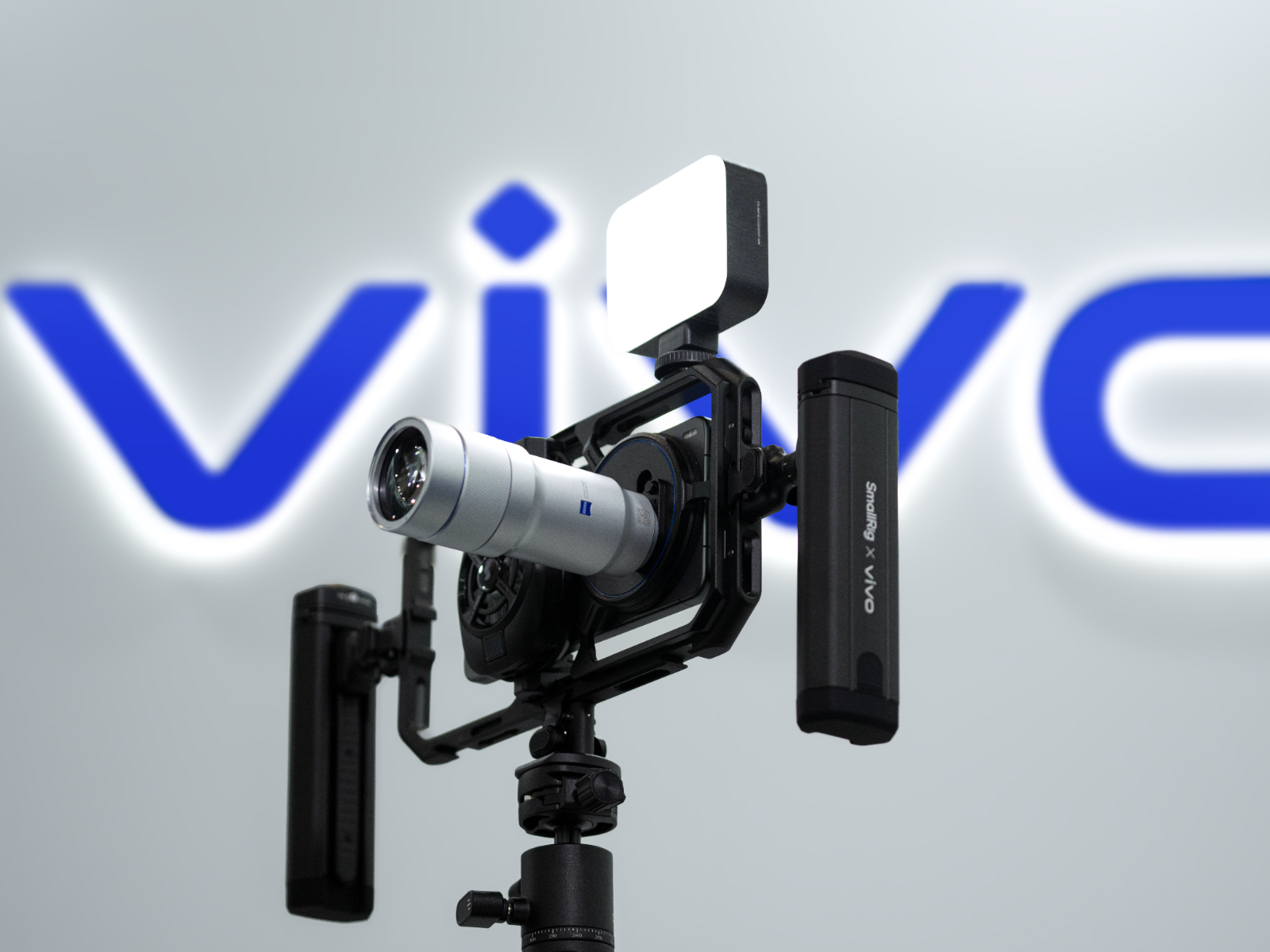
Paired with a dedicated photography grip and an official camera cage unveiled simultaneously at exhibitions, vivo’s vision is clear: it is no longer satisfied with creating a smartphone that rivals a camera, but is instead attempting to become a pocket-sized imaging system capable of partially replacing mirrorless ecosystems in fields such as wildlife photography, high-spec concert recording, and professional video production.
Finally: The Last Piece of the Puzzle
As of the publication of this article, official teasers have also revealed that the vivo X300 Ultra will feature a brand-new multispectral camera. From the perspective of professional imaging—especially video production—it aims to completely solve one of the most critical pain points when multi-camera systems move toward professional use: color consistency and white balance accuracy under extreme conditions.
In the past, mobile imaging often relied on AI algorithms to “guess” colors, which has been one of the main reasons behind the “smudged” look and the so-called “plastic” feel in images. The addition of a spectral camera not only enables a visibly more natural “what you see is what you get” rendering, but also greatly expands the color grading flexibility for professional creators in post-production workflows. More importantly, it represents a key step for mobile devices toward the color science standards of professional cinema cameras.
From initially experimenting with three fixed focal lengths to now fully embracing hardware-driven advancements and an external accessory ecosystem, vivo can hardly be called anything less than a relentless “disruptor” in the industry’s exploration of imaging. At a time when algorithm-driven imaging is gradually leading to aesthetic fatigue among the public, a “V-mirrorless” approach—grounded in optical hardware and expanding boundaries through a professional photography perspective—may well be the new solution many of us have been waiting for.
Share:

Exploring technology, digital culture, and better ways to live and work.