Category: Smartphone

  • SSPAI Morning Brief: NVIDIA Unveils RTX Spark AI PC Processor and Surface Laptop Ultra at Computex 2026

    SSPAI Morning Brief: NVIDIA Unveils RTX Spark AI PC Processor and Surface Laptop Ultra at Computex 2026

    Morning Brief

    1. NVIDIA unveils DLSS 4.5 Ray Reconstruction technology
    2. NVIDIA introduces RTX Spark PC processors and the Surface Laptop Ultra
    3. ASUS announces multiple new products
    4. Intel reveals Xeon 6+ server processors and other new offerings
    5. AMD launches new processors and graphics cards at Computex 2026
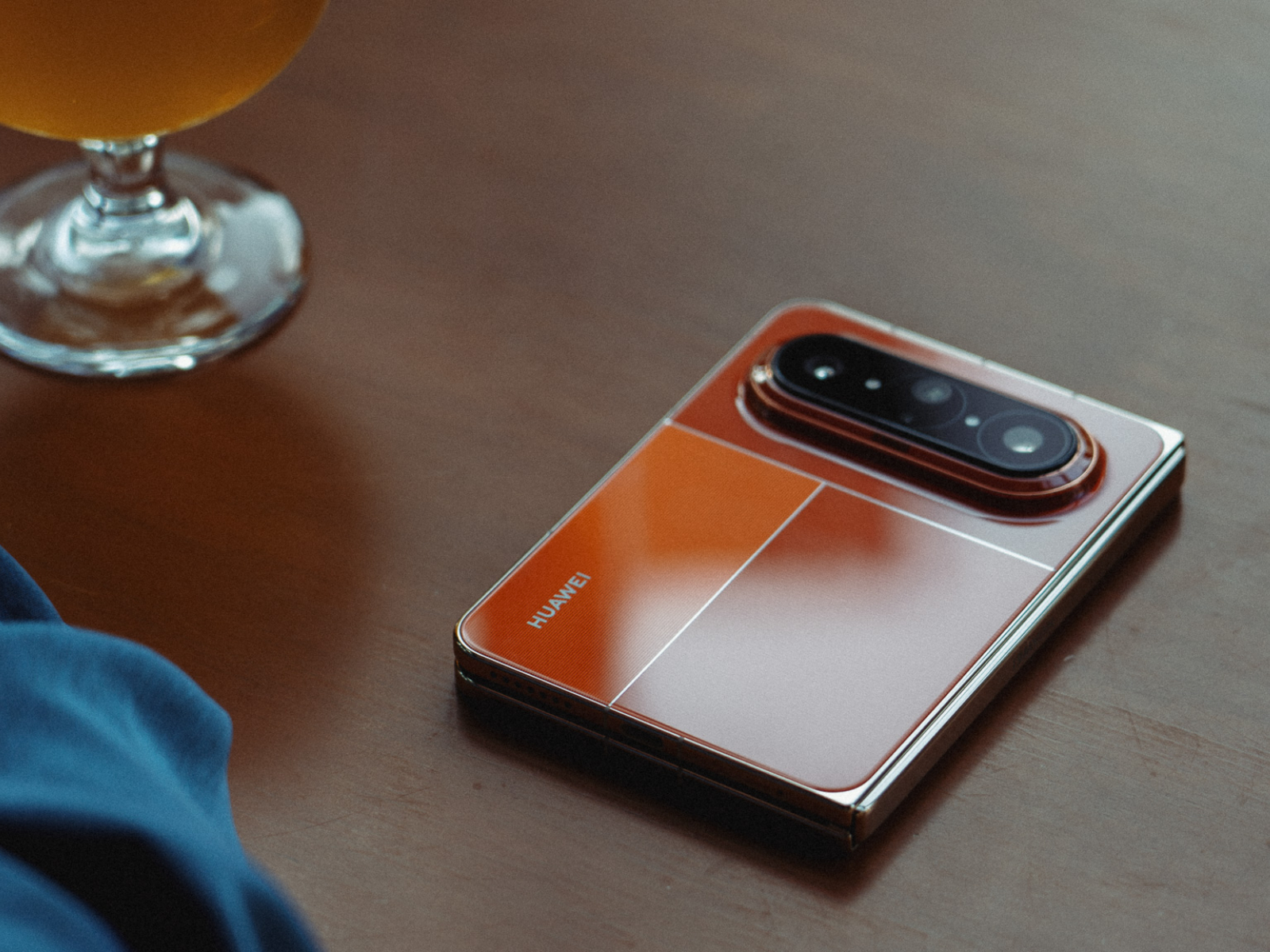
    6. Huawei unveils the nova 16 series and several other products
    7. The next-generation AV2 video codec standard is officially released
    8. MiniMax launches the M3 model
    9. Sennheiser begins sales of the MOMENTUM 5 over-ear headphones
    10. iFLYTEK introduces the Fika smartphone-shaped E Ink reader
    11. Bambu Lab launches the A2L 3D printer
    12. Dell announces the new XPS 13
    13. News Worth a Quick Look

    NVIDIA unveils DLSS 4.5 Ray Reconstruction technology

    On June 1, NVIDIA announced DLSS 4.5 Ray Reconstruction technology. The new technology will officially launch this August and will be available on all GeForce RTX GPUs, with support already confirmed for 38 games. DLSS 4.5 Ray Reconstruction replaces traditional hand-tuned denoisers with neural rendering, improving image quality in ray-traced and path-traced scenes. By integrating denoising and super-resolution into a single model trained on a significantly larger dataset, it can generate higher-quality pixels between sampled rays. Compared to previous versions, the DLSS 4.5 Ray Reconstruction model delivers 35% more computational capability and increases parameter count by 20%. Relative to DLSS 4.5 Super Resolution, the new model features deeper spatial awareness in every scene and makes more intelligent use of game engine pixel sampling and motion data, resulting in improved lighting accuracy, temporal stability, and motion clarity. The model is also accompanied by a dedicated developer masking tool, allowing developers to fine-tune parameters more precisely and further optimize image quality. Source

    In addition, NVIDIA unveiled new RTX 50 Series graphics cards from partners including ASUS, Gigabyte, MSI, and PNY, alongside two RTX 50-powered laptops—the Acer Nitro 16 and Mechrevo Yaoshi 16 Air—as well as multiple new monitors, desktops, and other products. Source


    NVIDIA introduces RTX Spark PC processors and the Surface Laptop Ultra

    During its Computex 2026 keynote on June 1, NVIDIA announced the RTX Spark PC processor. The chip combines a 20-core Grace CPU developed in collaboration with MediaTek and an NVIDIA Blackwell RTX GPU featuring 6,144 CUDA cores, delivering up to 1 petaFLOP of AI performance. Manufactured using TSMC’s 3nm process, it includes 128GB of unified memory. RTX Spark is designed to enable creators, AI developers, and gamers to render massive 3D scenes exceeding 90GB, edit 12K 4:2:2 video, generate 4K AI videos, run local AI agents powered by 120-billion-parameter large language models with context windows of up to one million tokens, and play AAA games at over 100 FPS at 1440p resolution. Adobe is currently redesigning the architecture of Photoshop and Premiere to support RTX Spark, with the goal of delivering up to twice the AI and graphics performance. RTX Spark laptops feature an ultra-thin design measuring just 14mm thick and weighing only 3 pounds. They will be available in 14-inch and 16-inch sizes, with precision-machined aluminum chassis, OLED displays, and NVIDIA G-SYNC support. The first RTX Spark-powered products will include premium thin-and-light Windows laptops offering all-day battery life and high-end displays, as well as compact desktop systems. Products from ASUS, Dell, HP, Lenovo, Microsoft Surface, and MSI are expected to launch this fall, with Acer and Gigabyte models arriving later. Source

    NVIDIA and Microsoft also jointly announced the Surface Laptop Ultra, powered by the RTX Spark PC processor. The device will be available in Platinum and Nightfall color options and features a 15-inch mini-LED PixelSense Ultra touchscreen with up to 2,000 nits of peak HDR brightness and a pixel density of 262 PPI. It will also feature the largest trackpad ever included in a Surface device, along with HDMI, USB-C, USB-A, SD card, and headphone ports. For power efficiency, Microsoft and NVIDIA have collaborated to implement the Microsoft Power and Thermal Framework on RTX Spark systems, maximizing performance while reducing power consumption during mobile use. This enables RTX Spark PCs to remain cool while delivering industry-leading efficiency. Microsoft is also enhancing Windows support for unified memory architectures, increasing the amount of system memory accessible to the GPU, allowing larger local AI models and more complex creative workloads to be loaded. The Surface Laptop Ultra is scheduled to launch later this year. Source


    ASUS announces multiple new products

    On June 1, ASUS unveiled a wide range of new products at Computex 2026.

    Leading the announcements was the next-generation ProArt lineup of AI-focused creator PCs, including the ProArt P16 and P14 laptops as well as a new ProArt mini PC, all powered by NVIDIA RTX Spark processors. Both the ProArt P16 and P14 feature ASUS Lumina Pro OLED displays, while the ProArt mini PC delivers 140W of cooling performance within a compact 150 × 150 × 51 mm chassis and supports M.2 PCIe Gen 5 x4 expansion. Source

    On the display side, ASUS and ROG jointly introduced more than ten new monitors. Updates include the ROG Swift 4K Dual-Layer OLED monitor, ROG Strix OLED gaming monitors, ROG Strix 5K gaming monitors, ProArt professional creator displays, TUF Gaming Series 5 monitors, and ASUS ZenScreen products. ASUS also announced the ZenScreen Duo MB14FCD dual-screen portable monitor, which combines two 14-inch 16:10 FHD IPS panels into a display area equivalent to approximately 20 inches. Another new product is the 13.3-inch ZenScreen Color ePaper MP13UC color E Ink display. Source

    ROG also unveiled the ROG XBOX Ally X20 handheld gaming device. Finished in a black-and-gold color scheme, it features a 7.4-inch 120Hz ROG Nebula HDR OLED display with up to 1,400 nits of peak brightness. It is powered by the AMD Ryzen AI Z2 Extreme processor, paired with 24GB of LPDDR5X memory and 1TB of storage, and supports Auto SR image-enhancement technology. The device incorporates an Xbox-style eight-direction D-pad and TMR analog sticks, along with a native Xbox mode. The package also includes the ROG XREAL R1 (20th Anniversary Edition) gaming AR glasses. When connected to the handheld, the glasses can project a virtual 171-inch display at a viewing distance of four meters with a 240Hz refresh rate and support native 3DoF head tracking. Source

    To celebrate the 20th anniversary of the ROG brand, ASUS also introduced the ROG Edition 20 Series featuring the same black-and-gold design language. The lineup includes the ROG Crosshair X870E Edition 20 motherboard, ROG Crosshair X870E Edition 20 graphics card, ROG Thor 3000W Titanium III Edition 20 power supply, ROG GR20 Edition 20 open-frame chassis, ROG NUC 16 Edition 20, ROG G1000 Edition 20 desktop PC, ROG Swift OLED PG27AQWP-G Edition 20 monitor, and the ROG Rapture GT-BE98 Pro Edition 20 router, alongside various accessories such as mouse pads, keycaps, mice, keyboards, gaming chairs, and backpacks. Source


    Intel reveals Xeon 6+ server processors and other new offerings

    At Computex 2026 on June 1, Intel unveiled the Xeon 6+ server processor family. Designed for cloud-native workloads and 5G core networks, the Xeon 6+ adopts the E-core architecture built on Intel’s 18A process technology. In terms of internal chip structure, each Clearwater Forest compute tile consists of six modules, with each module integrating four Darkmont E-cores, resulting in 24 E-cores per compute tile. By stacking 12 such compute tiles, Intel has created a flagship model with up to 288 cores, delivering extremely high core density and parallel processing capability. Xeon 6+ features up to 576MB of “enhanced low-latency” LLC cache and supports 12-channel DDR5 memory at speeds of up to 8000 MT/s. In terms of performance, Intel claims the flagship Xeon 6990E+ delivers up to 30% higher average per-thread performance than the AMD EPYC 9965. Under typical workloads, the Xeon 6990E+ can also provide up to 30% better performance per watt compared with similarly positioned EPYC processors. Compared to Intel’s own previous-generation Xeon 6780E, the company expects approximately 55% higher efficiency and an overall performance increase of around 126% in comparable scenarios. Source

    Intel also previewed its next-generation Xeon processor, codenamed Diamond Rapids, scheduled for release in 2027. Diamond Rapids continues Intel’s large-die, modular design approach and adopts the enhanced Intel 18A-P process technology. It features a scalable SoC architecture while maintaining uniform memory latency. Core counts will increase by 50%, with strong single-threaded performance optimized for high-end IaaS workloads. The processor will deliver double the memory bandwidth through expanded channel counts and higher supported frequencies, while also adding support for PCIe Gen 6. Source

    In addition, Intel introduced the next-generation Crescent Island GPU platform for AI data centers, emphasizing large memory capacity and energy-efficient inference performance. Crescent Island is based on Intel’s Arc Xe 3P architecture, which is also used in the integrated graphics of the current Panther Lake platform. It represents Intel’s latest high-performance graphics and compute platform for data centers. According to Intel, it is one of the company’s most powerful data center GPUs to date, offering up to 480GB of onboard memory per card, clearly targeting AI and high-performance computing (HPC) workloads that require large-scale models and datasets. For cooling, Crescent Island uses an air-cooled design and is rated for a 350W TDP. Intel says the card is designed to meet the demands of next-generation AI workloads and supports a wide range of data formats and low-precision quantization types, from native FP4 and MXFP4 to FP64, enabling both training and inference across different accuracy and performance requirements. Crescent Island is specifically optimized for AI inference while delivering higher performance density and lower overall data center operating costs. Source


    AMD launches new processors and graphics cards at Computex 2026

    At Computex 2026 on June 1, AMD announced several new products. The company first introduced two new 3D V-Cache gaming processors for desktop platforms: the Ryzen 7 5800X3D 10th Anniversary Edition for the AM4 socket and the Ryzen 7 7700X3D for the AM5 platform.

    The Ryzen 7 7700X3D belongs to the Zen 4-based Ryzen 7000 series and is an 8-core, 16-thread desktop processor positioned below the highly popular Ryzen 7 7800X3D. In terms of specifications, the two processors share the same core count, cache configuration, and 3D V-Cache stacking design, with the primary differences being clock speeds. The 7800X3D features a 4.2GHz base clock and boosts up to 5.0GHz, while the 7700X3D runs at a 4.0GHz base clock with a maximum boost frequency of 4.5GHz. Both processors carry a default TDP of 120W. The 7700X3D retains 96MB of L3 cache, along with 512KB of L1 cache and 8MB of L2 cache, and uses TSMC’s 5nm FinFET process for the CPU cores alongside a 6nm I/O die. Memory support includes dual-channel DDR5 with capacities up to 128GB. AMD officially rates support at up to DDR5-5200 with two single-rank or two dual-rank DIMMs, and DDR5-3600 with four single-rank or dual-rank DIMMs installed.

    The Ryzen 7 5800X3D 10th Anniversary Edition is AMD’s tribute to the 10th anniversary of the AM4 socket. Over the years, AMD has continued extending the lifespan of the AM4 platform with products such as the Ryzen 7 5700X3D and Ryzen 5 5500X3D, both featuring 3D V-Cache technology. The newly unveiled Ryzen 7 5800X3D 10th Anniversary Edition retains identical specifications to the original version, including its 8-core, 16-thread design, cache capacity, and clock speeds, meaning performance is expected to be unchanged.

    The Ryzen 7 7700X3D will retail for $329 and launch on July 16, while the AM4-based Ryzen 7 5800X3D 10th Anniversary Edition is priced at $349 and will become available on June 25.

    AMD also introduced EXPO ULL (Ultra Low Latency), a new memory overclocking technology. Built upon the existing EXPO memory profile overclocking system, EXPO ULL aims to further reduce DDR5 memory timings to deliver higher frame rates and smoother gaming performance on Ryzen platforms. The technology primarily focuses on lowering DDR5 CAS latency values. According to AMD’s demonstration, compared to standard JEDEC-spec DDR5-5600 CL40 memory, a DDR5-6000 CL28 EXPO ULL configuration can improve average gaming frame rates by approximately 13%, representing about four percentage points more performance than a conventional EXPO configuration on the same platform.

    AMD also officially announced that it will extend the lifespan of its current mainstream desktop socket, AM5, through 2029. This means the platform is expected to support at least one more generation of Zen processors. While AMD did not explicitly name future products, industry observers widely interpret the announcement as confirmation that AM5 will support Zen 6 and related Ryzen 10000-series processors.

    Finally, AMD unveiled the Radeon RX 9070 GRE graphics card. Positioned in the mid-range segment, the RX 9070 GRE features 48 Compute Units, 3,072 stream processors, 48 third-generation ray accelerators, and 96 second-generation AI accelerators. The card operates at a game clock of 2070MHz and can boost up to 2790MHz. Memory specifications include 12GB of GDDR6 on a 256-bit memory bus running at up to 20Gbps, providing 640GB/s of bandwidth, along with 48MB of AMD Infinity Cache. The card has a typical board power rating of 220W, requires a recommended 650W power supply, and uses dual 8-pin power connectors. It also features 96 ROPs and 192 texture units. Compared with the RX 9060 XT’s 128-bit memory interface, the RX 9070 GRE doubles memory bus width, although its 12GB memory capacity is lower than the 16GB found on the RX 9070 and RX 9070 XT. The Radeon RX 9070 GRE is priced at $549. Source


    Huawei unveils the nova 16 series and several other products

    On June 1, Huawei held its nova 16 Series and All-Scenario New Product Launch Event. Source

    The nova 16 series includes the nova 16 Ultra, nova 16 Pro, and nova 16, all powered by the Kirin 9010S processor. Both the nova 16 Pro and Ultra feature 6.84-inch displays and a quad-camera rear setup. The Pro model includes a 200MP RYYB ultra-high-resolution large-sensor camera (F1.8 aperture, OIS), a 50MP RYYB periscope telephoto camera (F2.6 aperture, OIS), a 50MP ultra-wide macro camera (F2.2 aperture), and a Red Maple Color camera. The Ultra model upgrades the telephoto lens aperture to F2.2. On the front, both models feature a 50MP camera paired with a Red Maple Color camera, with an F2.4 aperture on the Pro and F2.2 on the Ultra. The nova 16 Pro offers IP65 dust and water resistance, a 7000mAh battery, and starts at RMB 3,899 (12GB+256GB). It is available in Sky Blue, Horizon White, Starry Black, and Iridescent Pearl. The nova 16 Ultra features IP68 and IP69 dust and water resistance, a 7000mAh battery, and starts at RMB 4,699 (12GB+256GB). Color options include Sky Blue, Horizon White, and Starry Black.

    The nova 16 features a 6.68-inch display and a triple-camera rear setup consisting of a 50MP ultra-high-resolution camera (F1.9 aperture), a 50MP RYYB periscope telephoto camera (F2.6 aperture, OIS), and a Red Maple Color camera. The front camera does not include a Red Maple Color sensor. It is equipped with a 7000mAh battery, supports IP65 dust and water resistance, and starts at RMB 2,999 (12GB+256GB).

    Pictured: nova 16 Pro

    Huawei also introduced the nova 16z, powered by the Kirin 8020 processor. It features a 6.7-inch display and a rear camera system consisting of a 50MP ultra-high-resolution camera, a 12MP RYYB telephoto portrait camera with OIS, and a Red Maple Color camera. The device is equipped with a 6000mAh battery, supports IP65 dust and water resistance, and starts at RMB 2,699 (12GB+256GB). Available colors include Horizon White, Starry Black, and Iridescent Pearl.

    The HUAWEI MatePad Pro Max is available in Glow Blue, Moonlight Silver, Deep Space Gray, and Obsidian Gray. It features a 13.2-inch display, with an optional Soft Light Edition equipped with a flexible OLED CloudClear Soft Light display. The tablet is powered by the Kirin T93 Pro processor, while the Enjoy Edition uses the Kirin T93. It packs a 10,400mAh battery and supports up to 40W wired reverse SuperCharge. The device weighs 499g and is only 4.7mm thick. The Enjoy Edition starts at RMB 5,999 (12GB+256GB), the standard Wi-Fi version starts at RMB 6,199 (12GB+256GB), and the Soft Light Edition starts at RMB 7,399 (12GB+256GB).

    Huawei also announced the HUAWEI FreeClip 2 Collector’s Edition clip-on earbuds, the Huawei Lingxiao Q7 Powerline Mesh Router, the HUAWEI Watch GT Runner 2 Track Legend Edition, and the Huawei Nova Watch X1 and X1 Pro.


    The next-generation AV2 video codec standard is officially released

    The Alliance for Open Media (AOMedia) officially released version 1.0 of the next-generation AV2 video coding standard on May 29. Like AV1, AV2 continues to follow an open-source model centered on being efficient, royalty-free, and open. According to AOMedia, AV2 builds upon AV1 with further optimizations, enabling higher-quality video delivery at lower bitrates for evolving use cases such as streaming, broadcasting, and real-time video conferencing. It also enhances support for AR and VR applications, improves split-screen multi-program transmission and screen-content coding, and operates effectively across a broader range of visual quality targets. In terms of compression efficiency, official testing shows that AV2 reduces bitrate by approximately 28.63% compared to AV1 under the PSNR-YUV metric, while achieving a reduction of 32.59% under the VMAF metric, with virtually no loss in image quality. It is worth noting that AV2’s reference software, AVM (AOMedia Video Model), currently runs very slowly, with encoding speeds on mainstream hardware typically reaching only around one frame per second, meaning practical deployment is still a long way off. Source


    MiniMax launches the M3 model

    MiniMax officially launched its next-generation model, MiniMax M3, on June 1. The model combines state-of-the-art coding capabilities, up to 1 million tokens of context length, and native multimodal support, including image input, video input, and desktop computer operation. It is the first model in China to offer all three capabilities simultaneously and currently the only open-source model to do so. According to official benchmarks, M3 achieved a score of 59.0% on the SWE-Bench Pro programming benchmark, surpassing GPT-5.5 and Gemini 3.1 Pro while approaching Opus 4.7. It also achieved the highest score on the Claw-Eval agent benchmark and outperformed Gemini 3.1 Pro on the multimodal benchmark OmniDocBench. M3 is built on a new sparse attention architecture called MSA (MiniMax Sparse Attention), reducing per-token computation at a 1-million-token context length to just one-twentieth of the previous generation. The architecture delivers more than 9× acceleration during the prefilling stage and over 15× acceleration during decoding. Alongside the model launch, MiniMax updated its Agent product, MiniMax Code, and introduced a Token Plan subscription service, with Plus priced at RMB 49/month, Max at RMB 119/month, and Ultra at RMB 469/month. The M3 API is available immediately, while model weights and the technical report will be open-sourced within 10 days. Source


    Sennheiser begins sales of the MOMENTUM 5 over-ear headphones

    The Sennheiser MOMENTUM 5 over-ear headphones went on sale on May 31 with the slogan “Lossless Audio, Even Wirelessly,” priced at RMB 3,299. The new model features Sennheiser’s self-developed 42mm dynamic driver units. It supports major audio codecs including SBC, AAC, aptX, aptX HD, and aptX Adaptive, while also incorporating Snapdragon Sound TT technology and aptX Lossless support. This enables CD-quality lossless audio transmission (16-bit/44.1kHz) over Bluetooth. The headphones are Hi-Res Audio certified and support Dolby Atmos spatial audio. For noise cancellation, the number of microphones has doubled to eight. With active noise cancellation enabled, battery life can reach up to 57 hours, while a 10-minute charge provides up to 7 hours of playback. Source


    iFLYTEK introduces the Fika smartphone-shaped E Ink reader

    iFLYTEK introduced the Fika e-book reader on June 1. Designed in a smartphone-like form factor, the device is priced at RMB 2,399. It is available in “Aussie White” and “Iced Americano” color options, weighs 140g, and measures 6.7mm thick. The reader features a 6.13-inch 300 PPI Carta 1300 E Ink display, paired with a 32-level dual-tone front light system and the IFR 2.0 fast-refresh algorithm. It is powered by an octa-core MediaTek processor, with 6GB of RAM and 128GB of storage. Buyers receive 2GB of mobile data per month free during the first year. The device includes a 2,580mAh battery and offers up to 21 days of standby time. Source


    Bambu Lab launches the A2L 3D printer

    On June 1, Bambu Lab introduced the Bambu A2L 3D printer. The A2L features a single-nozzle design and supports a maximum build volume of 330 mm × 320 mm × 325 mm, representing a 105% increase compared to the A1. It incorporates an adaptive vibration compensation algorithm and built-in granular dampers within the frame to reduce print artifacts caused by vibrations. The printer supports quick switching between a blade-cutting module and a brush module. It also features active motor noise reduction, allowing operating noise to drop as low as 49 dB in Silent Mode. The standalone Bambu A2L is priced at RMB 2,549 and is eligible for government subsidies, with limited-time launch promotions available. Source


    Dell announces the new XPS 13

    On May 31, Dell unveiled the new XPS 13 laptop. Positioned against the MacBook Neo, the new XPS 13 starts at $699, weighs 1kg, and measures 12.7mm thick. It is powered by the Intel Core 5 320 processor, with Core Ultra 7 355 variants planned for a later release. Memory configurations include LPDDR5x-7467 MT/s, with 8GB to 16GB single-channel options at launch and future higher-end models offering 16GB to 32GB dual-channel configurations. The laptop features a 13.4-inch InfinityEdge touchscreen display. It supports Wi-Fi 7 and Windows Hello, and comes with a backlit keyboard. The device will go on sale in June. Source


    News Worth a Quick Look

    • According to 36Kr, Doubao is expected to officially launch a paid subscription service in late June. In the third quarter, the platform is also expected to further integrate with Douyin E-commerce features and expand its monetization scenarios. Source
    • Leaker Ice Universe posted what appears to be a mock-up image of the rumored iPhone Ultra/Fold on Weibo. Source
    • Microsoft has announced that Fable has been delayed and is now scheduled for release in February 2027. Source
    • On June 1, iReader and WIKO respectively introduced AI-powered collectible companion devices called CreMoMo and Xingzai. Xingzai is powered by Huawei’s Xiaoyi large language model, while CreMoMo focuses on a growth-oriented, personality-driven AI companion experience. Source 1 2
    • Randy Pitchford, founder of Gearbox Software, the studio behind the Borderlands series, posted on X that a friend of his found what appears to be an unreleased Google Pixel Watch 5 while diving near Saint Martin, recovering it from the ocean floor. Source
  • SSPAI Morning Brief: Google Translate Adds AI Pronunciation Practice as Valve Unveils New Steam Controller

    SSPAI Morning Brief: Google Translate Adds AI Pronunciation Practice as Valve Unveils New Steam Controller

    Morning Brief

    1. Ledo L80 unveiled
    2. OnePlus Ace 6 Supreme Edition released
    3. New-generation Steam Controller announced by Valve
    4. China Unicom launches “Unicom Cube” customizable service
    5. Google Translate introduces “Pronunciation Practice” feature
    6. News Worth a Quick Look

    Ledo L80 unveiled

    On April 28, Ledo Auto launched the Ledo L80 in Hangzhou, positioning it as a “smart dual-cabin, large five-seat flagship SUV.” The vehicle measures 5145 mm in length and offers two intelligent driving solutions: a pure vision setup powered by Orin-X, or a combination of the “Shenji chip” with LiDAR. It comes in six exterior colors and four interior themes. The model emphasizes cargo space and scenario-based expansion, supporting features such as carrying three bicycles, a customized camping kit, and a three-section convertible bed, all offered as official accessories.

    The Ledo L80 starts at a pre-sale price of 245,800 RMB, with the BaaS (battery-as-a-service) version starting at 159,800 RMB. Test drives will begin on May 1, with the official launch set for May 15. Source


    OnePlus Ace 6 Supreme Edition released

    On April 28, OnePlus released the OnePlus Ace 6 Supreme Edition, powered by the Dimensity 9500 platform and featuring a self-developed “Fengchi gaming engine” along with an “Ice Glacier cooling system.” The display is a BOE co-developed 165 Hz high-refresh-rate panel with 1800 nits global brightness, 0.1 ms grayscale response time, 96% first-frame brightness ratio, and 3840 Hz PWM dimming. The device also includes the “Lingxi touch chip,” supporting a 4000 Hz instantaneous touch sampling rate and 480 Hz multi-touch sampling, along with a gyroscope adjustable up to 500 Hz. The phone is rated IP66, IP68, IP69, and IP69K for dust and water resistance. It is equipped with an 8600 mAh “Glacier battery” supporting 120 W fast charging. In terms of imaging, it features a 50 MP main camera with a 1/1.55-inch sensor. The OnePlus Ace 6 Supreme Edition is now available across all channels, starting at 3,099 RMB (12GB + 256GB).

    OnePlus also introduced the “OnePlus Gunshen Gaming Controller,” featuring a hybrid touch-and-press design with esports-grade micro-switches, priced at 449 RMB, with a 50 RMB discount when purchased together with the phone. Source


    New-generation Steam Controller announced by Valve

    On April 28, Valve announced that its new-generation Steam Controller will go on sale at 1:00 AM Beijing time on May 5. The controller can be used independently without a Steam Machine and is compatible with all devices running Steam or the Steam Link app, including PC, Mac, mobile devices, and Steam Deck. In terms of configuration, the controller includes standard control buttons, a Steam button, a quick access button, four assignable grip buttons, two full-size TMR magnetic joysticks with capacitive touch, and a 6-axis IMU gyroscope. It also features four haptic motors, including two LRA motors inside the touchpads and two high-output LRA motors in the grips. Each side is equipped with a 34.5 mm square touchpad with haptic feedback and pressure sensitivity, with configurable click strength. The back of the controller also includes two capacitive sensing areas.

    The controller supports 2.4GHz wireless connectivity (4 ms polling rate), comes with an 8.39 Wh lithium battery, offers over 35 hours of battery life, weighs approximately 292 g, and is priced at $99. Source


    China Unicom launches “Unicom Cube” customizable service

    On April 28, China Unicom launched the “Unicom Cube” customizable communication service, centered around a drag-and-drop configuration experience. The service allows users to freely combine service components with high flexibility, supporting online self-adjustment and dynamic changes. In terms of pricing, the service adopts tiered data pricing: the first 20 GB per month is charged at 1.5 RMB/GB, usage between 20 GB and 50 GB is priced at 1.2 RMB/GB, and usage above 50 GB is charged at 1 RMB/GB. Voice calls are billed on a pay-as-you-go basis at 0.1 RMB per minute, while SMS and MMS are charged at 0.1 RMB per message.

    The service has a base monthly fee of 39 RMB, with China Unicom promising a true pay-for-what-you-use model, ensuring users will not encounter overage charges common in traditional plans. Source


    Google Translate introduces “Pronunciation Practice” feature

    On April 28, marking the 20th anniversary of Google Translate, Google announced a new pronunciation practice feature. After obtaining a translation result, users can tap the practice button to read aloud, with AI analyzing speech and providing real-time feedback. The feature is based on the Gemini Understand and Ask capability introduced earlier this year and is currently available to Android users in the United States and India, supporting English, Spanish, and Hindi. Source


    News Worth a Quick Look

    • According to Engadget citing The Information, Google has signed a confidential agreement with the U.S. Department of Defense allowing its AI models to be used for “any lawful government purpose,” including handling sensitive tasks in classified environments. The agreement restricts the use of AI for domestic mass surveillance, but Google cannot veto lawful government actions and must assist in adjusting AI safety settings and filters when requested. Prior to the agreement, more than 600 Google employees had written to CEO Sundar Pichai urging the company not to involve AI in classified military projects. Google responded that API access remains governed by standard terms and that the cooperation supports national security in a responsible manner. Source
    • According to 9to5Google citing leaker Lanzuk on Naver, Samsung is considering a new rear camera module design for the Galaxy S27 series, replacing the design used for the past three years. Compatibility with Qi2 magnetic accessories is cited as a key reason. Camera specifications for the next generation may also be revised, though the change remains uncertain, with reports suggesting “recent cost issues” could delay the full redesign. Source
    • Google’s Nearby Share (AirDrop-like feature) has now expanded support to the international versions of OPPO Find X9 Ultra and vivo X300 Ultra. Source

  • Huawei Pura X Max Review: A New Foldable Category Between Smartphones and Tablets

    Huawei Pura X Max Review: A New Foldable Category Between Smartphones and Tablets

    Foldable phones haven’t had an easy time over the past two years.

    According to IDC’s annual report, China’s foldable smartphone shipments reached about 10.01 million units in 2025, a year-over-year growth of 9.2%, compared to 30.8% in 2024—growth nearly halved in just one year. Meanwhile, foldables still account for only around 2.5% of the global smartphone market. After seven years, the category remains stuck in a niche position.

    IDC, Counterpoint, and Omdia all reached a similar conclusion in their year-end reports—the real restart for foldables won’t come until 2026. Their reasoning is also largely the same: new players entering the market, supply chain upgrades, and the adoption of new materials. In other words, the industry has already accepted one thing—the next breakthrough for foldables won’t come from the product itself, but from external forces.

    I see it differently.

    After years of using foldables on and off—never quite sticking with them—I’ve come to believe the real reason foldables haven’t broken through has nothing to do with specs or supply chains. It’s something more fundamental: every manufacturer is still building foldables with a “phone-first” mindset. The screens fold thinner and unfold larger, but the system is still a phone system, the interaction model is still phone-based, and even many apps and native features feel largely unchanged. The physical form of the screen has evolved, but the thinking behind it hasn’t.

    But here’s the problem—once a screen unfolds to seven or eight inches, approaching the size of a small tablet, user expectations are no longer about “a bigger phone.” What we really want is something new: a device that lets us comfortably read long articles, sketch properly, edit videos on the couch, or experience AI in a more fluid, ambient way. These needs used to be fulfilled by tablets—but tablets are too large to carry in a pocket. Phones fit in your pocket but can’t deliver these experiences. Foldables were supposed to address exactly this in-between space.

    Most foldables over the past seven years have been trying to solve a problem that may not have been the right one to begin with. They focus on “making phones bigger,” yet rarely question “how to fill this gap.” What the industry truly needs isn’t another foldable with better specs, but the first foldable that breaks away from phone-centric thinking. In many ways, Huawei Pura X Max rethinks this problem from the ground up.

    This first-of-its-kind wide-format foldable doesn’t follow the tall, narrow proportions of traditional smartphones, nor does it unfold into an uninspiring square-like screen. Instead, it introduces a new “wide” aspect ratio—one that doesn’t belong to any previous category of device. According to Huawei, the ratio is derived from the common denominator of popular content formats, aligning with the √2:1 ratio of A4 paper. While that may sound mathematical, in practice it’s quite intuitive—4:3 images, 3:2 photos, and 16:9 videos all display in near-native proportions. As a result, many long-standing limitations and assumptions are broken.

    For the first time, the evolution of the display returns to the content itself.

    Put Agile, Efficient Content Consumption in Your Pocket

    For a long time, foldable phone users have shared an unspoken habit: if you want to actually use the phone, you unfold it. The outer screen is often reserved for calls, QR codes, or checking the time—real usage only begins once the inner screen is opened.

    But this habit isn’t something users naturally developed—it was conditioned. At its root is an assumption the entire industry has accepted for too long: the value of a foldable lies in having “a bigger screen.” Once that becomes the core selling point, product design inevitably follows the same direction—unfolded is the main stage, the outer screen is just a supporting role. The narrow outer display and increasingly thin bodies, despite claims of offering both “slab and foldable experiences,” are ultimately byproducts of this obsession. It’s not that they were poorly designed—it’s that they were never truly taken seriously in the first place.

    More subtly, this design bias feeds back into user psychology. Foldables already differ from traditional phones in system interaction—split screen, multitasking, hover modes, layering—features that only fully shine when the inner display is open. Over time, users develop a quiet anxiety: if I bought a foldable but keep using it closed, am I wasting its potential? As a result, even simple tasks that could easily be handled on the outer screen—reading a slightly longer article or replying to a longer message—end up pushing users to unfold. No one forces you to do it, but you start to feel like you should.

    This psychological burden—“it’s a waste if I don’t unfold it”—is more exhausting than any physical limitation. It adds unnecessary friction to the experience. Unfolding feels ceremonious; not unfolding feels wasteful. In a crowded subway, you can’t unfold it with one hand; in a coffee queue, unfolding feels over the top. Most of the time, you just want to get things done while the device is closed—and traditional foldables, both in design and in the mental model they impose, haven’t made that feel natural.

    The Huawei Pura X Max takes a different approach: its outer and inner displays share nearly the same wide aspect ratio. It sounds simple, but the experience shift is significant. For the first time, the outer screen is treated as a fully capable primary interface—you no longer have to wait to unfold to “start using” the device, nor do you need to repeatedly decide whether you should unfold. The outer display itself is a wide screen that stands on its own. You unfold only when you want to, based on the situation—not out of habit.

    High-Density Information in Fragmented Moments

    Commuting, standing in line, waiting for someone—these short fragments of time are when we use our phones most often, and they’re exactly where the outer screen should take over.

    Open a content app, and cards can be displayed in multiple columns on the wide outer screen of the Pura X Max, letting you scan several items at once. The essence of feed-based content is to browse more options in less time and quickly decide what to open. With more horizontal space, visual scanning becomes effortless. This level of information density used to belong only to large screens—now it’s available on a device you can hold in one hand.

    Thanks to the “wide small screen” design, when folded, the device also has balanced weight distribution and fits naturally in your hands. For fundamental phone tasks—replying to messages, jotting down notes, frequent scrolling through social feeds—the experience is not only smooth but also lighter and more comfortable.

    What these scenarios share is that they previously implied you needed to unfold the device for a “better” experience. Now, the outer screen delivers it directly. It’s no longer a transition—it’s enough on its own.

    For the Moments That Truly Deserve It

    And when a more immersive moment arrives, that’s when you unfold the inner screen.

    Watching a movie on the couch over the weekend—this is the classic use case. Most films, short videos, variety shows, and sports broadcasts are shot in 3:2, 16:9, or wider formats, yet on traditional square-ish foldable displays, they leave large black bars. The Pura X Max’s wide inner screen better matches these formats, allowing your brain to naturally enter a “nothing beyond the screen matters” state. For the first time, the core logic of a cinema experience is fully realized on a phone.

    Gaming is another scenario worth unfolding for. In titles like auto-battlers, the expanded layout feels much closer to a tablet or PC—wider boards, more spacious UI elements, and better visibility without constant switching. Seeing the full picture at once is the core need of such games—and one of the hardest things to achieve on smaller screens.

    Reading a long article or flipping through an e-book—these are also moments worth unfolding for. You’re not opening the device to “justify the product,” but because the content itself deserves more space.

    On the Pura X Max, folding and unfolding are no longer opposing modes—they’re simply two levels of content intensity. Quick, fragmented, one-handed tasks are handled perfectly by the outer screen; immersive, longer, more engaging experiences naturally call for the inner display. The device hands this choice back to the context itself.

    This is the fundamental difference between a tablet mindset and a phone mindset. Under a phone mindset, the outer screen is subordinate to the inner one, and folding is a compromise. Under a tablet mindset, both screens are just different sizes of the same canvas—primary and secondary views flowing seamlessly between each other. What the Pura X Max achieves isn’t just making foldables “a bit better” for content consumption—it borrows from tablet design thinking to answer a long-unresolved need: combining the expansiveness of a tablet with the portability of a phone.

    And Creation, Too

    Once the screen gets bigger and the aspect ratio feels right, the first thing that changes isn’t just how you consume content—it’s how you create. In the past landscape of mobile devices, “doing” has always been assumed to belong to tablets and computers. Phones, constrained by smaller, narrower screens, have always been a compromise for any creative task that needs room to breathe—drawing, video editing, layout design. You could doodle a little on a phone, but for anything serious, you’d return to a tablet or a computer; you could cut together a short vertical clip on your phone, but longer horizontal videos meant switching devices.

    This division—“consumption on phones, creation on tablets”—is itself a byproduct of phone-first thinking. It assumes the phone is a consumption terminal, while creation belongs elsewhere. But look at it another way: if a foldable phone already unfolds to something close to tablet size, why shouldn’t it take on the responsibilities of a tablet?

    Huawei Pura X Max gives a serious answer to that question.

    The most direct proof is that drawing apps finally make sense on a phone. Apps that were once exclusive productivity tools on tablets—offering watercolor, oil painting, even brush-like calligraphy strokes—now feel usable. In the past, trying to draw on a six-inch slab phone wasn’t limited by brush realism, but by the lack of space to actually draw.

    With the wide display unfolded, the screen is large enough to accommodate a full canvas. Paired with the customized HUAWEI M-Pen 3 mini stylus, a sketchbook finally fits into your pocket. More importantly, the screen’s color accuracy and brightness are good enough to support creative feedback—you see the same soft watercolor tones outdoors as you do with your eyes, without needing to recheck them later on a professional device.

    AI-powered creative tools further merge the pipeline between sketching and generation. By embedding AIGC capabilities directly into Huawei Notes, you can sketch on one side of the wide screen and instantly see AI-generated results on the other. A rough doodle and a simple prompt can quickly turn into a usable design draft. What once required multiple devices and apps is now compressed into a single screen.

    For video creation, the focus shifts to editing. Vertical vlog editing adopts a side-by-side layout, while horizontal long-form editing uses a top-and-bottom layout—both offering significantly larger preview areas than traditional phones. The bottom toolbar is fully visible without dragging. A light press with the stylus brings up a radial menu, allowing quick cuts, speed adjustments, and subtitle additions in one flow. What used to be a rushed compromise on phones now approaches a desktop-level workflow.

    Combining both “viewing” and “doing,” the purpose of the Pura X Max becomes clear—it enables both the consumption and creation strengths of a tablet to fully exist on a device that fits in your pocket. Under phone-first thinking, consumption and creation are separated; under tablet-first thinking, both coexist. The Pura X Max begins as a portable tablet, but its larger ambition is to define something entirely new.

    Accompanied: An AI That Doesn’t Need to Be Summoned

    The Pura X Max doesn’t just rethink the screen—it also rethinks interaction through its “ambient AI.” The question it answers is this: should interaction on this screen still follow the rules of traditional phones?

    In recent years, nearly every manufacturer has talked about “AI phones.” But in practice, most AI still behaves like a summoned tool—you have to speak, tap, or remember how to activate it. AI on phones feels more like a silent utility than a constant companion.

    This isn’t entirely the fault of manufacturers. Conversational AI only entered mainstream awareness three or four years ago. By then, the slab phone interaction model had already been established for nearly two decades—home screen, app icons, full-screen apps. It’s a deeply ingrained habit for billions of users, not something easily changed.

    So when AI was introduced to phones, options were limited: package it as a standalone app, or as a floating window triggered by voice or a button. Either way, it’s squeezed into an existing framework—not because the screen lacks space, but because AI arrived too late to claim its own place.

    Tablets, however, were different from the start. Split-screen multitasking, floating windows, parallel app workflows—these computer-like interaction patterns already exist naturally. When AI arrives on a tablet, it doesn’t need to be forced in; it has space to coexist. Reading an article while AI summarizes on the side, writing while AI refines text in real time—these feel natural.

    The Pura X Max brings this tablet-style interaction into a phone form. When a foldable is redesigned with tablet thinking, something like a “persistent side AI panel” doesn’t need to be invented—it simply fits.

    This is where Xiaoyi’s ambient AI comes in. It supports three modes: background presence, side-panel persistence, and window expansion. The most intuitive change is the side panel—AI no longer waits to be summoned. It stays alongside your main content, observing what’s on screen and proactively suggesting what you might want to do next.

    A few moments that stood out to me.

    A colleague posts in a Feishu group: “Meeting with the business team tomorrow at 10:30.” Xiaoyi sees it and adds it to your calendar automatically—no need to open the calendar app. While reading an article, if you encounter an unfamiliar term, simply highlight it and the explanation appears on the side. After finishing the article, a quick glance shows suggested follow-up topics. When opening a map app to go somewhere unfamiliar, you can also ask Xiaoyi on the side where to park, avoiding another search.

    None of these ideas are entirely new in isolation. What matters is that they are proactively presented, rather than something you remember to look for later. Once the interaction direction flips, AI shifts from being a “tool” to an “environment”—not something you use, but something you exist within.

    This isn’t something manufacturers never considered for slab phones—it’s that there was no room for it. Not physical screen space, but interaction space. The old framework simply doesn’t accommodate always-on, parallel AI without clashing with established habits. The Pura X Max’s tablet-first approach creates that space, allowing AI to settle naturally.

    Conclusion

    Back in 2010, before the first iPad was released, Steve Jobs asked a question on stage: is there room for a third category between phones and computers? At the time, it sounded rhetorical—but years later, it defined an entire product category. The iPad succeeded not because it was a “bigger iPhone” or a “more portable Mac,” but because it was given its own identity.

    More than a decade later, the same question deserves to be asked again—is there a third category between phones and tablets?

    That’s the strongest impression I had after using the Pura X Max. Throughout this piece, I’ve used the term “tablet thinking” as a way to explain why it feels different from other foldables. But that only tells part of the story. What the Pura X Max is really doing isn’t just applying tablet thinking to a foldable—it’s finding a place for foldables between phones and tablets.

    It borrows from tablets—wide aspect ratios, parallel interaction models, persistent AI—but it is ultimately neither a portable tablet nor a bigger phone. It’s something new: a form made possible only because the screen can fold. It’s small enough to carry, large enough to use seriously, and interactive enough to let AI truly accompany the user. These three things used to belong to separate devices—the Pura X Max brings them together.

    Foldables have existed for seven years, and the industry has been measuring them with old metrics—size, thinness, durability. But what determines whether a product endures is not how well it scores on old scales, but whether it makes us realize those scales are no longer sufficient. The Pura X Max breaks that ruler. It’s not just a better foldable—it’s the first to make us reconsider what a foldable should be.

    Back to the question at the beginning—can the next breakthrough in foldables come from the product itself? I think the answer is already clear.

  • SSPAI Morning Brief: OpenAI Launches ChatGPT Images 2.0 With Advanced AI Image Generation

    SSPAI Morning Brief: OpenAI Launches ChatGPT Images 2.0 With Advanced AI Image Generation

    Morning Brief

    1. OPPO Find X9 Ultra officially unveiled
    2. Beats releases Solo 4 JENNIE Special Edition and a 3-meter USB-C cable
    3. ChatGPT Images 2.0 launched by OpenAI
    4. CATL introduces Shenxing fast-charging and multiple new power batteries
    5. GitHub Copilot adjusts individual subscription plans
    6. Amazon invests an additional $5 billion in Anthropic and secures computing capacity supply
    7. Microsoft lowers pricing for some Xbox Game Pass plans
    8. News Worth a Quick Look

    OPPO Find X9 Ultra officially unveiled

    On April 21, OPPO unveiled the OPPO Find X9 Ultra, powered by the Snapdragon 8 Gen 5 Elite mobile platform, paired with LPDDR5X memory and UFS 4.1 storage. It features a 6.82-inch QHD+ flat display with a resolution of 3168×1440, supporting up to a 144Hz refresh rate, with 800 nits typical brightness and 1800 nits peak brightness. The camera system includes a 200MP wide-angle lens, 50MP ultra-wide lens, 200MP telephoto lens, and 50MP periscope telephoto lens, along with a 50MP front-facing camera. It is equipped with a 7050mAh battery, supporting 100W wired fast charging and 50W wireless charging. The device comes in three color options—Velvet Canyon, Polar Glacier, and Earth Tundra—with pricing starting at RMB 7,499 (12+256GB). Source


    Beats releases Solo 4 JENNIE Special Edition and a 3-meter USB-C cable

    On April 21, Beats introduced the Onyx Black JENNIE Special Edition Beats Solo 4. The product features a minimalist monochrome design, includes two detachable black bow accessories, and has a custom music note engraving on one UltraPlush ear cushion, along with a matching carrying case. It will go on sale at 9 AM on April 24, priced at RMB 1,799, available via Apple.com and the Beats official store on JD.com. Source

    At the same time, Beats also announced a new addition to its accessories lineup: a 3-meter USB-C to USB-C cable. It features a tangle-free braided design with reinforced internals, supports up to 240W charging, and can handle data transfer, audio output, and CarPlay connectivity. The cable is compatible with USB-C devices across both Apple and Android ecosystems, and comes in four colors: Bolt Black, Surge Gray, Speed Blue, and Rush Red. It is now available in over 50 countries and regions worldwide, with orders open via apple.com.cn at a price of RMB 229. Source


    ChatGPT Images 2.0 launched by OpenAI

    On April 21, OpenAI released the ChatGPT Images 2.0 model along with the gpt-image-2 API. The model brings significant improvements in instruction following, visual composition, and text rendering. It supports multilingual text generation, including Chinese, Japanese, Korean, Hindi, and Bengali. Supported aspect ratios range from 3:1 to 1:3, with up to 2K resolution available via the API. The model’s knowledge cutoff is December 2025. When “thinking” mode is enabled, it can perform web searches and includes self-verification capabilities, and can generate up to 8 coherent images in a single request.

    Yes, these are official sample images.

    The model is now available to all ChatGPT and Codex users, while advanced outputs with “thinking” capabilities are limited to ChatGPT Plus, Pro, and Business subscribers. The gpt-image-2 API is also live, with pricing depending on selected image quality and resolution. Source


    CATL introduces Shenxing fast-charging and multiple new power batteries

    On April 21, CATL announced its third-generation Shenxing supercharging battery, third-generation Qilin battery, and an integrated charging-and-swapping energy solution. The new Shenxing battery supports up to 10C equivalent and peak 15C ultra-fast charging, reaching full charge in just 6 minutes under standard conditions. The third-generation Qilin battery achieves an energy density of 280Wh/kg and supports up to 1,000 km range, featuring thermal-electric separation safety technology. The lineup also includes the Qilin condensed-state battery, second-generation Xiaoyao hybrid battery, and sodium-ion batteries, with the latter scheduled for mass production in Q4 2026. By the end of 2026, CATL plans to build 4,000 integrated charging and swapping stations for passenger vehicles and heavy trucks, enabling flexible charging, battery swapping, and on-demand power distribution. Source


    GitHub Copilot adjusts individual subscription plans

    On April 20, GitHub Copilot announced adjustments to its individual subscription plans. Effective immediately, new user sign-ups for Pro, Pro+, and Student plans are suspended. The usage limits for the Pro+ plan have been increased to more than five times that of the Pro plan, with specific limits viewable in real time via VS Code and Copilot CLI. In terms of model access, the Pro plan will no longer support the Opus series models, while the Pro+ plan will retain only Opus 4.7, removing Opus 4.5 and Opus 4.6. Affected users may cancel their subscriptions via the billing settings page before May 20 and request a refund corresponding to the remaining subscription period. Source


    Amazon invests an additional $5 billion in Anthropic and secures computing capacity supply

    On April 21, Amazon announced an additional $5 billion investment in Anthropic and signed a long-term compute supply agreement. This round brings Amazon’s total direct investment in Anthropic to $13 billion. Under the agreement, Amazon may invest an additional $20 billion if certain business milestones are achieved. Anthropic plans to spend over $100 billion on Amazon Web Services over the next decade to procure custom AI chips, including Graviton, Trainium2, and Trainium4, addressing infrastructure demands driven by the growth of Claude users. The two companies aim to deliver 1 gigawatt of compute capacity by the end of 2026, with a long-term supply cap of 5 gigawatts. Source


    Microsoft lowers pricing for some Xbox Game Pass plans

    On April 22, Microsoft announced price reductions for certain Xbox Game Pass plans. The monthly fee for Game Pass Ultimate will drop from $29.99 to $22.99, while the PC Game Pass subscription will decrease from $16.49 to $13.99. At the same time, starting in 2026, future installments of the Call of Duty series will no longer be included in Game Pass Ultimate or PC Game Pass at launch. Instead, they will be added during the following holiday season (approximately one year later). Existing Call of Duty titles already in the library will remain unaffected. Source


    News Worth a Quick Look

    • OpenAI has rolled out a Chronicle research preview feature for the macOS version of Codex, available to Pro subscribers. This feature uses background agents to periodically capture screen content and generate a local memory base, enhancing the model’s contextual understanding of the current task environment—such as on-screen error messages, open documents, and past workflows. The stored memory can be reviewed and edited by users. Due to its background operation, enabling the feature may increase rate limit consumption. It is now available to Pro subscribers. Source
    • Google Labs has open-sourced the DESIGN.md specification from its Stitch platform. This format provides AI agents with a unified, machine-readable design guideline—including brand colors, typography rules, component styles, layout logic, and interaction patterns—allowing AI to generate UI across projects while maintaining consistency with brand design standards. Source
  • SSPAI Morning Brief: Microsoft Launches Massive AI Data Center Fairwater with Over 100,000 NVIDIA Blackwell GPUs

    SSPAI Morning Brief: Microsoft Launches Massive AI Data Center Fairwater with Over 100,000 NVIDIA Blackwell GPUs

    Morning Brief

    1. Huawei hosts Pura series and all-scenario product launch event
    2. Leica and Gpixel jointly develop next-generation CMOS
    3. Microsoft’s AI data center Fairwater goes into operation
    4. Apple announces a series of executive changes
    5. Moonshot AI releases and open-sources Kimi K2.6 model
    6. The 11th China University Computer Competition – Mobile Application Innovation Contest opens registration
    7. Adobe launches enterprise-focused customer experience design tools
    8. News Worth a Quick Look

    Huawei hosts Pura series and all-scenario product launch event

    On April 20, Huawei held its Pura series and all-scenario product launch event in Guangzhou, unveiling multiple new products including the HUAWEI Pura 90 series.

    The HUAWEI Pura 90 series includes three models: Pura 90, Pura 90 Pro, and Pura 90 Pro Max, all featuring IP68 and IP69 dust and water resistance. The HUAWEI Pura 90 Pro Max comes in Orange Sea, Glow Purple, Emerald Lake, Morning Gold, and Obsidian Black, with a 6.9-inch display protected by anti-reflective, scratch-resistant Kunlun Glass. It is powered by the Kirin 9030S processor, equipped with a 6000 mAh battery, and supports 100 W wired fast charging and 80 W wireless fast charging. The rear camera setup includes a 50 MP main camera (F1.4–F4.0, OIS), a 40 MP ultra-wide camera (F2.2), a 200 MP telephoto camera (1/1.28-inch sensor, F2.6, OIS, telephoto macro), and a second-generation XMAGE color camera. Pricing ranges from RMB 6,499 (12GB+256GB) to RMB 8,499 (16GB+1TB).

    The HUAWEI Pura 90 Pro is available in Pink Guava, Orange Soda, Coconut White, and Mulberry Black, featuring a 6.6-inch display with second-generation Kunlun Glass. It also uses the Kirin 9030S processor and a 6000 mAh battery, supporting 66 W wired and 50 W wireless fast charging. Its rear camera system includes a 50 MP main camera (F1.4–F4.0, OIS), a 12.5 MP ultra-wide camera (F2.2), a 50 MP telephoto camera (F2.1, OIS), and a second-generation XMAGE color camera. Pricing ranges from RMB 5,499 (12GB+256GB) to RMB 7,499 (16GB+1TB).

    The HUAWEI Pura 90 comes in Roland Purple, Velvet Black, and Snow White, featuring a 6.8-inch display with Kunlun Glass. It is powered by the Kirin 9010S processor, with a 6500 mAh battery supporting 100 W wired and 50 W wireless fast charging. The rear camera setup includes a 50 MP main camera (F1.8, OIS), a 12.5 MP ultra-wide camera (F2.2), a 50 MP periscope telephoto camera (F2.2, OIS), and an XMAGE color camera. The front camera includes a 50 MP portrait camera (F2.0) and an XMAGE color camera. Pricing ranges from RMB 4,699 (12GB+256GB) to RMB 5,699 (16GB+512GB).

    The HUAWEI Pura X Max is Huawei’s first wide-format foldable phone. It features a 5.4-inch outer display and a 7.7-inch inner display, with a 5300 mAh battery and second-generation Kunlun Glass on the outer screen. It is powered by the Kirin 9030 Pro processor and supports IP58 and IP59 dust and water resistance. The rear camera system includes a 50 MP main camera (F1.4–F4.0, RYYB, OIS), a 12.5 MP ultra-wide camera (F2.2, RYYB), a 50 MP telephoto macro camera (F2.2, RYYB, OIS), and a second-generation XMAGE color camera. Available in Phantom Black, Zero White, Stellar Blue, Olive Gold, and Vitality Orange, pricing ranges from RMB 10,999 (12GB+256GB) to RMB 13,999 (16GB+1TB Collector’s Edition). It also supports the HUAWEI M-Pen 3 Mini.

    Meanwhile, the HUAWEI Pura X adds two new color options—Stylish Purple and Stylish Orange—available only in the 16GB+512GB configuration, priced at RMB 7,999.

    In wearables, Huawei officially introduced its AI Glasses, weighing 35.5 g with temple arms as thin as 6.25 mm, supporting HDR Vivid. It features a 12 MP ultra-sensitive camera with a 1/2.8-inch sensor and high-transmittance 6P optical lens, along with a powerful audio unit and a triple-microphone noise reduction system enabling clear two-way calls at up to 80 dB. The glasses are designed to work with Mate, Pura, and nova series phones running HarmonyOS 6.0 or above. Battery life reaches up to 12 hours overall, 8 hours of continuous voice calls, and 9 hours of music playback. Optical frame versions are priced at RMB 2,499, while the full-frame sunglasses version is priced at RMB 2,899.

    The HUAWEI WATCH ULTIMATE DESIGN “Star Diamond” edition was also unveiled, weighing 91 g and featuring 99 natural diamonds, priced at RMB 29,999.

    The HUAWEI WATCH FIT 5 series includes the FIT 5 Pro and FIT 5 models. The FIT 5 Pro comes in Danxia Orange, Glacier White, and Yadan Black, featuring a 1.92-inch AMOLED display with peak brightness of 3000 nits, 2.5D sapphire glass, and a titanium-aluminum alloy body. It supports IP6X dust and water resistance and can withstand depths of up to 40 meters. The series introduces wrist-based micro-motion tracking. The FIT 5 comes in Silver Weave, Hyacinth Purple, Fresh Green, Dynamic White, and Rhythm Black, with a 1.82-inch AMOLED display, 2500 nits peak brightness, and aluminum alloy body, also supporting IP6X resistance. Pricing starts at RMB 2,099 for FIT 5 Pro and RMB 1,099 for FIT 5.

    The HUAWEI WATCH Buds 2 combines a smartwatch and earbuds in one device. It features a titanium alloy body and a 1.5-inch ultra-narrow bezel flexible display with peak brightness of 3000 nits. The earbuds automatically detect left and right channels, weigh 4 g each, and support wide-area touch controls. The device offers about 3 days of battery life and comes in Amber Brown, Obsidian Black, and Titanium Silver, priced from RMB 3,488.

    The HUAWEI MateBook 14 (HarmonyOS Edition) features a circular keyboard design and an optional 2.8K OLED anti-glare display with P3 wide color gamut. It is powered by the Kirin X90 chip, with a 40W TDP cooling system and Wi-Fi 7 support. The laptop weighs 1.33 kg and includes one USB-C port, two USB 3.2 Gen 1 Type-A ports, one HDMI port, and a 3.5 mm headphone jack. Available in Green, Sakura Pink Gold, and Space Gray, pricing starts at RMB 6,599 (24GB+512GB).

    Huawei also introduced the Smart Screen S7 Pro, featuring a Super MiniLED display, a slim 49 mm body, 288 Hz refresh rate, and a 2.1-channel audio system. Pricing starts at RMB 7,999 (65-inch). Additionally, the HUAWEI Sound X5 speaker was launched, priced at RMB 2,199.


    Leica and Gpixel jointly develop next-generation CMOS

    On April 20, Leica and high-performance CMOS image sensor supplier Gpixel announced a new phase of strategic cooperation. The two parties will jointly develop a custom CMOS image sensor chip for Leica’s next-generation cameras, aiming to enhance image quality, dynamic range, color reproduction, and low-light performance. They will also work closely on chip validation, image tuning, and mass production readiness. Source


    Microsoft’s AI data center Fairwater goes into operation

    On April 16, Microsoft CEO Satya Nadella confirmed via a tweet that the Fairwater AI data center in Wisconsin has been put into operation ahead of schedule. First announced in September 2025, the facility will be equipped with over 100,000 NVIDIA Blackwell GB200 GPUs. It adopts a closed-loop liquid cooling system, with internal fiber infrastructure extending the equivalent of 4.5 times around the Earth. Microsoft stated that Fairwater will be powered by renewable energy, including a newly built 250MW solar plant in Portage County. Source


    Apple announces a series of executive changes

    On April 20 (local time), Apple issued a press release announcing that, effective September 1, 2026, Tim Cook—who has served as Apple CEO for 15 years—will transition to Executive Chairman of the Board, focusing on areas such as government relations. Current Senior Vice President of Hardware Engineering John Ternus will become Apple’s new CEO. Arthur Levinson, who has served as non-executive chairman for 15 years, will become Lead Independent Director, while John Ternus will join the board. During Tim Cook’s tenure as CEO, Apple’s market value grew from approximately $350 billion to $4 trillion—an increase of over 1000%—while annual revenue nearly quadrupled, rising from $108 billion in fiscal year 2011 to over $416 billion in fiscal year 2025. John Ternus has served as SVP of Hardware Engineering since 2013 and has played a key role in launching new product categories such as iPad and AirPods, as well as multiple generations of iPhone, Mac, and Apple Watch. Source

    At the same time, Apple’s Senior Vice President of Hardware Technologies Johny Srouji has been appointed Chief Hardware Officer, effective immediately. Source


    Moonshot AI releases and open-sources Kimi K2.6 model

    On April 20, Moonshot AI released and open-sourced the Kimi K2.6 model, which is now available on its web platform, the latest Kimi app, Kimi API, and Kimi Code programming assistant. Kimi K2.6 shows comprehensive improvements in general agent capabilities, coding, and visual understanding. It achieved industry-leading results in multiple benchmarks, including the PhD-level full version of Humanity’s Last Exam, SWE-Bench Pro for evaluating real-world software engineering ability, and DeepSearchQA for agent-based retrieval. Its performance is on par with or exceeds closed-source models such as GPT-5.4, Claude Opus 4.6, and Gemini 3.1 Pro. The model also demonstrates significant improvements in long-context coding and enhanced autonomous agent execution capabilities. Source


    The 11th China University Computer Competition – Mobile Application Innovation Contest opens registration

    On April 20, registration officially opened for the 11th “China University Computer Competition – Mobile Application Innovation Contest,” jointly organized by Apple and Zhejiang University. The competition features three tracks—“Qiming,” “Qidi,” and “Qihang”—encouraging participation from primary and secondary school students, vocational and university students, as well as young developers within five years of graduation and non-technical participants interested in programming. Submission deadlines for the preliminary rounds are June 30, 2026 (23:59) for the Qiming and Qidi tracks, and July 31, 2026 (23:59) for the Qihang track.

    In addition, Apple previously donated RMB 30 million to support programming education in China. Based on this funding, the Apple Mobile Incubator has begun recruiting its first batch of independent developers and early-stage startup teams (angel round or earlier). Selected participants will receive comprehensive support, including technical training and business guidance. Source

    Related reading: A decade of the Mobile Application Innovation Contest concludes, Apple’s mobile app incubation fund “Qihang” launches


    Adobe launches enterprise-focused customer experience design tools

    On April 20, Adobe introduced Adobe CX Enterprise, a customer experience orchestration (CXO) solution designed for enterprises. Built around three core dimensions—content supply chain, customer engagement, and brand awareness—the system aims to integrate AI into business workflows through an agent-based architecture, helping brands shift from channel-centric marketing to full lifecycle experience orchestration. Adobe CX Enterprise supports hybrid experiences, combining traditional interfaces with conversational interactions; features goal-driven decision optimization to continuously improve revenue and customer lifetime value; and offers scalable agent interoperability, allowing integration with Adobe and third-party generative AI models. The tool is now available on Adobe Experience Cloud. Source


    News Worth a Quick Look

    • A screenless fitness band currently in development by Google has been publicly worn by NBA star Stephen Curry. The device appears slightly thinner than its main competitor, WHOOP MG. According to 9to5Google, the band may be named Google Fitbit Air, with its accompanying subscription service potentially rebranded from Fitbit Premium to Google Health. Source
    • On April 20, iQIYI announced at its 2026 World Conference that 117 artists had signed with its “NaDou Pro Artist Library,” stating that their likeness and voice data would be used for AI-driven film and television production. CEO Gong Yu suggested at the event that “live-action filming may become intangible cultural heritage.” Shortly afterward, multiple artists and their studios issued statements denying any such agreements. iQIYI later clarified via Weibo that inclusion in the AI artist library only indicates a willingness to explore AI film projects. Source
  • SSPAI Morning Brief: Claude Code Leak, OpenAI Valued at $122 Billion, and More Tech Headlines

    SSPAI Morning Brief: Claude Code Leak, OpenAI Valued at $122 Billion, and More Tech Headlines

    Morning Brief

    1. Claude Code source code accidentally leaked
    2. OpenAI raises $122 billion in funding
    3. Sony to continue raising PlayStation Plus subscription prices
    4. Microsoft confirms development of fully native system apps for Windows 11
    5. Meta releases Ray-Ban Optic Styles smart glasses
    6. SSPAI gets early hands-on with iPhone 18
    7. SSPAI Otter addresses ecological pollution concerns with lobster community
    8. Google releases Veo 3.1 Lite video generation model
    9. News Worth a Quick Look

    Claude Code source code accidentally leaked

    On March 31, Anthropic inadvertently included source map files when publishing the ClaudeCode npm package, leading to the exposure of its complete source code. The leak involves nearly 2,000 TypeScript files and over 512,000 lines of code, including core components such as a ~46,000-line query system and a ~40,000-line plugin-based tooling system. Security researcher Chaofan Shou first flagged the issue on X, after which the code was mirrored to public GitHub repositories and quickly amassed tens of thousands of forks.

    Anthropic responded that the incident was a packaging error rather than a security breach, and did not involve any customer-sensitive data or credentials. Developer analysis suggests the code reveals a complex memory architecture—including background memory rewriting—and validation mechanisms. While trade secrets remain legally protected, the exposed architectural design could potentially help competitors optimize similar tools, or enable malicious actors to identify vulnerabilities to bypass safety guardrails. Source


    OpenAI raises $122 billion in funding

    On March 31, OpenAI completed a $122 billion funding round, reaching a post-money valuation of $852 billion. The round was led by SoftBank and Andreessen Horowitz, with participation from Nvidia, Microsoft, and Amazon. Of the total, $3 billion came from individual investors via banking channels, alongside an expansion of its undrawn revolving credit facility to $4.7 billion.

    Business data shows OpenAI generates $2 billion in monthly revenue, with 40% coming from enterprise services. Weekly active users exceed 900 million, with over 50 million subscribers. Its advertising pilot program has generated more than $100 million in revenue in under six weeks. Source


    Sony to continue raising PlayStation Plus subscription prices

    Sony Interactive Entertainment stated in a blog post that data from the past two years of player testing shows around 59% of PlayStation users who subscribed to PlayStation Plus at discounted rates chose to renew at higher prices, indicating a recovery in the appeal of PlayStation content and subscription services. Based on this, Sony has internally planned a tiered pricing strategy that includes annual increases of HKD 125 for PS Plus subscriptions. Source


    Microsoft confirms development of fully native system apps for Windows 11

    As part of a broader “cleanup” of Windows 11, Microsoft has committed to developing fully native system applications and has formed a new team to drive the initiative. According to Rudy Huyn, Partner Architect responsible for Microsoft Store and File Explorer, the team will focus on Windows 11 app development. Currently, the proportion of native apps in Windows remains relatively low, with some system apps—such as Clipchamp and the Copilot series—still based on web technologies. While it remains unclear whether all new apps will adopt the WinUI framework, Microsoft has confirmed that at least some will no longer rely on web components. Windows 11 itself will also receive major updates, including improved context menu loading, faster File Explorer startup times, migration of the Start menu to WinUI, and support for taskbar resizing and compact layouts. Source


    Meta releases Ray-Ban Optic Styles smart glasses

    On March 31, Meta introduced the Ray-Ban Optic Styles series of smart glasses, optimized for prescription lenses. The lineup includes the square-framed Blayzer and the round-framed Scriber. Both models feature a slimmer, lighter design, along with flexible hinges, adjustable temples, and replaceable nose pads. In terms of hardware, they include a camera, privacy LED indicator, open-ear audio, and AI capabilities, with battery life exceeding 8 hours. Users can choose from standard, thin, or ultra-thin lenses at the time of purchase, all supporting anti-reflective coatings.

    The Optic Styles series comes with a dark brown charging case, starts at $499, and is now available for pre-order, with shipping expected to begin in April. Source


    SSPAI gets early hands-on with iPhone 18

    On April 1, we got our hands on the yet-to-be-released iPhone 18 ahead of schedule. The iPhone 18 is powered by the new A25 Bionic chip, delivering exceptionally smooth multitasking and near-instant loading in demanding games, with outstanding overall performance. Despite a slim 7.4mm body, it packs a high-density 4500mAh battery, significantly improving battery life. It features a 6.2-inch Super Retina XDR display using quantum dot self-emissive technology, achieving 100% color accuracy and near-infinite contrast, along with an ultra-high 800Hz refresh rate for incredibly smooth scrolling. The rear camera system upgrades the main sensor to 120MP, with up to 20x optical zoom, producing sharp and detailed long-range shots. The frame adopts an innovative flexible material that not only enhances drop resistance but also conforms better to the hand for a more comfortable grip.

    To better protect this flagship device, we have specially customized a dedicated screen protector for the iPhone 18, using an ultra-thin plastic material derived from food wrap. The design prioritizes an extremely lightweight and close-fitting experience, offering basic protection while preserving the original naked feel of the device as much as possible. The material is highly flexible, conforming to the device’s curves without easily forming bubbles. In addition, this material choice aligns with environmental considerations by reducing time and material waste caused by failed applications. This custom solution has already attracted significant attention, and many users are looking forward to versions for more models. There’s no need to rush—we will gradually roll out a complete lineup of professional tempered glass protectors for the full iPhone series, along with synchronized support for multiple models in upcoming official announcements.


    SSPAI Otter addresses ecological pollution concerns with lobster community

    Recently, the head otter of SSPAI’s aquatic ecosystem department held a meeting with the chief of a newly migrated lobster community, addressing repeated incidents of ecological pollution and territorial encroachment caused by its members, and ordering immediate rectification along with strict accountability for those responsible.

    The otter emphasized that SSPAI waters welcome the migration of new species, provided they adhere to principles of fairness, friendliness, and responsibility. According to the SSPAI Aquatic Ecology Regulations, any non-native species entering SSPAI waters must truthfully and accurately declare its origin and behavioral traits. The ecosystem department retains full discretion over the conditions and scope of permitted residence, and all species must comply strictly with these conditions. Violators will face prosecution and expulsion.

    The department stated it will continue to manage water resources in accordance with regulations, strengthen oversight, enforce accountability among newly introduced communities, and maintain a clean and orderly aquatic environment.


    Google releases Veo 3.1 Lite video generation model

    On March 31, Google launched the Veo 3.1 Lite video generation model, designed to support high-throughput video application development. It is now available to developers via the paid tier of the Gemini API and Google AI Studio.

    Veo 3.1 Lite supports both text-to-video and image-to-video generation, offering 720p and 1080p resolution options, and compatibility with both 16:9 landscape and 9:16 portrait formats. Developers can customize video durations of 4, 6, or 8 seconds. In terms of performance, the model maintains the same generation speed as Veo 3.1 Fast while reducing costs by at least 50%. At the same time, Google announced it will lower the pricing of Veo 3.1 Fast starting April 7 to further reduce the barrier to adopting video generation technology. Source


    News Worth a Quick Look

    • On March 31, ollama announced backend support for the Apple MLX framework, further leveraging unified memory architecture, with specific optimizations for the GPU neural accelerators in M5, M5 Pro, and M5 Max chips. The update also introduces support for NVIDIA’s NVFP4 format to balance model accuracy and VRAM usage, and upgrades the caching system to enable cross-session cache reuse, intelligent snapshots, and smart eviction algorithms. Source
    • Bloomberg reports that Nothing plans to release its first AI smart glasses in 2027. The product is expected to include a microphone, speakers, and a camera, but may not feature a display, instead relying on smartphones and cloud services for AI processing. Founder Carl Pei, who was previously skeptical of the category, has now shifted to support it and has outlined a strategy to expand beyond smartphones and audio products. Before that, Nothing will continue its current roadmap, updating its phone and earbud lineup in the first half of 2026. Source
    • An internal memo obtained by Android Authority suggests that due to declining user satisfaction with the design of recent Google Pixel hardware, Google plans to adjust its product strategy starting in 2028. The new approach will adopt a five-year release cycle (referred to as LTSM—Long-Term Servicing Model devices) to reduce design costs. Future revenue for the Pixel hardware division is expected to shift toward relatively closed, subscription-based software update services. Source
    • Reports suggest that after discontinuing the Mac Pro, Apple is planning to reintroduce its rack-mounted server, Xserve. The product, reportedly codenamed A3174, may support up to four Apple M2 Ultra chips and include a BMC controller with 16GB memory and 1TB SSD, potentially powered by M1 or M2 series chips. Apple originally introduced its first 1U rack server in 2002 for file services, web hosting, and cluster computing, but discontinued the line in 2011. Earlier reports indicated Apple has been developing a new server hardware lineup for its Intelligence cloud models, and A3174 could be one such variant. Some analysts also suggest it may serve as a home-based Apple Intelligence hub for local AI inference. Source
    • Following a PR crisis triggered by controversial social media remarks—“players become dogs after price cuts”—Logitech China responded to media on April 1, stating that those responsible have been dealt with. The company acknowledged the harm caused to the gaming community and announced it will suspend promotion of its peripheral product lines in mainland China, shifting instead toward real estate and senior care businesses. Plans include launching subscription-based retirement communities equipped with esports centers and daily care services, aiming to “act as children” for gamers and take on caregiving responsibilities. Source
    • On March 30, OpenAI Codex launched an official plugin for its competitor Claude Code, named Codex-Plugin-CC. The plugin allows developers to invoke Codex directly within Claude Code without switching tools, enabling tasks such as code review, adversarial review, and task handoff. Users can install the plugin via the marketplace in Claude Code and access commands like /codex:review, /codex:adversarial-review, and /codex:rescue. Source
  • SSPAI Morning Brief: GitHub Copilot Ad Controversy and Dolby’s AV1 Patent Lawsuit Against Snap Signal Rising Tensions in AI and Streaming Tech

    SSPAI Morning Brief: GitHub Copilot Ad Controversy and Dolby’s AV1 Patent Lawsuit Against Snap Signal Rising Tensions in AI and Streaming Tech

    Morning Brief

    1. vivo hosts spring launch event for the vivo X series
    2. Dolby Laboratories accuses Snapchat’s parent company of infringing AV1 and HEVC patents
    3. Dell unveils the Dell Pro 5 Micro business mini PC
    4. MECHREVO launches the imini E300 mini PC
    5. Copilot found injecting ads into GitHub PR descriptions
    6. Sony Japan stops accepting purchase orders for CF and SD cards
    7. News Worth a Quick Look

    vivo hosts spring launch event for the vivo X series

    On March 30, vivo held its X series spring launch event, unveiling new products including the vivo X300s, vivo X300 Ultra, and vivo Pad6 Pro.

    The vivo X300s is powered by the Dimensity 9500 processor, featuring a 6.78-inch 144Hz display and a 7100mAh battery. It is available in four colors: Film Green, Dreamcore Purple, Silver White, and Titanium Black. In terms of cameras, the main camera is a ZEISS 200MP “super” sensor with a 1/1.4″ size, f/1.68 aperture, and CIPA 4.5 professional stabilization; the telephoto lens is a ZEISS APO super telephoto using a BlueImage × Sony LYTIA 602 sensor (1/1.95″, f/2.57) with a periscope design and CIPA 4.5 stabilization; the ultra-wide camera uses a 50MP JN1 sensor (1/2.76″, f/2.0); the front camera is also a 50MP JN1 with autofocus. The telephoto can be paired with a 200mm-equivalent vivo ZEISS teleconverter G2. It will go on sale April 3, starting at RMB 4,999 (12GB+256GB), with the 16GB+1TB Photographer Kit priced at RMB 7,999.

    The vivo X300 Ultra is equipped with the Snapdragon 8 Gen 5 flagship platform, featuring a 6.82-inch 2K 144Hz display and a 6600mAh battery. It comes in Film Green, Black Ka, and Silver. The camera system includes a 35mm ZEISS documentary main camera II using a BlueImage × Sony LYTIA 901 1/1.2″ 200MP sensor (f/1.85, CIPA 6.5 stabilization); an 85mm ZEISS gimbal-level telephoto with a BlueImage × Samsung HP0 1/1.4″ 200MP sensor (f/2.67, CIPA 7.0 stabilization), compatible with 200mm and 400mm equivalent vivo ZEISS teleconverters G2/G2 Ultra; and a 14mm ZEISS ultra-wide lens using a BlueImage × Sony LYTIA 818 1/1.28″ 50MP sensor (f/2.0, CIPA 6.0 stabilization). It also features a 5MP 12-channel spectral sensor and vivo’s in-house VS1+ imaging chip, supporting 4K 120fps 10-bit Log video across all focal lengths. It will go on sale April 3, starting at RMB 6,999 (12GB+256GB), with the 16GB+1TB satellite communication version priced at RMB 8,999 and the Photographer Kit at RMB 11,999.

    The vivo Pad6 Pro tablet is powered by the Snapdragon 8 Gen 5 platform, featuring a 13.2-inch 4K display with Dolby Vision, an 8-speaker setup, and a 13,000mAh battery. It is available in Inspiration Purple, Relaxed Blue, and Free Gray. Versions with 12GB RAM or above support the Atom Workbench feature, allowing up to five apps to run simultaneously on screen. Pricing starts at RMB 4,499 (8GB+256GB), with the 16GB+512GB version priced at RMB 6,699.

    In addition, vivo has also listed the vivo Y500s on its official website. The Y500s features a 7200mAh battery with a claimed lifespan of six years, has passed SGS five-star drop resistance certification, and supports IP69 (6-minute) and IP68 (24-hour) water resistance. Its speaker volume is boosted to 400%, and it includes an infrared remote control function. It comes in Gold Phoenix, Obsidian Black, and Galaxy Silver, starting at RMB 1,799 (8GB+256GB).


    Dolby Laboratories accuses Snapchat’s parent company of infringing AV1 and HEVC patents

    According to a press release published on the 24th local time by licensing management company Access Advance, its partner Dolby Laboratories has filed a lawsuit against Snap, the parent company of Snapchat, over alleged infringement of AV1 and HEVC (H.265) patents. Although AV1 was introduced in 2018 as a royalty-free video codec, the Alliance for Open Media and its members do not own all patents used in AV1 implementations, and inclusion in the standard does not imply waiver of intellectual property rights. Notably, this marks the first time an Access Advance licensor has asserted patent claims against AV1 implementations, as well as the first such claim targeting a streaming platform. Access Advance CEO Peter Moller stated that using advanced technologies without proper licensing undermines the collaborative framework that fosters innovation, and that such enforcement actions help innovators protect their intellectual property and secure fair compensation. Source


    Dell unveils the Dell Pro 5 Micro business mini PC

    On March 28, Dell introduced a new lineup of business products under the Dell Pro series, including the Dell Pro 5 Micro (PCM1260), a mini PC powered by Intel Core Ultra 300 “Panther Lake” processors. The device measures 182 × 36 × 178 mm, with a volume of under 1.2 liters. It can be configured with vPro-enabled Core Ultra 7 366H or Ultra 5 335 processors, and offers two DDR5-7200 SO-DIMM slots and two M.2 (2280/2230) SSD slots. In terms of connectivity, the front panel includes one USB-C (10Gbps), one USB-A (5Gbps), and an audio jack; the rear panel features one full-function USB-C, two USB-A (5Gbps), two USB-A (480Mbps), one HDMI 2.1 TMDS, one DisplayPort 1.4a, one 1GbE RJ45 port, as well as a modular expansion slot for flexible configuration. Source


    MECHREVO launches the imini E300 mini PC

    MECHREVO has released a mini PC model named imini E300. The imini E300 is powered by an AMD Ryzen 7 7445H processor, paired with 16GB DDR5 5600MT/s memory and either 512GB or 1TB PCIe 4.0 SSD storage. It features HDMI and DisplayPort outputs, and can support triple-display output via a USB4 (40Gbps) interface. Additional ports include three USB-A 3.2 Gen2 ports and one USB 2.0 port, along with both 2.5Gb and Gigabit Ethernet ports. It also supports Wi-Fi 6E and Bluetooth 5.4. The device has a compact volume of 0.87L, with pricing starting at RMB 3,299. Source


    Copilot found injecting ads into GitHub PR descriptions

    On the evening of March 30, developer Zach Manson discovered that after a team member used Copilot to correct a typo in a pull request description, Copilot automatically appended an advertisement for itself and Raycast at the end. Source


    In response, GitHub Vice President of Developer Relations Martin Woodward replied on X, stating that this “product prompt” was a feature of Copilot. The feature was originally limited to PRs fully generated by Copilot, but recent changes expanded its scope to “all” PRs involving Copilot. Following user feedback, the feature has now been completely disabled. Source


    Sony Japan stops accepting purchase orders for CF and SD cards

    Sony Japan announced that starting March 27, 2026, it will stop accepting purchase orders for CF cards and SD cards from both consumers and authorized distributors. Sony stated that due to the global semiconductor shortage and other factors, supply of these products will not be able to meet market demand for the foreseeable future. Products affected by the suspension include Sony’s CFexpress Type A cards (240GB, 480GB, 960GB, and 1920GB) and CFexpress Type B cards (240GB and 480GB). Sony’s full lineup of high-end SDXC and SDHC cards is also impacted, including TOUGH series cards (64GB, 128GB, 256GB) and standard SF-M and SF-E series cards ranging from 64GB to 512GB. The full scope of the suspension’s impact remains unclear. Source


    News Worth a Quick Look

    • Leaker OnLeaks has revealed renders of the Pixel 11, which is expected to launch this summer. Source
    • Some users have noticed that Instagram has begun testing an Instagram Plus subscription service. Subscribers can create multiple audience groups for Stories, access Story view analytics, check lists of viewers via search, and extend the expiration time of Stories, among other features. Source
    • Starting in the early hours of March 31, some users of mainland China iPhones found that Apple Intelligence-related features had been activated, though no clear or confirmed activation method is known. Leaker Mark Gurman believes this was an accidental rollout, as image recognition features still rely on Google services and Apple has not yet received approval. The feature has since been rolled back. Source
  • SSPAI Morning Brief: Nintendo to Introduce Variable Pricing for Switch 2 eShop Titles Starting in 2026

    SSPAI Morning Brief: Nintendo to Introduce Variable Pricing for Switch 2 eShop Titles Starting in 2026

    Morning Brief

    1. iQOO launches Z11 series smartphones
    2. DJI releases its first 8K panoramic flagship drone, DJI Avata 360
    3. Razer unveils 2026 Blade 16 thin-and-light gaming laptop
    4. MIUI officially ends updates
    5. Google introduces Lyria 3 Pro music generation model
    6. Nintendo confirms differentiated pricing for the Switch 2 eShop
    7. Google announces overhaul of Android 17’s underlying encryption architecture
    8. Apple discontinues Mac Pro
    9. News Worth a Quick Look

    iQOO launches Z11 series smartphones

    On March 26, iQOO officially unveiled the Z11 series, including the iQOO Z11 and iQOO Z11x, powered by the Dimensity 8500 and Dimensity 7400 processors respectively.

    In terms of display, the iQOO Z11 features a 6.83-inch OLED panel with a 165 Hz refresh rate and a peak global brightness of 2000 nits. The iQOO Z11x comes with a 6.76-inch LCD display, supports DC dimming, offers up to 1200 nits brightness, and is certified for low blue light by TÜV Rheinland.

    On the performance side, the iQOO Z11 is equipped with the Dimensity 8500 built on TSMC’s second-generation 4 nm process, paired with VC liquid cooling, achieving an AnTuTu benchmark score exceeding 2.62 million. The iQOO Z11x uses the Dimensity 7400, also based on TSMC’s second-generation 4 nm process, with an AnTuTu score exceeding 1.05 million. For imaging, the iQOO Z11 features a 50 MP main camera with OIS, along with portrait modes, filters, and watermark features.

    For battery and charging, the iQOO Z11 packs a 9020 mAh battery, supporting 90 W wired fast charging, reverse charging, as well as 55 W PD/PPS and 44 W UFCS fast charging input. The iQOO Z11x includes a 7200 mAh battery. Other features include OriginOS 6, NFC, infrared remote control, and IP68/IP69 dust and water resistance. The iQOO Z11 supports native 165 fps in CrossFire: Future, 165 fps mode in Valorant Mobile, and native 144 fps in Honor of Kings, while the Z11x has received SGS five-star drop resistance certification.

    Pricing starts at RMB 1,999 for the iQOO Z11 and RMB 1,499 for the iQOO Z11x. Source


    DJI releases its first 8K panoramic flagship drone, DJI Avata 360

    On the evening of March 26, DJI officially unveiled its first 8K panoramic flagship drone, the DJI Avata 360. The new model focuses on upgrades in panoramic imaging, intelligent tracking, and immersive flight, featuring dual sensors with an equivalent one-inch area. It supports 8K 60 fps HDR panoramic video recording and can output 120 MP, 16K ultra-high-resolution panoramic photos. When switched to single-lens mode, it can also function in the classic Avata form, supporting 4K 60 fps video recording.

    In terms of imaging and flight safety, the DJI Avata 360 uses DJI’s self-developed panoramic stitching algorithm to generate high-spec panoramic video in real time, and is equipped with forward-facing LiDAR, enabling night-level omnidirectional obstacle avoidance in panoramic shooting mode. The body continues the integrated propeller guard design, while adding a panoramic virtual gimbal capable of 360° infinite rotation and tilt control. It supports effects such as reverse shots, flips, and the “Tiny Planet” effect, and can export videos directly based on camera movements during shooting, reducing post-production editing.

    For control and tracking capabilities, the DJI Avata 360 supports omnidirectional intelligent tracking, subject-follow shooting, motion-based control, and advanced tracking algorithms, allowing it to lock onto subjects even during fast movement or complex trajectories. Users can control the drone via remote controllers or joysticks, and pair it with Goggles 3 / N3 and Motion Controller 3 for a more immersive panoramic flight experience. In terms of transmission, the drone is equipped with the flagship O4+ full HD transmission system, supporting up to 20 km of 1080p 60 fps high-frame-rate video transmission, along with dual-channel HD transmission. It also includes a built-in 4G enhanced transmission module, which, when paired with RC 2, RC-N2, or RC-N3 controllers, can improve signal stability via 4G networks.

    Additional specifications include 42 GB of onboard storage, capable of storing approximately 30 minutes of 8K panoramic footage; support for Wi-Fi 6 high-speed wireless transfer with speeds up to 100 MB/s; a maximum flight time of 23 minutes; and support for PD fast charging and multi-battery charging via a charging hub. The standalone drone (enhanced transmission version) starts at RMB 2,788. Source


    Razer unveils 2026 Blade 16 thin-and-light gaming laptop

    Razer has released the 2026 Blade 16 thin-and-light gaming laptop. The device is based on Intel’s Panther Lake platform, with a thickness as slim as 14.9 mm and a weight of approximately 2.14 kg.

    In terms of configuration, the new Blade 16 can be equipped with up to an Intel Core Ultra 9 386H processor and an NVIDIA GeForce RTX 5090 Laptop GPU. When paired with the official cooling stand, the GPU can reach up to 175 W TGP. Memory supports up to 64 GB of LPDDR5X-9600.

    Razer states that the chassis is precision-milled from a single block of T6 aluminum, with sandblasting, anodization, and an anti-fingerprint coating. The display is a 16-inch OLED panel with a resolution of 2560 × 1600 and a 240 Hz refresh rate, certified with VESA DisplayHDR TrueBlack 1000, offering a 0.2 ms response time, 100% DCI-P3 color gamut coverage, and Calman color certification.

    Other features include a six-speaker system, a 3.5 mm audio jack supporting 7.1.4 surround sound, and support for Wi-Fi 7 and Bluetooth 6.0. Ports include one Thunderbolt 5, one Thunderbolt 4, three USB-A (10 Gbps), one HDMI 2.1, and one UHS-II card reader. Source


    MIUI officially ends updates

    With the rollout of Xiaomi’s HyperOS, the company has gradually added older devices to its end-of-support list. The Redmi A2 and Redmi A2+ global variants were the last devices still receiving MIUI updates, running Android 13 and continuing to receive security patches and minor updates during their support period. Their final firmware version was V14.0.44.0.TGOMIXM, with support officially ending on March 24, 2026.

    MIUI, first released in August 2010, was one of Xiaomi’s earliest products, initially existing as a third-party ROM. Over 12 years of development, it reached version 14 and accumulated hundreds of millions of users. In October 2023, Xiaomi introduced HyperOS as its next-generation operating system, gradually replacing MIUI.

    Xiaomi stated:

    “We just noticed MIUI trending, and didn’t expect so many long-time users to still care about it—it’s truly touching.

    With the launch of Xiaomi HyperOS in 2023 as part of our ‘Human x Car x Home’ ecosystem strategy, MIUI has completed its transition. It will gradually exit maintenance, while necessary security updates will continue to be provided.”

    Source


    Google introduces Lyria 3 Pro music generation model

    On March 26, Google announced its most advanced music generation model, Lyria 3 Pro. According to Google, the model shows significant improvements over its predecessor in both structural composition and track length.

    Lyria 3 Pro can more accurately handle musical elements such as intros, verses, choruses, and bridges, and is capable of generating full tracks up to approximately three minutes in length, making outputs closer to ready-to-use music. The model does not directly imitate specific artists’ styles; even if artist names are included in prompts, they are treated only as sources of inspiration.

    Regarding training data, Google stated that it uses only content it has the right to use under terms of service, partnership agreements, and applicable laws, but did not disclose more specific data sources. At the same time, Google noted that all audio generated by the model is embedded with an invisible SynthID digital watermark to identify AI-generated content.

    The model is now available across Gemini, Google Vids (within the Workspace ecosystem), the Vertex AI cloud platform, and the developer tool Google AI Studio. Source


    Nintendo confirms differentiated pricing for the Switch 2 eShop

    On March 26, Nintendo announced that it will implement a “digital vs. physical price differentiation” strategy for first-party titles on the Switch 2 platform, with digital versions priced lower than physical copies.

    This strategy will debut with the upcoming title Yoshi and the Mysterious Book, set to release on May 21. On the U.S. eShop, the digital version will be priced at $59.99, while the physical edition will cost $69.99. By comparison, most Nintendo first-party titles previously maintained a unified price of $69.99 for both digital and physical versions. Source


    Google announces overhaul of Android 17’s underlying encryption architecture

    On March 26, Google announced that it will introduce post-quantum cryptography (PQC) standards in Android 17 to address potential future threats posed by quantum computing to existing encryption systems.

    Technically, Google plans to integrate quantum-resistant digital signature mechanisms into the Android 17 bootloader, preventing attackers from interrupting or tampering with the secure chain during device startup. Even with quantum computing capabilities, it would be difficult for attackers to gain low-level control of devices. In addition, Google will upgrade the Android Keystore to a PQC-compliant system, ensuring that authentication processes during communication with external servers cannot be intercepted or forged by quantum attacks, thereby protecting sensitive data transmissions such as financial and social information. Source


    Apple discontinues Mac Pro

    According to technology media outlet 9to5Mac, Apple has officially discontinued the Mac Pro and removed it from its website. The company has confirmed that there are currently no plans for a successor model. The most recent Mac Pro update was in 2023, featuring the M2 Ultra chip, while its design has remained unchanged since 2019.

    9to5Mac also noted that the Mac Studio has fully replaced the Mac Pro as Apple’s flagship desktop for professional users. The current model is equipped with the M3 Ultra chip, with a future upgrade to M5 Ultra expected. Source


    News Worth a Quick Look

    • According to the Financial Times, after employees and investors raised concerns about potential social impacts, OpenAI has decided to indefinitely postpone its “Adult Mode” (codenamed Citron mode). The project had already been delayed multiple times, with internal discussions even considering outright cancellation. The main controversies center on the risk of increasing users’ emotional dependence on AI and exposing minors to inappropriate content. The company stated that there is currently insufficient empirical data to support related decisions, and that longer-term research is needed. There is no clear timeline for the feature’s release. Source
    • At the same time, OpenAI has also introduced a plugin system for Codex. The system supports seamless integration with mainstream tools such as Slack, Figma, Notion, and Gmail. OpenAI stated that Codex plugins are essentially installable workflow bundles, which may include skills, app integrations, and MCP server configurations, helping teams reuse standardized setups across different projects. Developers can access the plugin directory via the Codex app or CLI (/plugins), with support for creating and installing local plugins. Source
    • Mark Gurman reported:
    • Apple plans to introduce third-party AI interfaces for Siri in iOS 27, allowing users to route queries to different AI chatbots. Building on its existing partnership with OpenAI, Apple is expected to support integrations with services such as Google Gemini and Anthropic Claude. Users will be able to select their default AI service in the “Apple Intelligence & Siri” settings and manage related features via extension options. Apple will also provide entry points for downloading relevant AI apps through the App Store.
    • Apple is preparing new generations of the full-size HomePod, HomePod mini, and Apple TV, but these products are currently on hold pending the release of an upgraded Siri. The new Siri is expected to debut in iOS 27, enter testing after WWDC in June, and roll out officially in September. As a result, these hardware products may launch as early as this fall. Rumors suggest the next Apple TV will feature the A17 Pro chip and a custom N1 chip, with support for Wi-Fi 7, Bluetooth 6, and Thread; the HomePod mini is expected to upgrade to the S9 chip, with improvements in audio quality, connectivity, and color options. The current Apple TV 4K (2022) and HomePod mini (2020) are both due for refresh, while the full-size HomePod was last updated in 2023.
    • Apple will not introduce major design changes to the Apple Watch lineup in 2026, nor will it release the rumored “Apple Watch X.” This year’s updates will focus on incremental hardware improvements rather than significant changes in design or structure.
    • Apple is planning to release the iPhone 18 Pro, iPhone 18 Pro Max, and its first foldable iPhone (tentatively called iPhone Fold) this fall. The foldable model is expected to ship later than the Pro models, possibly delayed until December. The delay is mainly due to the complexity of foldable display manufacturing, similar to previous new-form-factor products like the iPhone X, which also launched later than its announcement. The starting price is expected to exceed $2,000, making it the most expensive iPhone to date.
  • SSPAI Morning Brief: Huawei Launches New Phones, Tablets and Smart Devices at Spring Event

    SSPAI Morning Brief: Huawei Launches New Phones, Tablets and Smart Devices at Spring Event

    Morning Brief

    1. Huawei holds spring all-scenario product launch event
    2. DJI sues Insta360 over six patent ownership disputes
    3. Douyin releases “Douyin Online Abuse Governance Guidelines (2026 Edition)”
    4. News Worth a Quick Look

    Huawei holds spring all-scenario product launch event

    On March 23, Huawei held its spring all-scenario product launch event in Changsha, unveiling more than a dozen new products across multiple categories.

    The HUAWEI Mate 80 Pro Max Fengchi Edition introduces a new cooling structure integrated into the camera module, featuring a hidden, seamless airflow design. It is the first to support both 90 FPS frame rates and ray tracing with balanced image quality enabled simultaneously. Overall performance is improved by an average of 45% compared to the Mate 70 Pro+, while HyperSpace Memory technology boosts background app retention by 67%. The device shares similar specifications with the Mate 80 Pro Max, including the Kirin 9030 Pro processor and 16GB RAM, but replaces the 50MP periscope telephoto lens with a triple-camera setup plus a second-generation Red Maple color camera. It will go on sale at 10:08 on March 27, priced at RMB 8,499 for 16GB+512GB and RMB 9,499 for 16GB+1TB.

    Huawei also announced the Enjoy 90 series, including the Enjoy 90, Enjoy 90 Plus, and Enjoy 90 Pro Max. The series features Huawei’s “Giant Whale” battery, HarmonyOS smart communication, Wi-Fi 7 support, and a “Xuanjia” durable body design. The Pro Max and Plus models are powered by the Kirin 8000 chipset, while the base model uses the Kirin 8000A. Battery capacities are 6620 mAh for the Enjoy 90 and 90 Plus, and 8500 mAh for the Pro Max. The Enjoy 90 and 90 Plus feature 6.67-inch 120Hz LCD displays, while the Pro Max upgrades to a 6.84-inch 120Hz OLED panel. The Pro Max and Plus models are available for pre-order starting March 23 at RMB 1,499, while the base model opens pre-orders on April 23 starting at RMB 1,299.

    The HUAWEI WATCH Ultimate 2 adds a new Wilderness Green color. Its golf features have been upgraded with practice range and course modes, including club switching, swing monitoring, customizable flag positions, rotating green views, and a new 18-hole bezel scorecard, enhancing the overall golf experience. The new color variant is priced at RMB 7,999.

    The HUAWEI WATCH GT Runner 2 is designed for runners, featuring a suspended antenna architecture that improves signal strength by 250% and enhances positioning accuracy by 20% compared to the GT 6 series. Built with a titanium alloy body, it weighs 43.5g and offers up to 32 hours of outdoor battery life. It comes in three colors—Blue, Orange, and Black—and is priced at RMB 2,588, with sales starting April 10.

    The Huawei Band 11 series includes the Band 11 Pro and Band 11. Both feature a 1.62-inch display, with the Pro version reaching a peak brightness of 2000 nits. The body is as thin as 8.99mm, with the Pro model using aluminum alloy and available in three colors. The standard model offers both aluminum alloy and reinforced polyester fiber options. The series includes sleep apnea screening, all-day HRV monitoring, and 12 emotional state tracking modes. The Pro model also supports standalone GNSS positioning. Prices start at RMB 389 for the Pro and RMB 269 for the standard version.

    The Huawei MatePad Pro 12.2-inch features a dual-layer OLED soft-light display with a 3:2 aspect ratio, 12GB RAM, a 10,000 mAh battery, Wi-Fi 7 support, and a slim 5.5mm body weighing 508g. It is available in four colors and supports HarmonyOS desktop apps. Pricing starts at RMB 4,499, with sales beginning March 28.

    The Huawei MatePad Mini “Reading Edition” features an 8.8-inch flexible OLED display with a 16:10 aspect ratio, a 6400 mAh battery, and a lightweight 255g body measuring just 5.1mm thick. It comes in three colors with a 12GB+256GB configuration, starting at RMB 3,299, available March 28.

    The Huawei MateView GT monitor lineup includes a 27-inch panel with multiple configurations, including standard and Sound editions, as well as smooth and ultra-clear versions. The top-tier model features a 4K soft-light display, 91% screen-to-body ratio, up to 320Hz refresh rate, 95% P3 color gamut, and 100% sRGB coverage. It also supports Huawei’s audio system with a 4.1-channel speaker setup. Prices range from RMB 1,099 to RMB 2,599 depending on configuration.

    The Huawei Vision Smart Screen 6 features a 4.9cm ultra-thin design and a new Huawei Black Crystal display with dual-layer anti-reflective coating, reducing reflectivity to as low as 0.5%. It also uses a sixth-generation LCD panel with 20% improved light transmission. A new “Xiaoyi Sports” feature can recognize players during matches and provide real-time analysis. Prices start at RMB 6,499, with the Vision Smart Screen 6 SE starting at RMB 3,899.

    Under Harmony Intelligent Mobility, Huawei introduced the Shangjie Z7 and Z7T. The vehicles feature a modern design, optional sports packages, ALPS Health Cabin 2.0, Huawei’s dual optical LiDAR system, and an 800V battery platform, offering up to 905 km CLTC range. Pre-orders have begun, starting at RMB 229,800 for the Z7 and RMB 239,800 for the Z7T.

    The Aito M6 has opened pre-orders, with extended-range models starting at RMB 269,800 and fully electric versions at RMB 289,800. It features a 2950mm wheelbase, Huawei Tuling platform, and 700mm wading depth capability, along with standard LiDAR across all models.

    The Luxeed S9T adds a new pink color option, while the S9 introduces a new white color and updated interior designs. Both models support Huawei ADS 4 advanced driving system and LiDAR configurations, starting at RMB 319,800.

    The Luxeed R7 and updated S7 receive new exterior colors, interior upgrades, and enhanced safety features, with optional LiDAR and battery upgrades up to 100kWh. Prices start at RMB 259,800 for the R7 and RMB 239,800 for the S7.

    Additionally, Huawei unveiled its first flagship MPV under Harmony Intelligent Mobility, the Luxeed V9, with showroom units arriving in late April.

    The Aito M7 adds a new LiDAR system, while the M7 Pro+ features an in-cabin vision system, with city-level assisted driving updates rolling out in April. Prices start at RMB 309,800.

    The Aito M8 introduces new colors and upgraded hardware, including a larger battery and extended range of up to 1,590 km combined. Prices start at RMB 369,800.


    DJI sues Insta360 over six patent ownership disputes

    On March 23, according to Jiemian News, DJI filed a lawsuit against Insta360 in the Shenzhen Intermediate People’s Court of Guangdong Province, involving six patent ownership disputes, mainly related to drone flight control, structural design, and imaging processing. In its complaint, DJI stated that the patents in question were inventions created by a former employee within one year after leaving the company, and were closely related to the employee’s job responsibilities while at DJI. Insta360 CEO Liu Jingkang responded on Weibo the same afternoon, stating that the R&D process was compliant and legitimate, and that the case is currently awaiting normal evidence collection and investigation by the court. Liu said that existing evidence shows the patents filed during that period were internally developed ideas and independent innovations within Insta360; concealing inventors in domestic patent filings is a common practice, mainly to avoid talent poaching, and was not specifically done for this former DJI employee; he also noted that some DJI products fall within Insta360’s patent protection scope, but Insta360 will not initiate legal action unless it is blocked from launching new products or innovations in that category. Source


    Douyin releases “Douyin Online Abuse Governance Guidelines (2026 Edition)”

    On March 23, Douyin released the “Douyin Online Abuse Governance Guidelines (2026 Edition),” which for the first time clearly defines the core elements for identifying online abuse, establishes four fundamental governance principles, and outlines circumstances requiring stricter regulation. Under the new guidelines, the platform will assess abusive content and behavior based on three key characteristics: targeting, harm, and scale, while also considering factors such as the type of incident, target subject, number of participants, content of the information, posting frequency, duration, and user reports or complaints. The guidelines also specify four governing principles: the principle of harm prevention, the principle of special protection, the principle of privacy and personal information protection, and the principle of balancing public interest. Among these, the special protection principle emphasizes prioritizing vulnerable groups such as minors, the elderly, and people with disabilities; for public figures and individuals involved in matters of public interest, reasonable public scrutiny should be allowed to prevent overgeneralization of the concept of “online abuse.” The guidelines also clearly define what constitutes “serious circumstances.” Source


    News Worth a Quick Look

    • In a recent email statement to Reuters, an OpenAI spokesperson said that the company will begin showing ads to all ChatGPT Free and Go users in the United States within the next few weeks. Earlier this month, advertising technology company Criteo also stated that OpenAI has integrated it into an ad testing program for ChatGPT Free and Go tiers in the U.S. Criteo primarily provides advertisers with ad purchasing and targeted delivery optimization tools. As ChatGPT usage continues to surge, OpenAI has been exploring advertising as a new revenue stream. Amid intensifying competition in generative AI and rising infrastructure costs, the company is seeking to diversify its income sources. Source
    • According to Cailian Press, XPeng Motors issued an internal announcement on March 23 regarding the establishment of a Robotaxi business unit and related personnel appointments. The unit will operate as a primary organizational division, led by Yuan Tingting, and will include two sub-departments: a product team and a project integration team. XPeng Chairman He Xiaopeng previously stated during the company’s 2025 Q4 and full-year earnings call that XPeng plans to launch pilot Robotaxi passenger services in the second half of this year. Source
    • According to The Wall Street Journal, Meta CEO Mark Zuckerberg is developing a CEO-level AI agent to assist with his work. Sources say the agent enables him to access internal information more quickly, which previously required multiple layers of communication. Source
    • Microsoft has rolled back an update related to virtual accounts that caused an outage in Exchange Online services. While services have been temporarily restored, the root cause is still under investigation, with the issue internally tracked as EX1256020. Source
    • NetEase Cloud Music announced on March 23 that it has integrated OpenClaw, packaging core capabilities such as music recommendations and search into standardized CLI tools and automated skills that users can invoke directly. Source
    • On March 24, Apple announced that its annual Worldwide Developers Conference (WWDC) will be held online from June 9 to June 13 (Beijing time). Source
  • vivo X300 Ultra Camera Preview: Pushing the Boundaries of Smartphone Photography

    vivo X300 Ultra Camera Preview: Pushing the Boundaries of Smartphone Photography

    One year after its release, the vivo X200 Ultra delivered an impressive answer to the industry with its creative and forward-looking imaging design. In terms of market performance, it not only doubled the first-day pre-order sales compared with its predecessor, but also went on to break vivo’s historical sales record for high-end models, helping the brand achieve remarkable growth in the ultra-premium Android flagship segment.

    Notably, although the X200 Ultra was launched exclusively in China, it still made its way into global markets through various channels and received widespread acclaim. Leading imaging outlet DPReview praised it as “committed to becoming a camera more professional than a phone,” highly recognizing its bold strategy of establishing golden focal lengths; the authoritative British photography magazine Digital Camera World did not hesitate to call it “possibly the most powerful camera phone ever”; meanwhile, the well-known photography blog Phillipreeve described it as “the end of portable cameras.”

    As a highly distinctive imaging flagship with a far-reaching vision, the X200 Ultra took a different path at a time when the industry was still obsessing over the traditional “standard main camera” while neglecting other lenses. With its evenly balanced 14mm, 35mm, and 85mm golden focal length system, it demonstrated that a true “imaging flagship” is not merely about stacking specifications, but about aligning with the compositional instincts of real photographers. This has also become its unique significance in the history of mobile imaging development.

    Now, the vivo X300 Ultra is already on the horizon. Based on a wave of recent official teasers and disclosures, we have written this article to offer an early look at the optical breakthroughs and ecosystem changes that the next generation “V-series imaging flagship” is set to bring.

    Building a Better “Video Camera”

    If the design principle of the vivo X200 Ultra was to “think from the perspective of professional photographers,” then based on the information currently available, the X300 Ultra feels more like “the best camera recommended to you by a professional photographer.” Hardware iterations and specification upgrades are merely the easily quantifiable surface. The deeper progress lies in its overall performance. For video creators in particular, it offers entirely new possibilities for using a smartphone as a serious filming device.

    Fifth-Generation ‘Thanos Telephoto’: Reviving the Glory of the Micro Gimbal

    In fact, after experiencing the X300 Pro, I already felt that this so-called “Thanos telephoto” had reached a point where it could hardly improve further—of course, that’s because it is already excellent. Photography is ultimately a physical game, and the optical limitations imposed by the compact size of smartphones make it difficult to keep improving endlessly the way traditional cameras can. Yet the X300 Ultra still presents a new solution.

    Image source: Weibo @vivo韩伯啸

    The X300 Ultra will adopt the brand-new, deeply customized Samsung HP0 sensor developed under the BluePrint imaging system. Its biggest hardware advancement is the debut of an ultra-wide 3° optical stabilization angle, pushing stabilization standards to the professional-level CIPA 7.0 rating, and pairing it with a 60 fps high-refresh tracking autofocus engine. Since traditional flagship telephoto lenses usually offer stabilization angles of only around 1°, this two-to-three-times leap delivers visibly gimbal-level stabilization, making high-magnification shooting remarkably easy. Combined with a doubled capture frame rate, smartphone telephoto lenses will no longer be limited to photographing static subjects—they will also become powerful tools for tracking wildlife and capturing extreme sports.

    At the same time, with further optimizations in color science, autofocus, HDR, and power consumption, the telephoto video capabilities build upon the already widely praised “concert-shooting powerhouse” of the previous generation, making telephoto video one of the strongest real-world advantages of the X300 Ultra compared with competing devices.

    35mm New 200MP: The Humanistic Golden Eye of Mobile Photography

    The 35mm main camera on the X300 Ultra is set to upgrade to the same 200-megapixel specification as the telephoto lens, and will debut the brand-new LYTIA-901 sensor jointly customized by BluePrint and Sony. It features a massive 1/1.12-inch sensor, while the lens structure has been upgraded from the previous generation’s luxurious 7P design to 1G+6P (1G ALD PRO + ultra-low reflection coating, paired with 6P ALE and ALM coatings). While the single-pixel light-gathering area sees a significant leap forward, ghosting control has also improved, and optical stabilization has been further enhanced to the industry-leading CIPA 6.5 standard.

    Image source: Weibo @vivo韩伯啸

    Compared with other flagship phones on the market that still commonly rely on a roughly 23mm wide-angle main camera, the vivo X300 Ultra stands alone globally with the extreme combination of “35mm + 200MP + 1/1.12-inch.” It not only leads the pack in light-gathering capability, but also offers creators unparalleled clarity and immense cropping flexibility for scenarios such as street photography and portrait close-ups.

    If the telephoto camera gives video creators a major boost of confidence, then this lens is what will truly delight photographers—especially street photography enthusiasts. If you are skilled in post-processing and color grading, it may well rival today’s most sought-after compact cameras, or even replace them altogether in a single device.

    14mm Ultra-Wide: The End of ‘Secondary Camera’ Compromise

    The X200 Ultra has been treasured by many landscape photographers because it gave the often-neglected wide-angle lens on smartphones image quality comparable to the main camera. On the X300 Ultra, the ultra-wide camera will feature Sony’s LYTIA-818 sensor—one that has previously been widely used as the main camera in other high-end flagships, and is now boldly “downshifted” into this position for the first time. It features a large 1/1.28-inch sensor and raises ultra-wide video stabilization to CIPA 6.0.

    Image source: Weibo @vivo韩伯啸

    At present, most flagship ultra-wide cameras still remain stuck in the small-sensor era of 1/2-inch or smaller. With a main-camera-level sensor, the X300 Ultra completely fills the final gap in the multi-camera system. It eliminates the noticeable drop in image quality when switching focal lengths, while the dramatic increase in light intake and powerful HDR capabilities make it the ideal choice for capturing grand landscapes. At the same time, this is also a lens specifically designed for high-spec video. The combination of powerful stabilization and a large sensor brings a qualitative leap in low-light ultra-wide video performance.

    Toward a Professional “V-Mirrorless”: Breaking the Boundaries of Focal Length

    The three extremely high-spec built-in lenses lay the foundation for this phone’s professional “V-mirrorless” concept, and the accompanying accessory ecosystem further reveals its ambitions.

    After first introducing the 200mm teleconverter, the vivo X200 Ultra and X300 series captured more than 50% of the rental market share throughout 2025, firmly securing the top position. Perhaps in order to fulfill the promise that “even the mountaintop is VIP,” the vivo X300 Ultra further upgrades the external teleconverter lenses and supporting components.

    On the X300 Ultra, the 200mm teleconverter receives its first upgrade. Its overall weight has been reduced by 27% to just 153g, and its size has been significantly reduced, earning it the nickname “Lipstick 200.” Yet despite the reduced weight and size, the number of lens elements has increased from 13 to 15, resulting in stronger image quality while achieving an impressive CIPA 6.5 stabilization rating—continuing to defend its dominance as the ultimate “concert-shooting tool.”

    In addition, the company has introduced a new 400mm teleconverter, called the “Cannon 400.” The equivalent 400mm focal length delivers the highest magnification in the industry, supporting direct optical output of 200MP images and achieving a remarkable 17.4× pure optical zoom (based on a 23mm reference). Combined with the Thanos telephoto’s new 3° optical stabilization and 60fps high-refresh tracking autofocus, even with the teleconverter attached it still maintains CIPA 4.5 stabilization. Even at an extreme focal length of 1600mm, it remains highly usable, fully unlocking capabilities for wildlife photography and extreme long-range shooting within the ecosystem.

    At the same time, compared with the previous generation where shooting modes were limited when using external teleconverters, the X300 Ultra now fully supports 14 shooting modes while using the teleconverter. In addition to portrait, stage, and slow-motion modes, it newly supports features such as Live Photo, dual-view recording, and beauty capture during recording.

    Image source: Weibo @vivo韩伯啸

    Starting with the X300 Ultra, vivo has officially built a “ZEISS Master Lens Group” spanning from 14mm, 35mm, and 85mm to 200mm and 400mm. These five lenses—three built-in and two external—follow an extremely strict shared standard: large sensors across the board, ZEISS optics throughout, high image quality, golden focal lengths, and stabilization across the entire focal range.

    Paired with a dedicated photography grip and an official camera cage unveiled simultaneously at exhibitions, vivo’s vision is clear: it is no longer satisfied with creating a smartphone that rivals a camera, but is instead attempting to become a pocket-sized imaging system capable of partially replacing mirrorless ecosystems in fields such as wildlife photography, high-spec concert recording, and professional video production.

    Finally: The Last Piece of the Puzzle

    As of the publication of this article, official teasers have also revealed that the vivo X300 Ultra will feature a brand-new multispectral camera. From the perspective of professional imaging—especially video production—it aims to completely solve one of the most critical pain points when multi-camera systems move toward professional use: color consistency and white balance accuracy under extreme conditions.

    In the past, mobile imaging often relied on AI algorithms to “guess” colors, which has been one of the main reasons behind the “smudged” look and the so-called “plastic” feel in images. The addition of a spectral camera not only enables a visibly more natural “what you see is what you get” rendering, but also greatly expands the color grading flexibility for professional creators in post-production workflows. More importantly, it represents a key step for mobile devices toward the color science standards of professional cinema cameras.

    From initially experimenting with three fixed focal lengths to now fully embracing hardware-driven advancements and an external accessory ecosystem, vivo can hardly be called anything less than a relentless “disruptor” in the industry’s exploration of imaging. At a time when algorithm-driven imaging is gradually leading to aesthetic fatigue among the public, a “V-mirrorless” approach—grounded in optical hardware and expanding boundaries through a professional photography perspective—may well be the new solution many of us have been waiting for.