
Category: Smartphone

  • SSPAI Morning Brief: Gemini Comes to Google Workspace, ChatGPT Gains Shazam Music Recognition

    SSPAI Morning Brief: Gemini Comes to Google Workspace, ChatGPT Gains Shazam Music Recognition

    Morning Brief

    1. Honor Magic V6 unveiled
    2. OPPO announces price increases for selected models
    3. Sonos releases portable speaker Play and Era 100 SL
    4. Intel introduces Core (2nd Gen) performance-core Bartlett Lake 12P processor
    5. Meta acquires Moltbook
    6. Google Workspace adds new Gemini AI features
    7. ChatGPT introduces Shazam-style music recognition
    8. Adobe launches Photoshop AI assistant
    9. Short News Worth a Look

    Honor Magic V6 unveiled

    On March 10, Honor officially launched its foldable flagship smartphone Magic V6 in China, available in four color options: Chitu Red, Sunrise Gold, Snowfield White, and Velvet Black. The device measures 8.75 mm thick when folded and 4.0 mm when unfolded, with a total weight of 219 g. The display features Honor’s self-developed “Ultimate Black Diamond” screen technology, with the outer display using a 5600-layer silicon nitride stacking structure, while the inner display incorporates ultra-tough UTG glass that improves crease resistance by 44%. Both displays have received TÜV Rheinland global eye-care certification. At its core, the device is powered by the full-performance eight-core Snapdragon 8 Gen 5 Elite Edition processor and comes standard with 120 W GaN fast charging. It also debuts the new-generation Qinghai Lake Blade Battery with a capacity of 7,150 mAh, featuring 32% silicon content and an energy density of 985 Wh/L. The imaging system includes a 64 MP periscope telephoto camera with a 1/2-inch sensor and CIPA 6.5-level optical stabilization. The device uses a 2800 MPa “Shield Tunnel Steel” hinge structure and supports IP68 and IP69 dust and water resistance, as well as BeiDou satellite messaging. On the software side, it runs MagicOS 10 and supports Mac Tap-to-Transfer as well as compatibility with Apple’s iWork suite.

    Honor Magic V6 will be available in four configurations: 12 GB + 256 GB, 12 GB + 512 GB, 16 GB + 512 GB, and 16 GB + 1 TB. Prices start at 8,999 yuan, with official sales beginning at 10:08 on March 13. Source


    OPPO announces price increases for selected models

    On March 10, OPPO announced that due to rising costs and supply shortages of key storage components such as DRAM and NAND flash, it will adjust the official retail prices of some existing products starting at 00:00 on March 16. The price adjustments will affect devices in the OPPO A series, K series, and certain OnePlus models. However, the OPPO Find series, Reno series, and OPPO Pad tablets will not be included in this round of price changes. Source


    Sonos releases portable speaker Play and Era 100 SL

    On March 10, Sonos announced the release of the Sonos Play, a mid-sized portable speaker positioned between the Roam 2 and Move 2, as well as the Era 100 SL, a microphone-free version of the Era 100 speaker. The Sonos Play weighs approximately 3 pounds and measures 7.6 × 4.4 × 3 inches. Its acoustic structure includes two tweeters positioned at 90-degree angles, a mid-woofer, and two newly added passive radiators. It supports Wi-Fi, Bluetooth, AirPlay 2, and Spotify Connect connectivity, and carries an IP67 rating for water and dust resistance. The speaker also introduces Bluetooth multi-speaker networking (compatible with Move 2), a removable hanging loop design, and a built-in USB-C port that supports line-in, Ethernet expansion, and reverse charging. It comes with a wireless charging base, though a power adapter is not included. The Era 100 SL retains the full acoustic architecture of the Era 100 but removes the microphone component, targeting the entry-level market.

    The Sonos Play is priced at $299, while the Era 100 SL is priced at $189. Both products are available for pre-order starting today and are scheduled to ship on March 31. Source


    Intel introduces Core (2nd Gen) performance-core Bartlett Lake 12P processor

    On March 9, Intel officially introduced the Core (2nd Gen) performance-core processor codenamed Bartlett Lake 12P, designed for embedded and edge workloads. The processor lineup offers up to 12 P-cores with no E-cores. The series is built on Intel 7 process technology and includes three TDP configurations of 125W, 65W, and 45W. Maximum single-core turbo frequency reaches up to 5.9 GHz, while the all-core turbo frequency can reach up to 5.3 GHz. Intel claims the processor outperforms AMD’s Ryzen 7 9700X in metrics such as maximum PCIe latency, deterministic response time, and deterministic performance. It supports H610 (E), Q670 (E), R680E, and W680 motherboards, with memory overclocking available on the W680 platform. Source


    Meta acquires Moltbook

    On March 10, Meta announced the acquisition of Moltbook, a Reddit-like social network founded by Matt Schlicht and Ben Parr, and will integrate it into Meta’s Superintelligence Lab. Moltbook is a social platform built on OpenClaw. After OpenClaw gained popularity, the platform drew attention for branding itself as “Reddit for agents.” It also sparked public discussion with topics such as agent-encrypted language and agent religions. However, security research institutions later confirmed that the platform had significant security vulnerabilities, including long-exposed unencrypted database credentials and the ability for human users to impersonate AI agents to post content.

    Meta CTO Andrew Bosworth previously stated that compared with AI agents simulating human conversation, Meta is more interested in understanding how humans intervene in such networks through system vulnerabilities. The financial details and terms of the acquisition have not yet been disclosed. Source


    Google Workspace adds new Gemini AI features

    On March 10, Google announced a range of Gemini-powered AI features for Docs, Sheets, Slides, and Drive. In Docs, a new “Help me create” tool allows users to pull information from Gmail, Chat, and Drive to generate document drafts. It also introduces “match writing style” and “match format” options to standardize tone or fill in details such as airline and hotel information based on templates. Sheets can now extract data across platforms from a single instruction—such as organizing a moving checklist—and generate formatted tables. It also introduces a “Fill with Gemini” feature that can automatically categorize data or pull real-time information from Google Search to complete spreadsheets. Slides can generate a single slide aligned with the presentation theme using context from files, emails, and web pages, with plans to support generating full presentations from a single prompt in the future. Drive adds “AI Overview” and “Chat with Gemini,” allowing users to search files using natural language, receive summaries, or obtain detailed answers to complex questions—such as tax advice—based on private data across documents, emails, and calendars.

    These features are now available in English beta for global Google AI Ultra and Pro subscribers (Drive functionality is currently limited to users in the United States). Source


    ChatGPT introduces Shazam-style music recognition

    On March 10, OpenAI announced a partnership with Shazam to add music recognition functionality to ChatGPT. After manually searching for and adding Shazam in the Apps section within the ChatGPT client settings, users can trigger the feature with prompts such as “Shazam, what song is playing right now?” This will open the web version of Shazam inside ChatGPT. Once the music is identified, Shazam provides a music card in the reply box, allowing users to recognize songs and preview audio clips without leaving the ChatGPT app. Source


    Adobe launches Photoshop AI assistant

    On March 10, Adobe announced that the Photoshop AI Assistant has entered beta testing on both web and mobile platforms, alongside updates to its Firefly media creation tools. The Photoshop AI Assistant allows users to execute Photoshop editing commands through natural language instructions. Paid users can enjoy unlimited generation until April 9, while free users receive an initial quota of 20 generations. Meanwhile, Firefly introduces an experimental “AI Markup” feature, enabling users to trigger AI-driven object transformations or background modifications through simple hand-drawn annotations. Source


    Short News Worth a Look

    • On March 10, Zhipu announced the launch of AutoClaw, which comes with more than 50 popular prebuilt Skills and supports one-click integration with instant messaging tools such as Feishu. The tool supports both macOS and Windows platforms and offers a certain amount of free Zhipu usage quota along with third-party Coding Plan and API support. Source
    • According to Bloomberg, citing Mark Gurman, the long-rumored Apple smart home display has been delayed until September this year. Apple is reportedly still waiting for the final delivery of the new version of Siri in order to provide a complete smart ecosystem experience for the upcoming product. Source
    • On March 10, a Capcom director announced via a video message that story DLC for the upcoming title Resident Evil 9: Requiem is currently in development. In addition to continued performance bug fixes, future updates will also introduce a Photo Mode and mini-games as part of additional content updates. Source
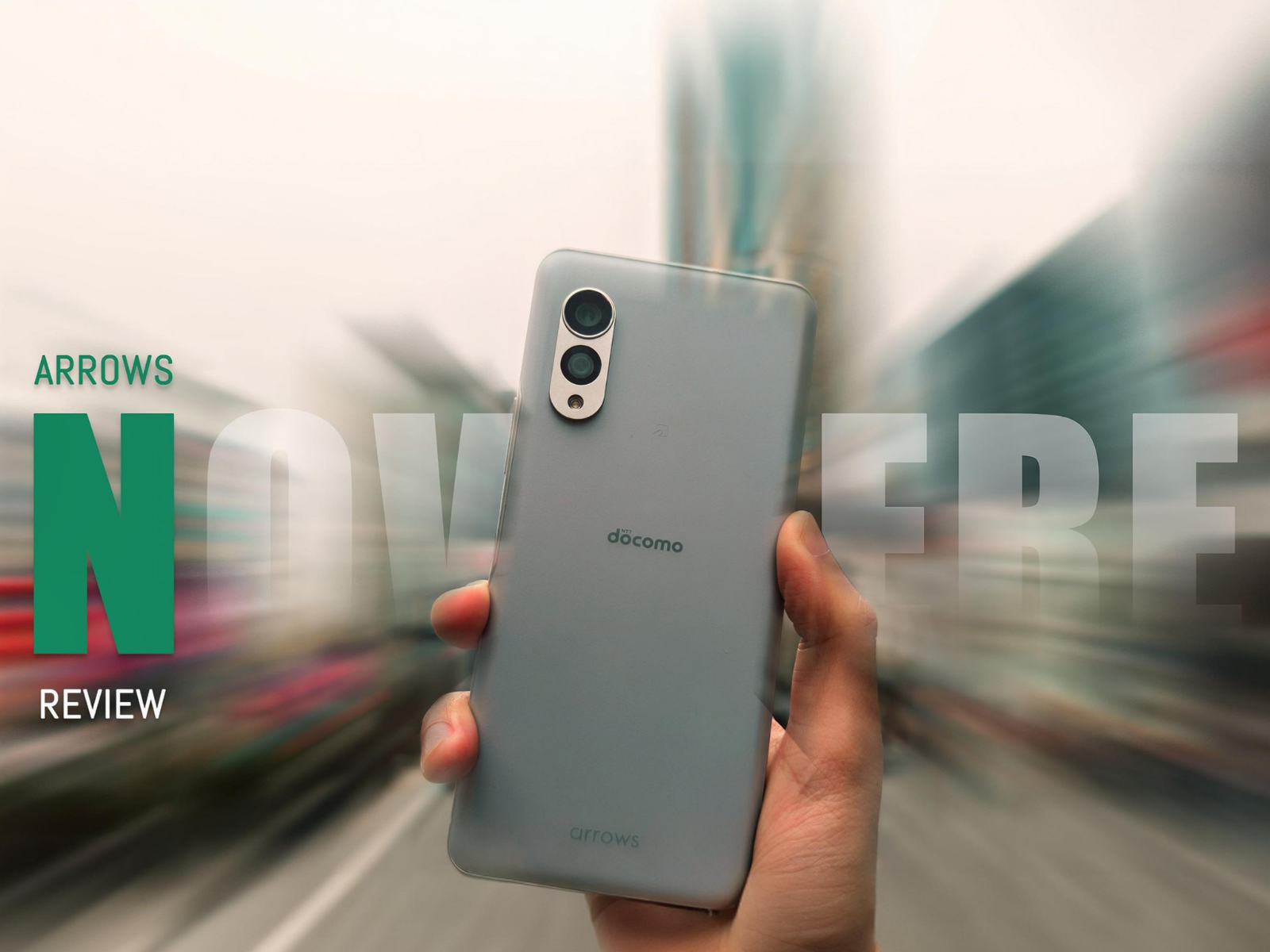
  • The End of Fujitsu Smartphones: Arrows N Marks the Final Chapter

    The End of Fujitsu Smartphones: Arrows N Marks the Final Chapter

    For many people, the impression of Japanese smartphones probably stops at Sony and Sharp. That is understandable, as they are now the only two Japanese phone brands that can still be considered active. But if we rewind fifteen years, a once-ambitious Japanese mobile company launched a brand-new flagship lineup in 2011 and gave it a name filled with hope—Arrows, meaning “an arrow charging forward.” At the time, the company was riding high, having just acquired Toshiba’s mobile phone division. The new Arrows branding felt like a bold declaration of confidence in the future.

    Fujitsu, at the beginning of the 21st century, introduced the impressive LifeBook ultraportable series and also led the development of the world’s fastest supercomputer, Fugaku. In the smartphone market, however, the sweeping dominance of the iPhone—along with the enthusiastic support Apple received from Japan’s three major carriers—continued to squeeze the space for Android flagships. At the same time, the Nvidia Tegra 3 processor used in the 2012 Arrows X suffered from severe overheating issues, which ultimately led to a lawsuit from angry users and dealt a serious blow to the brand’s reputation. Ever since the Arrows brand debuted, Fujitsu’s mobile business gradually entered a steady decline, with its market share shrinking year after year.

    In 2015, Fujitsu’s parent company made two major decisions. First, it shifted the focus of its mobile phone manufacturing toward the “Rakuraku” line, targeting the aging population as a niche market. Second, it decided to spin off its mobile phone business. In 2016, FCNT was officially established as a wholly owned subsidiary of Fujitsu and began operating independently. At the same time, the mobile device manufacturing operations that had previously belonged to Fujitsu Peripherals Limited were spun off to create a new company, Japan E.M. Solutions (JEMS). Two years later, the Japanese private equity fund Polaris Capital acquired a 70% stake in FCNT, leaving Fujitsu’s lineage within the company almost imperceptible. Nevertheless, FCNT continued to manufacture most of its core products at the Yashiro Plant of JEMS in Kato, Hyogo Prefecture—making it the only smartphone company that still carried out manufacturing and assembly within Japan itself. Although the high-end Arrows 5G and Arrows NX9 were released in 2020, even the marketing slogan of being “Japan’s champion” failed to translate into meaningful sales.

    The iPhone’s dominance in the premium segment remained unshaken, while new competitors such as OPPO, Xiaomi, and Pixel kept entering the market. The pandemic further battered both market demand and semiconductor supply. And so, in 2022, the Arrows N (F-51C) was released, highlighting eco-friendliness and exceptional longevity as its main selling points. But by then, the arrow had already left the bow—flying toward the end of its journey.

    Plastic Can Feel Premium, but That’s About It

    Environmental friendliness is the key selling point heavily promoted for this generation of Arrows flagship, and at least from an engineering perspective FCNT did manage to deliver on that promise. The Arrows N uses recycled materials for 67% of the device’s total weight. The back cover, internal roll cage, and motherboard cover are made from recycled plastics, while the frame and camera housing use recycled aluminum. In actual use, the white unit I have does not feel cheap despite the use of recycled materials. The plastic back panel feels warm and pleasant to the touch, with a fine matte texture that is smooth in the hand while also resisting fingerprints. The Felica logo, Docomo logo, and Arrows logo—along with the device codename F-51C—are vertically aligned in the center from top to bottom, which is a distinctive trait of Japanese phones. The camera bump is formed from a single piece of aluminum plate, with the main camera surrounded by a polished aluminum ring. The ultrawide camera and flash are also placed centrally, and the entire camera deco is modest in size and neatly organized. Compared with the exaggerated oversized circular modules common today, it feels cleaner and more restrained. The matte aluminum finish of the frame also resists fingerprints, while the relatively thick frame and the smooth curved transition between the frame and the back cover create a comfortable and well-fitting grip. The charging port is injection-molded, the speaker grille is centered, and symmetrical antenna injection strips are present. Of course, there is also the legendary “alien technology” inherited by Japanese phones—the hot-swappable SIM card slot that doesn’t require a pin tool. In terms of build quality and industrial design alone, it actually surpassed Sony and Sharp, its competitors at the time.

    Deco close-up
    Rear and frame design

    However, once you flip it to the front, the sense of refinement suddenly disappears. Although the Arrows N features a 120 Hz display, it still retains noticeably thick top and bottom bezels. Even more frustrating is that the upper and lower bezels are not the same width… a screen design that could easily drive perfectionists mad.

    Front appearance; the display supports Dolby Vision but not HDR

    Returning to the environmental focus mentioned earlier, the Arrows N is entirely produced and assembled at the JEMS Kato Plant in Japan. This gives it the rather “noble” characteristic of being fully manufactured domestically. On the software side, Arrows also partnered with Docomo to launch an environmental initiative called “カボニュー (Carbon Neutral),” essentially a phonetic rendering of “carbon neutral.” In simple terms, the goal is to achieve carbon neutrality by 2030 through environmentally conscious measures across multiple stages, including smartphone manufacturing and carrier operations. In addition, the Arrows Portal encourages users to charge their phones during off-peak hours in exchange for reward points.

    Promotional details for the カボニュー initiative and Arrows Portal on the Arrows N
    Caboneu Record promotional page

    The packaging box of the Arrows N also uses FSC-certified paper and environmentally friendly ink, and the box itself is designed to be easily folded for recycling. There is no charging adapter or cable included inside the box—an environmental measure implemented even earlier than that of a certain California-based company across the ocean. Part of the reason is that accessory sales are handled through the carrier’s distribution channels.

    As is traditional for Japanese phones, the Arrows N also supports IP68 dust and water resistance and can even be washed with soapy water. It has also passed the U.S. military MIL-STD-810H durability standard. However, given that this second-hand unit I bought is almost in pristine condition, I’ll refrain from actually testing its durability.

    Beyond the Ideals, There’s Little Worth Praising

    Sometimes you have to admire the peculiar logic of Japanese manufacturers. They seemed to believe that environmental friendliness alone could uphold the flagship status of the Arrows N. And so, in the second half of 2022, they priced a Qualcomm Snapdragon 695 device at 98,000 yen (roughly RMB 4,400+). In China, that price sits right around the entry point of full-fledged flagship models—you could buy brand-new devices powered by the Snapdragon 8 Gen 2, such as the Xiaomi 13, OnePlus 11, or iQOO 11. Even in Japan, the Sharp AQUOS Sense 7/7 Plus—priced at barely half of the Arrows N—uses the exact same Snapdragon 695 SoC. The weak performance of this chip is an established fact. At the time, chips like the Snapdragon 6 Gen 1 or 7 Gen 3, which later introduced oversized cores into lower-tier price segments, did not yet exist. With only two A78 performance cores and six A55 efficiency cores, the chip was already ill-suited for heavy workloads even in 2022, not to mention that it had been released a full year earlier. To make matters worse, Japan’s domestic semiconductor shortages during the pandemic meant that the Docomo contract version did not officially go on sale until March of the following year—turning the phone into a perfect example of “outdated at launch.”

    Geekbench 6 and 3DMark scores ruthlessly reveal how undeserving this SoC is of its flagship price tag. The only real advantage is the excellent power efficiency provided by TSMC’s N6 process. Combined with the chip’s low peak performance ceiling, the phone actually offers fairly good battery life and sustained performance. During the WLE Stress Test the device barely produced any heat and showed extremely stable performance—though, to be fair, the absolute scores were never very high to begin with. It’s also worth noting that due to limited instruction set and graphics API support, the phone cannot even run the newer Steel Nomad Light test (it lacks Vulkan support).

    This weak performance also affects everyday smoothness. Thankfully, the phone at least includes 8 GB of LPDDR4X RAM, so it avoids frequent LMK background app kills due to insufficient memory. However, scrolling on the home screen often fails to maintain a stable 120 Hz frame rate, and cold app launches are locked to 60 fps, creating a noticeable sense of stutter. After updating to Android 15, Lenovo even removed the nonlinear animation used during cold launches—ironically giving this phone worse treatment than its own cheaper G-series models. Installing large games is also noticeably slower than on devices with more powerful chips. Meanwhile, with support limited to WiFi 5, game downloads usually top out at only around 8–9 MB/s, making the network experience merely passable.

    For the relatively lightweight Honor of Kings, the average frame rate of 47 fps is at least playable, though team fights often bring frequent frame drops—consistent with the sub-30 fps 1% low metric.

    Honor of Kings running at High Frame Rate + Ultra Graphics

    But with the newer Arknights: Endfield, I genuinely struggled to believe that a chip with two A78 cores could perform this poorly. Even at the lowest graphics settings, the visuals looked like a mosaic, with exploration averaging less than 10 fps and combat scenes rarely exceeding 5 fps. During battles the frame rate essentially stuck at 1 fps, only rising above 20 fps when opening the map or menu. I had planned to test a dungeon as well, but this performance spared me the trouble.

    I could only laugh in disbelief.

    On the photography side, I can at least say FCNT tried to do some optimization. One of the main features promoted is Photoshop ExpressMode, developed in cooperation with Adobe. After taking a photo, the image automatically opens in Adobe Photoshop Express for automatic post-processing, and the system even comes pre-installed with the full suite of Adobe imaging tools. Unfortunately, the reality falls far short of the idea. Because of the weak SoC, the post-processing step in Photoshop is painfully slow—an auto-mode photo takes nearly half a minute just spinning before the optimization finishes. The resulting images also suffer from an excessively warm white balance, making it hard to say they look any better than the originals. Even when manually editing photos in Photoshop or Lightroom, the interface locked to 60 fps and the constant lag are far removed from the official claim that the camera would produce images “you’ll want to share with people around the world.”

    Adobe software suite
    Photo after Express processing, with severely yellowed white balance

    Night photography is where the Arrows N truly falls apart. In auto mode the camera struggles heavily with focus hunting, repeatedly failing to determine what it should lock onto even after multiple attempts. Exposure metering is also extremely inaccurate—light signs less than ten meters away still blow out highlights, and the HDR performance feels like something from a fifteen-year-old Sony CCD sensor. On top of that, under complex lighting conditions, the Snapdragon 695’s weak ISP simply cannot handle the heavy computational load of exposure reconstruction, leaving the enlarged images filled with ugly color noise that’s impossible to ignore. Taking a usable night photo basically requires switching to manual mode. But the Arrows N camera interface only allows adjustments for EV, ISO, white balance, and focus distance, with a minimum ISO of 100. Since highlights still blow out even at ISO 100, the only option is manually dialing EV down to –1 to achieve brightness closer to what the human eye sees. The downside is noticeable color shifts in manual mode. The small consolation is that once a white balance preset is chosen, color noise disappears and there are no bizarre white balance shifts. I’ve reviewed countless phones, but this may be the first time I’ve seen a device where adding computational photography actually makes the results worse.

    Top image: auto mode; bottom image: manual –1 EV
    Left: auto mode; right: –1 EV, though color noise is obvious
    Manual mode –1 EV indoor still life; white balance relatively stable

    Objectively speaking, the hardware itself—1/1.55″ CMOS with an f/1.88 aperture—still isn’t outdated even by today’s standards. Under bright daylight, the lens can finally produce images close to its full potential. Although the weak algorithm still struggles to control highlights, scenes like flowers, grass, and the sky actually benefit from the slight color shift and overexposure, giving the images a nostalgic CCD-like flavor. The rendering of blue skies and the handling of highlight spillover are particularly to my taste, creating a dizzying sensation where everything seems to shimmer with color under the sunlight.

    Daylight sample #1: excellent sky color rendering
    Daylight sample #2: buildings rendered with a classic CCD-like look

    As for the front camera and the tiny 1/4-inch ultrawide… it’s better left unmentioned. The moment I opened the ultrawide viewfinder I almost burst out laughing. All I can say is that fans of Japanese phones truly have endless “blessings.”

    The Last Remnants of Arrows’ Legacy, Yet No One Seems to Care

    Even though the weak performance makes almost every part of the experience somewhat hard to endure, FCNT’s level of system customization is still far deeper than what Sony—barely hanging on in the market today—currently offers, and it stands on par with Sharp, the true shining star of Japanese phones in terms of effort. As a Docomo launch device, the Arrows N comes preinstalled with the infamous and universally despised Docomo “bloatware bundle.” That said, compared with the era of Snapdragon 835/845 when everyone complained loudly about it, these apps do not occupy too many CPU or memory resources under 8 GB of RAM, which at least saves the trouble of freezing them one by one through tutorials.

    The full Docomo bundle—such a spectacle has long disappeared from domestic Chinese devices.

    Similar to Sharp, Arrows also includes a dedicated feature introduction and integration interface. The list of features is indeed long, covering quick operations, performance, privacy, and daily-life utilities. In practice, however, the actual modifications made to the system are very limited, and most functions rely on separate standalone apps. FAST APP Drive can quickly launch apps through a whitelist mechanism—I have good reason to suspect that it simply keeps selected apps alive in the background for extended periods. Swiping from the lock screen quickly opens FAST Memo, which is essentially a basic note-taking app with limited functions but quick voice input support. The sidebar, unlike the feature-rich ones in Chinese Android skins, offers little beyond quick app launching, along with things like touch blocking, screenshot doodling, and text recognition that opens an AR app—features that feel bland or even somewhat pointless. Like many Chinese Android interfaces, the Arrows N also allows apps to be launched through fingerprint shortcuts, even supporting independent triggers for all ten fingers. However, because the phone uses a side-mounted fingerprint sensor that requires you to swipe first before unlocking, and because the app launcher appears in the center of the screen after unlocking—combined with a fingerprint sensor that is neither particularly responsive nor fast—the overall human–machine interaction can only be described as a disaster.

    Arrows Feature Select introduction page
    Fast Memo, Fast App Drive, quick launch
    Sidebar interface and list of special functions

    The standalone Game Zone app at least features its own UI and sidebar trigger, but it still cannot adjust game-related settings such as performance or touch responsiveness. It only offers simple functions like notification blocking and network acceleration, along with a still rather puzzling game screenshot gallery.

    Game Zone app

    From my personal experience, the only feature that feels genuinely useful is the battery management function developed jointly by FCNT and Qnovo, optimized specifically for Qualcomm chips. By reading kernel-level data, Qnovo can provide accurate battery health information and charging cycle counts for users. It also includes functions such as charge limiting. Combined with the extremely power-efficient SoC and the 4600 mAh battery, the phone’s real-world battery life is at least passable.

    Qnovo, an energy-saving technology solution based on Snapdragon chips

    Not a Pity—In Fact, Entirely Self-Inflicted

    While writing this article and thinking back on the Japanese phones I’ve used over the years, one sentence kept echoing in my mind—

    The only lesson humanity learns from history is that humanity never learns from history.

    Few lines describe the decline of Japanese smartphone makers more accurately. In the feature phone era, Japanese devices symbolized individuality. They were collections of cutting-edge technology, pioneers of innovation, and synonymous with premium quality. When the Android era arrived, some manufacturers had already fallen behind, yet the leading names still seemed intoxicated by memories of past glory. Dreams of the Spring and Autumn age are easy to dream but hard to awaken from. By the time they realized that the carriers who once courted them had turned to embrace the iPhone instead, it was already far too late.

    Japanese manufacturers have long prioritized hardware over software in device development. Part of this stems from the arrogance often associated with the so-called “craftsman spirit,” but another factor lies in the unusual structure of Japan’s mobile market, where carriers hold greater influence over product definition than the device makers themselves. Rather than merely providing services, carriers act more like demanding clients toward the manufacturers. They tend to be conservative and self-contained, and system maintenance for many devices ends up being passed back and forth between the two sides until neither takes responsibility and the result is simply a mess.

    Android’s open ecosystem became a perfect opportunity for carriers to monetize devices through large amounts of preinstalled software. Meanwhile, Apple’s overwhelming dominance in Japan forced carriers to court the iPhone for profits. As a result, Japanese Android phones spent years trapped in a stereotype: weak low-end performance combined with bloated carrier software bundles. Perhaps they themselves forgot that a true flagship requires not only hardware specifications but also strong software. Ever since Sony abandoned Xperia UI in 2016 and shifted toward the Concept for Android project to simplify the system, Japanese phones have largely lost any deeply customized interfaces. Each year brings little more than modest hardware upgrades and a near-stock Android system sprinkled with a few in-house apps to signal effort. Beginning with Android Marshmallow, it almost feels as if Japan completely lost its ability to think about and design mobile UI/UX and human–computer interaction. Over the past decade, not a single company seems to have fully understood how to design touch-based interaction logic. Looking back, it’s hard to believe Sony had already implemented early floating window concepts in Android 5 and transplanted the PS3’s XMB design language onto smartphones. Yet the brilliant UI design seen on the PS4 and PS5 never again blossomed at our fingertips.

    PS3 XMB UI

    I once came across a sharp remark somewhere: Japan tends to invent something twenty years ahead of the world—then wait twenty years until it falls behind the world. That’s why banks were still using floppy disks well into the 2020s, why upgrades for aging Shinkansen systems sometimes remain PowerPoint slides, and why FeLiCa—once a payment technology ahead of its time—never became the universal NFC standard nor saw much meaningful evolution. History moves in cycles, and Japan’s mobile device market is no exception. Along the way there were excellent products—Xperia 1 II, iida X-ray, Infobar, Casio G’zone—but none were carried forward or truly built upon. There was only nostalgia and self-reflection, while the market never sheds tears for anyone.

    When I revisit old devices, I usually look at them through a lens of nostalgia. I’ve generously praised Lumia phones, early Redmi models, and even doomed experiments like Balmuda’s phone. But with this Arrows N, the dominant feelings during my time using it were silence and a kind of exasperated laughter. The halo of being assembled in Japan did not grant it even a dignified ending. Japanese consumers had little patience for a low-end device priced like a flagship. By then, however, FCNT itself no longer had the energy to care about the fate of its products—because its own fate was approaching an end even sooner than the Arrows N.

    Pandemic-driven semiconductor shortages, the brutal squeeze of Pixel devices and older iPhones in the mid-range market, and pressures both internal and external caused FCNT’s collapse to arrive abruptly. In 2023, the number of bankrupt companies in Japan saw its largest increase since the Plaza Accord era, rising by more than 30%. A total of 8,497 domestic Japanese companies went bankrupt, with combined liabilities reaching 2,376,903 million yen. Among them were 18 companies with debts exceeding 10 billion yen, including Unizo Holdings, Panasonic Liquid Crystal Display—and FCNT, which carried more than 70 billion yen in debt.

    Reports on the bankruptcy of FCNT and JEMS

    Yet the rebirth of the Arrows brand was hardly unpredictable. Lenovo, eager to capture the Japanese market, saw the acquisition of the Arrows brand as a potential entry ticket into Japan’s high-end smartphone segment—and they followed through. In September 2023 Lenovo completed the full acquisition of the bankrupt and reorganized FCNT. On the 29th, FCNT announced that under Lenovo’s leadership it would resume operations with a new organizational structure.

    Selling oneself is not something to be ashamed of; survival is what matters. Even Sharp—whose business remained relatively healthy—could not avoid being acquired by Foxconn’s parent company Hon Hai Precision. Being acquired after bankruptcy restructuring simply looks more awkward. Under Lenovo’s leadership, the new FCNT has released the Arrows we2 and Arrows Alpha. Only the external design retains faint traces of Fujitsu’s legacy—certainly not the software. Even the packaging now looks almost identical to Moto International’s. After Lenovo integrated the supply chain, the combined push of FCNT and Motorola helped Lenovo return to third place in Japan’s smartphone market in 2024 with an 8.5% share. Yet this success has almost nothing to do with FCNT, with Arrows, or with the once-spirited Fujitsu that declared “Arrows means ‘arrow,’ symbolizing the determination to open new paths.” The title of “Japan’s champion” has long been shattered by reality. Fujitsu’s former pride and stubbornness did once exist—but it has little to do with FCNT today, and even less to do with the engineering and corporate culture that produced electronic waste like the Arrows N.

    The new flagship Arrows Alpha after Lenovo’s acquisition—design language inherited, but the UI is now Moto MyUI
    Lenovo–Motorola ranked third in Japan’s smartphone market share in Q4 2024, TechInsights.

    Traditional Japanese culture holds a deep fascination with tragic heroes, even giving rise to a specific term: “hōgan-biiki.” During the Battle of Koromogawa, Minamoto no Yoshitsune took his own life when cornered. His retainer Benkei, Musashibō Benkei, stood guard to protect his lord, remaining upright even after being pierced by countless arrows until he died standing.

    Unfortunately, I don’t see Arrows as such a tragic hero. Producing electronic waste is itself a sign of disrespect toward consumers. “Every step we take determines the final outcome; our footsteps lead toward the end we have chosen.” The moment the arrow leaves the bowstring, its eventual fall is already inevitable.

    Goodnight. See you tomorrow. Everything in the past no longer belongs to the brand-new you.

    Further reading:

    Thanks to @WangMT and @冰清tsin for their help and corrections to this article. Thanks to my friend T Xiaopi for lending the device.

  • SSPAI Morning Brief: OpenAI Releases GPT-5.4 as Google Reaches Settlement with Epic Games

    SSPAI Morning Brief: OpenAI Releases GPT-5.4 as Google Reaches Settlement with Epic Games

    Morning Brief

    1. Aqara launches the Jiyue Smart Control Screen S1 Plus (Siri Edition)
    2. Hisense unveils the UX 2026 flagship RGB-Mini LED TV
    3. Nothing introduces the Phone (4a) series
    4. Insta360 releases the Snap smartphone selfie screen
    5. Google rolls out Gemini Canvas AI mode in the U.S.
    6. OpenAI launches the GPT-5.4 model
    7. Microsoft releases the open-source Phi-4-Reasoning-Vision-15B model
    8. Apple Music introduces AI content provenance labels
    9. Huami launches the Amazfit Active 3 Sapphire Edition smartwatch
    10. Google reaches a settlement with Epic Games
    11. Briefs worth a quick look

    Aqara launches the Jiyue Smart Control Screen S1 Plus (Siri Edition)

    On March 4, Aqara announced the launch of the Jiyue Smart Control Screen S1 Plus Siri Edition, the world’s first whole-home smart control panel with native Siri support.

    In terms of functionality, the S1 Plus Siri Edition integrates lighting control, temperature control, and energy management systems into a single screen. Users can interact with it through Siri or the Aqara voice assistant, or directly adjust and control smart home devices from the display while monitoring the home’s overall energy usage and device status. The product also offers customizable themes, a dedicated photo album feature, and data dashboards for personalized display and information aggregation.

    In security scenarios, the S1 Plus supports distributed video streaming. When a visitor presses the smart doorbell, any S1 Plus screen in the home can instantly display the visitor’s video feed and function as a video intercom interface.

    Product appearance image, image courtesy of Aqara

    On the hardware side, the S1 Plus Siri Edition features a 6.9-inch display with a resolution of 1440 × 720. It adopts a dual 86-type panel design, allowing it to be installed alongside standard 86 switch panels. The device includes three built-in relay switches and six wireless switches, which users can configure based on their preferences.

    So far, Aqara has more than 30 products available in Apple Stores worldwide, and over 310 of its products support Apple Home. Source


    Hisense unveils the UX 2026 flagship RGB-Mini LED TV

    On March 5, Hisense announced the UX 2026 RGB-Mini LED flagship TV, featuring the world’s first “Linglong 4-Chip True Color Backlight System.” In addition to the traditional red, green, and blue primary backlight chips, the system introduces a fourth cyan backlight chip. These backlight chips are fully developed in-house and built to automotive-grade standards. According to Hisense, the system can maintain color stability for up to 15 years, cover 110% of the BT.2020 color gamut, and reach peak brightness of up to 10,000 nits. The 116-inch version features 43,008 color-control zones, making it the largest RGB-Mini LED TV currently available. The TV also integrates the Hi-View AI picture quality chip H7 Pro, which works with the four-color architecture to enable more precise light and color control, reaching a color control precision of 134 bits.

    In other aspects, the series adopts a custom “Obsidian Screen Ultra” panel with approximately 1.28% reflectivity, delivering high contrast and wide viewing angles while supporting a native 4K 180Hz refresh rate. For audio, the TV is equipped with the Devialet Elevation Sound Pro system. Pricing starts at ¥34,999 for the 85-inch model, ¥54,999 for the 100-inch model, and ¥119,999 for the 116-inch model. Source


    Nothing introduces the Phone (4a) series

    At its latest launch event, Nothing unveiled the Phone (4a) series, including the standard Phone (4a) and the Phone (4a) Pro.

    The standard Phone (4a) features a 6.78-inch 120Hz OLED display. On the rear, it is equipped with a 50MP main camera, a 50MP 3.5× periscope telephoto lens, and an ultra-wide camera. To the right of the camera module is a square Glyph Bar light strip with a peak brightness of up to 3500 nits, supporting multiple lighting effects.

    The Phone (4a) Pro comes with a 6.83-inch 144Hz OLED panel and a body thickness of 7.95 mm. According to the company, it is currently the thinnest “full-metal smartphone” on the market. In terms of imaging, the device features a 50MP Sony LYT700C main camera, a 50MP 3.5× periscope telephoto lens, and an ultra-wide camera. It also includes a Glyph Matrix lighting system composed of 137 mini LEDs, capable of displaying battery status, timers, and a digital clock.

    For performance, the Phone (4a) is powered by the Qualcomm Snapdragon 7s Gen 4 processor, while the Phone (4a) Pro uses the Qualcomm Snapdragon 7 Gen 4 processor. Both models come with a 5080mAh battery and support 50W wired charging. Pricing starts at €349 (approximately ¥2801) for the Phone (4a), and €479 (approximately ¥3845) for the Phone (4a) Pro. Source

    Nothing also introduced the Headphone A, which continues the brand’s signature design language. Its overall shape resembles the Headphone 1, featuring rectangular ear cups and transparent elements, though some of the transparent parts have been replaced with opaque panels. It is available in white, black, pink, and yellow. The headphones weigh about 310g and carry an IP52 rating for dust and water resistance.

    Headphone A uses physical mechanical controls, including a volume roller, toggle-style track controls, and a voice assistant button. For audio, it supports AAC, SBC, and LDAC codecs, and provides an 8-band parametric equalizer along with basic EQ adjustment options. In terms of battery life, it can last up to 135 hours with AAC playback and ANC turned off, or around 75 hours with ANC enabled.

    Headphone A supports Bluetooth 5.4, USB-C, and 3.5mm wired connections, and can connect to two devices simultaneously for seamless switching. For calls, the headset is equipped with three microphones. The Headphone A is priced at $199 (approximately ¥794.7). Source


    Insta360 releases the Snap smartphone selfie screen

    On March 5, Insta360 announced the Snap smartphone selfie screen, a device designed to solve the problem of not being able to preview shots in real time when taking selfies with a phone’s rear camera.

    In terms of design, the Snap selfie screen features a 3.5-inch display. The base version is about 7.3 mm thick and attaches magnetically to the back of a smartphone, supporting a range of Apple and Android devices. The Snap connects to the phone via a USB-C cable and works plug-and-play without requiring an independent power supply. Compared with wireless image transmission solutions, this design provides more stable and smoother video transmission, while also supporting real-time preview when recording 4K video.

    In terms of user experience, Snap supports touch interaction, allowing users to quickly adjust exposure, switch filters or shooting modes, and mirror the preview with a single tap. The accessory is compatible not only with the phone’s native camera app but also with mainstream beauty and professional photography apps, enabling users to take selfies or shoot videos using the rear camera.

    The product is available in two versions: a standard edition and a lighting edition, priced at ¥499 and ¥599 respectively. The lighting edition is co-tuned by Insta360 and beauty lighting brand AMIRO, and features a ring fill light with three color temperature options and five brightness levels. Source


    Google rolls out Gemini Canvas AI mode in the U.S.

    On March 5, Google announced that the Canvas feature, previously tested in Google Labs, is now available to all users in the United States through Gemini’s AI Mode. The feature currently supports English.

    Canvas is designed to help users organize information, plan projects, and conduct in-depth research. It has now expanded to support writing documents and creating custom tools directly within the search interface. In creative and development scenarios, users can simply describe their ideas to Canvas in natural language to generate code, which can then be quickly turned into shareable applications or mini games.

    The feature also applies to literary writing and other creative projects. Users can use Canvas to polish drafts, adjust structure, or receive suggestions for improvement.

    In terms of workflow, users can click the “+” button in the tool menu within AI Mode and select the newly added Canvas option, then describe the task they want to complete or the content they want to create. A Canvas panel will then open on the side of the interface, where users can gather information from web pages and the Google Knowledge Graph to organize research materials or structure their projects.

    If used for building prototypes or applications, users can also test functions within the same interface, view and switch the underlying code, and continuously refine the application’s behavior through conversations with Gemini. Source


    OpenAI launches the GPT-5.4 model

    OpenAI has announced the release of its next-generation AI model, GPT-5.4. The company states that the model brings upgrades in reasoning ability, coding performance, and handling professional workflows such as spreadsheets, documents, and presentations. OpenAI also notes that GPT-5.4 is its first model with native computer operation capabilities. By generating code as well as keyboard and mouse commands, it can perform tasks across different applications and complete actions based on screenshots. In addition, the model has improved efficiency and accuracy in web browsing, tool usage, and API calls.

    OpenAI has also introduced a reasoning-focused version, GPT-5.4 Thinking, which is now available in ChatGPT. This version can display a summary of its reasoning steps when handling complex problems and allows users to adjust their requests during the generation process. According to OpenAI, GPT-5.4 performs better on questions that require retrieving information from multiple sources, enabling sustained multi-step searches and result integration. Its factual accuracy has also improved, with the probability of a single incorrect conclusion reduced by approximately 33% compared to GPT-5.2.

    GPT-5.4 is now available across ChatGPT, Codex, and the API. GPT-5.4 Thinking is offered to Plus, Team, and Pro users, while GPT-5.4 Pro is available to API, ChatGPT Enterprise, and Edu users. Source


    Microsoft releases the open-source Phi-4-Reasoning-Vision-15B model

    On March 5, Microsoft announced the launch of the open-source Phi-4-Reasoning-Vision-15B model through its official developer community blog. This is a vision reasoning model that combines high-resolution visual perception with selective, task-aware reasoning capabilities, making it the first small language model (SLM) in the Phi-4 series that can both “see clearly” and “think deeply.”

    The core feature of the model is its hybrid reasoning mechanism. When a task requires deeper reasoning—such as solving math problems or performing logical analysis—the model activates a multi-step reasoning chain. When only rapid visual perception is required—such as OCR or identifying UI elements—it outputs results directly to reduce latency and improve response efficiency.

    In terms of application scenarios, the model is particularly suited for use with computer agents. After receiving screenshots and natural language instructions, the model can output standardized bounding box coordinates for target UI elements, which can then be used by other agent models to perform actions such as clicking or scrolling. The model has now been released as open source on Hugging Face.


    Apple Music introduces AI content provenance labels

    On March 5, Apple Music introduced a transparency labeling feature to indicate whether music content has been created using AI technologies.

    Under the new rules, record labels and content distributors must clearly state whether artificial intelligence (AI) was used in the creation process—such as for music production or cover artwork—when submitting new content to the platform. To more clearly define the scope of AI involvement, Apple has introduced four Transparency Tags corresponding to the core creative elements of digital music content: cover artwork, audio track, composition, and music video.

    According to Apple’s implementation guidelines, these tags will only be triggered when “a substantial portion of the content is created using AI.” Given the complexity of modern music production workflows, a single piece of music may carry multiple transparency tags simultaneously.

    At the implementation level, Apple has not introduced mandatory machine-based detection mechanisms. Instead, the determination of whether content qualifies as AI-generated is left to partners to self-report. This approach is similar to existing industry practices for metadata management, such as classifying music genres or listing credits for performers and production staff, allowing creators and distributors a relatively high degree of discretion. Source


    Huami launches the Amazfit Active 3 Sapphire Edition smartwatch

    On March 5, Huami introduced the Amazfit Active 3 Sapphire Edition smartwatch. The watch adopts a lightweight four-button design and features a sapphire crystal display paired with a stainless steel middle frame.

    The Amazfit Active 3 Sapphire Edition is equipped with a 1.32-inch high-brightness AMOLED display with peak brightness reaching up to 3000 nits. The device includes a wide range of built-in training courses covering basic cardio and mixed training types, and supports more than 170 sports modes. Running and strength training programs include multiple formats such as endurance and speed training.

    For outdoor activities, the watch supports offline maps, route navigation, and turn-by-turn alerts, allowing users to plan routes in advance. It is equipped with a five-satellite positioning system for faster and more accurate location tracking. The BioTracker heart rate monitoring system provides real-time feedback on workout intensity and combines sleep, blood oxygen, and stress data to help users balance training and recovery.

    In addition, the watch supports Bluetooth calling, Alipay and WeChat offline payments, as well as NFC transit cards. According to official data, the device offers around 12 days of battery life under typical usage and about 7 days under heavy use.

    In terms of colors, the Amazfit Active 3 Sapphire Edition is available in options such as Champagne Silver and Sapphire Blue, with a retail price of ¥1199. Source


    Google reaches a settlement with Epic Games

    On March 4, Google and Epic Games reached a settlement agreement.

    Under the new plan, Google will reduce the base service fee for in-app purchases from the previous maximum of 30% to 20%. If developers choose to use Google’s own payment system, an additional 5% fee will apply. Subscription service fees will be reduced to 10%.

    At the same time, Google will introduce a “Registered App Stores” program. Third-party app stores that meet quality and security standards will be able to install and run more easily on the Android platform, reducing the friction users face when installing apps outside the Play Store.

    As part of the settlement, Epic Games will relaunch Fortnite on the global Google Play Store while continuing to develop the Epic Games Store for Android. The new fee structure is scheduled to take effect on June 30, 2026, in the United States, the European Economic Area, and the United Kingdom, followed by expansion to Australia on September 30, 2026. It is expected to cover South Korea and Japan by the end of 2026 and expand globally by September 30, 2027.

    Epic Games CEO Tim Sweeney stated that the agreement will push the Android ecosystem toward greater openness and allow app stores to compete with one another. Meanwhile, Epic’s lawsuit against Apple over App Store commissions is still ongoing, with the current ruling under appeal. Source


    Briefs worth a quick look

    According to Board Channels, the GeForce RTX 3060 graphics card that NVIDIA recently resumed production of will enter the market between March 10 and March 20. Earlier reports suggested that the revived RTX 3060 is an 8GB version with a 128-bit memory bus, which delivers noticeably reduced performance compared with the 12GB version. Source

    According to analysis by the tech outlet wccftech, the MacBook Neo’s 8GB memory configuration may be related to the packaging design of the A18 Pro chip it uses. The A18 Pro adopts TSMC’s InFO-POP (Integrated Fan-Out Package on Package) technology, which allows DRAM to be stacked directly on top of the SoC package, forming a single integrated structure between memory and the chip. Currently, the memory package paired with the A18 Pro provides 8GB of capacity. If Apple were to redesign the chip to support 12GB of RAM, development and manufacturing costs would increase significantly. In theory, Apple could also use the A19 Pro chip with a built-in 12GB RAM package, but that would likewise raise the bill of materials cost for the MacBook Neo. With memory chip prices rising, Apple ultimately chose to offer only a fixed, non-upgradable 8GB RAM configuration in order to maintain the MacBook Neo’s relatively low price positioning. Source

    Microsoft’s newly appointed CEO of gaming, Asha Sharma, revealed that the internal codename for the next-generation Xbox console is “Project Helix.” She stated that the device will focus on high performance and support running both Xbox and PC games, further integrating the console and PC ecosystems. Microsoft had previously indicated that the next-generation Xbox would be a hybrid device combining characteristics of both consoles and PCs, aiming to deliver a “premium and carefully crafted” gaming experience. Source

  • SSPAI Morning Brief: Apple Unveils iPhone 17e and M4 iPad Air as Qualcomm Introduces Snapdragon Wear Elite

    SSPAI Morning Brief: Apple Unveils iPhone 17e and M4 iPad Air as Qualcomm Introduces Snapdragon Wear Elite

    Morning Brief

    1. Apple unveils iPhone 17e and M4-powered iPad Air
    2. Two updates from Motorola
    3. Lenovo announces multiple new products at MWC
    4. HONOR unveils several new products at MWC
    5. Qualcomm introduces the new Snapdragon Wear Elite
    6. iReader launches the iReader Tango 2 Pro e-ink reader
    7. Three updates from Alibaba’s Qwen
    8. Anker eufyMake E1 3D Texture UV Printer now available domestically
    9. Briefs worth a quick look

    Apple unveils iPhone 17e and M4-powered iPad Air

    On March 2, Apple announced two new products: the iPhone 17e and a new iPad Air powered by the M4 chip.

    The iPhone 17e features a 6.1-inch display with Ceramic Shield 2 and an aluminum frame. It is powered by the A19 chip with a 4-core GPU and the C1X modem, and supports eSIM. Compared with the C1 modem found in the iPhone 16e, the C1X delivers up to twice the speed. The device supports MagSafe, with wireless charging up to 15W, and offers up to 26 hours of video playback. The iPhone 17e starts at 256GB of storage and is available in black, white, and pink, with pricing starting at RMB 4,499. It will go on sale on March 11. Source

    The new iPad Air is equipped with the M4 chip (8-core CPU and 9-core GPU), with unified memory increased to 12GB. It is available in 11-inch and 13-inch sizes, and comes in Space Gray, Blue, Purple, and Starlight. Storage starts at 128GB, with pricing beginning at RMB 4,799. It will also go on sale on March 11. The new iPad Air adopts the N1 chip and C1X modem, and supports Wi-Fi 7, Bluetooth 6, and Thread connectivity. Source


    Two updates from Motorola

    Motorola Partners with GrapheneOS

    On March 2 at MWC 2026, Motorola announced a long-term partnership with GrapheneOS, aiming to bring advanced security technologies to everyday users. Through this collaboration, the two parties will work together to enhance smartphone security and explore future device compatibility with GrapheneOS. Motorola will collaborate with GrapheneOS in the coming months on software features, security enhancements, and related areas, with more details to be revealed as the partnership progresses. At present, Motorola has not disclosed which models will be compatible with or ship with GrapheneOS. Previously, GrapheneOS was only available on Google Pixel devices. Source

    Motorola Unveils the Razr Fold Horizontal Foldable

    At MWC 2026, Motorola introduced its first horizontally folding smartphone, the Razr Fold. The device is powered by the Snapdragon 8 Gen 5 processor, paired with 16GB of RAM and 512GB of storage, with a 1TB variant available in select markets. It features a 6.6-inch 165Hz 21:9 pOLED external display, making it the first smartphone to use Corning Gorilla Glass Ceramic 3. The internal display is an 8.1-inch 120Hz LTPO panel. The device measures 4.6mm thick when unfolded (excluding the camera module), 9.9mm when folded, and weighs 244g. The Razr Fold packs a 6,000mAh battery, supporting 80W TurboPower fast charging, 50W wireless charging, and 5W reverse wireless charging. It carries IP48 and IP49 ratings for dust and water resistance, and supports the Moto Pen Ultra stylus. The Razr Fold will ship with Android 16 and is promised at least seven major OS upgrades along with seven years of security updates. It will be available in Pantone Blackened Blue and Pantone Lily White. Pricing and exact availability have yet to be announced, but the device is set for release within 2026. Source


    Lenovo announces multiple new products at MWC

    At MWC 2026, Lenovo introduced a range of new products and concept devices.

    The Yoga Book Pro 3D concept laptop highlights its glasses-free 3D display, aiming to naturally present depth, shape, and spatial relationships on screen. The laptop features dual Lenovo PureSight Pro Tandem OLED displays. Powered by Lenovo’s in-house AI software, 2D images can be converted into 3D and shown on the upper display. Users can also use mid-air gestures captured via an RGB camera to zoom, rotate, and interact with content. The lower display supports an attachable keyboard, offering shortcuts for adjusting lighting, viewing angles, and color tones. The device is powered by an Intel Core Ultra 7 processor and an RTX 5070 GPU.

    The Legion Go Fold concept handheld features a POLED display that expands from 7.7 inches to 11.6 inches, with detachable controllers. It supports four usage modes: standard handheld mode, vertical split-screen mode, horizontal full-screen mode, and extended desktop mode.

    In extended desktop mode, the right controller can function as a vertical mouse. It includes a small display that can act as a touchpad, show game settings and performance metrics, or serve as customizable hotkeys. The Legion Go Fold is powered by an Intel Core Ultra 7 258V processor, features a 48Whr battery, and comes with 32GB of RAM.

    The Yoga 9i 2-in-1 Aura Edition (14″, 11) retains the Yoga series’ classic 360° convertible design. Lenovo positions it as a versatile drawing tablet. It features a 2.8K PureSight Pro OLED touchscreen with a peak brightness of 1100 nits and 100% coverage of DCI-P3, Adobe RGB, and sRGB color gamuts. It supports the Yoga Pen Gen 2 stylus, and the pen case magnetically attaches to the lid to create a canvas mode for improved ergonomics while drawing.

    The device continues to support the Yoga series’ multi-mode usage. It is powered by an Intel Core Ultra Series 3 processor and qualifies as a Copilot+ PC. Ports include two USB-C Thunderbolt 4 ports, one USB-A 3.2 Gen 2 port, and one HDMI 2.1 FRL port. It weighs 1.29kg and is expected to launch in March this year.

    The Yoga Pro 7a (15″, 11) is equipped with AMD Ryzen AI Max+ series processors and supports a unified memory architecture, allowing the CPU and GPU to share up to 128GB of RAM. It is compatible with the Yoga Pen Gen 2, and its Force Pad touchpad is powered by Wacom technology for drawing, automatically disabling touch gestures when the stylus is in use. The device features Lenovo X Power thermal technology, upgraded heat pipes, and dual fans, increasing thermal performance to 95W TDP while keeping noise levels as low as 22dB. It is expected to launch in June this year.

    The IdeaPad Pro Gen 2 tablet runs on the Snapdragon 8s Gen 4 mobile platform and integrates Lenovo AI solutions. It features a 13-inch 3.5K PureSight Pro display with Dolby Vision support. The tablet measures 6.2mm thick, weighs under 600g, includes a 10,200mAh battery with 45W fast charging, and is available in Moon Gray, Cloud Gray, and Mint.

    The IdeaPad Slim 5i Ultra (14″, 11) laptop offers either a WUXGA OLED or WQXGA IPS LCD 120Hz display. It houses a 65Wh battery, supporting up to approximately 20 hours of video playback. The device weighs as little as 1.15kg and measures 11.9mm at its thinnest point. It includes an FHD infrared camera for facial recognition and features a physical privacy shutter.

    The Legion Tab (8.8″, 5), known domestically as the Y700 (5th Gen), features an 8.8-inch 3K display with a 165Hz refresh rate and typical brightness of 600 nits. It is powered by the Snapdragon 8 Elite Gen 5 mobile platform, with configurations up to 16GB RAM and 512GB storage. The 9,000mAh battery is paired with Lenovo’s Legion Coldfront Vapor cooling system, improving thermal efficiency by 32% compared to the previous generation. The tablet weighs 360g and comes in black, white, and fluorescent green.

    The Legion 7a (15″, 11) gaming laptop also features AMD Ryzen AI Max+ series processors with unified memory architecture. It uses an aluminum chassis, weighs 1.65kg, and sports a 15.3-inch PureSight OLED display.

    Lenovo also showcased an AI Work Companion concept device resembling a desktop clock. Designed for interactive engagement, it uses AI to sync daily tasks and schedules across the user’s devices and can generate a balanced daily plan with a single tap. The device includes a built-in hub for desktop charging and features customizable physical buttons that can be configured as needed.

    Also announced were the Yoga Slim 7i Aura Edition, IdeaPad Slim 3i, L16 desktop monitor, and other new devices. Source


    HONOR unveils several new products at MWC

    At MWC 2026, HONOR announced several new products. The foldable flagship HONOR Magic V6 debuted in a new “Chitu Red” colorway, with its official domestic launch scheduled for March 10. HONOR also announced a strategic technology partnership with ARRI, aiming to “bring cinematic storytelling experiences to creators worldwide.”

    HONOR introduced the Robot Phone concept device as a new form of AI terminal. The Robot Phone features a motorized four-joint movable gimbal built into its camera module. The camera can perform AI-driven interactions and real-time feedback through movement, while also supporting three-axis image stabilization and intelligent object tracking. It can even “dance” in sync with music for interactive experiences. HONOR has launched a Robot Phone wish program, allowing users to receive updates on development progress and participate in user research. The device is envisioned to launch within 2026. Source

    At MWC 2026, HONOR also unveiled its first humanoid robot, HONOR ROBOT, which took part in a live dance performance, showcasing moves such as the moonwalk and a backflip. Source


    Qualcomm introduces the new Snapdragon Wear Elite

    On March 2 at MWC 2026, Qualcomm officially unveiled the new Snapdragon Wear Elite platform. The platform is designed to enable OEMs and AI cloud service providers to develop and innovate rapidly in this emerging space, deploying AI agents across a wide range of device form factors, including smartwatches, pin-style wearables, pendants, and more. The platform places significant emphasis on its integrated NPU, which has been substantially enhanced to run models with up to 2 billion parameters directly on-device. Combined with multimodal inputs from voice, vision, location, and various sensors, it enables highly personalized AI agents to support users in work, study, health, and everyday life. In terms of performance, the platform adopts a new five-core CPU architecture and integrates upgraded CPU and GPU components, delivering substantial performance gains. Compared to the previous generation, CPU performance improves by up to five times, while GPU performance increases by up to seven times. On the efficiency front, Qualcomm states that the platform can extend daily operating usage (DOU) by 30%, and can charge to approximately 50% in just 10 minutes. For connectivity, Qualcomm introduces what it describes as the most comprehensive connectivity suite yet for a wearable platform, supporting six different technologies: 5G RedCap, ultra-low-power Wi-Fi, Bluetooth 6.0, UWB (Ultra Wideband), GNSS (Global Navigation Satellite System), and NB-NTN satellite communication. Source


    iReader launches the iReader Tango 2 Pro e-ink reader

    On March 2, iReader unveiled the iReader Tango 2 Pro e-ink reader. The device adopts a smartphone-like form factor and is available in black and white. It features a newly developed in-house ultra-refresh technology, delivering a dynamic refresh rate of up to 50 frames per second, with flicker reduced to nearly zero. The reader supports SIM card insertion for cellular connectivity and enables WeChat voice functionality. An 8MP rear camera is included for QR code scanning. It uses a Carta 1300 e-ink display with freely adjustable color temperature and brightness. Powered by an 8-core CPU built on a 6nm process, the device comes with 8GB RAM and 128GB storage, with rated battery life of approximately 101 hours. The iReader Tango 2 Pro will go on sale on March 10, with an introductory price of RMB 1,999. Source


    Three updates from Alibaba’s Qwen

    Alibaba Unifies Its Large Model Brand Under Qwen
    On March 2, Alibaba’s large model team officially announced that it has unified the overall name and core brand of Alibaba’s AI under “Qwen.” The Qwen large model lineup covers both foundational models and domain-specific models, while the Qwen App serves as Alibaba’s flagship AI application for consumers. Following the rebranding, the Chinese name of Alibaba’s large model brand is 千问大模型, with the English name Qwen. “Tongyi Lab” will remain the organizational name of Alibaba Group’s AI research institution. Source

    Tongyi Lab Releases Two Natural Language–Controlled Speech Generation Models
    On March 2, Alibaba Cloud’s Tongyi Lab announced the release of two speech generation models built on the new FreeStyle paradigm: Fun-CosyVoice 3.5 and Fun-AudioGen-VD, aiming to push speech generation into a new stage of fine-grained control via natural language. Fun-CosyVoice 3.5 focuses on voice cloning and expressive optimization, with its core breakthrough being the ability to directly control generation results through natural language instructions such as “make the tone more firm,” without relying on preset tags. It supports multilingual voice cloning and adds new generation capabilities for Thai, Indonesian, Portuguese, and Vietnamese, while significantly improving pronunciation accuracy, prosody quality, and response latency. Fun-AudioGen-VD, on the other hand, focuses on building voices and auditory scenes from scratch. Based on text descriptions, it can directly generate specific timbres, emotions, characters, and even complete background environments and spatial acoustic effects, enabling integrated “character + scene” audio creation. Source

    Qwen AI Glasses G1 Open for Reservations Across All Channels
    Qwen’s first AI hardware product, the Qwen AI Glasses, went online for reservations on March 2 and will go on sale in China on March 8. The initial launch includes two series, S1 and G1, both powered by the latest generation Qwen large model. The devices offer industry-leading response speed and interaction smoothness, support high-precision multimodal understanding and real-time interaction, and cover key daily and office scenarios including high-definition photography, AI translation, meeting transcription, and image recognition. The G1 series, which will be available first, features dual flagship chips with dual systems, a five-microphone array with bone conduction, and high-performance large-diaphragm speakers. It adopts a lightweight design with a swappable battery experience, weighing only about 40g—comparable to ordinary optical glasses—and is equipped with an adjustable swan-neck bracket and FDA food-grade silicone nose pads for all-day comfort. The G1 integrates “smartphone-level” imaging technology, enabling 0.6-second rapid capture and 3K video recording, with AI super-resolution and frame interpolation to output 4K video. It also uses Super RAW low-light enhancement technology to significantly improve image quality and stability in low-light environments. With 64GB of built-in storage, it supports extended continuous shooting. The G1 series starts at RMB 2,899, with a subsidized price of RMB 1,997 after national incentives. Source


    Anker eufyMake E1 3D Texture UV Printer now available domestically

    On March 2, Anker announced via its official WeChat account that the eufyMake E1 is now exclusively available on JD.com, with full-payment pre-orders set to begin on March 12. Designed for makers and small studios, the printer supports 3D textured printing on a variety of materials. It can print on metal, glass, acrylic, and wood surfaces, simulating textures such as oil painting brushstrokes and embossed leather, with a maximum print height of up to 5mm. The companion app includes AI-powered creative features, allowing users to generate textures and relief effects. The printer supports flat printing, cylindrical printing, and UV transfer stickers. It also features a built-in JetClean self-cleaning system that automatically maintains the printheads to reduce the risk of clogging. Source


    Briefs worth a quick look

    • At MWC 2026, Leica joined Xiaomi in unveiling the Leica Leitzphone. In China, the device will be sold as the Xiaomi 17 Ultra Leica Edition in a black and silver colorway, with pricing starting at RMB 7,999. Source
    • Xiaomi has launched the Xiaomi Tag tracker, available in BLE and UWB versions, priced at RMB 69 and RMB 129 respectively. The Xiaomi Tag supports IP67 dust and water resistance and is powered by a CR2032 coin-cell battery. It is compatible with the iOS Find My app. The UWB version works with the Xiaomi 17 Ultra, Xiaomi 17 Pro Max, and Xiaomi 17 Pro. The BLE version is already on sale. Source
  • SSPAI Morning Brief: Samsung Unveils Galaxy S26 as Google Integrates ProducerAI Music Tool

    SSPAI Morning Brief: Samsung Unveils Galaxy S26 as Google Integrates ProducerAI Music Tool

    Morning Brief

    1. Samsung Releases the S26 Series
    2. New Developments from Anthropic
    3. Aqara Launches Smart Video Doorbell G400
    4. Spotify Introduces Urn-Shaped Speaker
    5. Audio-Technica Releases USB-C Wired Earphones ATH-CKD7NC
    6. ProducerAI Music Creation Tool Integrates with Google
    7. Open-Source Office Suite LibreOffice Online Project Resumes
    8. WeChat Announces Two Practical New Features
    9. Rumors Worth a Quick Look

    Samsung Releases the S26 Series

    On February 26, Samsung held a Galaxy Unpacked event in San Francisco, USA, unveiling the Galaxy S26 series, which includes the Galaxy S26, Galaxy S26+, and Galaxy S26 Ultra.

    In terms of display and design, the Galaxy S26 and S26+ feature 6.3-inch and 6.7-inch displays respectively, with body thicknesses of 7.2mm and 7.3mm, and weights of 167g and 190g. Both support IP68-rated dust and water resistance and use an “Enhanced Armor Aluminum Frame.” The Galaxy S26 Ultra measures 7.9mm in thickness and weighs 214g, featuring an “Upgraded Enhanced Armor Aluminum Frame,” and also supports IP68-rated dust and water resistance. All models in the S26 series support a 1–120Hz adaptive refresh rate and peak brightness of up to 2600 nits. The Galaxy S26 has a display resolution of 2340 × 1080, while both the Galaxy S26+ and Galaxy S26 Ultra offer a resolution of 3120 × 1440.

    In terms of hardware, all three models are powered by the custom Snapdragon 8 Gen 5 for Galaxy chipset. Samsung claims that the chip delivers approximately 39% improvement in NPU performance, 24% improvement in image processing, and around 19% improvement in CPU performance. For thermal management, the Ultra model is equipped with a new vapor chamber solution.

    For battery life and charging, the Galaxy S26 and S26+ come with 4300mAh and 4900mAh batteries respectively, with official claims of up to 31 hours of video playback. The Galaxy S26 supports up to 25W wired fast charging (around 55% in 30 minutes) and requires a separately purchased 25W adapter. The Galaxy S26+ supports up to 45W wired fast charging (around 69% in 30 minutes) with a separately purchased 45W adapter. The Galaxy S26 Ultra retains a 5000mAh battery but supports up to 60W wired charging (Super-Fast Charging 3.0), also requiring Samsung’s 60W power adapter. In terms of wireless charging, the S26+ and Ultra support Qi2 wireless charging at 20W and 25W respectively, though neither includes built-in magnetic alignment.

    For imaging, the Galaxy S26 and S26+ feature a triple-camera setup consisting of a 50MP main camera, 12MP ultra-wide camera, and 10MP telephoto lens, supporting 3x optical zoom and up to 30x digital zoom, along with the “Enhanced Visual Engine” for improved night photography. The S26 series also introduces a new “Super Steady” feature that combines ultra-wide field of view with gyroscope and accelerometer data to improve horizontal stabilization during shooting. The Galaxy S26 Ultra adopts a quad-camera system, including a 200MP main camera, 50MP ultra-wide camera, and a 50MP / 10MP telephoto combination, supporting 3x and 5x optical zoom, along with a 12MP front camera. The Ultra’s wide-angle lens is upgraded to an ƒ/1.4 aperture, with Samsung claiming a 47% increase in imaging brightness, while the telephoto lens features an ƒ/2.9 aperture with a claimed 37% brightness improvement. Samsung also highlighted improvements in Nightography Video, stabilization, ISP performance, and skin tone reproduction, along with expanded AI capabilities.

    In terms of privacy and functionality, the Galaxy S26 Ultra introduces native hardware-level “Privacy Display” for the first time, which helps obscure sensitive content such as notifications from side viewing angles, with customizable in-app settings and multiple visibility levels. It also supports privacy protection for password, PIN, or pattern input across lock screens, Secure Folder, and system settings. The Ultra continues to support the S Pen, available only in black and white finishes, though Bluetooth functionality has not returned.

    On the system and AI side, the Galaxy S26 series comes preloaded with One UI 8.5, featuring the “Now Nudge” information suggestion function, with a more personalized Now Brief. Circle to Search also adds multi-object recognition. For the default assistant, users can choose between Bixby, Gemini, or Perplexity in system settings.

    In terms of pricing, the base Galaxy S26 with 12GB of RAM and 256GB of storage is priced at 6,999 RMB; the Galaxy S26+ with the same configuration is priced at 7,999 RMB; and the Galaxy S26 Ultra with 12GB of RAM and 256GB of storage is priced at 9,999 RMB. Source


    New Developments from Anthropic

    On February 25, Anthropic Product Manager Noah Zweben stated that the newly added “Remote Control” feature in Claude Code allows developers to remotely sync and control command-line programming tasks on their local computers via mobile devices. Users only need to update the client and scan a QR code to complete session synchronization. This feature works by establishing a secure connection between the local terminal and the mobile device, rather than migrating the development environment to the cloud.

    The feature is currently being rolled out to Claude Max subscribers first and will later be extended to Claude Pro users. According to Anthropic, the design aims to improve developers’ workflow continuity, enabling them to continue working on complex tasks even when away from their computers. Source

    Additionally, according to TIME magazine, Anthropic has made significant revisions to its Responsible Scaling Policy (RSP) introduced in 2023, removing the key commitment to “not train AI models without first ensuring sufficient safety mitigation measures.” Chief Scientist Jared Kaplan noted that amid rapid advances in AI technology and continued progress by competitors, unilaterally pausing model training would neither effectively curb rising systemic risks nor preserve the company’s influence in frontier safety research.

    The updated RSP places greater emphasis on transparency and relative constraint mechanisms, including disclosing model performance in safety testing, matching or exceeding competitors’ safety investments, and committing to consider slowing development only when the company is deemed to be leading in the AI race and facing significant catastrophic risks. Anthropic also plans to regularly publish a “Frontier Safety Roadmap” along with more detailed risk reports. Source


    Aqara Launches Smart Video Doorbell G400

    On February 25, Aqara announced that its Smart Video Doorbell G400 is now officially available. The device features an IP65 protection rating and adopts a constant power supply design, meaning it does not support battery operation. It offers 2K resolution and supports AI-powered human detection, facial recognition, and package detection. The G400 is equipped with dual-band Wi-Fi 6 and an RJ45 Ethernet port, and includes a Micro SD card slot. Additionally, it supports Apple HomeKit and is priced at 819 RMB. Source


    Spotify Introduces Urn-Shaped Speaker

    On February 25, Spotify and Liquid Death announced a collaborative product called the “Eternal Playlist Urn,” a wireless Bluetooth speaker designed in the shape of an urn—not an actual container for ashes.

    As a limited-edition collectible, only 150 units of the Eternal Playlist Urn will be sold in the United States, priced at $495. Buyers will receive a 7-inch by 11.4-inch urn-shaped speaker with an integrated Bluetooth audio unit built into the lid.

    Users can create a personalized “Eternal Playlist” on Spotify by answering questions such as “What is your eternal vibe?” Spotify will generate a customized playlist based on the responses and listening history, which can then be synced directly to the urn speaker and shared with friends and family. In an official blog post, Spotify stated: “Life needs music—and so does the afterlife.” This collaboration with Liquid Death aims to create what is described as the world’s first wireless speaker designed for music to accompany users into the unknown. Source


    Audio-Technica Releases USB-C Wired Earphones ATH-CKD7NC

    Audio-Technica has announced that it will launch a new USB Type-C wired earphone, the ATH-CKD7NC, this Friday. The model supports high-precision hybrid active noise cancellation and is equipped with an ENC environmental noise-reduction microphone. The ATH-CKD7NC features a precision-machined aluminum alloy housing and houses an 11mm Hi-Res driver unit, along with a high-quality DAC chip supporting 24-bit / 96kHz audio. The product also includes an in-line controller for switching between transparency and noise cancellation modes, as well as a cable clip. It is priced at 9,680 yen. Source


    ProducerAI Music Creation Tool Integrates with Google

    On February 24, Google Labs published a blog post announcing that the generative AI music creation platform ProducerAI has joined its product ecosystem. ProducerAI deeply integrates Google DeepMind’s Gemini, Lyria 3, Veo, and other large models to provide musicians with end-to-end creative support—from songwriting and arrangement to mixing.

    Users can simply input commands such as “produce a lo-fi beat,” and ProducerAI will quickly generate cross-genre compositions, with support for post-processing such as adding reverb or enhancing bass. Google has also introduced the Spaces feature for the platform. Artists can use natural language to create new instruments and effects, or even build node-based modular audio environments. These modular environments can be shared among users and used for remixing. Finally, Google stated that to enhance the identifiability of AI-generated content, all audio outputs from the platform are embedded with SynthID invisible watermarks. Source


    Open-Source Office Suite LibreOffice Online Project Resumes

    On February 25, The Document Foundation (TDF) announced the relaunch of the LibreOffice Online project. The project’s code repository has now been reopened, and the open-source community is invited to resume development under official guidance.

    Once relaunched, LibreOffice Online will allow users to access the office suite directly through a web browser without installing desktop applications. Designed for cloud platform integration and self-hosted collaborative environments, the project supports Writer (documents), Calc (spreadsheets), and Impress (presentations), enabling users to open, edit, and collaborate on files remotely at any time. Source


    WeChat Announces Two Practical New Features

    Recently, WeChat introduced feature enhancements focused on two high-frequency scenarios: image transfer and image traceability.

    First, WeChat has added the ability to quickly send and receive original images without needing to add each other as friends. Users can tap the “+” icon on the homepage, go to “Scan,” then select “My QR Code” followed by “Receive Photos and Files Face-to-Face” to generate a dedicated QR code. After scanning, the other party can directly send original images or files. According to WeChat, the entire transfer process is completed via a local connection without consuming mobile data, making it especially suitable for scenarios such as travel, gatherings, or team events where multiple people need to share photos.

    Additionally, WeChat has introduced an image “traceability” feature. By long-pressing an image in chat and selecting “View Chats Containing This Image,” users can quickly see which conversations the image has been sent to and jump directly to the corresponding chat to review the context. WeChat stated that this feature is particularly useful when images are frequently forwarded or when chat histories are extensive, helping users quickly identify the source and transmission path of information. Source


    Rumors Worth a Quick Look

    • Jiemian News has exclusively learned from multiple sources that Meizu’s smartphone business has effectively come to a halt and is set to officially exit the market in March 2026. Meanwhile, Meizu’s FlymeAuto in-vehicle system business will operate independently, and the Meizu brand may continue to be retained within Geely’s ecosystem. Source
    • According to a February 25 report by Bloomberg, Unity Software is evaluating multiple options for its China business, including the potential sale of related operations. The company has reportedly engaged an advisor to gauge market interest in Unity China. Sources familiar with the matter stated that Unity Software may be seeking a valuation exceeding $1 billion for its China unit. Discussions are ongoing and no final agreement has been reached. A Unity spokesperson declined to comment. Source
  • SSPAI Morning Brief: Samsung Brings Perplexity AI to Galaxy as PayPal Confirms App Data Breach

    SSPAI Morning Brief: Samsung Brings Perplexity AI to Galaxy as PayPal Confirms App Data Breach

    Morning Brief

    1. Samsung to Bring Perplexity AI to Galaxy Phones
    2. Linux Kernel 7.0-rc1 Released
    3. Firefox 115 ESR to End Support for Windows 7/8 This Month
    4. PayPal Confirms Data Breach in Its App
    5. Google Releases AI Music Generation Model Lyria 3
    6. Microsoft Edge to Remove Custom Master Password Feature
    7. Rumors You Can Just Glance At

    Samsung to Bring Perplexity AI to Galaxy Phones

    On February 22, Samsung Mobile announced that Galaxy AI is further expanding its multi-AI agent ecosystem to deliver more diverse and flexible user experiences. Perplexity AI will be introduced to flagship Galaxy devices, and Samsung stated that it plans to collaborate with more partners in the future to jointly develop Galaxy AI into a more inclusive AI ecosystem. Samsung has also adapted a new wake word, “Hey Plex,” for Perplexity AI. Users can alternatively long-press the side button to activate it. Similar to Bixby, it can interact with Samsung’s first-party and some third-party apps for system-level integration. Specific supported models will be announced soon. Source


    Linux Kernel 7.0-rc1 Released

    Linux kernel version 7.0-rc1 was officially released on February 22, bringing multiple changes and new features. In terms of new hardware support, it adds compatibility for Intel Nova Lake and Diamond Rapids processors, AMD Zen 6, and Qualcomm Snapdragon X2. Performance improvements are also notable, including better PostgreSQL performance on AMD EPYC, improved sequential read performance for exFAT, various F2FS file system enhancements, memory management optimizations, improved concurrent direct I/O writes in EXT4, default enablement of Intel TSX auto mode, scheduler performance and scalability work, and the return of large page memory support for Nouveau to boost NVK performance. Source


    Firefox 115 ESR to End Support for Windows 7/8 This Month

    On February 18, Mozilla updated its official support documentation, confirming that it will end maintenance support for the Firefox 115 ESR (Extended Support Release) browser on Windows 7, Windows 8, and Windows 8.1 by the end of this month (February 2026). This makes Mozilla the last major browser vendor to drop support for these legacy systems, following Chrome and Edge. Mozilla had originally planned to end support for Firefox 115 ESR in September 2024. Source


    PayPal Confirms Data Breach in Its App

    PayPal recently confirmed that its PayPal Working Capital app experienced a data breach caused by a code vulnerability. The flaw existed for six months, from July 1, 2025 to December 13, 2025. At the time of the announcement, PayPal had contacted approximately 100 potentially affected customers whose names, Social Security numbers, dates of birth, email addresses, phone numbers, and business addresses were exposed to unauthorized access. Some users have already reported discovering unauthorized transfer records in their accounts. PayPal Working Capital is a lending service app under PayPal that provides small business loans based on merchants’ transaction histories. Source


    Google Releases AI Music Generation Model Lyria 3

    On February 19, Google released a new AI music generation model named Lyria 3. The model can create high-fidelity, 30-second audio tracks based on text, image, audio, or video prompts, supporting a wide range of styles—from short ad jingles and lo-fi beats to more complex arrangements and full songs. Users can control genre, vocals, and rhythm through prompts. Lyria 3 can also automatically generate lyrics based on the prompt, and when paired with Nano Banana, it can create matching album artwork. The model currently supports English, German, Spanish, French, Hindi, Japanese, Korean, and Portuguese, with more languages planned for future updates. It has already been integrated into the Gemini app, where users can access it by selecting the “Music” option from the “Tools” dropdown menu. Google has also released a prompt guide for Lyria 3 to help users get started quickly. Source

    Microsoft Edge to Remove Custom Master Password Feature

    According to the Edge Beta channel update log, starting from Edge 146, the custom master password feature in the Edge password manager will be removed, and users will no longer be able to create new custom master passwords as a security measure for saved credentials. Users who have already enabled this feature will receive a warning notification, but it will remain available until June 4, 2026. After that, affected users will be automatically migrated to device-based authentication methods such as Windows Hello.

    Additionally, in this update, the “Passwords” option will be removed from the “Clear browsing data” tab to prevent users from accidentally deleting saved account credentials when clearing browser data. Source


    Rumors You Can Just Glance At

    • On February 23 (local time), Anthropic posted on X alleging that DeepSeek, Moonshot AI, and MiniMax used more than 24,000 fake accounts to conduct large-scale distillation attacks on its models, generating 150,000, 3.4 million, and 13 million interactions with Claude respectively to improve their own model performance. Source
    • According to 9to5Google, Google is adjusting the experience of the built-in Google Weather service on Android. Previously, tapping the Google Weather widget would open a full-screen weather information interface that resembled a standalone app, but was actually a dedicated page within the Google app. Some users who updated the Google app have found that this weather page has been removed. Now, tapping the widget redirects directly to the Google app’s search page, where weather information is presented in card form as part of search results. In addition to traditional forecasts, air quality data, and detailed weather metrics, AI-generated forecast summaries will also be included, aligning the experience more closely with standard web search results. Notably, Pixel users are unaffected as they rely on the Pixel Weather app. Source
    • According to Game File, Tencent has shut down its TiMi Montreal studio. In addition to reports from internal sources, LinkedIn posts by former employees (now deleted) have corroborated the development. The studio was established in July 2021 with the goal of developing AAA open-world multi-platform games. Source
    • On February 23, Uber announced the acquisition of SpotHero, an app that offers parking reservation services in crowded areas. Financial details of the deal were not disclosed. Uber stated that it plans to integrate parking services directly into its own app. Source
    • According to Android Authority, Google is developing a facial recognition system called Project Toscana for future use on Android phones and Chromebooks. Test devices equipped with Project Toscana reportedly require only a circular camera cutout. The system is said to function reliably under varying lighting conditions, similar to Face ID, though the underlying technology remains unclear and is currently speculated to involve infrared cameras. Source
    • According to Bloomberg’s Mark Gurman, due to the global popularity of the “Starlight Orange” color this year—especially in the Chinese market—Apple is considering introducing a deep red color option for the iPhone 18 Pro. Previous rumors of purple or brown variants may have been testing adjustments for this color. The iPhone Fold, however, is expected to avoid bold colors, offering only dark gray or black, as well as white or silver options. Source
    • Following a U.S. Supreme Court ruling that most of last year’s Trump-era tariff policies were unlawful, Apple—which had previously lobbied for exemptions on many products—may now face a uniform 10% tariff, potentially higher than before. Source
    • In Windows 11 Insider Preview Build 26300.7877, the Paint app (version 11.2601.391.0) introduces a free rotation feature, allowing any shape, text, or selection to be rotated at any angle. Source
  • What Editors Are Buying: New Stuff Vol. 236

    What Editors Are Buying: New Stuff Vol. 236

    @Lotta:

    OPPO Find X9

    • Reference price: ¥3884.41 (16+256)

    It’s been more than two years since I last changed my phone, and my Xiaomi had definitely started to feel like it was due for an upgrade if I wanted to enjoy a smoother experience again. So, with strong encouragement from friends and family, I ended up receiving this OPPO Find X9. I won’t go into the specific specs or system experience—that would be both boring and feel a bit like an ad. Instead, I’d like to share my decision-making process when choosing this phone and some pleasant surprises I encountered after switching to ColorOS.

    Because I have a basic need to run two instances of WeChat, I ruled out iOS from the start when choosing an operating system. The iPhone 11 I bought previously still serves as my backup device to this day. On top of that, I wanted a phone with solid imaging performance for everyday outings—whether for documenting life or photographing food. After some consideration, the final contenders came down to OPPO and vivo.

    Initially, we were actually drawn to the vivo X300. Its relatively smaller screen and Fuji-style NC and CC filters were quite appealing. But after trying it out in an offline store, I found that I preferred the feel of ColorOS. The color performance brought by the Hasselblad collaboration also looked great, and I had always been curious about how well ColorOS’s “forced compatibility” with Apple’s ecosystem would work. So during the recent Taobao New Year shopping festival, with stacked discounts and government subsidies, I managed to get this Find X9 for under ¥4000.

    Perhaps because it’s a cross-brand upgrade, using the OPPO Find X9 has given me a constant sense of novelty. Sometimes I’m impressed by how smooth the animations are; other times, it’s the fun little system features that catch my attention. Meanwhile, a friend who upgraded from an iPhone 15 to an iPhone 17 last year said after transferring their data that it “felt like nothing had changed.” In comparison, brand-hopping actually makes each phone upgrade feel more interesting.

    After using it for a while, there are three main aspects of this phone that have pleasantly surprised me: Fluid Cloud, the photo editing features in the system gallery, and compatibility with the Apple ecosystem.

    Although it has a different name, Fluid Cloud is essentially what everyone knows as the “Dynamic Island.” Unlike the iPhone’s Dynamic Island, which requires third-party apps to adapt before they can appear on it, Fluid Cloud can be made compatible through AI recognition. This is especially useful when dealing with pickup or delivery codes—just press the shortcut button on the left side to pin them to the Fluid Cloud for easy viewing.

    Regardless of the implementation, as long as it can present the information I need when I need it, it’s a good feature.

    Then there’s the gallery. As we all know, traditional gallery apps simply add editing features on top of photo viewing—boring and uninspiring. But in today’s highly competitive imaging environment, manufacturers are equipping their gallery apps with various capabilities. In addition to common features like AI object removal and AI color adjustment, what surprised me most about the OPPO Find X9 was its collage function.

    Simply select a few photos in the gallery and choose the collage option to generate a composition based on specific ratios and templates. Tap on one of the photos at the top and select “Out of Frame,” and the system will automatically cut out the subject and overlay it onto the other images. Compared to ordinary collages, this allows you to display multiple photos at once while preserving the integrity of the main subject—and even adds a bit of dynamism. Most importantly, it’s extremely convenient: no need to download third-party apps or manually outline selections. You can create an interesting collage in just a short amount of time.

    Although my main phone has always been an Android device, most of my other gadgets are part of the Apple ecosystem. For a long time, my main phone couldn’t integrate well into my workflow. The biggest issue for me was that my Apple Watch couldn’t receive notifications from it. So after switching to the OPPO Find X9, I immediately installed the relevant interoperability apps on my Apple devices to bridge the gap.

    Starting with the iPhone: while promotional materials often highlight AirDrop compatibility, in actual use it’s not very different from third-party file transfer apps like LANDrop or LocalSend—you still need to operate within the “OPPO Connect” software. If there’s anything unique, it’s the ability to simulate an NFC tag to trigger the iPhone’s App Clips pop-up, somewhat similar to Alipay’s tap-to-interact feature. It’s clever, but not quite the same as native iPhone tap-to-transfer. As for message syncing, since my iPhone doesn’t have a SIM card and rarely receives notifications, I haven’t really tested this feature yet.

    Compared to the iPhone, the Apple Watch integration experience is actually better. After downloading the corresponding app on the Apple Watch and pairing it through the OPPO Health app on the phone, health data can be synced to the main device. Not only that, the Apple Watch can also receive notifications from the phone—which, for me, is one of the fundamental aspects of true ecosystem integration.

    As for the Mac, I rarely need to operate my phone through my computer. Even when file transfers are required, I usually rely on LANDrop. So for now, I don’t feel a strong need to integrate my Mac with the phone. Perhaps I’ll try it in the future and see if it brings any surprises.

    As for AI features, I haven’t explored them in depth yet, so I won’t go into detail here. Overall, I’m very satisfied with the OPPO Find X9 and hope it will serve me well as my main device in the days to come.

    Cherry Maruko Dessert Gift Box

    • Reference price: ¥130

    This festive and adorable Cherry Maruko–themed gift box was recommended to me by the algorithm—and how could I possibly not buy it? On top of that, I’ve always liked the Cherry Maruko IP, so I placed the order without hesitation. The full set includes the gift box, a gift bag, 16 desserts, one Maruko greeting card, and four red envelopes. The print quality is excellent, and I’m very satisfied with it.

    Each compartment inside the box features different animated characters and blessing messages when opened, creating a ritual-like experience reminiscent of an Advent calendar. If you’re sitting around with friends, playing games while drawing dessert blind boxes, it sounds like it could be a lot of fun.

    Among the 16 types of desserts, there’s a mix of both Chinese and Western styles. Aside from the chocolate varieties—which may lose their shape due to melting—the rest are all quite delicate in appearance. I tried the Magical Pastry – Cherry Maruko Rose Soy Milk Treat, and it pleasantly surprised me. Unlike most pastries on the market, it’s not overly sweet. As someone whose sweetness tolerance maxes out at a single bite of a KFC egg tart, this was just right. The Love Core Pastry – Strawberry-Filled Matcha Chocolate has a sweeter outer chocolate layer and a slightly tangy freeze-dried strawberry filling inside, which balances out nicely in one bite.

    Store product images

    Attentive readers may have already noticed one minor drawback—the pattern on the box features a snake rather than a horse. So if you’re planning to give it as a gift, you may want to consider other designs. The brand also offers more than 20 New Year–themed gift boxes, such as “Fortune-Filled New Year,” “Prosperity Every Day,” and “Endless Blessings,” all of which are suitable for festive occasions. If you’re looking for attractive holiday gifts, these are worth considering.

    @什么陈: UNIQLO Puffy Crossbody Bag

    • Reference price: ¥99

    Last weekend, I happened to notice that UNIQLO’s backpacks were on sale while shopping. Since I usually need to carry a laptop for commuting, and this bag was just the right size, I decided to try it on.

    The design is simple and fairly casual, with three color options available: black, light beige, and chestnut. I ultimately chose black, as I think it’s easier to match with everyday outfits. The strap length is adjustable, so it can be worn either over one shoulder or crossbody. I used to prefer shoulder bags, which eventually led to uneven shoulders, so now I tend to go for crossbody styles that help distribute the weight more evenly.

    The capacity is quite decent—it can fit a 14-inch laptop, and there’s still room for a light jacket when heading out. The internal compartments are practical: two open storage sections can hold tissues, keys, or a power bank, while a zippered inner pocket is perfect for storing important items like a wallet or ID. Most convenient of all are the two independent side pockets, which are deep enough for a water bottle or a folding umbrella. They’re easy to access and help prevent spills from affecting other items inside the bag.

    That said, there is a minor downside. Since the bag itself is lightweight and the material isn’t particularly thick, it can lose its shape when overfilled—but it’s still within an acceptable range.

    Image source: official

    The surface material has been treated to resist moisture. While it’s not fully waterproof, light rain or accidental splashes will bead up and roll off instead of soaking in immediately. For those who frequently carry a laptop outdoors, this definitely adds some peace of mind.

    Overall, if you’re looking for an affordable daily commuter bag that can fit a laptop and offers well-organized compartments, this one is worth considering. It may not have any standout design features, but it performs well across the board. Another model currently on sale offers even more storage compartments and is often used as a camera bag—photographers might want to take a look.

    Image source: official

    @一只索狗: Adapro Touch Finger Robot

    • Reference price: ¥92.8

    The inconvenience of upgrading a home with smart features is definitely one of the biggest pain points of renting. Since many household appliances don’t actually belong to you, replacing them outright can feel wasteful—but continuing to use them without connectivity can also be inconvenient. Take the landlord-provided electric heater in my room, for example.

    I had known for a long time about products like finger robots (such as SwitchBot), which can physically press switches to control home appliances without needing to replace existing hardware. So after forgetting to turn off my heater for the Nth time before leaving home, I started thinking about how to give it some kind of network connectivity.

    But the problem was that the heater’s control panel uses touch-sensitive input rather than physical buttons, meaning a traditional finger robot with a mechanical actuator wouldn’t be able to solve the issue. One of the amazing things about domestic manufacturing is that you can always find surprisingly niche solutions—so I came across this touch-based finger robot.

    The principle itself is quite simple: two contact points simulate a finger tap, while the small box contains a communication module and a battery. The model I bought integrates with the Mi Home ecosystem, and if you already have a device that supports a Bluetooth Mesh gateway, you can enable remote control.

    There are two ways to simulate touch input. One is a single tap with adjustable touch duration, which can also replicate a long press. The other is a toggle mode, which separates the “on” and “off” touch actions for easier status identification.

    Since it only has two contact points, I’ve currently assigned them solely to the heater’s power switch. Setting the other one for temperature adjustment didn’t feel ideal—only increasing or only decreasing would both be a bit awkward. Using the included adhesive, it can be mounted directly onto the appliance. After integrating it with Mi Home, it more or less meets my needs for remote control and automation.

  • What Editors Are Buying: New Stuff Vol. 235

    What Editors Are Buying: New Stuff Vol. 235

    @ph: Kindle Paperwhite 6

    • Reference price: ¥1,300

    The last time I used a Kindle was more than a decade ago—the Paperwhite 2 and the Voyage. Back then, e-ink displays were still a niche market, and Kindle was almost the only option with a reasonably complete user experience in China. Everyone knows what happened later: domestic brands increasingly took over Kindle’s market share, and Kindle officially exited the Chinese market in 2022. Since then, most of my e-ink devices have been from domestic brands.

    To be fair, I welcome the competition driven by local manufacturers. Today, more new e-ink products are released in a single quarter than used to appear in an entire year, and value for money has continued to improve. On the other hand, after using more than ten different domestic e-ink devices, I’ve become quite certain that the currently promoted color screens and Android systems are not what I want.

    When it comes to color displays, the mainstream Kaleido panel structure today (a black-and-white e-ink layer overlaid with a three-color filter) inherently limits clarity and transparency. I don’t read comics, so for text reading, Kaleido brings more drawbacks than benefits. As for Android, while it looks open and versatile on the surface, the hardware constraints and screen characteristics of e-ink devices mean that, for reading, it can’t match a dedicated system, and for functionality, it can’t compete with a regular tablet. Add to that the general lack of system optimization and long-term maintenance commitments among domestic e-ink brands, and the result is devices that are neither worry-free nor long-lasting.

    So when I recently found myself needing to read more e-books (background explained later) and started reconsidering an e-ink device, the now sixth-generation Kindle Paperwhite once again became my top choice.

    Since it has been out for over a year, the Paperwhite 6 now has stable availability and pricing in China. The 32GB version is easy to find online for under ¥1,300. (Of course, a trip to Sham Shui Po could be even cheaper—but once you factor in transport and meals, it evens out.) I bought the green Signature Edition. The back cover is plastic with a slight metallic sheen—not as prone to fingerprints as the soft-touch finish on the standard version, but the overall feel is still fairly ordinary. It’s definitely no match for the metal builds that have become common on domestic devices, so don’t expect too much.

    Of course, the main reasons to buy a Kindle are its screen and its services. While there are only a handful of commonly used e-ink panels, the actual experience depends heavily on optimization (refresh strategies, dithering algorithms, and so on), and results can vary widely between manufacturers. Among domestic devices, very few reach Kindle’s level. The Paperwhite 6 proves this once again—it’s clearer and more comfortable than any domestic device I’ve seen using the same Carta 1300 panel.

    On the services side, even if you ignore the Kindle Store, which isn’t particularly relevant for Chinese readers anymore, the convenience of the official Send to Kindle service and the breadth of third-party support still make Kindle highly competitive. Almost any service related to reading offers some form of Kindle integration. For example, the Readwise I use can send saved content directly to Kindle and also import highlights from Kindle.

    Kindle’s feature updates have always been fairly laid-back. Even after years of not using one, the core functions and interactions felt familiar, and I was able to pick it up again quickly. Over time, though, the native system has accumulated a number of genuinely useful features. Compared with the past, it’s now much easier to load external fonts, adjust line spacing and margins, and save layout settings as themes. Improvements like page preview interactions and long-press link previews also make skimming more efficient. Since 2022, Send to Kindle has supported direct EPUB uploads as well. So even though my firmware version is technically jailbreakable, I now just read EPUBs on the stock system, switching to KOReader (installed after jailbreaking) only when reading PDFs, for its more advanced cropping and contrast enhancement.

    (There have been regressions too—most notably, the device no longer appears as a mass storage disk when connected to a computer, making file transfers more cumbersome. But there’s no need to install Amazon’s Send to Kindle tool either; any tool that supports the MTP protocol will do, such as the open-source OpenMTP.)

    Finally, a word on e-book sources. As mentioned earlier, I’ve had a growing need for e-book reading recently, partly because I’ve found two relatively reliable ways to acquire books.

    The first is the Kobo online store. Because Kobo has a strong presence in Hong Kong and Taiwan, its catalog of traditional Chinese titles (including traditional Chinese translations of English books) is extensive and updated quickly—second only to purely Chinese platforms like Books.com.tw or Eslite. Pricing for traditional Chinese editions is also significantly lower than for English versions. And because Kobo uses the widely adopted Adobe Digital Editions DRM, it remains one of the few e-book retailers whose DRM is relatively easy to remove. All you need to do is (1) choose “Download” after purchase; (2) import the file into the ADE client and right-click to select “Show File in Finder”; then (3) import the encrypted file into Calibre with the ACSM plugin installed. You’ll then get an unprotected EPUB that can be sent directly to Kindle.

    The second option is mail-in scanning services. One side effect of Kindle’s exit from the Chinese market is that domestic titles are far less likely to be released simultaneously in e-book form. So recently, I’ve often used printing shops on Taobao that offer mail-in scanning services (there are many; no specific recommendations). I simply ship the physical book directly to the shop, and in most cases receive the scanned version the same day it arrives. For a typical 300-page book, the cost is around a dozen yuan, which is acceptable. From there, I compress the files and create an OCR version using methods I’ve described elsewhere. Note that this service involves cutting the book apart for scanning, so it’s probably only suitable for people like me who care solely about obtaining a digital copy. I’m sharing it here simply as an idea.

    Based on recent trends, Kindles typically receive around seven to eight years of software support, so this Paperwhite 6 should be usable until around 2030. (After all, my Paperwhite 2 still powers on and works.) If you’re overwhelmed by the noise of domestic e-ink options and your primary use case is simply reading, a Kindle might be a solid, low-stress, long-term choice.

    @一只索狗:

    iQOO 15 Ultra

    • Manufacturer review unit

    Back in 2019, I bought an iQOO Pro 5G. At the time, its leading-edge 5G connectivity, powerful performance, and the excellent gaming experience enabled by the Monster Touch pressure-sensitive buttons left a deep impression on me.

    I’m happy to see that, years later with the iQOO 15 Ultra, some of those standout traits have carried over. I was also able to get my hands on this new device early and spend some time with it in a brief hands-on.

    Smartphone camera deco designs come in all shapes and forms, but most mid-to-high-end models are constrained by product line positioning and find it hard to differentiate stylistically. The iQOO 15 Ultra is more daring. As a gaming-focused midrange product, it adopts what’s called a “Future Capsule” design—like a spacecraft cabin straight out of the future.

    On the camera module, you’ll definitely notice the shiny light strip. How long has it been since you last saw a notification light on a phone? The iQOO 15 Ultra brings it back. Officially dubbed the “Energy Light Blade,” the lighting effect is minimal and elegant. The system also offers extensive customization options, allowing you to set activation times, brightness, scenarios, and dynamic lighting effects.

    At first, I assumed the openings on the mid-frame were speaker grilles. After taking a closer look, I was surprised to discover that they actually form a complete air intake and exhaust channel together with the area beneath the camera. When I set the fan to its maximum level, the sound was about as loud as a handheld mini fan—brutally powerful, to say the least. According to iQOO, the “Ice Dome Air-Cooling System” features the largest active cooling fan in the industry.

    With such an aggressive cooling setup, paired with the fifth-generation Snapdragon 8 Elite, LPDDR5X Ultra Pro at 10,667 Mbps, and UFS 4.1 storage, every high-end mobile game you can think of delivers peak “gaming productivity.” For example, Honor of Kings supports native 144 FPS at maximum settings right out of the gate, and Delta Force can also run at 144 FPS with ultra graphics.

    The hardware is there, and when it comes to pushing the gaming experience to the extreme, iQOO has also added plenty of thoughtful software touches to make things more comfortable for players. For instance, downloading data packs on game login screens often tests my patience, but on iQOO’s Origin OS, the system automatically suggests running downloads in the background, so you don’t have to worry about the process being killed.

    Within the Game Space, there are dedicated settings for graphics, audio, background running, do-not-disturb mode, mistouch prevention, and other common pain points gamers care about—everything is covered.

    Aside from imaging flagships, many midrange phones have indeed started to feel a bit boring. The iQOO 15 Ultra, however, continues to commit to the path of “ultimate gaming experience,” staying true to its product identity, which is reassuring to see. If you’re looking for a performance-driven gaming phone and also care about build quality and feel, the iQOO 15 Ultra is well worth checking out.

    TRMNL Software License

    Reference price: ¥355

    I previously bought a YUEXINGTONG X4 in an SSPAI livestream (this product was also shared in New Stuff 226). It’s a small device, but quite a charming one—no wonder it’s attracted a lot of attention in overseas tech circles.

    As a result, the Reddit community around YUEXINGTONG (XTEINK) is fairly active as well, with plenty of posts sharing third-party firmware and usage tips. I happened to come across a post mentioning that a company called TRMNL had created firmware for the XTEINK X4, turning this e-ink reader into a small information dashboard—similar in spirit to Quote/0.

    TRMNL’s core business is actually selling physical hardware—essentially a roughly 7-inch e-ink display that can connect to the internet and update via plugins. Since many plugins and new ideas in this category come from DIY makers in the community, TRMNL naturally supports a BYOD (Bring Your Own Device) model. If you have the relevant knowledge and experience, you can absolutely build your own hardware and flash it with TRMNL’s firmware.

    Which brings us to the key point: TRMNL’s software license is not cheap. It costs USD 50. Out of curiosity—and for research purposes—I went ahead and bought a license to try it out. I don’t recommend following my example. 🤣

    The flashing process itself is very simple. You just connect the device with a cable and use a web-based tool for one-click flashing. After rebooting, connect the device to Wi-Fi, fill in some authorization details, and my XTEINK X4 instantly became an e-ink information dashboard.

    I’ve always felt that Quote/0 has a small drawback: its screen is a bit too small, which limits how much information it can display. TRMNL plugins support larger-screen devices, allowing for much greater information density and more flexible layouts. There’s a Mash Up mode that lets you combine multiple widgets on one screen. For example, my current setup shows Steam discounts in the top-left, a GTA 6 release countdown in the bottom-left, and the weather on the right.

    According to TRMNL’s website, there are currently around 800 plugins available, covering categories like daily life, calendars, news, travel, education, and finance. That said, since it’s developed primarily for overseas users, support for domestic platforms is basically nonexistent.

    There are also plenty of customization options for how information refreshes and rotates. You can set the rotation interval, or get more granular and specify which days of the week and times certain views are shown. And if you don’t like the Mash Up approach of displaying multiple widgets at once, you can focus on a single view instead. Overall, it’s quite flexible.

    A single TRMNL software license costs about the same as buying three Quote/0 units. So unless you’re like me—driven by curiosity and a desire to tinker—buying it just to use as an information dashboard is really not cost-effective.

    That said, if you rely heavily on overseas services, already happen to own a XTEINK X4, and enjoy doing a bit of programming and DIY on the side, it’s worth studying the official plugins and developer documentation first. Once you’re sure it fits your needs, then you can decide whether it’s worth paying for the license.

    @Lincoln: tomtoc passport holder

    • Reference price: ¥154.16 (including government subsidy)

    I used to never understand why products like passport holders—basically “oversized wallets”—even existed. That changed the year my previous passport and my Mainland Travel Permit for Hong Kong, Macao, and Taiwan somehow “disappeared” at home and were never found again. Only then did I truly realize the point of a passport holder.

    In the past, when traveling far, I liked to stuff my wallet, passport, a small power bank, and various tickets into a waist bag. But if, like me, you have a camera hanging on your chest and a backpack on your back, a waist bag quickly becomes inconvenient. First, the camera often blocks the waist bag, so every time you want to grab something, you have to push the camera aside to even see it. Do that often enough and it gets genuinely annoying. Second, there’s the waist bag itself: once it’s packed with too many items, it never feels comfortable around the waist. And whenever you’re rummaging through it, you either have to look down or bend forward—otherwise the backpack pulls you backward, or all the camera’s weight shifts onto your neck. There’s always something that makes the experience unpleasant.

    So I bought a passport holder mainly because it’s an “oversized wallet” you can carry in your hand. When choosing this type of product, though, it’s essential to check whether it supports RFID protection. Many contactless bank cards and transit cards contain RFID chips, allowing payment simply by being near a reader (no direct contact required). If they can be read normally, there’s naturally a risk of unauthorized scanning. If someone with a reader gets close to a wallet without RFID shielding, there’s a chance of theft.

    After some comparison, I found that Bellroy’s Travel Folio has excellent build quality and design, but it lacks a wrist strap and a dedicated slot for an AirTag, and it’s not officially sold by domestic distributors. So I turned to tomtoc instead. While tomtoc’s passport holder doesn’t stand out for its exterior design, the internal layout is still very well thought out and meets all the needs I mentioned above.

    Easy to carry in hand, easy to stow in a bag

    When you need to use it frequently, you can carry the passport holder in your hand; when you don’t, you can hang it inside your bag. On the one hand, the pull strap on the holder provides a secure grip and can also be clipped directly inside a backpack. On the other hand, there’s a hidden slot for an Apple AirTag inside the holder, so you don’t need to attach an AirTag externally. While attaching an AirTag to the outside would still allow tracking, it’s very obvious and easy for a thief to remove. As a side note: if you want to put an AirTag in a camera bag, you can find Velcro-style AirTag accessories on Taobao or 1688—they’re discreet and leave no marks.

    Hidden AirTag slot

    As for the holder’s core functionality, tomtoc has designed space for four passports and four bank cards. Whether you’re traveling or at home, you can keep your (or even your family’s) important documents and cards together. Hopefully, my documents won’t mysteriously vanish again.

    Internal compartments—useful even if you don’t have that many passports (image source: official)

    Tomtoc clearly remembers this is a passport holder, so it includes quick-access pockets both inside and out for boarding passes, booking confirmations, and other loose papers. Whether at the airport or at immigration, you can find what you need by “zone” instead of rummaging through a waist bag like before. The efficiency improvement is very noticeable.

    This tomtoc passport holder also includes a dedicated compartment for banknotes and a mesh pocket for coins. If you don’t feel like bringing a separate wallet, it can easily double as one. And of course, no long passport holder would be complete without a place for a pen and SIM cards—this tomtoc has both. When filling out forms or swapping SIMs, these small details really come in handy.

    SIM card pin and slots look like this (image source: official)
  • SSPAI Morning Brief: xAI Launches Grok Imagine 1.0, Expanding Its Generative AI Capabilities

    SSPAI Morning Brief: xAI Launches Grok Imagine 1.0, Expanding Its Generative AI Capabilities

    Morning Brief

    1. iQOO launches its flagship performance phone, the 15 Ultra
    2. xAI releases Grok Imagine 1.0
    3. Alibaba Cloud Qwen team releases Qwen3-Coder-Next
    4. Apple reminds users to upgrade the Home app
    5. Microsoft to discontinue standalone OneDrive business subscriptions
    6. Adobe cancels plans to discontinue Animate

    iQOO launches its flagship performance phone, the 15 Ultra

    On February 4, the iQOO brand officially unveiled its performance-focused Ultra flagship, the iQOO 15 Ultra. Aimed at gamers and creators, the device is enhanced across four key areas—performance, controls, live streaming, and design—and comes in two color options: 2077 (Black) and 2049 (Silver).

    The iQOO 15 Ultra is powered by the fifth-generation Snapdragon 8 Elite SoC, paired with LPDDR5X Ultra Pro memory and UFS 4.1 storage, offering configurations up to 24GB + 1TB. For cooling, it features a custom Ice Dome air-cooling system that combines airflow channels with an extra-large VC, along with the in-house esports chip Q3, enabling full-scene ray tracing, 2K native-resolution upscaling, and 120FPS frame interpolation. The display is a 2K Samsung “Zhufeng” panel supporting a dynamic refresh rate from 1 to 144Hz, with peak brightness reaching 8000 nits and Dolby Vision certification.

    In terms of controls, the iQOO 15 Ultra adopts a system-level ultra-sensory control framework that integrates pressure-sensitive shoulder buttons, a gyroscope, and touch input. It also debuts the Warhammer MAX dual-axis haptic motors, paired with dual speakers and Dolby Atmos. The phone packs a 7400mAh Blue Ocean battery, supports IP68 and IP69 dust and water resistance, and includes Wi-Fi 7, an ultrasonic 3D fingerprint sensor, and support for 31 5G bands, including n79.

    For imaging, the device features a rear triple-camera setup with three 50MP sensors and a 32MP front-facing camera. Both the main camera and the periscope telephoto support CIPA 4.5-level stabilization, and the system is powered by the NICE 3.0 imaging algorithm and the Magic 2.0 image restoration engine. Pricing starts at RMB 5,499 for the 16GB + 256GB version during the initial sales period (February 4 to February 12), with the 16GB + 512GB variant priced at RMB 5,999. Higher-end options include 16GB + 1TB at RMB 6,999 and 24GB + 1TB at RMB 7,699. Source


    xAI releases Grok Imagine 1.0

    On February 2, the xAI team announced the release of its video generation tool Grok Imagine 1.0, describing it as the company’s “largest upgrade to date.” According to xAI, the new version has begun rolling out more broadly, and users can try it via the Imagine page on grok.com.

    Grok Imagine 1.0 is xAI’s audio-and-video generative foundation model. It currently supports generating short videos of up to 10 seconds in length at a maximum resolution of 720p, and it “significantly improves” audio capabilities, with an emphasis on producing richer speech and soundtrack effects. Source


    Alibaba Cloud Qwen team releases Qwen3-Coder-Next

    On February 4, Alibaba Qwen announced the release of Qwen3-Coder-Next, an open-weight language model purpose-built for coding agents and local development. The model is built on Qwen3-Next-80B-A3B-Base and adopts a new architecture that combines hybrid attention with Mixture-of-Experts (MoE). Through large-scale executable task synthesis, environment interaction, and reinforcement learning for agent training, the model delivers strong programming and agent capabilities while significantly reducing inference costs.

    Qwen3-Coder-Next is now available on ModelScope and Hugging Face. Source


    Apple reminds users to upgrade the Home app

    Recently, Apple sent a notice to Apple Home users, reminding them to complete an upgrade of the Home app by February 10, 2026. Users who do not complete the upgrade may encounter issues with smart accessories and automation scenes failing to run properly, and may even be unable to access their smart home devices within the app.

    In addition, users who do not upgrade will be unable to use new features such as robot vacuum support, and will miss out on important security patches and performance optimizations.

    To upgrade, open the Home app, tap the three-dot icon in the top-right corner to enter Home Settings, then select Software Update → Update Now, and follow the on-screen instructions. Source


    Microsoft to discontinue standalone OneDrive business subscriptions

    On February 3, Microsoft confirmed in updated support documentation that it plans to remove the standalone low-priced subscription offerings for OneDrive for Business and SharePoint Online (Plan 1 and Plan 2). These plans do not include core productivity apps such as Word, Excel, and PowerPoint, but have been attractive to users with limited budgets who only need specific features.

    Microsoft plans to stop selling these standalone products to new customers in May 2026, and will disable renewals for existing users in June. The official end-of-life (EOL) date for current subscriptions is January 2027, with Microsoft planning to fully end all technical support for these products in December 2029, at which point the related services will be completely taken offline. Source


    Adobe Cancels Plans to Discontinue Animate

    Following opposition from multiple parties, Adobe stated in a FAQ published on February 4 that Animate, which was previously slated for full discontinuation, will instead enter maintenance mode. Animate will continue to receive ongoing security updates and vulnerability fixes, and both existing and new users will be able to keep using the software. However, no new features will be introduced going forward. Source

  • Morning Brief: Chrome Adds Gemini-Powered Automation as Tesla Plans to End Model S and X

    Morning Brief: Chrome Adds Gemini-Powered Automation as Tesla Plans to End Model S and X

    Morning Brief

    1. Xiaomi launches the REDMI Turbo 5 series smartphones
    2. WeChat issues a special enforcement notice targeting third-party violations
    3. MiniMax (Xiyu Technology) releases the MiniMax Music 2.5 model
    4. Microsoft commits to not using Copilot interactions to train AI
    5. Chrome introduces Gemini-powered automated browsing
    6. Tesla plans to discontinue the Model S and Model X
    7. Rumors You Can Just Glance At

    Xiaomi launches the REDMI Turbo 5 series smartphones

    On January 29, Xiaomi officially unveiled the REDMI Turbo 5 series smartphones.

    Among them, the REDMI Turbo 5 Max is powered by the Dimensity 9500s chip built on a 3nm process. According to the company, the Dimensity 9500s adopts an all–big-core architecture and features a large cache. The CPU reaches a peak clock speed of up to 3.73GHz, with cache capacity increased to 29MB. In terms of display and design, the new phone comes with a 6.83-inch 1.5K-resolution screen using new M10 emissive materials, offering a peak brightness of up to 3500 nits and supporting both 3840Hz PWM dimming and DC dimming.

    For battery life and charging, the REDMI Turbo 5 Max packs a 9000mAh battery. Xiaomi claims its endurance rivals that of some 10,000mAh devices. It supports 100W wired fast charging, the 100W PPS protocol, and 27W wired reverse charging. On the imaging front, the REDMI Turbo 5 Max features a 50MP primary camera with an ƒ/1.5 aperture and 1.6µm pixels, and supports high dynamic range video recording.

    The REDMI Turbo 5 Max is available in four colors: black, blue, white, and orange. The base configuration includes 12GB of RAM and 256GB of storage, with a starting price of 2,499 yuan.

    The standard REDMI Turbo 5 uses the Dimensity 8500-Ultra chip built on a 4nm process. It features a 6.59-inch display, while most other specifications remain consistent with the REDMI Turbo 5 Max. The REDMI Turbo 5 is equipped with a 7560mAh battery, supports 100W wired fast charging, 27W wired reverse charging, and is compatible with 100W-class PPS fast charging. The standard REDMI Turbo 5 comes in three colors—black, green, and white. The base model offers 12GB of RAM and 256GB of storage, starting at 1,999 yuan. Source


    WeChat issues a special enforcement notice targeting third-party violations

    On January 29, WeChat released a special enforcement announcement targeting third-party violations, with a focus on cracking down on false marketing, excessive marketing, and activities that threaten data security.

    WeChat stated that, based on recent user complaints and reports, it has launched concentrated governance actions against third-party violations that seriously disrupt the platform ecosystem and infringe on user rights. These mainly include false marketing and related fraudulent activities, excessive marketing and induced sharing behaviors, as well as actions that endanger privacy and security, such as illegally obtaining user data and using plug-ins or external tools. In accordance with relevant laws, regulations, and multiple WeChat platform agreements, the platform will impose tiered penalties on violating links, mini programs, and third-party apps, including access restrictions, functional bans, removal from the platform, and account suspensions.

    WeChat further noted that false marketing often involves fabricated cashback or lottery schemes and impersonation of official identities for fraud, frequently resulting in financial losses and illegal collection of personal information. Excessive marketing harms user experience through high-frequency push notifications and forced redirects. Meanwhile, plug-ins and data theft activities manipulate WeChat functions through automated scripts and technical means, posing direct threats to platform security. WeChat said it will continue to clear such violations through a combination of technical inspections and user reports. Source


    MiniMax (Xiyu Technology) releases the MiniMax Music 2.5 model

    On January 29, MiniMax (Xiyu Technology) officially released its music generation model, MiniMax Music 2.5. The model supports full-section tag control and precisely handles 14 musical structure variants, including Intro, Bridge, Interlude, Build-up, and Hook, enabling expressive creation of highly complex musical works.

    For Mandarin pop music scenarios, MiniMax Music 2.5 has been deeply optimized to cover a wide range of styles, including ballads, rap, fully Chinese lyrics, and mixed Chinese–English compositions. Vocal synthesis has also been enhanced, delivering smoother and more nuanced pitch transitions, more natural vibrato dynamics, and flexible switching between chest and head resonance. In male–female duet scenarios, MiniMax Music 2.5 presents more coordinated vocal interplay, supporting alternating vocals and multi-layered harmony arrangements.

    In terms of timbre, the model supports more than 100 instruments and includes optimized mixing to keep vocals and accompaniment clearly separated. At the same time, MiniMax Music 2.5 is deeply integrated with professional creative workflows. According to the company, it can be applied to professional scenarios such as film and television scoring, dynamic game audio effects, studio-grade pop music production, and branded sound design. Source


    Microsoft commits to not using Copilot interactions to train AI

    On January 28, Microsoft issued a statement responding to long-standing public concerns over its data collection and privacy practices. The company reiterated that users retain full control over their personal data and can access, transfer, or delete relevant information at any time. Data will only be used for purposes such as personalized advertising with explicit user consent.

    Addressing privacy concerns from enterprise and individual users regarding Microsoft 365 Copilot, Microsoft further pledged to strictly isolate user prompts, generated content, and business data, and clearly stated that none of this information will be used to train any AI systems, including foundational large language models (LLMs). Microsoft said that Copilot fully inherits Microsoft 365’s existing identity management, permission controls, and compliance framework, ensuring that organizational data remains within the company’s own tenant environment and is not accessed externally or exposed. Source


    Chrome introduces Gemini-powered automated browsing

    On January 29, Google announced the introduction of new AI capabilities to the Chrome browser, deeply integrating Gemini 3 technology into the browser’s sidebar to deliver a more intelligent interactive experience.

    At the same time, Chrome is rolling out a new feature called “Automated Browsing,” available to users subscribed to Google AI Pro or Ultra. This feature allows AI to carry out multi-step tasks through natural language commands, including opening pages across websites, filling out forms, comparing prices, and managing appointments and subscriptions, thereby reducing repetitive operations. For sensitive actions such as payments or content publishing, the system still requires manual user confirmation.

    In addition, the newly added Gemini panel on the right side of the browser can work in conjunction with services such as Gmail, Calendar, Maps, Flights, and Shopping. Based on cross-app data, the AI can provide intelligent suggestions—for example, extracting itinerary details from emails, matching them with flights, and automatically generating calendar schedules. Chrome also includes a built-in generative image tool called Nano Banana, allowing users to generate or edit images directly within the browser using text prompts. Source


    Tesla plans to discontinue the Model S and Model X

    Elon Musk revealed during the latest earnings call that Tesla plans to cease production of the Model S and Model X in the second quarter of 2026, in order to free up manufacturing capacity at the Fremont factory for the Optimus humanoid robot project. He said the move reflects the company’s strategic shift toward autonomous driving and robotics, and advised consumers interested in these models to place orders as early as possible.

    The Model S was launched in 2012, followed by the Model X in 2015, and both long served as key parts of Tesla’s flagship lineup. As the company has increasingly focused its resources on the Model 3 and Model Y, sales of the two high-end models have continued to decline. Data shows that sales classified under the “other models” category fell by more than 40% year over year in 2025, while Tesla’s profits in the fourth quarter also saw a notable drop. Source


    Rumors You Can Just Glance At

    • According to reports, Logitech G is set to officially launch the G325 LIGHTSPEED wireless over-ear headset. The headset features 32 mm drivers with an impedance of 32 Ω, and is equipped with an omnidirectional beamforming microphone that supports AI noise reduction and 24-bit audio. In terms of design, it uses seamless breathable knitted fabric, a soft headband, and dual-layer ear cushions, with a total weight of 212 g. For connectivity, it supports Bluetooth 5.2 as well as Logitech’s 2.4 GHz LIGHTSPEED wireless mode, offering a battery life of over 24 hours. The headset is priced at €79.99. Source
    • The Raspberry Pi Foundation is reportedly preparing an intelligent display module for the Compute Module 5. Essentially an adapter board, this module integrates the CM5’s computing power and energy efficiency directly into compatible displays, while also providing an additional HDMI output to drive a second independent video signal, catering to multi-display setups or complex information presentation needs. The module board also reserves an M.2 expansion slot, allowing users to add AI acceleration modules and leaving headroom for local inference and intelligent applications. Designed in accordance with the Intel SDM specification, the intelligent display module is positioned for use cases such as flight information systems, retail and enterprise digital signage, and industrial-grade display terminals. The module is expected to launch later this year and will make its first public appearance next week at ISE 2026 in Spain. Source