
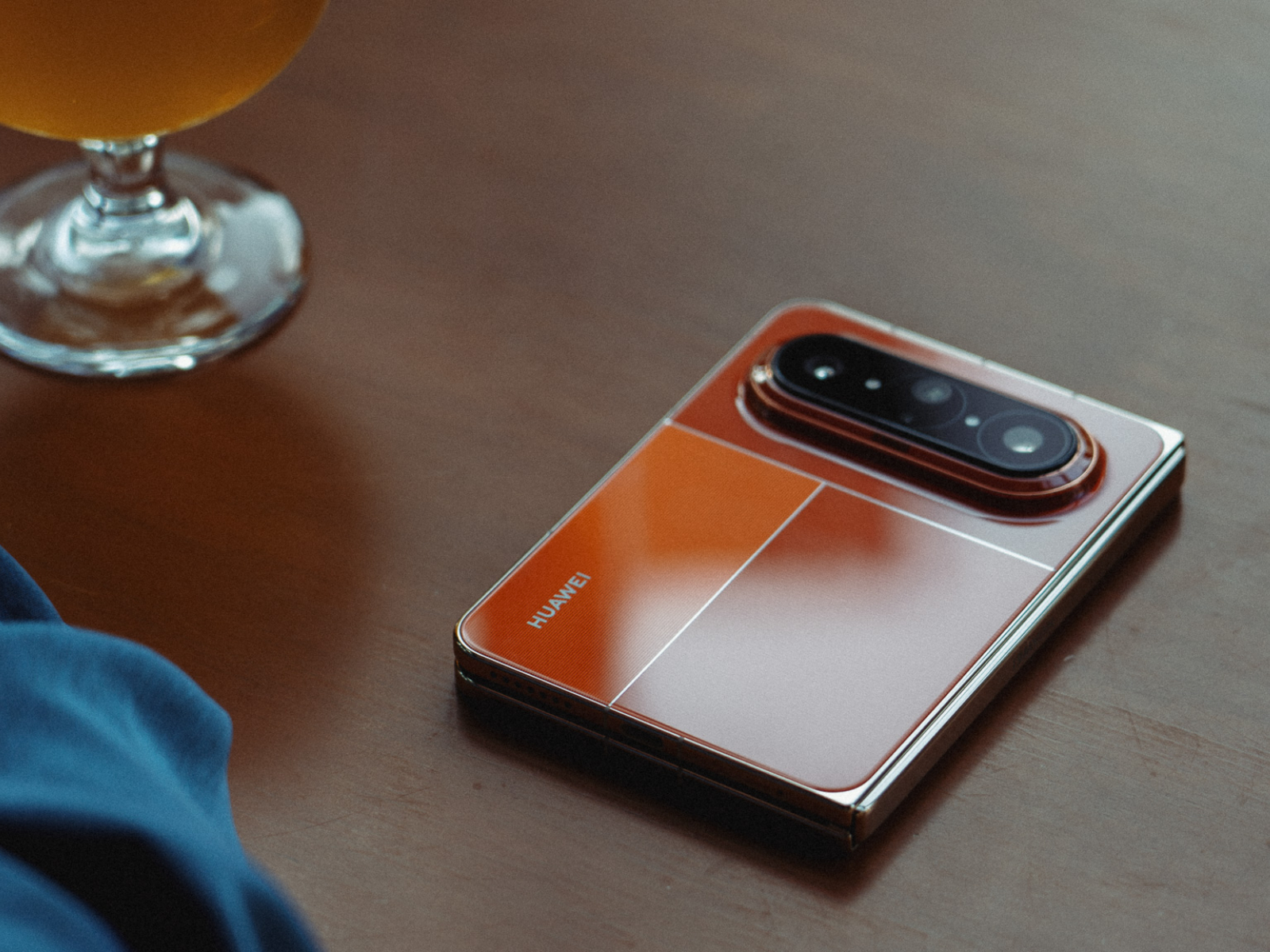
Huawei’s unusually wide foldable explores the space between phone and tablet, offering a fresh format with meaningful tradeoffs.
***
Foldable phones haven’t had an easy time over the past two years.
According to IDC’s annual report, China’s foldable smartphone shipments reached about 10.01 million units in 2025, a year-over-year growth of 9.2%, compared to 30.8% in 2024—growth nearly halved in just one year. Meanwhile, foldables still account for only around 2.5% of the global smartphone market. After seven years, the category remains stuck in a niche position.
IDC, Counterpoint, and Omdia all reached a similar conclusion in their year-end reports—the real restart for foldables won’t come until 2026. Their reasoning is also largely the same: new players entering the market, supply chain upgrades, and the adoption of new materials. In other words, the industry has already accepted one thing—the next breakthrough for foldables won’t come from the product itself, but from external forces.
I see it differently.
After years of using foldables on and off—never quite sticking with them—I’ve come to believe the real reason foldables haven’t broken through has nothing to do with specs or supply chains. It’s something more fundamental: every manufacturer is still building foldables with a “phone-first” mindset. The screens fold thinner and unfold larger, but the system is still a phone system, the interaction model is still phone-based, and even many apps and native features feel largely unchanged. The physical form of the screen has evolved, but the thinking behind it hasn’t.
But here’s the problem—once a screen unfolds to seven or eight inches, approaching the size of a small tablet, user expectations are no longer about “a bigger phone.” What we really want is something new: a device that lets us comfortably read long articles, sketch properly, edit videos on the couch, or experience AI in a more fluid, ambient way. These needs used to be fulfilled by tablets—but tablets are too large to carry in a pocket. Phones fit in your pocket but can’t deliver these experiences. Foldables were supposed to address exactly this in-between space.
Most foldables over the past seven years have been trying to solve a problem that may not have been the right one to begin with. They focus on “making phones bigger,” yet rarely question “how to fill this gap.” What the industry truly needs isn’t another foldable with better specs, but the first foldable that breaks away from phone-centric thinking. In many ways, Huawei Pura X Max rethinks this problem from the ground up.

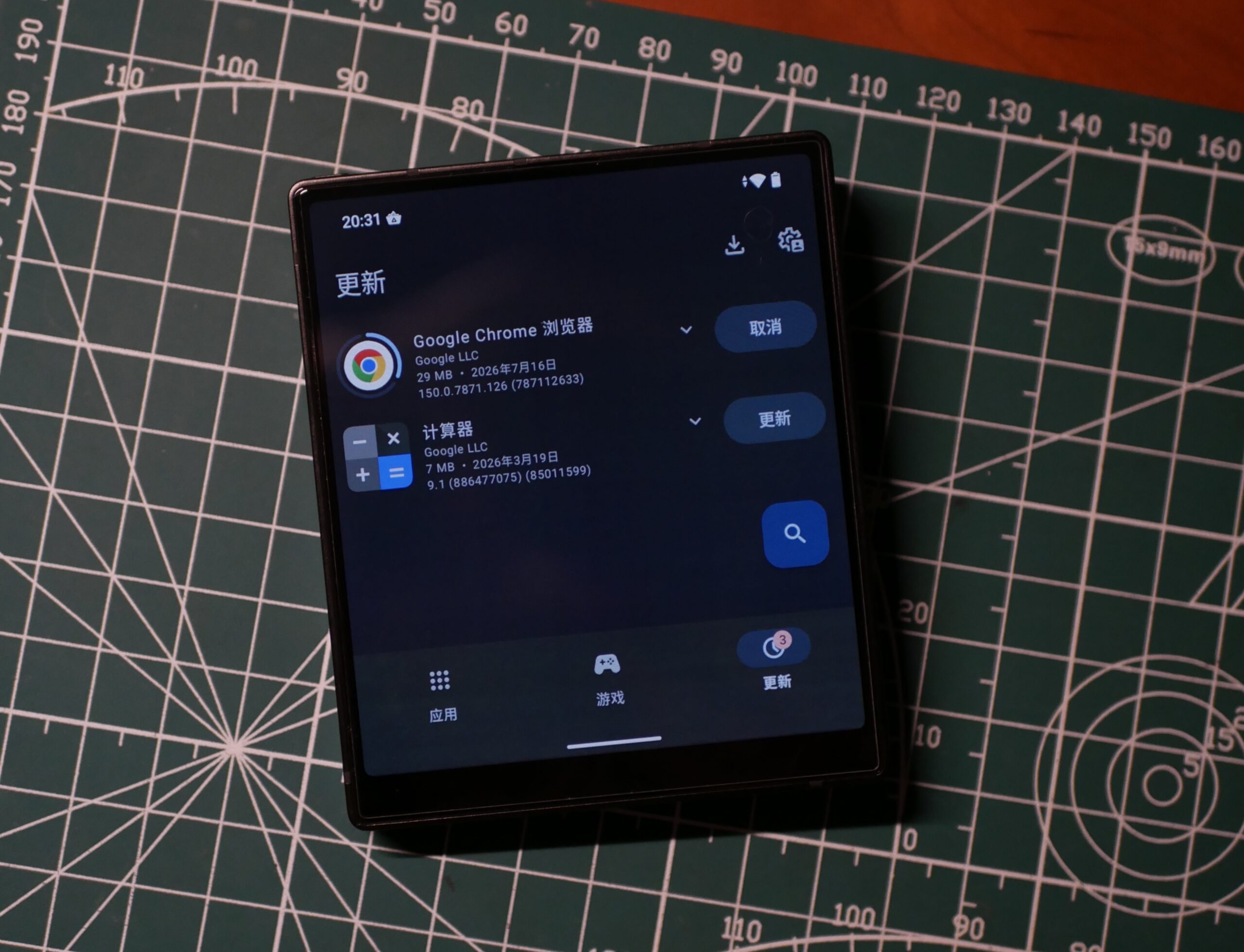
This first-of-its-kind wide-format foldable doesn’t follow the tall, narrow proportions of traditional smartphones, nor does it unfold into an uninspiring square-like screen. Instead, it introduces a new “wide” aspect ratio—one that doesn’t belong to any previous category of device. According to Huawei, the ratio is derived from the common denominator of popular content formats, aligning with the √2:1 ratio of A4 paper. While that may sound mathematical, in practice it’s quite intuitive—4:3 images, 3:2 photos, and 16:9 videos all display in near-native proportions. As a result, many long-standing limitations and assumptions are broken.
For the first time, the evolution of the display returns to the content itself.
Put Agile, Efficient Content Consumption in Your Pocket
For a long time, foldable phone users have shared an unspoken habit: if you want to actually use the phone, you unfold it. The outer screen is often reserved for calls, QR codes, or checking the time—real usage only begins once the inner screen is opened.
But this habit isn’t something users naturally developed—it was conditioned. At its root is an assumption the entire industry has accepted for too long: the value of a foldable lies in having “a bigger screen.” Once that becomes the core selling point, product design inevitably follows the same direction—unfolded is the main stage, the outer screen is just a supporting role. The narrow outer display and increasingly thin bodies, despite claims of offering both “slab and foldable experiences,” are ultimately byproducts of this obsession. It’s not that they were poorly designed—it’s that they were never truly taken seriously in the first place.
More subtly, this design bias feeds back into user psychology. Foldables already differ from traditional phones in system interaction—split screen, multitasking, hover modes, layering—features that only fully shine when the inner display is open. Over time, users develop a quiet anxiety: if I bought a foldable but keep using it closed, am I wasting its potential? As a result, even simple tasks that could easily be handled on the outer screen—reading a slightly longer article or replying to a longer message—end up pushing users to unfold. No one forces you to do it, but you start to feel like you should.

This psychological burden—“it’s a waste if I don’t unfold it”—is more exhausting than any physical limitation. It adds unnecessary friction to the experience. Unfolding feels ceremonious; not unfolding feels wasteful. In a crowded subway, you can’t unfold it with one hand; in a coffee queue, unfolding feels over the top. Most of the time, you just want to get things done while the device is closed—and traditional foldables, both in design and in the mental model they impose, haven’t made that feel natural.
The Huawei Pura X Max takes a different approach: its outer and inner displays share nearly the same wide aspect ratio. It sounds simple, but the experience shift is significant. For the first time, the outer screen is treated as a fully capable primary interface—you no longer have to wait to unfold to “start using” the device, nor do you need to repeatedly decide whether you should unfold. The outer display itself is a wide screen that stands on its own. You unfold only when you want to, based on the situation—not out of habit.
High-Density Information in Fragmented Moments
Commuting, standing in line, waiting for someone—these short fragments of time are when we use our phones most often, and they’re exactly where the outer screen should take over.
Open a content app, and cards can be displayed in multiple columns on the wide outer screen of the Pura X Max, letting you scan several items at once. The essence of feed-based content is to browse more options in less time and quickly decide what to open. With more horizontal space, visual scanning becomes effortless. This level of information density used to belong only to large screens—now it’s available on a device you can hold in one hand.

Thanks to the “wide small screen” design, when folded, the device also has balanced weight distribution and fits naturally in your hands. For fundamental phone tasks—replying to messages, jotting down notes, frequent scrolling through social feeds—the experience is not only smooth but also lighter and more comfortable.
What these scenarios share is that they previously implied you needed to unfold the device for a “better” experience. Now, the outer screen delivers it directly. It’s no longer a transition—it’s enough on its own.
For the Moments That Truly Deserve It
And when a more immersive moment arrives, that’s when you unfold the inner screen.

Watching a movie on the couch over the weekend—this is the classic use case. Most films, short videos, variety shows, and sports broadcasts are shot in 3:2, 16:9, or wider formats, yet on traditional square-ish foldable displays, they leave large black bars. The Pura X Max’s wide inner screen better matches these formats, allowing your brain to naturally enter a “nothing beyond the screen matters” state. For the first time, the core logic of a cinema experience is fully realized on a phone.
Gaming is another scenario worth unfolding for. In titles like auto-battlers, the expanded layout feels much closer to a tablet or PC—wider boards, more spacious UI elements, and better visibility without constant switching. Seeing the full picture at once is the core need of such games—and one of the hardest things to achieve on smaller screens.

Reading a long article or flipping through an e-book—these are also moments worth unfolding for. You’re not opening the device to “justify the product,” but because the content itself deserves more space.
On the Pura X Max, folding and unfolding are no longer opposing modes—they’re simply two levels of content intensity. Quick, fragmented, one-handed tasks are handled perfectly by the outer screen; immersive, longer, more engaging experiences naturally call for the inner display. The device hands this choice back to the context itself.
This is the fundamental difference between a tablet mindset and a phone mindset. Under a phone mindset, the outer screen is subordinate to the inner one, and folding is a compromise. Under a tablet mindset, both screens are just different sizes of the same canvas—primary and secondary views flowing seamlessly between each other. What the Pura X Max achieves isn’t just making foldables “a bit better” for content consumption—it borrows from tablet design thinking to answer a long-unresolved need: combining the expansiveness of a tablet with the portability of a phone.
And Creation, Too
Once the screen gets bigger and the aspect ratio feels right, the first thing that changes isn’t just how you consume content—it’s how you create. In the past landscape of mobile devices, “doing” has always been assumed to belong to tablets and computers. Phones, constrained by smaller, narrower screens, have always been a compromise for any creative task that needs room to breathe—drawing, video editing, layout design. You could doodle a little on a phone, but for anything serious, you’d return to a tablet or a computer; you could cut together a short vertical clip on your phone, but longer horizontal videos meant switching devices.
This division—“consumption on phones, creation on tablets”—is itself a byproduct of phone-first thinking. It assumes the phone is a consumption terminal, while creation belongs elsewhere. But look at it another way: if a foldable phone already unfolds to something close to tablet size, why shouldn’t it take on the responsibilities of a tablet?
Huawei Pura X Max gives a serious answer to that question.
The most direct proof is that drawing apps finally make sense on a phone. Apps that were once exclusive productivity tools on tablets—offering watercolor, oil painting, even brush-like calligraphy strokes—now feel usable. In the past, trying to draw on a six-inch slab phone wasn’t limited by brush realism, but by the lack of space to actually draw.

With the wide display unfolded, the screen is large enough to accommodate a full canvas. Paired with the customized HUAWEI M-Pen 3 mini stylus, a sketchbook finally fits into your pocket. More importantly, the screen’s color accuracy and brightness are good enough to support creative feedback—you see the same soft watercolor tones outdoors as you do with your eyes, without needing to recheck them later on a professional device.
AI-powered creative tools further merge the pipeline between sketching and generation. By embedding AIGC capabilities directly into Huawei Notes, you can sketch on one side of the wide screen and instantly see AI-generated results on the other. A rough doodle and a simple prompt can quickly turn into a usable design draft. What once required multiple devices and apps is now compressed into a single screen.

For video creation, the focus shifts to editing. Vertical vlog editing adopts a side-by-side layout, while horizontal long-form editing uses a top-and-bottom layout—both offering significantly larger preview areas than traditional phones. The bottom toolbar is fully visible without dragging. A light press with the stylus brings up a radial menu, allowing quick cuts, speed adjustments, and subtitle additions in one flow. What used to be a rushed compromise on phones now approaches a desktop-level workflow.
Combining both “viewing” and “doing,” the purpose of the Pura X Max becomes clear—it enables both the consumption and creation strengths of a tablet to fully exist on a device that fits in your pocket. Under phone-first thinking, consumption and creation are separated; under tablet-first thinking, both coexist. The Pura X Max begins as a portable tablet, but its larger ambition is to define something entirely new.
Accompanied: An AI That Doesn’t Need to Be Summoned
The Pura X Max doesn’t just rethink the screen—it also rethinks interaction through its “ambient AI.” The question it answers is this: should interaction on this screen still follow the rules of traditional phones?
In recent years, nearly every manufacturer has talked about “AI phones.” But in practice, most AI still behaves like a summoned tool—you have to speak, tap, or remember how to activate it. AI on phones feels more like a silent utility than a constant companion.
This isn’t entirely the fault of manufacturers. Conversational AI only entered mainstream awareness three or four years ago. By then, the slab phone interaction model had already been established for nearly two decades—home screen, app icons, full-screen apps. It’s a deeply ingrained habit for billions of users, not something easily changed.

So when AI was introduced to phones, options were limited: package it as a standalone app, or as a floating window triggered by voice or a button. Either way, it’s squeezed into an existing framework—not because the screen lacks space, but because AI arrived too late to claim its own place.
Tablets, however, were different from the start. Split-screen multitasking, floating windows, parallel app workflows—these computer-like interaction patterns already exist naturally. When AI arrives on a tablet, it doesn’t need to be forced in; it has space to coexist. Reading an article while AI summarizes on the side, writing while AI refines text in real time—these feel natural.
The Pura X Max brings this tablet-style interaction into a phone form. When a foldable is redesigned with tablet thinking, something like a “persistent side AI panel” doesn’t need to be invented—it simply fits.
This is where Xiaoyi’s ambient AI comes in. It supports three modes: background presence, side-panel persistence, and window expansion. The most intuitive change is the side panel—AI no longer waits to be summoned. It stays alongside your main content, observing what’s on screen and proactively suggesting what you might want to do next.
A few moments that stood out to me.

A colleague posts in a Feishu group: “Meeting with the business team tomorrow at 10:30.” Xiaoyi sees it and adds it to your calendar automatically—no need to open the calendar app. While reading an article, if you encounter an unfamiliar term, simply highlight it and the explanation appears on the side. After finishing the article, a quick glance shows suggested follow-up topics. When opening a map app to go somewhere unfamiliar, you can also ask Xiaoyi on the side where to park, avoiding another search.
None of these ideas are entirely new in isolation. What matters is that they are proactively presented, rather than something you remember to look for later. Once the interaction direction flips, AI shifts from being a “tool” to an “environment”—not something you use, but something you exist within.

This isn’t something manufacturers never considered for slab phones—it’s that there was no room for it. Not physical screen space, but interaction space. The old framework simply doesn’t accommodate always-on, parallel AI without clashing with established habits. The Pura X Max’s tablet-first approach creates that space, allowing AI to settle naturally.
Conclusion
Back in 2010, before the first iPad was released, Steve Jobs asked a question on stage: is there room for a third category between phones and computers? At the time, it sounded rhetorical—but years later, it defined an entire product category. The iPad succeeded not because it was a “bigger iPhone” or a “more portable Mac,” but because it was given its own identity.
More than a decade later, the same question deserves to be asked again—is there a third category between phones and tablets?

That’s the strongest impression I had after using the Pura X Max. Throughout this piece, I’ve used the term “tablet thinking” as a way to explain why it feels different from other foldables. But that only tells part of the story. What the Pura X Max is really doing isn’t just applying tablet thinking to a foldable—it’s finding a place for foldables between phones and tablets.
It borrows from tablets—wide aspect ratios, parallel interaction models, persistent AI—but it is ultimately neither a portable tablet nor a bigger phone. It’s something new: a form made possible only because the screen can fold. It’s small enough to carry, large enough to use seriously, and interactive enough to let AI truly accompany the user. These three things used to belong to separate devices—the Pura X Max brings them together.
Foldables have existed for seven years, and the industry has been measuring them with old metrics—size, thinness, durability. But what determines whether a product endures is not how well it scores on old scales, but whether it makes us realize those scales are no longer sufficient. The Pura X Max breaks that ruler. It’s not just a better foldable—it’s the first to make us reconsider what a foldable should be.
Back to the question at the beginning—can the next breakthrough in foldables come from the product itself? I think the answer is already clear.
Share:

Exploring technology, digital culture, and better ways to live and work.