Honor releases new models including the Magic8 Pro Air
Anker and Feishu jointly launch the Anker AI Voice Recorder Buds
Xiaohongshu rolls out Community Guidelines 2.0
ASUS stops releasing new smartphones
Rumors You Can Just Glance At
Honor releases new models including the Magic8 Pro Air
On January 19, Honor held a product launch event, unveiling new devices including the Honor Magic8 Pro Air, Honor Magic8 RSR, and the Honor 500 Pro MOLLY 20th Anniversary Limited Edition.
The Honor Magic8 Pro Air is powered by the Dimensity 9500 processor and features a 6.31-inch Honor Oasis Eye-Care display. It measures 71.9 mm in width, just 6.1 mm in thickness, and weighs 155 g. The rear camera setup includes three cameras: a 50-MP 1/1.3-inch f/1.6 main camera with a 23 mm equivalent focal length and OIS support; a 50-MP f/2.2 ultra-wide camera; and a 64-MP periscope telephoto camera with 3.2× optical zoom, f/2.6 aperture, and OIS support. It also includes a color temperature sensor and a flicker sensor. The phone is equipped with a 5,500 mAh battery and supports IP68 and IP69 dust and water resistance. It supports eSIM and has dual physical SIM card slots. Color options include Light Orange, Fairy Purple, Feather White, and Shadow Black. Pricing ranges from RMB 4,999 (12 GB + 256 GB) to RMB 5,999 (16 GB + 1 TB), with an additional RMB 500 discount available through government subsidies.
The Honor Magic8 RSR is a co-branded model created in collaboration with Porsche Design. It features an ultra-microcrystalline nano-ceramic body and has largely the same overall configuration as the Magic8 Pro, powered by the Snapdragon 8 Elite Gen 5 chipset. The Magic8 RSR supports Honor’s Hongyan dual-satellite communication (Tiantong satellite calling and BeiDou satellite messaging) and offers an optional professional imaging kit. It is available in Moonstone and Slate Gray, priced at RMB 7,999 (16 GB + 512 GB) and RMB 8,999 (24 GB + 1 TB).
The Honor 500 Pro MOLLY 20th Anniversary Limited Edition is a collaboration with POP MART and comes with an exclusive gift box containing various themed accessories. It is priced at RMB 4,499 (16 GB + 512 GB). Source
Anker and Feishu jointly launch the Anker AI Voice Recorder Buds
On January 19, Anker announced via its official WeChat account that it has partnered with Feishu to introduce a new form-factor hardware product—the Anker AI Recording Bean. The device weighs just 10 grams, roughly the size of a broad bean, and features a dual MEMS microphone array. With the charging case included, the total weight is about 48 grams. It supports both Bluetooth and Wi-Fi transmission modes, offers up to 8 hours of battery life on its own, and up to 32 hours when used with the charging case. The product focuses on unobtrusive wearability and instant recording, supporting AI-powered visual real-time summaries, multilingual transcription and translation, and the generation of illustrated “fishbone diagrams” that can turn messy discussions into clear conclusions and to-do lists. It also supports one-tap syncing of recording summaries to Feishu multi-dimensional spreadsheets, where quality checks and analysis can be completed automatically based on user-defined rules. The hardware is now available on JD.com, priced at RMB 899. Source
Xiaohongshu rolls out Community Guidelines 2.0
On January 19, Xiaohongshu rolled out Community Guidelines 2.0, which merge the previous Community Guidelines and Community Business Guidelines into a single framework with three sections: sincere sharing, friendly interaction, and orderly operations. In the “sincere sharing” section, Xiaohongshu calls on users to proactively disclose the use of AI-assisted tools, avoid creating false personas, and refrain from flaunting consumption levels far beyond those of ordinary people. The “friendly interaction” section requires users not to maliciously speculate about the motives of content creators, to engage in rational dialogue, and to avoid posting inflammatory remarks or making unfounded accusations against others. The “orderly operations” section prohibits marketing practices such as posing as ordinary users or manipulating reviews, as well as the abuse of the reporting mechanism. Source
Rumors You Can Just Glance At
According to foreign media outlet Windows Central, Microsoft is introducing an “ad-supported model” to Xbox Cloud Gaming. This would allow users who have purchased digital Xbox games but are not subscribed to Xbox Game Pass to play cloud games for free by “watching ads.” In cloud computing, “idle computing power” is one of the most expensive forms of waste. By rolling out an ad-supported Xbox Cloud Gaming service, Microsoft could increase Azure server utilization during low-demand periods, while also providing stronger commercial justification for the continued expansion of its data centers, as cloud and AI become core parts of the company’s strategy. Source
There are rumors that the Google Pixel 10a will be announced on February 18 and go on sale on March 5. The device is said to feature 8 GB of RAM, with overall specifications largely similar to the Pixel 9a, and a starting price of EUR 549. Source
Matthew Forsyth, Director of Developer Experience Product Management and Chief Product Evangelist for the Google Play Store, said on X that Android’s app sideloading process will add extra steps to ensure users fully understand the risks of installing apps from unverified developers. However, advanced users will still be able to choose “skip verification and install directly,” and sideloading will not be restricted. This explanation is largely consistent with what has been observed in recent versions of the Google Play Store: while new warning messages pop up emphasizing developer verification requirements, the need for an internet connection, and potential risks, users are still allowed to proceed with installation. Source
Apple’s U.S. website shows tightening supply of M4 Pro / Max MacBook Pro models, with delivery dates pushed back to after February 6. Custom configurations of the 14-inch MacBook Pro with a 16-core M4 Max chip and 128 GB of memory are now scheduled for delivery as late as March 17. Combined with earlier rumors—and considering that Apple often extends shipping times for current models ahead of new product launches—this may indicate that the M5 Pro / Max MacBook Pro lineup will quietly appear on Apple’s website on January 28. Source
According to insiders, Xiaomi’s second-generation in-house SoC, Xuanjie O2, may adopt TSMC’s N3P process (third-generation 3 nm) rather than the company’s latest 2 nm node. Xiaomi is also planning to apply the Xuanjie O2 to “non-smartphone” products to further expand the use of its self-developed chips, including tablets, cars, and computers—starting with tablets, followed by PCs and vehicles. Source
According to TechCrunch, Meta’s social platform Threads has surpassed X in mobile daily active users, reaching 141.5 million, compared to X’s 125 million. Source
Bungie, a studio under Sony, has announced that its new shooter Marathon (also known as Lost Starship: Marathon) will launch on March 5 at a price of USD 39.99, and will be released simultaneously on PC, Xbox Series X|S, and PlayStation 5. Source
Zootopia 2 has surpassed Inside Out 2 at the box office, reaching USD 1.703 billion, becoming the highest-grossing Hollywood animated film of all time and ranking ninth in global box office history. Source
DJI releases the DJI RS 5 lightweight commercial gimbal
MediaTek announces the Dimensity 9500s and Dimensity 8500 chips
The Philippines grants visa-free entry to Chinese travelers
Qwen announces the launch of AI-powered lifestyle shopping features
Apple announces Apple Pay support for Visa cards
Google Gemini now rolls out “Personal Intelligence”
Microsoft to remove the Collections feature from Microsoft Edge
iQOO releases the iQOO Z11 Turbo smartphone
On January 15, iQOO officially unveiled the iQOO Z11 Turbo smartphone, with a starting price of RMB 2,699, or RMB 2,039.15 after national subsidies.
In terms of display, the iQOO Z11 Turbo features a 6.59-inch flat OLED screen with a resolution of 2750 × 1260 and a maximum refresh rate of 144 Hz. The panel uses TCL CSOT C9+ luminous material, reaching a local peak brightness of up to 5,000 nits and a minimum brightness of around 1 nit. For dimming, it supports DC-like dimming as well as high-frequency PWM dimming up to 4,320 Hz, with DC-like dimming available across the full brightness range. The display also offers up to 3,200 Hz instantaneous touch sampling and 300 Hz ten-finger touch sampling, supports 1.07 billion colors, and is protected by Schott Diamond Shield glass.
In terms of performance, the iQOO Z11 Turbo is powered by the Qualcomm Snapdragon 8 Gen 5 processor and is paired with a self-developed auxiliary chip, Q2, dedicated to gaming performance scheduling and display optimization. The device uses LPDDR5X memory and UFS 4.1 storage, along with a large-area VC liquid-cooling system. Official benchmark scores exceed 3.59 million points. In gaming tests, mainstream open-world mobile games achieve an average frame rate of around 60 fps, with overall power consumption controlled at approximately 4.54 W.
For battery life, the new model is equipped with a 7,600 mAh battery using a second-generation semi-solid-state design. According to iQOO, the battery maintains relatively stable discharge performance in both high- and low-temperature environments. Charging-wise, the iQOO Z11 Turbo supports 100 W wired fast charging and offers a direct power supply mode for gaming while charging. The cooling system uses a multi-layer heat-dissipation structure to lower core temperatures and improve heat distribution under heavy loads.
In imaging, the iQOO Z11 Turbo is the first in the Z series to feature a 200-megapixel main camera, supporting 4× lossless zoom and covering commonly used portrait focal lengths such as 50 mm and 85 mm, as well as multi-focal-length Live Photo shooting. The front camera is 32 megapixels and supports 0.8× wide-angle capture.
In terms of appearance and design, the iQOO Z11 Turbo is available in four colors: Canglang Floating Light, Halo Pink, Sky White, and Polar Night Black. The Polar Night Black version uses a fiberglass back, while the other colors use glass backs. The phone adopts an aluminum alloy frame, measures about 74.42 mm in width and 7.9 mm in thickness, weighs around 202 g, and supports IP68/IP69 dust and water resistance.
For connectivity and software, the device integrates a multi-antenna design to improve connection stability in complex network environments. On the software side, the iQOO Z11 Turbo comes preinstalled with OriginOS 6, introducing new smoothness optimizations and animation effects, along with multiple AI features for everyday scenarios such as search and sharing. Source
DJI releases the DJI RS 5 lightweight commercial gimbal
DJI today officially unveiled its new lightweight commercial gimbal, the DJI RS 5, priced at RMB 3,099 for the standard version and RMB 3,899 for the combo kit.
According to DJI, the RS 5 introduces a brand-new RS Enhanced Intelligent Tracking Module, expanding tracking subjects from people to multiple categories such as vehicles and pets. DJI claims the maximum recognition distance for human tracking reaches up to 10 meters, and the system can re-lock onto the subject even if it briefly leaves the frame. The module attaches magnetically and supports tap-to-select or box-select tracking on the touchscreen. Combined with assisted composition, it significantly lowers the barrier for complex camera movements.
In terms of stabilization and power, the DJI RS 5 delivers up to a 50% increase in peak motor torque compared to the previous generation. Together with the fifth-generation RS stabilization algorithm, it provides more stable footage during fast rotations, motion shooting, and vertical filming scenarios. On the control side, the new model supports a native electronic control handle adapter, making one-handed and low-angle shooting easier, and adds a Z-axis stabilization indicator to provide real-time feedback on vertical shake to help users adjust their walking pace.
Battery life and body design have also been enhanced. Charging speed is increased by 60%, allowing a full charge in about one hour. The standard battery offers around 14 hours of runtime, which can be extended to up to 30 hours with the BG70 high-capacity battery grip. The gimbal weighs approximately 1.46 kg, supports third-generation native horizontal/vertical switching, and has a maximum payload of 3 kg, covering most mainstream mirrorless camera and lens combinations.
In terms of expandability, the DJI RS 5 natively supports the Focus Pro motor and the DJI SDR video transmission system, features a built-in RSA communication interface, and is compatible with a wide range of official and third-party accessories. DJI also opens up the DJI RS SDK, allowing developers to customize additional professional features. Source
MediaTek announces the Dimensity 9500s and Dimensity 8500 chips
On January 15, MediaTek announced the Dimensity 9500s and Dimensity 8500 chipsets. Both chips are deeply optimized at the hardware level for generative inference and multimodal models, with native support for major global large language models (LLMs / MLLMs) and Stable Diffusion image generation models. They also introduce AI-powered ultra-clear telephoto algorithms, the Dimensity AI semantic segmentation engine, and AI reflection and flare removal technology. In addition, the chips support on-device AI enhancements for Live Photos and photo editing, as well as AI-powered summaries for calls, meetings, and document content based on local AI computing capabilities.
The Dimensity 9500s is built on TSMC’s second-generation 3nm process, integrating more than 29 billion transistors. It features a flagship all–big-core CPU architecture and includes a Cortex-X925 ultra-big core. MediaTek states that, combined with the second-generation Dimensity scheduling engine and advanced memory compression technology, the chip delivers significant improvements in performance scheduling efficiency and app launch speeds. The Dimensity 9500s also supports ray tracing, 8K HDR video, on-device AI computing, as well as 5G and Wi-Fi 7 connectivity.
Targeting the “light flagship” segment, the Dimensity 8500 also adopts a second-generation all–big-core CPU architecture and is manufactured using TSMC’s N4P process. CPU performance is up 7% over the previous generation, GPU performance is improved by 25%, and it comes with a quad-channel memory configuration. The Dimensity 8500 likewise supports ray tracing and further enhances AI capabilities for voice and imaging. Source
The Philippines grants visa-free entry to Chinese travelers
The Philippine Department of Foreign Affairs has announced a visa-free policy for Chinese citizens. Starting from January 16, 2026, Chinese passport holders will be allowed to enter the Philippines without a visa for stays of up to 14 days. This policy applies only to tourists entering through Manila and Cebu airports, and the 14-day stay period is non-extendable. Source
Qwen announces the launch of AI-powered lifestyle shopping features
On January 15, the Qwen app announced full integration with Alibaba ecosystem services including Taobao, Alipay, and Taobao Instant Delivery, opening beta access to AI-powered shopping and lifestyle services for all users.
According to the official introduction, the Qwen app now enables unified operations such as ordering food delivery, AI-assisted shopping, and booking flights directly within the chat interface. More than 400 new features have been launched, with deep integration into Alipay’s government services and Fliggy’s travel services, along with the release of a complete feature list. A new “Task Assistant” feature has also been added to support intelligent planning and execution of multi-step complex tasks. Source
Apple announces Apple Pay support for Visa cards
On January 15, Apple announced the expansion of Apple Pay’s cross-border payment support. When traveling abroad, users in mainland China can use locally issued Visa credit and debit cards to make payments at offline merchants and online scenarios that support contactless payments.
At present, Visa credit cards issued by Industrial and Commercial Bank of China, Bank of China, Agricultural Bank of China, Bank of Communications, China Merchants Bank, China CITIC Bank, Ping An Bank, and Industrial Bank, as well as Visa debit cards issued by China CITIC Bank, already support this feature. After adding these cards to the Apple Wallet app, users can make cross-border payments via Apple Pay.
In addition, Visa credit cards issued by institutions such as Shanghai Pudong Development Bank, China Construction Bank, China Minsheng Bank, and China Everbright Bank are expected to join the list of supported cards in the coming months. Mastercard has also stated that it plans to enable Apple Pay support for Chinese cardholders of some issuing banks in the coming months. Source
Google Gemini now rolls out “Personal Intelligence”
On January 14, Google announced that a new feature called “Personal Intelligence” has been opened for testing to individual accounts. This feature can integrate information from apps such as Gmail and Google Photos, helping Gemini understand contextual relationships without explicit instructions, enabling the chatbot to comprehend user data across apps and provide responses that better match personal situations.
The feature will be rolled out first to Google AI Pro and AI Ultra subscribers in the United States, and will later be added to Google Search’s AI Mode. To reduce potential risks, “Personal Intelligence” is turned off by default.
Josh Woodward, Vice President of Google Labs and the Gemini app, said that the test version may still produce judgment errors and encouraged users to actively provide feedback. In scenarios involving changes in relationships or complex personal interests, Gemini may still struggle to accurately grasp timing and context. In sensitive areas such as health, Gemini will not make proactive inferences and will only discuss based on existing data when users explicitly ask questions.
In addition, Google stated that it will not directly use users’ Gmail content or photo libraries to train models. Only some interaction data, such as user prompts and model responses, will be used to gradually optimize feature performance. Source
Microsoft to remove the Collections feature from Microsoft Edge
Microsoft recently notified users in the latest Microsoft Edge Dev build that it plans to remove the “Collections” feature from the browser. After the change is implemented, users will no longer be able to add new content to Collections.
For existing data, Microsoft is offering limited migration options. Users can move all web pages saved in Collections to Favorites (bookmarks), but this method will only preserve the page links and will not migrate any images or notes previously added. To fully retain images and notes, users must manually export their Collections data as a CSV file for offline storage. Microsoft warns that if the export is not completed in advance, the related data will be removed from user accounts later and may be permanently lost.
According to public information, the Edge Collections feature was first introduced in 2020, allowing users to save web pages, images, and notes in one place, commonly used for travel planning, research organization, and shopping lists. At present, Microsoft has not issued an official announcement regarding the removal of this feature. However, as the notice has already appeared in the Dev version, users are advised to back up their data as soon as possible to prepare for potential future product changes. Source
After all these years, I’ve actually never truly bought a six-seat car. As Little Mai keeps growing up, family trips have become a real challenge. Over the past couple of years, on longer journeys we basically ended up leaving the grandparents at home, which always made me feel a bit guilty. On top of that, the ES6 is starting to feel a little old, so the idea of switching to a six-seater gradually took shape.
At first, I did look at brands beyond NIO, including the dominant SUV players like Li Auto and AITO. Each of them has its own strengths—some excel in assisted driving, others focus more on comfort. But once I compared prices, the Ledao L90 stood out: choosing the battery-rental option knocks ¥86,000 off the price, effectively turning a ¥300,000-level configuration into something just over ¥200,000. The value proposition was simply too strong. And since I haven’t exactly been making much money this year, I figured saving where I could was the sensible choice.
Once I actually got the car and started driving it, it really felt like a hidden gem. The Black Knight edition is essentially the fully loaded Ultra trim: high-performance dual-motor AWD, 0–100 km/h in 4.7 seconds, air suspension, and all the creature comforts—fridge, big screen, plush seats, even little tray tables. It meets the travel needs of both kids and seniors perfectly. The massive front trunk deserves special mention. A few years ago, when I borrowed a car for a full-family road trip, luggage space was the bottleneck, and we had to stack bags inside the cabin, which seriously hurt the experience. With the Ledao, that’s no longer a concern. Looking at this frunk, I even feel like if I ever lost my job, I could take it to the street and sell fruit from it.
The cabin setup is hard to fault. Real wood paired with metal accents feels premium, heating and massage are all there, and the sound system is actually better than the one in my ¥300,000-plus ES6. The infotainment is smooth, and Xiao Le responds quickly—though it still doesn’t support wake-word-free commands, so coming from the ET9, I do have to remind myself to call out “Xiao Le” first. Compared with other NIO models, ambient fragrance isn’t standard, but there’s a purification and fragrance product in the Ledao store that supports ozone sterilization and deodorization, and can link with the car system. It looks promising, and I’ve already placed an order.
Because I didn’t have time to attend a test drive before, I had no idea what the L90’s driving dynamics would be like. After more than a week behind the wheel, it’s been pleasantly surprising. First of all, it doesn’t feel like piloting a massive boat—driving it is light and agile. Thanks to the air suspension and CDC dampers, bumps are filtered out much better, keeping passengers comfortable. More importantly, when I’m driving alone and switch to Sport mode, there’s no obvious body roll or wobble in high-speed corners. I’ve also watched other media reviews, and it’s clear that the L90’s tuning deliberately preserves a degree of driving engagement, so you don’t end up feeling like nothing more than a chauffeur. That’s actually pretty rare.
Buying this L90 also coincided with NIO’s push to achieve profitability in Q4 and the milestone of rolling out its one-millionth vehicle, so in a small way it feels meaningful to be part of that. I have a special emotional connection to the NIO brand, and I genuinely hope that companies with this kind of user-centric, long-term mindset can turn things around and thrive—it would also boost confidence across the industry. Fortunately, Ledao’s value for money comes from years of NIO’s in-house R&D and accumulated know-how. As the battery-swap network continues to expand into lower-tier cities, there’s still plenty of room for growth in third- and fourth-tier markets.
@一只索狗: OnePlus Turbo6
Acquisition: provided by the manufacturer for review
Price: 12GB + 256GB, launch promo ¥2,099 (¥1,784.15 after national subsidy)
Most of the devices I’ve used recently have been imaging-focused flagships, so it’s been a while since I last spent time with a performance-oriented phone in the thousand-yuan price segment. This time, I happened to get early access to the newly announced OnePlus Turbo6, and here are my brief impressions.
The OnePlus Turbo6 carries over the same aesthetic language as the flagship models, continuing the metal “Rubik’s Cube” camera deco design. It comes in three colors: Tracing Silver, Solo Black, and Wild Green. Judging from photos, the Wild Green unit I have doesn’t look particularly “green,” largely due to lighting angles and color grading. In reality, this colorway is indeed quite understated—at certain angles, it’s already very close to a silvery white.
In terms of specs, my OnePlus Turbo6 is equipped with the fourth-generation Snapdragon 8s “Fengchi Edition,” paired with 16 GB of LPDDR5X memory and UFS 4.1 storage. OnePlus once again emphasizes that this chip is deeply customized in collaboration with Qualcomm. With the “Fengchi Gaming Kernel” baked in, it delivers what OnePlus claims is the only 165 Hz ultra-high-frame-rate gaming experience in its class.
Popular titles on the market such as Honor of Kings, Call of Duty, and Naruto already support the 165 Hz ultra-high-frame-rate mode. However, based on my testing in Call of Duty, the one downside is that frame rates of 120 fps and above can’t coexist with the more refined graphics settings.
As for battery life, OnePlus’ official slogan is “the chewing gum of the phone world,” and in my own testing, it really does feel like it just keeps going. The OnePlus Turbo6 packs a massive 9000 mAh battery—the largest capacity I’ve ever used in a smartphone. I received the device on January 2 and fully charged it then. Although it hasn’t been my primary phone, I’ve still played around two hours of Call of Duty almost every day. As of January 8, it still had about 40% battery remaining without a single recharge.
Paired with 80W SuperVOOC fast charging, there’s absolutely no battery anxiety in day-to-day use. It even supports 27W PD reverse charging, so doubling as a power bank for an iPhone is no problem at all.
It’s even a bit faster than a shared power bank.
With ColorOS 16 on board, the Turbo6’s overall fundamentals as a smartphone are very solid. New features like AI one-tap memory capture are included, and seamless interconnection with the iPhone ecosystem is also supported—something I really appreciate as someone who uses both iOS and Android devices.
Some people play games just for fun, while others play to win. If you’re chasing peak performance in mobile gaming, the OnePlus Turbo6 is an esports-focused weapon designed to help you climb the ranks.
@北鸮: 2026 Slack-Off Calendar
Reference price: ¥119
A new year naturally calls for a new calendar. I didn’t think too hard about it this time—back in early December, I ordered some merch purely out of fandom from the “Slack-Off Office” channel, which I’d been watching a lot last year. Given that channel’s track record, some kind of mishap was almost guaranteed. The batch I received just before New Year’s Day had a misprint for about a week around October. Thankfully, that’s still far off, so I’ll just wait for them to send replacement calendar pages later.
This year’s Slack-Off Calendar is themed around Lucky Koi A-Yah (A-Yah is one of the channel’s mascots). While it claims it’s “not encouraging people to hoard random junk,” the packaging box itself features a matching slack-off design, which made it hard for me to throw away. The calendar itself is shaped like a hand, with a small magnetic area at the bottom that lets you attach the plush Lucky Koi A-Yah. Once it’s on, the whole thing becomes a very literal embodiment of the “slacking off” theme.
The calendar pages are very straightforward. Whatever day of the week it is, that’s how many times you’re supposed to “slack off.” On weekends, the A-Yah in the background clocks off and goes to sleep. Whenever there’s a holiday, the calendar switches to a little themed illustration. On the right side of each page, there’s also a reminder of how many days are left in the year, and how many days remain until the next day off—constantly telling me just how far away the next bit of hope in life still is.
The paper is relatively thin, which actually makes it quite suitable for tearing off individual pages, jotting something down, and sticking them into a journal. There’s plenty of blank space for daily notes, too. If you have personal anniversaries, writing them in with a darker-colored marker also gives you that satisfying sense of “watching it get closer.” In the end, this is very much a fan-oriented product—it wins you over with its design. Set it on your desk, and it just makes you happy to look at.
@路中南: NeilMed Nasal Gel
Reference price: ¥61
Last time in New Gadgets I wrote about a nasal rinse spray, but my nose still tends to suffer from cracked nasal mucosa and occasional bleeding. It’s just that the frequency has gone from year-round to mainly two situations: the first is when flying; the second is when visiting shopping malls. Even wearing a mask doesn’t really help—after spending a long time in high-altitude cabins or overheated, air-conditioned indoor environments, the nasal passages dry out easily. Last weekend, I went to a mall café for a coffee date. We were chatting happily when I suddenly felt moisture in my nose. I had no choice but to stay calm on the surface, grab a tissue, and pinch my nostrils. On the way home, I thought to myself: after all these years of industrial society, there must be a mature product designed to keep the nasal passages moist and prevent this kind of situation.
A quick search on e-commerce platforms confirmed it—there are indeed plenty of products called “nasal gels.” If only I’d known sooner. But faced with all kinds of potential “fake foreign brands,” I first went to ask ChatGPT. The idea was simple: buy an industry leader or at least a top-three product to reduce the chances of stepping into a pitfall (which also shows the sales potential of large language models). Coincidentally, the very first recommendation was the same product I’d already found on the platform. I originally wanted to support a domestic brand, Kefu, but was surprised to find that its medical gel cost more than twice the price of this NeilMed product. Maybe that’s just the magic of medical devices. In the end, I had to settle for the latter.
Once I got it, I realized that besides the dry indoor heat, dry weather, and air travel I’d personally experienced, high altitudes (which makes sense when you think about it), sleep apnea machines, and long-term oxygen therapy can also cause nasal dryness. One thing to note when using it: you should squeeze for about four seconds so the gel can fully coat the nasal cavity. Generally, applying it every 4–6 hours is sufficient. The bottle itself is tiny, but in addition to the regular cap, it also has a blue safety cap (shown in the second image on the right) to prevent accidental squeezing when carrying it around.
In actual use, it feels pretty good—nothing fancy, just like a standard saline aloe gel. After squeezing it in, a bit does still flow out. After using it at home, breathing feels noticeably smoother. When going out to malls or wearing a mask, I also feel much more at ease. That said, there can still be slight leakage around the nozzle after use, which is something to watch out for. NeilMed has now officially joined my everyday carry pouch. From now on, before heading into a mall, I’ll definitely give my nose a quick squeeze first. If any fellow readers have friends with sensitive nasal passages who need to fly or travel to high-altitude areas, this is something worth recommending.
One interesting detail: the package comes with a thick printed booklet. At first, I thought it was just an instruction manual, but it’s actually much more than that. It includes usage guides for all of their products, product comparisons, detailed instructions, and dozens of Q&A-style educational explanations about nasal passages and sinuses. It’s actually quite a decent read when you’re bored.
Easter egg
The video version of New Gadgets recently released an episode introducing how to play with the built-in “Mood Flowers” feature in Apple Health. It’s a rather niche but surprisingly practical system feature—give yourself a flower every day, and keep your mood blooming.
Public Platform Assistant mini program to discontinue service
Leica is independently developing a full-frame CMOS sensor
Withings Body Scan 2 smart scale debuts at CES 2026
Nintendo fixes unstable network connectivity issue with the Switch 2 dock
Vietnam introduces mandatory rules on skippable ad durations
Honor unveils multiple new products
On January 5, Honor introduced the Honor Power2 smartphone via an online launch event, alongside the Honor Pad X10 Pro, Honor Pad 10 Pro, and a range of Honor Choice IoT products.
The Honor Power2 features the industry’s first 10,080 mAh fourth-generation Qinghai Lake battery, while keeping the device thickness to 7.98 mm. It supports 80W SuperCharge fast charging and 27W reverse charging, and incorporates a smart charging engine to improve charging efficiency and battery longevity.
In terms of connectivity, the Honor Power2 is equipped with the Hongyan six-wing antenna system and Honor’s in-house RF enhancement chip C1+, supporting 25 antennas in total. It also adopts a parallel dual-rail antenna design to improve performance in weak-signal environments. For positioning, it uses a multi-source fused positioning engine with support for dual-frequency GPS and triple-frequency BeiDou. On the performance side, it debuts the Dimensity 8500 Elite chipset and features an over-40,000 mm² Ice-Sealed liquid cooling system. The device has passed SGS Gold Label five-star certifications for drop resistance, impact resistance, and compression resistance, offers IP68, IP69, and IP69K dust and water resistance, and comes with a 6.79-inch 1.5K eye-care display and a 50-megapixel OIS main camera.
Core product highlight image, image sourced from Honor.
The Honor Power2 is available in Sunrise Orange, Snowfield White, and Phantom Night Black. Pricing is set at RMB 2,699 for the 12 GB + 256 GB version and RMB 2,999 for the 12 GB + 512 GB version, with government-subsidized prices of RMB 2,294.15 and RMB 2,549.15 respectively. Pre-orders are now open, with official sales scheduled to begin at 10:08 a.m. on January 9. Source
Douyin to support Dolby Vision
On January 5, Dolby Laboratories and Douyin announced a partnership under which Douyin will bring Dolby Vision to users on the platform, enabling the creation and sharing of higher dynamic range video content.
According to Dolby, iPhone users can now publish and watch Dolby Vision videos within the Douyin app, and can use Douyin’s built-in editing tools as well as compatible editing apps such as Jianying to create Dolby Vision content. Support for more device types will be rolled out gradually.
Dolby noted that the rise of short-video platforms has reshaped how people share and consume content. Through this collaboration, the two parties aim to make it easier for creators to use Dolby Vision on mobile devices for both content creation and distribution. Source
Public Platform Assistant mini program to discontinue service
Tencent WeChat’s Public Platform Assistant mini program announced on January 3 that it will cease providing services starting March 2, 2026. According to the official statement, users who wish to continue managing public accounts on their phones can download the “Public Account Assistant” app from app stores, or manage their public accounts via “WeChat” → “Official Accounts.” Source
Leica is independently developing a full-frame CMOS sensor
Recently, Dr. Andreas Kaufmann, owner and Chairman of the Supervisory Board of Leica Camera AG, revealed in a podcast that Leica is currently independently developing a full-frame CMOS sensor. The project reportedly began around four years ago, in 2022, around the time of the Leica M11’s release. The entire development process is expected to take about five years, meaning that the earliest Leica M12 model equipped with Leica’s in-house CMOS sensor could appear as soon as 2027.
By way of comparison, the Leica M11, Q3, and SL3 use customized versions of Sony’s IMX455 sensor. The exact sensor models used in the M10R, Q2, and SL2 remain somewhat disputed, but they are also supplied by Sony. Meanwhile, the SL2-S and SL3-S use customized versions of Sony’s IMX410 sensor. Source
Withings Body Scan 2 smart scale debuts at CES 2026
Smart health brand Withings unveiled the Body Scan 2 smart scale at CES 2026. The new model primarily features a redesigned form factor and adds functions such as hypertension risk detection and cellular health assessment.
In terms of design, Body Scan 2 moves the display from the surface of the scale to the pull-out handle used for ECG measurements, allowing users to view data more easily.
On the sensor side, the Body Scan 2 can measure up to 60 different body metrics. Its most notable new feature is impedance cardiography (ICG), which evaluates the heart’s ability to pump blood to organs throughout the body, enabling hypertension risk assessment. Another newly added capability, bioelectrical impedance spectroscopy (BIS), uses extremely low-intensity electrical currents to measure total body water, from which it derives key indicators such as cellular age, active cell mass, and metabolic efficiency. All collected data is analyzed by Withings’ “clinically validated” AI models to generate more accessible health insights, including hypertension risk evaluations and assessments of blood glucose regulation. The system also combines these results with the user’s vital signs to identify health trends and provide a range of recommendations for improving overall health.
Product appearance images, courtesy of Withings.
The scale is priced at $599.95 and is scheduled to go on sale in the second quarter of 2026. Source
Nintendo fixes unstable network connectivity issue with the Switch 2 dock
Recently, Nintendo quietly addressed an issue with unstable Ethernet connectivity on the Switch 2 dock through firmware version 21.1.0. Some players reported that after installing the update, performing a full power-off restart allowed the Ethernet port to connect to the network normally.
Players speculate that the earlier instability may have been caused by a defect in the Realtek chip used in the Switch 2, and that this update could represent a workaround Nintendo has found for a potential hardware issue. Source
Vietnam introduces mandatory rules on skippable ad durations
Recently, the Vietnamese government issued Decree No. 342 (Decree 342/2025), which introduces more detailed regulations for digital advertising and will take effect on February 15, 2026. Under the decree, platforms running online video and animated image ads in Vietnam must ensure that users can skip or close ads within a maximum of five seconds. Longer “non-skippable” ad formats lasting 7 to 30 seconds will no longer be permitted.
The new rules also apply to static image ads, requiring advertisers not to implement mechanisms that force users to wait before closing ads. For pop-up and other non-fixed-position ads, the decree prohibits the use of hard-to-identify or misleading close buttons, and requires that users be able to close ads with a single, clear action.
In addition, the decree mandates that online ads provide clear icons and guidance to allow users to report illegal content, and to opt out of or stop viewing inappropriate ads. For ads deemed illegal by authorities, advertisers, service providers, distributors, and publishers must remove or disable them within 24 hours of receiving notice. Telecommunications operators and internet service providers are also required to restrict access to the relevant illegal ads or services within 24 hours of receiving an official request. Source
Clicks launches the Power Keyboard and Communicator phone
Pebble releases the Round 2 watch
DeepSeek publishes a paper introducing the efficient training technique mHC
ASUS notifies channels of price increases starting today
A new batch of works enters the public domain
BYD surpasses Tesla to become the world’s top EV seller in 2025
Rumors You Can Just Glance At
Clicks launches the Power Keyboard and Communicator phone
On January 2, tech startup Clicks Technology unveiled its first batch of new products following its physical keyboard cases.
Among them, the Clicks Communicator phone is positioned as a “modern communication companion,” with a role similar to that of a Kindle alongside an iPad, intended primarily as a user’s secondary phone. The device runs Android, features a candybar design, and comes with a 4-inch display and a full physical keyboard. It weighs 170 grams and measures 12 mm thick. To reduce information overload, the system interface is deeply customized based on Niagara Launcher, abandoning the traditional app grid in favor of a minimalist message aggregation center. In terms of hardware, the Communicator is equipped with a 50-megapixel rear camera and a 24-megapixel front camera, while retaining a 3.5 mm headphone jack, a mute switch, and a MicroSD card slot. A signal-light button on the side changes color according to notification type. The device is powered by a 4000 mAh battery. Details about the processor and storage have not been disclosed. The Communicator starts at $499 (approximately RMB 3,487), with an early-bird pre-order price of $399, and is expected to ship later this year.
The other new product, the Clicks Power Keyboard, is a two-in-one device combining a Bluetooth keyboard and a power bank. It supports MagSafe and Qi2 wireless charging standards and can magnetically attach to the back of a phone. The keyboard features a sliding design and, in addition to serving as a physical keyboard for phones, can connect via Bluetooth 5.4 to up to three devices such as tablets and smart TVs. The Power Keyboard weighs 180 grams, is 15.2 mm thick, and has a battery capacity of 2150 mAh, of which 500 mAh is allocated specifically for keyboard use. The product is priced at $109 (approximately RMB 790), with an early-bird price of $79, and will officially go on sale this spring.
Pebble releases the Round 2 watch
On January 2, smartwatch brand Pebble announced the Pebble Round 2. As part of the brand’s reboot plan, the Round 2 is a revival of the Pebble Time Round released in 2015, aiming to recreate the classic circular design that was once known as the “thinnest in the industry,” now updated with more modern technology.
In terms of hardware design, the Pebble Round 2 addresses one of the biggest drawbacks of the original model—its overly wide bezels. While retaining an ultra-thin 8.1 mm stainless steel case, the new model features a 1.3-inch color e-ink display with a pixel density doubled from the previous generation to 283 ppi, along with backlight support. The Round 2 keeps physical side buttons, allowing users to rely on tactile, eyes-free operation in scenarios such as meetings.
To achieve a battery life of 10 to 14 days, the Pebble Round 2 makes clear trade-offs in functionality. It retains only basic health features such as step counting and sleep tracking, and does not include a heart rate sensor, making it unsuitable as a dedicated fitness-tracking device. On the software side, it runs the open-source Pebble OS and is compatible with thousands of watch faces and apps. A built-in microphone supports voice input and replies, but due to limitations imposed by Apple’s system, this feature currently mainly targets Android users, with iOS support set to roll out first in the EU. Previously, Pebble released a low-cost AI smart ring with recording and transcription capabilities, and the company has stated that it plans to bring similar AI features to its watches in the future.
The product is priced at $199 (approximately RMB 1,390) and is now available for pre-order on the official website, with shipments expected in May this year. For customers who previously pre-ordered the square-faced Pebble Time 2, the company is also offering the option to switch their reservation to the Round 2 while retaining their place in the queue.
DeepSeek publishes a paper introducing the efficient training technique mHC
On January 1, DeepSeek released a technical paper co-authored by its founder Liang Wenfeng, proposing a new deep learning architecture called “Manifold-Constrained Hyper-Connections” (mHC). The research aims to optimize computational efficiency, enabling larger-scale models to be trained at lower cost in environments with limited computing resources.
The mHC technique is a further refinement of the “Hyper-Connections” architecture. Hyper-Connections were originally proposed by researchers at ByteDance in September 2024, with the goal of improving upon the mainstream ResNet (Residual Network) architecture invented by He Kaiming and others at Microsoft Research Asia. The approach was designed to address signal attenuation in deep networks—where information gradually weakens as it propagates through layers, preventing deeper layers from receiving effective signals—as well as model collapse, in which different inputs become increasingly similar or even converge after successive layers of processing.
The DeepSeek team points out that while ByteDance’s approach increased network complexity, it overlooked the rapidly rising memory costs in large-model training, resulting in limited real-world scalability. In response, DeepSeek’s mHC approach introduces specific manifold constraints that force data flows to operate only along certain geometric trajectories (manifolds). This preserves the advantages of hyper-connections while successfully addressing memory and cost bottlenecks, achieving what the paper describes as “almost negligible computational overhead.” According to the paper, the DeepSeek research team conducted experiments on models with 3 billion, 9 billion, and 27 billion parameters, and the empirical results show that mHC offers better scalability than traditional architectures while maintaining stability during large-scale training.
The paper was uploaded to arXiv under Liang Wenfeng’s personal account. Previously, Liang had personally published only DeepSeek’s most important technical papers, such as those related to the R1 and V3 models, and in this work he is listed as the final author. This move confirms that he remains deeply involved in core research and development, and is widely seen as a signal that the technical direction for DeepSeek’s next-generation core models has been set. Market expectations suggest that DeepSeek may follow the R1 release strategy and unveil a new large model before the Lunar New Year holiday in mid-February.
ASUS notifies channels of price increases starting today
According to VideoCardz, ASUS sent a “2026 Product Price Adjustment Notice” to its partners on December 30 last year, announcing that price adjustments will take effect starting January 5, 2026.
The notice states that due to structural volatility in the global supply chain, multiple key components are facing severe cost pressures, particularly DRAM and NAND memory. These changes stem from “adjustments in global foundry capacity allocation,” “rising investment costs in advanced process nodes,” and “structural gaps in the industry caused by demand for AI computing power.”
Although ASUS did not specify which models would be affected, it clearly stated that it would implement “strategic price adjustments for certain product portfolios.” As the effective date of the price increase comes just ahead of the opening of CES 2026, industry analysts believe that ASUS’s upcoming next-generation hardware—especially AI PCs and gaming devices expected to be unveiled at CES—will be the first to be impacted, potentially setting new market price benchmarks.
ASUS emphasized that the adjustment is a “necessary decision made after long-term absorption of and responses to cost pressures,” with the goal of “ensuring stable supply and maintaining quality and service standards.” Regarding subsequent impacts, ASUS business representatives will proactively contact partners to provide detailed explanations and assist in planning the most appropriate response strategies or configuration recommendations.
ASUS’s public relations department has confirmed the authenticity of the document, while clarifying to the media that it is an internal commercial communication intended solely for channel partners, rather than an official press release issued to the public.
A new batch of works enters the public domain
On January 1, 2026, the world marked its annual milestone for copyright expiration. Works by renowned figures such as Freud, Einstein, and Toynbee entered the public domain across jurisdictions including the United States, Europe, and China.
In the United States, with the expiration of copyright protection for works published in 1930, books such as William Faulkner’s As I Lay Dying and Sigmund Freud’s Civilization and Its Discontents, as well as films like All Quiet on the Western Front, entered the public domain. Paintings by Piet Mondrian and Paul Klee, the original “Betty Boop” doll, and Disney’s earliest depiction of Pluto (then known as Rover) are also no longer subject to copyright restrictions, making derivative creations based on these early materials possible.
In jurisdictions that apply a copyright term of “the author’s lifetime plus 70 years,” such as the European Union, the United Kingdom, and Russia, works by authors who died in 1955 have now reached the end of their protection period. This means that works by physicist Albert Einstein, Dale Carnegie—the author of How to Win Friends and Influence People—and Nobel Prize–winning writer Thomas Mann are no longer protected by copyright in these regions.
In jurisdictions that apply a copyright term of “the author’s lifetime plus 50 years,” including China and most parts of Asia and Africa, works by authors who died in 1975 have reached the end of their protection period. This includes figures such as Chiang Kai-shek, historian Arnold J. Toynbee, Soviet composer Dmitri Shostakovich, and political philosopher Hannah Arendt.
BYD surpasses Tesla to become the world’s top EV seller in 2025
According to The New York Times, Tesla lost its position as the world’s largest electric vehicle manufacturer in 2025, being surpassed by BYD for the first time. Data released on December 31 show that Tesla’s annual deliveries fell 9% year on year to 1.64 million vehicles, with fourth-quarter sales plunging 16% due to policy impacts. In contrast, BYD’s annual sales of pure electric vehicles rose 28% to 2.26 million units, and the company achieved significant expansion across Asia, Europe, and Latin America thanks to its pricing advantage.
Tesla’s sales decline was primarily driven by a sharp shift in U.S. policy. Despite Elon Musk’s strong support for Donald Trump in the 2024 election, after Republicans regained control of the White House and Congress, they swiftly repealed the federal EV tax credit of up to $7,500 and began rolling back clean air regulations. As the dominant player holding about 45% of the U.S. EV market, Tesla became the biggest casualty of these policy changes, with fourth-quarter deliveries dropping sharply from 496,000 a year earlier to 418,000 units.
Beyond the deteriorating external environment, Tesla’s own lagging product updates were also a key factor. Its flagship Model Y has seen no major refresh since its launch in 2020, while the newly introduced Cybertruck has delivered disappointing sales. In the European market, Tesla’s sales have already been overtaken by Volkswagen. In addition, Musk has shifted the company’s focus toward robotaxis and humanoid robots, which have yet to generate meaningful revenue, and Tesla has fallen behind Alphabet-owned Waymo in the deployment of autonomous driving.
Industry analysts predict that the U.S. EV market will remain sluggish in 2026, with a recovery unlikely until 2027, when more low-cost models priced below $30,000 enter the market. Despite weak vehicle sales, Tesla’s stock price remains near historical highs, as Wall Street continues to bet on its long-term potential in autonomous driving. Meanwhile, although BYD is unable to enter the U.S. market due to high tariff barriers, it has firmly established its leadership in the rest of the world.
Rumors You Can Just Glance At
Recently, multiple Reddit users complained that Duolingo was displaying subscription ads through its real-time events feature, a practice prohibited by App Store review guidelines and one that could potentially lead to removal from the store. Duolingo later appeared to have stopped showing the ads.
According to official data from Stack Overflow, the site added only 3,862 new questions in December 2025, a figure that has fallen below the level seen in August 2008, shortly after the platform’s launch.
Internal Meta documents reviewed by Reuters show that in response to pressure from global regulators cracking down on scam ads on social media, Meta developed a set of countermeasures known as the “Global Playbook.” The documents reveal that rather than fully verifying advertisers’ identities or eliminating scams, Meta made it harder for regulators to discover violating ads by manipulating search results in order to pass compliance reviews. For example, in Japan, Meta teams found that regulators searched public ad libraries using specific keywords such as celebrity names to identify scam ads. Ahead of regulatory reviews, Meta selectively cleaned up search results related to those keywords, creating the impression that scam ads had been significantly reduced. In addition, when regulation was tightened in one region, algorithms would automatically divert scam ad traffic to other regions with looser oversight. Previously, Meta had faced tough questioning from governments in Japan, Singapore, and elsewhere over the proliferation of investment scams and AI-generated fake celebrity endorsement ads on Facebook and Instagram.
On the evening of January 3, Lei Jun revealed during a New Year livestream that Xiaomi’s original vehicle delivery target for 2025 had been set at 300,000 units, later raised to 350,000, and ultimately surpassed 410,000 units. He also announced that Xiaomi’s vehicle delivery target for 2026 is 550,000 units. During the four-hour livestream, Lei Jun and his engineering team completely disassembled a YU7. After the teardown, Lei Jun addressed a series of recent public controversies surrounding Xiaomi Auto. Regarding marketing claims such as “1,300 kilometers on a single charge” and “instant braking from 200 km/h,” Lei Jun said these statements originated from driving demonstration videos meant to showcase the SU7’s range and braking performance, with full videos available as evidence, but were taken out of context during dissemination. He also acknowledged that “fine-print marketing” is a bad industry practice, accepted the criticism, and said that since November last year he has required business teams to use larger, clearer text whenever possible.
Xiaomi responds to reports of a loose Leica master zoom ring on the Xiaomi 17 Ultra
Samsung releases the Galaxy A17
TCL Note A1 NXTPAPER announced
NVIDIA completes a $5 billion investment in Intel
Rumors You Can Just Glance At
The 2026 “National Subsidy” plan is unveiled
On December 30, the National Development and Reform Commission (NDRC) and the Ministry of Finance released a notice on the implementation of large-scale equipment upgrades and consumer goods trade-in programs in 2026. The notice includes the following measures:
Support for home appliance trade-in programs. Individual consumers who purchase products meeting Level 1 energy efficiency or water efficiency standards in six categories—refrigerators, washing machines, televisions, air conditioners, computers, and water heaters—will receive a subsidy equal to 15% of the product’s sale price. Each consumer may receive a subsidy for one item per category, with a maximum subsidy of 1,500 yuan per item.
Support for new purchases of digital and smart products. Individual consumers who purchase products in four categories—smartphones, tablets, smartwatches or fitness bands, and smart glasses—will receive a subsidy equal to 15% of the product’s sale price. Each consumer may receive a subsidy for one item per category, with a maximum subsidy of 500 yuan per item.
Support for subsidies on new smart home product purchases. Specific subsidized categories and subsidy standards will be independently and reasonably determined by local governments based on local conditions.
The 2026 “National Subsidy” plan further optimizes the scope of support. On the basis of continuing overall equipment upgrade policies, it expands to include areas such as adding elevators to old residential communities, elderly care institutions, firefighting and rescue, inspection and testing, and offline commercial consumption facilities. In terms of consumer goods trade-ins, the plan supports vehicle trade-ins, while home appliance trade-ins focus on six categories: refrigerators, washing machines, televisions, air conditioners, computers, and water heaters. It also supports new purchases of digital and smart products, including smartphones, tablets, smartwatches (bands), smart glasses, and smart home products (including age-friendly home products).
The state has recently allocated in advance the first batch of 62.5 billion yuan in ultra-long-term special treasury bonds for 2026 to local governments, earmarked to support consumer goods trade-in programs and meet peak consumption demand during periods such as New Year’s Day and the Spring Festival. Source
Luo Yonghao hosts an annual technology innovation sharing event
On the evening of December 30, Luo Yonghao held the “Luo Yonghao’s Crossroads” Annual Tech Innovation Sharing Conference at the Shanghai West Bund International Convention and Exhibition Center. The event is widely seen as the return of his signature “Tech Spring Festival Gala” after a seven-year hiatus. At the conference, Luo introduced a range of innovative tech products, including the DJI Neo 2, Jike exoskeleton robot, Bambu Lab desktop 3D printer, Yingling panoramic drone, Qingxian ergonomic chair, and Like dishwasher, and also presented awards to outstanding video creators on the Douyin Featured platform. Source
Image from the news source
It is also worth noting that Thin Red Line’s app Qie Ting officially debuted at the event. Positioned as “an AI-era audio library for in-depth interpretation and analysis of great books,” Qie Ting is now available for download on major app stores. Source
On December 30, the 2026 GAC Trumpchi Xiangwang M8 was officially launched. A total of three variants are available, with official guide prices ranging from 309,900 to 389,900 yuan.
The 2026 Xiangwang M8 features the brand’s “Yipin Qilin front fascia” design and comes equipped with electric sliding doors, a floating roof, and hidden B-, C-, and D-pillars. It also offers features such as a 192-line LiDAR, intelligent welcome projection, and more. Inside, the cabin uses soft-touch materials and wood-grain trim, and is fitted with a 12.3-inch dual-screen setup, the ADiGO intelligent system, and the HarmonySpace 5 HarmonyOS cockpit, along with a rear-seat entertainment screen. In terms of comfort, the second row offers five-star SPA dual zero-gravity seats, while the third-row power seats support freely adjustable backrest angles.
For power, the 2026 Xiangwang M8 is equipped with a 2.0T plug-in hybrid system, delivering a combined maximum output of 300 kW and a combined peak torque of 645 Nm. It offers a CLTC-rated pure electric range of 248 km and a WLTC-rated combined driving range of 1,177 km. Source
Xiaomi responds to reports of a loose Leica master zoom ring on the Xiaomi 17 Ultra
On December 30, Xiaomi’s official smartphone Weibo account published “Xiaomi 17 Ultra Series: Answers to Questions from Users,” responding to recent online reports claiming that the “Master Zoom Ring on the Xiaomi 17 Ultra Leica Edition is loose.”
According to the statement, the Master Zoom Ring on the Xiaomi 17 Ultra Leica Edition is designed with allowable movement in both the radial and axial directions. This is intended to prevent deformation of the phone’s outer frame in the event of a drop, as well as to avoid jamming caused by dust or liquid ingress. As a result, slight movement may be felt when shaking the Master Zoom Ring, and a faint sound may be heard when tapping it—both are considered normal phenomena. These do not affect the functionality of the Master Zoom Ring, nor do they compromise the device’s dust and water resistance. The statement also addressed topics such as optical zoom focal length selection, the so-called “clicking” sound from the lens, and product availability issues. Source
Samsung releases the Galaxy A17
On December 30, Samsung unveiled a new A-series smartphone, the Galaxy A17. It is powered by the Exynos 1330 processor, paired with 4GB of RAM and 128GB of storage, with support for microSD card expansion. The device is rated IP54 for dust and water resistance, and features a 6.7-inch 90Hz FHD display, a 5,000mAh battery, and 25W wired charging. In terms of imaging, it comes with a triple rear camera setup consisting of a 50MP main camera, a 5MP ultra-wide camera, and a 2MP macro camera, along with a 13MP front-facing selfie camera.
Samsung promises six years of Android OS version updates and security patches for the Galaxy A17. It will be available in blue and black color options, and is set to go on sale first in the United States on January 7, 2026, with a price tag of $199. Source
TCL Note A1 NXTPAPER announced
On December 30, TCL unveiled the TCL Note A1 NXTPAPER, an e-reading device based on its NXTPAPER display technology. It features an 11.5-inch NXTPAPER Pure screen using an LCD panel, with a resolution of 2200 × 1440 and a 120Hz refresh rate. The device is equipped with an 8,000mAh battery, 256GB of storage, and support for TCL’s own T-Pen Pro stylus. It also includes eight built-in microphones, as well as a 13MP rear camera dedicated to document scanning.
Unlike previous NXTPAPER tablets, the TCL Note A1 NXTPAPER is positioned as a note-taking and productivity assistant. It runs the Android operating system and supports AI-powered real-time translation and handwriting beautification. The device is currently live on Kickstarter and is scheduled to officially go on sale by the end of February 2026, priced at $549. Source
NVIDIA completes a $5 billion investment in Intel
According to regulatory filings disclosed on December 29, NVIDIA completed a $5 billion investment in Intel on December 26 by acquiring 214.7 million Intel shares through a private placement at a price of $23.28 per share.
The transaction was first announced in September and is regarded as one of the most significant strategic shifts in the semiconductor industry in 2025. As a result, it drew the attention of the U.S. Federal Trade Commission, with the relevant approvals ultimately granted on December 18.
In addition, under the agreement, Intel will provide NVIDIA with customized x86 CPUs for its AI infrastructure platform, and the two companies will also develop a new type of processor featuring integrated NVIDIA RTX graphics and NVLink technology, with transmission bandwidth reaching up to 1.8 TB per second. Source
Rumors You Can Just Glance At
According to a report from Calcalist, NVIDIA is planning to acquire the Israeli AI startup AI21 Labs for between $2 billion and $3 billion. Source
Well-known leaker @OnLeaks released a hands-on video of a Galaxy S26 Ultra dummy unit. The video shows that, compared with the S25 Ultra, the overall design has not changed much, though the rear camera module has been slightly redesigned and appears to protrude more noticeably.
Marvel Entertainment’s official YouTube channel has released the second teaser trailer for Avengers: Doomsday. Similar to the previous teaser, this one focuses on Thor and his adopted daughter Love from Thor: Love and Thunder.
As in previous years, toward the end of the year I reviewed my annual spending using Qianji’s statements and a Notion database. Based on my actual usage throughout the year, I then consolidated everything into this annual favorites list. On the one hand, this serves as part of my year-end self-review; on the other, it’s also a relaxed and enjoyable way to share and exchange thoughts with everyone in the sspai Matrix community.
Before officially getting started, I want to clarify four points:
All of the products mentioned were purchased with my own money; there is no brand collaboration involved, so please feel free to read with confidence;
“Lightweight” is a new idea I introduced this year. Before buying anything, I ask myself: if I had to move to a new city and start a new life next month, would I bring this item with me;
When selecting my annual favorites, I try to prioritize products that are either “highly cost-effective” or genuinely “eye-opening.” Expensive products don’t really need my recommendation—everyone already knows how good they are;
This year, I experimented with using AI to create the accompanying images, making the article look a bit more polished overall. Of course, this also has its downsides: the lack of real-world photos makes the piece feel slightly less “human.” I’d really appreciate any feedback you have on this.
Digital Products
Since this is an article for the sspai Matrix community, let’s start with what many of you are probably most interested in: digital products.
Angry Miao Infinity Mouse
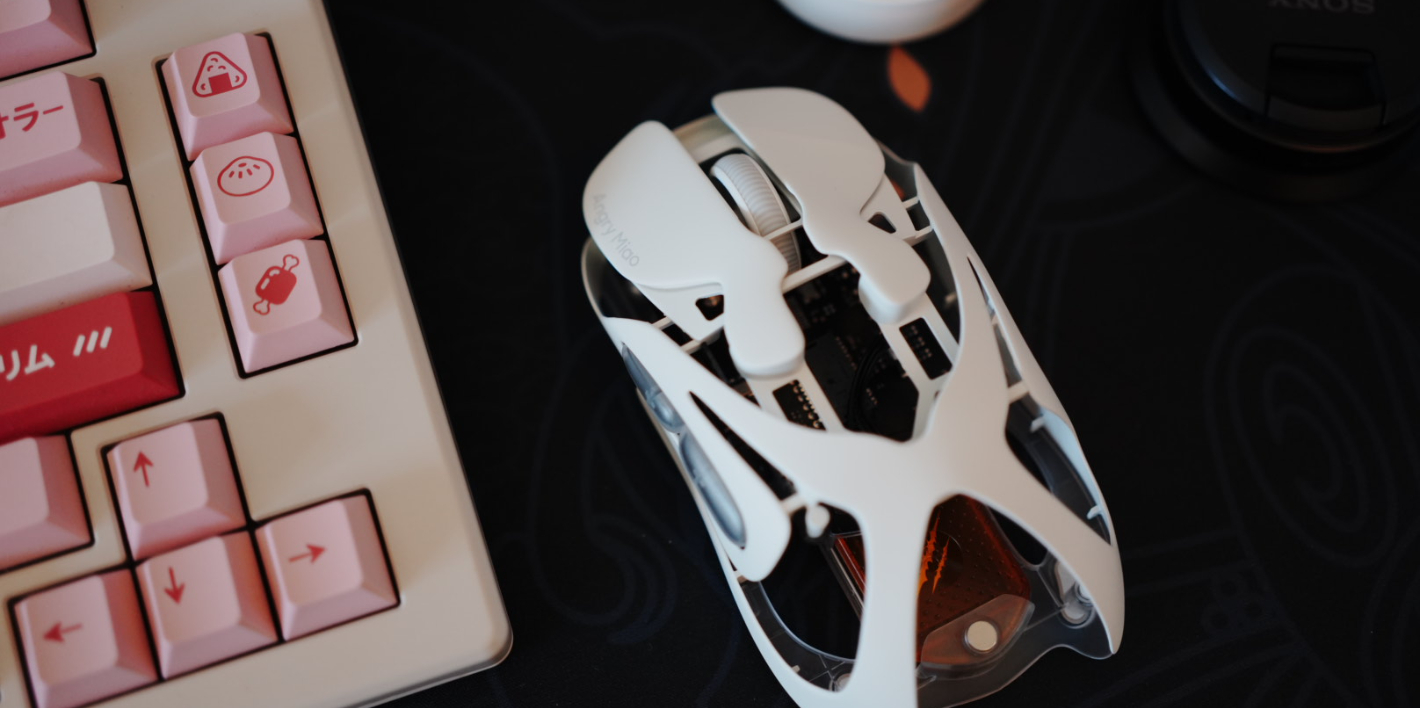
I put the Angry Miao Infinity Mouse in first place because it’s my personal choice for hardware of the year. I also want to give a quick shout-out to Tao—back in early August, he managed to snag the new Cloud White version as a birthday gift for me. Nearly five months have passed, and every time I use the Angry Miao Infinity Mouse, I still get that “can’t put it down” feeling.
The biggest difference between the Angry Miao Infinity Mouse and a typical mouse lies in its battery-swap design (something NIO car owners will probably appreciate even more). Angry Miao designed two hot-swappable magnetic batteries: one attaches to the mouse for normal use, while the other attaches to the 2.4G receiver module and charges in real time. Swapping batteries takes less than two seconds from start to finish, so you never have to worry about the mouse running out of power. I’d go so far as to call it a “genius-level design.”
Beyond the core battery-swap system, the design of the Angry Miao Infinity Mouse also hits my aesthetic sweet spot. Inspired by the Cloud White colorway from Isle of Dogs, it features a UV-coated finish and a hollowed-out magnesium-aluminum alloy body. Combined with its ultra-light weight of 49 grams (39 grams in wired mode), it delivers top-tier performance in both looks and hand feel.
If you’re considering the Angry Miao Infinity Mouse for gaming, there’s no need to worry about performance. It’s equipped with the PAW3950 sensor, offering 30,000 CPI native sensitivity, 750 IPS tracking speed, and 50G acceleration. The 2.4G receiver supports up to an 8000 Hz polling rate. As for the switches, it uses TTC Orange Dot optical switches V2, with the switch lifespan extended to hundreds of millions of clicks. The Angry Miao Infinity Mouse also supports the AM Master driver platform, allowing you to customize button mapping, RGB lighting effects, DPI settings, macros, and more.
NuPhy Node 75
Because my daily workflow involves both a desktop computer (for work) and a MacBook Air (for personal use), I needed an external keyboard that could connect to two machines at the same time. This not only saves what is already limited desk space, but also avoids the hassle of constantly swapping keyboards. Last month, I happened to see someone on Weibo sharing NuPhy’s low-profile keyboard, the Node 75. Both the price and the design fit my needs perfectly, so I picked it up for 325 RMB.
The biggest drawback of the WOB Rainy75 I used before was its weight. It was inconvenient to move around on the desk and couldn’t be placed on top of the MacBook Air’s keyboard area for use. As a result, I was constantly picking up and putting away this heavy chunk of aluminum, occasionally bumping into other items on the desk in the process. The NuPhy Node 75, on the other hand, is made entirely of plastic, which naturally makes it much lighter and a perfect fit for my needs. It’s easy to pick up and store, and in daily use I simply place it directly on the MacBook Air’s keyboard area, saving desk space. Even when I occasionally need to use Touch ID, lifting such a lightweight keyboard is effortless. I connect it to the MacBook Air via Bluetooth and to the desktop via the 2.4G receiver, switching quickly with FN + number keys, which is very convenient. One thing worth mentioning is that switching to 2.4G mode is almost instantaneous, with virtually no latency. Switching to Bluetooth takes about one to two seconds to reconnect, which is still acceptable.
I chose the low-profile version of the NuPhy Node 75 (Super Red switches, 45 gf). The typing feel is well-balanced: quiet enough for office use, yet not as soft and bouncy as the low-profile optical switches on the ROG Azoth RX LP. The retro white design is also very clean and understated, making it low-key enough for an office environment without drawing too much attention from colleagues. The dot-matrix design on the top of the keyboard is another highlight. The dot-matrix light on the left indicates the currently connected device, while the dot-matrix area on the right can be slid to adjust the system volume. It’s genuinely practical rather than a gimmick.
Anker Capsule Power Bank
As iPhone batteries have grown larger and battery life optimization has continued to improve, I’ve found that iPhones released in recent years can basically cover a full day of use for me. As a result, power banks have become more of an optional accessory—something I only really need for occasional business trips or travel. A product in the form factor of the Anker Capsule Power Bank fits this kind of usage perfectly.
This Anker power bank measures 77 × 36 × 25 mm and weighs just 100 grams, so it’s no burden at all even when carried in a pocket. The 2900 mAh capacity isn’t enough to fully charge an iPhone, but it’s more than sufficient for an emergency top-up. It also comes with a built-in Type-C connector, allowing you to plug it in and charge directly, eliminating the need to carry a cable and avoiding the awkward “dangling power bank” situation.
Mac mini M4
Since its launch last year and its subsequent inclusion in national subsidies, the Mac mini M4 has enjoyed an excellent reputation. I bought the “16 GB + 256 GB + 10-gigabit Ethernet” version earlier this year for around 4,000 RMB, which I already thought was a great deal. I didn’t expect that during the 618 shopping festival, with national subsidies and education discounts stacked together, the price would drop to below 3,000 RMB—arguably the most cost-effective Apple product ever.
Turning to the Mac mini M4 itself, performance upgrades are clearly the main highlight. With the M4 chip and a 16 GB base memory configuration, the Mac mini has transformed from an entry-level macOS experience machine into a standard Mac that’s powerful enough for most people. On top of that, the Mac mini M4 now supports HDMI-CEC and HDMI 2.1. For LG C4 users like me, this means enjoying a 4K HDR display with a 120 Hz variable refresh rate, along with synchronized sleep and wake control between devices—an excellent overall experience.
Pixel 9 Pro
The Pixel 9 Pro I bought in January may be the most emotionally conflicted piece of tech I’ve owned this year. In fact, before buying a Pixel, I had already managed my expectations—and that’s also why, despite being a long-time Google fan, I had put off buying a Pixel phone for so many years. Next, I’ll talk in detail about my love-hate relationship with the Pixel 9 Pro.
First of all, a major reason I finally decided to buy the Pixel 9 Pro was its design. In my view, this is the first generation where Pixel can truly be called “good-looking.” I don’t like large foreheads, and I don’t like rear fingerprint sensors. While it’s true that the Pixel 9 series’ display (uniform narrow bezels on all four sides, flat panel) and frame design (flat edges, polished metal) look very similar to the iPhone 14 Pro series, good design often converges. At the same time, the Pixel 9 Pro is lighter and has more rounded edges, making its in-hand feel far superior to Apple’s Pro lineup.
Second, stock Android is undoubtedly the core selling point of this phone. On the Pixel 9 Pro, I get to experience the latest features and UI interactions of pure Android. Every time I unlock the phone, there’s a refreshing, almost uplifting feeling. Gemini deserves special mention here: the leading model combined with deep, system-level integration turns Pixel phones into a benchmark for AI hardware in today’s market. The only issue is that, as someone deeply invested in the Apple ecosystem, it’s very difficult for the Pixel to become my primary phone. The lack of seamless sharing, the inability to pair with an Apple Watch, and the absence of certain ecosystem-exclusive apps are all very real constraints. Of course, this isn’t a problem with Pixel or Android itself, but rather an ecosystem choice dilemma faced by me as a regular consumer.
Finally, there’s the unavoidable and unsolvable issue of localization. As everyone knows, Pixel has never officially entered the mainland Chinese market, so 5G doesn’t work properly. Google also tightened restrictions even further in an October system update this year. Initially, with help from @Clyde, I enabled 5G connectivity through Root and tools like PixelIMS and Network Signal Guru. Later, I managed to “keep it alive” using Shizuku and an IMS plugin. The problem is that 5G enabled through these methods is unstable, and I frequently encountered dropped data connections and call failures. The final straw for me was emergency calling: once, after getting into a traffic accident while driving and needing to call the police, I discovered that my Pixel couldn’t dial emergency numbers like 110 or 122 at all.
As a result, the Pixel 9 Pro became my favorite phone—yet one I rarely use. Eventually, I restored it to factory settings, with no OEM unlocking and no Root. This way, I can normally use features like Google Wallet and Pixel Studio, and easily update to the latest version of stock Android without flashing. I take the Pixel 9 Pro with me when traveling abroad, using it for contactless payments, navigation, photography, and public transportation. But once I’m back home, the Pixel 9 Pro’s greatest role may simply be serving as an emotional connection between me and Google.
Clothing & Accessories
This year can be considered the first year in which I seriously reflected on my personal style, everyday outfits, and systematically learned about fabrics, materials, and functional use cases. With Tao’s help, I carried out a “carpet-bombing” cleanup of my wardrobe, recycling everything that didn’t fit, was worn out or faded, or had strange, mismatched styles. What remained were only the pieces I genuinely like and am willing to wear. When adding new clothing, in addition to brand, price, and fit, I also consider fabric characteristics and how each piece fits into an overall layering system. Using the “three-layer clothing system” as a foundation, I make targeted additions to fill specific gaps.
Watch the Wind — Three Pieces
I’ve actually known for a long time that Uncle Bo has been running his own clothing brand, but due to price and design considerations, I never pulled the trigger. During this year’s Singles’ Day sale, however, a post he shared on social media gained some traction and reminded me of the brand. I checked out this year’s releases on the Taobao store and found a few pieces that suited me quite well, so I ended up ordering three items over time. None of these are from this autumn/winter’s new releases, though—I haven’t managed to snag anything since Drop 5. Hopefully Uncle Bo will produce more in the future.
The piece I’m most satisfied with is the WtW half-placket pullover fleece mid-layer. It uses a 160 gsm lightweight fleece fabric that balances warmth and lightness very well. I especially like the half-placket collar design: it looks distinctive, and the snap closure is more convenient than either zippers or buttons.
The second piece is the WtW stretchable, machine-washable merino wool fitted base layer. The fabric is composed of 96% merino wool and 4% elastane, and with a fiber diameter of 19.5 microns, it’s very comfortable even when worn directly against the skin, without the itchiness commonly associated with regular wool. In terms of fit and design, this piece is more stylish than comparable products from Icebreaker, and it works fine even when worn on its own—unlike Icebreaker pieces, which tend to look more like thermal underwear. That said, the construction quality isn’t as good as Icebreaker’s. After one hand wash, I noticed significant seam tape peeling at the edges. At 350 RMB, it’s about 130 RMB cheaper than the Icebreaker Oasis 200, so it really comes down to personal trade-offs.
The third piece is the WtW garment-dyed lightweight dynamic insulated half-placket sweatshirt. It uses the increasingly popular PrimaLoft Active Evolve fabric (95 gsm version) from the past couple of years. As a mid-layer, it’s impressively lightweight while still offering decent warmth. For me, though, the half-placket design on this piece feels a bit restrictive, and visually it’s not as appealing as the half-placket pullover fleece mid-layer mentioned earlier.
Lululemon ABC Flannel Elastic-Waist Pants
Lululemon is a brand that offers almost no value at full retail price, but once you pick things up at deep discounts during shopping festivals, it becomes a clear “worth it.” After reorganizing my wardrobe this year, I realized that all the pants I had left were either too thick or too thin—nothing suitable for temperatures around 10°C. That’s when I set my sights on these Lululemon ABC flannel elastic-waist pants. I paid 479 RMB after the Singles’ Day discount; the regular price outside of promotions is 1,080 RMB. Even more interestingly, this pair is actually a new release for the winter of 2025.
In terms of fit, these pants lean toward a business-casual style. They’re made from brushed flannel fabric with a small amount of wool added, giving them a soft and comfortable feel. When worn directly against the skin in winter, they don’t have that “instant chill” sensation. I especially like wearing them on workdays: the relaxed cut is particularly important for long hours of sitting at a desk, and they’re also very easy to style. The “Heathery Black Pine” color looks more like black indoors, but under bright outdoor light, it takes on a subtle dark green tone.
OriginalGear Evolve Multi-Purpose Pants
In winter in the Jiangsu–Zhejiang–Shanghai region, I try to get by with just a single pair of pants. Only when temperatures drop to around freezing and I really can’t take it anymore do I consider adding long underwear. The biggest problem with long underwear is that it’s hard to balance comfort, warmth, and looseness. That’s why the OG Evolve pants—ultra-light yet warm—completely changed my winter pants-wearing habits.
The OG Evolve multi-purpose pants use PrimaLoft Active Evolve fabric (95 gsm), with a CLO value above 0.55. The entire pair weighs around 100 grams, almost perfectly balancing lightness, thinness, and warmth at the same time. The material is also very skin-friendly, making it comfortable to wear directly against the skin.
Of course, PrimaLoft Active Evolve isn’t without its drawbacks. Its biggest weakness is wind resistance—or rather, the lack of it. Even indoors, walking around at home wearing only the Evolve pants, I can feel a noticeable chill on my legs. Because of this characteristic, the Evolve pants are actually better suited for layering. At home, I usually throw on a pair of lounge pants over them. Outdoors, I layer an Arc’teryx Gamma Pant on top for wind protection. This combination easily fends off the “winter magic attacks” of the Jiangsu–Zhejiang–Shanghai region. If I could offer one suggestion to OG’s founder, it would be to make the pants slightly longer in the next iteration.
Speaking of PrimaLoft Active Evolve, some of you might be curious how it compares to Polartec Alpha Direct. I actually own a pair of Alpha Direct pants from another domestic brand. The cut and overall weight are similar to the OG Evolve pants, but the price is nearly double. To put it simply: when stationary, their warmth is about the same; when moving, Alpha Direct has better breathability; in terms of comfort, PrimaLoft Active Evolve feels more skin-friendly. For me, that makes PrimaLoft Active Evolve the more cost-effective choice.
Smartwool Merino Wool Socks
I actually mentioned Catman’s wool socks in last year’s annual recommendations, but after wearing them for a while, I realized they have two major drawbacks. One is poor breathability—they make my feet sweat easily. The other is that once my feet sweat, they become very slippery. As a result, they’ve basically been demoted to winter house socks. Still unwilling to give up, I picked up a pair of the famously well-regarded Smartwool socks while shopping at Paddy Pallin in Melbourne this year, just to hit the free-shipping threshold. There were so many styles that I didn’t do any research and simply chose one at random.
The first time I wore them after returning home, I was convinced that Smartwool truly deserves its reputation as the “god of wool socks.” First, the fit is excellent—the socks conform well to the shape of the foot, and the wool isn’t itchy at all. They’re comfortable and snug, forming a stark contrast with Catman’s wool socks. Second, Smartwool socks are anti-slip. Since they’re designed specifically for outdoor activities, this is something you don’t have to worry about at all. Finally, they’re sweat-absorbing and odor-resistant. To test this, I wore the same pair for five consecutive days, and there was genuinely no noticeable odor (at a normal distance—not by sticking my nose right up to them). The only issue is the price: at full retail, they’re hard to justify. When they’re discounted by half, though, they’re well worth buying via overseas shopping.
Montane PROTIUM XT Fleece
To be honest, I hesitated for quite a while about whether to include this piece. Before Links and Li Xian released their hiking video in Kulagangri, this “British Maotai” brand was still relatively niche in the outdoor world. But starting from the third day after the video went live, the “Li Xian same model” effect kicked in. The PROTIUM XT fleece and the “custard bun” KAMEN XT down jacket quickly sold out.
My original reason for buying this fleece was to fill a gap in my mid-layer lineup—a hooded fleece. My Patagonia R1 Air is a fleece jacket, and on windy winter days, I really want a warmer hood when heading out. A hooded fleece fits this scenario perfectly.
Once I had it in hand, I realized the PROTIUM XT fleece was much thicker than I expected—thicker even than Tao’s Patagonia R2 CrossStrata—yet it costs only about half to two-thirds of the price. This means that in addition to serving as a mid-layer, the PROTIUM XT can also be worn directly as an outer layer when the wind isn’t too strong. One morning in Zhejiang, with temperatures around 3°C, I tried heading out wearing a combination of “PROTIUM XT fleece + a POLARTEC PolarSport fleece sweatshirt + Icebreaker Oasis 200 merino long-sleeve base layer.” The warmth and insulation were excellent—I even broke a sweat after finishing a bowl of soy milk for breakfast.
As a British brand, Montane is actually quite reasonably priced in the UK. Some colorways of the PROTIUM XT fleece sell for as little as £65 on third-party platforms, making it possible to get one at a relatively low price through overseas shopping or purchasing agents. Prices on the domestic Tmall flagship store are slightly higher than on Montane’s UK official site, but still well within a reasonable range—unlike some other popular outdoor brands where the price gap between domestic and overseas markets is huge.
As for downsides, personally I find Montane’s tailoring and finishing not quite on par with top-tier brands like Arc’teryx or Patagonia. That said, considering the price, I’m perfectly willing to accept this relatively minor difference.
Home & Daily Essentials
Tanita Body Weight Scale
I’ve actually bought quite a few so-called smart body fat scales. Setting aside build quality and data accuracy, their “smart” features basically boil down to connecting to various apps and giving you a health analysis based on weight and body fat. Without exception, those apps are all incredibly annoying—crammed with shopping malls, communities, and check-in features—and syncing data to HealthKit is also a hassle.
So I decided to go back to basics. No more body fat measurements, no more health diagnostics, no more data syncing. I just wanted a simple, straightforward scale. After some searching, I ordered this Tanita scale, and after using it for a year, I’ve been very satisfied. First, the design is extremely minimalist—completely different from those smart body fat scales—and it blends in nicely at home without looking out of place. Second, the all-plastic body means that stepping on it barefoot in winter doesn’t feel icy cold. By contrast, smart body fat scales usually have four metal contact areas, and stepping on those barefoot in low temperatures is genuinely freezing. Finally, saying goodbye to all those bizarre apps also means saying goodbye to data anxiety. All I need is a simple number showing my weight.
Hero Thunder Distribution Tool (WDT Needle)
I’ve always been pretty laid-back when it comes to coffee distribution, so channeling during extraction was almost inevitable. I figured I’d buy a cheap distribution needle—basically just a few steel wires stuck into a cork. To be honest, the results were terrible, and it still couldn’t achieve even distribution. Of course, there are plenty of expensive options on Taobao. Press down on them and the needles rotate automatically, achieving very even distribution by design, since vertical movement is eliminated and only horizontal concentric rotation remains. But at around 300 RMB, I really couldn’t bring myself to buy one.
So instead, I found a lower-cost alternative in the same category. It replaces the downward pressing action with manual rotation, costs only 62 RMB, and works very well—one of those results that’s immediately intuitive and easy to understand.
Feather Double-Edge Razor Blades
I might be one of the few people left who still sticks with a manual razor. Since college, I’ve used various Gillette razors, but honestly, they were never that great. Around 2018, on a former colleague’s recommendation, I bought a Rockwell razor on Amazon. It’s very old-school, with replaceable blades, and it shaves smoothly and cleanly. However, after Amazon exited the Chinese market, I could no longer buy replacement blades for the Rockwell.
That changed this year when I found Feather’s Tmall flagship store. Seeing that five blades cost just 30 RMB, I decided to give them a try. To my surprise, these Feather double-edge blades fit my Rockwell razor perfectly and perform beautifully—smooth and clean shaves, a perfect replacement for the original Rockwell blades. At this rate, it looks like I’ll be able to use this Rockwell razor for the rest of my life.
Qinghexun Air Purifier Filters
After moving into a new office building last year, I was worried about formaldehyde, so I moved one of my Xiaomi air purifiers from home to my desk and kept it running 24/7. The problem is that official Xiaomi filters are too expensive. I tried buying third-party filters on Xianyu—they were cheap, but I never really felt at ease using them. Later, I happened to come across the brand Qinghexun on Xiaohongshu. I learned that it’s a subsidiary of Beijing Hengjianlun, a strategic partner of Toray in Japan, with its own dust-free production facilities and seven filter production lines. Their filters are compatible with various Xiaomi air purifier models and use Toraymicron triple-protection filter paper from Japan’s Toray. That convinced me to place an order on Taobao.
Once the filters arrived, I could tell immediately that even the packaging was on a completely different level compared to the small workshop products I’d seen on Xianyu. The filter itself looked well made, and the RFID chip was perfectly recognized by my Xiaomi air purifier. During the Double 12 sale, I stocked up on two more Pro All-in-One flagship filters, which support antibacterial, anti-mold, antiviral, anti-allergen functions, as well as formaldehyde removal. Calculated out, each filter cost just 86 RMB.
Xiaomi Air Circulation Fan
Because my apartment is on the top floor and the bedroom faces south, it cools down very slowly in summer even with the air conditioner on. As someone with fairly high demands for a good sleep environment, I decided to add a circulation fan to address the persistently high indoor temperature. After some comparison, I chose the Xiaomi Air Circulation Fan for three reasons: first, the design is quite minimalist and doesn’t look out of place in the bedroom; second, it runs very quietly—when sleep mode is enabled at night, it’s almost inaudible; third, it can be integrated into HomeKit via Home Assistant and the official Mi Home plugin, allowing me to turn the air conditioner and fan on or off together with a single tap in the Home app or via Siri.
As a circulation fan, the Xiaomi Air Circulation Fan also met my expectations perfectly. On the one hand, it helps disperse the cold air blown out by the air conditioner, preventing it from quickly sinking to the floor. On the other hand, it directly lowers the surface temperature of the body. With the low airflow in sleep mode, there’s no need to worry about getting chilled.
Food & Wellness
Yourongnaida Coffee Beans
Ever since I downed two cups of Yourongnaida’s Saturday-limited cold brew (Panama Altieri Mimosa Geisha) in one go back in June, Yourongnaida has basically supplied almost all of my coffee beans for the second half of the year. I checked my Taobao order history and realized that since June, I’ve bought 19 bags of Yourongnaida beans—safe to say I’m a loyal fan.
For espresso blends, you can buy the seasonal limited editions without overthinking it. They’re slightly more expensive than the regular blends, but the quality is consistently high. I’ve bought everything from the spring and summer editions all the way through the fall and winter ones, with multiple repeat purchases for each season—never a miss. For pour-over beans, I recommend a cost-effective option with a very distinctive flavor: Colombia Milan Estate Caturra anaerobic washed. It works well for pour-over and SOE Americanos. The first time I tried this bean was at Slab Town, where I ordered a combo featuring it—the hot Americano left a particularly strong impression. I won’t recommend the expensive beans, because expensive beans are almost always good, and don’t really need recommending.
Code Black Coffee Beans
For international beans, I’d like to recommend the Australian brand Code Black. When Tao and I were in Melbourne, we visited a Code Black café in person, and both the milk-based drinks and cold brew were excellent. So when I came back to China, I brought home a bag of the Santuario Project, a Colombian SOE. I’ve used it for Americanos, pour-over, and cold brew, and it’s been great every time—so good that even Tao, who usually doesn’t like black coffee, really enjoyed it.
Later on, I bought another bag through an Australian proxy: Code Black’s Ex-Wife espresso blend. It’s a blend of beans from Brazil, Guatemala, and Ethiopia, and the overall impression is very balanced. It works equally well for milk-based drinks and black coffee. If it weren’t for the long proxy shipping times, this would be a blend I’d repurchase endlessly.
Guanghua Silver Rice Vermicelli
As non-Cantonese, Tao and I learned about this rice vermicelli from Houpi Orange. After trying it once, there was no turning back—we’ve been repurchasing it ever since.
In terms of texture, silver rice vermicelli is quite similar to the rice noodles from my hometown. However, it has a slightly rougher bite, and even if you cook it longer, that texture remains. This is completely different from the softer, chewier texture of my hometown’s rice noodles. As for cooking methods, it works well boiled or stir-fried. I usually boil it—it cooks very quickly, is low in calories, yet surprisingly filling. This makes it an excellent staple for fat-loss meals. Just add some beef and vegetables, plus half a spoon of garlic crisp oil, and the scale starts dropping fast. For storage, just keep it in a cool place. Since it’s dehydrated and vacuum-sealed, there’s no need to worry about spoilage. One pack per meal—just cut it open and toss it into the pot.
Midea Dishwasher UP2Pro
Tao and I had wanted to buy a dishwasher for a long time, but our old apartment didn’t have space reserved for a built-in model, and countertop models often involve complicated plumbing and drilling, so we kept putting it off. This year, however, considering the upcoming arrival of a baby and the need to thoroughly clean and sterilize tableware and baby bottles, we finally decided to get one. After looking around, we chose the Midea UP2Pro dishwasher. With national subsidies and various discounts, it cost less than 1,400 RMB, and it supports three installation methods: countertop, semi-built-in, and wall-mounted.
Before the installer arrived, we cleared off the kitchen countertop and made space next to the sink, where there happened to be a power outlet. When the installer came, he told us that drilling into a stainless-steel sink is quite difficult and suggested drilling into the marble countertop instead. We agreed. In the end, the setup involved drilling a single hole for the inlet hose, while the drain hose was inserted directly into a small compartment of the sink, saving us from having to drill a second hole.
The Midea UP2Pro supports features like one-touch baby-care sterilization washing and one-touch hot-air drying. On the control panel, you can directly select modes such as fruit and vegetable wash, baby-care wash, quick wash, intensive wash, and standard wash. In the Midea app, there are additional options like eco wash, self-cleaning, and seafood wash. In daily use, we usually give the dishes from all three meals and our coffee cups a quick rinse, load them into the dishwasher, and after dinner run a “quick wash,” which takes 30 minutes, followed by up to two hours of drying as needed. We’re extremely satisfied with both the washing and drying results—the dishes come out very clean, with almost no water marks. Ever since we bought the Midea UP2Pro, our willingness to cook at home has increased significantly. It ensures food safety, saves money that would otherwise go toward eating out or ordering takeout, and even helps us improve our cooking skills—truly a win on all fronts.
Decathlon EL520 Elliptical Trainer
Whenever Tao and I go to the gym for cardio workouts, the elliptical is always our first choice. So when it came time to choose home fitness equipment, an elliptical was our top priority as well. Compared with a treadmill, an elliptical takes up less space and weighs less, making it easier to transport and install. After considering factors such as stride length, flywheel weight, and brand after-sales support, we ultimately chose the Decathlon EL520 elliptical trainer. Once we had narrowed it down, we went straight to a Decathlon brick-and-mortar store to try it out. After the trial, we were very satisfied with the stride length, stability, and smoothness, so we placed an order on Taobao.
The morning after placing the order, the unit was delivered directly to our home, and in the afternoon an installer came to set it up. The entire installation took about 30 minutes. We’ve been using it ever since without any issues. Using an elliptical at home is probably one of the most suitable forms of exercise: it doesn’t disturb downstairs neighbors, and you can work out while watching TV, which greatly reduces the boredom of cardio. It’s now become a daily must-do activity for both Tao and me.
That wraps up my 2025 annual favorites. If you have any questions or other recommendations, feel free to share and discuss them in the comments.
Draft rules propose requiring AI chat services to issue timed exit reminders and intervene promptly in cases of addiction
Xiaohongshu responds to a public “call-out” from the Lijiang Old Town Culture and Tourism Bureau
Cyberspace Administration issues regulations to standardize the behavior of online influencer accounts
Honor releases the WIN series gaming smartphones
Plaintiff presents forged evidence bearing Doubao AI watermarks, receives a judicial reprimand
Beijing arbitration case clarifies that dismissal due to a role being replaced by AI constitutes unlawful termination
Rumors You Can Just Glance At
Draft rules propose requiring AI chat services to issue timed exit reminders and intervene promptly in cases of addiction
On December 27, the Cyberspace Administration of China released the Interim Measures for the Management of Anthropomorphic Interactive AI Services (Draft for Public Comment), soliciting public feedback. The draft defines “anthropomorphic interactive services” as products or services that use AI technologies to simulate human personality traits, thinking patterns, and communication styles, and engage in emotional interaction with humans through text, images, audio, video, and other forms.
Beyond basic content compliance, the draft proposes that anthropomorphic interactive services must not provide false promises that seriously affect user behavior or services that harm social relationships; must not harm users’ physical or mental health; and must not induce users to make unreasonable decisions through algorithmic manipulation, misleading information, or emotional traps. Service providers are required to have safety capabilities such as mental health protection, emotional boundary guidance, and dependency risk warnings, and must not take replacing social interaction, controlling users’ psychology, or inducing addiction and dependence as design goals.
The draft also proposes introducing a number of intervention mechanisms. For example, while protecting users’ personal privacy, providers should assess users’ emotional states and their level of dependence on products and services, and take necessary measures to intervene when extreme emotions or addiction are identified. When users explicitly express intentions to commit suicide, self-harm, or other extreme actions, the conversation must be taken over by human operators, and timely measures should be taken to contact users’ guardians or emergency contacts (required to be provided during registration for minors and older adults). In addition, if a user has been using the service continuously for more than two hours, dynamic reminders—such as pop-up notifications—should be displayed to prompt a pause; providers must not obstruct users from actively exiting the service. Providers should also prominently inform users that they are interacting with AI rather than a natural person.
The draft further brings training data under regulatory oversight. Providers should strengthen the management of training data, ensure that data sources are lawful and traceable, take necessary measures to safeguard data security, and prevent data leakage risks. Unless otherwise stipulated by laws or administrative regulations, or with separate user consent, providers must not use user interaction data or users’ sensitive personal information for model training.
Since the beginning of this year, international media have repeatedly reported on incidents linked to AI chat services. The U.S. Federal Trade Commission is investigating chatbot products from major AI companies, and some states have begun to legislate oversight. For example, in October, the Governor of California signed a series of restrictive bills targeting AI applications, aimed at strengthening protections for minors. These measures require AI products to verify users’ ages, remind users every three hours that they are interacting with AI rather than a human, and promptly intervene in cases involving suicide or self-harm.
Xiaohongshu responds to a public “call-out” from the Lijiang Old Town Culture and Tourism Bureau
According to a report by Observer Network, the Culture and Tourism Bureau of Lijiang’s Old Town District in Yunnan recently issued a public letter accusing the Xiaohongshu platform of failing to adequately fulfill its responsibilities in information oversight. The bureau claimed this had led to a large number of consumers using unsubstantiated “avoid-at-all-costs” posts to threaten wedding photography businesses into issuing refunds.
In response, on December 24 Xiaohongshu customer service stated that the platform provides public reporting channels and will handle confirmed violations in a timely manner. People familiar with the platform said that preliminary reviews have not found evidence of consumers fabricating experiences or engaging in other violations. The Old Town District Culture and Tourism Bureau later deleted the letter. However, the Lijiang Old Town Travel Photography Industry Association said it has refused to continue negotiations with Xiaohongshu and is currently commissioning lawyers to collect evidence and prepare a collective public-interest lawsuit.
Several local travel photography business owners told the media that some consumers, after signing off on services and receiving their final photos, subsequently post negative reviews on Xiaohongshu to extort full refunds. In some cases, social groups have even emerged that coach members on how to obtain free services through complaints. Merchants said that even when they submit signed satisfaction agreements or certificates showing no complaints filed with regulators, their appeals often fail because the platform’s system deems_toggle “insufficient evidence.” As a result, order volumes at some studios have dropped sharply, and some sales teams have even resigned en masse. According to the industry association, as of December 2025, direct economic losses caused by false “avoid-at-all-costs” posts have exceeded RMB 1 million, with indirect order losses reaching more than RMB 5 million.
Public opinion online has been divided. Some users believe that certain “avoid-at-all-costs” posts have deteriorated in nature and have expressed concern about Xiaohongshu’s overall content environment. Another perspective shifts the focus to the travel photography businesses and the industry itself, arguing that the key to avoiding such posts lies in improving service quality.
Industry experts note that social platforms such as Xiaohongshu have effectively become part of the infrastructure for tourism services. Meanwhile, structural issues within the travel photography industry—such as cutthroat low-price competition, hidden fees, and non-standardized services—objectively increase the difficulty for platforms to verify the authenticity of content. Experts suggest that platforms should consider establishing collective appeal and communication mechanisms tailored to regional industries, while industry associations should help optimize the environment for public opinion oversight through standardization efforts.
Cyberspace Administration issues regulations to standardize the behavior of online influencer accounts
On December 26, the Cyberspace Administration of China (CAC) released the Notice on Regulating the Management of Online Influencer Account Conduct, establishing a negative list for online influencer account behavior and defining clear boundaries for such conduct.
According to the notice, the negative list of prohibited behaviors for online influencer accounts includes: (1) spreading vulgar content; (2) promoting unhealthy value orientations; (3) creating “ugliness-as-spectacle” or otherwise harmful personas; (4) disseminating false information; (5) distorting or misinterpreting policies and public events; (6) inciting group antagonism; (7) doxxing or publicly exposing individuals at will; (8) organizing offline fights or online flame wars; (9) soliciting negative leads or accusations; (10) calling on fans to gather or mobilize; (11) engaging in coercive or extortionary practices for personal gain; (12) conducting operations without required qualifications; and (13) covertly engaging in illegal or gray-market activities.
The notice requires all websites and platforms to conscientiously implement relevant laws, regulations, and policies, strictly fulfill their primary responsibilities in accordance with the negative list, and further improve community rules and user agreements related to the management of online influencer accounts. Platforms are also instructed to strengthen, in accordance with the law and platform rules, the management of content publishing, live-stream interactions, topic creation, and other behaviors by online influencer accounts, guiding operators to use their influence responsibly and to standardize online speech and conduct.
Honor releases the WIN series gaming smartphones
On December 26, Honor launched the WIN series smartphones in Chengdu, introducing two models—Honor WIN and Honor WIN RT—with starting prices of RMB 3,999 and RMB 2,699 respectively. The WIN series is a brand upgrade of the previous GT lineup and is positioned squarely in the professional gaming phone market.
In terms of performance, the entire Honor WIN lineup is powered by Qualcomm’s flagship Snapdragon platforms. The Honor WIN features the fifth-generation Snapdragon 8 Elite chipset, paired with LPDDR5X memory and UFS 4.1 storage. To improve endurance, the WIN series raises battery capacity to 10,000mAh for the first time, supporting 100W wired fast charging and 80W wireless fast charging (standard model only). The new phones also support bypass charging, allowing the charger to power the motherboard directly to reduce heat buildup while gaming and charging simultaneously.
The Honor WIN series introduces the “Dongfeng Turbo” active cooling system, which uses an ultra-compact fan and a direct-drive high-efficiency cooling air duct. Official figures claim a 30% improvement in cooling efficiency, with fan noise as low as 25 dB. On the display front, the phones are equipped with a 185Hz ultra-high-refresh-rate esports screen, support 5,920Hz high-frequency PWM dimming, and are optimized for ultra-frame-rate modes in multiple mainstream games.
The Honor WIN series also features dedicated esports antennas to ensure low-latency performance in weak network conditions. Additional features include AI-assisted control enhancements and anti-mis-touch functions. At the launch event, Honor announced a strategic partnership with Delta Force, with the WIN series designated as the official device for its professional league. Honor stated that it will further build out a gaming ecosystem around the WIN series, including future products such as tablets.
Plaintiff presents forged evidence bearing Doubao AI watermarks, receives a judicial reprimand
Recently, the Civil Division II of the Dawu County Court in Xiaogan, Hubei Province, identified a plaintiff’s attempt to fabricate evidence using AI technology during the trial of a housing lease contract dispute, and issued a formal reprimand in accordance with the law.
In May 2024, Li signed a housing lease contract with Xiong, agreeing on the lease term and rent, and specifying that the rent for the latter half of the term must be paid by March 2025. After the lease expired, Li sued Xiong for failing to pay the remaining rent as well as water and electricity fees, appointing his daughter Dong as his litigation agent.
During the hearing, Li was unable to provide valid proof that Xiong owed water and electricity charges. Dong stated in court that Xiong was the first tenant of the property and that all utility costs were incurred by him, and promised to submit photos of the water and electricity meters from before and after the lease period as supporting evidence after the hearing. However, the photos Dong submitted clearly bore a “Generated by Doubao AI” watermark, which immediately raised the judge’s suspicions. Further examination revealed inconsistencies in Dong’s statements: she initially claimed that the meters were used independently, but later admitted under questioning that two households shared the same meters. Faced with the judge’s inquiries, Dong was unable to justify her claims and ultimately admitted to fabricating the evidence, subsequently submitting the genuine photos to the court.
The presiding judge gave Dong a serious lesson in the rule of law, pointing out that using AI-generated images as litigation evidence constitutes the fabrication of key evidence and is suspected of disrupting judicial order. Taking into account that Dong voluntarily confessed during the investigation and promptly corrected her mistake, the court followed a principle of combining punishment with education, opting to handle the matter by way of a reprimand and refusing to admit the fabricated evidence.
Internationally, the use of AI-generated false materials in litigation has also become increasingly common. A database established by French lawyer Damien Charlotin has collected more than 600 cases worldwide. When such errors are discovered, many lawyers attempt to deflect responsibility with various excuses, such as claiming they did not know they were using AI, did not realize AI could hallucinate, alleging that hackers remotely altered the files, or even saying it was too inconvenient to switch windows on a laptop so they used AI. Some lawyers have even tried to shift the blame to interns or clients.
Beijing arbitration case clarifies that dismissal due to a role being replaced by AI constitutes unlawful termination
On December 26, the Beijing Municipal Human Resources and Social Security Bureau released its 2025 annual collection of representative labor and personnel dispute arbitration cases. Among them, an arbitration case arising from AI replacing a job position explicitly clarified that “AI replacing a position does not equal lawful dismissal.”
According to the case details, Liu had worked for many years at a technology company, responsible for traditional manual map data collection. In early 2024, the company decided to fully shift to AI-driven automated data collection, abolishing the department and corresponding positions where Liu worked. At the end of 2024, the company terminated Liu’s labor contract on the grounds that “the objective circumstances on which the labor contract was based have undergone a material change, making the contract impossible to continue performing.” Liu believed the termination was unlawful and therefore applied for arbitration.
In its analysis, the arbitration committee pointed out that the company’s introduction of AI technology was a proactive technological upgrade undertaken to adapt to market competition. Although such changes may lead to adjustments in job structures, they do not meet the criteria of “objective circumstances,” which require characteristics of irresistibility and unpredictability. Terminating a labor contract on the grounds that a position has been replaced by AI essentially shifts the normal risks of technological iteration onto the employee. The arbitration committee thus determined that the company’s action constituted unlawful termination.
The arbitration committee further noted that, in the context of rapid technological development, employers should give priority to properly accommodating affected employees through measures such as negotiating changes to labor contracts, providing skills training, and arranging internal job transfers. If termination of a labor contract is indeed necessary, employers must strictly comply with relevant regulations and avoid mechanically applying “material changes in objective circumstances” as a justification for dismissal.
Rumors You Can Just Glance At
According to the November 2025 Domestic Mobile Phone Market Operation Analysis Reportreleased by the China Academy of Information and Communications Technology (CAICT), domestic brands shipped 23.228 million units in November, down 12.6% year over year, accounting for 77.7% of total shipments. Meanwhile, shipments of foreign-brand phones reached 6.93 million units, up 128.4% year over year. This surge is likely related to adjustments by manufacturers such as Apple in promotions, channel strategies, or new product release cycles.
Weibo user “定焦数码” claimed that “a new iteration of the iPhone Air is confirmed to launch and will appear at the fall event. In addition, the iPhone 17e has already entered mass production and will be seen at the spring event.” This differs from earlier reporting by The Information, which stated that due to lukewarm market performance of the first-generation iPhone Air, Apple had informed its supply chain to remove the second-generation product from the 2026 roadmap, possibly delaying it until 2027.
X user Kosutami recently shared a set of photos said to be prototypes of the first-generation AirPods, showing two bright color options Apple once experimented with: pink and yellow. The prototypes were described as using an “iPhone 5C color scheme.” Although these colorways never made it into mass production, the level of finish on the prototypes suggests that Apple seriously considered breaking away from its single-white design tradition during the early development stage.
Microsoft announces BitLocker will support hardware acceleration
ASUS launches RT-BE90U wireless router
Critical security vulnerability discovered in MongoDB
Alibaba open-sources Tongyi Qwen-Image-Edit-2511 image editing AI model
Lenovo Watch GT Pro officially goes on sale
Rumors You Can Just Glance At
Xiaomi unveils multiple new products
On December 25, Xiaomi unveiled a range of new products, including the Xiaomi 17 Ultra, 17 Ultra Leica Edition, Xiaomi Buds 6, and Xiaomi Watch 5.
First up is the Xiaomi 17 Ultra, Xiaomi’s latest imaging flagship. In terms of design, the Xiaomi 17 Ultra series features a 2D flat display paired with a completely flat, straight-edged frame. With a thickness of 8.29 mm, it is the slimmest Ultra model in the series to date. Color options include black, white, purple, and green, and the device supports IP66, IP68, and IP69 ratings for dust and water resistance.
On the imaging front, the Xiaomi 17 Ultra is equipped with a Leica 1-inch Light Fusion Master main camera and a Leica 200-megapixel optical zoom telephoto lens. The main camera uses the Light Fusion 1050L sensor, featuring a 1-inch large sensor, 3.2 μm pixels, an f/1.67 aperture, and third-generation LOFIC ultra-high dynamic range technology. Its single-pixel full well capacity has increased to 6.3× that of the previous generation, supporting high dynamic range scenarios such as Fireworks mode. The telephoto camera adopts a new-generation HPE sensor, reducing power consumption by 40% compared to its predecessor. It measures 1/1.4 inches and delivers 200 megapixels. This lens supports continuous optical zoom, covering 75 mm to 100 mm mid-telephoto full-sensor optical output, with telephoto relay options at 200 mm and 400 mm. It is also the first Leica APO optical lens on a mobile device, supporting 4K Live Photos and multiple camera movement modes.
For the display, the Xiaomi 17 Ultra features a 6.9-inch low-power “sunlight” display using M10 emissive materials and a new red primary emissive material, protected by Dragon Crystal Glass 3.0. Powering the device is Qualcomm’s fifth-generation Snapdragon 8 Supreme Edition processor, paired with a 6800 mAh battery that supports 90 W wired fast charging, 50 W wireless fast charging, and the PPS universal fast charging protocol. In terms of connectivity, it supports Xiaomi Star Communication and UWB ultra-wideband interconnection technology. Pricing starts at RMB 6,999 for the 12 GB + 512 GB configuration.
Following the launch of the Xiaomi 17 Ultra, Xiaomi also introduced the 17 Ultra Leica Edition. This version continues Leica’s design language in its exterior details, including the iconic Leica red dot, a black-and-white two-tone body, finely knurled frame, and exclusive Leica engravings. The rear camera area features a Master Zoom Ring for focal length adjustment, with customizable parameters such as exposure compensation and white balance. In terms of imaging styles, the 17 Ultra Leica Edition offers one-tap Leica modes, including Leica M9 image rendering and Leica M3 + MONOPAN 50 black-and-white film aesthetics, as well as exclusive imaging options like a 3:2 full-frame aspect ratio. This edition also adds Beidou + Tiantong dual-satellite communication and a secure privacy encryption chip. The Xiaomi 17 Ultra Leica Edition starts at RMB 7,999 for the 16 GB + 512 GB version.
At the same event, Xiaomi also unveiled the Xiaomi Buds 6. Xiaomi states that these earbuds feature a bionic curved structure, weighing just 4.2 g per earbud, and are available in four color options. They are equipped with triple-magnet gold-plated drivers, co-tuned with Harman, and support end-to-end true lossless audio, spatial audio, intelligent translation recording, and real-time interpretation. Battery life can reach up to 35 hours, with a price of RMB 699.
In addition, the Xiaomi Watch 5 was announced. It features a 47 mm, 1.54-inch AMOLED display and a dual-sided synthetic sapphire glass body, powered by the Snapdragon W5 processor and a BES2800 low-power chip. It supports standalone eSIM, an on-wrist control center, EMG micro-gesture control, ECG electrocardiogram analysis, and over 150 sports modes. Battery life reaches up to 6 days in performance mode and up to 18 days in power-saving mode. Pricing starts at RMB 1,999. Source
Microsoft announces BitLocker will support hardware acceleration
Microsoft has announced that BitLocker in Windows 11 (25H2) and Windows Server 2025 now supports CPU hardware encryption. After enabling BitLocker, the encryption workload is shifted from the software layer to a dedicated encryption engine, reducing the performance overhead typically caused by software-based encryption. According to Microsoft, the new approach can significantly improve storage read and write performance: sequential read speeds increase from 1,632 MB/s to 3,746 MB/s, write speeds rise from 1,510 MB/s to 3,530 MB/s, and CPU usage is reduced by approximately 70%.
At present, hardware-accelerated BitLocker is only available on vPro devices equipped with “Panther Lake” processors, with support expected to expand to more devices in the future. Source
ASUS launches RT-BE90U wireless router
On December 25, ASUS introduced the RT-BE90U wireless router. The new model supports tri-band Wi-Fi 7 with a BE9400 wireless specification, including advanced Wi-Fi 7 features such as 320 MHz channel bandwidth, 4096-QAM, and MLO, and can expand home networks via AiMesh. In terms of hardware, the RT-BE90U is equipped with four 2.5 GbE RJ45 ports and six external antennas. The rear of the device also includes a USB-A (5 Gbps) port for network sharing with external devices.
On the software and feature side, the router supports Smart Home Master, allowing users to configure up to three SSIDs for device categorization and parental controls. It also integrates the enterprise-grade AiProtection security solution, providing more comprehensive protection for home networks. Source
Critical security vulnerability discovered in MongoDB
A critical security vulnerability has recently been disclosed in the popular non-relational database MongoDB. Assigned CVE-2025-14847, the flaw affects multiple versions of MongoDB and MongoDB Server. The vulnerability stems from inconsistent handling of length parameters, which could allow unauthenticated attackers to execute arbitrary code and gain control of affected systems.
MongoDB’s security team stated that clients could exploit a flaw in the server-side zlib implementation to trigger the return of uninitialized heap memory without authentication. The company strongly recommends upgrading to patched versions as soon as possible. MongoDB currently advises immediate updates to the following unaffected versions: MongoDB 4.4.30, 5.0.32, 6.0.27, 7.0.28, 8.0.17, and 8.2.3. If an immediate upgrade is not feasible, users can mitigate the risk by explicitly removing zlib via the networkMessageCompressors or net.compression.compressors options when starting mongod or mongos, thereby disabling server-side zlib compression. Source
Alibaba open-sources Tongyi Qwen-Image-Edit-2511 image editing AI model
On December 25, Alibaba’s Tongyi Qwen announced the official open-sourcing of its image editing model, Qwen-Image-Edit-2511. This release focuses on strengthening consistency across multiple dimensions and improving overall generation quality.
Specifically, Qwen-Image-Edit-2511 enhances character consistency, integrates LoRA capabilities for lighting and multi-scene generation, and improves industrial design generation and geometric reasoning abilities. In addition, the new version further boosts consistency in multi-person group photo generation. While the earlier Qwen-Image-Edit-2509 had already improved single-person group photo consistency, this update addresses consistency challenges in multi-person scenarios, enabling the model to generate more coherent group photos based on two individual portraits.
Currently, Qwen-Image-Edit-2511 has been open-sourced simultaneously on the ModelScope and Hugging Face platforms. Source
Lenovo Watch GT Pro officially goes on sale
The Lenovo Watch GT Pro smartwatch officially went on sale on December 25, highlighting up to 27 days of battery life, dual-frequency GPS for precise positioning, 50-meter professional-grade water resistance, as well as outdoor features such as more than 170 sports modes and an altitude, barometer, and compass. The current price is RMB 899.
In terms of design, the Lenovo Watch GT Pro features a 1.43-inch circular AMOLED display with a resolution of 466 × 466, protected by Corning glass, and supports a wide range of free, customizable watch faces. The watch offers 5ATM professional water resistance and includes built-in swimming algorithms.
On the functionality side, the watch is compatible with both Android and iOS systems and comes with dual-frequency GPS positioning and 24/7 health monitoring. It supports heart rate, blood oxygen, sleep, and stress tracking, as well as breathing exercises and health reminders. For sports and fitness, it offers more than 170 workout modes. The smartwatch also supports Alipay payments, a compass, Bluetooth calling, message notifications, weather information, remote camera control, phone-finding, and a voice assistant. Source
Rumors You Can Just Glance At
According to The Korea Economic Daily, Samsung Electronics is accelerating its push toward GPU in-house development and plans to adopt a self-developed graphics IP in the Exynos 2800, which is expected to launch in 2027. The move aims to reduce reliance on AMD’s RDNA technology and increase autonomy in product iteration. Samsung also intends to extend its in-house GPU beyond smartphones to smart glasses, robotics, and automotive SoCs, while further expanding into the AI ASIC market. Source
Huawei hosts nova 15 series and all-scenario new product launch
NVIDIA begins sales of the RTX PRO 5000 72GB Blackwell graphics card
TCL launches the Note A1 tablet
EA mobile game Real Racing 3 to shut down on March 19, 2026
NetEase Games’ Top Chase official servers announce shutdown
Porsche China confirms it will shut down all self-built charging stations
Rumors You Can Just Glance At
Huawei hosts nova 15 series and all-scenario new product launch
On December 22, Huawei held the nova 15 Series and All-Scenario New Product Launch, unveiling a range of new products including the nova 15 series, HUAWEI MatePad 11.5, the HUAWEI WATCH 10th Anniversary Edition, and HUAWEI HarmonyOS Smart Home.
HUAWEI nova 15 Ultra features a 6.84-inch display and is powered by the Kirin 9010S processor. The device is 6.8 mm thick and packs a 6,500 mAh battery, supporting 100 W Huawei wired SuperCharge and 50 W Huawei wireless SuperCharge. It supports Tiantong satellite communication and BeiDou satellite image messaging, and is rated IP68 & IP69 for dust and water resistance. On the rear, it is equipped with a variable-aperture OIS main camera, a large-aperture periscope telephoto camera, and an ultra-wide macro camera—all using 50 MP RYYB sensors. The front camera is a 50 MP F2.0 ultra-light-gathering portrait camera. In addition, both the front and rear feature a 1.5 MP multispectral Red Maple original-color sensor, marking the first time a Red Maple sensor has been introduced on the front camera. The back cover uses a brocade fiber finish and comes in Vibrant Green, Versatile Purple, Zero White, and Phantom Night Black. Pricing starts at RMB 4,199.
HUAWEI nova 15 Pro also comes with a 6.84-inch display and the Kirin 9010S processor, paired with a 6,500 mAh battery and 100 W Huawei wired SuperCharge. It supports BeiDou satellite image messaging and carries an IP65 dust- and water-resistance rating. Both the front and rear cameras include Red Maple sensors. The rear camera setup consists of a 50 MP RYYB OIS main camera, a 12 MP RYYB OIS telephoto camera, and a 13 MP RYYB ultra-wide macro camera, while the front camera is a 50 MP F2.0 portrait camera. Color options match the Ultra model, with a starting price of RMB 3,499.
HUAWEI nova 15 is equipped with a 6.7-inch display and the Kirin 8020 processor, along with a 6,000 mAh battery. It supports 100 W wired SuperCharge, BeiDou satellite image messaging, and IP65 dust and water resistance. The rear camera system includes a 50 MP F1.9 main camera, a 12 MP RYYB OIS telephoto camera, and a Red Maple sensor, while the front camera is a 50 MP F2.4 portrait camera. Color options are the same as the nova 15 Pro, with prices starting at RMB 2,699. The nova 15 series officially goes on sale on December 25.
HUAWEI MatePad 11.5 (2026) features an 11.5-inch display. The standard version is powered by the Kirin T82B processor, while the PaperMatte Edition uses the Kirin T82 processor. It houses a 10,100 mAh battery. The PaperMatte Edition’s eye-care Cloud Clear Soft Light Display introduces a new nano magnetron optical coating technology, reducing screen reflectivity by 60% and eliminating 99% of ambient light interference, while also incorporating circularly polarized light technology. Available colors include Feather Sand Purple, Island Blue, Frost Silver, and Deep Space Gray. Pricing starts at RMB 1,799, with sales beginning on December 25.
The HUAWEI WATCH 10th Anniversary Edition is largely consistent with the HUAWEI WATCH 5. It features an exclusive colorway blending Celestial Blue and Polar White, and is available in 42 mm and 46 mm sizes. The watch is crafted from aerospace-grade titanium alloy and 904L steel, with “10 YEARS” engraved on the crown and strap. The HUAWEI WATCH 10th Anniversary Edition goes on sale on December 25, starting at RMB 2,799. Meanwhile, the HUAWEI WATCH GT 6 adds a new 41 mm Ice Snow Blue color option, launching on January 1, 2026, priced at RMB 1,488.
On the HUAWEI HarmonyOS Smart Home front, the Xiaoyi Assistant has been upgraded, and the new HUAWEI HarmonyOS Smart Home Hub X2 Pro has been introduced. New product lines include the Smart MINI Pro Sun–Moon–Star Diamond series, the Smart Switch Mondrian Moonlight series, the Oslo Mother-of-Pearl series, and the Mondrian Kintsugi series. Huawei also launched three tiers of pre-installed solutions—Standard, Professional, and Premium—along with three tiers of 24-hour rapid smart retrofitting solutions, as well as an entry-level smart installation package. Source
NVIDIA begins sales of the RTX PRO 5000 72GB Blackwell graphics card
On December 19, NVIDIA announced the official launch of the RTX PRO 5000 72GB Blackwell graphics card. Compared with the initially released RTX PRO 5000 Blackwell featuring 48GB of VRAM, the new model increases memory capacity by 50%. NVIDIA said the 72GB version supports local training, fine-tuning, and prototyping of models with larger parameter sizes, giving AI developers greater flexibility to scale their systems according to budget and project requirements. Aside from memory capacity, the RTX PRO 5000 72GB Blackwell remains unchanged from the original version: it is still based on the GB202 GPU, with 14,080 CUDA cores (110 SMs), 2,064 TOPS of AI performance, a 300W power draw, and 1,344 GB/s of memory bandwidth. The only difference lies in the memory configuration—the original RTX PRO 5000 Blackwell uses 24 × 16Gb GDDR7 chips, while the new version upgrades to 24 × 24Gb GDDR7 chips. Source
TCL launches the Note A1 tablet
TCL has launched the Note A1 tablet in overseas markets. It features an 11.5-inch TCL signature NxtPaper paper-like display with color support. The Note A1 weighs 500 g, measures 5.5 mm thick, and comes equipped with an eight-microphone array. The display includes anti-glare, anti-reflection, and anti-fingerprint treatments, offering a paper-like reading and writing experience. The tablet is positioned for productivity use, with its note-taking system providing AI-assisted templates, voice transcription, real-time translation, and AI-powered summaries. The Note A1 is set to launch on Kickstarter soon with a crowdfunding price of $419. Source
EA mobile game Real Racing 3 to shut down on March 19, 2026
On December 19, EA announced that its mobile game Real Racing 3 will be shut down on March 19, 2026. The game has been officially removed from major app stores as of today, but players who have already downloaded it will still be able to continue playing until March 19, 2026. In-game purchases have been disabled, meaning players can no longer use real money to buy in-game currency or item packs; however, any unspent in-game currency already owned by players can still be used. Before the shutdown, the developers will release one final update, granting all players an Audi S1 e-tron quattro, a 2023 Rimac Nevera, and 1,000 gold as a “thank-you gift for player support.” Players who already own both vehicles will instead receive additional gold. Source
NetEase Games’ Top Chase official servers announce shutdown
On December 17, Top Chase released an announcement regarding the shutdown of its NetEase (official) version. Due to adjustments in development and operation strategy, the game will cease operations at 10:00 on February 26, 2026. Starting from 10:00 on December 17, 2025, download access across all platforms will be closed, meaning players will no longer be able to download the game, and in-game purchases as well as new user registrations will be disabled. At 10:00 on February 26, 2026, the game’s servers will be shut down entirely, and the official NetEase website for the game will also be taken offline and become inaccessible. From the date of the shutdown announcement until 10:00 on February 26, 2026, any unused “Top Coins” remaining in existing players’ accounts can continue to be used. Source
Porsche China confirms it will shut down all self-built charging stations
According to a December 22 report by Yicai, Porsche China has confirmed that its self-built charging network will gradually cease operations starting March 1, 2026, involving a total of around 200 charging stations. Porsche China stated that from March 1, 2026, it will orderly dismantle its Porsche Privileged Charging service facilities, after which it will shift toward deeper cooperation with leading charging network operators in the industry. This adjustment applies only to Porsche’s privileged charging scenarios; other charging options will continue to operate normally. These include charging stations installed at Porsche Centers (dealerships), Porsche Destination Charging stations, and third-party brand chargers integrated into the Porsche Charging Map, all of which will remain available. Source
Rumors You Can Just Glance At
NetEase’s Eggy Party announced on December 22 that, due to adjustments in its cooperative operations strategy with Xiaomi, the Xiaomi-channel version of the mobile game will cease operations on the Xiaomi platform at 15:00 on February 23, 2026. A character asset recovery service has been launched simultaneously. From 10:00 on December 22, 2025, downloads on the Xiaomi platform will be closed, and players will no longer be able to download the game; in-game purchases and new user registrations will also be suspended. At 15:00 on February 23, 2026, operations on the Xiaomi platform will officially end, and players will no longer be able to log in via Xiaomi channels. Source
According to internal notices originating from GameStop employees, Nintendo will no longer restock the Switch 2 Mario Kart World bundle. The bundle’s stock-keeping unit (SKU) has reached the end of its lifecycle and will not be produced again. The bundle is still currently available for purchase, and staff are advised to actively recommend it to customers. Compared with buying the console and the game separately, the bundle saves consumers an additional $29.99 and offers excellent value. Future restocks of Nintendo Switch 2 products will consist only of the base console. Source
On the evening of December 22, sexually explicit content appeared in multiple livestreams on the Kuaishou platform. Kuaishou responded that around 22:00 that night, the platform was attacked by gray- and black-market actors. Repairs are underway, and the incident has been reported to relevant authorities and the police. Kuaishou subsequently shut down its livestream section and has since fully restored normal operations. Source
Bloomberg reports that Baidu will partner with Uber and Lyft to conduct autonomous ride-hailing tests in the United Kingdom. Source
According to Reuters, sources familiar with the matter revealed that NVIDIA expects to ship H200 chips to China in mid-February, ahead of the Lunar New Year holiday, though the actual situation may change depending on government decisions and other factors. Source
The HTC Weather app ceased operations on December 18. The existing app and widgets will no longer receive updates, and users will need to switch to alternative products. Source
After pledging in October not to use generative AI in finished games, Battlefield 6 was found by players to be highly suspected of using generative AI to create decorative items in paid content packs, with clear errors visible in the depicted weapon designs. Source