Mixtape
A single cassette tape preserves the final night of three teenagers’ high school lives—and captures a carefully curated soundtrack of the era from the creators themselves.
- Release Date: May 7, 2026
- Platforms: PS5, Xbox Series X|S, Nintendo Switch 2, PC

Developed by Australian indie studio Beethoven & Dinosaur and published by Annapurna Interactive, Mixtape carries the musical DNA that has long defined the team. The studio’s creative director—and the creative director of this project—Johnny Galvatron is himself a musician, having previously served as the lead vocalist and guitarist of the band The Galvatrons. Beethoven & Dinosaur’s previous title was 2021’s The Artful Escape, a psychedelic music-themed platformer heavily inspired by David Bowie and his stage persona Ziggy Stardust.
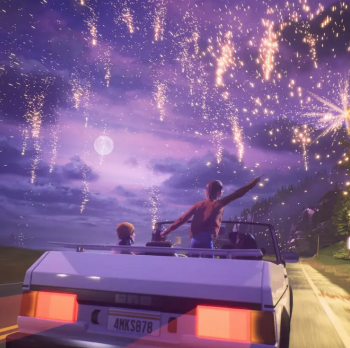
Mixtape is set in Northern California in the late 1990s. Players take on the role of Stacy Rockford, a teenage girl who has dreamed of becoming a music supervisor since she was eight years old. Together with her friends Van Slater and Cassandra “Cass” Morino, she spends the final night of high school on the way to a party, reminiscing about the years they spent growing up together. In terms of gameplay, I feel the core experience lies in following the creators’ cinematic direction and immersing yourself in the narrative. Despite its musical theme, this is not a rhythm game. Instead, the journey is punctuated by a handful of light simulation-style minigames. Overall, the action elements are minimal, and players are unlikely to encounter traditional failure states. The entire experience lasts around three hours, and its cinematic presentation naturally reduces the emphasis on player input. This has drawn some criticism, but instinctively I find it perfectly acceptable—after all, the story takes place over the course of a single night. Why shouldn’t it be told in a concise and focused way?
Built with Unreal Engine 5, the game’s audiovisual style is particularly striking. You can clearly see the influence of stop-motion animation techniques, and the deliberately reduced frame rate occasionally evokes the look and feel of Spider-Man: Into the Spider-Verse. According to Galvatron himself, as well as numerous media reviews, Mixtape pays extensive tribute—both in tone and visual design—to the coming-of-age films of 1980s filmmaker John Hughes. One major sequence even serves as a direct homage to Ferris Bueller’s Day Off. The trailers already showcase plenty of playful visual touches. One moment, which I personally suspect references the music video for “What Is Love,” features a clearly 3D-modeled car driving through a cityscape rendered in the fuzzy aesthetic of an old VHS recording rather than pristine high-definition imagery. It makes me eager to discover just how many thoughtful details like this are hidden throughout the full game.
The audio side is even more distinctive. Mixtape grows almost entirely out of Galvatron’s personal memories, placing music at the center of every aspect of its storytelling. In interviews with outlets such as Kotaku, Galvatron explained that the entire project originally began with what he considers his all-time favorite song: “That’s Good” by Devo. The team ultimately secured licenses for more than twenty tracks from artists including Devo, Roxy Music, Smashing Pumpkins, Iggy Pop, Joy Division, Siouxsie and the Banshees, The Cure, and Lush. During development, the team genuinely approached the game as if they were assembling a mixtape. They treated the entire experience as a playlist, repeatedly playing through it from beginning to end, feeling the emotional rise and fall, and adjusting songs, scenes, and moods accordingly.
The soundtrack choices reflect Galvatron’s own experience growing up in Australia during the 1990s. Silverchair dominated his life from the age of thirteen. Smashing Pumpkins’ “Love” entered his world as a gift from a relative when he was fifteen. Roxy Music’s “More Than This,” meanwhile, came from the musical education his father had been giving him since childhood. In an interview with ScreenRant, Galvatron spoke about his fascination with stories that exist “on the edge of a cliff where everything is about to change and there’s no going back.” He also encourages players to “become obnoxious about the things you love.” I deeply admire and appreciate that kind of sincerity.
To be honest, I’ve never been a particularly serious music listener. When friends bring up a famous song, I often feel as though I’ve heard it somewhere before but can never quite place it. My exposure to Western popular music between the 1990s and 2010s was especially limited. It’s only in recent years that I’ve begun to spend more time appreciating classic artists such as Queen and Arctic Monkeys. So, somewhat embarrassingly, the youthful era that Mixtape lovingly revisits and celebrates feels, for me, like a reunion that arrived long after the fact. Yet that is precisely why I connect so strongly with its approach to nostalgia. Great music is like a preserved fragment of a beautiful moment in time. Even if you never lived through it yourself, it can still touch that part of you that longs for nostalgia. And besides, I really did grow up during a period—the 1990s and the turn of the millennium—that was worth remembering.
007 First Light
The studio behind Hitman has taken on the challenge of adapting James Bond. How will Agent 47’s creators differentiate Bond from their iconic assassin? The question has captured everyone’s attention.
- Release Date: May 27, 2026
- Platforms: PS5, Xbox Series X|S, Nintendo Switch 2, PC

Developed by Danish studio IO Interactive, the creators of the Hitman series, 007 First Light is built using the company’s proprietary Glacier engine. Following the critical and commercial failure of 007 Legends in 2012—which ultimately led to Activision losing the Bond license—this marks the first major, fully fledged James Bond game in many years.
IO began dedicating its full development efforts to the project after the completion of Hitman 3. The game tells a completely original Bond origin story inspired by Ian Fleming’s novels and decades of classic Bond films. The protagonist’s youthful and inexperienced characterization is deliberately designed to distinguish him from the Bond audiences know from the movies. Players step into the shoes of a 26-year-old James Bond, still green and unpolished as an MI6 operative, undertaking a mission that could earn him the coveted “00” designation—and the license to kill. In an interview with Game Informer, narrative and cinematic director Martin Emborg explained that the studio wanted a young man with rough edges. Meanwhile, familiar figures such as M and Q have been intentionally given traits that audiences recognize as quintessentially Bond-like, gradually guiding the protagonist toward becoming the Bond we know.
Like many players, I was particularly curious about one question: after spending so many years perfecting Hitman, would IO simply build 007 on top of the same framework, or attempt something entirely new? And if it chose the latter, could the studio pull it off? Based on what we have seen so far, First Light clearly carries over many of the design philosophies that defined Hitman, including broad-linear sandbox levels and objectives that remain fixed while solutions are left up to the player. However, IO has repeatedly emphasized that First Light is not merely a Bond-themed reskin of Hitman:
- First, pacing. Hitman can be slow, methodical, and puzzle-like, allowing players to study a situation and carefully orchestrate the perfect assassination—though charging in guns blazing has always been an option. While First Light still supports both stealth and direct-combat approaches, the game is much more inclined to keep players moving forward.
- Second, identity. According to IO, you are playing a spy, not an assassin. As a result, infiltration, investigation, and eavesdropping on conversations play a much larger role, while executing the perfect kill is no longer the central objective.
- Third, action. In the Hitman series, open combat is generally treated as a last resort. Here, players are no longer meant to feel punished or “ashamed” for engaging in large-scale fights. Drawing inspiration from Batman, the game expands hand-to-hand combat with more elaborate combo systems, incorporates blockbuster set pieces reminiscent of Uncharted, and even introduces drivable vehicles. That may sound like a small step for the action genre, but it is a giant leap for IO Interactive itself—the studio even hired specialists in vehicle gameplay specifically for the project.
ZERO PARADES: For Dead Spies
The post-Disco Elysium era of ZA/UM officially begins.
- Release Date: May 21, 2026
- Platform: PC

This new espionage-themed title comes from ZA/UM, the studio behind Disco Elysium. Around 2022, many of the game’s core creators departed from ZA/UM, including producer Robert Kurvitz, art director Aleksander Rostov, and writer Helen Hindpere, none of whom remain at the studio today. The driving force behind ZERO PARADES is arguably the most prominent figure among those who stayed: Siim “Kosmos” Sinamäe, a producer on Disco Elysium, serves as the lead writer. He is joined by co-writer Honey Watson, a novelist who joined the studio more recently.
ZA/UM has repeatedly stressed that this is neither a sequel nor a spiritual successor to Disco Elysium. Even so, the game clearly inherits much of its predecessor’s DNA in both gameplay and visual design. Players take on the role of female agent Hershel Wilk, codenamed CASCADE. Five years after a disastrous intelligence operation, she is released from confinement and sent on a covert mission to the city-state of Portofiro—the very place where an intelligence network was exposed and where she, as the person in charge, was forced to flee. In practice, the game is an isometric, combat-free narrative RPG. Players explore Portofiro’s districts, converse with residents, investigate objects, and gather clues through a series of skill checks that gradually advance the story. Like the protagonist of Disco Elysium, Wilk possesses a highly active mind, and many of the game’s checks are tied to different aspects of her psyche. At first glance, it may sound like more of the same.
In terms of subject matter, however, this is a spy story. According to interviews with outlets such as Polygon, the developers believe that the world of espionage inherently lacks clear-cut notions of right and wrong, making it a natural fit for this type of system. The spies they envision are nothing like the 007-style agents mentioned earlier. In fact, they joke that the best spies are middle-ranking civil servants, while James Bond is perhaps the worst spy imaginable—“you can spot him from miles away, and everything around him is on fire.” Both writers have stated that the game draws its primary inspiration from the spy novels of John le Carré. Watson argues that compared with Bond, le Carré’s work contains far more rationality and introspection, which aligns perfectly with what ZERO PARADES hopes to explore: an ordinary person committing “petty, ugly deeds” in the name of intelligence work.
It is also worth revisiting the personnel earthquake that shook ZA/UM. The studio was founded in 2016 by Estonian novelist Robert Kurvitz, and Disco Elysium itself was adapted from his literary work. After the game launched, it swept up numerous Game of the Year awards and secured its place on countless “greatest games of all time” lists. Success, however, was followed by a tangle of legal disputes involving studio members and stakeholders. In 2022, Kurvitz and several other key creators left the company involuntarily (thank you, PC Gamer). Plans for both a prequel and a sequel to Disco Elysium were subsequently canceled, while ZA/UM underwent multiple rounds of layoffs. Those who left went on to form their own studios—such as Longdue and Summer Eternal—each developing its own contender for the title of “heir to Disco Elysium.”
Faced with this heavy and complicated history, the current developers appear surprisingly at peace. In an interview with RPG Site at GDC 2026, when asked why players should not dismiss the game simply because several key creative figures had departed, both writers responded with variations of “a good game speaks for itself.” Watson expanded on the thought: “Rather than spending our energy proving we can make a good game, we’d rather just make one.” I have to admit, that response genuinely piqued my interest, because I have an endless appetite for CRPGs like this.
For me, Disco Elysium was once my number one “game of a lifetime” (until I encountered Phantom Liberty). So when I first heard about everything that had happened to ZA/UM, my feelings were complicated. On one hand, I mourned the hardships endured by the original creators and worried about the uncertain future of any successor projects. On the other hand, I felt a strange sense of acceptance. Perhaps works with this kind of spirit really do require a touch of obsession, a touch of madness. For a while, I even thought I might deliberately avoid ZA/UM’s so-called “official spiritual successor.” But now that so much time has passed since the original team underwent its creative mitosis, that sense of acceptance has ultimately won out.
[Empathy — 10] I’m ready.
Forza Horizon 6
The Horizon Festival has finally arrived in Japan—a destination fans of the series have been calling for for years.
- Release Date: May 19, 2026
- Platforms: Xbox Series X|S, PC

Developed by Playground Games and published by Xbox Game Studios, Forza Horizon 6 was officially unveiled during Tokyo Game Show (TGS) 2025. A PS5 version has also been confirmed and is being developed collaboratively by Playground Games and Turn 10 Studios, with release planned for later this year.
After years of fan requests, the winds of the Horizon Festival have finally blown across Japan. Now free from the technical constraints imposed by the Xbox One generation, Playground Games decided the time had come to deliver a world that distills Japan’s most iconic elements into a single, highly concentrated experience. Centered around Tokyo and surrounded by dramatic mountain landscapes, the game features the largest map in the series’ history. According to the developers, the area of “Tokyo City” in Forza Horizon 6 is five times larger than Guanajuato, the main city from the previous game. It recreates landmarks such as the Shuto Expressway C1 Loop, Shinjuku Gyoen, and the famous ginkgo-lined avenue outside Meiji Jingu Gaien. Beyond the city lie the Japanese Alps, Mount Haruna (the real-world inspiration for Mount Akina), the Hakone mountain roads, Arashiyama, and numerous scenic routes that conveniently pass by breathtaking sights—including locations reminiscent of Kinkaku-ji. The result is a map that condenses a remarkable number of Japanese destinations into one space, creating what may be the series’ densest and most vertically layered world to date.
In the game, players arrive in Japan as visitors. After demonstrating their driving skills, they are welcomed into the Horizon Festival, opening up the franchise’s signature open-world formula. Players are free to roam the map, discover new locations, enjoy scenic views, participate in races and activities encountered along the way, smash bonus boards, and visit photo spots. These activities reward points that can be used to upgrade vehicles, expand garages, and unlock new opportunities. One of my favorite aspects of the Horizon series has always been its ability to offer “virtual tourism,” and the developers continue to push the visual experience further with each installment. Alongside the larger map and expanded scenery, the dynamic seasonal system that returned in Forza Horizon 4 has been further enhanced. Special attention has been given to iconic locations featuring cherry blossoms and golden ginkgo leaves. According to a developer Q&A published on Xbox Wire, the team placed enormous emphasis on authenticity, obsessing over details ranging from the sounds of city streets at dusk to the meanings behind shop signs and color choices. Their goal was to create an atmosphere convincing enough even for people deeply familiar with Japan.
I wouldn’t consider myself a car enthusiast, but I have experienced quite a few works associated with both “Japan” and “street racing,” and they all left a strong impression on me. Initial D hardly needs mentioning. Even now, I can vividly remember the nighttime Tokyo race sequence from Cars 2, as well as The Fast and the Furious: Tokyo Drift. Having traveled in Japan myself, I naturally developed a set of expectations for Forza Horizon 6’s version of the country—expectations built, admittedly, on a fair amount of stereotype and imagination.
I have not yet had a chance to play the game myself, but judging from the trailers, its depiction of Japan feels slightly different from what I had envisioned. Compared with Forza Horizon 3, 4, and 5, I expected debates over whether Japan felt “authentic” to be particularly intense. Yet after browsing through various reports and reactions, I realized the situation is more complicated than that.
Questions of authenticity have been a recurring challenge for every Forza Horizon game. Accusations that the series resembles a “tourism brochure” have followed Horizon 3, 4, and 5. Ironically, Forza Horizon 4—the entry I personally liked the most—received some of the harshest criticism. Polygon mocked it as “theme park England,” while Top Gear described it as a postcard version of Britain that exists only in older generations’ memories. The reception to Forza Horizon 6, by comparison, feels far more divided. Japanese outlets such as Game*Spark and 4Gamer have praised its level of authenticity, while many communities outside Japan have criticized aspects such as the radio language options, the perceived lack of urban depth in Tokyo, and the relatively sparse traffic and pedestrian density.
Thinking about it again, perhaps what many people really want from Forza Horizon 6 is not Japan as it actually is, but rather the Japan that exists in their imagination—the stereotypical version they have always dreamed of driving through.
Yoshi and the Curious Codex / ヨッシーとフカシギの図鑑
After seven years, Yoshi is finally back as the star of a brand-new adventure.
- Release Date: May 21, 2026
- Platform: Nintendo Switch 2

Developed by Good-Feel and published by Nintendo, this marks the studio’s latest Yoshi-led title following Yoshi’s Woolly World (ヨッシーウールワールド) in 2015 and Yoshi’s Crafted World (ヨッシークラフトワールド) in 2019. The game was unveiled during Nintendo Direct in September 2025 as part of the Super Mario Bros. (スーパーマリオブラザーズ) 40th Anniversary celebration and is exclusive to Nintendo Switch 2.
The gameplay continues the series’ long-standing side-scrolling platforming formula, though this time the familiar recipe comes with a fresh twist. Yoshi accidentally finds himself inside a talking “living encyclopedia” known as Mr. E—a playful pun on the word “mystery.” Players explore levels built entirely from the pages of this magical book, using Yoshi’s signature abilities—swallowing enemies, throwing eggs, ground pounding, and tail attacks—to interact with the many creatures documented within its pages. By observing and understanding their behaviors, players can solve puzzles, progress through stages, and gradually complete the in-game bestiary. The game adopts a hand-drawn colored-pencil art style, widely seen as a tribute to the illustrated aesthetic of the original Yoshi’s Island.
Coffee Talk Tokyo
The same late-night café returns—this time in a Tokyo where humans and yokai share the city.
- Release Date: May 21, 2026
- Platforms: PC, PS5, Xbox Series X|S, Nintendo Switch, Nintendo Switch 2

Coffee Talk Tokyo is the third entry in the Coffee Talk series. While the first two games were developed by Indonesian studio Toge Productions, development duties for this installment have largely shifted to Chorus Worldwide, with Toge continuing to collaborate. The setting has also changed, moving away from the alternate Seattle where humans and fantasy races coexist to a near-future Tokyo infused with elements of both science fiction and folklore.
The new game continues the series’ familiar formula. Players once again step into the role of a late-night café barista, serving a diverse mix of humans and supernatural beings during an unbearably hot summer. As customers come and go, they share their thoughts on love, loss, identity, second chances, and the many struggles of everyday life. Gameplay remains centered around preparing hot and cold drinks, creating latte art, and serving the right beverage at the right moment. Through these seemingly simple actions, players subtly influence conversations and, ultimately, the fates of the characters themselves. This installment introduces an entirely new cast of eleven characters, alongside an updated version of the dynamic social-media system, “Tomodachill 2.0,” which offers richer interactions and a stronger sense of connection. Music is once again composed by Andrew “AJ” Jeremy, whose signature tracks continue to define the series’ comforting lo-fi atmosphere.
As for why the setting was moved to Tokyo, an interview conducted by 80 Level with lead writer Anna Winterstein revealed that the team felt the world and characters of the first two games deserved a chance to “catch their breath” after their stories had concluded. Tokyo, meanwhile, was seen as the perfect example of a modern metropolis—perhaps even more suited than Seattle to capturing the tension between opportunity and loneliness. As Japan’s capital, the city also brings with it a distinctive cultural identity, along with a rich tradition of yokai folklore. In short, Tokyo offered the team a way to preserve the core themes of the series while exploring entirely new perspectives. Since many members of the development team are either Japanese or have spent significant time living in or traveling through Japan, they also felt confident in their ability to portray the setting authentically.
Winterstein also noted that, in some ways, the move represents a return to the series’ roots. After all, the original Coffee Talk was itself inspired by the Japanese television drama Midnight Diner.
Wax Heads
A deeply personal work, and a love letter to record-store culture.
- Release Date: May 5, 2026
- Platforms: PC, PS5, Xbox Series X|S, Nintendo Switch

Developed by the two-person indie team Patattie Games and published by Curve Games, the project brings together artist Murray Somerwolff and programmer Rocío “Rothio” Tomé.
This small-scale title blends narrative storytelling with light management-simulation elements. The story takes place in a record shop called Repeater Records, where players step into the shoes of a newly hired employee. Each day, a wide variety of customers walk through the door, describing—sometimes clearly, sometimes vaguely—the kind of music they are looking for. Players must search through the store’s inventory, examine information associated with each record—social media posts, magazine articles, reviews, song titles, and other clues—and ultimately recommend the vinyl that best matches the customer’s needs. Whether your recommendation is correct or not, the customer will leave carrying the record you chose.
The game features more than 80 hand-drawn records, over 60 hand-drawn characters, and more than 30 original songs. Beyond recommending music, players will also solve organization and storage puzzles, design posters for live performances, care for a virtual pet, and take on various other small tasks around the shop.
A major narrative thread centers on the unsolved breakup of a fictional band. In the 1980s, a group called Becoming Violet was formed by sisters Morgan and Willow. The band eventually fell apart after Willow launched a solo career, a producer became entangled in a romantic relationship, and Morgan disappeared without explanation—everyone seemed to contribute to the chaos in their own way. As it happens, the record store where the player works is owned by Morgan herself. Players will gradually uncover the truth behind the sisters’ falling-out and discover whether they can reunite for a charity performance.
In an interview with TheGamer, creator Murray Somerwolff—a passionate vinyl collector—revealed that the game’s original inspiration came while playing Wilmot’s Warehouse. He remembered thinking, “What if all these shelves were filled with records instead?” He emphasized that the project had to be deeply personal, because only then could it genuinely carry the creators’ passion.
Somerwolff also shared his concerns about what he sees as a growing trend of treating art as disposable. He admitted that he “hates Spotify,” arguing that albums are carefully structured works. Listening to a record from beginning to end offers a complete experience with its own themes, flow, and storytelling, whereas listening only to individual songs strips away their context. He hopes Wax Heads can serve as a metaphor—and a reminder of that idea.
Leave a Reply