After finishing the Kansai section in the previous post, I kept procrastinating on this one—only to see news breaking not long after I finally started writing, advising against travel. I had planned to give up on it, but eventually decided to treat this as a personal travel recap instead.
This article is not intended as travel advice for visiting Japan, but rather as a personal travel memory for reference.
Overview of the Kanto Itinerary:
Day 5: Kobe Airport – Tokyo Haneda – Omotesando – Harajuku – Shibuya – Jazz Spot
Day 6: Tokyo Disneyland
Day 7: Senso-ji – Akihabara – Nakameguro – Daikanyama – Minami-Aoyama – Yurakucho – Tokyo Tower Shiba Park
Day 8: Kamakura Station – Shichirigahama – Enoshima – Shonan Coast – Tokyo Dome LaQua
Day 5: Arriving in Kanto, Wandering Through the City
After four brief days in Kansai, we departed from Kobe Airport early in the morning on Day 5 and headed to Tokyo.
Aside from Itami Airport being closer to Osaka’s city center, Kobe Airport and Kansai International Airport are located at similar distances. However, Haneda and Narita airports differ significantly in their proximity to central Tokyo, so we chose Skymark Airlines for its Haneda arrival. The ticket cost 419 RMB and included a 20kg baggage allowance. A Shinkansen ticket from Osaka to Tokyo costs nearly 800 RMB, so we passed after comparing prices.
There’s also another budget-friendly option—overnight buses—which usually cost around 200–300 RMB and can save you a night’s accommodation.
Worth mentioning is that when we arrived in Kansai, the weather was gloomy and rainy—but on the day we left for Kobe Airport, it was a cloudless, brilliantly sunny day. During the final above-ground train ride along Kobe’s coastline, the blue of the sky blending with the sea left me mesmerized—I completely forgot to take out my camera or phone.

Following our usual domestic travel habits, we arrived at the airport three hours early. Check-in and security at Japanese airports are quite simple, leaving us with plenty of spare time. Kobe Airport is small, with not much to browse, so we bought some Osaka-exclusive Calbee fries from a convenience store—they were delicious. Although Skymark is considered a low-cost airline, the actual flight experience didn’t feel cheap at all. Seat spacing and comfort were comparable to standard carriers, and complimentary drinks were provided—giving us a great first impression of domestic flights in Japan.
After arriving in Tokyo, the subway system felt even more confusing. Sometimes Google Maps indicated no need to transfer, but after passing a station, the announcements didn’t match what was shown in the app, making the entire journey a bit nerve-wracking. Fortunately, we didn’t get on the wrong train.
For a first-time visit to Tokyo, it’s important to stay somewhere with convenient transportation, reasonable proximity to major attractions, and solid amenities. The Akasaka Select Hotel, located near two subway lines, turned out to be a good choice. Aside from the typical Tokyo hotel drawback of limited space, there were hardly any other downsides.
You can refer to my travel accommodation review for a more detailed stay experience.
Unfortunately, our first day in Tokyo was also rainy. We had purchased 5 PM tickets for Shibuya Sky in advance via KKday. In addition to this observation deck, there’s also one in Roppongi. Since they offer different perspectives, it’s best to choose based on your daily itinerary. Our afternoon plan was to stroll from Omotesando all the way through Harajuku before heading from Shinjuku to Shibuya around 4:30 PM.
We passed many famous shopping malls and stores along the way, but mostly just browsed without buying anything. If you plan to shop seriously, this amount of time definitely won’t be enough. Luxury stores along Omotesando had already put up their Christmas decorations, and even just walking by the architecture, storefronts, and window displays felt like a visual feast of festive aesthetics.
Another goal in Harajuku was visiting the world’s first Fender flagship store. It spans four floors and is hard to miss thanks to its massive signage. The store wasn’t crowded—just a few people testing guitars in the seating area. You can browse freely without staff hovering nearby, which is very introvert-friendly, though I still didn’t dare try one myself. The interior is minimalistic, and walking through it felt almost like a pilgrimage. I ended up taking a photo of my dream electric guitar before leaving. The presence of English- and Chinese-speaking staff also means there’s no need to worry about language barriers if you plan to buy.

On the way to Harajuku, we passed by a Mexican restaurant and decided to walk in, figuring we wouldn’t have much time to eat later. Both the staff and chefs appeared to be from Mexico, and the décor had a strong Mexican vibe. I honestly don’t remember how the food tasted, but it couldn’t have been bad.
Harajuku’s streets are quite narrow, and navigating the crowd with umbrellas left us with little desire to shop—we just wanted to get out as quickly as possible. We hurried to Shibuya Station afterward to avoid missing our observation deck time. After exiting, there’s an observation elevator outside the mall—taking it up leads directly to Shibuya Sky. Due to the weather, the open-air deck was closed, so we could only view from indoors. Given Tokyo’s windy conditions that day, we might have been blown away if it had been open.
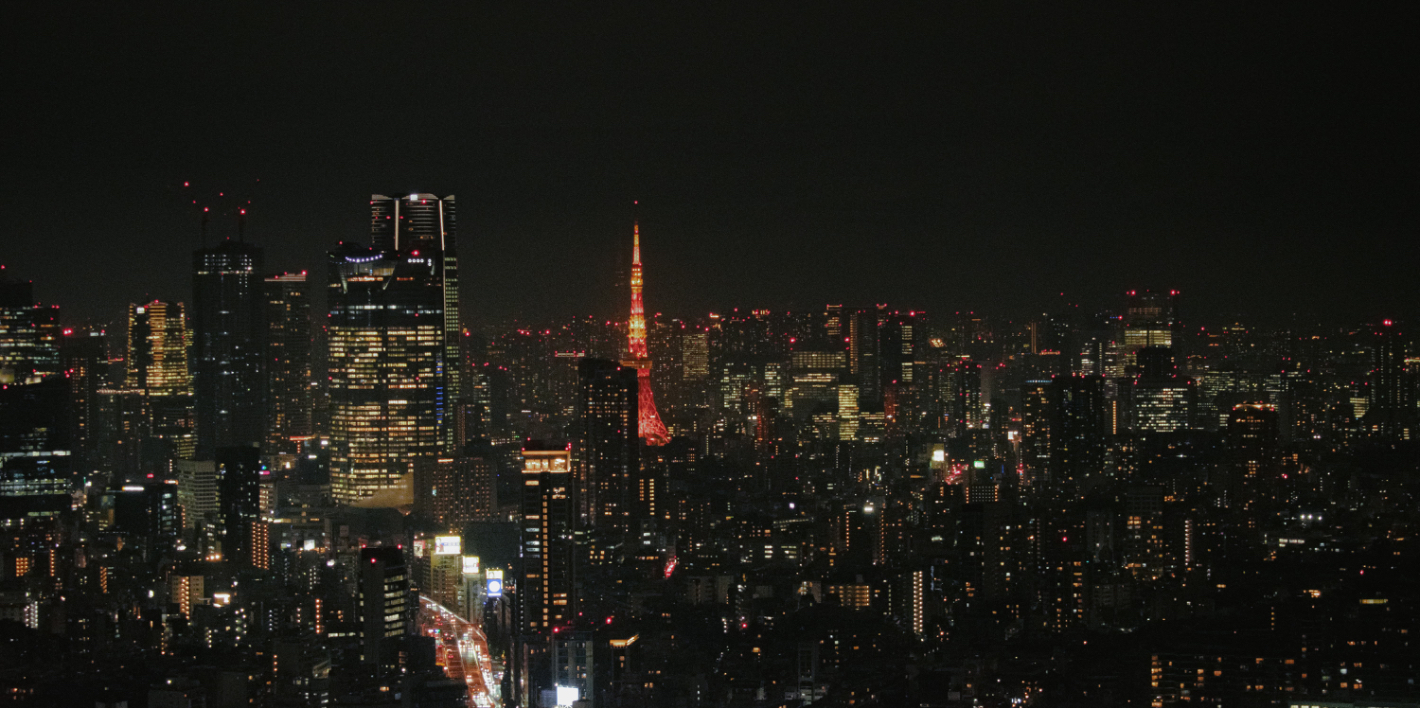
Rain streaked across the floor-to-ceiling windows, and standing above the famous Shibuya Crossing didn’t feel as overwhelming as expected. But being up high somehow gives you a god-like perspective—tempting you to observe the people below and wonder what they’re thinking. Even though the night view looked similar from all sides, we lingered for quite a while.
The lighting, atmosphere, and facilities inside the observation deck were excellent—there was even a bar. It’s not just a sightseeing stop, but a place where you can stay and relax.

After leaving the deck, we crossed the very intersection we had just observed from above. In reality, the streets aren’t that wide—it’s the simultaneous crossing from all four directions that creates such a spectacular scene. Yet when you’re part of it, it doesn’t feel especially grand. Shibuya has plenty of shopping options nearby. My favorite was Loft—I kept thinking how much I would’ve bought if I had visited back in my student days. Unfortunately, now that I’m working, I rarely need stationery, and had to stop myself from spending impulsively.
Beyond stationery, other floors offered digital gadgets, beauty products, and more—so many things to browse that it became overwhelming. During the Christmas season, the first floor was filled with decorations and greeting cards. An entire pillar was dedicated to various Christmas cards, and my friend and I struggled to choose until the mall was about to close. One of the main reasons I love Christmas is the decorations—regardless of how you feel about the holiday, it’s hard not to get caught up in the festive spirit.
By 8 PM, Tokyo’s nightlife had officially begun. One of my travel habits is to have a drink at a local bar. Tokyo has no shortage of renowned establishments—several even rank among Asia’s Top 50—but we didn’t follow those lists.
As the world’s second-largest music market, Japan has a deep jazz culture, which has even given rise to the unique concept of Jazz Kissa (jazz cafés). Jazz may feel a bit niche for everyday listening, but in a bar setting, it becomes instantly relaxing.
So for our first night in Tokyo, we chose to visit Jazz Spot, located near Takadanobaba Station by Waseda University. Many local students come here to perform. The performances are informal—musicians rotate in and out freely, sometimes even emerging from the audience. Tokyo was cold and rainy that evening, and without a reservation, we were worried about getting in. Fortunately, there was no queue, and we were able to walk in. The cramped space quickly warmed us up, and we were seated in the front row, right next to the performers. No exaggeration—the guitarist’s instrument was practically in my face.

Drinks at the bar were also inexpensive: 1500 yen per person, with refills at 1000 yen. Even for someone like me who doesn’t know much about alcohol, the quality seemed average—but the atmosphere made up for it. With people from all over the world gathered in a small space, drinking and listening to jazz together, the experience itself felt very “jazz.”
Tokyo also has other famous jazz bars, such as Blue Note Tokyo, Cotton Club Tokyo, and Pit Inn. We opted for Jazz Spot due to its affordability, but if your budget allows, the other three heavyweight venues are well worth considering for a warm and relaxing night.
Day 6: Tokyo DisneySea
Tokyo Disney Resort consists of two parks: Disneyland (Land) and DisneySea (Sea). After consulting several friends and comparing attractions, we chose DisneySea—the only ocean-themed Disney park in the world. If it’s your first visit and you only have one day, I would also recommend DisneySea. If you’re traveling with children, Disneyland may be the better option.
After arriving at Maihama Station, you can purchase commemorative day passes inside the station, which allow unlimited rides for the day. They cost about 100+ yen more than using a Suica card. Each ticket machine offers different designs, so you can choose whichever you like.

We deliberately picked Thursday, expecting the lowest ticket prices and the smallest crowds. But when we arrived at the station at 8:30 AM and boarded the Disney train, the massive queue at the entrance immediately made me realize we were in trouble. Disney had officially entered the Christmas season by then—an absolute peak period—so there’s really no such thing as a quiet day.
Unlike Universal Studios, Disney does not allow early entry unless you’re staying at an on-site hotel or have purchased Early Entry access. Everyone else can only enter after the official 9:00 AM opening. We started lining up around 8:40 and didn’t get in until 10:15. It rained throughout the day, and Tokyo’s cold temperature made it even worse. Not having brought thermal leggings, I ended up wearing hotel yukata pants under my clothes just to avoid freezing in the wind. Without a doubt, this became the worst day of our Japan trip—bad weather, massive crowds, and the added stress of constantly refreshing the app to secure entry to the new area.
Thankfully, for those visiting this year, the new area has officially opened in full, so there’s no longer a need to anxiously refresh the Tokyo Disney app.
As soon as we entered the park, we rushed to the Tower of Terror while simultaneously trying to secure other passes. In the end, we used our “financial power” to purchase a DPA for Peter Pan’s Never Land Adventure, which granted us entry. We thought we could finally relax—even if we couldn’t secure any free FastPasses—but as we waited, it felt like the queue had entered a black hole. The posted wait time was 100 minutes, but we ended up waiting around 180 minutes. The only consolation was that Journey to the Center of the Earth had a 300-minute wait.

By the time we finished our first attraction, it was already noon. In the end, we only had time to queue for the two DisneySea attractions that offer single rider lines—Indiana Jones Adventure and Raging Spirits.
After returning, we asked friends who had visited during off-peak seasons, and apparently the crowds aren’t usually this overwhelming. Even food carts and shops required waiting in line that day. Fortunately, DisneySea’s paid fast passes aren’t too expensive—around 2000 yen per person. At Disney, dreams really can be bought with money.
In total, we experienced four attractions and watched one show. Here’s our take on five highlights:
- Peter Pan’s Never Land Adventure: My favorite attraction across Shanghai, Hong Kong, and Tokyo Disney parks. You wear 3D glasses and join Peter Pan on an adventure, culminating in a breathtaking flight through the sky that makes everyone go “wow.” The terrible weather, long waits, and earlier disappointment all faded away after this ride. It’s also quite long—about five to six minutes—giving you plenty of time to immerse yourself in the dream.
- Tower of Terror: Despite having the longest queue, the experience didn’t disappoint. Before boarding the drop ride, you explore the entire castle, with Disney’s signature attention to detail on full display. In terms of thrill level, it ranks among Disney’s top attractions. The seatbelt almost feels unnecessary—as you plummet downward, you literally lift off your seat. Highly recommended at sunset, when you can enjoy a panoramic view of the entire park from the top.
- Indiana Jones Adventure: One of the single rider attractions. It’s not very thrilling but beautifully designed—like a cave expedition. The set design is a true showcase of Disney’s craftsmanship, offering a highly immersive experience.
- Raging Spirits: Also a single rider attraction. It’s surprising to find a full 360-degree looping roller coaster at Disney. Despite its advanced configuration, it’s not particularly scary and doesn’t induce strong weightlessness. You can keep your eyes open throughout, and the track is surrounded by atmospheric smoke effects.
- Big Band Beat: A Broadway-style performance featuring Disney characters, which unfortunately ended in late September this year. The music, choreography, and staging were all worth watching, and we even had front-row seats—it felt like attending a real Broadway show.
Although the crowds and weather dampened our enjoyment earlier in the day, the sky cleared up by evening. As we entered the theater for Big Band Beat, we caught sight of a post-rain sunset. After the show, with some time left before our Peter Pan reservation, we wandered around the park—taking photos by the Christmas tree, listening to staff sing Christmas carols, snapping pictures at attractions we couldn’t get on, and strolling all the way to Fantasy Springs before finally enjoying the happiest amusement park experience of our lives on Peter Pan’s ride.


By the time we left, our mood had improved. Setting aside the crowds, Disney during the Christmas season is truly beautiful. In my opinion, Tokyo DisneySea feels even more magical than Shanghai or Hong Kong Disneyland. During the rainy daytime, with umbrellas up, it’s easy to miss the details—but when the park lights up at night, it’s nothing short of stepping into a fairytale. After watching the Christmas special fireworks by the bay, our day at DisneySea officially came to an end.
For someone like me who will most likely visit Tokyo DisneySea only once, this trip may not stand out as the most wonderful memory—but I certainly don’t regret going.


Day 7: A Bit of Everything in Tokyo
The rain stopped after our day at DisneySea, and from this point on we were greeted with bright, sunny Tokyo skies.
This was the most tightly packed day of our itinerary. Early in the morning, we took the subway to one of Tokyo’s most famous landmarks—the city’s oldest temple, Sensō-ji. From Kaminarimon Gate to the main hall runs Nakamise Street, lined with all kinds of small shops. My friend and I couldn’t help but remark on just how commercialized famous temples can be. At first, the novelty made us want to check out every store, but after realizing that most of them sold similar things, we skipped the shops and headed straight toward the temple.
Passing through the Hōzōmon Gate of the main hall, you can hear the constant rattling of omikuji fortune sticks. Apparently, Sensō-ji is known for giving out a high number of bad fortunes. I had firmly decided not to draw one before coming—better to not know than to worry about the result. But with so many people lining up on both sides and shaking the boxes, the atmosphere (and a bit of stubborn curiosity) got the better of me, and I dropped in 100 yen. Luckily, both my friend and I drew good fortunes. All the mental preparation I had done turned out to be unnecessary. I even carefully brought mine back home with me, planning to frame it later.
After drawing our fortunes, we went to pray at the main hall, which enshrines the compassionate Bodhisattva Avalokiteśvara, said to bless all who come with sincere wishes.
We hadn’t done any research beforehand and simply followed what others were doing on-site. Since Sensō-ji is a Buddhist temple rather than a Shinto shrine, there’s no need to ring bells or clap hands—just press your palms together in prayer and bow. Only after praying did we notice the purification fountain—another moment of hindsight realization.
Besides the main hall, there’s also Asakusa Shrine next door. Compared to the main hall, it feels much more delicate and compact. Since we were already there, we decided to take a look.

Asakusa is very close to Akihabara. After leaving Sensō-ji, my friend and I split up again. As a former anime fan, I headed to Akihabara to revisit my childhood, while my friend went to see a Monet exhibition in Tokyo.
Stepping out of Akihabara Station into the bright blue sky, surrounded by billboards and greeted by maids promoting their cafés, it’s easy to feel overwhelmed on your first visit. I hadn’t made any detailed plans for which shops to visit—just wandered along the main street and went into whatever caught my interest. Still, I made sure not to miss major spots like Animate, MANDARAKE COMPLEX, and Yodobashi Camera. My personal favorite was Animate, filled with anime and game specialty stores. The first floor alone had countless gachapon machines featuring almost every popular IP imaginable—it was enough to make my head spin.
Yodobashi Camera mainly focuses on electronics, and it’s probably a great place to buy game cartridges, consoles, or controllers.


If you’re not coming with a specific shopping goal, there’s really no need for a detailed plan in Akihabara—any random shop can feel like heaven. The only regret was discovering after I returned that there’s a commercial complex called 2k540 AKI-OKA ARTISAN between Okachimachi Station and Akihabara Station, built beneath the elevated tracks and filled with original handmade craft shops. For someone like me who loves handmade goods, it would’ve been paradise.
After wrapping up in Akihabara—without even taking a break—I rushed to Nakameguro. Our afternoon city walk started from Nakameguro Station. Across the street from the exit is the famous Tsutaya Bookstore. Walking along the main road, you can really feel how comfortable and livable this area is. There are plenty of independent boutiques with thoughtful designs. We stepped into a few we liked, but after checking the price tags, everything was beyond my budget—so we left empty-handed.


By sunset, we had walked all the way from Nakameguro to Daikanyama. As we arrived, the sky gradually darkened, and golden sunlight slowly blanketed the streets. Many of the roadside trees were just beginning to show hints of red. I stopped on the sidewalk to take several photos—not because there was any special landmark, but because the scenery at that moment felt like a gift from the heavens.

The Tsutaya Bookstore in Daikanyama consists of three buildings connected by skybridges, and we spent most of our afternoon there. Besides books, it’s also a great place to buy souvenirs, with lots of stationery and areas where you can listen to CDs and vinyl records for free. By the time we left, it was already blue hour. We hurried toward Forestgate while the last light of the day faded. Along the way, small shops lit up with warm yellow lights, standing out beautifully against the blue sky and drawing us in.
We strolled around the ground floor of Forestgate and, despite the late hour, grabbed a coffee at Blue Bottle. Sitting by the glass window watching the sunset, the long walk we had taken all afternoon felt effortless thanks to the weather and the view. We didn’t head to the subway until it was completely dark.

Originally, I hadn’t planned to visit any exhibitions. But after arriving in Japan, I happened to see a post about the 25th anniversary exhibition of Paradise Kiss. During our stay, it was open without reservations, so I decided to drop by whenever I had time. It was already past five when we left Daikanyama, and the exhibition closed at seven, so we rushed over just in time—and ended up buying some “random stuff.” Since it was near the end of the exhibition period, many of the better-looking merchandise items were already sold out, which indirectly saved me some money.
The exhibition venue was close to our hotel, so I went back afterward to lie down for a bit. Only then did I realize just how exhausting the day had been. Later that evening, after my friend returned, we thought—why not go see Tokyo Tower now? (Originally it was scheduled for the last morning.) So off we went. Shiba Park isn’t far from the hotel, and at around 9 PM we spotted the glowing Tokyo Tower from the street corner. Below it stood a coldly lit gas station, while above rose the warm, radiant tower. Even from a distance, it was easy to understand why people make the effort to visit.
We didn’t go all the way to the base, just wandered around Shiba Park chatting. Even at 9 PM, many people were sitting on picnic blankets on the lawn, gathering and talking. With nothing of our own, we simply walked around until we got tired, then found a bench and sat down to share our separate experiences from the day.
The night air was cold, with occasional gusts of wind. We sat there with our arms crossed for warmth, laughing together on the bench. From where we sat, Tokyo Tower was no longer visible—only when we stood up could we catch a glimpse of it. But parks have a certain magic. Even knowing it was late and freezing, we didn’t want to leave. That night at Shiba Park became the happiest evening we had in Japan.

Day 8: A Stroll Through Kamakura
With only one day left, it came down to a choice between Mount Fuji and Kamakura. In the end, we chose the sea—and it left me with one of the most beautiful memories of my life.
Compared to visiting Mount Fuji, the round trip to Kamakura is much more relaxed. It takes about an hour to get from central Tokyo to Kamakura Station. The night before departure, I kept praying for clear skies.
On the last day of a trip, I prefer not to schedule anything too tightly. It’s more important to savor the local scenery and make the most of the final moments. So instead of getting up early like the previous days, we woke up after eight, quickly got ready, had breakfast, and took the subway toward the seaside.
There’s a restroom on the train to Kamakura Station, so there’s no need to worry if nature calls midway. After arriving, we followed the crowd out of the station and browsed a nearby shopping street. When we saw a matcha ice cream shop, we couldn’t resist buying one—even in the cold. It became a bit too rich toward the end, but with no trash cans in sight, we had no choice but to finish it.
The street wasn’t much different from most commercial areas, and with the heavy crowds, we turned back before reaching the end and headed toward Shichirigahama instead. Walking down to the beach, we could see Mount Fuji in the distance. Though the peak was partially hidden by clouds, the clear weather already made us feel relaxed and happy.
We didn’t have much of a plan for the day—just walking along the coastline without heading to Enoshima.
At noon, we wandered into a random okonomiyaki restaurant for lunch. The place was small but packed with people from all over the world. Familiar Showa-era J-pop played in the background, and from time to time someone would stand up and sing along. The cheerful atmosphere felt like something straight out of a Japanese drama. The staff were incredibly friendly, and best of all—we could communicate in English without any issues. Anyone who’s been to Japan knows how rare that is. Although we got a bit tired of okonomiyaki by the end, this restaurant remains one of the most unforgettable parts of the trip.
The only hiccup was that by the last day, we had almost run out of cash—and the restaurant only accepted cash or PayPay. Thankfully, the staff directed us to a nearby 7-Eleven, where we withdrew money and returned to pay.
As we stepped out of the restaurant, the sun was beginning to set. The brilliant blue sky and warm sunlight were so beautiful that we couldn’t bring ourselves to move on, slowly following the shadow of the setting sun and wishing time would slow down so the view wouldn’t fade away.


By the time we reached the beach, the sky had turned pink. Couples strolling hand in hand, people walking their dogs, surfers catching the last waves of the sunset—all scattered along the coastline, forming my most cherished memory of Kamakura. The waves were gentle, making it safe to walk along the shore as they rolled in slowly under the fading light. Everything moved at just the right pace.


When we emerged from an underpass, the sky had transformed into the perfect tangerine sea. I quickly pulled out my phone to capture this fleeting moment.

Sitting on the steps by the beach, we watched high school girls in short skirts laughing together, teenage couples holding hands as they walked along the shore, people strolling with their pets… It became clear why this place continues to draw visitors despite having no major landmarks—because the longing for a beautiful life is universal.
We stayed by the sea until it was completely dark, then wandered through the nearby shopping street to pick out some souvenirs before heading back to the city.
The final day in Kamakura was the happiest of the entire trip—and remains one of the best travel memories I’ve ever had. I ran out of storage on my phone and transferred most of my photos and videos to a hard drive before deleting them, but the ones from Kamakura are still saved on my phone. Whenever I’m feeling down, I open them to take myself back to that day.
On our last night, instead of staying at a hotel, we went to a well-known hot spring facility—LaQua, near Tokyo Dome. It’s open 24 hours, and with the overnight fee included, it’s actually cheaper than staying at a hotel, with the added bonus of a soak in the baths. It’s a great option if you have a red-eye flight. However, on weekends it can get crowded, and finding a sleeping spot may be difficult.
Early the next morning, we took the subway for two stops to Ginza and boarded a bus directly to Narita Airport. It cost only 1,500 yen, and you can sleep all the way to the end without worrying about missing your stop.
In Closing
Even more than a year later, thinking back on this trip to Japan still makes me feel happy today. Following our planned routes, squeezing onto subways with Tokyo’s morning commuters, getting lost in the underground passages of Umeda, sitting beneath red maple leaves in silence, watching everyday life unfold by the seaside, communicating in mutually unintelligible English…
The moments that seemed good or bad during the trip all feel meaningful in hindsight.
Leave a Reply