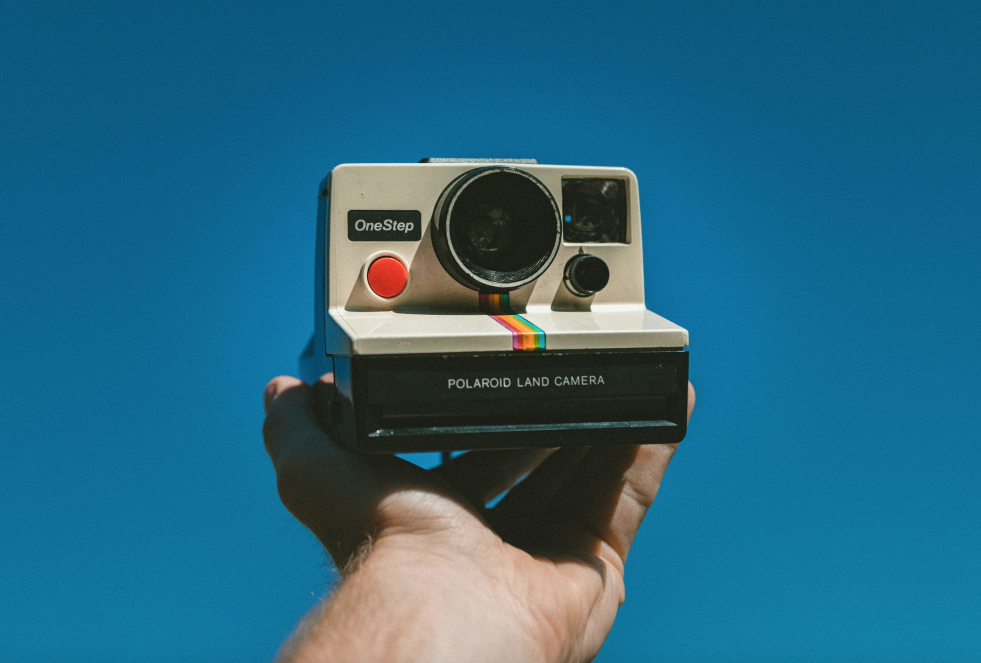
In today’s fashion and photography circles, the retro trend is sweeping through with unstoppable momentum. Among them, CCD cameras have gone viral for their distinctive vintage image quality, and standing alongside them at the top of the trend are instant cameras. Compact and portable, with a press of the shutter, a warm sheet of film slowly slides out, and within minutes, light and shadow are fixed into a tangible form—this unique sense of ritual has captivated countless young people.
Yet instant cameras are also something people both love and hate. Their operation appears extremely simple—no complicated parameter settings, no need for professional post-editing—yet it’s difficult to guarantee consistent results. A failed shot can be caused by lighting that’s just a bit off, or an angle that’s slightly wrong. As a result, the internet is flooded with countless “tutorials” and “tips” for instant photography. Some tools, like “exposure helpers,” have a bit of scientific basis, but advice such as “preheating metering for one minute” or “not moving the photo at all before it fully develops” carries more than a hint of mysticism.

In fact, these so-called “mystical” practices largely reflect a lack of photographic fundamentals among instant camera users, as well as a limited understanding of how instant imaging actually works. As the saying goes, it’s not enough to know that something works—you should also know why it works. To truly master an instant camera and escape the curse of wasted shots, it’s worth starting from the beginning, lifting the veil on its mysteries, and exploring the technological evolution and historical story behind this small device.
The Birth of Instant Imaging: Breaking the “Delayed Gratification” of Film
Instant cameras did not appear out of thin air; they are essentially an important branch of film photography. The core motivation behind their invention was to break the “delayed gratification” inherent in traditional film photography.
Looking back to the early 20th century, film photography was still in its infancy, and cameras at the time were effectively “disposable.” After finishing a roll of film, users couldn’t remove it themselves—they had to mail the entire camera, along with the film, back to Kodak. Skilled technicians at the factory would process the film in darkrooms, develop and print the photos, and then send both the pictures and the camera back to the user. This process could take anywhere from a few days to several weeks.

Later, the invention of the film cartridge changed this situation. By sealing the light-sensitive film inside a cartridge, it allowed individual users to set up simple darkrooms at home and handle development themselves. But no matter how the technology evolved, the core workflow of traditional film photography remained unchanged: exposure, development, fixing, and washing—each step indispensable. The wait for images to appear still demanded considerable patience.

For those who valued efficiency, this long wait was undoubtedly frustrating. So was it possible to package developer and fixer—essential darkroom chemicals—directly into the film itself, allowing shooting and imaging to happen simultaneously? This seemingly bold idea was eventually brought to life by the American company Polaroid.
In 1948, Polaroid introduced the Model 95 camera, paired with TYPE 40 peel-apart film, officially ushering in the era of instant imaging. Though simple in structure, this camera leveraged the core advantage of instant photography to completely transform the industry—people no longer had to wait for darkroom processing. After pressing the shutter, they could manually peel apart the film and see the image appear within seconds. Photography thus moved beyond “delayed gratification” and entered a brand-new era of instant results.

Giants in Rivalry: Kodak’s Defeat and Fujifilm’s “Overtaking on the Curve”
The enormous potential of instant imaging quickly caught the attention of film industry giants, setting the stage for a battle over patents and market dominance.
As the undisputed leader of the film industry at the time, Kodak was naturally unwilling to miss out on this opportunity. In 1976, Kodak launched its own instant imaging products, attempting to enter Polaroid’s core market directly. However, from core technologies to product design, these offerings overlapped heavily with Polaroid’s patents, and Polaroid soon filed a lawsuit for patent infringement.


This legal battle dragged on for a full decade, with both sides locked in relentless disputes in court. In 1986, a final ruling was delivered: Kodak lost the case. Not only was it required to pay massive damages, but it was also ordered to immediately cease all production and sales of its instant imaging products. After this defeat, Kodak completely withdrew from the instant imaging field and never returned.
At the same time, Fujifilm was still a minor player in the film industry, largely following Kodak’s lead. Half a century ago, Fujifilm had relied on Kodak’s technical licensing to release its first instant imaging product, the Fotorama. Interestingly, while Polaroid was fully engaged in its lawsuit with Kodak, it took a relatively hands-off approach toward Fujifilm in the Asia-Pacific market, giving Fujifilm valuable breathing room to grow.

When news of Kodak’s defeat broke, Fujifilm quickly demonstrated keen strategic awareness. It decisively distanced itself from Kodak and instead extended an olive branch to Polaroid. The two eventually reached a crucial cross-licensing agreement: Fujifilm traded its advanced magnetic recording media manufacturing technology in exchange for Polaroid’s core instant imaging development technology.
In the following decade, Fujifilm became Polaroid’s “partner” in the Asia-Pacific region, producing and selling instant imaging products under license and enjoying steady growth. It wasn’t until 1998, when Polaroid’s core patents expired, that Fujifilm’s true comeback began. That same year, Fujifilm went independent and launched the brand-new instax series of instant cameras. With designs better suited to Asian markets and more accessible pricing, it officially entered direct competition with Polaroid.

Meanwhile, Polaroid’s fortunes took a sharp downturn. In 2001, due to the rise of digital photography and poor business performance, the once-dominant instant imaging giant filed for bankruptcy protection. After seven years of struggle, Polaroid ceased its core operations entirely in 2008. Although the brand was later revived through fan-backed investment, today’s Polaroid is legally distinct from the original company that once held its core technologies—only the name remains as a vessel for retro nostalgia.
Holding Polaroid’s licensed technology while completing its own R&D, Fujifilm naturally became the sole inheritor of instant imaging technology, taking up the mantle of instant photography as its most legitimate successor.

From Luxury Toy to Mass Trend: The Democratization of Instant Cameras
Having explored the competition over film and technology, let’s now turn to the cameras themselves. Before the digital era, photography was always an “expensive hobby,” and instant imaging was even more so.
In its early days, Polaroid’s customer base consisted almost entirely of affluent elites. On one hand, the cost of instant film was extremely high, making it unaffordable for ordinary households; on the other, Polaroid positioned its cameras as “high-end luxury products,” with meticulous attention to design and performance. The Polaroid SX-70 featured in Jay Chou’s Greatest Works of Art music video is a perfect example of that era’s pinnacle.

Released in 1972, the SX-70 is often regarded as a miracle of industrial design. It featured a folding SLR structure, measuring only a few centimeters thick when closed and easily fitting into a pocket; when opened, its four-element glass lens delivered sharp, clear images. Later versions even introduced sonar autofocus technology—considered “black magic” in the 1970s—capable of completing distance measurement and focusing in just 0.07 seconds, achieving precise focus even in low-light conditions. Combining aesthetics, performance, and portability, the SX-70 earned its status as a legendary camera.
Fujifilm’s early Fotorama series, developed under competitive pressure from Polaroid, was equally refined. Folding SLR structures, glass lenses, and autofocus features were all standard. The 500AF model released in 1999 was widely regarded as a “flagship king,” matching Polaroid’s top models in performance. At the time, many believed instant cameras would continue evolving toward greater professionalism and higher performance.


However, Polaroid’s dramatic collapse served as a stark warning to Fujifilm. After 2000, digital photography rapidly took over the market with its advantages of “zero shooting cost” and “instant preview,” while traditional film photography became increasingly marginalized due to its high cost and steep learning curve. Fujifilm understood that continuing down a high-end path might lead to the same fate as Polaroid.
As a result, Fujifilm decisively adjusted its strategy, ushering in the “democratization” of instant cameras. It introduced smaller, more affordable mini film formats, along with a series of simple point-and-shoot automatic cameras. These models eliminated complex manual controls, adopted fully automatic exposure, and featured compact, colorful, and approachable designs—all at prices accessible to ordinary consumers.
This transformation allowed instant cameras to shed their label as “luxury toys” and become widely embraced cultural products. From students on campus, to street fashion enthusiasts, to newlyweds at weddings, instant cameras—with their portability and ritualistic charm—found their way into everyday life. Over the past two decades, they have carved out a unique path of survival within the overwhelming tide of digital photography.

“Only the young fail to appreciate film, mistaking digital for treasure.” Fifteen years ago, when I first encountered instant cameras, I was full of disdain. At the time, my Nikon digital camera could shoot endlessly and display images instantly, while each sheet of instant film cost several dollars, and a failed shot meant irreversible loss. For a young man in his early twenties, full of energy and ambition, the so-called “ritual” of instant photography seemed utterly worthless.
Today, times have changed. With the widespread adoption of smartphones, “everyone is a photographer,” and photography has shifted from a simple tool for documentation to a medium for personal expression and emotion. But along with this shift comes the overabundance of automation and AI: one-click AI retouching smooths skin and enhances beauty, algorithms optimize composition automatically, and an overwhelming flood of digital images fills our lives, blurring the line between real and artificial.
In this context, people have begun to long for the “warmth” of film photography—the irreplicable grain, the anticipation during development, and the tangible weight of a physical photograph. Instant cameras, once forgotten in the corner, have thus returned to the public eye, even sparking a new wave of popularity.
The Pain Points of Instant Cameras: The Origin of the Modding Craze
For a long time, instant imaging had a more professional product line known as peel-apart film, with both cameras and image quality far surpassing today’s instant cameras. Because of the existence of peel-apart film, modifying instax cameras was once seen as a thankless effort, and thus remained a niche practice. It wasn’t until 2016, when Fujifilm announced the discontinuation of FP-100C peel-apart film, that the market was left with only instax and a barely surviving Polaroid.
At the time, digital cameras were at their peak, while smartphone photography was rapidly advancing. Even instax itself began embracing digital technology, launching instant photo printers. The discontinuation of peel-apart film alone did not cause much of a stir in the industry.

Users may start as beginners, but they don’t remain beginners forever. As users’ photography skills improved, the shortcomings of Fujifilm’s stock instant cameras gradually became apparent—the “democratized” design was a double-edged sword. On one hand, it lowered the barrier to entry; on the other, it severely limited the ceiling of what these cameras could achieve.
For advanced users, three major pain points of stock cameras had long become the “ceiling” of image quality. First is the limitation of focusing. Almost all stock instant cameras use a fixed hyperfocal design, lacking true focusing capabilities. They can only adjust depth of field through lens extension, with a minimum focusing distance of no less than 0.6 meters, making macro photography nearly impossible. In contrast, Polaroid and Fotorama models from half a century ago were often equipped with manual or autofocus systems—by modifying the film pack mechanism to adapt modern film, precise focusing can be restored.

Second is rigid exposure control. Current stock instant cameras use fixed apertures, relying solely on built-in metering components to adjust shutter speed. Once the metering system ages or fails, or when facing complex lighting conditions, overexposure or underexposure becomes common, with no way to manually correct it. The so-called “mystical tutorials” online are essentially users’ desperate attempts to compensate for unreliable metering.

Finally, there is framing inaccuracy. Most stock instant cameras use a rangefinder-style structure, which introduces noticeable parallax errors in close-range shooting, making true “what you see is what you get” impossible. SLR structures solve this perfectly—medium format SLRs like Bronica, Mamiya, and Hasselblad can achieve seamless adaptation simply by attaching an instant film back. However, such equipment is bulky and heavy, significantly reducing portability.
It is precisely these insurmountable limitations that gave rise to the “modding craze” within the instant camera community. For advanced users, modification is not only the only way to overcome hardware limitations, but also a statement of individuality and technical mastery.
Modding an instant camera is far from simple tinkering—it is a precise craft that integrates mechanical engineering, optics, and electronics. Today, the modding community can generally be divided into three major approaches, each with its own philosophy and use cases.
The first is the revival of vintage models. The core idea is to modify classic cameras like Polaroid and Fotorama, whose original film has been discontinued, by redesigning film compartments and replacing mechanisms to adapt them to modern Fujifilm instax film. These classic models already feature professional capabilities such as manual focusing and adjustable exposure, but were abandoned due to film discontinuation. After modification, they not only bring “obsolete plastic” back to life, but also allow users to experience the professional feel of instant imaging from half a century ago. Modified Fujifilm SLIMACE models are representative of this approach.
The second is hybridization with film cameras. This is a more “hardcore” method, where users completely disassemble the internals of stock instant cameras and integrate them with traditional film cameras through cutting, welding, and bonding, enabling film cameras to shoot instant photos. However, this process permanently alters the original structure, making it irreversible. As a result, users typically experiment with affordable domestic film cameras like the Seagull 4B or Seagull 203, while modifications involving high-end models like Mamiya or Rolleiflex are extremely rare.

The third is modular upgrades. This is the most flexible and favored approach among professional users, centered on leveraging modular camera systems to create interchangeable instant film backs. Medium format SLRs like the Mamiya RB/RZ67, which already support interchangeable backs, can easily switch between film and instant photography by using a custom instant back. Some users take the opposite approach, mounting medium format lenses from Mamiya or Schneider directly onto stock instant camera bodies. Popular setups like pairing a WIDE400 with a Mamiya lens preserve portability while significantly enhancing image quality.

Regardless of the method, instant camera modding demands high technical skill and a steep learning curve, far beyond the reach of casual users. In an era dominated by “one-click shooting” and AI-generated images, many find it hard to understand why anyone would invest time, money, and effort into building a camera that runs counter to mainstream trends. The true appeal of instant camera modding has never been about recreating nostalgic aesthetics—it lies in using precise, rational engineering to break free from the “mysticism” of stock cameras.
Repeatedly calibrated focus parameters, meticulously tuned aperture and shutter combinations, and manually calculated exposure values—all represent a deliberate battle against unpredictable lighting and the randomness of failed shots. Modding enthusiasts are not chasing luck or surprise; what they seek is complete control over the final image with every press of the shutter—to transform “possibly good” into “consistently excellent,” turning uncertainty into clarity.
This persistence is not about romantic nostalgia, but about the triumph of technology. It frees instant photography from the label of “luck-based shooting” and, in the age of digital precision, continues to sustain the vitality of instant imaging in a more professional and hardcore way.
Leave a Reply