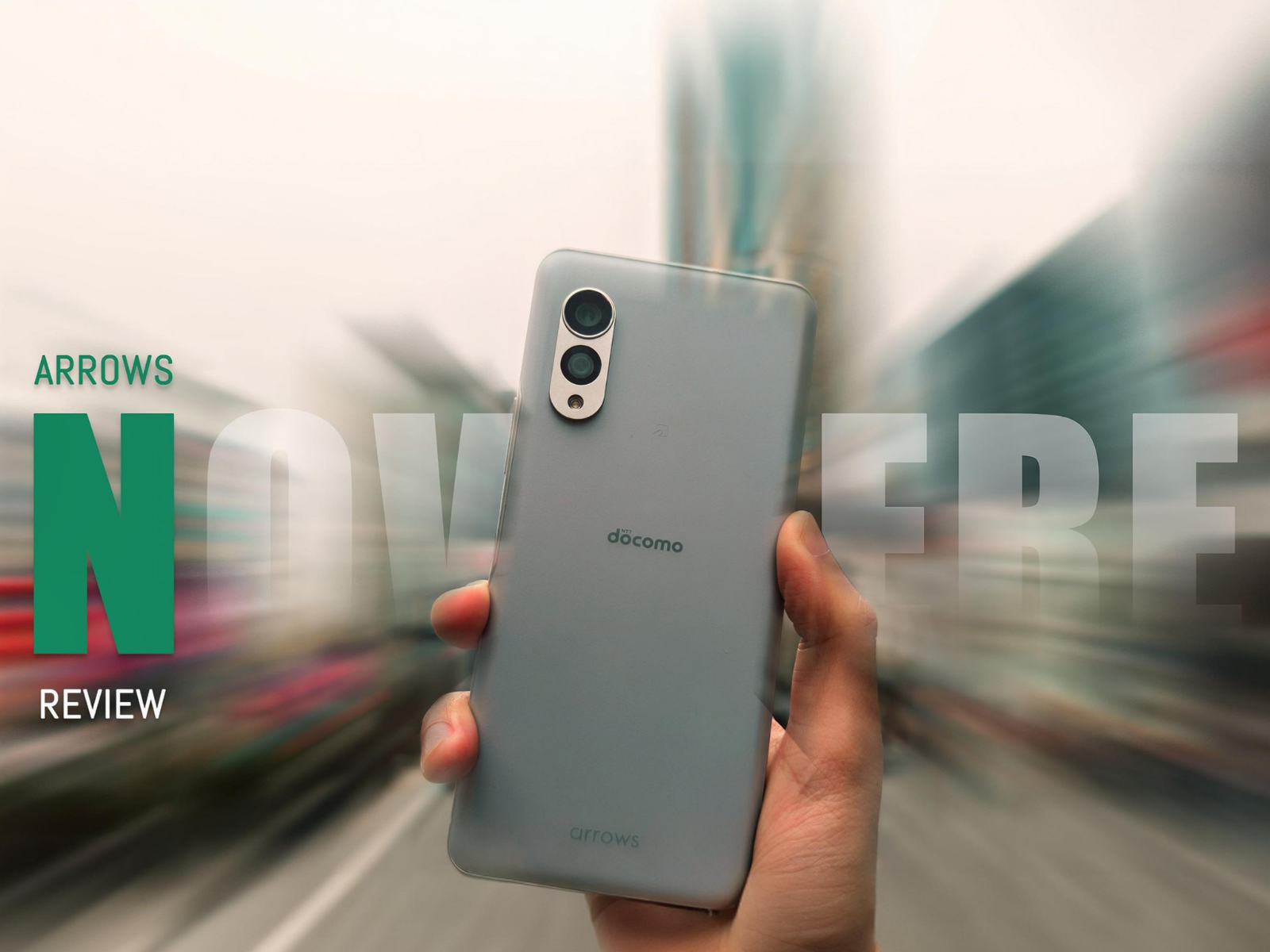
For many people, the impression of Japanese smartphones probably stops at Sony and Sharp. That is understandable, as they are now the only two Japanese phone brands that can still be considered active. But if we rewind fifteen years, a once-ambitious Japanese mobile company launched a brand-new flagship lineup in 2011 and gave it a name filled with hope—Arrows, meaning “an arrow charging forward.” At the time, the company was riding high, having just acquired Toshiba’s mobile phone division. The new Arrows branding felt like a bold declaration of confidence in the future.
Fujitsu, at the beginning of the 21st century, introduced the impressive LifeBook ultraportable series and also led the development of the world’s fastest supercomputer, Fugaku. In the smartphone market, however, the sweeping dominance of the iPhone—along with the enthusiastic support Apple received from Japan’s three major carriers—continued to squeeze the space for Android flagships. At the same time, the Nvidia Tegra 3 processor used in the 2012 Arrows X suffered from severe overheating issues, which ultimately led to a lawsuit from angry users and dealt a serious blow to the brand’s reputation. Ever since the Arrows brand debuted, Fujitsu’s mobile business gradually entered a steady decline, with its market share shrinking year after year.

In 2015, Fujitsu’s parent company made two major decisions. First, it shifted the focus of its mobile phone manufacturing toward the “Rakuraku” line, targeting the aging population as a niche market. Second, it decided to spin off its mobile phone business. In 2016, FCNT was officially established as a wholly owned subsidiary of Fujitsu and began operating independently. At the same time, the mobile device manufacturing operations that had previously belonged to Fujitsu Peripherals Limited were spun off to create a new company, Japan E.M. Solutions (JEMS). Two years later, the Japanese private equity fund Polaris Capital acquired a 70% stake in FCNT, leaving Fujitsu’s lineage within the company almost imperceptible. Nevertheless, FCNT continued to manufacture most of its core products at the Yashiro Plant of JEMS in Kato, Hyogo Prefecture—making it the only smartphone company that still carried out manufacturing and assembly within Japan itself. Although the high-end Arrows 5G and Arrows NX9 were released in 2020, even the marketing slogan of being “Japan’s champion” failed to translate into meaningful sales.

The iPhone’s dominance in the premium segment remained unshaken, while new competitors such as OPPO, Xiaomi, and Pixel kept entering the market. The pandemic further battered both market demand and semiconductor supply. And so, in 2022, the Arrows N (F-51C) was released, highlighting eco-friendliness and exceptional longevity as its main selling points. But by then, the arrow had already left the bow—flying toward the end of its journey.
Plastic Can Feel Premium, but That’s About It
Environmental friendliness is the key selling point heavily promoted for this generation of Arrows flagship, and at least from an engineering perspective FCNT did manage to deliver on that promise. The Arrows N uses recycled materials for 67% of the device’s total weight. The back cover, internal roll cage, and motherboard cover are made from recycled plastics, while the frame and camera housing use recycled aluminum. In actual use, the white unit I have does not feel cheap despite the use of recycled materials. The plastic back panel feels warm and pleasant to the touch, with a fine matte texture that is smooth in the hand while also resisting fingerprints. The Felica logo, Docomo logo, and Arrows logo—along with the device codename F-51C—are vertically aligned in the center from top to bottom, which is a distinctive trait of Japanese phones. The camera bump is formed from a single piece of aluminum plate, with the main camera surrounded by a polished aluminum ring. The ultrawide camera and flash are also placed centrally, and the entire camera deco is modest in size and neatly organized. Compared with the exaggerated oversized circular modules common today, it feels cleaner and more restrained. The matte aluminum finish of the frame also resists fingerprints, while the relatively thick frame and the smooth curved transition between the frame and the back cover create a comfortable and well-fitting grip. The charging port is injection-molded, the speaker grille is centered, and symmetrical antenna injection strips are present. Of course, there is also the legendary “alien technology” inherited by Japanese phones—the hot-swappable SIM card slot that doesn’t require a pin tool. In terms of build quality and industrial design alone, it actually surpassed Sony and Sharp, its competitors at the time.


However, once you flip it to the front, the sense of refinement suddenly disappears. Although the Arrows N features a 120 Hz display, it still retains noticeably thick top and bottom bezels. Even more frustrating is that the upper and lower bezels are not the same width… a screen design that could easily drive perfectionists mad.

Returning to the environmental focus mentioned earlier, the Arrows N is entirely produced and assembled at the JEMS Kato Plant in Japan. This gives it the rather “noble” characteristic of being fully manufactured domestically. On the software side, Arrows also partnered with Docomo to launch an environmental initiative called “カボニュー (Carbon Neutral),” essentially a phonetic rendering of “carbon neutral.” In simple terms, the goal is to achieve carbon neutrality by 2030 through environmentally conscious measures across multiple stages, including smartphone manufacturing and carrier operations. In addition, the Arrows Portal encourages users to charge their phones during off-peak hours in exchange for reward points.


The packaging box of the Arrows N also uses FSC-certified paper and environmentally friendly ink, and the box itself is designed to be easily folded for recycling. There is no charging adapter or cable included inside the box—an environmental measure implemented even earlier than that of a certain California-based company across the ocean. Part of the reason is that accessory sales are handled through the carrier’s distribution channels.

As is traditional for Japanese phones, the Arrows N also supports IP68 dust and water resistance and can even be washed with soapy water. It has also passed the U.S. military MIL-STD-810H durability standard. However, given that this second-hand unit I bought is almost in pristine condition, I’ll refrain from actually testing its durability.
Beyond the Ideals, There’s Little Worth Praising
Sometimes you have to admire the peculiar logic of Japanese manufacturers. They seemed to believe that environmental friendliness alone could uphold the flagship status of the Arrows N. And so, in the second half of 2022, they priced a Qualcomm Snapdragon 695 device at 98,000 yen (roughly RMB 4,400+). In China, that price sits right around the entry point of full-fledged flagship models—you could buy brand-new devices powered by the Snapdragon 8 Gen 2, such as the Xiaomi 13, OnePlus 11, or iQOO 11. Even in Japan, the Sharp AQUOS Sense 7/7 Plus—priced at barely half of the Arrows N—uses the exact same Snapdragon 695 SoC. The weak performance of this chip is an established fact. At the time, chips like the Snapdragon 6 Gen 1 or 7 Gen 3, which later introduced oversized cores into lower-tier price segments, did not yet exist. With only two A78 performance cores and six A55 efficiency cores, the chip was already ill-suited for heavy workloads even in 2022, not to mention that it had been released a full year earlier. To make matters worse, Japan’s domestic semiconductor shortages during the pandemic meant that the Docomo contract version did not officially go on sale until March of the following year—turning the phone into a perfect example of “outdated at launch.”
Geekbench 6 and 3DMark scores ruthlessly reveal how undeserving this SoC is of its flagship price tag. The only real advantage is the excellent power efficiency provided by TSMC’s N6 process. Combined with the chip’s low peak performance ceiling, the phone actually offers fairly good battery life and sustained performance. During the WLE Stress Test the device barely produced any heat and showed extremely stable performance—though, to be fair, the absolute scores were never very high to begin with. It’s also worth noting that due to limited instruction set and graphics API support, the phone cannot even run the newer Steel Nomad Light test (it lacks Vulkan support).

This weak performance also affects everyday smoothness. Thankfully, the phone at least includes 8 GB of LPDDR4X RAM, so it avoids frequent LMK background app kills due to insufficient memory. However, scrolling on the home screen often fails to maintain a stable 120 Hz frame rate, and cold app launches are locked to 60 fps, creating a noticeable sense of stutter. After updating to Android 15, Lenovo even removed the nonlinear animation used during cold launches—ironically giving this phone worse treatment than its own cheaper G-series models. Installing large games is also noticeably slower than on devices with more powerful chips. Meanwhile, with support limited to WiFi 5, game downloads usually top out at only around 8–9 MB/s, making the network experience merely passable.
For the relatively lightweight Honor of Kings, the average frame rate of 47 fps is at least playable, though team fights often bring frequent frame drops—consistent with the sub-30 fps 1% low metric.

But with the newer Arknights: Endfield, I genuinely struggled to believe that a chip with two A78 cores could perform this poorly. Even at the lowest graphics settings, the visuals looked like a mosaic, with exploration averaging less than 10 fps and combat scenes rarely exceeding 5 fps. During battles the frame rate essentially stuck at 1 fps, only rising above 20 fps when opening the map or menu. I had planned to test a dungeon as well, but this performance spared me the trouble.

On the photography side, I can at least say FCNT tried to do some optimization. One of the main features promoted is Photoshop ExpressMode, developed in cooperation with Adobe. After taking a photo, the image automatically opens in Adobe Photoshop Express for automatic post-processing, and the system even comes pre-installed with the full suite of Adobe imaging tools. Unfortunately, the reality falls far short of the idea. Because of the weak SoC, the post-processing step in Photoshop is painfully slow—an auto-mode photo takes nearly half a minute just spinning before the optimization finishes. The resulting images also suffer from an excessively warm white balance, making it hard to say they look any better than the originals. Even when manually editing photos in Photoshop or Lightroom, the interface locked to 60 fps and the constant lag are far removed from the official claim that the camera would produce images “you’ll want to share with people around the world.”


Night photography is where the Arrows N truly falls apart. In auto mode the camera struggles heavily with focus hunting, repeatedly failing to determine what it should lock onto even after multiple attempts. Exposure metering is also extremely inaccurate—light signs less than ten meters away still blow out highlights, and the HDR performance feels like something from a fifteen-year-old Sony CCD sensor. On top of that, under complex lighting conditions, the Snapdragon 695’s weak ISP simply cannot handle the heavy computational load of exposure reconstruction, leaving the enlarged images filled with ugly color noise that’s impossible to ignore. Taking a usable night photo basically requires switching to manual mode. But the Arrows N camera interface only allows adjustments for EV, ISO, white balance, and focus distance, with a minimum ISO of 100. Since highlights still blow out even at ISO 100, the only option is manually dialing EV down to –1 to achieve brightness closer to what the human eye sees. The downside is noticeable color shifts in manual mode. The small consolation is that once a white balance preset is chosen, color noise disappears and there are no bizarre white balance shifts. I’ve reviewed countless phones, but this may be the first time I’ve seen a device where adding computational photography actually makes the results worse.


Objectively speaking, the hardware itself—1/1.55″ CMOS with an f/1.88 aperture—still isn’t outdated even by today’s standards. Under bright daylight, the lens can finally produce images close to its full potential. Although the weak algorithm still struggles to control highlights, scenes like flowers, grass, and the sky actually benefit from the slight color shift and overexposure, giving the images a nostalgic CCD-like flavor. The rendering of blue skies and the handling of highlight spillover are particularly to my taste, creating a dizzying sensation where everything seems to shimmer with color under the sunlight.


As for the front camera and the tiny 1/4-inch ultrawide… it’s better left unmentioned. The moment I opened the ultrawide viewfinder I almost burst out laughing. All I can say is that fans of Japanese phones truly have endless “blessings.”
The Last Remnants of Arrows’ Legacy, Yet No One Seems to Care
Even though the weak performance makes almost every part of the experience somewhat hard to endure, FCNT’s level of system customization is still far deeper than what Sony—barely hanging on in the market today—currently offers, and it stands on par with Sharp, the true shining star of Japanese phones in terms of effort. As a Docomo launch device, the Arrows N comes preinstalled with the infamous and universally despised Docomo “bloatware bundle.” That said, compared with the era of Snapdragon 835/845 when everyone complained loudly about it, these apps do not occupy too many CPU or memory resources under 8 GB of RAM, which at least saves the trouble of freezing them one by one through tutorials.

Similar to Sharp, Arrows also includes a dedicated feature introduction and integration interface. The list of features is indeed long, covering quick operations, performance, privacy, and daily-life utilities. In practice, however, the actual modifications made to the system are very limited, and most functions rely on separate standalone apps. FAST APP Drive can quickly launch apps through a whitelist mechanism—I have good reason to suspect that it simply keeps selected apps alive in the background for extended periods. Swiping from the lock screen quickly opens FAST Memo, which is essentially a basic note-taking app with limited functions but quick voice input support. The sidebar, unlike the feature-rich ones in Chinese Android skins, offers little beyond quick app launching, along with things like touch blocking, screenshot doodling, and text recognition that opens an AR app—features that feel bland or even somewhat pointless. Like many Chinese Android interfaces, the Arrows N also allows apps to be launched through fingerprint shortcuts, even supporting independent triggers for all ten fingers. However, because the phone uses a side-mounted fingerprint sensor that requires you to swipe first before unlocking, and because the app launcher appears in the center of the screen after unlocking—combined with a fingerprint sensor that is neither particularly responsive nor fast—the overall human–machine interaction can only be described as a disaster.


The standalone Game Zone app at least features its own UI and sidebar trigger, but it still cannot adjust game-related settings such as performance or touch responsiveness. It only offers simple functions like notification blocking and network acceleration, along with a still rather puzzling game screenshot gallery.

From my personal experience, the only feature that feels genuinely useful is the battery management function developed jointly by FCNT and Qnovo, optimized specifically for Qualcomm chips. By reading kernel-level data, Qnovo can provide accurate battery health information and charging cycle counts for users. It also includes functions such as charge limiting. Combined with the extremely power-efficient SoC and the 4600 mAh battery, the phone’s real-world battery life is at least passable.

Not a Pity—In Fact, Entirely Self-Inflicted
While writing this article and thinking back on the Japanese phones I’ve used over the years, one sentence kept echoing in my mind—
The only lesson humanity learns from history is that humanity never learns from history.
Few lines describe the decline of Japanese smartphone makers more accurately. In the feature phone era, Japanese devices symbolized individuality. They were collections of cutting-edge technology, pioneers of innovation, and synonymous with premium quality. When the Android era arrived, some manufacturers had already fallen behind, yet the leading names still seemed intoxicated by memories of past glory. Dreams of the Spring and Autumn age are easy to dream but hard to awaken from. By the time they realized that the carriers who once courted them had turned to embrace the iPhone instead, it was already far too late.
Japanese manufacturers have long prioritized hardware over software in device development. Part of this stems from the arrogance often associated with the so-called “craftsman spirit,” but another factor lies in the unusual structure of Japan’s mobile market, where carriers hold greater influence over product definition than the device makers themselves. Rather than merely providing services, carriers act more like demanding clients toward the manufacturers. They tend to be conservative and self-contained, and system maintenance for many devices ends up being passed back and forth between the two sides until neither takes responsibility and the result is simply a mess.
Android’s open ecosystem became a perfect opportunity for carriers to monetize devices through large amounts of preinstalled software. Meanwhile, Apple’s overwhelming dominance in Japan forced carriers to court the iPhone for profits. As a result, Japanese Android phones spent years trapped in a stereotype: weak low-end performance combined with bloated carrier software bundles. Perhaps they themselves forgot that a true flagship requires not only hardware specifications but also strong software. Ever since Sony abandoned Xperia UI in 2016 and shifted toward the Concept for Android project to simplify the system, Japanese phones have largely lost any deeply customized interfaces. Each year brings little more than modest hardware upgrades and a near-stock Android system sprinkled with a few in-house apps to signal effort. Beginning with Android Marshmallow, it almost feels as if Japan completely lost its ability to think about and design mobile UI/UX and human–computer interaction. Over the past decade, not a single company seems to have fully understood how to design touch-based interaction logic. Looking back, it’s hard to believe Sony had already implemented early floating window concepts in Android 5 and transplanted the PS3’s XMB design language onto smartphones. Yet the brilliant UI design seen on the PS4 and PS5 never again blossomed at our fingertips.
- Xperia NXP UI vs Holo Design comparison: https://www.xperiablog.net/2014/01/15/user-interfaces-compared-stock-android-versus-sony-xperia/
- Xperia UI after Concept for Android: https://www.xperiablog.net/2016/03/01/sonys-marshmallow-android-concept-is-our-favourite-xperia-software-to-date/

I once came across a sharp remark somewhere: Japan tends to invent something twenty years ahead of the world—then wait twenty years until it falls behind the world. That’s why banks were still using floppy disks well into the 2020s, why upgrades for aging Shinkansen systems sometimes remain PowerPoint slides, and why FeLiCa—once a payment technology ahead of its time—never became the universal NFC standard nor saw much meaningful evolution. History moves in cycles, and Japan’s mobile device market is no exception. Along the way there were excellent products—Xperia 1 II, iida X-ray, Infobar, Casio G’zone—but none were carried forward or truly built upon. There was only nostalgia and self-reflection, while the market never sheds tears for anyone.
When I revisit old devices, I usually look at them through a lens of nostalgia. I’ve generously praised Lumia phones, early Redmi models, and even doomed experiments like Balmuda’s phone. But with this Arrows N, the dominant feelings during my time using it were silence and a kind of exasperated laughter. The halo of being assembled in Japan did not grant it even a dignified ending. Japanese consumers had little patience for a low-end device priced like a flagship. By then, however, FCNT itself no longer had the energy to care about the fate of its products—because its own fate was approaching an end even sooner than the Arrows N.
Pandemic-driven semiconductor shortages, the brutal squeeze of Pixel devices and older iPhones in the mid-range market, and pressures both internal and external caused FCNT’s collapse to arrive abruptly. In 2023, the number of bankrupt companies in Japan saw its largest increase since the Plaza Accord era, rising by more than 30%. A total of 8,497 domestic Japanese companies went bankrupt, with combined liabilities reaching 2,376,903 million yen. Among them were 18 companies with debts exceeding 10 billion yen, including Unizo Holdings, Panasonic Liquid Crystal Display—and FCNT, which carried more than 70 billion yen in debt.

Yet the rebirth of the Arrows brand was hardly unpredictable. Lenovo, eager to capture the Japanese market, saw the acquisition of the Arrows brand as a potential entry ticket into Japan’s high-end smartphone segment—and they followed through. In September 2023 Lenovo completed the full acquisition of the bankrupt and reorganized FCNT. On the 29th, FCNT announced that under Lenovo’s leadership it would resume operations with a new organizational structure.

Selling oneself is not something to be ashamed of; survival is what matters. Even Sharp—whose business remained relatively healthy—could not avoid being acquired by Foxconn’s parent company Hon Hai Precision. Being acquired after bankruptcy restructuring simply looks more awkward. Under Lenovo’s leadership, the new FCNT has released the Arrows we2 and Arrows Alpha. Only the external design retains faint traces of Fujitsu’s legacy—certainly not the software. Even the packaging now looks almost identical to Moto International’s. After Lenovo integrated the supply chain, the combined push of FCNT and Motorola helped Lenovo return to third place in Japan’s smartphone market in 2024 with an 8.5% share. Yet this success has almost nothing to do with FCNT, with Arrows, or with the once-spirited Fujitsu that declared “Arrows means ‘arrow,’ symbolizing the determination to open new paths.” The title of “Japan’s champion” has long been shattered by reality. Fujitsu’s former pride and stubbornness did once exist—but it has little to do with FCNT today, and even less to do with the engineering and corporate culture that produced electronic waste like the Arrows N.


Traditional Japanese culture holds a deep fascination with tragic heroes, even giving rise to a specific term: “hōgan-biiki.” During the Battle of Koromogawa, Minamoto no Yoshitsune took his own life when cornered. His retainer Benkei, Musashibō Benkei, stood guard to protect his lord, remaining upright even after being pierced by countless arrows until he died standing.
Unfortunately, I don’t see Arrows as such a tragic hero. Producing electronic waste is itself a sign of disrespect toward consumers. “Every step we take determines the final outcome; our footsteps lead toward the end we have chosen.” The moment the arrow leaves the bowstring, its eventual fall is already inevitable.

Goodnight. See you tomorrow. Everything in the past no longer belongs to the brand-new you.
Further reading:
Thanks to @WangMT and @冰清tsin for their help and corrections to this article. Thanks to my friend T Xiaopi for lending the device.
Leave a Reply