Category: AI

  • Putting AI in Your Pocket—and Then Forgetting About It: One Month With the YoooClaw C·ONE Smart Device

    Putting AI in Your Pocket—and Then Forgetting About It: One Month With the YoooClaw C·ONE Smart Device

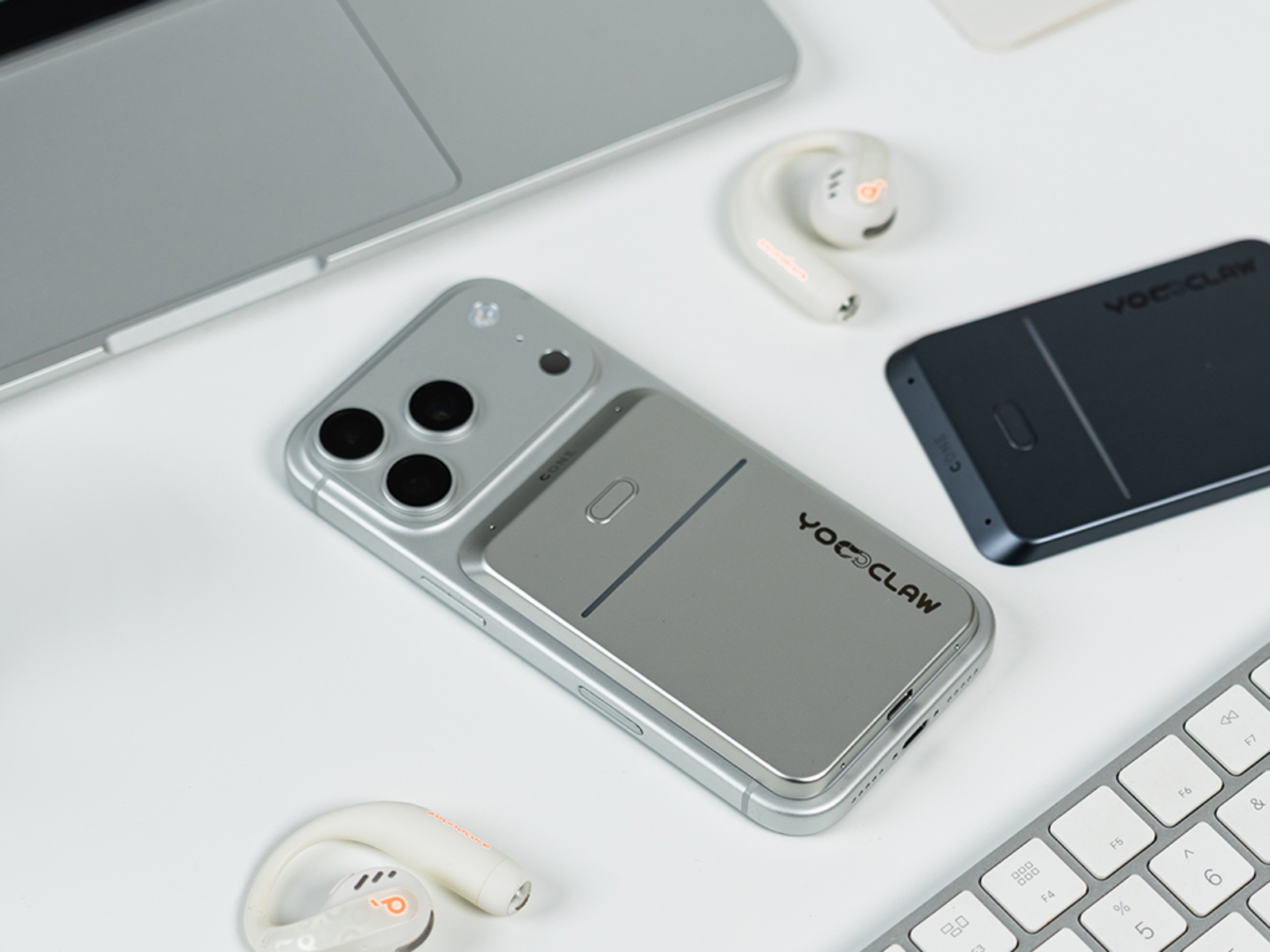
    When I first received the YoooClaw C·ONE, my initial impression before even opening the box was: this thing is tiny. The packaging was several times smaller than I had imagined. After opening it, I found that the C·ONE is a credit-card-sized ultra-thin matte purple card with no screen—just a slim LED light bar and a single button.

    For an AI device this minimalist—without even a screen, to be honest, I felt a little disappointed when I first unboxed it. It simply didn’t seem refined enough or geeky enough.

    However, after using it for a month, it has become the third electronic device I never leave home without, right behind my phone and earbuds. It even made me consider switching my primary phone from Android to iPhone. At this stage, its role is very clear: it is not a standalone smart device, but rather a “portable AI gateway” to the OpenClaw ecosystem—a device that fills the gaps within the broader AI ecosystem.

    What Exactly Is It?

    Before talking about the product itself, we need to clarify one thing first: why do we need a dedicated piece of hardware?

    The YoooClaw C·ONE is a multifunctional AI hardware gateway built around the OpenClaw ecosystem. More specifically, when connected to your phone via Bluetooth, it serves as a 24/7 online AI agent assistant, gateway, and information collector (voice, notifications, and other information), allowing you to access the capabilities and convenience of AI anytime and anywhere.

    Over the past month, my core usage scenarios have roughly fallen into four categories: capturing information on the go, collecting and organizing information from my phone, designing scenario-based functions, and gaining visibility into the OpenClaw backend.

    Extreme Battery Life and the App as the Missing Piece: The Philosophy of Subtraction and Addition

    Making a product simpler is easy. Building a complete and enjoyable experience on top of that simplicity is not.

    I’ve been using the YoooClaw C·ONE for a month and have only charged it twice in total. The last charge was more than ten days ago, and it still has 55% battery remaining. In the age of smart devices, I have never seen anything this power-efficient. Once you are no longer burdened by battery anxiety, the card truly blends into your EDC (Everyday Carry), becoming part of the background of your daily life. Like your glasses or your car keys, you know it’s there—and it’s always ready when you need it.

    While the hardware embraces subtraction, the YoooClaw app adds the missing pieces that make the experience work. I’ll focus on the app’s features in the sections below.

    An Information Catcher Anywhere, Anytime: More Than Just a Voice Recorder

    The C·ONE has only a single button, and in my opinion its most useful shortcut is the ability to start recording automatically with a double press. Whenever you need to record something, simply press the button twice and it will record the entire session while automatically transcribing it. Beyond generating a full transcript, C·ONE also produces detailed summaries and extracts key information such as names, dates, times, and numbers.

    For a long recording, C·ONE’s transcription will almost certainly be more comprehensive than notes organized manually—because it never misses those few sentences you failed to catch when your attention drifted.

    And its use cases extend far beyond meeting rooms and interviews. In everyday life, when I’m watching videos or listening to podcasts and come across something valuable, I would previously pause to take notes, grab screenshots, or manually write things down. All of that is actually quite cumbersome. With the C·ONE, I simply double-press the button to start real-time recording and double-press again when I’m done. The recording is then stored and processed in the background. When you come back to review it later, you’ll find that it doesn’t just convert speech into text—it organizes the content into a structured analytical report. This goes well beyond simple transcription.

    Here’s a real example. Recently, I watched a Bilibili video about “how one-person AI companies generate revenue.” After the recording was processed, what I received wasn’t just a block of transcribed dialogue. Instead, the content was organized into multiple sections such as “Industry Background and Trend Insights,” “Representative Success Stories and Key Data,” and “Step-by-Step Practical Workflow.” This kind of structured output is far more efficient and complete than stopping to type notes myself.

    That said, there is still a small issue visible in the example. “Vibe Coding” was recognized as “Web Coding.” In my view, this is an unavoidable challenge for current speech recognition systems when dealing with English terms. I occasionally run into the same problem when using voice input in WeChat Input as well.

    Scenario Features and a Window Into the OpenClaw Backend: An All-Around AI Assistant

    The real power of agents lies in their high degree of customization. But that is also where the barrier comes from—not everyone has the patience to learn prompt engineering and workflow configuration from scratch. And after using an agent for a while, you often have no idea whether it has created a bunch of unnecessary scheduled tasks, or whether it is even making use of the skills you carefully configured for it.

    The YoooClaw app does an excellent job of lowering that barrier through two key design approaches.

    The first is its Scenario feature. Think of it as a beginner-friendly ecosystem of ready-made workflows. If you’re new to AI agents, you don’t need to understand system prompts at all. You can simply subscribe to scenarios such as “Idea Capture,” “Notification Briefing,” or “Morning News Digest” with a single tap from the marketplace.

    Back when I was configuring OpenClaw skills myself, setting up something similar to “Idea Capture” could easily take several hours. I had to connect content sources, configure filtering rules, and set up scheduled deliveries. Now, I can simply search for something like “AI Industry News Briefing” in the scenario marketplace, enter a few keywords using an official template, and make a few basic adjustments. The system will then automatically push me a summary of the previous day’s industry developments every morning at 8 a.m., along with unread-message summaries from the AI-related group chats I follow. I can review everything while brushing my teeth in the morning and get up to speed on the most important information from the previous day in just five minutes, without having to search for it myself.

    The only concern here is privacy. To unlock some of these capabilities, you need to grant access to your phone’s notifications and messages. Whether sensitive or private data could potentially be exposed is something I can’t personally verify. Of course, you can choose not to grant those permissions and simply use the scenario features that gather information from external sources instead.

    The second is the visualization of skills, scheduled tasks, models, and usage statistics. For advanced users, these features are incredibly practical. In the past, when using OpenClaw, it often felt like a black box. You rarely knew which model was being called, how many tokens had been consumed, or which skill had been triggered. Some less capable models can’t even accurately identify themselves when asked—they simply read from files and claim to be whatever model name they find there. In the YoooClaw app, however, the operational logic behind OpenClaw is laid out clearly. You can see exactly which model is currently in use and how many tokens have been consumed today. Conversations show which tools were called and which skills were triggered. This level of transparency gives users a tremendous sense of control. If I hadn’t started using YoooClaw, I would never have discovered that my OpenClaw instance had accumulated more than 100 scheduled tasks. I had been wondering why my token plan was being consumed faster and faster. The moment I saw that enormous list of scheduled jobs, I immediately cleared them out. From now on, YoooClaw gives me a much more reliable way to manage those tasks and keep everything under control.

    An Imperfect Cut: The Compromises and Trade-Offs

    To be honest, during the first few days after receiving the C·ONE, I didn’t use it very often. I simply couldn’t remember to use it. Whenever I needed help with something, my instinct was still to pull out my phone and open WeChat, Feishu, or OpenClaw. After about a week, however, I gradually formed a habit: the C·ONE stayed magnetically attached to my phone at all times, ready whenever I needed it. I started using the recording function on the go, checking the Idea Capture feature daily for inspiration, and reviewing scheduled tasks on a regular basis.

    No product is perfect. As a first-generation device with virtually no direct competitors to reference, the C·ONE has had to pioneer its own category from scratch. In my opinion, it already delivers an experience worth around 80 out of 100. The remaining 20 points will likely come with time and iteration.

    That said, a month of use has also revealed several design issues and functional limitations.

    The first is Android compatibility. My current primary phone is actually an OPPO Find X9 Ultra. After the Android version of the app became available about half a month ago, I tried pairing the C·ONE with it. Since most Android phones tend to have larger camera modules and MagSafe-compatible magnetic positions are generally lower on the back, attaching the C·ONE to a magnetic case causes the bottom half of the card to protrude roughly 5mm beyond the edge of the phone, sticking out like a stubborn little tail. Fortunately, the magnetic connection itself is strong enough that it doesn’t usually cause problems. On my two iPhones, however, the magnetic attachment feels nearly perfect. In fact, the color of the review unit I received happens to match one of my purple iPhones almost exactly.

    The second issue is the placement of the physical button and the risk of accidental activation. The button is located on the front of the card, likely for ease of access and visual symmetry. However, this also creates an awkward scenario: when I place my phone face-up on a desk, pressing against the back of the card can occasionally trigger recording unintentionally. I only discovered this after opening the app and finding a collection of strange conversations and recordings that I definitely didn’t intend to create. Whether through hardware revisions or firmware updates, I hope the team finds a way to address this issue. Over time, repeated accidental activations could waste battery life and consume storage space.

    The third issue is occasional plugin errors. During use, I sometimes encountered messages such as “plugin error” in the conversation window. This happened roughly three times, all during conversations with my local OpenClaw instance. I never encountered the issue when using the official Cloud Claw service, so it may be related to the stability of third-party plugins on the OpenClaw side. Retrying usually resolves the problem, and it isn’t frequent enough to be a major concern, but it can occasionally interrupt the experience.

    The fourth limitation is the lack of support for agents outside of OpenClaw and YoooClaw’s official Cloud Claw service. The agent ecosystem is growing rapidly, and some platforms may soon surpass OpenClaw in user numbers. Personally, I now spend more time using Hermes. In fact, on the very first night after receiving the C·ONE, I spent hours experimenting with different ways to connect Hermes to it. The only thing I managed to achieve was getting Hermes to control the C·ONE’s lighting effects. That little side project ended up being one of the most entertaining surprises of the past month. Fortunately, the company has already stated that Hermes support is coming soon, which I’m genuinely looking forward to.

    The final limitation is the inability to send images or files. This is probably the one feature that prevents YoooClaw from completely replacing tools like Feishu or WeChat in my daily workflow. Whenever I want OpenClaw to perform a task based on an image or document, I still have to switch back to another app to handle it. That said, this feels like a relatively straightforward issue to solve through future app or firmware updates, so I’m not particularly worried about it in the long run.

    Who Is It For Right Now?

    Starting at RMB 599, is it worth it? Personally, the price is actually lower than I expected. At RMB 599, I think the value proposition is quite strong. These days, it feels like any product with even a hint of AI attached to it rarely costs less than RMB 1,000.

    For you, however, the answer depends entirely on how you define your relationship with AI.

    • Beginners who want an affordable way to get started with AI: simply spend RMB 799 on the official YoooClaw Cloud Edition. Using the official cloud-based Claw is far easier and more cost-effective than deploying your own OpenClaw instance and carrying it around everywhere. The official cloud service is essentially plug-and-play, whereas OpenClaw still comes with a learning curve for newcomers.
    • Professionals who frequently need recording, transcription, and related workflow features: the C·ONE can become one of your most valuable assistants.
    • Existing OpenClaw users: if you are already using OpenClaw, the C·ONE feels like a natural hardware extension of the ecosystem. At this stage, I haven’t found a better alternative.

    Conclusion: The Best AI Products Are the Ones That Fade Into Everyday Life

    The YoooClaw C·ONE has its flaws and compromises, but when it comes to the question that matters most to me—how to make AI blend seamlessly into everyday life—it delivers an answer that I’m genuinely satisfied with.

    Looking back on the past month, the biggest change the YoooClaw C·ONE brought me was its ability to reveal workflows I had not yet built and potential issues within my OpenClaw setup before they became problems. It helped me make better use of the capabilities and conveniences that AI can provide. From that perspective alone, the RMB 599 price tag represents excellent value, and it has left me genuinely excited about the future evolution of YoooClaw’s products.

    That RMB 599 doesn’t just buy a piece of hardware. It buys a ticket that pulls AI out of the confines of a computer or phone screen and slips it into the small gaps of everyday life. Whether or not you need that ticket—that’s a question only you can answer.

  • SSPAI Morning Brief: WeChat Opens Its AI Ecosystem to Developers Through New Integration Program

    SSPAI Morning Brief: WeChat Opens Its AI Ecosystem to Developers Through New Integration Program

    Morning Brief

    1. WWDC26 Worldwide Developers Conference Opens
    2. Xiaomi Unveils the Xiaomi 17T Series Smartphones
    3. Viltrox Launches AF 75mm F1.8 and 90mm F2.2 EVO APS-C Camera Lenses
    4. Dasung Launches the Link 2 Smartphone-Shaped Screen Mirroring Device
    5. Hanvon Introduces the Clear Mobile Plus Smartphone-Shaped E Ink Reader
    6. Cyberspace Administration of China and State Administration for Market Regulation Jointly Issue the Guidelines for Online Review Activities
    7. WeChat Releases Guidelines for Developers Integrating with the WeChat AI Ecosystem
    8. News Worth a Quick Look

    WWDC26 Worldwide Developers Conference Opens

    In the early hours of June 9, the WWDC26 Worldwide Developers Conference officially kicked off. The opening keynote introduced iOS 27, iPadOS 27, watchOS 27, macOS 27 Golden Gate, visionOS 27, and other new operating systems. The updates focus on performance improvements, design refinements, enhanced child safety features, Apple Intelligence upgrades, and a significantly improved Siri AI experience. Developer preview versions are available now, with public releases scheduled for this fall.

    For detailed coverage, see Liquid Glass Refined, Apple Intelligence Gets a Major Upgrade: WWDC26 Keynote Recap.

    For more WWDC26 news and updates, stay tuned to the WWDC26 with SSPAI special coverage series.


    Xiaomi Unveils the Xiaomi 17T Series Smartphones

    On June 8, Xiaomi officially introduced the Xiaomi 17T series, consisting of the 17T and 17T Pro models.

    The Xiaomi 17T is powered by the Dimensity 8500-Ultra mobile platform and features a 6.59-inch 1.5K flexible OLED flat display with peak brightness reaching 3500 nits in various usage scenarios. Its camera system consists of a Leica professional triple-camera setup, including a 50MP Leica primary camera, a 50MP Leica 5× periscope telephoto camera, and a 12MP Leica ultra-wide camera. The primary camera uses the Light Hunter 800 image sensor. The device is equipped with a 7000mAh Xiaomi Jinshajiang battery, supports 67W fast charging, and carries an IP68 dust and water resistance rating. Available in Iridescent White, Ice Berry Purple, and Black, pricing ranges from RMB 2,999 (12GB + 256GB) to RMB 3,499 (12GB + 512GB). Source

    The Xiaomi 17T Pro is powered by the Dimensity 9500 mobile platform and features a 6.83-inch 1.5K flexible OLED flat display with peak brightness reaching 3500 nits. It comes with a Leica professional triple-camera system consisting of a 50MP high-dynamic-range main camera, a 50MP Leica 5× periscope telephoto camera, and a 12MP Leica ultra-wide camera. The main camera uses the custom Light Hunter 950 image sensor, capable of delivering a dynamic range of up to 13.5 EV. The device packs a 7000mAh Xiaomi Jinshajiang battery and supports 100W Xiaomi HyperCharge wired charging as well as 50W Xiaomi HyperCharge wireless charging. It also features IP68 dust and water resistance. Available in Black, Nebula Purple, and Midnight Blue, pricing ranges from RMB 3,999 (12GB + 256GB) to RMB 4,799 (16GB + 512GB). Source


    Viltrox Launches AF 75mm F1.8 and 90mm F2.2 EVO APS-C Camera Lenses

    On June 8, Viltrox officially unveiled two new EVO-series APS-C lenses: the AF 75mm F1.8 and AF 90mm F2.2. Priced at RMB 1,499 and RMB 1,699 respectively, both lenses are available in Sony E, Nikon Z, and Fujifilm X mounts. Depending on the mount version, the AF 75mm F1.8 weighs approximately 325–355 grams. It features a manual aperture ring, while the Sony E and Nikon Z versions additionally include a customizable Fn button, a CLICK switch for toggling between clicked and de-clicked aperture control, and an AF/MF focus mode switch. The lens uses an STM silent autofocus motor, features an optical design consisting of 11 elements in 9 groups, and offers a minimum focusing distance of 0.74 meters. The AF 90mm F2.2 weighs approximately 320–340 grams depending on the mount. It also includes a manual aperture ring, while the E- and Z-mount versions offer the same customizable Fn button, CLICK aperture switch, and AF/MF focus mode switch. The lens uses an STM silent autofocus motor, features an optical design of 10 elements in 8 groups, and has a minimum focusing distance of 0.74 meters. Source


    Dasung Launches the Link 2 Smartphone-Shaped Screen Mirroring Device

    Dasung’s Link 2 smartphone-style screen mirroring device (display) is now available on JD.com. The device features a 6.7-inch display and is priced at RMB 1,899. It comes in Deep Space Gray and Glacier Blue color options, measures 7 mm thick, and weighs 155 g. The front is equipped with a 6.7-inch 300 PPI 60 Hz monochrome E Ink display paired with a dual-tone front light supporting both warm and cool color temperatures. The device can connect to any smartphone that supports Miracast or AirPlay wireless casting protocols and also supports reverse touch control. Source


    Hanvon Introduces the Clear Mobile Plus Smartphone-Shaped E Ink Reader

    On June 8, Hanvon listed its new Clear Mobile Plus smartphone-style e-reader on JD.com. The device features a 6.13-inch monochrome E Ink display and is priced at RMB 1,899. Available in black and white color options, it measures 9 mm thick and weighs 198 g. The front is equipped with a 6.13-inch Carta 1300 monochrome E Ink panel with a resolution of 1648 × 824, paired with a 30-level adjustable warm and cool backlight system. On the rear, the device includes an 8 MP camera.

    The Clear Mobile Plus is powered by an octa-core processor, paired with 4 GB LPDDR4X RAM and 128 GB of storage. It features a 4,000 mAh battery, runs Android 14, and includes 5 GB of free mobile data per month. Source


    Cyberspace Administration of China and State Administration for Market Regulation Jointly Issue the Guidelines for Online Review Activities

    On June 8, the Cyberspace Administration of China (CAC) and the State Administration for Market Regulation (SAMR) jointly released the Guidelines for Online Review Activities. The guidelines clarify that individuals and organizations conducting online reviews must comply with laws, administrative regulations, and relevant national requirements, adhere to business ethics and accepted social norms, and uphold the principles of objectivity, fairness, comprehensiveness, and accuracy. The guidelines further require that when online reviews involve testing product functionality, performance, or other measurable characteristics, the testing must be carried out by inspection and testing institutions that hold legally recognized certification and accreditation, following applicable standards and technical specifications. For food-related testing, reviewers must possess the necessary qualifications, may not use non-standard testing methods, and may not evaluate items lacking nationally recognized testing standards. The guidelines also prohibit using different standards or methodologies when making horizontal or vertical comparisons between similar products. Where no actual product testing has been conducted and evaluations are based solely on subjective impressions, reviewers must clearly disclose this fact. In addition, website platforms are required to strengthen oversight of online review content and promptly handle related complaints and reports. Source


    WeChat Releases Guidelines for Developers Integrating with the WeChat AI Ecosystem

    On June 8, the WeChat team published the Guidelines for Developers Integrating with the WeChat AI Ecosystem, announcing that the WeChat Open Platform now provides streamlined access to the WeChat AI ecosystem. Mini Programs that integrate with the ecosystem will have opportunities to be recommended and invoked by WeChat AI, while Mini Programs that do not complete the integration process will not be accessible through WeChat AI. The platform offers both an automatic mode and a developer mode. WeChat AI is currently in a closed beta testing phase, with JD.com and Trip.com already confirming their participation in the testing program. Source


    News Worth a Quick Look

    • According to the Financial Times, OpenAI is planning the largest upgrade in ChatGPT’s history, aiming to transform it into a “super app” by introducing enhanced coding tools and AI agent capabilities in an effort to boost revenue ahead of a potential IPO. Citing more than a dozen current and former employees, the report states that the changes are part of a broader organizational restructuring within OpenAI. The company is reallocating resources toward the highly profitable enterprise market while intensifying competition with rival Anthropic. A major focus of the upgrade will be Codex, OpenAI’s coding tool, which is expected to receive significantly more resources. New features are scheduled to roll out gradually over the coming weeks, first through updates to the ChatGPT web app and mobile applications. To further increase user engagement, OpenAI is also redesigning the ChatGPT interface and introducing new prompts and features to encourage the use of coding tools, image generation capabilities, and third-party partner services such as Canva and Booking. Source
    • At the Xbox Showcase on June 8, Microsoft unveiled a new limited-edition gaming console, the Xbox Series X25 Limited Edition, along with a matching commemorative controller. The special-edition console comes with 1TB of storage and draws its design inspiration from the original Xbox. It features a semi-transparent OG Green shell, while the Xbox logo area on top includes green lighting effects. A 25th Anniversary logo is printed on the front panel. Microsoft also revealed that the console contains several hidden “Easter egg” details throughout both its hardware and exterior design, though the company has not yet disclosed their exact nature. At the same time, Microsoft introduced the Xbox Wireless Controller X25 Special Edition, which adopts the same classic translucent green design while retaining the traditional ABXY button color scheme. Source
    • According to Bloomberg, Moonshot AI is seeking a new funding round with a target valuation of $30 billion. Source
    • According to Bloomberg, Spotify is currently in discussions with music festival organizers in an effort to secure livestreaming rights for festivals and concerts, as the company looks to expand beyond music into video content. Source
    • Kimi, the AI model developed by Moonshot AI, has launched the Kimi China Football Support Initiative. Under the program, Kimi will donate 1 billion tokens to support Chinese football development for every goal scored during the 2026 FIFA World Cup. The donations will support grassroots programs, school football initiatives, youth coaching development, and nonprofit organizations using Kimi. Source
    • According to a June 7 report by Windows Latest, Microsoft has acknowledged that the current Windows Search experience falls well short of expectations. The company reportedly plans to prioritize local results over web content even when users enter as few as two characters. Windows Latest independently confirmed that a dedicated local-only search mode for Windows is currently under development. Microsoft is testing a new toggle that will allow users to completely disable web-based search results, restricting searches exclusively to local content. Users will also be able to disable Microsoft Store search results separately. At present, the mixed presentation of local and web results often creates a poor experience. For example, when searching for applications, Windows may occasionally prioritize web content instead of local programs. Although such behavior is not constant, the system frequently defaults to Bing-powered search results. Source
  • SSPAI Morning Brief: Cloudflare Acquires Vite Creator Evan You’s VoidZero to Accelerate AI-Powered Web Development

    SSPAI Morning Brief: Cloudflare Acquires Vite Creator Evan You’s VoidZero to Accelerate AI-Powered Web Development

    Morning Brief

    1. Passenger Cars Keep Getting Heavier, Gaining Nearly 400 kg Over 12 Years
    2. iFixit Tears Down Counterfeit Apple Products from Huaqiangbei
    3. Cloudflare Acquires the Company Behind Vite
    4. rsync Sparks Controversy After an AI-Assisted Maintenance Bug
    5. OpenAI Discusses Equity Donation With the U.S. Government
    6. Average Vehicle Age on U.S. Roads Reaches 13 Years
    7. News Worth a Quick Look

    Passenger Cars Keep Getting Heavier, Gaining Nearly 400 kg Over 12 Years

    According to a report by CCTV, passenger cars on the market have been collectively “bulking up” in recent years. Data shows that the average curb weight of new passenger vehicles in China reached 1,704 kg in 2024, nearly 400 kg heavier than the 1,312 kg average recorded in 2012. Moreover, the pace of weight gain continues to accelerate. Between 2020 and 2024 alone, the increase in vehicle weight exceeded the total gain accumulated during the eight-year period from 2012 to 2020. New energy vehicles have become the primary contributors to this trend, with many mainstream models weighing more than two metric tons and some reaching as much as 3.8 tons—heavier than a light-duty truck.

    Experts attribute the increase largely to the automotive industry’s transition toward electrification and consumers’ growing demand for more features. As the industry remains in a rapid phase of EV adoption, components such as traction batteries add significant weight. In today’s mainstream household EVs, battery packs typically weigh between 500 and 650 kg, while long-range models equipped with larger batteries can reach 700 to 800 kg. At the same time, electric motors, power control systems, and battery protection structures integrated into the chassis further increase overall vehicle mass.

    The report notes that excessive vehicle weight reduces efficiency, accelerates tire and brake wear, and can lead to handling issues such as understeer. Energy consumption also rises significantly. For example, a three-ton battery-electric SUV typically consumes more than 20 kWh per 100 kilometers. Industry estimates suggest that reducing vehicle weight by 100 kg can lower energy consumption by approximately 7.5% per 100 kilometers. Additionally, every 20% increase in vehicle weight raises road surface damage rates to roughly 2.07 times the original level, increasing urban road maintenance costs.

    Policymakers have already begun addressing the issue. China’s national standard Limits of Energy Consumption for Electric Vehicles, Part 1: Passenger Cars came into effect on January 1 this year. Through stricter and more systematic performance requirements, the regulation pushes automakers toward meaningful technological upgrades and lower energy consumption. New purchase tax incentive standards set to take effect in 2026 stipulate that battery-electric vehicles with a curb weight exceeding 2,710 kg must achieve CLTC energy consumption of no more than 19.1 kWh per 100 kilometers to qualify for the 50% purchase tax reduction. This measure is expected to curb unrestricted vehicle weight growth to some extent.


    iFixit Tears Down Counterfeit Apple Products from Huaqiangbei

    Recently, iFixit released a video showcasing the teardown of counterfeit Apple products purchased from Shenzhen’s Huaqiangbei electronics market, including fake versions of the Apple Watch Ultra 3, AirPods Max 2, and AirPods Pro 3. All three products together cost less than $100.

    The counterfeit Apple Watch Ultra 3 came preloaded with apps such as Alipay, but many built-in icons—including Compass and Weather—had no actual functionality, merely toggling Night Mode when tapped. On the rear casing, a plastic shell decorated with painted fake sensors replaced the genuine ceramic and sapphire sensor assembly found on the authentic product. The display assembly method also differed significantly from Apple’s design. Inside, the fake watch used a 260 mAh lithium-polymer pouch battery, compared with the genuine model’s 542 mAh battery, and it was directly soldered to the motherboard.

    The counterfeit AirPods Max 2 replaced aluminum components with low-quality plastic. The headband exhibited unusual bending, while the ear cushions appeared prone to rapid wear. Although the device could reproduce a convincing Apple-style pairing animation, it lacked active noise cancellation entirely. Internally, the wiring featured crude soldering work, and steel weights fixed with resin had been added inside the ear cups to imitate the heft of the genuine headphones.

    The counterfeit AirPods Pro 3 used silicone ear tips glued directly onto the earbuds. Inside were pouch batteries and inexpensive soldered copper wires instead of proper flex cables. Apple’s force-sensor controls were replaced with physical buttons, and the counterfeit version lacked both heart-rate sensors and noise-canceling microphones.

    According to iFixit, these counterfeit products not only fail to deliver any of the advanced features they attempt to imitate, but also pose potential fire hazards due to their use of unbranded and uncertified batteries. Built with low-quality components and offering virtually no repairability, they are likely to become electronic waste in a very short time.


    Cloudflare Acquires the Company Behind Vite

    On June 4, Cloudflare announced its acquisition of open-source JavaScript tooling company VoidZero. Core products under the VoidZero umbrella—including the Vite build tool, Vitest testing framework, Rolldown, and Oxc—will be integrated into the Cloudflare Workers platform.

    VoidZero was founded in 2024 by Chinese developer Evan You, creator of the Vue.js framework and Vite. Following the acquisition, You and his team will join Cloudflare’s Emerging Technologies and Incubation (ETI) division. Cloudflare CEO Matthew Prince stated that as AI-assisted code generation continues to grow rapidly, development tools must become lighter and more efficient. The integration aims to provide developers and AI agents with the fastest path from local code creation to deployment across Cloudflare’s global network.

    Addressing concerns from developers about the future of the ecosystem, Cloudflare pledged that Vite and its related tooling would remain vendor-neutral, continue to be released under the MIT License, and stay community-driven. The company also announced a $1 million independent Vite Ecosystem Fund dedicated to supporting open-source contributors and maintainers outside both the Cloudflare and VoidZero organizations.

    According to official figures, Vite currently surpasses 130 million weekly downloads worldwide. Cloudflare’s Vite plugin alone accounts for approximately 13.9 million weekly downloads, representing more than 10% of the total. Financial details of the acquisition have not been disclosed.


    rsync Sparks Controversy After an AI-Assisted Maintenance Bug

    According to The Register, a recent backup failure in a new version of the veteran open-source file synchronization tool rsync has triggered a broader debate about the use of AI in maintaining critical open-source software. Originally created in the 1990s, rsync has become a widely used backup and synchronization component throughout the Unix and Linux ecosystem, with countless enterprise IT departments, NAS devices, and backend scripts relying heavily on its stability.

    After the release of rsync 3.4.3, some users reported that incremental backups were no longer functioning correctly. While investigating the bug, users discovered references to Claude in the project’s commit history, prompting widespread criticism. One developer angrily posted on GitHub, telling the maintainers to “do not vibe fuck up this software,” a comment that quickly received thousands of reactions in agreement.

    In response, rsync creator Andrew Tridgell, a veteran software engineer with 40 years of experience, published an article defending his approach. He acknowledged that the new version did contain a bug affecting certain backup workflows and apologized for the issue, but firmly rejected accusations that he had blindly accepted AI-generated code. Tridgell explained that he primarily uses tools such as Claude for what he described as “grunt work,” including rewriting legacy test suites in Python to strengthen security testing, and emphasized that all generated code undergoes rigorous manual review by himself.

    Tridgell also pointed out that the software maintenance landscape has changed dramatically. Open-source maintainers are now facing a flood of security vulnerability reports, many of which are themselves generated by AI. To cope with the resulting increase in workload, he stated that he has no intention of abandoning AI-assisted development and plans to continue using such tools in the upcoming rsync 3.5 release, which will focus heavily on security improvements.


    OpenAI Discusses Equity Donation With the U.S. Government

    According to CNBC, U.S. President Donald Trump and OpenAI CEO Sam Altman are discussing a proposal that would allow the U.S. government to obtain an equity stake in the company. Negotiations have reportedly been ongoing for more than a year, with OpenAI potentially donating a portion of its shares to establish an investment vehicle similar to a “public wealth fund.”

    The idea was first proposed by Altman to the Trump administration in 2025, with the goal of allowing the American public to directly participate in and benefit from the economic gains generated by advances in artificial intelligence. Trump confirmed the concept to reporters aboard Air Force One on June 5, saying that he is considering arrangements under which certain AI companies would contribute equity so that “the American people become, in effect, partners.” He also revealed plans to meet with executives from several AI companies in the near future. Altman reportedly held extensive discussions with lawmakers and government officials in Washington last week.

    The negotiations come amid growing political interest in how AI-generated wealth should be distributed. Senator Bernie Sanders, for example, previously proposed a plan to impose a one-time 50% equity levy on major AI companies to create a sovereign wealth fund, and recently discussed the idea directly with Altman. During Trump’s second term, the administration has pursued a variety of technology and industrial policies and has already acquired equity stakes in companies including Intel, IBM, as well as several quantum computing and critical minerals firms.

    At the same time, the White House is increasing regulatory oversight of the AI industry. Trump recently signed two executive orders: one directing national security agencies to accelerate the adoption of advanced AI models, and another requiring AI companies to provide government access to major models 30 days before their public release.


    Average Vehicle Age on U.S. Roads Reaches 13 Years

    According to The Wall Street Journal, the average age of vehicles currently on U.S. roads has reached a record 13 years, up 10% from a decade ago. Driven by high new-car prices and economic uncertainty, this trend is reshaping the American automotive industry, pushing automakers and dealerships to focus more on repairs and used-car sales rather than new vehicle purchases.

    The average price of a new vehicle in the United States is now approaching $50,000 (approximately RMB 338,000). Combined with elevated auto loan interest rates, the cost of ownership has become increasingly difficult for consumers who depend on cars for daily transportation. Supply-chain disruptions since the pandemic, along with the recent cooling of the U.S. electric vehicle market, have further encouraged consumers to delay purchases. At the same time, advances in vehicle materials and safety technologies have made modern cars capable of remaining on the road much longer than before.

    As weak new-car sales become the norm, automakers and dealers are increasingly turning their attention to the existing vehicle market. Maintenance and repair operations now account for roughly half of the gross profit generated by U.S. dealerships. Traditional manufacturers such as Ford and General Motors are expanding their presence in the after-sales market. Ford, for example, recently introduced mobile repair services that send technicians directly to customers and uses connected-vehicle data to pre-position replacement parts before a breakdown occurs. Major automakers are also steadily expanding their certified pre-owned vehicle programs.

    Meanwhile, competition in the automotive aftermarket is becoming increasingly intense. Long wait times and a lack of pricing transparency at authorized dealerships have driven more American car owners—including those whose vehicles remain under warranty—to independent repair shops and nationwide quick-service chains. In response, large dealership groups such as Penske are reducing showroom space to create additional service bays and introducing customer perks such as complimentary cappuccinos, Wi-Fi-equipped workspaces, and one-hour express maintenance services in an effort to win customers back.


    News Worth a Quick Look

    • On June 7, leaker Sonny Dickson shared new photos of a foldable iPhone dummy unit, claiming it represents the finalized exterior design. He also suggested that the device may be available in only a single color option: white. Based on the model, the outer display adopts an edge-curved full-screen design. The rear microphone has been upgraded to a five-hole configuration, with the flash positioned beneath it. Meanwhile, the front-facing camera on the inner display has been moved to the upper-left corner.
    • Mark Gurman reports that Apple held a highly confidential internal meeting in early 2025 to address the underwhelming reception of Apple Intelligence and delays affecting the next-generation Siri. Senior executives reportedly realized that the company had fallen significantly behind in the AI race, prompting a major strategic shift. Following the reorganization, Mike Rockwell, who previously led the development of Vision Pro, took over responsibility for Siri, while former AI chief John Giannandrea departed the company earlier this year. After assuming the role, Rockwell quickly restructured the team and, together with software engineering chief Craig Federighi and others, helped facilitate deeper cooperation between Apple and Google. The situation also changed Tim Cook’s management style, with the CEO becoming unusually hands-on in shaping Apple’s AI roadmap.
    • Valve has recently rolled out a major update to the Steam Store homepage. The redesigned storefront features larger and more prominent images, along with more detailed descriptions. A new “Quick Browse” feature allows users to preview recommended games without opening individual store pages. Wishlist and DLC sections, which previously appeared only during sales events and promotions, are now permanently available on the homepage. The update also introduces a “Personalized Calendar” that recommends upcoming releases based on each user’s interests.
  • SSPAI Morning Brief: Chinese AI Rivals Doubao and Kimi Unveil Premium AI Services and Multi-Agent Productivity Tools

    SSPAI Morning Brief: Chinese AI Rivals Doubao and Kimi Unveil Premium AI Services and Multi-Agent Productivity Tools

    Morning Brief

    1. Doubao Confirms Launch of Paid Subscription Service
    2. Moonshot AI Launches Kimi Work Beta
    3. OpenAI Expands Codex Use Cases
    4. Amazfit Introduces the Balance 3 Smartwatch
    5. CHERRY Unveils the XTRFY K63W Pro Gaming Keyboard
    6. Longsys Announces AIDIMM and AILPBGA Memory Solutions

    Doubao Confirms Launch of Paid Subscription Service

    On June 3, AI assistant Doubao published a statement announcing plans to introduce Doubao Professional, a premium version designed for the productivity needs of professional users. The service will include specialized capabilities for software development, data analysis, professional design, workflow automation, financial analysis, and scientific research.

    For everyday users, Doubao’s existing features—including search-based Q&A, writing assistance, image generation, voice conversations, and video chat—will remain free of charge. The company also stated that some Professional Edition features will be made available to users within certain usage limits at no cost.

    Doubao emphasized that recent rumors regarding a paid version of the service are inaccurate. Doubao Professional is still undergoing testing, and further details will be announced at a later date. Source


    Moonshot AI Launches Kimi Work Beta

    On June 3, Moonshot AI announced that its large language model Kimi will gain a new Work feature, now available in beta testing. Kimi Work is a general-purpose local agent designed for knowledge workers and is being introduced alongside the latest beta versions of the Kimi desktop client for macOS and Windows.

    Kimi Work supports agent clusters and can autonomously create a team of up to 300 sub-agents depending on task complexity, enabling it to handle more sophisticated and time-consuming workloads. Like similar products, Kimi Work also supports importing Skills to perform more specialized or professional tasks. The beta version is currently available on macOS, while the Windows release will arrive at a later date.


    OpenAI Expands Codex Use Cases

    On June 3, OpenAI announced an expansion of Codex’s capabilities, introducing six new professional role plugins covering 62 applications and 110 skills. The new plugins target data analysis, creative production, sales, product design, public equity investing, and investment banking. The data analysis plugin helps teams query business data, explain metric changes, and generate reports or dashboards through integrations with tools such as Snowflake, Databricks Genie, Hex, and Tableau. The creative production plugin is designed for marketing teams, transforming briefs into ad variations, campaign boards, product images, and lifestyle visuals.

    In addition, OpenAI introduced a new Sites feature for Business and Enterprise subscribers, allowing users to create and share interactive hosted websites and applications. Codex can transform ideas, analyses, and plans into dashboards, planners, review workspaces, project boards, portfolios, and lightweight tools. These can be shared via URL with specific team members, providing a collaborative workspace for exploring projects, contributing ideas, tracking progress, and making decisions together. Annotation capabilities have also been extended to documents, spreadsheets, and presentations. Users can select navigation elements, investment thesis statements, or chart labels within slides and instruct Codex to modify only those specific sections. Source


    Amazfit Introduces the Balance 3 Smartwatch

    On June 3, Amazfit launched the Balance 3 smartwatch in overseas markets. The device features a stainless-steel body, measures approximately 14.6mm thick including the sensor module, and has a case diameter of 51.4mm. It is rated for 10ATM water resistance.

    The front is equipped with a 1.5-inch AMOLED display with a peak brightness of 3,000 nits and comes standard with a sapphire crystal cover. In terms of health tracking, the Balance 3 supports 24/7 heart rate monitoring, blood oxygen tracking, skin temperature measurement, and stress monitoring. It can also detect abnormal heart rate conditions, low blood oxygen levels, and elevated stress levels. Additional features include sleep tracking and menstrual cycle monitoring.

    The smartwatch supports more than 180 sports modes and includes a built-in GPS module for standalone activity tracking. Other features include a 658mAh battery, with Amazfit claiming up to 21 days of battery life under typical use and around 7 days with the always-on display (AOD) enabled. The device also includes a speaker, microphone, NFC functionality, and other smart features. The Amazfit Balance 3 is priced at $369.99. Source

    Product image, courtesy of the original news source.

    CHERRY Unveils the XTRFY K63W Pro Gaming Keyboard

    On June 3, CHERRY’s gaming hardware brand CHERRY XTRFY introduced the world’s first gaming keyboard to support 8K UWB (Ultra-Wideband) wireless connectivity — the CHERRY XTRFY K63W Pro.

    According to CHERRY, traditional wireless solutions used in peripherals often suffer from crowded and narrow communication channels. UWB technology, by contrast, transmits data using short-duration pulses across a much wider frequency spectrum, enabling more precise timing, reduced interference, and more stable communication.

    The K63W Pro features a compact 70% layout and is equipped with the upgraded CHERRY MX LOW PROFILE 2.0 mechanical low-profile switches. It comes with ABS keycaps featuring laser etching and UV coating. Internally, the keyboard uses a gasket-mounted structure, supports an 8kHz polling rate, and includes a 6,000mAh battery capable of delivering up to 1,100 hours of battery life. The MX LP 2.0 switches have been redesigned with a smoother keystroke, improved stability, more consistent actuation, and a crisp yet fluid linear feel. An optimized lubrication process further reduces friction while enhancing both typing feel and key acoustics. The switches are rated for up to 100 million keystrokes. The keyboard will launch in Europe in early July with a suggested retail price of €179.99 (and the equivalent price in GBP), followed by a U.S. release in August with an MSRP of $169.99. Source

    Product image, courtesy of the original news source.

    Longsys Announces AIDIMM and AILPBGA Memory Solutions

    At COMPUTEX 2026, Longsys unveiled two specialized memory products designed for on-device AI inference: AIDIMM and AILPBGA. Both solutions are based on LPDDR5X memory, feature a 256-bit wide interface, and support transfer speeds of up to 9600MT/s.

    The AIDIMM architecture shares some similarities with server-side SOCAMM2 modules but has been specifically optimized for AI agent host systems. Its four LPDDR DRAM chips are arranged horizontally along the shorter edge of the module. Measuring 80mm in length and 30mm in width, the module supports capacities of up to 128GB and uses a tool-free high-pin-count connector.

    AILPBGA, meanwhile, targets embedded AI inference scenarios where compact size is a key requirement. It offers capacities ranging from 24GB to 64GB and is fully compatible with standard LPDDR interfaces. The solution uses a 22mm × 22mm BGA1764 package, delivering high memory bandwidth while maintaining a compact footprint and a high level of integration. Source

  • SSPAI Morning Brief: Anthropic Surpasses OpenAI in Valuation, Becomes World’s Most Valuable AI Startup

    SSPAI Morning Brief: Anthropic Surpasses OpenAI in Valuation, Becomes World’s Most Valuable AI Startup

    Morning Brief

    1. Anthropic surpasses OpenAI in valuation
    2. The Pirate Bay marks 20 years since its raid and shutdown, yet remains operational today
    3. Qualcomm launches the Snapdragon C series to compete with MacBook Neo-class notebook PCs
    4. Last.fm returns to independent operation
    5. vivo unveils the vivo S60 series
    6. Beijing Internet Court says a single case involving a minor’s in-game spending exceeded RMB 600,000
    7. Bill Gates faces an unprecedented public image crisis
    8. News Worth a Quick Look

    Anthropic surpasses OpenAI in valuation

    According to The Wall Street Journal, Anthropic recently completed a $65 billion funding round, doubling its valuation to $965 billion. This allows the company to overtake its main rival OpenAI and become the world’s most highly valued AI startup.

    Unlike OpenAI, which initially focused on consumer-facing products, Anthropic has concentrated on enterprise customers and code automation. Late last year, its autonomous coding tool Claude Code sparked significant interest among developers. Thanks to this momentum, the company’s annualized revenue is expected to reach $50 billion in June, while second-quarter revenue is projected to double to $10.9 billion, marking its first profitable quarter. The pace of Anthropic’s valuation growth has already set a new record in venture capital history.

    Computing power has now become the central battleground between the two AI giants. Earlier this year, OpenAI completed a $122 billion funding round and has been competing aggressively for enterprise customers with rival coding products. To keep up with stronger-than-expected business growth and break through infrastructure bottlenecks, Anthropic has reportedly signed a deal worth nearly $50 billion with Elon Musk’s SpaceX to gain access to the vast computing resources of the Colossus data center.

    Financial markets are also closely watching a wave of upcoming AI-related public offerings. Reports indicate that OpenAI is expected to file for an initial public offering in the near future, while Anthropic is also aiming to go public as early as this year. In addition, SpaceX is reportedly preparing for an IPO around June 12, seeking a valuation exceeding $1.5 trillion.


    The Pirate Bay marks 20 years since its raid and shutdown, yet remains operational today

    According to TorrentFreak, May 31 marked the twentieth anniversary of the police raid on the infamous BitTorrent-sharing website The Pirate Bay. Despite years of pressure from the U.S. government, repeated server seizures, and prison sentences handed down to its founders, the site remains online today, living up to its self-proclaimed reputation as “the most resilient torrent site in the universe.”

    On May 31, 2006, sixty-five Swedish police officers raided the Stockholm data center that hosted The Pirate Bay, attempting to permanently remove its servers. However, before the operation took place, co-founder Fredrik Neij sensed that something was wrong and rushed to back up all of the site’s critical tracker infrastructure. As a result, The Pirate Bay returned online just three days after the raid. Its homepage was renamed “Police Bay,” and it adopted a new logo depicting a phoenix rising from the ashes alongside a pirate ship firing cannons at Hollywood. The message was unmistakably mocking. Rather than destroying the site, the raid attracted widespread mainstream media coverage and triggered a surge in global traffic.

    The driving force behind the operation was the U.S. government. Diplomatic cables later released to the public revealed that the Motion Picture Association of America (MPA) and the U.S. Embassy in Sweden had spent months pressuring Swedish authorities before the raid. The cables explicitly demanded firm action against what they described as a major offender openly disregarding intellectual property rights, and U.S. officials viewed the operation as a significant diplomatic achievement in the broader fight against online piracy.

    As the criminal investigation progressed, several key founders were ultimately convicted and sentenced to prison. The original team subsequently severed ties with the website and transferred control to anonymous organizations registered in locations such as the Seychelles. From that point onward, The Pirate Bay adopted a lower-profile approach. Although it was forced offline for several weeks in 2014 following another data center seizure, the site continues to operate today under the stewardship of anonymous administrators working behind the scenes.


    Qualcomm launches the Snapdragon C series to compete with MacBook Neo-class notebook PCs

    On May 28, Qualcomm announced the Snapdragon C series of SoCs, designed specifically for entry-level Windows 11 devices with starting prices as low as $300. The first products powered by the new chips are expected to launch later in 2026, targeting lightweight productivity and media-consumption scenarios while competing against Apple’s MacBook Neo and the Chromebook laptops that have long dominated education and budget markets.

    The Snapdragon C series emphasizes energy efficiency, fanless silent operation, and all-day battery life. Together with the premium Snapdragon X2 lineup, it forms part of Qualcomm’s next-generation PC processor portfolio. Unlike the high-performance Snapdragon X family, however, Snapdragon C does not utilize Qualcomm’s custom Oryon CPU architecture. In addition, while the chip still includes an integrated neural processing unit (NPU), cost considerations mean that most Snapdragon C laptops are expected to ship with only 4GB or 8GB of memory. This falls short of Microsoft’s 16GB requirement for Copilot+ PC certification, meaning these devices will not be able to fully support Windows’ advanced AI features.

    Acer, HP, and Lenovo have already confirmed their participation as launch partners and are expected to introduce low-cost Windows 11 devices powered by Snapdragon C.


    Last.fm returns to independent operation

    On May 27, veteran music platform Last.fm announced on its official forum that it had formally separated from Paramount Skydance and returned to independent ownership nearly two decades after being acquired. The company emphasized that despite the ownership change, its products, services, and operating team will remain unchanged.

    Addressing concerns that might arise from the transition, Last.fm assured users that all accounts, listening histories, subscription statuses, and linked payment information would remain fully intact. The company stated that additional details regarding the transition period and future plans will be shared in the coming weeks.

    Founded in 2002, Last.fm originally began as an internet radio service. In 2007, CBS Interactive—later folded into Paramount Skydance through corporate mergers—acquired the company for $280 million. In 2014, responding to shifts in the streaming market, Last.fm shut down its $3-per-month subscription radio service and refocused entirely on cross-platform music tracking and listening-data analysis.

    As a cross-platform music tracking tool, Last.fm allows users to connect services such as Spotify, Apple Music, and YouTube. Every song played generates a listening record known as a “Scrobble.” Using this Scrobble data, Last.fm can accurately collect and analyze users’ listening habits in real time, helping it maintain a loyal and dedicated user base over the years.


    vivo unveils the vivo S60 series

    On May 29, vivo officially launched the vivo S60 series. The lineup is built around a design language dubbed “Starlight Aesthetics,” featuring a unibody floating-light cold-carved glass finish. Its signature colorway, “Starry Sea,” employs a three-dimensional starlight lithography process that layers patterns onto the film surface, combined with lithographic de-metallization techniques and triangular prism etching to create varying shimmering effects under different lighting conditions.

    The vivo S60 measures as thin as 7.79mm in certain color variants. All models feature a 6.59-inch display with a 144Hz eye-comfort panel, hardware-level low blue light technology, and support for brightness as low as 1 nit. The series also introduces Wet Finger Ultrasonic Fingerprint 2.0, capable of reliably recognizing sweaty or wet fingers in everyday unlocking scenarios.

    For imaging, vivo has reworked its algorithms to address common Live Photo shortcomings such as soft image quality, inadequate stabilization, and inconsistent color reproduction. The result is 4K output for every frame of a Live Photo sequence. Combined with a gimbal-level primary camera system, the phones achieve CIPA 5.0 professional-grade stabilization. The series also includes “Starlight Live” lighting enhancement features and creative collage tools. In addition, it becomes the first smartphone lineup to support glasses-free 3D spatial image sharing directly to Xiaohongshu, expanding social photography possibilities.

    The standard S60 model is powered by Qualcomm’s third-generation Snapdragon 8s mobile platform. Every model in the lineup comes equipped with a 7200mAh Blue Ocean battery, 90W fast charging, a VC liquid-cooling system, IP69 and IP68 dust and water resistance ratings, and SGS-certified drop and impact resistance.

    The vivo S60 series is now available for pre-order and will officially go on sale on June 3. The lineup includes a Standard Edition and a Vitality Edition. Pricing starts at RMB 3,599 for the vivo S60 Standard Edition (12GB + 256GB) and RMB 2,899 for the Vitality Edition (8GB + 256GB).

    vivo also introduced several new IoT ecosystem products. The new vivo over-ear noise-canceling headphones support up to 58dB active noise cancellation and seamless triple-device connectivity across ecosystems, priced at RMB 499. The vivo TWS 5e earbuds, focused on long battery life and low latency, are priced at RMB 229. Meanwhile, the vivo WATCH GT 2 smart watch has also received an upgrade.


    Beijing Internet Court says a single case involving a minor’s in-game spending exceeded RMB 600,000

    According to Beijing Daily, on May 28 the Beijing Internet Court held a press conference to release the White Paper on Judicial Protection of Minors in Cyberspace (2021–2026). The report shows that disputes involving minors have expanded beyond traditional gaming-related issues into emerging sectors such as blind-box purchases and online social interaction services. It also notes that some online products continue to encourage excessive spending, while unclear responsibility among platforms, streamers, and other stakeholders makes it more difficult for minors to defend their rights.

    In May 2021, the Beijing Internet Court established China’s first internet juvenile tribunal. By May 2026, the court had handled 2,581 internet-related disputes involving minors, with an average annual increase of approximately 237 cases. According to the report, disputes have gradually expanded beyond gaming top-ups and livestream tipping into areas such as social networking, digital comics, blind-box consumption, online companionship services, and casual mobile games.

    Online consumption disputes remain the most common category of cases. Individual livestream tipping disputes have involved amounts exceeding RMB 6.5 million, while the largest gaming top-up case surpassed RMB 640,000. In some cases, minors spent hundreds of thousands of yuan within a short period on lottery-style mini-games and blind-box purchases. The report argues that these disputes reflect both insufficient parental supervision and shortcomings in platform mechanisms related to anti-addiction systems, spending limits, and content moderation.


    Bill Gates faces an unprecedented public image crisis

    According to The Wall Street Journal, the carefully cultivated public image of Microsoft co-founder Bill Gates is facing an unprecedented challenge. Ongoing revelations regarding his relationship with the late convicted sex offender Jeffrey Epstein, along with reports of multiple extramarital affairs, have reportedly led to growing isolation for the 70-year-old billionaire in both business and philanthropic circles. Gates was absent from this year’s Microsoft CEO Summit and Berkshire Hathaway’s shareholder meeting, and is expected to face questioning from a U.S. congressional committee later this month regarding his ties to Epstein.

    The controversy has reportedly weakened both Gates’ reputation and his network among influential figures. In addition to Microsoft distancing itself from him, longtime friend and renowned investor Warren Buffett is said to have become increasingly reserved. Buffett reportedly skipped a recent annual charitable gathering organized by Gates and stated that he would temporarily pause his annual large-scale donations to the Gates Foundation until he had fully reviewed recently released Epstein-related documents from the U.S. Department of Justice.

    Within the Gates Foundation and affiliated organizations, employee concerns and uncertainty have also intensified. At an internal foundation meeting in February, Gates reportedly acknowledged having extramarital relationships with two Russian women, one of whom had worked for a nuclear energy company in which he invested. According to internal documents cited by The Wall Street Journal, critical media coverage of Gates and the foundation has increased by more than 40% since the release of the Epstein files. Governments in countries such as India have also reportedly canceled keynote speaking invitations due to concerns about negative publicity.

    During his tenure leading Microsoft, Gates developed a reputation for aggressive behavior during antitrust battles. In response, his team spent years investing heavily in reshaping his image into that of a thoughtful philanthropist focused on global health and development. These efforts reportedly extended to details as specific as the style of sweaters he wore in public appearances, and even included attempts to influence or request changes to footage used in Netflix documentaries about him.


    News Worth a Quick Look

    • According to Axios, Nvidia and Microsoft are expected to announce the first Windows PCs powered by Nvidia CPUs this week, including Microsoft Surface devices and products from third-party manufacturers such as Dell.
    • On May 29, Apple leaker Sonny Dickson shared a series of iPhone 18 Pro dummy-unit photos, providing the first physical look at four color options: Light Blue, Black (or Dark Gray), Silver, and a new Dark Cherry finish. Based on multiple earlier reports, the Dark Cherry color is expected to be relatively understated. The leaked dummy units are largely consistent with descriptions previously shared by Bloomberg’s Mark Gurman and other supply-chain sources. Chinese leaker @刹那数码 previously described the color as resembling the tone of red wine.
    • Mark Gurman also claims that:
    • Apple’s first smart glasses are now expected to launch in late 2027, with a target price between $200 and $500.
    • Apple has begun development of iOS 28 and macOS 28 (internally codenamed “Boppy”) as part of preparations for the 20th anniversary of the iPhone next year, with more substantial system updates planned.
    • New versions of Apple TV and HomePod mini are currently undergoing internal testing at Apple headquarters. The new HomePod mini is expected to receive an upgraded processor capable of supporting Apple’s latest AI features. Both devices were previously delayed while Apple continued work on the next-generation Siri and Apple Intelligence platform, but they are now reportedly scheduled for release this fall.
  • SSPAI Morning Brief: Huawei Unveils New Semiconductor “Tao Law” as OPPO Launches Reno16 Series with 200MP Cameras and 7000mAh Batteries

    SSPAI Morning Brief: Huawei Unveils New Semiconductor “Tao Law” as OPPO Launches Reno16 Series with 200MP Cameras and 7000mAh Batteries

    Morning Brief

    1. OPPO Launches Reno16 Series and Other New Products
    2. HONOR Launches HONOR 600 Series and Other New Products
    3. Huawei Proposes a New Law in the Semiconductor Industry
    4. Epic Reveals Unreal Engine 6
    5. Meta Launches Forum App
    6. Alibaba DAMO Academy’s Xuantie 9 RISC-V Processor Series Adapts to Android 16
    7. News Worth a Quick Look

    OPPO Launches Reno16 Series and Other New Products

    On May 25, OPPO held its Reno Land Fantasy Night launch event, unveiling multiple newproducts including the OPPO Reno16 smartphone series and the OPPO Pad 6 tablet.

    The OPPO Reno16 series includes the Reno16 and Reno16 Pro. The OPPO Reno16 features a 6.32-inch flat display, powered by the Dimensity 8550 SUPER processor, with a 6700mAh battery, available in Heartbeat Star, Galaxy Purple, and Moonlight Black. The OPPO Reno16 Pro features a 6.78-inch flat display, powered by the Dimensity 9500s processor, with a 7000mAh battery, available in Heartbeat Star, Dream Blue, and Moonlight Black. The entire lineup is equipped with a quad-main-camera ultra-clear imaging system focused on direct Live Photo capture, including a 200MP primary camera, a 50MP 3.5x periscope telephoto lens, a 50MP ultra-wide lens, and a 50MP front ultra-wide camera. All models support IP69K water resistance. The Reno16 Pro’s main camera also includes a large-angle stabilization gimbal module, alongside a new “Mountain and Sea” antenna architecture designed to improve livestreaming performance. The OPPO Reno16 starts at RMB 3,499 (12GB + 256GB), while the Reno16 Pro starts at RMB 4,499 (12GB + 256GB).

    Also announced was the magnetic accessory OPPO Bubble selfie display, featuring a 58mm AMOLED touchscreen that magnetically attaches to the back of the phone and functions as a selfie mirror. It supports customizable wallpaper rotation, includes a 550mAh battery, and supports remote wireless shooting. Pricing starts at RMB 499, with a Reno16 bundle option available.

    The OPPO Pad 6 is powered by the Dimensity 9500s processor and packs a 10,420mAh battery with support for 67W SUPERVOOC fast charging. It features a 12.1-inch 3K-resolution display with an optional anti-glare soft-light panel. The tablet weighs 577g and is approximately 5.99mm thick. Pricing starts at RMB 3,499 (8GB + 256GB), with Deep Space Gray, Galaxy Silver, and Starlight Blue color options available.

    OPPO also introduced the Enco Air5s semi-in-ear active noise-canceling earbuds, offering up to 48 hours of battery life and weighing 3.9g per earbud. Available colors include Midnight Black, Starlight Purple, and Moonlight White, with pricing set at RMB 299. Source


    HONOR Launches HONOR 600 Series and Other New Products

    On May 25, HONOR held its “4K Live Starlight Graduation Concert” launch event, unveiling the HONOR 600 series, HONOR Pad 20, and several other new products.

    The HONOR 600 series includes the HONOR 600 Pro, HONOR 600 Ultra Edition, and HONOR 600 Vitality Edition. The HONOR 600 Pro is powered by the Dimensity 8550 Elite processor, while the HONOR 600 Ultra Edition and Vitality Edition use the Snapdragon 7 Gen 4 mobile platform. All models support IP68/IP69/IP69K protection. Both the HONOR 600 Pro and HONOR 600 Ultra Edition feature 6.57-inch displays. The 600 Pro includes a triple-camera setup consisting of a 200MP wide-angle camera, a 50MP periscope telephoto lens, and a 12MP ultra-wide macro camera, supporting full-focal-length 4K Live Photo capture, alongside an 8000mAh battery. The 600 Ultra Edition features a dual-camera system with a 200MP wide-angle camera and a 12MP ultra-wide macro camera, also supporting 4K Live Photo capture, paired with an 8600mAh battery. The entire lineup supports a paper-like full-color eye-comfort mode. HONOR also introduced a magnetic secondary display accessory alongside the phones. The HONOR 600 Pro and Ultra Edition are available in Lucky Star, Feather Blue, Green Apple, and Obsidian Black. The Ultra Edition starts at RMB 3,299 (12GB + 256GB), while the Pro starts at RMB 3,899 (12GB + 256GB). The HONOR 600 Vitality Edition comes in Vitality White, Lucky Orange, and Obsidian Black, starting at RMB 2,699 (8GB + 256GB).

    The HONOR Pad 20 uses the Snapdragon 7 Gen 3 mobile platform and features a 12.1-inch 3K TFT LCD display with an optional soft-light panel. It weighs 525g, measures 6.29mm thick, and packs a 10,100mAh battery. Color options include Forest Green, Shining Pink, and Extraordinary Gray, with launch pricing starting at RMB 1,899 (6GB + 128GB).

    The HONOR Watch 6 Plus features a 46.5mm watch face with a 1.46-inch display and supports over 120 professional sports modes. It is the first smartwatch to include a 1000mAh “Qinghai Lake” battery, offering up to 17 days of battery life under normal Bluetooth usage. Launch pricing starts at RMB 1,199.

    HONOR also released the Earbuds Clip Pro clip-on earbuds, supporting IP55 dust and water resistance alongside LHDC 5.0 high-definition audio codec support. Introductory pricing starts at RMB 539.1. Source


    Huawei Proposes a New Law in the Semiconductor Industry

    At the International Symposium on Circuits and Systems (ISCAS 2026) on May 25, Huawei officially introduced the Tao (τ) Law, proposing “time scaling” as a replacement for traditional “geometric scaling.” The theory aims to systematically reduce time constants (τ) through innovations such as logic folding, continuously compressing signal propagation delays and increasing transistor density to sustain the evolution of semiconductors and electronic systems. The Tao Law establishes a multi-layer collaborative optimization framework spanning devices, circuits, chips, and entire systems. Huawei predicts that by 2031, high-end chips based on this principle could achieve transistor densities equivalent to current 1.4nm process technology. Source

    Huawei also revealed technical details related to its upcoming Kirin 2026 chip during the conference. The chip will be among the first to adopt logic folding technology. Compared with traditional 2D-designed chips, transistor density increases by 53.5% to 238 MTr/mm², while P-core power efficiency improves by 41% and peak frequency rises by 12.7%. The P-core frequency for the 2026 chip is expected to reach 3.1GHz. For comparison, the previous Kirin 9030 Pro operated at 2.75GHz, meaning the 12.7% increase aligns exactly with the new 3.1GHz target. Huawei also projected steady future improvements in frequency and transistor density, estimating more than 400 MTr/mm² transistor density and 5.0GHz clock speeds by 2031. Source


    Epic Reveals Unreal Engine 6

    On May 25, Epic Games subsidiary Psyonix released a trailer for a new version of Rocket League running on Unreal Engine 6 during the Rocket League Paris Masters tournament. Epic and Psyonix did not reveal further technical details or an official release timeline for Unreal Engine 6. Epic Games CEO Tim Sweeney previously stated in 2025 that UE6 would address the long-standing single-thread simulation bottleneck present in UE5 by fully transitioning to multi-threaded game simulation. The engine will also deeply integrate the Verse programming language and the next-generation Scene Graph content platform. According to Sweeney, the complete rollout is still one to two years away. Source


    Meta Launches Forum App

    Meta has recently launched a standalone group-focused app called Forum, positioned as a competitor to Reddit. Officially described as “a dedicated space for in-depth discussions, genuine Q&A, and interest-based communities,” the app syncs users’ groups, profiles, and activity after logging in with a Facebook account, while also allowing posts to be published under nicknames. Its operation closely mirrors the standard Facebook app. Existing groups remain on Facebook itself, and content posted in Forum is simultaneously displayed in the corresponding Facebook groups. The app’s feed centers around group conversations, allowing users to browse authentic discussions from regular members and easily continue unfinished interactions. It also includes an AI-powered Q&A section where users can ask questions, with the system generating responses by aggregating discussions from various groups. Additionally, the app features an AI assistant for administrators, helping group owners manage communities and moderate content. Source


    Alibaba DAMO Academy’s Xuantie 9 RISC-V Processor Series Adapts to Android 16

    On May 25, Alibaba DAMO Academy’s Xuantie team announced that the high-performance Xuantie 9 processor series has completed adaptation for the Android 16 operating system, with the Xuantie Android platform now being selectively released to strategic partners. The adaptation is built on Xuantie 9 processors compliant with the RVA23 specification and based on Android 16’s AOSP mainline code. Both system functionality and security capabilities have undergone deep optimization. In terms of system support, the Xuantie Android platform is fully compatible with standards such as AVB, GKI, GSI, and VINTF. Leveraging RISC-V vector extensions and vector encryption extensions, the platform deeply optimizes Android core components. The team has verified the correctness and stability of Android 16’s core runtime, system services, and native RISC-V applications running on Xuantie processors. On the security side, the Xuantie Android platform provides a complete trusted execution environment integrating over 40 security applications, covering secure boot, key management, encryption acceleration, and other core Android security framework requirements. It also supports system-level features such as device lock-screen verification and digital rights protection, enabling RISC-V deployment in high-security scenarios like financial payments and high-definition streaming services. The Xuantie Android platform is currently available to the first batch of Xuantie strategic customers. Backed by Xuantie’s full-stack support from processor platforms to operating systems, along with complete functional verification, system-level performance optimization, and end-to-end security stack integration, customers can accelerate exploration of new RISC-V smart device scenarios and shorten the path from chip prototypes to commercial products. Source


    News Worth a Quick Look

    • Tencent announced on May 25 that ima copilot is now fully open to all users. Source
    • A Reddit user from Australia integrated Gemini into their Google Home smart home system and discovered that Gemini AI’s recognition accuracy for surveillance cameras was surprisingly poor. For example, it repeatedly identified a neighbor’s cat as a raccoon—which does not exist in Australia—and mistook kangaroos and wallabies for humans. Source
    • A Xiaomi wearable device with model number M2561B1 has appeared in Singapore IMDA and Taiwan NCC certification databases, leading to speculation that it could be the Xiaomi Smart Band 11 Active. Source
    • An X user posted that Tesla FSD automatically began slowing down, changing lanes, and blending into slower-moving traffic after detecting police vehicles parked by the roadside. Source
  • SSPAI Morning Brief: GitHub Faces Talent Drain and Growing Technical Challenges Under Microsoft

    SSPAI Morning Brief: GitHub Faces Talent Drain and Growing Technical Challenges Under Microsoft

    Morning Brief

    1. GitHub Faces Talent and Technology Drain Under Microsoft
    2. Tiger Brokers, Futu, and Longbridge to Fully Exit Mainland China Business
    3. Google Search AI Mode Mistakenly Treats Keywords Like “disregard” as Instructions
    4. “Dead Yet?” Renamed to “You There?” for Elderly Home Safety
    5. Ministry of Public Security Proposes Clearer Procedures for Obtaining Passwords During Investigations
    6. London iPhone Theft Rings Use Threats to Unbind Apple IDs
    7. News Worth a Quick Look

    GitHub Faces Talent and Technology Drain Under Microsoft

    According to The Verge, nearly eight years after Microsoft acquired GitHub, the world’s largest open-source code hosting platform is facing multiple challenges.

    On the personnel side, after former CEO Thomas Dohmke departed last summer, Microsoft did not appoint a new CEO. Instead, GitHub’s reporting structure was merged into Microsoft’s CoreAI division, led by a former Meta executive. This restructuring broke GitHub’s long-prized tradition of independent operations, triggering strong internal backlash and talent loss. Several core executives have left, with many employees following Dohmke to his newly founded competing platform, Entire.

    On the technical and operational front, GitHub has suffered frequent outages over the past year amid a difficult migration to Microsoft Azure cloud servers. Some prominent developers, frustrated by the instability, publicly announced they were abandoning the platform, forcing the current CTO to issue a public apology. In terms of security, GitHub’s internal infrastructure was reported to have a severe vulnerability in March, and this week an employee accidentally installed a malicious VS Code extension, leading to hackers stealing 3,800 internal repositories. Meanwhile, GitHub Copilot’s recent shift toward usage-based limits and pricing has sparked strong backlash from the user community.

    External competition has also intensified. Although GitHub Copilot once held an early lead in AI programming, it has gradually been overtaken over the past year by strong competitors such as Cursor and Claude Code. Microsoft CoreAI management reportedly warned internally that GitHub faces an “existential threat,” even going so far as to revoke internal developers’ access to Claude Code in an attempt to force teams to focus on improving GitHub Copilot and regain its technical edge.


    Tiger Brokers, Futu, and Longbridge to Fully Exit Mainland China Business

    According to Caixin, on May 22 the China Securities Regulatory Commission (CSRC) announced that it had formally opened investigations into Tiger Brokers, Futu, and Longbridge, along with related domestic and overseas entities, for illegally operating securities businesses within mainland China, and had issued prior notices of administrative penalties. The CSRC stated that the related entities of Tiger, Futu, and Longbridge had conducted securities marketing, transaction processing, and other brokerage-related services in mainland China without approval or the required licenses for securities brokerage or margin financing operations, thereby constituting illegal securities business activities. Regulators also determined that the three firms had illegally engaged in public fund sales and futures brokerage businesses. The CSRC plans to confiscate all illegal gains from the involved entities and impose severe penalties in accordance with the law.

    Under the newly issued Implementation Plan for the Comprehensive Rectification of Illegal Cross-Border Securities, Futures, and Fund Operations, jointly released by eight government departments including the CSRC, China will fully eliminate illegal cross-border operations by overseas securities and fund institutions during a two-year rectification campaign. Previously, the CSRC had already ordered Tiger Brokers and Futu to halt new customer acquisition in mainland China, banning them from soliciting mainland investors or opening new accounts, while existing customers could continue trading. However, the new measures prohibit overseas institutions from providing mainland-based existing investors with services such as buy-side trading or inbound fund transfers, allowing only one-way selling and fund withdrawals. The CSRC emphasized that investor asset safety would not be affected during the rectification process, and overseas institutions must properly communicate with affected investors and handle account arrangements to ensure asset security. After the rectification period ends, overseas institutions will be ordered to completely shut down mainland websites, trading software, and supporting services, and will be prohibited from illegally providing trading services to mainland investors.

    On May 22, the Hong Kong Securities and Futures Commission also issued a circular to licensed corporations regarding customer onboarding and relationship management expectations, requiring intermediaries to strengthen controls when opening accounts for individuals using mainland Chinese ID cards or passports.

    Under China’s securities regulations, mainland residents may only indirectly invest in overseas stock markets through the Qualified Domestic Institutional Investor (QDII) scheme, or directly trade eligible Hong Kong-listed stocks through the Shanghai-Hong Kong and Shenzhen-Hong Kong Stock Connect programs, both of which have eligibility thresholds. Legally speaking, it is not possible for mainland residents to directly trade U.S. stocks from within mainland China. Cross-border stock trading has long existed in a regulatory gray area outside China’s securities and foreign exchange supervision systems.


    Google Search AI Mode Mistakenly Treats Keywords Like “disregard” as Instructions

    According to The Verge, Google’s recently launched AI Overview search feature has developed a bug. When users search for the word “disregard,” the AI mistakenly interprets it as a conversational instruction directed at the AI itself, rather than as a normal search query. Instead of returning search results, it responds like a chatbot, with replies such as, “Understood. If you need any further help or have new questions later, feel free to ask!”

    Similarly, searches for words like “ignore” or “skip” produce responses such as “Got it! I’m ready to help” or “This looks like a test or typo,” completely diverging from the user’s search intent.

    Google has temporarily removed the AI Overview module for the term “disregard,” restoring standard web and news search results as the default display. A Google spokesperson stated that the company is aware the AI Overview feature is currently misinterpreting certain “action-related queries,” and that engineers are working on a fix, with an update expected soon.


    “Dead Yet?” Renamed to “You There?” for Elderly Home Safety

    According to The Paper, on May 24 the official WeChat account “Shangcheng Release” operated by Hangzhou’s Shangcheng District Publicity Department revealed that, after gathering public feedback, the “Dead Yet?” app has officially been upgraded and renamed as the “You There?” safety platform, and has already been deployed in Naxing Subdistrict of Shangcheng District.

    According to the report, more than 40% of Naxing Subdistrict’s population is elderly, making home safety and emergency support for seniors living alone or in empty nests a major challenge for local public services. The “You There?” platform adopts an elderly-friendly design with large fonts, simple interfaces, minimal operations, and high fault tolerance. Seniors only need to input basic information once, and can then use their smartphones for seamless daily check-ins to confirm their safety. If no check-in is detected for two consecutive days, the system automatically alerts family members or emergency contacts. It also includes a one-tap SOS emergency feature. For elderly residents without smartphones, the subdistrict and platform operator introduced a physical “safety button,” which can be worn or placed nearby. In emergencies, pressing it instantly alerts guardians and community support staff.

    Back in January, the paid app “Dead Yet?” went viral online. Designed as a lightweight safety tool for people living alone, it only required users to enter contact names and email addresses. If the user failed to check in for two days, the system would send an email notification to designated contacts. On January 13, the developer announced that, after careful consideration, the app would adopt the globalized brand name “Demumu” in its upcoming release. The next day, however, the developer admitted the renaming attempt had not gone smoothly and decided to let internet users vote on a new name instead.


    Ministry of Public Security Proposes Clearer Procedures for Obtaining Passwords During Investigations

    On May 22, China’s Ministry of Public Security issued a public consultation notice for the Rules for Electronic Data Collection by Public Security Organs (Draft for Comments), with feedback open until June 21, 2026.

    The draft explicitly states that when account passwords for smart devices or related systems are necessary for electronic evidence collection, investigators should generally first request the password from the data holder. If the individual refuses, police may, with approval from county-level or higher public security authorities and after informing the data holder or having witnesses present, take corresponding measures to obtain the password.

    When retrieving personal communications such as emails, authorities should first ask the data holder to log in and assist voluntarily. If the individual refuses, investigators must obtain approval from municipal-level or higher public security authorities before requesting the data from internet service providers, while informing the user or ensuring witness oversight. The draft emphasizes respect for and protection of citizens’ communication privacy and personal information.

    The proposed rules also expand the scope of electronic evidence collection procedures, standardize related concepts, and regulate documentation used during electronic data investigations.


    London iPhone Theft Rings Use Threats to Unbind Apple IDs

    According to The New York Times, smartphone theft in London is increasingly being combined with extortion tactics. More and more victims whose iPhones are stolen in London are discovering that criminal groups smuggle the devices to China and use psychological manipulation and violent threats to coerce victims or their families into removing Apple IDs, allowing the devices to be resold intact at high prices on the second-hand black market.

    The extortion typically relies on emergency contact information left visible in “Lost Mode.” Criminals escalate their tactics in stages: first pretending to be Apple support sending fake security alerts, then posing as innocent buyers who unknowingly purchased the stolen device. If victims refuse to cooperate, the criminals escalate to sending videos featuring firearms and even threaten sexual violence or murder against family members. Although police confirm that most overseas threats are bluffs, the psychological pressure has still forced many victims to comply.

    For thieves, stolen iPhones remain locked and cannot be reset without the original Apple ID being removed, reducing them to low-value spare parts. In recent years, between 70,000 and 80,000 phones have been stolen annually in London, reaching a record 81,000 in 2024. Many are trafficked through international criminal networks to electronics trading hubs such as Shenzhen, making Apple ID removal a crucial step for maximizing profits.

    British police stated that because many extortion messages originate overseas, their ability to intervene is limited by jurisdictional constraints. London officials and law enforcement are urging Apple to introduce stronger irreversible device-disabling measures to disrupt the resale chain. Apple responded by advising victims to remotely erase stolen devices but keep them listed in the “Find My” device list, reducing incentives for theft.


    News Worth a Quick Look

    • According to Mark Gurman:
      • To comply with EU regulations, iOS 27 will allow third-party casting protocols as alternatives to AirPlay;
      • iOS 27 will significantly improve the AirPods settings interface.
    • According to Bloomberg, Sony-owned Bungie plans major layoffs and will halt development of Destiny 2. The game will receive its final content update on June 9 before remaining online without further major development, and there are currently no plans for Destiny 3. None of Bungie employees’ proposed new projects reportedly received approval. Sony acquired Bungie for $3.6 billion in 2022, and the studio has already laid off hundreds of employees in the years since.
  • SSPAI Morning Brief: Apple Blocks $2.2 Billion in Fraud as App Store 2025 Security Report Reveals Massive Crackdown

    SSPAI Morning Brief: Apple Blocks $2.2 Billion in Fraud as App Store 2025 Security Report Reveals Massive Crackdown

    Morning Brief

    1. iQOO 15T Officially Launches
    2. Apple Releases App Store 2025 Anti-Fraud Report
    3. Two Microsoft Updates
    4. XPeng GX Officially Launches
    5. Gigabyte Introduces GO27Q24A Monitor
    6. AMD Reveals Detailed Information on EPYC 8005 Sorano Processors
    7. Sony Announces WH-1000XX 10th Anniversary Edition Noise-Canceling Headphones
    8. New National Standards for Carrier Online Service Platforms Released
    9. WeChat Begins Testing “Log In With This Device’s Phone Number” Feature
    10. Warhorse Studios Reveals Two New Games Simultaneously

    iQOO 15T Officially Launches

    On May 20, vivo’s iQOO brand officially unveiled the new iQOO 15T smartphone, starting at 3,799 yuan during its initial launch period. Also announced alongside it were the iQOO Pad6 Pro and iQOO TWS 5i earbuds.

    The iQOO 15T debuts with the MediaTek Dimensity 9500 Monster Edition chipset, paired with LPDDR5X Ultra memory and UFS 4.1 storage. Compared to the standard Dimensity 9500, the customized version offers lower power consumption and a 34% improvement in frame-rate stability. The device also features an 8K “Ice Dome” VC liquid cooling system and the Universe Esports Network System 2.0. Battery capacity reaches 8000mAh with support for 100W wired fast charging.

    For the display, the iQOO 15T uses a jointly developed 2K 144Hz “Everest Display” created with BOE. It utilizes Q10+ luminescent materials and 2K 8T LTPO technology, supporting a dynamic 1–144Hz refresh rate, 2592Hz high-frequency PWM dimming, and TÜV Rheinland Global Eye Protection 5.0 certification. The phone also includes the self-developed Q3 gaming chip, enabling full-scene ray tracing, super resolution, and frame interpolation simultaneously. In 逆战:未来, the device debuts support for 2K upscaling combined with 144FPS frame interpolation.

    In terms of cameras and design, the iQOO 15T adopts the same “Future Capsule Deco” design language found on the Ultra model and comes in Azure Cloud, Legend Edition, and Track Edition color options. The main camera uses a 200-megapixel large sensor with support for 4x lossless zoom and CIPA 4.5 stabilization, accompanied by a 50-megapixel ultra-wide camera. The phone ships with OriginOS 6.0 preinstalled. During the first-sale period from May 20 to May 26, pricing starts at 3,799 yuan for the 12GB + 256GB version. Sales are available through the vivo official store, JD.com, Tmall, Pinduoduo, Douyin, Kuaishou, and offline retail channels.

    Product render image, image sourced from the original report

    The simultaneously announced iQOO Pad6 Pro features the Snapdragon 8 Gen 5 Leading Edition chipset and a 13.2-inch 144Hz 4K display, starting at 4,299 yuan (3,799 yuan after subsidies). Meanwhile, the iQOO TWS 5i earbuds are priced at 119 yuan. Source


    Apple Releases App Store 2025 Anti-Fraud Report

    On May 20, Apple published its App Store 2025 Fraud Prevention Report through its first-party Newsroom platform. According to the report, Apple prevented more than $2.2 billion in potentially fraudulent transactions during 2025 alone, bringing the six-year cumulative total to over $11.2 billion. The company also rejected more than 2 million problematic app submissions and blocked over 1.1 billion fraudulent account creation attempts during the year.

    At the account level, Apple disabled 40.4 million customer accounts for fraud and abuse, terminated 193,000 developer accounts, and rejected more than 138,000 developer registration attempts. The company also detected and blocked 28,000 violating apps distributed through pirated app stores. In the past month alone, Apple prevented 2.9 million attempts to illegally install or launch apps through methods designed to bypass the App Store or approved alternative marketplaces.

    On the review side, Apple’s App Review team evaluated more than 9.1 million submissions throughout the year, rejecting over 1.2 million new app submissions and nearly 800,000 updates. Among them, roughly 59,000 used “bait-and-switch” tactics, more than 22,000 contained hidden functionality, 371,000 were identified as spam or copied apps, and 443,000 raised privacy concerns. The TestFlight platform also blocked more than 2.5 million pre-release submissions due to fraud or security issues.

    In search and payment systems, Apple processed more than 1.3 billion ratings and reviews during the year, intercepting nearly 195 million fraudulent submissions. The company also prevented approximately 7,800 deceptive apps and 11,500 misleading apps from appearing in App Store search results and ranking charts respectively. On the payments side, Apple blocked over 5.4 million stolen credit cards from being used for purchases and prohibited nearly 2 million accounts from conducting additional transactions. Source


    Two Microsoft Updates

    Surface Laptop to Launch With 8GB RAM Version

    According to technology outlet Windows Central, Microsoft plans to introduce an 8GB RAM version of the Surface Laptop in 2026 in response to the ongoing memory supply situation, with a starting price of $1,299.99. Although the 2026 13-inch Surface Laptop will reportedly deliver 50 TOPS of AI computing performance, it would become the first Surface device since Microsoft introduced the Windows 11 AI+ PC standard in 2024 — which specified a minimum requirement of 16GB of memory — to ship with less than 16GB RAM. The report notes that while 8GB may still handle everyday tasks, it may struggle to fully utilize the device’s AI capabilities in multi-tasking scenarios, especially for features such as semantic search and Windows Recall. Source

    Microsoft Releases Azure Linux 4.0

    Recently, Kubernetes co-founder and Microsoft vice president Brendan Burns announced at the North America Open Source Summit that Microsoft plans to expand Azure Linux into a general-purpose Linux distribution. Previously, Microsoft had developed the Linux container platform CBL-Mariner — now known as Azure Linux — specifically for its Azure cloud computing platform. However, the distribution was never intended to serve as a fully general Linux operating system. This time, Microsoft aims to transform Azure Linux into a complete general-purpose cloud distribution.

    Azure Linux 4.0 is based on Fedora Linux and has already been released on GitHub. It uses Fedora’s RPM package management system and deeply integrates with the Azure cloud platform. Developers can run Azure Linux 4.0 through Windows Subsystem for Linux on Windows 11, though no graphical user interface is currently provided. Microsoft also promised monthly security patches for Azure Linux, along with rapid updates for major vulnerabilities when necessary. Source


    XPeng GX Officially Launches

    On May 20, XPeng Motors officially unveiled its new flagship SUV, the XPeng GX, simultaneously launching both fully electric and extended-range powertrain versions. Official pricing starts at 279,800 yuan and goes up to 359,800 yuan for the pure electric models, while the Super Extended Range versions are priced between 289,800 yuan and 359,800 yuan. Customers who place a 5,000 yuan deposit before June 30, 2026 can receive limited-time launch benefits including a 10,000 yuan reduction on the final payment.

    In terms of performance, the pure electric all-wheel-drive version delivers a CLTC-rated range of 750 km with a minimum energy consumption of 16.3 kWh/100 km. The Super Extended Range all-wheel-drive version adopts XPeng’s next-generation Kunpeng Super AWD Range-Extension technology, offering a CLTC combined range of 1,585 km and a pure electric range of 430 km. Its WLTC fuel consumption under depleted battery conditions is rated at 6.19L/100 km, while 0–100 km/h acceleration takes 4.98 seconds. Both versions support 800V 5C ultra-fast charging, capable of adding 525 km and 301 km of range respectively in just twelve minutes.

    For chassis and safety systems, the GX comes equipped with a fully steer-by-wire four-wheel steering system, achieving a minimum turning radius of 5.4 meters, alongside an AI-powered intelligent dual-chamber air suspension system. The vehicle adopts an aerospace-grade six-layer redundant safety architecture covering steering, braking, power supply, drivetrain, communications, and unlocking systems. XPeng states the GX has passed a 720-degree chain collision challenge and includes eleven airbags alongside an EIS battery safety chip.

    Inside the cabin, the “Universal Starry Sky First-Class Cabin” includes powered electric doors, AI digital projection headlights, a steer-by-wire steering wheel, a “Queen Passenger Seat,” a second-row right-side zero-gravity seat, and a third row capable of reclining completely flat to 180 degrees. Maximum cargo capacity expands to 1748L. For intelligent driving, the entire GX lineup is powered by the Turing AI chip with computing performance reaching up to 3000 TOPS, utilizing the same technical architecture as XPeng’s Robotaxi platform together with the company’s second-generation VLA system. The vehicle is available in six exterior colors and three interior options. Source

    Product images and pricing chart sourced from XPeng

    Gigabyte Introduces GO27Q24A Monitor

    On May 20, Gigabyte introduced its new OLED monitor, the GO27Q24A. The monitor features what the company describes as a “Semi-Glossy” 26.5-inch QD-OLED panel, offering a QHD (2560×1440) resolution alongside a 240Hz refresh rate.

    The GO27Q24A complies with the HDR10 standard, delivering a peak HDR brightness of 400 nits and a 1.5M:1 HDR contrast ratio. It also features a 0.03ms GtG response time, 10-bit color depth, 99% DCI-P3 color gamut coverage, and a color accuracy rating of ΔE < 2.

    The monitor includes a built-in power supply board. For connectivity, it provides two HDMI 2.1 ports, one DisplayPort 1.4 connector, and a 3.5mm audio jack. It also ships with a fully ergonomic stand supporting four-way adjustment and is compatible with the VESA 100mm × 100mm mounting standard. Source

    Product render image, image sourced from the original report

    AMD Reveals Detailed Information on EPYC 8005 Sorano Processors

    On May 19, AMD published detailed specifications for its EPYC 8005 Sorano processors through an official blog post, while also listing several SKU configurations within the EPYC 8005 lineup.

    The EPYC 8005 series is designed with a compact and streamlined architecture, utilizing a single-socket SP6 platform. The processors feature between 8 and 84 Zen 5 CPU cores, support six-channel DDR5-6400 memory, and provide 96 PCIe Gen5 lanes. Default TDP ranges from 70W to 225W. Compared to the previous-generation EPYC 8004 processors, EPYC 8005 delivers a 30% improvement in single-core integer performance alongside a 6.4% gain in single-core energy efficiency. For flagship models, integer performance improves by 40%, while energy efficiency increases by 9.5%. Source


    Sony Announces WH-1000XX 10th Anniversary Edition Noise-Canceling Headphones

    On May 20, Sony officially unveiled the 10th Anniversary Edition of its 1000X headphone series, the 1000X THE COLLEXION. At the same time, Sony also announced a new sandstone color option for the WH-1000XM6. Both products are now officially on sale.

    The Chinese retail price for the 1000X 10th Anniversary Edition is set at 4,799 yuan, with a launch price of 4,399 yuan. It is available in Platinum Silver and Black color options. In terms of design and materials, the 1000X THE COLLEXION adopts a manufacturing process significantly different from the WH-1000XM6. The headband introduces stainless steel construction for the first time, undergoing multiple finishing processes including matte sandblasting and hand polishing. Combined with newly developed synthetic leather materials, the overall texture feels smoother and more skin-friendly. Compared to the WH-1000XM6, the anniversary model features a headband cushion widened by approximately 10% and thickened by around 40%, while the external thickness of the earcups has been reduced by more than 5mm despite an increase in internal chamber volume. Total weight reaches approximately 320 grams, slightly heavier than the WH-1000XM6. The carrying case also replaces the traditional zipper with a magnetic closure system and integrated handle, while left and right ear indicators inside the case adopt raised Braille-style markings.

    On the acoustic side, the 1000X THE COLLEXION uses a specially developed 30mm unidirectional carbon fiber composite diaphragm driver. Under high-output conditions, diaphragm deformation remains more controlled, improving high-frequency extension and separation between instruments and vocals. Sony also invited Grammy-winning and Grammy-nominated mastering engineers to participate in tuning the headphones, aiming to preserve the standard model’s noise-canceling performance while delivering a warmer, more relaxed, and more layered sound signature.

    The WH-1000XX series also debuts Sony’s next-generation integrated V3 processor, becoming the first headphone in the 1000X lineup to support the flagship version of DSEE Ultimate. Using Edge-AI technology, compressed audio can be restored to a level approaching Hi-Res quality. The 360 Upmix spatial audio feature has also expanded from a single cinema mode into dedicated Music, Movie, and Game modes, all accessible through a newly added dedicated “Listening Mode” button on the earcup.

    For noise cancellation and battery life, the 1000X THE COLLEXION retains the same core hardware configuration as the WH-1000XM6, including the HD Noise Cancelling Processor QN3 and twelve high-performance noise-canceling microphones distributed throughout the headphones. The adaptive noise-canceling optimizer can rapidly adjust algorithms according to surrounding environmental changes. Battery life reaches approximately 24 hours with noise cancellation enabled and around 32 hours with noise cancellation disabled. Wireless connectivity has also been upgraded to the Bluetooth 6.0 standard. Source

    Product render image, image sourced from the original report

    New National Standards for Carrier Online Service Platforms Released

    According to a May 20 report from China Central Television, China’s State Administration for Market Regulation has officially approved and released the national standard Telecommunications and Internet Services — Service Specifications for Basic Telecommunications Enterprise Online Business Halls. The standard establishes comprehensive regulations covering the entire service process for telecom online business platforms, including websites and mobile apps, spanning service promotion, sales, account management, and related service operations.

    In terms of information transparency, the standard emphasizes that online service platforms must provide truthful, accurate, complete, and clearly presented promotional information. It specifically requires that important details such as pricing standards, service content, applicable scope, usage rules, promotional policies, contract durations, cancellation methods, liabilities for breach of contract, and restrictive conditions must all be prominently displayed on the same page. For operational convenience, the standard requires online business halls to provide navigation through both keyword search and page menu systems. Customer support and consultation portals must also be placed in highly visible locations to allow users one-click access. Regarding accessibility services, the standard calls for user-friendly interface design, including senior-friendly simplified layouts, ad-free browsing without floating advertisements, and multilingual interfaces for non-native Chinese speakers. For personal data protection, the standard specifies that online service platforms must obtain proper user authorization and consent before collecting or using personal information. During data processing, platforms are required to implement technical protections such as encryption, anonymization, and access controls to prevent illegal access, tampering, or misuse of user data.

    The standard additionally introduces requirements covering service availability, service efficiency, and complaint and feedback mechanisms, aiming to encourage telecom operators to continuously improve online business hall services and comprehensively enhance user experience. Source


    WeChat Begins Testing “Log In With This Device’s Phone Number” Feature

    WeChat has recently begun limited testing on iOS for a brand-new login method called “Log In With This Device’s Phone Number.” Some users may now see this new option when logging back into their WeChat accounts after signing out, or when logging into WeChat on a device that is not being used for the first time. After tapping the button, the system uses carrier-provided mobile number authentication services to automatically recognize the phone number linked to the device’s current SIM card. Users can then log in with a single tap without manually entering passwords or receiving SMS verification codes. The feature requires cellular data to remain enabled during use.

    At present, the feature has not yet been rolled out to all WeChat accounts and devices. Users who have not received access are not experiencing any abnormalities, as the feature is still expanding gradually through staged rollout testing. Source


    Warhorse Studios Reveals Two New Games Simultaneously

    On May 20, Warhorse Studios — the developer behind Kingdom Come: Deliverance — announced through the X platform that the studio is currently developing two new projects simultaneously: an open-world RPG set in Middle-earth, as well as an entirely new adventure in the Kingdom Come series. Warhorse stated that additional details will be revealed “when the time is right.” Source

    Concept poster image, image sourced from the original report
  • SSPAI Morning Brief: Google I/O 2026: Google Launches Gemini Omni, AI Agents, and Next-Generation AI Search Features

    SSPAI Morning Brief: Google I/O 2026: Google Launches Gemini Omni, AI Agents, and Next-Generation AI Search Features

    Morning Brief

    1. Google announces multiple updates across its Google Gemini product lineup
    2. LG Electronics unveils new UltraGear gaming monitors
    3. Andrej Karpathy joins Anthropic
    4. CHERRY XTRFY launches the K5 Ultra keyboard
    5. Sony raises prices for select PlayStation Plus subscription plans
    6. Apple previews multiple accessibility feature updates powered by Apple Intelligenc
    7. Google adds YouTube Premium Lite benefits to its AI Pro subscription plan
    8. News Worth a Quick Look

    Google announces multiple updates across its Google Gemini product lineup

    In the early hours of May 20, Google I/O 2026 officially opened. During the keynote presentation, Sundar Pichai unveiled a wide range of product updates centered around Google Gemini.

    Google announced the launch of the Gemini Omni series, a new family of models focused on video generation and editing, with the first model being Gemini Omni Flash. Omni supports using images, text, video, or audio as reference inputs and enables multi-turn video editing through natural language. Throughout the editing process, the system maintains character consistency, physical logic, and scene context. Combined with Gemini’s real-world knowledge capabilities, Omni can generate outputs that better adhere to the laws of gravity, momentum, fluid dynamics, and other physical principles. Gemini Omni Flash is rolling out immediately to global Google AI Plus, Pro, and Ultra subscribers through the Gemini app and Google Flow. Starting this week, it will also become freely available inside YouTube Shorts and YouTube Create. API access for developers and enterprise customers will launch over the coming weeks. Source

    Google also officially launched Gemini 3.5 Flash, the first model in the Gemini 3.5 family, focused on agentic workflows and programming tasks. The model is now fully deployed across the Gemini app, Google Search AI Mode, Google Antigravity, the Gemini API, and related platforms and services. Gemini 3.5 Flash reportedly achieved scores of 76.2% on Terminal-Bench 2.1, 1656 Elo on GDPval-AA, 83.6% on MCP Atlas, and 84.2% on CharXiv Reasoning, while generating output tokens at four times the speed of other frontier models. The model also supports collaborative sub-agent execution through the new Antigravity harness, enabling complex multi-step workflows and programming tasks. It has already become the default model powering both the Gemini app and AI Mode inside Google Search. Google stated that the Gemini 3.5 series was developed under its Frontier Safety Framework, with enhanced cybersecurity and CBRN protections. Gemini 3.5 Pro has already entered internal testing and is scheduled for release next month. Source

    The Gemini app itself is also receiving multiple updates. In addition to built-in support for Gemini 3.5 Flash and the Gemini Omni video model, the app introduces a new Neural Expressive design language, personalized morning summaries called Daily Brief, a full-time personal AI agent named Gemini Spark focused on task execution, and a new macOS client integrating Spark alongside upgraded voice features. After receiving user permission, Daily Brief can connect to Gmail and Calendar to automatically organize urgent emails, schedules, and follow-up tasks while recommending actions based on personal priorities. Gemini Spark, built on Gemini 3.5 and the Antigravity harness, can connect to Workspace tools including Gmail, Docs, and Slides. Initial MCP integrations include Canva, OpenTable, and Instacart, with support for custom sub-agents and local browser interactions planned later. Daily Brief is rolling out immediately to paid Google AI subscribers in the United States, while Gemini Spark begins limited testing this week before expanding to Google AI Ultra users in the U.S. next week. Spark functionality updates and the upgraded voice system for the Gemini macOS client are expected to launch this summer. Source

    Google Search is also receiving a large wave of AI updates. A new intelligent search box can now dynamically expand based on search keywords and supports text, images, files, videos, and even Chrome tabs as input sources. The feature is now rolling out in all countries and regions where AI Mode is available. AI Overviews additionally now support follow-up questioning and extended AI conversations. Google Search is also introducing an “information agent” capable of continuously monitoring blogs, news sources, social posts, and real-time financial, shopping, and sports data in the background. This feature is expected to launch first for Google AI Pro and Ultra subscribers this summer. Additional capabilities — including local experience bookings, service reservations, and AI-powered phone calls to businesses on behalf of users — are also planned for U.S. rollout this summer. Google further previewed Antigravity-powered custom mini apps capable of generating interactive search experiences tailored to specific search queries, initially launching for U.S.-based Google AI Pro and Ultra users over the coming months. Finally, AI Mode officially announced support for personalized AI services across 98 languages in 200 countries and regions, with no subscription required. The service can connect to Gmail and Google Photos to provide personalized search results, with Google Calendar integration planned later. Source

    Google also introduced Universal Cart, a cross-service and cross-merchant intelligent shopping cart system. Users will be able to add products directly through Search, Gemini, YouTube, Gmail, and other Google products, while Gemini models track discounts, price drops, pricing history, and restock alerts in the background. Built on top of Google Wallet, Universal Cart can recognize payment benefits, membership information, and merchant discounts while reasoning across multiple retailers to infer user needs. Checkout is powered by the Universal Commerce Protocol (UCP), allowing users to complete purchases using Google Pay across brands including Nike, Sephora, Target, Ulta Beauty, Walmart, Wayfair, and Shopify merchants such as Fenty and Steve Madden, or alternatively redirecting users to merchant websites for final checkout while brands remain the official sellers of record. Universal Cart will launch this summer in U.S. Search and Gemini services, with YouTube and Gmail integrations arriving later. Source

    Finally, Google also shared new progress updates regarding Android XR smart glasses, Workspace AI updates, expanded support for SynthID digital watermarking technology, new Google Flow updates, and Wear OS 7.


    LG Electronics unveils new UltraGear gaming monitors

    On May 20, LG Electronics announced a new 24.5-inch UltraGear gaming monitor, describing it as the world’s first Full HD gaming monitor with a native 1000Hz refresh rate. The display features a 1920×1080 resolution, uses an IPS panel with a low-reflection coating, and is capable of delivering a 1000Hz refresh rate at Full HD resolution. The monitor includes a compact stand with tilt and height adjustment support, along with an integrated headphone hook. On the software side, it supports on-device AI scene optimization capable of automatically adjusting image settings based on game genres, while also offering AI Sound spatial audio features. LG has not yet announced pricing or release timing for the monitor. Source


    Andrej Karpathy joins Anthropic

    On May 19, renowned AI researcher Andrej Karpathy announced that he has joined Anthropic, returning once again to frontier large language model research. Karpathy was one of OpenAI’s co-founders. After leaving OpenAI in 2017, he joined Tesla to lead autonomous driving initiatives, departed in 2022, returned to OpenAI in 2023, and left again in 2024 to establish the AI education startup Eureka Labs.

    Starting this week, Karpathy has joined Anthropic’s pretraining team under the leadership of Nick Joseph. The pretraining division is responsible for large-scale training of Claude’s core knowledge and capabilities and represents one of the most compute-intensive and expensive stages of frontier model development. Anthropic stated that Karpathy will build a team focused on accelerating pretraining research using Claude itself. Karpathy said he believes the coming years will be a critical phase for frontier LLM development, while also emphasizing that he remains passionate about education and plans to return to related projects in the future. Source


    CHERRY XTRFY launches the K5 Ultra keyboard

    CHERRY officially launched the new wired magnetic-switch keyboard CHERRY XTRFY K5 Ultra on May 19. The CHERRY XTRFY K5 Ultra features the new MK Crystal Magnetic Switch Plus and uses a compact 65% layout. Specifications include an 8kHz polling rate, a 16kHz full-key scanning rate, and adjustable Rapid Trigger distances ranging from 0.1mm to 3.3mm with 0.01mm precision. Internally, the keyboard uses an aluminum alloy positioning plate and a four-layer sound-dampening structure. The PCB is also compatible with certain third-party magnetic switches. The keyboard is priced at 499 yuan. Source


    Sony raises prices for select PlayStation Plus subscription plans

    On May 19, Sony announced price increases for short-term PlayStation Plus subscriptions for new users in certain regions. Monthly subscriptions have been adjusted to $10.99, while quarterly subscriptions now cost $27.99. Sony stated that the price increases were driven by “market conditions.” Existing subscribers are not immediately affected by the changes, though current users who modify or interrupt their subscriptions in the future will also be charged under the new pricing structure. Pricing for annual subscriptions and the Extra and Premium tiers remains unchanged for now. Source

    Notably, some PlayStation users have already filed a class-action lawsuit against Sony Interactive Entertainment in the U.S. District Court for the Northern District of California. The lawsuit alleges that after tariffs imposed under the Trump administration’s use of the International Emergency Economic Powers Act in 2025 led Sony to raise PS5 pricing and pass costs on to consumers, the company continued retaining the benefits of those price increases even after the U.S. Supreme Court ruled 6–3 that the tariff authorization was invalid and companies were eligible for government refunds. Plaintiffs described the situation as creating a “double recovery windfall” for Sony. Source


    Apple previews multiple accessibility feature updates powered by Apple Intelligenc

    On May 19, Apple previewed a range of new accessibility updates powered by Apple Intelligence, covering VoiceOver, Magnifier, Voice Control, Accessibility Reader, video captions, and Apple Vision Pro. Among the updates, VoiceOver’s new Image Explorer feature can provide far more detailed system-wide descriptions of photos, bills, personal records, and other image-based content. Magnifier now supports invoking Live Recognition through the iPhone Action Button to identify objects within the camera view and answer follow-up questions, while also supporting voice commands such as “zoom in” or “turn on flashlight.” Voice Control gains support for natural-language screen interactions, eliminating the need to memorize button labels or numbered overlays. Accessibility Reader can process complex documents containing multiple columns, images, and tables while preserving customized fonts and color settings. Device-side generated captions will automatically create subtitles for videos that do not already include caption tracks, supporting iPhone, iPad, Mac, Apple TV, and Apple Vision Pro. Vision Pro will additionally support eye-tracking control for compatible powered wheelchairs, initially supporting Tolt and LUCI alternative driving systems in the United States through both Bluetooth and wired connections. Name Recognition functionality is expanding to support 50 languages, tvOS will introduce larger text support, and Made for iPhone hearing aids are receiving improved multi-device handoff functionality. Source


    Google adds YouTube Premium Lite benefits to its AI Pro subscription plan

    On May 19, Google announced that YouTube Premium Lite will now be included as part of the Google AI Pro subscription package, while the full YouTube Premium plan will become part of the Google AI Ultra subscription tier. Google AI Pro individual subscribers will receive a personal YouTube Premium Lite subscription, including ad-free playback for select videos, offline downloads, and background playback functionality.

    Google AI Pro currently costs $20 per month and already includes a Gemini subscription, 5TB of shared storage across Gmail, Google Drive, and Google Photos, alongside YouTube Premium Lite access. Google AI Ultra is currently priced at $100 per month and includes the full individual YouTube Premium plan. Existing YouTube Premium and Premium Lite subscribers will not have their subscriptions automatically canceled and must manually cancel their current subscriptions before activating YouTube benefits through the AI subscription plans. Users currently on AI subscription trial periods must also convert to full paid subscriptions before receiving the included YouTube benefits. For family subscription plans, only the family administrator is eligible for the bundled benefits, which cannot be shared with other family members. Source


    News Worth a Quick Look

    • On May 19, Google rolled out updated app icons across its iOS applications and web services, including changes to the web-based Google app switcher and several Google apps on iOS. Source
    • X has further restricted the daily posting and reply limits for non-paying users. Free unverified accounts are now limited to 50 original posts and 200 replies per day, down from the previous 2,400 daily posts. X stated that the changes are intended to combat spam and bot activity on the platform. Source
    • Mozilla released Firefox 151, introducing generative AI control toggles on both iOS and Android versions of the browser. Users can now disable all generative AI features with a single switch or individually enable and disable specific AI capabilities. Source
    • Plex announced that beginning in late June 2026, the one-time lifetime purchase price for Plex Pass will increase from $250 to $750 — a 200% increase. Existing lifetime subscribers will not be affected. Plex Pass originally launched in 2012 at $75 and has undergone multiple price increases over the years, including a jump to $250 in March 2025. Plex stated that monthly and annual subscription models are more sustainable for long-term development, and while the company previously considered eliminating the lifetime option entirely, it ultimately decided to keep it available at a significantly higher price. Source
    • On May 19, Microsoft confirmed that, following enterprise users, SMS verification codes for personal accounts will also gradually be phased out. Microsoft stated that SMS verification transmits data in plaintext and carries risks of interception. The company is now aggressively promoting passkeys as the default login method for personal accounts. Passkeys are based on the FIDO2 standard and use public-key cryptography, with private keys stored securely inside the TPM security chip on user devices and never transmitted across networks. Source
  • SSPAI Morning Brief: Tencent Launches Ardot AI Design Platform to Compete in the Growing AI Productivity Race

    SSPAI Morning Brief: Tencent Launches Ardot AI Design Platform to Compete in the Growing AI Productivity Race

    Morning Brief

    1. RedMagic launches the RedMagic 11S Pro smartphone series
    2. Tencent Music Entertainment has completed its acquisition of Ximalaya
    3. Bluetooth Core Specification 6.3 officially released
    4. Tencent opens public beta testing for its self-developed AI design agent platform Ardot
    5. Microsoft will allow users to remap the physical Microsoft Copilot key
    6. China Audio-Video and Digital Publishing Association Game Committee releases the April 2026 China gaming industry monthly report
    7. Lawsuit filed by Elon Musk against Sam Altman dismissed
    8. News Worth a Quick Look

    RedMagic launches the RedMagic 11S Pro smartphone series

    On May 18, RedMagic unveiled the new RedMagic 11S Pro and RedMagic 11S Pro+ smartphones, along with several new accessories. The RedMagic 11S Pro series is powered by the Snapdragon 8 Elite Leading Version platform alongside the in-house RedCore R4 gaming chip. The phones feature a completely flat-edge design, while the 11S Pro+ additionally includes a transparent liquid-cooling visual design. Both models use a 6.85-inch 144Hz uninterrupted full-screen display with no notch or punch-hole, relying instead on an under-display front-facing camera and 3D ultrasonic fingerprint unlocking. They are also equipped with a Synaptics touch chip supporting up to 3000Hz instantaneous touch sampling. The system includes a built-in PC emulator and retains both a 3.5mm headphone jack and infrared functionality. The 11S Pro packs an 8000mAh battery with support for 80W fast charging, while the 11S Pro+ uses a 7500mAh battery with 120W fast charging. Both models also support bypass charging.

    The RedMagic 11S Pro comes in Dark Knight and Silver Wing Warrior color options. The 12GB + 256GB version is priced at 5,499 yuan, or 4,999 yuan after government subsidies. The RedMagic 11S Pro+ is available in Deuterium Transparent Silver Wing and Deuterium Transparent Dark Night editions. Pricing starts at 6,199 yuan for the 12GB + 256GB model, 6,999 yuan for the 16GB + 512GB version, and 7,999 yuan for the 16GB + 1TB configuration. RedMagic also introduced accessories including a carbon fiber gaming mouse, the RedMagic Cooler 8 Pro, and the Deuterium Energy Card Pro magnetic power bank. Source


    Tencent Music Entertainment has completed its acquisition of Ximalaya

    Tencent Music Entertainment announced on May 18 through a filing with the Hong Kong Stock Exchange that its acquisition of Ximalaya has officially been completed under the terms of the merger agreement. As part of the deal, Ximalaya shareholders and participants in the company’s employee stock ownership plan had their equity securities canceled in exchange for merger consideration, which includes up to $1.26 billion in cash and as many as 175 million Class A ordinary shares of Tencent Music. This includes both newly issued Class A shares at closing and Class A shares tied to equity-based incentive programs granted by Tencent Music. Following the completion of the transaction, Ximalaya has officially become a wholly owned subsidiary of Tencent Music. Source


    Bluetooth Core Specification 6.3 officially released

    The Bluetooth Special Interest Group released Bluetooth Core Specification 6.3 over the weekend as part of its semiannual update cycle. The new release introduces multiple improvements aimed at enhancing ranging accuracy, expanding interface capacity, and improving radio frequency efficiency. New additions in this update include Bluetooth Channel Sounding Inline PCT Transmission, Bluetooth Channel Sounding PHY-specific RTT Accuracy enhancements, Bluetooth Bit Resource Extension, and relaxed ACP and C/I limits. The Bluetooth SIG also emphasized that member companies should avoid directly referencing Bluetooth Core Specification version numbers — such as “Bluetooth Core Specification 6.3” — when describing supported features in products. Instead, companies are encouraged to clearly and accurately communicate the specific Bluetooth capabilities their products support across packaging, documentation, and promotional materials, especially features most relevant to users. Source


    Tencent opens public beta testing for its self-developed AI design agent platform Ardot

    Tencent Cloud announced on May 18 that its AI design agent platform Ardot has officially entered public beta. Tencent describes Ardot as “an AI-powered collaboration platform for product, design, and development teams.” Ardot supports generating editable design drafts from a single sentence prompt. Its AI can quickly create app interfaces, official websites, posters, illustrations, PowerPoint presentations, and more. The platform can also directly call a team’s own business component library to generate editable designs that already comply with internal standards. Ardot additionally supports importing Figma files while fully preserving original layouts, styles, and components. The platform is also highly code-friendly, supporting one-click conversion from design to code. Design drafts — including variables, components, layout data, and other detailed design metadata — can be directly imported into CodeBuddy for one-click code reconstruction. Ardot is also compatible with MCP IDE tools such as Cursor and Claude Code. For collaboration, Ardot supports real-time online comments, annotation feedback, and version comparison for multiple users simultaneously. It also includes an intelligent permission center, comprehensive activity tracing, and seamless handoff mechanisms to ensure collaboration remains standardized and organized. Tencent also stated that an Ardot WeChat Mini Program will launch soon. Source


    Microsoft will allow users to remap the physical Microsoft Copilot key

    On May 18, Windows Central discovered that Microsoft had published a new support document acknowledging that the physical Microsoft Copilot key preinstalled by laptop manufacturers on Windows 11 devices since 2024 has negatively impacted some users’ workflows. Microsoft plans to release a future Windows 11 update later this year that will allow users to remap the Copilot key into either the previously replaced Menu key or the right Ctrl key. The option will be available under Settings > Bluetooth & Other Devices > Keyboard. Source


    China Audio-Video and Digital Publishing Association Game Committee releases the April 2026 China gaming industry monthly report

    On May 18, the China Audio-Video and Digital Publishing Association Game Working Committee released its April 2026 China gaming industry monthly report. In April 2026, China’s gaming market generated actual sales revenue of 30.369 billion yuan, down 3.51% month-over-month but up 11.04% year-over-year. Among this, China’s mobile gaming market generated 22.430 billion yuan in revenue, increasing 0.71% month-over-month and 9.83% year-over-year. The PC gaming market generated 6.866 billion yuan, declining 12.77% month-over-month while increasing 18.40% year-over-year. Meanwhile, revenue from overseas markets for Chinese-developed games reached $2.032 billion, down 5.02% month-over-month but up 30.78% year-over-year. Source


    Lawsuit filed by Elon Musk against Sam Altman dismissed

    A federal jury in Oakland, California delivered a unanimous verdict on May 18 dismissing Elon Musk’s lawsuit against OpenAI and its CEO Sam Altman, among others. After a three-week trial, the nine-member jury reached its decision in less than two hours, ruling that Musk’s claims accusing OpenAI of violating its original charitable mission were barred by the statute of limitations. In 2024, Musk — one of OpenAI’s co-founders — accused Altman, President Greg Brockman, and major investor Microsoft of betraying OpenAI’s original mission of developing non-profit AI “for the benefit of humanity” by transitioning into a commercial structure and aligning closely with Microsoft for massive private gain. Musk had previously provided early funding to OpenAI and sought damages of up to $150 billion in the lawsuit. The jury concluded that Musk had already known about OpenAI’s shift toward a for-profit structure as early as 2021, meaning his 2024 lawsuit exceeded California’s three-year statute of limitations. Evidence presented by the defense also showed that Musk himself had previously proposed transitioning OpenAI into a for-profit structure before ultimately failing to gain control of the organization. The ruling removes a major legal obstacle ahead of OpenAI’s expected IPO later this year. Musk later posted on X criticizing the verdict as being based purely on “procedural timing issues” rather than addressing the substantive justice of the case itself. Source


    News Worth a Quick Look

    • According to a report from Wccftech, information from a leaked shipping manifest last year suggests that a future Googlebook laptop may use Intel’s Panther Lake processor featuring 12 Xe3 graphics cores. The manifest indicates the product uses a Core Ultra Series 3 processor (Panther Lake) paired with a 12Xe3 graphics unit. In related documents from both Google and Intel, the same codename “Q7AP” appears repeatedly. That identifier reportedly corresponds to a Panther Lake 12Xe motherboard, while the Chromebook product codename tied to it is “Felino.” The laptop is said to feature a 16-inch design with 32GB of LPDDR5X memory and 1TB of storage. According to Intel’s published product lineup, the 12Xe variant should represent a high-end Panther Lake configuration, supporting up to a 16-core CPU with a power range between 25W and 80W. If the leak is accurate, the Googlebook will likely adopt Intel’s Core Ultra Series 3 processors. Source
    • According to Weibo user Golden Pig Upgrade Pack, Intel introduced Project Firefly during its May 18 third-generation Intel Core processor launch event. The project aims to integrate China’s mature local smartphone supply chain into the cost-sensitive Wildcat Lake platform, using standardized interfaces to achieve larger-scale manufacturing while improving cost efficiency. Intel showcased both the Project Firefly A+ reference design and the first mass-produced product based on the reference platform, the Laiku Air 14 laptop, both featuring ultra-thin chassis designs and a “Clean D” aesthetic. Source
    • Linus Torvalds recently posted on LKML advising developers not to use AI tools to submit repetitive bug reports. He stated that large numbers of duplicate and outdated reports are making it increasingly difficult for the mailing list to properly collect and track bugs. If people want AI tools to create actual value, he suggested they should spend their time writing proper patches instead. Source
    • Apple has officially scheduled WWDC26 to take place from June 9 to June 13 Beijing time. The opening keynote will begin at 1 AM on June 9, where Apple is expected to introduce updates across its platforms, including advancements in artificial intelligence, new software, and developer tools. A Platforms State of the Union presentation will follow at 4 AM on June 10, focusing on new features, APIs, and technologies designed to further empower developers. Source