Introduction
If I asked you to guess a camera:
- It has a native 1:1 square-format sensor, just like classic 6×6 medium-format cameras;
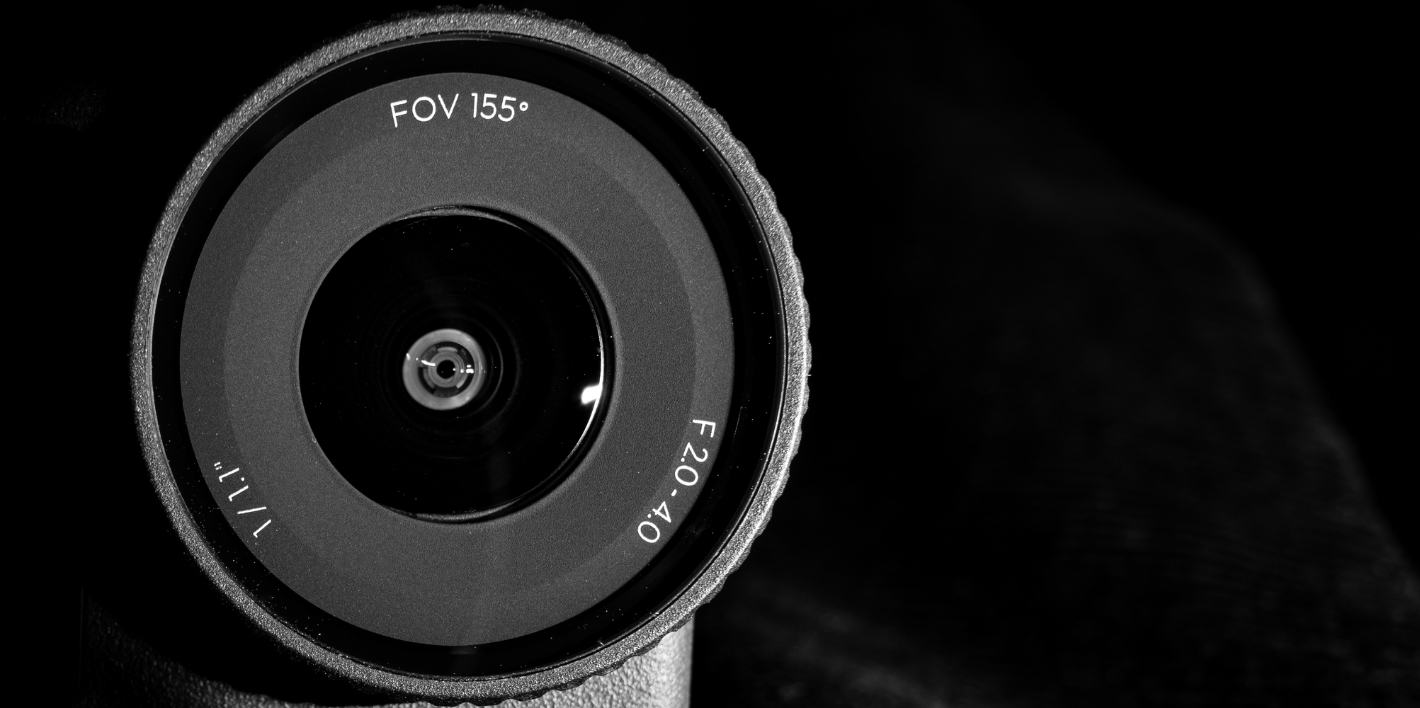
- It uses an ultra-wide lens around 12mm, capable of capturing a dramatically expansive field of view;
- It’s also a fast-aperture prime lens with a physical variable aperture for depth-of-field control. Sounds a bit like a “wide-angle modded version” of a Ricoh GR, doesn’t it?
But if I tell you its actual name—DJI Action 6 (hereafter AC6)—your first reaction might be: “Isn’t this just an action camera?”
This sense of “discrepancy” may not be a flaw in product design at all, but rather a sign that the logic of the market has quietly shifted.
Suppose the number of people in extreme sports communities has actually remained fairly stable—yet you’ll notice that action-camera sales continue to rise year after year. What does that imply? It implies that more and more people are buying these devices with the mindset of “buying a camera,” not “buying an action camera.”
Some features that seem to have little to do with sports scenarios also indirectly confirm this trend: direct-connect microphones, starburst effects enabled by the variable aperture, portrait mode… DJI clearly wants to position it as an all-purpose camera, not merely a tougher, more stable “action camera.”

All these features and accessories exist to help it break free from the limitations of “only shooting ultra-wide action footage,” making users more inclined to see it as a compact creative tool.
I don’t ski, and I’m not brave enough to go skydiving. I intend to use the Action 6 as an ultra-wide prime camera. Based on my daily shooting habits, I want to see what kind of images it can capture once it’s stripped of its “action” label.
01 A More Camera-Like Attempt: The Addition of a Physical Aperture
In the past, the logic of action-camera lenses was simple: ultra-wide, fixed-focus, fixed aperture.
This time, the AC6 introduces a physical variable aperture (F2.0–F4.0). In actual use, the variable aperture functions mostly as a “brightness switch,” with limited impact on image quality. In Auto mode, under normal daylight conditions, it typically stays at F2.8; in low-light environments, it switches to F2 to allow more light in, and it almost never switches automatically to F4. If you want to capture starbursts, you’ll need to manually set it to F4.
Minimum focusing distance improvement:
This is a parameter upgrade that many people might overlook. In DJI’s promotional materials, the selling point of the F4 aperture is mostly centered on starburst effects.

However, in real-world use, the improvement in minimum focusing distance is likely more practical. At F2.8, the minimum focusing distance is about 35 cm. At F4.0, it shortens to 20 cm. I also tested whether the aperture would automatically stop down when shooting at close range; it does not.
In default Auto mode, the AC6 still adjusts the aperture based on scene brightness rather than scene content, prioritizing “ensuring sufficient light” above all. This means it isn’t as “smart” as a smartphone. If you want to shoot close-ups, you’ll need to manually switch to F4.0, which increases the operational steps.
02 A Square Format That “Can Only Shoot Video”
The funniest thing about this camera is this: it has a square sensor, yet when you want to compose in a 1:1 square format, you can only shoot video, not photos.
In actual use, the camera still feels far better suited for video than for stills. Shooting video is smooth and seamless—the recording, playback, and review flow naturally. Shooting photos, on the other hand, is barely acceptable. After pressing the shutter, capturing a 38-megapixel JPEG takes about 4 seconds; shooting JPEG+RAW takes around 5 seconds. During this time, you cannot take the next shot—you must wait for the current image to finish writing before shooting again. With this camera, you absolutely cannot rush photography; you just have to take it slow.
All sample images below were captured using the 38 MP (4:3) format, JPEG, Auto aperture mode, and Auto exposure, with composition adjustments and color editing applied afterward.
1:1 and 2.35:1 Cinematic Feel: An Alternative Way to Use Ultra-Wide
Pairing an ultra-wide lens with an elongated cinematic aspect ratio creates a fascinating chemistry: removing extra information from the top and bottom instantly amplifies the horizontal tension of the frame.
By placing the camera close to the ground or foreground and using the exaggerated perspective of the ultra-wide lens—then cropping to a wide aspect ratio—you get instant dynamism.


A wide aspect ratio can also capture more architectural lines on both sides of the street, creating a strong sense of narrative.


Square compositions force you to eliminate distractions on the left and right, keeping only the core geometric balance.
Below are several sample shots to help you feel the mood of the square format:


03 Smartphones Also Have Ultra-Wide Lenses—How Big Is the Image Quality Gap?
“Since flagship phones now have increasingly good ultra-wide cameras, is there really still a need to buy an AC6 purely for image quality?”
To answer this question, I mounted the iPhone 16 Pro Max (which doesn’t even count as a flagship anymore) and the AC6 on the same tripod and compared them through real-world shooting.
I tested daytime and nighttime image quality, stabilization, audio recording, exposure behavior, brightness, and color tendencies. If you’re interested, you can watch the full comparison on Bilibili. If you can’t watch the video, below is a text-version summary.
1. Image Quality Comparison
Sharpness: Based on the sample shots, the actual resolving power of the two devices is similar.
The AC6 applies more sharpening and noise reduction, resulting in heavier smearing. In photo mode, you cannot adjust noise reduction or texture intensity. In daytime scenarios, AC6’s image quality tends to look better. However, at night, the AC6 over-sharpens to the point that highlights are more likely to show unnatural artifacts.


White balance: Across all indoor and outdoor test scenes, the smartphone’s image consistently leans yellow, while the AC6 is closer to real-life visual perception.


Dynamic range: The two devices handle brightness with entirely different strategies.
The AC6 prioritizes highlight suppression. The smartphone lifts shadows aggressively, tolerating more blown-out highlights.
The smartphone’s image is overall about one stop brighter, but the entire frame appears slightly washed out, lacking the AC6’s clarity and transparency.


Flare resistance:
Under identical camera movements, the AC6 displays flare earlier than the phone, with green elliptical artifacts.
When moving forward while shooting, the AC6 also produces flare more frequently than the smartphone.

2. Stabilization Comparison
For easier testing, both devices recorded 4K/60P video in a 16:9 aspect ratio. The smartphone’s action-stabilization mode was turned off, while the AC6 was set to its “SuperStrong Stabilization” mode, with image-quality priority enabled and Standard (distortion correction) equivalent to 15mm.
Daytime scenes:
- During normal walking, the difference between the smartphone and the AC6 is minimal—both perform excellently.
- During running, the AC6 delivers noticeably better stabilization with smoother transitions.
Night scenes: In both normal walking and running, the AC6 performs better overall.
3. Audio Recording Comparison
Without external microphones, both devices recorded 4K/60P, 16:9 video. The test scenario was an outdoor live band performance.
The smartphone used default audio settings; the AC6 was set to stereo channels with wind-noise reduction at the standard level.

The smartphone performs better overall, offering clearer separation between vocals and instruments and a wider dynamic range. The audio can also be mixed in post, resulting in stronger presence and immersion.
With the AC6, recording gain seems somewhat high, and the captured audio is loud, with vocals and instruments blending together. This may be an optimization intended for sports scenarios. If you care about audio quality, it’s recommended to use a DJI Mic with the AC6.
4. Differences in User Experience
If we look only at image quality, the phone is not far behind. But the true value of the AC6 lies in “freeing your mindset.”
A dead phone battery triggers anxiety (subway rides, replying to messages, navigation, payment—all still required). But when the AC6 runs out of power, the worst case is simply: you stop shooting, or swap in another battery. This “battery separation” creates a sense of ease. Combined with the camera’s physical advantages—“pick it up and shoot,” “drop it into a puddle and it’s still fine”—this is the true competitive edge of such devices.
Below is a table summarizing the test results so you can quickly compare based on your own usage needs:
| Comparison Category | DJI OSMO ACTION 6 | iPhone 16 Pro Max |
|---|---|---|
| Image sharpness | Similar to the phone, slightly less noise | Similar to the AC6 |
| Brightness tendency | Prioritizes highlight detail | Prioritizes shadow detail |
| Stabilization | ⭐ Comparable to the phone in daytime, overwhelmingly better at night | – |
| Flare resistance | More prone to flare under identical camera movement | ⭐ |
| Auto white balance | ⭐ Highly consistent indoors and outdoors, very accurate | Consistently yellowish |
| Audio | – | ⭐ Better separation of vocals and instruments, adjustable in post |
04 A Few Things That Require Adjustment: Pain Points in the User Experience
Although I’ve tried to think of it as a “mini camera,” in actual use there are moments when certain frustrating flaws make it clear: as a camera, it still isn’t mature enough.
1. Extremely Slow Shutter Lag
The AC6 does indeed offer high-resolution stills (38 MP), but its processing speed doesn’t keep up. When shooting full-resolution photos, after pressing the shutter you need to wait about 4 seconds before the camera finishes processing the previous image and becomes ready for the next shot. This essentially eliminates any possibility of continuous capture. In these moments, it really does feel like using a medium-format camera—slow composition, slow shooting.
2. “Blinding” Burst Mode
If you can’t tolerate the slowness of single-shot capture and switch to burst mode, the preview freezes completely while shooting, providing no real-time view of what’s being captured. When photographing moving subjects, this is basically shooting blind.
3. Crippled Features in Photo Mode
In photo mode, you cannot use built-in filters, cannot use 2× lossless zoom, cannot adjust texture or noise reduction for JPEG output, and cannot use portrait mode.
4. Front-Screen Swipe-Up Unlock
This is the one thing I most want to complain about.
The swipe-up gesture to unlock the front screen fails at an extremely high rate. Even without gloves—just using bare fingers—I often need to swipe around 10 times before it finally unlocks by luck. The rear screen does not have this issue.
To this day I still haven’t found a reliable unlocking trick. If anyone knows the secret, please teach me in the comments. When you need to quickly check framing for a selfie, this kind of interaction friction seriously breaks the shooting rhythm.
5. Low-Angle Shooting Is Slightly Painful
Although the AC6 is well-suited for low-angle shots (e.g., ground-level perspectives), the lack of a flip screen means you literally have to lie on the ground to see the display. In this regard, it’s definitely less elegant than competitors like the Insta360 Ace Pro 2.
6. “Computational Compromises” in Video Mode
When shooting square-format footage, there are still software limitations.
Resolution lock: When recording video in the square aspect ratio, the resolution is forced to 4K—you cannot switch to 1080p for a more storage-friendly option.
Feature limitations: Built-in filters and image-enhancement features are disabled in this mode. The 2× lossless zoom is also unavailable.
Conclusion
Returning to the question from the very beginning: when an action camera is no longer used for action, what is it?
The answer may not lie in the spec sheet, but in the people around us.
On social media, I’ve noticed more and more middle-school and high-school students wearing action cameras around their necks as they move through campus. They use them to record their lunchtime sprint to the cafeteria, to document the battle for a shower stall in the dorms, and to capture the moment they pack up spicy hot pot from the dining hall to save on living expenses.

Of course, most of what they carry are previous-generation Action 4 units—or even older models. After all, compared to the nearly 3,000 RMB price of the AC6, those older, thousand-yuan devices are far more attainable as a “first camera.” But whether new or old, the reasons they choose this category are the same.
Here, “ultra-wide” carries two meanings:
It is the physical 15mm lens, because it can greedily fit every classmate’s face into one frame, contain the embrace at the finish line during the school sports meet, the noise-filled hallways between evening study sessions, and the rising steam of the cafeteria’s hot meals.
It is also a metaphor for a “wide-open life.” Precisely because of this exaggerated angle of view, those fleeting, irreversible moments of youth can be preserved whole within this small black square.
The arrival of the AC6 is not so much about pushing users to upgrade, but about revealing the direction this entire category is evolving toward—shifting from a simple “recording device” to an “all-purpose camera.”
Whether an action camera is used for action doesn’t matter to most people who don’t do sports at all. What matters is that it captures the world a little wider, so that when you look back in the future, you can see more.
Thank you for reading this far. If you enjoyed my article, feel free to follow.
I’m 钟桦服—see you in the next piece.
Leave a Reply