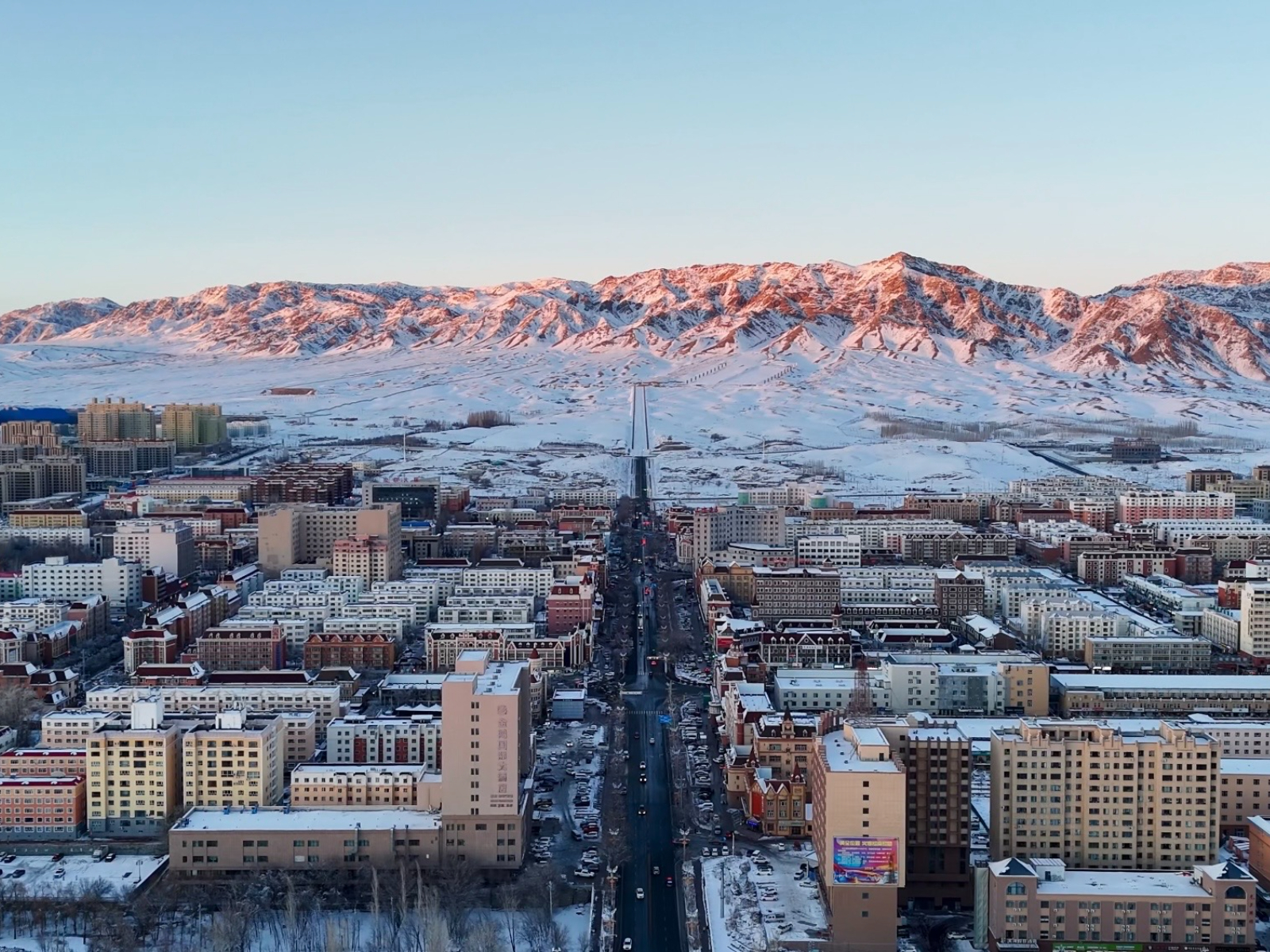
Xinjiang has become incredibly popular—everyone wants to go. But after visiting, I realized it is still underestimated.

During the recent off-season, I spent 24 days traveling solo across Xinjiang, moving between both northern and southern regions. I visited Urumqi, Turpan, Fuyun, Altay, Shache, Kashgar, Tashkurgan, Aksu, Yining, Bole, and more. I rode the snowfield train to Koktokay, passed herds of camels, cattle, sheep, and horses scattered across the winter wilderness, witnessed the golden sunset glow over Bogda Peak, saw horses treading through snow-laden pine forests in the Tianshan Mountains, yaks slowly crossing the frozen Baisha Lake, the silent “Father of Ice Mountains” on the Pamir Plateau, pigeons and timeworn high-platform dwellings, the Karakoram Mountains sealing the road like a wall at the edge of the world, mandarin ducks shaking water off their feathers in the wetlands of Ili at dusk, fiery clouds reflecting red across snow mountains and dissolving into the tears of Sayram Lake, and wild ibex wandering at 3,300 meters, grazing on moss in the mountain winds…

Snowfields, grasslands, mountains, glaciers, lakes, hills, wetlands, volcanoes, canyons, forests, deserts, oases… To contain such a rich diversity of landscapes within a single province feels almost unbelievable. Nature’s craftsmanship here is vast and intricate, making Xinjiang astonishingly rich in travel possibilities. Its multicultural blend also gives cities a distinctive, almost exotic atmosphere. Over these 24 days of travel, every place overwhelmed my senses—from landscapes to people to all living things—expanding my understanding of what travel can be.

I am not a trekking expert, nor a cultural scholar, so I cannot share the most extreme scenery or lost relics of Xinjiang. But I am a traveler—someone good at saving money and traveling on a budget. Contrary to the growing perception that Xinjiang is becoming increasingly expensive, my nearly month-long, free-spirited journey made me realize that Xinjiang is actually an ideal destination for budget travel during the off-season—a place to truly relax both body and mind. It’s genuinely affordable.


Sayram Lake
Expenses
Talk is cheap—let’s look at the actual bill. From flights to accommodation, food, transportation, and various miscellaneous costs, my total spending over these 24 days was under RMB 8,000 (see detailed breakdown below). This is not the typical “per capita” calculation often used in headlines (where accommodation costs are shared), nor is it a hardcore, ultra-frugal trip. I did not deliberately lower my travel standards or resort to energy-draining ways of saving money, such as long hours on hard-seat trains or staying in low-quality hostel beds with unpleasant conditions. My trip included high-speed rail business class, occasional stays at Hilton hotels, and experiences like horseback riding and ski resort visits. In other words, I traveled comfortably and freely the entire time—not cutting costs deliberately, but also not planning everything far in advance, simply going with the flow. It’s worth noting that affordability, comfort, and flexibility form an almost impossible triangle in travel—especially in a place like Xinjiang, where prices are often assumed to rival those of major cities like Beijing, Shanghai, and Guangzhou.


One thing to clarify: my return flight out of Xinjiang happened to be reimbursed due to a photography-related invitation. However, even without reimbursement, using a flight pass like China Eastern’s “Fly Freely” would have only added around RMB 269.
Earlier, I shared both my expenses and travel photos with a European friend, who remarked, “Do you know how expensive a similar experience would be in Europe?” That was when it struck me—this might actually be the best time for domestic travel. Since the pandemic, prices have risen globally, yet within China, costs have been decreasing. Factors such as the real estate slowdown, economic adjustments, and the country’s strong push to develop western regions have led to airline subsidies, discounted newly opened chain hotels, and increasingly affordable travel and accommodation. Meanwhile, infrastructure continues to improve rapidly—from the upgrade of Diwopu Airport to Tianshan Airport, to new energy facilities and rapidly developing cities—enhancing the overall travel experience. This combination is rare on a global scale and likely won’t last forever. It feels like a unique dividend of this era.

Of course, taking advantage of this “dividend” requires some strategy. Based on the expenses and this journey, let’s talk about how to travel Xinjiang comfortably on a budget.
Flights: Off-Season, Flight Passes, and Flexible Deals
Flights are the first hurdle for most people. Many have searched for peak-season ticket prices to Xinjiang after being inspired by viral travel videos, only to label it as an expensive destination. And it’s true—if you book last minute during peak season, flying to Xinjiang can be extremely costly. However, I used a Hainan Airlines “Fly Freely” pass during the off-season. The pass itself costs RMB 666, and each flight has a fixed cost of RMB 199 plus airport taxes and fuel surcharges. These flight pass products have been widely known since the pandemic, but availability depends on routes and seat inventory. This year, with the economy still sluggish, airlines such as Hainan Airlines, China Southern, Sichuan Airlines, Spring Airlines, China Express, and Loong Air continue to offer similar products. However, each airline has different rules and usage methods, which can be quite complex. For example, with the Hainan Airlines pass I used, I flew from Luoyang to Urumqi. Each flight has limited seat availability, requiring reservations several days in advance, and all eligible flights are red-eye flights—meaning you may occasionally lose a night’s accommodation. Different airlines have varying route networks and operational strategies, so I won’t go into detail here. Instead, I recommend following specialized bloggers and information sources such as Feifei Travel (WeChat), Feifei (mini program for checking routes), “This Is Not Excessive” (Xiaohongshu), Travel Radar Assistant (WeChat), and Stan Cheap Flights (WeChat).

As a side note, for Xinjiang-specific flight passes, Chengdu Airlines and China Express operate many regional routes and offer dedicated Xinjiang passes, such as Chengdu Airlines’ “Xinjiang Unlimited Fly” starting from RMB 150. These are limited to flights within Xinjiang and are very cost-effective, though they require booking several days in advance. They are ideal for experienced travelers planning in-depth trips. I originally purchased one of these for this journey, but due to platform issues I couldn’t use it—otherwise I would have saved even more.

Flight passes come with complex rules and are better suited for experienced users. Beginners or those simply planning a Xinjiang trip can consider multi-flight passes. These are sold through various channels, including OTA platforms, airline livestreams on Douyin or Xiaohongshu, as well as airline apps and mini programs. Sales periods are irregular, so it’s best to follow the information sources mentioned earlier. Although all are “multi-flight passes,” their rules vary significantly by airline, so be sure to read the details carefully (or search for user experiences—I often do this myself).
Finally, and just as importantly, there are discounted flight tickets. Flights and hotels are opportunity-based products, with prices fluctuating over time. By using OTA price-checking tools and planning ahead, you can sometimes find deals comparable to flight passes or multi-flight packages, while saving effort. Based on my experience, Ctrip offers the most intuitive discount flight search function. In “Home – Flights – Special Deals,” you can search across a large database ranging from cities to provinces to entire countries, with calendar-based pricing tools. For example, using Ctrip, the cheapest flight in December was a China Express flight (G52885) from Hohhot to Erenhot on December 20, costing only RMB 170 including taxes and fees.
Although I often use Ctrip for price comparisons, I usually book flights through Fliggy. Thanks to the 88VIP membership and Fliggy’s partnerships with Marriott and Hilton, I prefer booking there to accumulate membership benefits. This is mainly because I don’t participate in airline loyalty programs—otherwise booking directly through airlines might be more reasonable. Hotel memberships, airline memberships, and OTA platform memberships all offer different benefits, so choosing the right platform based on your status is key. For example, I don’t have airline status, but I am an F5 member on Fliggy. By booking through Fliggy, I can redeem points for airport lounge access and fast-track security, which helps me rest and recover during travel transitions. Overall, making good use of membership perks is an effective way to recharge during a trip and avoid exhausting yourself with overly intense travel schedules.
First Stop: Urumqi
For this trip to Xinjiang, I made no prior itinerary plans, so my first destination was the typical beginner-friendly choice: Urumqi.
As the capital of Xinjiang and a major hub in Northwest China, Urumqi naturally offers the densest network of inbound and outbound flights. Benefiting from the “Belt and Road” initiative, Urumqi Tianshan International Airport has undergone continuous upgrades in recent years—not only changing its name (officially renamed from Diwopu International Airport in March 2025), but also expanding to Terminal 4 (with T1–T3 under renovation). Its annual passenger capacity has grown from the originally designed 35 million to 63 million. The airport facilities are highly advanced, with comprehensive routes that make it convenient to travel across the entire region.
A glimpse reveals the whole picture—Tianshan Airport is a microcosm of Xinjiang’s overall development. Throughout my 20+ day journey, I often felt that Xinjiang today resembles coastal cities in Southeast China before the pandemic, or even around 2008—a sense of economic upward momentum. Urumqi is filled with newly constructed high-rises, giving me a feeling surprisingly similar to Shenzhen. This is also reflected in the data: Urumqi’s urbanization rate has reached an astonishing 97%, second only to Shenzhen’s 98.5% nationwide, and far exceeding Guangzhou’s 86.5% in third place.

As a result, Urumqi shares similarities with Shenzhen: well-planned urban design and developed infrastructure, but relatively limited travel attractions and (comparatively) less remarkable food. The logic is simple—Shenzhen also has beautiful coastlines and a rich mix of Cantonese cuisine, yet high living costs and rapid urbanization often compress local culture and culinary diversity. Starting your Xinjiang trip in Urumqi is like starting a Guangdong trip in Shenzhen. Out of curiosity, I stayed in Urumqi for a few extra days, but in hindsight, it wasn’t necessary. Despite frequent recommendations online, my advice is to treat it as a transit point and move on as soon as possible.

If you do want to explore Urumqi briefly, places like Hequan Second Street, the Grand Bazaar, and Consulate Lane do offer ethnic charm, but they are not particularly unique within the broader context of Xinjiang and can be skipped if time is limited. Three more worthwhile options are Hongshan Park, Yama Mountain, and Shagou. Hongshan Park is the most accessible choice, offering excellent viewpoints for sunset over the mountains and cityscapes.

Bogda Peak, meaning “God of Mountains” in Mongolian, stands at 5,445 meters and is considered a sacred mountain. For many visitors, it is the first major peak they see in Xinjiang. While it wasn’t the tallest mountain I encountered on this trip, it carried a profound sense of presence. At sunset, as golden light falls upon it, the towering mountain overlooks the city skyline, and the Tianshan range stands like a crowned deity—enduring through time, silently demonstrating the unimaginable forces of nature.
Hongshan Park is easily accessible by taxi, making it a convenient viewing spot. If you’re looking for a higher vantage point, Yama Mountain is a better choice. At 1,391 meters, it is the highest point within Urumqi city, though still lower than Mount Tai’s 1,545 meters. However, it is much easier to climb—thanks to its higher starting elevation, shorter route, and gentle slopes. With a good path and decent fitness, you can reach the summit in just over half an hour. There are even shortcuts that can be found on Xiaohongshu. Locals call it “Monster Mountain.” I didn’t feel much on the way up while chasing the sunset, but descending after dark was a different story—bare trees, strange rocks, winding paths, and complete darkness made it genuinely unsettling. Thankfully, I had a bright photography flashlight; otherwise, walking down alone would have been quite intimidating.
Shagou in the southern part of Urumqi County deserves special mention. I went there for horseback riding, which is often described online as a hidden gem activity in Urumqi. To give the conclusion upfront: the experience is unique and affordable, but I don’t recommend it due to safety concerns. The area is underdeveloped, and horseback rides typically come with a teenage local guide (one-to-many, paid, with limited Mandarin communication), and no protective measures. Local herders have lived here for generations, mastering horseback riding from a young age—some, like the Kyrgyz guide I met, even train eagles. The horses, however, can be unpredictable. Mine suddenly sprinted at full speed at one point, ignoring commands, until I managed to pull the reins tightly and the guide caught up to regain control. Others seemed to have calmer horses, but if you try this, be sure to ask for a gentle one.

Shagou is located in Urumqi County, about 1 to 1.5 hours by car. There is a shuttle bus from the parking lot of Friendly City Outlets, costing RMB 20 per person, with stops along the way. It’s best to go in the morning, and get the driver’s contact information for the return trip. Drivers in Xinjiang often coordinate rides through internal networks, which I also experienced in Altay, Sayram Lake, and Shache—you may not return with the same driver, but they’ll arrange transport as long as you confirm your timing. Many herders offer horseback riding services; you can book online or ask drivers for recommendations. Prices generally start at RMB 60 per hour, depending on the horse. In more developed scenic areas in northern Xinjiang, horseback riding is more expensive but safer, with one-on-one guides, helmets, and insurance. Even then, accidents do happen. In contrast, riding in Shagou feels raw and untamed—no protective gear, minimal instruction, and risks that local herders seem unconcerned about. While I admire their carefree confidence, I must caution those unfamiliar with such environments: if you lack experience, avoid it; if you lack physical strength, don’t even consider it. Riding is physically demanding—your thighs will endure intense friction, so be prepared. Avoid carrying handheld camera equipment; instead, use a chest-mounted action camera for first-person footage. You can take photos with your phone during breaks. Secure your pockets or travel light. Bags can be left in the herders’ yurts, guarded by large dogs capable of fending off wolves. Never stand behind a horse, and if you bring a drone, operate it far away from horses to avoid disturbing them.

Despite all these warnings, galloping across the Tianshan Mountains still feels exhilarating. When the horse runs, it feels like flying, and the snow becomes clouds. All worries fall behind you, and the distance ahead becomes your destination.
Altay · Fuyun
After horseback riding, my body ached for several days, so I decided to leave Urumqi and head to northern Xinjiang. The cheapest flight option required a transfer via Turpan to Fuyun. I took a hard-seat train for RMB 24.5 to Turpan, where the overheated carriage left me feeling dizzy. Cheap as it was, the journey was still quite long—distances between cities in Xinjiang are immense. I didn’t explore Turpan at all, instead staying in a small hotel without an elevator near the station, waiting for my flight. Skipping Turpan was one of my few regrets during the trip—the station is right next to the airport but far from the city center, so if you follow a similar route, planning is essential. But what came next made up for it: the flight from Turpan to Fuyun cost only RMB 119. Most airports in Xinjiang are quite small, without jet bridges—you simply walk to board the plane. The aircraft was a Bombardier CRJ900 operated by China Express. It’s an interesting plane—Bombardier jets are often used as private aircraft, so it felt small and somewhat cramped. I’ve heard these flights often operate from dawn till dusk with rotating crews, almost like airborne buses. I recommend choosing a window seat near the front. If you happen to take off on a clear day after snowfall, you’ll feel exactly what I did.

This was, without a doubt, the best RMB 119 I’ve ever spent.
Flying from south to north, we crossed the Tianshan Mountains. From cruising altitude, looking down at Bogda Peak was a breathtaking, almost tear-inducing experience. There was even a hint of guilt in those tears—what right did I have to view such a sacred mountain from a godlike perspective?

Lin Zexu once wrote at the foot of the mountains, “I smile with the spirit of the mountains.” Li Bai imagined the frontier: “The bright moon rises from the Tianshan, among vast seas of clouds.” Cen Shen wrote, “Snow clouds never part over the Tianshan, peaks upon peaks stand towering in white.” And I, in the sky, was left speechless—lost in awe. Without the words of poets or heroes, how could an ordinary person ever describe such an eternal mountain?


Fuyun is a county under Altay Prefecture. The writer Li Juan, author of My Altay, is from here. The famous Koktokay lies nearby. In winter, everything here is covered in endless white. Koktokay is home to a ski resort, and recently even made headlines for a rare snow leopard sighting. Snow leopards are incredibly elusive—many researchers spend their entire lives without seeing one in the wild. That alone tells you how pristine and untamed the environment is.

There is no public transportation from the airport to Fuyun County—taxis cost around RMB 100, or RMB 80 if you bargain. Ride-hailing services are rare; taxis are the main option. Fuyun feels somewhat like Northeast China: low prices, generous food portions, and warm, straightforward people. I stayed at what might be the cheapest Hilton DoubleTree in the world. As a member—and likely one of very few here—I was upgraded to a spacious suite for just over RMB 200. The room even had a tea table and a mahjong table, and the bathroom was so large it included a sofa.

From my room, I could see snow-covered mountains in the distance. Fuyun is surrounded by mountains on all sides, with icy rivers flowing swiftly through the landscape. People move carefully but with quiet determination. The sky is white, the mountains are white, and even the half-frozen rivers gleam with brightness. Only the town itself carries a hint of color, as people go about their daily lives. Imagine a campfire burning across a snowfield—that flicker of warmth is Fuyun.

My days in Fuyun were wonderfully unhurried. Walking along the streets, footprints sank deep into the snow, while tiny snowflakes settled into my hair. Meatball soup was rich and warming; lamb and naan were so hearty they felt overwhelming; pilaf with a couple of thin-skinned dumplings, and oil-slicked stir-fried noodles often left me in a blissful carb haze.

Li Juan once described Fuyun like this: “Fuyun County is as quiet as the end of the world, with only four streets crossing in a grid, and filled entirely with trees. Whenever I walked between school and home along that straight, silent, tree-lined road, dense canopies intertwined above, forming a shaded corridor. The world before me felt endlessly deep and ancient, a mystery that still lingers in my heart to this day.”
Altay
From Fuyun to Altay city, you should definitely take the train. However, the hard-seat carriages can be quite crowded. I recommend booking a sleeper instead—it’s much less crowded and not significantly more expensive. The carriage between the hard seats and sleepers is locked.

The scenery on this train is unlike anything I’ve ever seen—a true snowfield train. Along the way, you’ll see camels, herds of horses and cattle, and scattered yurts. It feels like… the planet with potential for life that Matt Damon sends coordinates to in Interstellar. Everything looks like it could sustain life.


Compared to the small-town feel of Fuyun, Altay city is much larger, more commercialized, and very popular. In Fuyun, I didn’t visit Koktokay; in Altay, I didn’t go to Hemu—looking back, that’s a bit of a regret. At the time, however, continuous snowfall made travel difficult, and those places are quite commercialized. Many local herders have already sold their land to outsiders and moved into the city. Wooden houses converted from cattle sheds in Hemu can sell for several thousand RMB per night during New Year’s Eve. I visited in November, typically considered the off-season, but it was just before Altay’s peak winter season—the ski resorts had just opened, and hotel prices were already rising. Reports say that during peak snow season last year, rooms were nearly impossible to book. With a limited budget, I didn’t dare venture to places like Baihaba or Hemu. Ski enthusiasts have strong spending power and a certain vitality—you can almost sense their polished, middle-class presence even at breakfast in the hotel. It’s the scent of urban life, higher education, and high income, mixed with a hint of snow and wilderness.

Prices in Altay are not low. A local specialty—black mushrooms—has a distinct umami flavor. A bowl of black mushroom meatball soup in a small roadside restaurant costs RMB 38. I also ordered a simple tomato-and-egg rice dish at a tiny family-run eatery for RMB 20. The owners were warm and friendly, but the prices reflect the influx of wealthier visitors—Altay feels almost “Shanghai-ized.”

Cats in northern Xinjiang are very affectionate. Living in the snow, they take any chance for food they can get. The cats I met in Altay would come right up to you if you crouched down, trotting over and rubbing against your legs—thin but agile, and friendly to people. Later, in Kashgar, the cats I encountered were plump and seemed less attentive, completely ignoring me while busy fighting with other cats.


Jiangjun Mountain Ski Resort is located within Altay city and is likely a great spot for sightseeing. When I traveled to northern Xinjiang, there was a promotion offering free skiing with flight tickets, but I didn’t fully understand the terms and missed it. After that, I lost motivation to visit Jiangjun Mountain—telling myself that everything happens for the best.
Shache
If Fuyun County was my unexpected delight in northern Xinjiang, then Shache was its southern counterpart. The ancient Kingdom of Shache was one of the Western Regions states—Zhang Qian passed through here, Ban Chao came here, and Xuanzang also visited on his westward journey. Within the old city of Shache, there is even a historical site known as the “Xuanzang Lecture Platform.” It is often said that northern Xinjiang is about landscapes, while southern Xinjiang is about culture—and Shache, a city with over a thousand years of history, proves this well. Modernization in eastern cities tends to be rapid and thorough, often loosening the connection between long-standing traditions and contemporary culture. But from Shache across southern Xinjiang, culture is deeply embedded in everyday life. The poetry engraved on royal tombs, the bargaining gestures hidden in sleeves at livestock bazaars, the old shops tucked deep within Kazanqi—culture here is not confined to museums, but lives in the streets and daily routines.

I wandered deeper into Kazanqi and came across a market. At a stall steaming lamb, I bought RMB 20 worth of meat priced at RMB 30 per jin—it was incredibly satisfying. From an elderly woman, with whom communication was not very smooth, I bought a bottle of fresh milk for RMB 3. From another old lady selling fruit, I bought fresh grapes that tasted like raisins—I picked quite a lot, but she only charged RMB 2. Feeling it was too cheap, I added more fruit, but she refused to take more money. I transferred RMB 4 anyway, and upon seeing it, she immediately grabbed another handful of grapes and gave them to me…


Shache is known as the “home of almonds,” the largest almond-producing region in China. I didn’t buy almonds themselves, but I did try almond ice cream—and it was truly outstanding. The rich combination of milk and nutty flavor surpassed even pilaf and lamb skewers, becoming my number one most memorable food in Xinjiang.
Kashgar
I took a train from Shache to Kashgar. The ride itself was quite interesting—the station was packed with people, and I seemed to be the only Han Chinese there.

Kashgar Prefecture has a slightly larger permanent population than Ili, making it the most populous region in Xinjiang. Traveling from northern to southern Xinjiang, the climate changes noticeably, and the architectural styles become distinctly different—you can clearly feel the vibrant, lived-in atmosphere of southern Xinjiang. In Kashgar Old City, pigeon keepers release flocks of pigeons in circles, which looks especially beautiful under the setting sun. The most recommended viewing spot online is the observation deck of the Licheng Hotel in the old city. Even the cheapest windowless rooms there cost over RMB 300 during peak season, but when I visited, an executive room with a view was only a bit over RMB 200, so I booked a night. Compared to the observation deck, the view wasn’t much different.


The pigeons in Kashgar are unlike those elsewhere—I can’t quite identify their breed. I came across a few in the Gaotai residential area, waddling along the streets like penguins.

This is one of the cities in China—besides Zhongshan—that loves pigeon dishes the most. Just outside the east gate of the old city, there’s an entire row of pigeon restaurants. From grilled pigeon to pigeon soup, there’s a wide variety, and the flavors are excellent. Unlike the Cantonese style of roast pigeon that retains juiciness, here they are grilled quite dry, yet still richly flavorful.


Pigeon soup and grilled pigeon
Kashgar also has a strong football culture. In People’s Park, I came across a live broadcast of the Kashgar Cup football tournament opening. Many men, women, children, and even kids playing with footballs gathered in front of a large outdoor screen to watch the entire match. The students here seem to have lighter academic pressure, leaving them more time to play sports and stay active—which is genuinely refreshing to see.
Kashgar offers more than just culture. It lies near the Kunlun and Karakoram mountain ranges—places where myths are born and the earth itself seems to shift. “Brilliant as the cosmos, rising above Kunlun.” Nearly all of the world’s mountains above 7,000 meters are concentrated around the Qinghai-Tibet Plateau and the Pamir Plateau, and Kashgar sits right among them. K2, the world’s second-highest peak, is here, along with Mustagh Ata—the “Father of Ice Mountains”—the pearl of the Pamir Plateau, Baisha Lake, the crimson Red Mountain, and Oytagh Glacier Park…


I joined an off-season day tour booked through Ctrip, costing only RMB 131. From morning to evening, we traveled in a small minibus with few passengers, while the driver covered more than 400 kilometers round trip. A border permit is required along the way, and it’s recommended to carry a small oxygen canister just in case—they cost only a dozen yuan. At Baisha Lake, you can also ride yaks at a reasonable price.


If you visit here, definitely bring a drone—preferably with extra batteries and a power bank for charging. One word: incredible flying experience.

Ili
Heading north from Kashgar with connecting flights, I arrived in Ili. Ili is often called the “Jiangnan beyond the Great Wall,” and for good reason. Here I experienced the most humid climate in all of Xinjiang—my room didn’t even need a humidifier, and I never had nosebleeds. The region is rich in waterways and wetlands, with an exceptionally favorable ecological environment. It serves as a major grain-producing area in western China and has long been a core region of the Western Regions. Historically, Sun Yat-sen once described it as “Ili as the key to governing a continent,” almost like an Asian capital.


Lush grasslands and even mandarin ducks
The development of Yining feels steady and grounded—much like Jiangnan, which has been prosperous for centuries, Yining carries a similar sense of being “old money” within Xinjiang. Compared to the rapid expansion of Urumqi, the sudden popularity of Altay, and the dense population of Kashgar, Yining’s commercial development feels more rational and measured. Areas like Qixing Street and Kazanqi are quite commercialized, lacking some of the raw simplicity found in Shache’s Kazanqi, but they haven’t lost their essence in pursuit of profit. Their reputation matches their substance, making them well worth a visit.

My original plan was to travel from Yining to Khorgos, then take an eight-hour bus to visa-free Almaty in Kazakhstan to see Soviet-era architecture. Unfortunately, due to time constraints, I couldn’t make it. If you plan to go, I’d recommend attending an opera in Almaty—the city has a rich cultural atmosphere. You can check available performances and purchase tickets on this website.

Sayram Lake
I gave up on Almaty, but Sayram Lake was not something I could miss.

From Yining’s Ili Prefecture Bus Station, a bus to Sayram Lake costs only RMB 49. It’s best to go early in the morning. Sayram Lake is a designated drone flight zone, where drones can fly up to 1,000 meters. Check whether your device supports this and enable the altitude limit in the settings. Before takeoff, you need to register your drone at the scenic area.

There are two main ways to explore the lake: self-driving or taking the shuttle bus. I chose the shuttle. During peak season, the shuttle operates like a hop-on, hop-off bus. In the off-season, however, passengers follow a fixed schedule—the driver drops you at scenic spots and asks you to return within a set time. The downside is that drivers finish work early. We thought we would miss the sunset, and the driver, seeing the weather worsen, encouraged us to leave earlier. But just after exiting the gate, we were greeted by an intense, fiery sunset. With barely any battery left after a full day, I risked flying my drone to capture the scene—one of the most stunning sunsets I’ve ever witnessed.


Left: view from outside the gate; Right: drone perspective
When taking the shuttle, sit in the front row on the right side. The route circles the lake clockwise, making this the absolute best seat—like the emperor’s seat.

I recommend staying overnight near the east gate. Ever since Sayram Lake became popular through viral content, it has become one of the most commercialized destinations in Xinjiang. The east gate area has developed rapidly, with hotels and guesthouses opening one after another. However, food options are expensive and fairly average. It’s also worth noting that, throughout my Xinjiang trip, Sayram Lake was the only place where the majority of visitors were Han Chinese, with a very high tourist density.

If you can wake up early the next morning, go watch the sunrise. Ask your driver about the early shuttle schedule—they usually have internal arrangements. I took a free shuttle to the Sayram Lake ski resort. It’s less famous than resorts like Hemu, Jiangjun Mountain, or Koktokay, but it boasts the longest ski lift in Asia. I bought a sightseeing ticket and enjoyed a long cable car ride. The view from the top was stunning, and in the distance, I spotted horned wild ibex.


View from the top of the ski resort
Leaving Sayram Lake, I took a car to Bole, again arranged through a driver. From Bole back to Urumqi, I managed to book a business-class high-speed train seat. If Sayram Lake is your main destination, you can try booking business class from Urumqi to Bole instead. The journey takes about four and a half hours, with fishbone-style seats—one of the best-value business-class experiences in China. Meals used to be included, but since new regulations last May, they are no longer provided. Still, if you can get a ticket, it’s absolutely worth it—you can lie flat and sleep the entire journey.

Tips
That’s my journey through Xinjiang. Here are a few practical tips for budget travel worth taking advantage of: for the first and last nights of your trip, look for hotels that offer airport transfers—it saves both time and money; many airports in Xinjiang provide overnight transit benefits—for example, Urumqi offers transit perks such as sleep pods and free meals. You can check the details based on your flight itinerary. For accommodation, I found that Jinjiang hotels have a strong presence in Xinjiang, and with an 88VIP membership you can get Gold status, which includes complimentary breakfast. When booking hotels, compare prices across platforms—sometimes Fliggy’s “special deals” section offers surprisingly good prices, while Jinjiang’s own platform allows you to use points to offset costs. I’ve stayed in rooms costing just over RMB 70 per night, and they were all quite decent.

Everyone should visit Xinjiang at least once in their lifetime—ideally more than once. Snow-capped mountains and the sea, one in the west and one in the east, feel like two forms of redemption destined for those who live in China, quietly waiting for you to arrive. We are used to structured cities governed by rules, but when you witness vast landscapes that exist beyond human control, you begin to realize how immense the world is and how small we are within it. All hardships and struggles feel fleeting. Xinjiang is vast enough to hold everything. It is a place without noise, without explanations. There, simply breathing is enough. Camels will not spare you a glance, horses only neigh. Snow falls, flowers bloom, mountains stand still, lakes remain blue, and the universe carries on.
Leave a Reply