If you watch a lot of films and TV dramas, you’re probably no stranger to the “amnesia” plot device. In tearjerker K-dramas especially, amnesia, car accidents, and terminal illness are often treated as a standard trio—a go-to formula for emotional storytelling. But how common is amnesia in real life, and what actually causes it? In this article, we’ll take a closer look at the typical “amnesia” scenarios found in classic film and television, while also introducing some basic neuroscience along the way—so the next time you encounter such a storyline, you’ll be ready with a sharp and informed critique.
For a better reading experience, you may want to first check out: “Do You Really Have a Bad Memory? Common Misconceptions About Memory and Forgetting,” which offers a brief overview of how short-term memory (working memory) and long-term memory function.
Car Accident Amnesia: Who Am I? Where Am I? Who Are You?
This is probably the most common type of amnesia seen in film and television.
The protagonist typically suffers a series of physical head injuries—car crashes, being struck by a heavy object, tumbling down stairs or off a cliff, or getting severely beaten—and falls into a coma. In the next scene, they wake up in a hospital room, touching the bandages on their head, staring blankly at the concerned faces around them, and uttering the ultimate existential questions: Who am I? Why am I here? Who are you? What happened? At this point, we can predict the rest of the plot with our eyes closed: the hero mistakes their true love for a stranger, treats their enemy as a friend, and after countless twists and turns, falls in love all over again (not really, but you get the idea).
Psychogenic Disorders: Dissociative Amnesia
In reality, complete and global memory loss is extremely rare—but such cases do exist. The condition is known as dissociative amnesia.
We often see that the protagonist forgets who they are, who their parents and lovers are—these are all forms of episodic memory, more precisely, autobiographical memory1. Dissociative amnesia can indeed affect a person’s sense of personal identity, while leaving intelligence and everyday skills largely intact. So when the protagonist wakes up clear-eyed and articulate, yet unable to recognize themselves or their loved ones—strictly speaking, that part is not entirely implausible.
The biggest scientific flaw in these storylines lies in the triggering mechanism. In reality, dissociative amnesia is a psychogenic disorder, not the result of structural brain damage. In other words, true dissociative amnesia is a defense mechanism of the brain, usually triggered by extreme psychological trauma. Survivors of severe violence, sexual assault, war massacres, or catastrophic natural disasters may find reality too brutal to bear. To protect the individual from overwhelming pain, the brain essentially strips away the concept of “self” along with the traumatic memories.
Moreover, even when memory loss occurs, patients in real life are more likely to exhibit localized amnesia—for example, forgetting the period during which they were abused, or being unable to recall the death of a loved one—rather than wiping out decades of memories, including their own name and parents, as TV protagonists often do. If someone truly forgot that thoroughly, it would likely indicate a severe psychiatric disorder, not something that could be cured by yet another car accident or a second fall.

In psychology, “dissociation” is a core concept. Put simply, it refers to a state in which consciousness becomes detached from reality. Everyday experiences like zoning out or daydreaming can be seen as mild forms of dissociation. Under increased stress, some people may experience a sense of detachment, feeling that the world around them is unreal, or that their body does not belong to them—as if they are watching themselves from the outside, like a movie. In more severe cases, dissociative amnesia may occur, or even dissociative identity disorder—commonly known as “multiple personality disorder”—in which the mind splits consciousness into several identities to distribute psychological pain, typically as a result of trauma.
There is also a more dramatic phenomenon called “dissociative fugue,” a rare subtype of dissociative amnesia. In real life, a person may suddenly leave their familiar environment and embark on unplanned, purposeless wandering. During this period, they remain conscious, capable of self-care, and able to interact normally with others, yet cannot recall their past. After the episode ends, they may also be unable to remember what happened during the wandering itself—it is almost like sleepwalking while awake. The good news is that this type of amnesia is usually reversible, and memory often returns quickly once the fugue state ends. The wandering trope is also popular in film and television: the protagonist not only loses their memory but relocates to another city, adopts a new name, and builds an entirely new identity. As someone with a strong attachment to logical consistency, I can’t help but complain every time I see this: wouldn’t their family report them missing? Wouldn’t someone who doesn’t know who they are go see a doctor? Why does the plot always prioritize romance above all else?
Traumatic Brain Injury: Post-Traumatic Amnesia
If someone in real life is involved in a car accident or sustains a severe concussion in a boxing match, what does waking up actually look like? There is a specific term for this: post-traumatic amnesia. It typically manifests as a memory gap lasting from a few minutes to several hours. The person not only cannot recall what happened at the moment of impact, but may also have no memory of a period of time before and after the accident. Moreover, this missing segment of memory is usually permanent and cannot be recovered.
Why does this happen? To understand that, we need to introduce an important structure in the brain—the hippocampus.

Many people know that the hippocampus is related to memory, but it’s easy to misunderstand its role and assume that it is where memories are stored. In fact, the hippocampus functions more like a computer’s RAM. Its core job is not to store memories, but to process and transfer them. Whether we experience an event or learn a new fact, the information is first temporarily held as short-term memory. After being organized and encoded by the hippocampus, it is then uploaded to different regions of the cerebral cortex and stored as long-term memory. This process is known as memory consolidation.
However, the hippocampus has a critical weakness: it is extremely sensitive to oxygen deprivation and physical shock. When a severe concussion occurs, the hippocampus can temporarily shut down. At the moment of impact, although the person may see blinding headlights or hear screams around them, the information enters short-term memory but cannot be further processed or consolidated because the hippocampus is not functioning properly. Even memories from the minutes before the accident—still “queued up” in the hippocampus awaiting consolidation—may vanish permanently. It’s like losing power while writing a document: no matter how many times you restart the computer, the unsaved lines are gone for good.

When memory loss is defined by the time of an accident or illness, the inability to remember events that occurred before it is called retrograde amnesia. The dissociative amnesia discussed earlier also falls under retrograde amnesia, though the time span of forgotten memories is usually much longer and the underlying mechanism is entirely different. In contrast, anterograde amnesia refers to the inability to form new memories after the event, meaning the person cannot remember anything that happens afterward.
In fact, for concussion patients, retrograde amnesia is not the only issue. What often causes greater alarm is anterograde amnesia—a period of “short-term memory loss” lasting minutes or even hours after regaining consciousness. The car accident is over, the patient is awake and able to speak, yet they cannot retain newly occurring information: they may repeatedly ask what happened, or forget a doctor’s instructions moments after hearing them. It’s understandably frightening, raising concerns about whether something is seriously wrong with the brain.
This happens because although the person has regained consciousness, the hippocampus has not fully recovered its function. The brain is effectively operating with malfunctioning “RAM,” unable to transfer short-term memories into long-term storage. The good news is that this type of anterograde amnesia is usually functional and temporary. For most concussion patients, a few hours of rest is enough for the hippocampus to come back online and restore normal memory consolidation. However, if a patient still cannot form new memories after 24 hours, the condition is no longer considered a simple concussion, or mild traumatic brain injury. It may indicate moderate to severe brain injury, potentially involving structural damage such as bleeding or contusions—situations that are far more serious.
Recommended Watchlist

Shutter Island
Recommendation: ⭐️⭐️⭐️⭐️⭐️
A classic of psychological suspense and a Douban Top 250 staple—say one word too many and you risk spoilers. Leonardo DiCaprio plays Teddy, a U.S. federal marshal who arrives at an isolated island to investigate a case. As the story unfolds, the truth takes a dramatic turn. A textbook-level thriller with strong scientific grounding, and absolutely worth watching.
The Bourne Series
Recommendation: ⭐️⭐️⭐️⭐️⭐️
Starring Matt Damon. The protagonist is shot in the back and rescued at sea, with no memory of who he is, yet possessing elite combat and language skills. The amnesia here mainly serves to create suspense, but it does attempt some scientific plausibility, attributing memory loss to both physical and psychological trauma. The plot isn’t overly cerebral, but it’s incredibly entertaining—especially the first three films, all highly recommended.
GIFT
Recommendation: ⭐️⭐️⭐️⭐️
A 1997 Fuji TV Wednesday Theater production. Takuya Kimura appears in a different Gucci haute couture suit each episode, with bold scenes that give it the vibe of a late-night drama. It was later banned following Japan’s infamous butterfly knife incident, adding a layer of mystique. This darkly humorous episodic series portrays various social outsiders. The cause of the protagonist’s amnesia is ultimately revealed, incorporating psychogenic elements into the narrative. Well worth a positive review.

Detective Conan: Captured in Her Eyes
Recommendation: ⭐️⭐️⭐️⭐️
A classic early Conan theatrical release. After witnessing Inspector Sato being shot, Ran develops psychogenic amnesia due to intense guilt and psychological trauma, awakening unable to recognize even her parents or Shinichi. While the amnesia setup is dramatically exaggerated, the film includes detailed medical touches—upon waking, Ran is immediately tested on semantic memory (e.g., “What is 5 times 8?” “What is the capital of the United States?”) and procedural memory (e.g., whether she can use a ballpoint pen). Compared to later films featuring increasingly explosive “Conan science” moments—like stopping a high-speed train with an inflatable soccer ball or triggering an avalanche to block a dam collapse—this installment truly stands the test of time.
Winter Sonata
Recommendation: ⭐️⭐️⭐️
The forefather of car-accident-amnesia melodrama, with tear-jerking power off the charts. Bae Yong-joon’s character is involved in a car crash on his way to meet the heroine and awakens with complete memory loss. After yet another accident, his memory conveniently returns. The amnesia here mainly serves to alter the protagonist’s identity and generate dramatic conflict. As for scientific plausibility—best not to think too hard. Just enjoy the visuals and let yourself cry. Similar K-dramas include Stairway to Heaven, The Last Dance, and The Moon Embracing the Sun—there’s no shortage of amnesia-themed works.
The Prince Who Turns into a Frog
Recommendation: ⭐️
The original domineering-CEO idol drama. Ming Dao plays the heir to a major corporation who loses his memory, adopts a new name, becomes a simple villager, and eventually falls in love with the spirited female lead. Same formula, same flavor—some viewers have even accused it of heavily borrowing from The Last Dance. Rewatching these childhood idol dramas as an adult may leave you questioning your younger self’s intelligence and taste. Recommended for those feeling nostalgic for their youth (tongue firmly in cheek).
Memory Reboot: Constantly Meeting a Brand-New Self
Another form of amnesia frequently portrayed in film and television is the idea of repeated “memory reboots.”
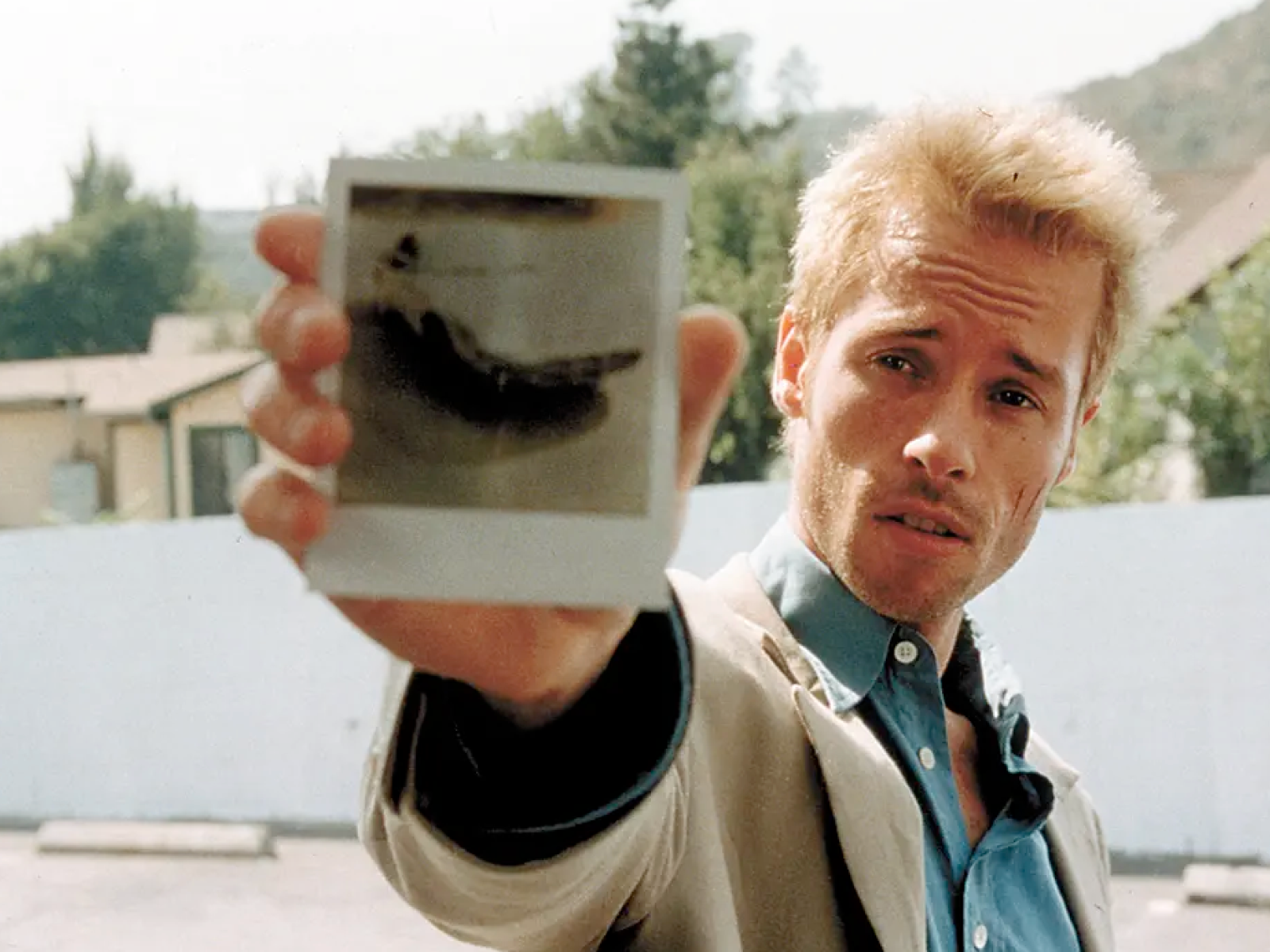
In Christopher Nolan’s mind-bending film Memento, the protagonist suffers from a rare memory disorder and can only retain memories for about a dozen minutes at a time. To avenge his wife’s death, he must use every tool at his disposal to preserve information, gather clues, and piece together the truth. The investigative difficulty is exponentially higher than for an ordinary person, which greatly amplifies the film’s tension.
Beyond the “minute-based” memory reset, there is another variation in which the protagonist’s memory resets after each period of sleep—essentially on a “daily” basis. In this setup, every awakening is equivalent to a rebirth. The character must leave behind carefully prepared clues to inform their future self: Where am I now? What has already happened? What am I supposed to do next?
Organic Brain Damage: “The Eternal Present Tense”
In the real world, the first scenario—frequent, short-term memory loss—is more consistent with scientific reality.
One of the most famous textbook cases in neuroscience is H.M., whose real name was Henry Molaison. He became a research model for constant memory reboot. At age 27, in order to treat severe epilepsy, surgeons removed parts of his bilateral medial temporal lobes, including the hippocampus and surrounding structures such as the amygdala. After the surgery, his intelligence and personality remained intact, but his memory suffered severe, irreversible, and permanent damage.

First, Henry could no longer form long-term memories of anything that happened after the surgery. In other words, his episodic and semantic memory systems were devastated—this is a classic case of anterograde amnesia.
For example, he could engage in simple back-and-forth conversations with visitors. As long as the interaction was not interrupted, it could continue smoothly. However, if the visitor stepped out of the room and returned, or if the conversation was interrupted by someone else, Henry would completely forget everything that had just been discussed. This phenomenon is closely tied to the principles of short-term memory (working memory) discussed earlier.
With his hippocampus removed, Henry could no longer consolidate new long-term memories. He had to rely on short-term memory and sustained attention, passing information along in his mind like a relay baton to maintain continuity in what he was doing or saying. But this state was extremely fragile. The moment his attention was disrupted—by glancing out the window, someone interjecting, or even taking a bathroom break—the brain’s “cache” would instantly clear. The previous conversation, even the identity of the person in front of him, would vanish. Even researchers who had followed him for years were greeted each time as strangers, with Henry politely asking, “Hello, have we met before?”

For Henry, time was permanently frozen in the present. There was no yesterday and no tomorrow. In his internal clock of self-awareness, he was forever 27 years old. If Henry looked into a mirror and saw an elderly man with white hair, he would feel confused—but the moment he turned away, he would forget the startling discovery and return to calm.
Second, Henry not only failed to form new memories but also lost some memories from before the surgery, exhibiting a degree of retrograde amnesia. Follow-up studies found that he had almost no recollection of events from the ten years prior to his operation, yet he vividly remembered his early childhood, including events before the age of ten.
To explain this pattern, researchers concluded that long-term memory is not stored in a single step. It requires a prolonged consolidation process, possibly spanning years or even a decade. In the first few years, although memories leave traces in the cerebral cortex, they still require assistance from the hippocampus for retrieval. Once the hippocampus is damaged, these not-yet-fully-consolidated memories lose their “index” and become inaccessible. In contrast, more remote memories are securely stored in the cortex, which is why, even without a hippocampus, Henry could still remember fundamental facts about himself—such as who he was and who his parents were.

Perhaps most astonishing to scientists was that although Henry could not remember new knowledge, he could still learn new skills. In one famous experiment, researchers asked him to perform a mirror-drawing task: tracing the outline of a double-bordered star while looking only at its reflection in a mirror. This is far from easy. At first, Henry’s drawings were clumsy and inaccurate, but with repeated practice, his performance improved dramatically. Interestingly, even though he eventually became highly proficient, Henry had no recollection of ever practicing. He would express surprise, saying, “That’s strange—this was easier than I expected.”
It was through studies of Henry that scientists came to understand that the brain contains multiple memory systems, each with distinct functions. Although the hippocampus—responsible for semantic and episodic memory—was permanently offline, the basal ganglia and cerebellum, which support skill learning, remained functional. This latter system is what we now call procedural memory, commonly known as muscle memory.

There is a small consolation: although Henry lived his entire life with memory impairment, he truly became someone who lived “in the present.” He led a peaceful life. This was partly due to his innate temperament, and partly because the surgery also removed his amygdala, eliminating much of the physiological basis for anxiety and fear. In daily life, he helped with household chores, prepared lunch, made the bed, accompanied family members on errands, played crossword puzzles, chatted with others, and watched television to relax. Although his consciousness remained anchored at age 27, his body continued to learn how to care for itself over time. Living in each brand-new present moment, he reached the age of 82.
Thus, in real cases of organic brain injury, forgetting is generally not measured in days—it happens continuously, moment by moment.
Besides Henry Molaison, another well-known amnesia patient was Clive Wearing, a musician from Cambridge University. Due to irreversible hippocampal damage caused by herpes encephalitis, his memory span was reduced to just 7 to 30 seconds—literally a “goldfish memory.” For Clive, unable to remember what had happened mere seconds earlier, every moment felt like waking from unconsciousness into a bewildering void. His wife wrote in her memoir:
Clive is in a constant state of feeling as if he has just regained consciousness. He once said, “I haven’t heard, seen, touched, or smelled anything. It’s like being dead.” His diary entries are heartbreaking to read:
2:00 p.m.: I have just woken up for the first time.
2:14 p.m.: I am now conscious.
2:19 p.m.: I have just woken up.
…
Rare Exception: “A Life That Resets Every Day”
Compared with these real-life cases, the film and TV trope in which a person is fully lucid during the day and only loses all memory after sleeping is, scientifically speaking, very difficult to justify.
If the hippocampus were severely damaged, a person would not be able to rely on short-term memory alone to sustain an entire day’s worth of experiences. A more plausible hypothesis is that during wakefulness, these memories have already entered the hippocampus and undergone initial encoding, with the problem arising later during the stabilization process. This in itself suggests that the hippocampus is functioning—at least participating in memory formation. If that is the case, then why would already-formed memories fail to stabilize after sleep, or become inaccessible upon waking? That is the truly puzzling part.

That said, screenwriters are not creating these stories entirely out of thin air. There are indeed rare real-world cases that resemble this setup. One example is Michelle Philpots, a British woman who suffered two car accidents, resulting in brain injury accompanied by epileptic seizures. Her memory abilities deteriorated significantly afterward. Her long-term memory remains anchored in the 1990s, while newly formed memories last only briefly. She relies on sticky notes, video recordings, and reminders from her husband to manage daily life. The media often describe her condition as “a life that resets every day,” but from a medical perspective, this is not a literal daily memory wipe. Rather, it reflects difficulty in consolidating new memories over the long term. The romantic film 50 First Dates, with its premise of “waking up with a blank slate every day,” may well have drawn inspiration from this real case.
It is important to emphasize that such cases are extraordinarily rare, and even within neuroscience, they remain controversial. One relatively plausible explanation involves a failure of memory consolidation. Research suggests that the transfer of memories from the unstable hippocampus to the more stable cerebral cortex primarily occurs during sleep. If a patient experiences severe nocturnal epilepsy, abnormal brain activity may disrupt this consolidation process, preventing memories from becoming permanently stored or making them difficult to retrieve upon waking.
So while this type of storyline has a real-world prototype, it is largely an artistic exaggeration designed to heighten dramatic tension. It should not be taken as general medical knowledge.
Recommended Watchlist

Memento
Recommendation: ⭐️⭐️⭐️⭐️⭐️
Christopher Nolan’s breakthrough masterpiece and a definitive mind-bending classic. The protagonist suffers anterograde amnesia after a brain injury, with memories lasting only a dozen minutes. To avenge his wife, he relies on tattoos, photographs, and handwritten notes to piece together clues. Beyond its intricate plot, Nolan’s editing masterfully simulates the fragmented experience of an amnesia patient, creating an immersive viewing experience. High on both scientific plausibility and cinematic ingenuity, it’s worth watching multiple times.
Similar film: Ghajini, a Bollywood remake that retains the same amnesia premise but adds more action and musical elements. Starring national treasure Aamir Khan—whose physique alone is worth noting—it’s an entertaining adaptation.

50 First Dates
Recommendation: ⭐️⭐️⭐️⭐️
A classic romantic comedy and perhaps the most famous “sleep-reset” amnesia story. The heroine suffers memory damage after a car accident and wakes up each morning with her memory reset to the day of the accident. The science is shaky, but the emotional impact carries the film. The hero’s daily efforts to make her fall in love with him all over again are undeniably romantic. As a love story, it’s well worth a watch.
Similar film: the Japanese remake 50 First Kisses, starring Takayuki Yamada and Masami Nagasawa. The plot closely follows the original, with few notable innovations. In my personal view, the on-screen chemistry is minimal—recommended mainly for fans of the actors.
Unmet: Diary of a Neurosurgeon
Recommendation: ⭐️⭐️⭐️⭐️
A well-received recent Japanese medical drama, with each episode centered on a neurosurgical case. The protagonist, played by Hana Sugisaki, is a neurosurgeon who develops a memory disorder after an accident. Her memory resets each morning, and she must rely on rereading her diary to reconnect the threads of her life. Unlike the purely romantic focus of 50 First Dates, this series uses the “daily reset” premise to explore classic neurological disorders and the psychological struggles of amnesia patients. In that respect, it does a commendable job. Personally, the most moving aspect is the romantic subplot. The lead actors (Hana Sugisaki and Ryuya Wakaba) are a real-life couple, and their genuine chemistry shines through on screen.
The Memorandum of Kyoko Okitegami
Recommendation: ⭐️⭐️⭐️
A manga-adapted mystery comedy starring Yui Aragaki and Masaki Okada. The heroine, Kyoko, is a white-haired detective whose memory resets whenever she falls asleep. As a result, every case must be solved within a single day, and she writes crucial clues on her arms and legs with a marker. Masaki Okada plays an unlucky man who always finds himself near crimes—and frequently suspected as the culprit. The amnesia premise here exists purely for narrative convenience and has no scientific grounding whatsoever. Fortunately, the show is lighthearted and humorous, with straightforward mysteries that require little mental strain. A casual watch for relaxation, though personally I’d rate it as average.
Alzheimer’s Disease: The Eraser in the Mind
If the first two types of amnesia are relatively uncommon in real life and largely shaped by artistic dramatization, memory loss caused by Alzheimer’s disease is, for ordinary people, the most common—and the most closely intertwined with everyday life. Just two years ago, my grandmother passed away. In the decade before her death, she had likely been living with Alzheimer’s, though at the time I did not recognize it. I only felt that she was becoming increasingly forgetful, gradually failing to recognize people, and that her temperament had changed dramatically—growing unusually stubborn. Looking back now, I still feel deep guilt and regret.
For the sake of dramatic conflict and aesthetic appeal, films often focus on the rare cases of early-onset Alzheimer’s. A classic example is the Korean romantic film A Moment to Remember, in which Son Ye-jin’s character begins, in the prime of her youth, to slowly and smilingly forget the person she loves most, rendering the disease tragic yet strangely romantic.
In reality, however, Alzheimer’s disease is typically a condition of old age. The vast majority of patients develop it after the age of 65. Moreover, the prevalence increases exponentially with age. Among people over 85, approximately one-quarter to one-third are affected. For a scientific overview of the disease, one might watch the TED talk by Harvard neuroscientist Dr. Lisa Genova.
From a symptomatic perspective, Alzheimer’s has an extremely long course. From initial mild forgetfulness to eventual profound dementia and loss of function, patients and their families often endure a decade or more of slow decline. For most families, daily life is marked less by romance than by exhaustion and despair. As the disease progresses, cognitive confusion, incontinence, personality changes, wandering, hallucinations, and even aggression may follow. Even when family members understand the condition and prepare themselves intellectually and emotionally, the relentless burden of caregiving can gradually erode patience and resilience.
For further reading, popular science books such as The Thief of the Mind are recommended, along with memoir-style works like When My Mother Had Alzheimer’s, On Call: A Harvard Physician and His Wife’s Ten-Year Journey with Alzheimer’s, and Being My Mother’s Mother. As a broader social issue, caregiving can also be explored through NHK documentary series such as Missing with Dementia and Bankrupt in Old Age.
Disease Mechanism
Why does Alzheimer’s disease not only cause memory loss but also such profound changes in personality and function? How does it differ from ordinary age-related forgetfulness? The answer lies in its underlying pathology.
Normal age-related forgetfulness is primarily due to a natural decline in brain function. Neuronal responses slow, and some neurons die with age, but the overall structure remains intact. Core memories and personality are largely preserved. In contrast, Alzheimer’s involves irreversible physical changes within the brain. Under a microscope, two abnormal protein pathologies are visible: beta-amyloid plaques, which accumulate like toxic debris between neurons and disrupt communication, and tau protein tangles, which damage the internal transport systems of neurons, leading to widespread cell death.


Brain Structure of Alzheimer’s Patients (Image source: The Illustrated Brain User’s Manual)
The structural damage caused by these pathologies follows a clear pathway and sequence, which directly determines the symptoms observed at different stages of the disease.
Stage One: Hippocampal Damage and Short-Term Memory Impairment (Typically 2–4 Years)
The hippocampus is the first region attacked. Once it is damaged, patients develop classic anterograde amnesia, unable to retain new information. This is the earliest and most common symptom of Alzheimer’s. Patients may repeatedly ask the same question, forget they have just eaten, or become lost in a familiar neighborhood. At this stage, long-term memories stored in the cortex remain intact, so patients may vividly recall distant events while failing to remember what happened moments ago.
Stage Two: Spread to the Cerebral Cortex, Affecting Long-Term Memory and Cognition (Typically 2–10 Years)
As the disease advances, toxic protein accumulation spreads outward from the hippocampus to the cerebral cortex. The cortex not only stores long-term memories but also governs language, logic, spatial reasoning, and emotional regulation. During this longest stage of the illness, patients begin to exhibit retrograde amnesia, gradually forgetting events from recent years or even decades past, eventually failing to recognize loved ones. Personality and behavior may change dramatically. Language abilities may deteriorate; words may no longer come easily. Some individuals become stubborn, suspicious, or aggressive. When families observe striking personality changes and behavioral disturbances, they are often witnessing this stage.
Stage Three: Widespread Brain Involvement and Total Functional Decline (Typically 1–3 Years)
In the final stage, pathological changes sweep through nearly the entire brain. Severe brain atrophy becomes evident. Patients may completely forget who they are. The brain progressively loses control over bodily functions. Walking becomes impossible; eventually even basic physiological abilities such as chewing, swallowing, and bladder and bowel control are lost. At this point, patients depend entirely on round-the-clock care, until complications ultimately lead to the end of life.
Regrettably, humanity has yet to develop a treatment capable of curing or reversing Alzheimer’s disease. Even when scientists succeed in clearing the toxic protein plaques from patients’ brains, the disease often continues its irreversible progression. This remains one of the most formidable challenges in modern medicine.
Recommended Watchlist

Still Alice
Recommendation: ⭐️⭐️⭐️⭐️⭐️
A textbook example of an Alzheimer’s-themed film. The original novel was written by Lisa Genova, a Harvard-trained neuroscientist who has authored multiple works of fiction and popular science centered on neurological disorders. The story follows a linguistics professor with a happy marriage and three children who develops familial Alzheimer’s disease at age 50. The film captures, with painful realism, the fear and helplessness of an intellectual confronting the gradual loss of self-awareness. Julianne Moore delivers an exceptional performance. Highly recommended.
The Father
Recommendation: ⭐️⭐️⭐️⭐️⭐️
Previously recommended in our “What to Watch This Week” column. Adapted from the stage play of the same name, this is widely regarded as a masterpiece among Alzheimer’s films, with remarkable artistic depth. Told largely from a first-person perspective, it immerses viewers in the daily confusion and fragmented memories of a father living with Alzheimer’s. The sense of immersion is powerful. Many viewers may feel disoriented while watching—but as one comment aptly put it: how fortunate are those who cannot fully understand this story. Anthony Hopkins (best known to many as “Hannibal”) delivers a godlike performance, and the portrayal of the daughter’s despair and inner conflict is equally compelling. Strongly recommended.
Another film on a similar theme, Familiar Touch, is also worth watching; you can refer to the detailed recommendation in our weekly column.

Wrinkles
Recommendation: ⭐️⭐️⭐️⭐️⭐️
A Spanish animated film—realistic and deeply sobering. The protagonists are elderly residents confined to a nursing home. The film delicately portrays different stages of the disease’s progression: early disorientation, mid-stage hallucinations, and the late-stage despair of being “moved upstairs,” a euphemism for complete loss of function. I personally enjoy animated films, and this one resonates with me in its storytelling, emotional depth, and visual style. Strongly recommended.
A Moment to Remember
Recommendation: ⭐️⭐️⭐️⭐️
A classic Korean tearjerker. The film focuses on early-onset Alzheimer’s, which accounts for less than 10% of real-life cases, primarily for dramatic purposes. As a romance, it is undeniably moving; as a depiction of disease, it is highly stylized and romanticized, and remains somewhat removed from the harsher realities of Alzheimer’s.
An Incurable Case of Love: The Person Who Will Forget Me (Daikoi: With You Who Will Forget Me)
Recommendation: ⭐️⭐️⭐️
A romance drama written by Shizuka Oishi, starring Erika Toda and Tsuyoshi Muro, whose on-screen chemistry is unexpectedly strong. Once again featuring an early-onset premise—a young, capable female doctor developing Alzheimer’s—the series offers a relatively detailed portrayal of the male lead’s pain and perseverance as he cares for his gradually declining partner. The first half, focused on romance, is especially engaging. The latter half, after the illness progresses, becomes somewhat melodramatic, and some side romances feel less convincing. Still, it is undeniably tear-inducing.
Final Thoughts
While gathering material for this article, I discovered that beyond the types of amnesia discussed above, there are many other unusual and complex memory disorders, each with different triggers. It would be impossible to cover them all here. Drawing from the book The Neuroscience of Memory, here is a summary for further reference:
Medication side effects (especially anticholinergics, antihistamines, typical antipsychotics, and benzodiazepines)
Vitamin deficiencies (particularly deficiencies in vitamin B12, vitamin B1, and vitamin D)
Hormonal imbalances (including thyroid disorders)
Physical stress, infection, and illness (including Lyme disease, COVID-19, encephalitis, diabetes, major surgery and anesthesia, organ failure, and sleep deprivation)
Neurological disorders (including brain tumors, epilepsy and seizures, multiple sclerosis, stroke, transient global amnesia, and traumatic brain injury)
Psychiatric disorders (including anxiety, depression, ADHD, bipolar disorder, schizophrenia, electroconvulsive therapy, dissociative amnesia, and alcohol or toxin use)
…
This article is the second installment in our “Memory” learning series, using film and television as an entry point to explore the science of memory. In the next piece, I plan to return to the core theme of learning and discuss the importance of procedural memory and practice. If there are topics you’re particularly interested in, feel free to leave a comment and share your suggestions.
- Combining episodic memory (specific past events) and semantic memory (abstract personal knowledge), it involves the cognitive reconstruction and narration of one’s personal life history. For example: Where is my hometown? Am I married? How did I leave my hometown back then? ↩︎
Leave a Reply