For me, a perfect trip is never just about visiting places that countless others have already checked off their lists. Instead, it holds three completely different experiences within it — the imagination and anticipation before departure, the intimate connection with nature during the journey itself, and the moment after returning home when you look back through the photos, rediscover details you never noticed at the time, revisit the memories, and dive into research that gives you a deeper understanding of the trip. So, through these words and photos, let us return once again to the beautiful Qinghai Lake.
The opportunity: As young people who had just started working, in the context of China’s work culture, the only truly no-questions-asked leave we can apply for is five days. Because of that, both I and the friends around me treasure those five days immensely, and every year, we carefully plan our annual trip while trying to avoid the crowds.
Since we needed to attend two weddings during the National Day holiday, we decided to first drive to Baoji for the wedding on the 2nd in order to save on transportation costs. We left Xiao P (my XPeng MONA M03 — you can refer to my previous article for more details) at Baoji High-Speed Railway Station. Considering that our schedule was relatively tight and that transportation and charging infrastructure around northwestern natural scenic areas might not be ideal, we chose to rent a car locally to complete the Qinghai Lake mini loop.
Armed with Baoji-style rolled noodles and roujiamo burgers, our group officially began the journey. Three and a half hours later, we arrived at Xining Railway Station. Entering a high-altitude region for the first time, none of us experienced any obvious discomfort. Conveniently, the car rental platform had pickup and drop-off points directly inside the underground parking lot of Xining Station, so we were able to load our luggage straight into the car and avoid the hassle of moving everything around repeatedly.
Day 1: Xining – Chaka | Total Distance: Approximately 457 km
Xining – Kumbum Monastery
National 5A Tourist Attraction | Ticket: 70 RMB | Recommended Visit Time: Around 2 Hours
Kumbum Monastery is one of the most famous monasteries of the Gelug school of Tibetan Buddhism. Originally built during the Ming Dynasty, it was first constructed to commemorate Tsongkhapa, the founder of the Gelug tradition. According to legend, Tsongkhapa was born here, and later generations built a stupa at his birthplace in his honor. This is also how the monastery got its name — “Kumbum” roughly means “the place with a stupa.”

There are plenty of guides available both at the visitor center and near the monastery entrance, and the prices are quite reasonable. However, as someone who believes in materialism, I approached the site purely as a historical and cultural landmark and chose not to hire a guide. That said, if you are particularly interested in Tibetan Buddhism or the stories behind the monastery, hiring a guide may offer a much richer experience. Or, like me, you can revisit the photos afterward and slowly research everything in detail once you return home.
Tips: Guides will usually explain the “purpose” of different Buddha statues (I’m not sure if that’s the best way to describe it — perhaps more accurately, the things they are believed to bless or protect). Because of that, visitors may sometimes feel subtly pressured into donating money for good fortune. If that makes you uncomfortable, you can simply explore freely on your own as I did.
Since it was still before the holiday rush, there were not many tourists. The crowd felt evenly split between visitors and genuine pilgrims or monks coming to worship. Without overwhelming crowds everywhere, I was able to observe the monastery itself — and the people who had traveled from afar performing full-body prostrations — much more carefully.

The moment you enter the monastery, the heavy scent of incense and the slightly stale smell of aging wooden structures lacking ventilation immediately fills the air. Looking at the towering Buddha statues and the neatly arranged prayer cushions lining the walls, you can genuinely feel a very different cultural atmosphere. The place feels quiet yet vividly alive. In particular, watching the believers who had come from who-knows-where performing prostrations along the way — despite their worn-out clothes from the long journey — made me feel that they must have realized something meaningful through all the hardship. Perhaps they did not even know why they set out in the beginning, but somewhere along the road, the answer slowly became clear.


There are many temples of all sizes scattered throughout Kumbum Monastery, though to me, several of them felt fairly similar. After focusing on a few of the more notable ones, we headed back to Xining for a meal, stocked up on oxygen canisters, emergency food, and other supplies, and officially set off toward Qinghai Lake.
Nanshan Viewing Platform, Gonghe County, Hainan Tibetan Autonomous Prefecture & Qinghai Lake Erlangjian Scenic Area
The former is free to visit, while the latter is a National 5A Tourist Attraction | Ticket: 72 RMB | Recommended Visit Time: Around 2 Hours
After finishing kangguo at around 1:30 PM in Xining, we began driving toward Qinghai Lake. About two hours later, we arrived at our main destination in the area — the southern scenic section of Qinghai Lake Erlangjian Scenic Area. Before entering the Erlangjian Scenic Area, you can first navigate to the “Nanshan Viewing Platform” to overlook the full panorama of Qinghai Lake and the distant mountain ranges from above. However, the mountain road is quite narrow, and construction trucks frequently pass through, so extra caution is necessary.
The scenic area itself does not really feature cultural attractions, though it was once an early torpedo testing base in China. Unfortunately, because we arrived rather late, we did not visit the museum and instead headed straight to the lakeside.
Qinghai Lake is the largest freshwater lake in China by surface area. The water is calm and vast, perfectly complementing the distant mountains and creating an incredibly open and beautiful landscape. Large, surprisingly clean pigeons perched along the railings. After taking countless photos from every imaginable angle, I leaned against the railing and watched the sunset spread across the land in the distance. The sound of birds and the wind filled my ears, while the noise of work and everyday life slowly faded away, leaving only pure immersion in nature.


As night gradually fell, we left the Erlangjian Scenic Area and continued driving along Qinghai Lake toward Chaka, where we would stay for the night. Although the journey was only a little over 200 kilometers, it became the most thrilling and nerve-racking stretch of the entire trip. There were countless construction trucks along the way, ongoing road repairs in many sections, continuous U-shaped turns on certain mountain roads, and even stretches where traffic in both directions had to share a single lane. On top of that, we still needed to cross several mountain passes sitting at elevations of around 3,800 meters. The entire drive was tense and exhausting, and only around 10 PM did we finally arrive safely in Chaka Town. Fortunately, restaurants in town were still open, so we found a local spot, had a simple meal, and finally rested for the night.

Day 2: Chaka – Qilian County | Total Distance: Approximately 372 km
Chaka Salt Lake | National 4A Tourist Attraction | Round-Trip Mini Train Package: 167 RMB
“Chaka” means “salt pond” in Tibetan, and the area is famous for producing “Great Blue Salt.” Visiting the salt lake has also become one of the region’s signature tourist experiences. There are actually two scenic areas at Chaka Salt Lake. The older “Sky Mirror” area focuses mainly on natural scenery, while “Sky No.1” leans much more heavily toward commercial attractions. As out-of-town visitors, we were naturally more interested in seeing the original natural landscape, so we chose to visit the Sky Mirror scenic area.
The scenic area itself is enormous. If you want to fully explore every section, it’s best to reserve an entire day. I would recommend first taking the small train all the way to the final stop, Sky Mirror, which sits at the deepest part of the salt lake. The saltwater there is exceptionally clean and also the most photogenic. The park has thoughtfully set up many photo spots and installations, making it easy to spend a long time taking pictures. My only regret was not bringing a drone.
On sunny days, because both the sky and the ground are overwhelmingly white, the brightness can easily strain your eyes. I highly recommend wearing sunglasses. Through the lenses, the lake appears much greener and more transparent, almost like emerald.
The ticket package also includes rental shoe covers, allowing visitors to walk directly into the lake. Stepping on the large salt crystals feels surprisingly similar to walking on a beach. The scenic area is maintained extremely well and feels remarkably clean, making it easy to fully immerse yourself in nature.
Interestingly, perhaps worried that visitors might become bored surrounded by endless expanses of white salt flats, the park has placed numerous photography props throughout the area — including oversized National Geographic-style frames and other installations. Large screens also continuously play photography tips and pose suggestions, clearly hoping every visitor leaves satisfied.


The old salt mining tracks stretch deep into the lake. Viewed through sunglasses, the real-life colors are actually much darker and richer than they appear in photos.


After leaving the salt lake, we took a short break in the county town before setting off toward Qilian County. After the tense drive the previous night, even though the national highways along the way were likely more scenic, we chose a route with more expressways instead. Fortunately, the road conditions on this stretch were excellent. Even the national roads had very little traffic, with long straight roads and incredibly open views. Grasslands, distant mountains, snow, and sky layered themselves clearly across the horizon. While driving, large groups of lambs and yaks would occasionally cross the road. There was no need to panic though — before long, local herders would appear on motorcycles, gently driving them along and speeding up their crossing.


By nightfall, we finally arrived in Qilian County. After enjoying a local barbecue dinner in town, we drifted off to sleep, preparing ourselves for the third day of the journey.
Day 3: Qilian County – Gangshika Snow Mountain – Xining | Total Distance: Approximately 320 km
Zhuo’er Mountain Scenic Area | Ticket: 60 RMB | Shuttle Bus to the Summit: 20 RMB | Mountain Elevator: 10 RMB
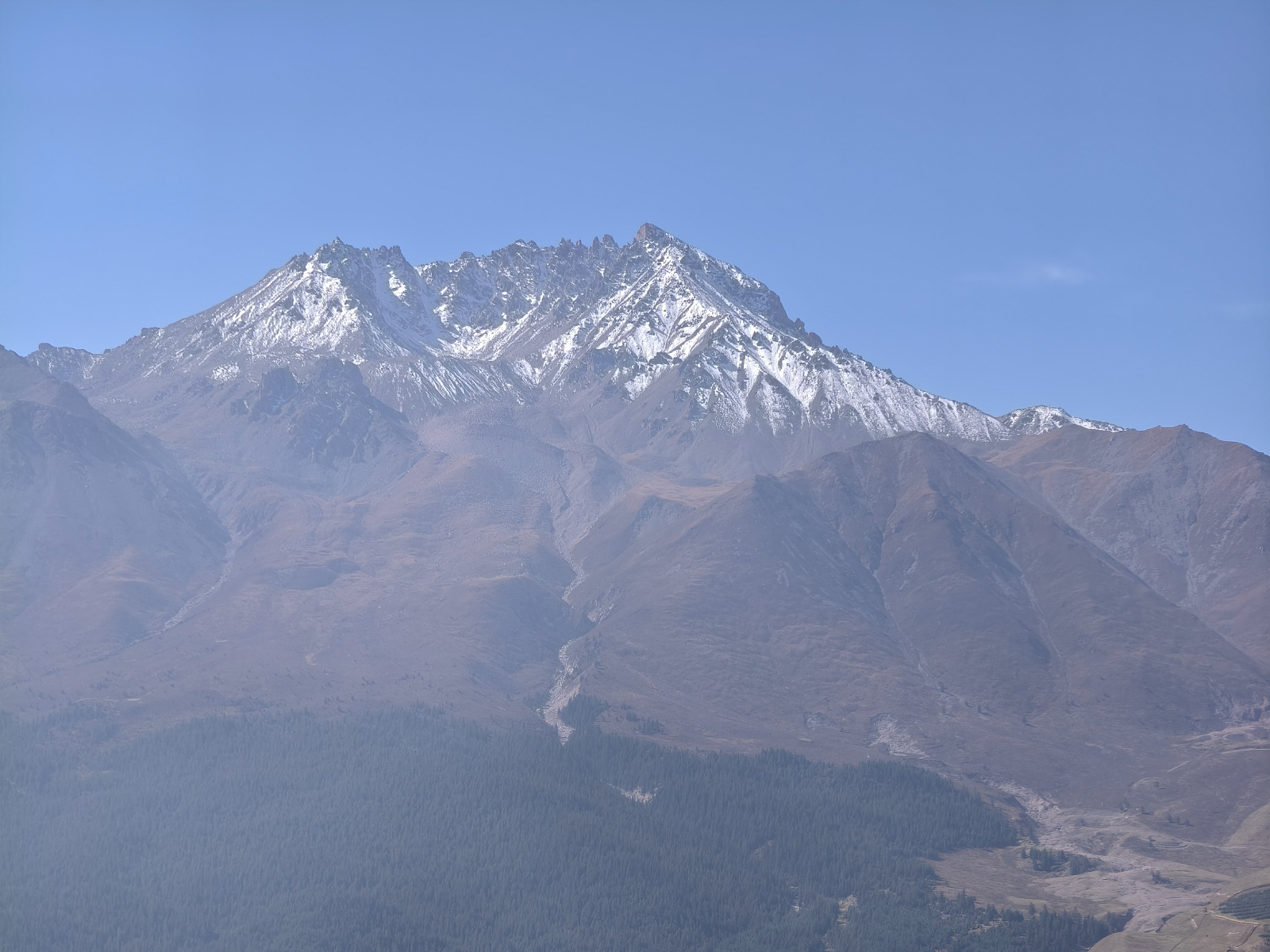
This was without question the most breathtaking scenic area of the entire trip for me. Up close, you can see idyllic countryside landscapes that resemble a Swiss town; in the middle distance, stunning Danxia landforms spread out like a painting; and farther away, you can gaze toward the magnificent Amne Machin Dongso Snow Mountain (elevation: 4,695 meters). From the mountaintop, you can even take photos together with the snow-capped peaks in the background — grand, clean, and majestic.
Self-driving visitors can park in the scenic area’s parking lot and then take a shuttle minibus for about ten minutes to reach the ticket checkpoint.
The scenery on the two sides of Zhuo’er Mountain Scenic Area could not feel more different. One side is lined with endless snow mountains, while the other side looks like rolling hills and villages straight out of a Swiss countryside postcard.


What surprised me the most was that the scenic area had even built sightseeing elevators to make climbing easier. Ten yuan per ride, divided into roughly three sections — honestly, incredibly user-friendly.

Around noon, we left the scenic area. After a simple lunch at a Sichuan restaurant in Qilian County, we officially began driving toward the highest-altitude destination of this trip: Gangshika Snow Mountain.
While driving through the county town, we stopped at a red light and I noticed a Tibetan middle-school-aged boy staring at our Voyah Dreamer with sparkling eyes. It instantly reminded me of myself as a child, when I would stop and stare whenever I saw a car I liked or had never seen before, filled with curiosity and imagination. I hope that one day, he too can drive the car he loves and live the life he truly wants.
Gangshika Snow Peak Scenic Area | Free Admission | Shuttle Bus to the Mountain: 25 RMB
Gangshika Snow Mountain is located in Menyuan County, Haibei Prefecture, Qinghai Province. It is the highest peak in the eastern section of the Qilian Mountains and is often referred to as the “King of Snow Mountains.” Because the facilities and difficulty level are both relatively approachable, snow mountain enthusiasts also call it “the first snow mountain of your life.” The main peak reaches an elevation of 5,254.5 meters.
The visiting process is similar: park your car in the scenic area parking lot, then take a shuttle bus to the base of the mountain. The official sightseeing area itself already sits at an altitude of around 3,800 meters, so I would strongly recommend carrying an oxygen canister with you. After getting off the shuttle, you are greeted by the incredibly blue Lianxin Lake. Fed by glacial meltwater, the lake is pristine and icy-clear, standing in sharp contrast against the barren dark-brown tones of the surrounding alpine terrain. The scenery is stunningly beautiful.


Following the traces left behind by ancient glaciers uphill, you can eventually reach the starting point for trekking and mountaineering routes on Gangshika Snow Peak. The scenic area also offers horses for rent, allowing visitors to continue deeper into the mountains with guides toward the colorful waterfall area. Due to time constraints and personal fitness considerations, however, we decided not to go too far. After wandering around the river valley for a while, we headed back down the mountain and began the return journey.
As evening approached, we set off back toward Xining. After an extravagant dinner at Haidilao Hot Pot, our joyful Qinghai Lake mini loop officially came to an end.
Day 4: Xining – Qinghai Tibetan Culture Museum – Specialty Shopping
On the final day, accompanied by light drizzle, we took a taxi to the Qinghai Tibetan Culture Museum. The museum itself is not particularly large, and even during the National Day holiday crowds were relatively light, but the exhibits were genuinely rich and fascinating. The walls were covered with intricate thangka paintings, alongside traditional Tibetan Buddhist monk robes that felt as though they had stepped straight out of a movie, as well as exquisite gold artifacts once used by Tibetan nobility. In the museum’s souvenir section, I bought a small prayer wheel, which I kept playing with throughout the journey home. Although I do not personally follow Buddhism, I still found it deeply interesting.


Before leaving, in order to bring some souvenirs back for family and friends, we chose a supermarket-style gift shop and bought local specialties including beef jerky, saffron, goji berries, highland barley liquor, and other regional products. Whether they were truly worth the price or not, at least everything was clearly marked with fixed prices. After stuffing our suitcases full, we finally began the journey home smoothly.
Epilogue
As my annual trip for 2025, I was extremely satisfied with this four-day Qinghai Lake mini loop. There were few crowds, no traffic jams, and the itinerary never felt rushed or overly exhausting. Along the way, we experienced local food and magnificent natural scenery, took turns driving with friends, talked about our impressions of the landscapes, took photos for each other, and commented on the food we ate. Although there were still occasional work calls interrupting the peace, overall the journey felt relaxed and carefree, allowing both body and mind to truly unwind. Everything felt quiet and serene, and the deep connection with nature stood in sharp contrast to the constant noise and chaos of Beijing.
As for transportation, self-driving was undoubtedly the best option. The route takes you deep into nature; although some roads are winding and rugged, they are still paved and generally accessible. Car rental companies such as Shenzhou Car Rental and eHi Car Services both have pickup and drop-off locations at Xining High-Speed Railway Station, making the process extremely convenient. More importantly, driving yourself gives you full control over the schedule and allows you to freely adjust the itinerary depending on how long you want to stay at each location.
For accommodation, since we had relatively high standards regarding cleanliness, we chose chain business hotels associated with the Huazhu Group ecosystem throughout the trip. Below are all the hotels we stayed at and their prices before the National Day holiday. Personally, I found them all very comfortable.
Day 0 — Orange Hotel Xining Railway Station Provincial People’s Hospital
Twin Room — 331 RMB
Day 1 — Starway Chaka Salt Lake Hotel
Oxygen-Enriched Twin Room — 314 RMB
Day 2 — Ibis Styles Haibei Qilian Zhuo’er Mountain Hotel
421 RMB
Day 3 — Orange Hotel Xining Railway Station Provincial People’s Hospital
Twin Room — 412 RMB
As for the overall cost of the trip, even including transportation expenses from Beijing, the total came to only around 3,000 RMB per person, which I would consider extremely cost-effective. The main expenses were simply the rental car and hotels.

Regarding restrooms, facilities at both the scenic areas and roadside service stations were generally quite complete. Since there were women traveling with us, we had also prepared a portable toilet just in case, but throughout the entire journey we never actually needed to use it. Personally, I think anyone following a similar itinerary would not need to worry too much about this issue.
Next Stop, Let’s Go!
The 2025 annual trip has come to an end, which means it is already time to start planning for 2026. Xinjiang or Hainan — wherever it may be, I hope it will once again take me far away from the noise, allowing me to enjoy the beautiful and magnificent landscapes of our country.
Leave a Reply