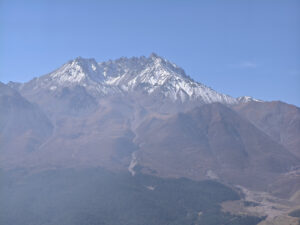





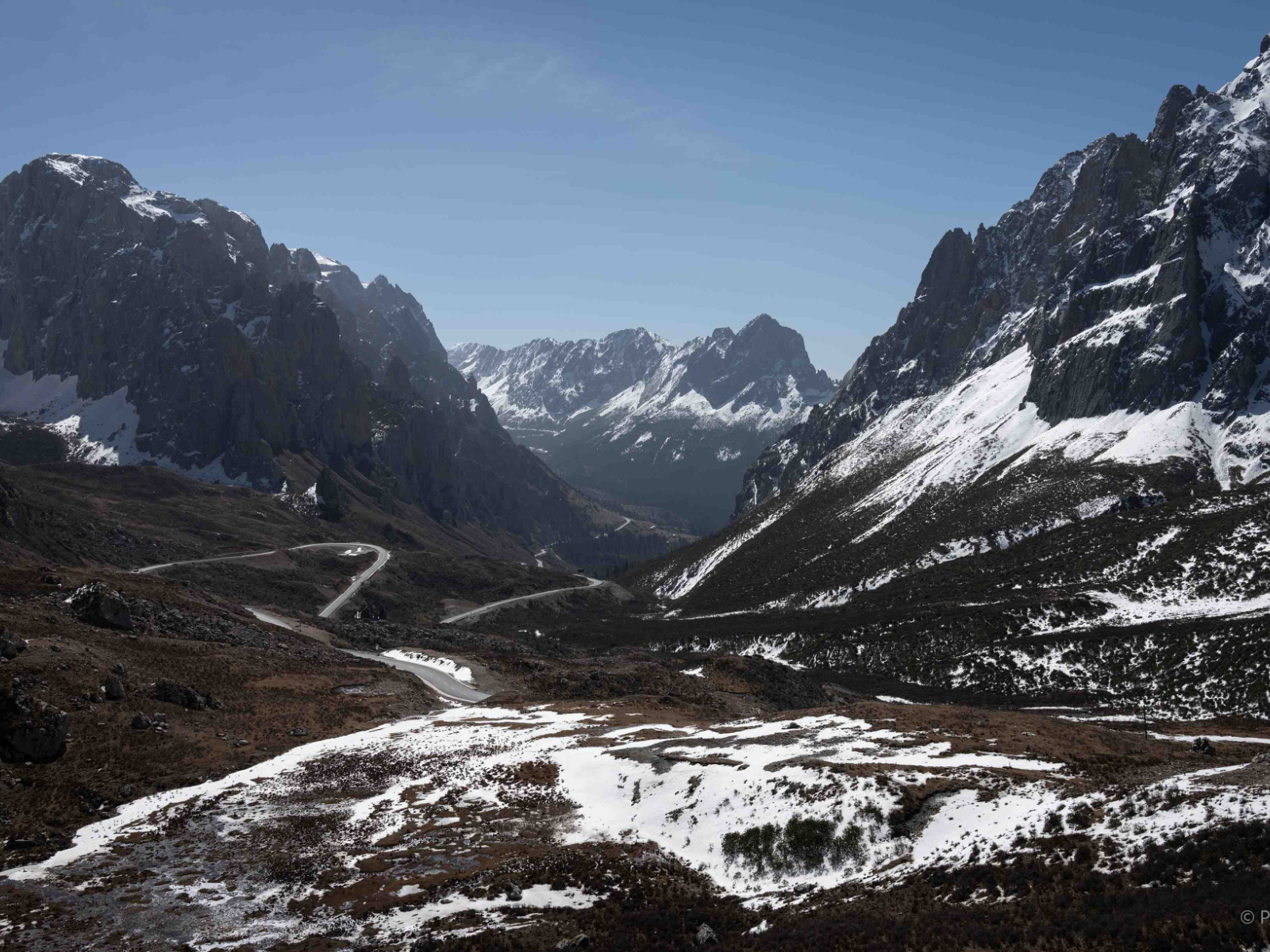
Gannan rewards slower travel with dramatic plateaus, Tibetan culture, remote monasteries, and landscapes that feel far removed from conventional itineraries.
***
Gannan is a breathtaking destination often mentioned alongside western Sichuan, northern Sichuan, and the Qinghai–Gansu Grand Loop. It sits along the transition zone between the first and second topographic steps of China’s vast landscape. Traveling south from Lanzhou through Linxia, once you pass Tumen Pass, you officially enter what used to be the territory of the Tibetan Empire. “Back then, if Han people wandered into Tibetan lands without travel permits, they’d be scalped and burned alive,” our driver told us solemnly over and over throughout the journey. After finishing our trip through Gannan, we entered Yinchuan in Ningxia, bringing my nationwide travel plan close to its conclusion.
The Night Before the Trip
In recent years, I’ve become especially fond of the phrase “the night before a trip.” No matter how many times I travel or how many places I’ve already been, the evening before setting off on a new journey always fills me with excitement—sometimes so much that I can’t even fall asleep.
This trip felt particularly exciting. First of all, I was finally heading to Ningxia, a province I had never visited before, as well as the entirely new geographical region of Gannan. I first learned about Gannan through mountain biking videos on Bilibili, and ever since then, I’d been unable to stop thinking about the vast landscapes around the Rock’s Road area. Secondly, I didn’t even submit the new version of the PFollow app until the afternoon before departure. Right after the submission, I immediately started writing the development summary. In between moments of thinking and writing, I hurriedly packed my clothes. Those few days were complete chaos—in the best possible way.
And finally, most importantly, I ended up planning two trips back to back. Why the rush? There’s actually a pretty funny story behind it. On the night we moved into our new home, my girlfriend and I were making the bed when our cat Zai Zai became incredibly excited after seeing the bedsheets. He burrowed into them and started playing with my girlfriend. In the middle of the chaos, he accidentally scratched her little finger, leaving a long, deep cut.
The scratch was serious enough that we immediately went to the hospital for rabies shots. Our original plan had been to take an “extended Southeast Asia loop” trip before the May Day holiday, but that was completely derailed. The rabies vaccine required five shots, with each interval between injections getting longer, so we could only travel during the two longest gaps between doses. Following that train of thought, we suddenly figured: why not just visit the last two provinces we hadn’t been to in China instead?
Lanzhou
There’s a song literally called Lanzhou, Lanzhou, and honestly, the overall mood of that song perfectly matches my first impression of the city. Although I had passed through Gansu twice before while traveling along the Qinghai–Gansu loop routes, those trips were mostly in the northwestern part of Gansu, around the Hexi Corridor and its western reaches. This time, we chose to stay near Zhangye Road Pedestrian Street. Looking north after stepping outside, you could immediately see Baita Mountain Park, standing there like a giant city wall watching over the endless stream of pedestrians and the Yellow River that has surged onward for thousands of years.
Zhongshan Bridge was our first stop. The moment we arrived, we saw a huge flock of pigeons circling around the bridge, so I quickly pulled out my camera to capture the scene. Walking onto the bridge and looking toward the riverbank, I realized the pigeons had gradually settled there. Plenty of people were feeding them, while vendors carrying pigeon feed wandered back and forth. The feed was cheap—just one yuan per bag—but the pigeons here were nowhere near as friendly as the ones at the Music Stage in Nanjing’s Sun Yat-sen Mausoleum. If you ever go to Nanjing, I highly recommend visiting the Music Stage there to experience what “pigeons right in your face” really means. It’s genuinely fun.

This was also the first time I finally saw the Yellow River actually looking yellow. Last year, I visited the Zoige Grasslands, home to the famous First Bend of the Yellow River, but unfortunately we never climbed up to properly appreciate those winding curves. Trying to save money, we listened to a homestay owner’s recommendation and went instead to a Yellow River viewing platform where you could directly touch the water. Looking back now, it feels like a shame that I missed the beauty of the river bends. Although I did touch the Yellow River—and even filled two bottles with its water—the water I saw back then was surprisingly clear, not yellow at all.
After walking back and forth across Zhongshan Bridge, we headed down to the riverside to splash around and feed pigeons. I stood quietly beside the Yellow River, watching wave after wave roll toward the shore. My shoes stepped into the river and back out again while my thoughts drifted along with the water. I never imagined I would one day actually stand in the real waters of the Yellow River and truly see what the Yellow River meant. We tossed several bags of pigeon feed to the birds, then continued upstream and rode a traditional sheepskin raft near the Yellow River Mother Sculpture.

Sheepskin rafts are such magical things. For someone from deep in southern China, they almost carry an irresistible pull. Once you know they exist, you can’t stop thinking about them—you just want to see one in person and pat it on the backside. Some people say they smell unpleasant, but I leaned in close and sniffed several of the sheepskins carefully. Honestly, I thought they had a kind of fragrance to them, not a bad smell at all. I’ve always found it incredible that something like sheepskin could be used not only for food and clothing, but even as transportation. There’s something strangely moving about that.

The ride cost 90 RMB per person, floating from the Yellow River Mother Sculpture area down toward Zhongshan Bridge before being pulled back by speedboat. Overall, it was a genuinely interesting experience. Before getting on, I was convinced my pants would get soaked, but the staff handed everyone a cushion, so your butt stayed perfectly dry. That said, part of the route passes through rocky shallows, and the open sheepskin raft can easily get splashed by larger waves from every direction—so my pants still got wet in the end.
Even though 90 RMB per person did feel expensive, this is probably a once-in-a-lifetime experience anyway. Later, at the Gansu Provincial Museum, I was stunned to learn that historical Yellow River sheepskin rafts could be made from as many as 300 or even 600 inflated sheepskins. Our tiny raft only used 12 skins, yet it could still support four or five people weighing a combined five or six hundred jin. No wonder these things were once such powerful transportation tools in ancient times.


Finally, we specifically went to Camel Alley in Lanzhou. I’d heard that it was the kind of place documentary photographers loved to shoot. We wandered around the neighborhood for a long time before finally finding the entrance to an abandoned railway track. Walking deeper along the tracks, we saw many residential buildings clustered around the railway area. The environment wasn’t great, and sanitation conditions were rough too, but somehow that atmosphere made me start pressing the shutter nonstop. One friend was confused at first, wondering why I specifically liked photographing places like this. Without even thinking, I replied, “This is the only thing I know how to shoot.” Looking back now, I think I really do open myself up more when I enter spaces like these. But discussions about photography subjects and styles can wait for another time.
Gannan
Starting from Lanzhou, the most classic route is to head south into Gannan, visit Zhagana, and complete a loop along Rock’s Road. I found this three-day itinerary on Mafengwo. I’ve been using Mafengwo since 2018, and whenever I look for chartered car routes, it’s still the first app I open. Only in the past two years did I gradually switch to Trip.com because its membership system and charter services are genuinely good.
What surprised me was that after all these years, Mafengwo is still alive and doing fine. So many new players have entered the travel industry, yet it hasn’t really been pushed aside. The only thing that feels different is that back in the day, you could find tons of veteran travelers sharing experiences there—budget travel, long-distance hiking, wandering the world. Over the years, that kind of content has become rarer and rarer on Mafengwo.
Interestingly, our trip happened during the off-season right before the May Day holiday, so there were barely any tourists along the route. After hesitating for a while, I chose the cheapest “comfortable” four-person shared car package with no breakfast included—the absolute entry-level option. It cost 980 RMB per person. There was another 1,480 RMB “light luxury” package that included breakfast and better hotels. I figured we were only staying two nights anyway, so even if the accommodations were bad, we could endure it. As for breakfast, we’d just buy bread and carry it ourselves.
Unexpectedly, the driver pulled off some truly smooth moves. He negotiated directly with the hotels, and in the end we got breakfast both days. On the second night, our room was even upgraded to the room type included in the luxury package. Rounded up mentally, it felt like the two of us had somehow saved a thousand yuan. Of course, this kind of thing depends entirely on timing and the driver. During peak season—or with a more by-the-book driver—none of this would happen. But honestly, this is part of the fun of traveling. After so many chartered car trips, I’ve realized that the driver’s personality and experience can have a huge impact on the quality of the entire journey.
Day One
We spent basically the entire morning in the car on the first day. After getting in at 7:30 a.m., we drove all the way until noon before stopping for lunch in Xiahe. Along the way we passed through Linxia and officially entered Gannan. The driver specifically reminded us when we passed through Tumen Pass—we were now officially entering Tibetan regions, once part of the Tibetan Empire. Without travel permits back then, Han people who accidentally wandered into Tibetan territory would supposedly be scalped and burned alive if caught. Hearing this left me completely stunned.

Our first stop was Ganjia Secret Land. There were very few tourists that day; including us, we probably encountered only three or four groups in total. Here stands Bajiaocheng Ancient City, a nationally protected heritage site first built during the Han Dynasty. As its name suggests, Bajiaocheng has eight corners, though in reality its layout resembles a giant cross. It originally functioned as a normal county town, but during the Yuan and Ming dynasties it became a relay station for officials and soldiers transporting documents and intelligence. During the Qing Dynasty, there were plans to reclaim farmland here, but the harsh natural conditions made it impossible. Looking down from the observation deck, the entire city seemed completely enclosed by the surrounding white stone mountains, airtight and isolated, with barely any land suitable for farming.

After visiting Bajiaocheng, we continued north to Baishi Cliff. Beneath the cliffs sits Baishi Cliff Temple, a monastery managed by Labrang Monastery and home to a female living Buddha. Unfortunately, our schedule was tight, so we only viewed the monastery from the observation platform. The driver told us that all the promotional photos online are basically taken from this exact angle. Honestly, the internet really does know how to find the best spots. From there, Baishi Cliff looked impossibly smooth, as though sliced cleanly by giant blades, standing like an iron guardian silently protecting the people living below.

Ganjia Secret Land and Labrang Monastery lie in opposite directions from Xiahe. The main road through Xiahe points directly toward Labrang Monastery. As one of the six great monasteries of the Gelug school of Tibetan Buddhism, Labrang immediately reminded me of Kumbum Monastery, another Gelug monastery we had visited previously. The Gelug school is what older Chinese TV dramas often called the “Yellow Sect,” famous for monks wearing tall yellow hats. Last year, when I visited Maiwa Monastery in Hongyuan County just south of Gannan, I noticed monks there wore flat maroon hats instead. Only afterward did I discover that Maiwa is actually the largest Nyingma monastery in northwestern Sichuan.
Labrang Monastery is enormous. More than three kilometers of prayer wheels surround the entire complex. Free monk guides are available, so we followed a young monk through several main halls and one of the academies. Labrang contains six major academies dedicated to Tibetan medicine, philosophy, tantra, and other disciplines. Walking through the monastery’s narrow alleyways felt strangely like wandering through an exotic university campus. I’m not sure how other people feel about religion, but I’ve always found it mysterious—not scary, just unknowable. In the past, seeing Tibetan Buddhist monks draped in red robes made me slightly nervous, but inside Labrang I felt none of that at all.

I’m not sure whether it’s because I’ve simply seen more over the past few years and become calmer, or because the atmosphere inside Labrang somehow closes the emotional distance. The uneasiness I used to feel faded a lot. It suddenly felt like everyone is fundamentally the same, just living in different circles because of various circumstances. Maybe it’s the lack of contact between those worlds that creates those strange feelings in the first place.
After leaving Labrang Monastery, we skipped Tibetan food and yak hotpot. I’d already eaten plenty of those during previous trips around Tibetan regions, so this time I wanted something new. By chance we found a restaurant called Kathmandu Cuisine. Reviews online were mixed, but one comment mentioned that the chef had actually been hired from Nepal, so we decided to try it. The food turned out to be genuinely good, especially the milk tea. It had a very distinctive flavor—probably because of spices like longan or something similar mixed in. It tasted completely different from the milk tea I’d had in Tibetan areas before. We ordered a set meal for two: lots of small bowls arranged on one large plate. The rice used long grains with a rather unusual texture. Overall, though, the entire meal was excellent.
Day Two
On the second day, we got to eat beef noodles for breakfast thanks to the driver pulling some strings with familiar faces. After eating our fill, we got in the car and headed to visit a Tibetan girl’s home not far from Xiahe County. Honestly, I’ve always been a bit resistant to this kind of itinerary item. Wearing Tibetan robes, riding horses, drinking butter tea—these overly formulaic experiences are only really fresh the first time you visit Tibetan areas. They feel like “template experiences,” all form and no soul. But since it was included in the itinerary for free, we went along with it anyway.
In reality, the whole experience felt a bit rushed and tense. First came the ceremonial white khata scarf, then we picked Tibetan outfits to change into, took some photos, and immediately went horseback riding. Personally, I do think horseback riding is far more interesting than riding camels. The camels at Mingsha Mountain in Dunhuang had completely worn out my patience. Toward the end, all I could think was, “How much farther do we have to go?” and “Why aren’t we turning back yet?” Eventually my lower back even started hurting. Though to be fair, the price there is reasonable enough that I’d still call it the ceiling of camel-riding experiences in China. As for horseback riding, after doing it several times, I’ve never really felt that romantic “galloping across battlefields” sensation. You’re always being led by someone holding the reins, so my interest in it has remained limited.

This horseback ride at the Tibetan girl’s house was much the same, except this time we wore Tibetan robes while riding, which made it marginally better. We went out for maybe two hundred meters before returning. Back inside, we drank two bowls of authentic butter tea. The milk had apparently been freshly squeezed before we arrived. I nearly spat it out after the first gulp. Turns out authentic butter tea really does hit differently when you drink it in an actual Tibetan home. The versions served in restaurants have clearly been toned down and modified. Real butter tea is almost impossible to finish a full bowl of—it’s bitter and astringent, and without sugar it’s genuinely difficult to drink.
Once we had more or less finished the two bowls of butter tea, we went outside to play with baby lambs. Now that part was genuinely fun. We chased around two lambs that had only been born a few weeks earlier, half-trying and half-not-trying to catch them. Eventually the owner probably got tired of watching us fail and simply picked one up and handed it to us, teaching us to hold all four legs with both hands so the lamb wouldn’t panic and kick around. The lamb I held reminded me a lot of my kitten Zizai. Once in my arms, it kept rubbing its nose against my face. Up close, the lamb even smelled sweet, carrying a soft milky scent. My paternal instincts almost kicked in again. Absolutely ridiculous.
We were out of the Tibetan girl’s house in less than an hour. If it’s your first time visiting Tibetan regions, I can imagine the experience feeling pretty novel. The driver told us that during summer, when more tourists arrive, they host bonfire parties on the grasslands after dark and lead everyone in Guozhuang dancing. Now that sounded genuinely fun. My girlfriend and I once stumbled into a huge Guozhuang dance gathering in Dali Ancient Town. Even though the bonfire itself was fake, the joy on everyone’s faces while holding hands in a circle was completely real and incredibly infectious.

The driver went to refuel and dropped us beside a boardwalk near a place called Sangke Grassland. We wandered around for a while. A few ducklings skimmed low over the water’s surface, and only then did we finally see water again. Thinking back now, it’s wild that this random refueling stop was actually the only place during the entire trip where we saw water at all. It really drives home how much prettier this route must become in late May or during summer vacation, when everything turns lush green.
The car continued onward. Today’s drive was much longer. We were racing toward Zhagana to catch sunset and see the so-called “place where immortals live.” Though honestly, I’ve now seen several places in China advertise themselves with exactly that phrase. Maybe the real answer is to start cultivating immortality myself—then at least I wouldn’t have to worry about purchase restrictions.

We arrived at Guomang Wetland in Luqu County, a migratory base for red-crowned cranes and many other birds. There was an observation deck topped with three sculptures of cranes in flight. Walking the full loop around the platform took about half an hour, and from the highest point you could look down over the entire wetland. Of course, at this time of year there was basically nothing to see except yaks diligently grazing on dry grass. After taking a few photos of blue skies, white clouds, and the first tiny green shoots poking through the earth, we hit the road again.
I sat in the passenger seat, drowsy under the warm sunlight, when suddenly the driver slammed on the brakes and shouted, “Quick, look! Vultures eating something!” The word vulture jolted me awake instantly. I shot upright, frantically grabbed my camera with both hands, and searched for the birds blending into the yellow-brown earth.
“Wow… so when vultures spread their wings, they can actually cover most of the road.” I couldn’t stop exclaiming in amazement while watching two vultures glide low overhead. Looking more carefully, I realized seven or eight vultures were feasting on a dead calf. The driver kept tossing small rocks near them, trying to make them all take flight. Some simply stood along the roadside, completely unfazed by people or cars. With their wings folded as they crouched there, they almost resembled little mani stone piles.

The driver also told us that without vultures, plagues would spread across the grasslands. They’re the ones that dispose of diseased livestock carcasses. I kept thinking about those words while reviewing the photos I’d just taken. It was my first time observing vultures from such close range. Their heads really are bald, and they hop when they walk. Somehow it was oddly adorable.
At lunchtime the driver took us to a Sichuan restaurant, where we devoured unbelievably delicious tomato-and-egg stir fry and fish-fragrant shredded pork. When your appetite suffers at high altitude, these two dishes are always our comfort food. No matter how little appetite we have, we can still demolish a huge bowl of rice with them. While chatting and joking with the owner, the driver once again brought up a misleading video he had seen on Douyin, the kind that might reduce tourist numbers during the May Day holiday. Things like “Gannan isn’t actually interesting,” or “Langmusi is just a river.” In short, he was furious about it and kept bringing it up to everyone he met.
What he said wasn’t entirely unreasonable. Personally, I don’t obsess over visiting places only during the “perfect” season to see the “best” scenery. But for many people, traveling thousands of kilometers to a destination at the wrong time of year and ending up disappointed is frustrating, especially when real money is involved. Everyone wants their money well spent. So whenever the driver started ranting about this topic, I never really encouraged him too much. Honestly, constantly bringing it up felt like an overreaction. If it bothered him that much, I figured he could simply report the video for false advertising. Beyond that, there’s no point saying more. The truth speaks for itself.
Speaking of Langmusi Monastery, we arrived there right after lunch. The driver told us that the second main hall from the right housed a preserved living Buddha statue whose fingernails had supposedly been clipped before. Then, with one step on the accelerator, he drove straight into the scenic area without buying tickets. We technically saved sixty yuan, but the move was undeniably slick. You really need an experienced local driver for stuff like this.
Once out of the car, we headed straight for the hall. I was curious to see what a preserved living Buddha with fingernails actually looked like.
To my disappointment, after circling around twice and inspecting carefully, it looked basically the same as all the other Buddha statues. I had imagined something more like the mummies I’d seen at the Turpan Museum—those preserved corpses lying in glass coffins with visible hair still attached. Completely different feeling. My expectations had been for nothing.

What truly impressed me instead was the scenery beyond the hall, along the source of the White Dragon River. Outside the monastery stretched a huge meadow. Several water-powered prayer wheels stood where the river flowed past. On one side of the river sat red-robed monks quietly discussing something while looking at their phones; on the other side, local Tibetan pilgrims sat together in circles sharing food and laughing nonstop. Pretending to look elsewhere, I quietly pressed the shutter and captured a photo.

I kept walking deeper toward the river’s source. If you ever visit Langmusi, I highly recommend wandering farther inside if you have time. During summer, when the water level rises, I suspect this pebble path may even disappear underwater. If you don’t mind the cold, taking off your shoes and wading through the stream seems like it would be pretty fun too.
We stayed at Langmusi for less than half an hour. The driver kept insisting that we needed to save time for Zhagana and move quickly through earlier stops. I could understand his good intentions, but I’ve always hated this feeling of being rushed while traveling. You pay money to relax, after all. If time runs short, you can simply skip certain spots. But I held back from arguing with him because I genuinely wanted to see just how stunning Zhagana would be according to his logic.

From the foot of the mountain to the summit, Zhagana contains several villages. We stayed in Dongwa Village, considered one of the most scenic areas in the entire Zhagana region. Even after entering through the main gate, it took nearly another twenty kilometers of driving to reach the village.
We climbed near Fairy Beach and looked down at Dongwa Village nestled deep within the valley. The scenery was indeed beautiful. But for someone who had already visited Lianbaoyeze, it felt slightly underwhelming. It lacked the overwhelming grandeur of Lianbaoyeze, where towering mountains on both sides of the fairytale-like roads seem to silently guard your passage.


Still unconvinced, we kept thinking, Surely this can’t be all there is. Since we had already come this far, we decided to push onward to Fairy Lake. That extra effort nearly exhausted us. The climb involved endless staircases above three thousand meters altitude, and by the time we finally reached Fairy Lake, we were only barely satisfied. The driver had been right—there’s nothing particularly extraordinary about it. If you still have energy, sure, climb up and take a look. If not, there’s really no need. Finally, the driver brought us to Observation Deck No. 1, supposedly the best sunset viewpoint in all of Dongwa Village. The moment I stepped out of the car and stood by the railing, the sight in front of me completely stunned me. Only then did I truly understand what the signs at the entrance meant by “The World’s Best Tourism Village” and “The Place Where Immortals Live.” It was absolutely worth it. The driver mentioned there was an even higher observation deck, but reaching it required riding horses owned by local herders, costing 400 RMB per person round trip. Honestly, hearing that almost excited me enough to blurt out, “Take me there.”
That night we stayed at a guesthouse called Traveler’s Home in Dongwa Village. Because it was still the off-season before May Day, the driver once again leveraged personal connections to upgrade our room. The room was enormous, with giant floor-to-ceiling windows overlooking the mountains of Zhagana. It wasn’t the very best view possible, but considering how little we paid, it already felt like we had scored an unbelievable bargain. Of course, there were downsides too. Since Zhagana sits at relatively high altitude, there’s no air conditioning. In winter, if a guesthouse doesn’t provide electric heaters, you basically rely entirely on electric blankets. As soon as darkness fell, the room temperature dropped sharply. Thankfully, the water heater was excellent. After a wonderfully hot shower, I crawled into the pre-warmed electric blanket and buried myself in the blankets.
Honestly, nearly every village inside Zhagana—especially Dongwa Village—has now become almost entirely guesthouses. There are barely any ordinary local villagers still living there. To curb the tidal wave of homestay construction, the government has already stopped approving any new guesthouses. Though it’s incredibly profitable, anything becomes problematic once there’s simply too much of it.
Day Three
Only in hindsight did I realize that the third day was the true highlight of the trip. During dinner the night before, our driver casually told me that two vehicles would be taking the Rock Road together the next day, and that we should be able to make it through, meaning we could cut nearly 100 kilometers off the route. Naturally, I was thrilled. Years ago, I had already seen several Bilibili creators specifically travel there to ride mountain bikes, and ever since then I’d been fascinated by the vast landscapes of Gannan. If I ever had the chance to complete the entire route myself, it would truly feel like fulfilling a long-held wish.

If the view overlooking Dongwa Village from Observation Deck No.1 at dusk the previous day only gave me a faint understanding of why this place is called “the land where immortals live,” then today’s journey along the Rock Road finally made me understand why it earned the title of “immortal” in the first place. Last year, when I rode through the Lianbaoyeze Scenic Area, I was already blown away by the fairy-tale roads there, lined on both sides with towering landscapes that felt straight out of Middle-earth in The Lord of the Rings. But the scenery I saw this time while traversing the Rock Road in reverse from Zhagana was twice as stunning as Lianbaoyeze. It was also much better suited for cycling — the altitude wasn’t as extreme, the scenery was richer, and the slopes were far friendlier.


Only the first 20 kilometers after leaving Dongwa Village and the 40 kilometers near the official starting point of the Rock Road were paved with asphalt. Once the descent began, there were another 40 kilometers of crater-filled dirt road. At one point we saw a van packed with tourists whose tire had been sliced open by rocks falling from the cliffside, leaving them stranded by the road borrowing a jack from passing cars. We also spotted several solo motorcycle travelers standing beside the cliff roads with their adventure bikes, stopping to take photos. Honestly, even while writing this now, I’m already tempted to come back in summer with my own bike. Start from Dongwa Village in Zhagana and ride all the way to the end of the Rock Road — a full 100 kilometers. Gather a few friends, bring a support vehicle. Road bikes are definitely out of the question though; gravel bikes would be ideal, mountain bikes even more fun. All I can say is I’ll try to make it happen one day. After all, these days it’s hard enough for everyone just to make money, let alone find a time when a whole group of friends can actually get together and have fun.

After stopping for a photo at the official starting point of the Rock Road, we began the long drive back toward Lanzhou. It was already nearly two in the afternoon by the time we finally had lunch in Hezuo City, and by then we were starving. The driver took us to a restaurant that had just reopened after renovation. I originally didn’t want to eat hand-grabbed lamb again, but they happened to be running a special promotion: only 58 RMB per jin. Naturally, I wisely ordered one jin. The moment the food arrived, I was instantly won over by how unbelievably soft and tender the lamb was. If you truly want to taste proper lamb, you still have to make a trip through Northwest China or Inner Mongolia.
Oddly enough, the fruit platter was also amazing. We finished two plates in no time, especially the strawberries and grapes, which were incredibly sweet and bursting with juice. We devoured so much fruit that after finishing one plate, we even tried to pay for another. The owner quickly blocked the payment QR code and said, “The fruit platters are complimentary — we can’t let you pay for them.” Throughout the drive, the driver also refused to let us sleep. Every time he noticed me getting drowsy, he would immediately start explaining where we were, where we were heading next, the stories behind the region, or the names of the mountains ahead. Of course, I was also worried that he himself might get sleepy while driving, but almost every single time I was about to drift off, he would suddenly clear his throat and launch into another enthusiastic explanation. Honestly, it was pretty entertaining.
The moment we arrived in Yinchuan, we were immediately greeted by dry heat and traffic jams. The few of us were still wearing fleece-lined winter pants and sweaters, curled up inside the car like dumplings steaming in a bamboo basket, completely miserable from the heat. It wasn’t until we finally reached the hotel that we could breathe a sigh of relief. The next day, we visited the Gansu Provincial Museum to see the famous Galloping Horse Treading on a Flying Swallow. It was smaller than I had imagined, but that wonderfully amusing expression on the cold bronze sculpture still managed to make people smile across the span of centuries. During the pandemic, the museum’s viral “Green Horse” mascot also exploded in popularity, and countless people came specifically to buy one from the museum as a symbol of safe travels. Even though the pandemic is long over now, we still bought one ourselves — perhaps as a small blessing and wish for a brighter future ahead.
Yinchuan
After visiting the museum, we headed toward Yinchuan around noon. Along the drive from Lanzhou toward the Ningxia Basin beneath the Helan Mountains, we passed countless loess hills. Even though the environment here is already far better than the three great deserts surrounding the Ningxia Basin, it’s still difficult to imagine the hardships the Tangut people once endured in order to preserve their survival. Forced out from the fertile grasslands around Qinghai Lake, they were squeezed between the Tuyuhun in the north and the Tibetan Empire in the south, struggling simply to survive. In the end, with nowhere else to go, they could only turn to the Tang Dynasty in the Central Plains and seek a place to live, wandering endlessly in search of refuge.
Every time I travel through the great northwestern regions of China, I always end up feeling grateful to have been born on this land. I mean that sincerely. I truly appreciate the sacrifices and efforts of those who came before us, because without them, we would never have the quality of life we enjoy today. Especially over the past two or three years, after traveling to other countries across East Asia, the more places I visited, the more I oddly felt that home was even better. At first, I was honestly just like many other people — easily swayed by rumors and negativity, paying attention to unresolved gossip and drawing all sorts of absurd conclusions from them, blindly criticizing and blaming certain people or groups.
But in reality, whenever we choose a place to live — or even have the ability to choose between different countries — we absolutely have to look at that country’s flaws. Only when you can accept its shortcomings can you truly live alongside it. If you only stare at the positives while refusing to see the negatives, it becomes far too easy to get manipulated or carried away. I have several friends living in Japan. At one point, I also seriously considered taking that path and trying to settle there myself. I visited Japan several times to experience different regions, and I’ve always felt that it’s a wonderful country to travel in. Each trip gradually became longer than the last. But those same friends who actually live there constantly complain to me about how inconvenient life in Japan can be, how restrictive and exhausting it feels. They keep telling me to find a chance to stay there for a full month, because maybe then my perspective would change.
But I still haven’t made up my mind. Up to this point, I genuinely still think Japan is a great country for traveling. There are things there that feel both familiar and strangely foreign to us, along with countless emotional ties — love and resentment mixed together — creating a feeling that’s difficult to clearly describe. The only things I see are its strengths. I even think eating at 7-Eleven every day sounds pretty nice. But my friends see the downsides of actually living there long-term, while I’ve simply been blinded by the beauty of travel.
Then there’s the United States. Back in 2019, I spent a week there attending Apple Worldwide Developers Conference. Even though it was only a single week, that short experience completely shattered the mystique I once had about America. I walked away with absolutely no desire to live there. Ironically, among the Southeast Asian countries I’ve visited, those places instead made me feel like I could probably live more comfortably there. The people there always seemed to carry this attitude of fearing nothing — like “whatever happens, happens” — as if life and death were simply part of the flow.
Five Lakes Crossing
That’s enough rambling though — back to Yinchuan. We signed up for a one-day “Five Lakes Crossing” tour. I originally thought it was some unique Yinchuan attraction, but it turned out to be a two-hour drive all the way into the Tengger Desert in Alxa League, Inner Mongolia, before looping around and coming back. Though thinking about it, that does make sense. Plenty of people visit Yinchuan, but if not for the off-road desert tour, probably nobody would willingly drive around the Helan Mountains all the way into Alxa League for no reason.

The Five Lakes Crossing itself was fairly average. Still, if you’ve never seen a desert before, the endless sea of yellow sand will absolutely make you understand the feeling behind the line, “the long river beneath the setting sun, the lonely smoke rising straight above the desert.” We switched into off-road vehicles at a residential parking lot somewhere in Alxa League’s urban area, then drove another half hour before reaching the edge of the Tengger Desert. The driver slammed on the gas and charged straight into the dunes, launching directly up several towering sand hills before timing the descent and steering carefully down the slopes. The intense force pressing us into our seats combined with the weightless drops made everyone scream nonstop. I gripped the handle above the car window with all my strength while clutching the phone in my pocket, terrified it might bounce right out the window.
As for the so-called “Five Lakes” themselves, they’re essentially five separate grasslands managed by local Mongolian herders, each operating independently and charging their own entrance fees. The most famous one, “Ulan Lake,” somehow costs 50 RMB per vehicle. By the time you finish the whole route, you’ve already spent over 160 RMB. I honestly have no idea why the local government doesn’t regulate it. Charging a fee is understandable — someone has to maintain the place after all — but charging that much without even providing receipts feels extremely questionable.

Although this wasn’t considered the best season for viewing the Five Lakes, we heard the scenery looks best during the peak heat of July and August, when much of the water evaporates and the colors become even more vivid. But strangely, nobody ever mentions that entering the desert during the hottest time of the year basically turns tourists into roasted pigs. Later, on the drive back, the driver jokingly said that people often advertise the Five Lakes Crossing this way on purpose: if visitors don’t come during the “best season,” they’ll keep thinking about returning someday. But if they do come during the absolute hottest season, they’ll probably be roasted so badly they’ll never want to return again.

Overall, I personally found the scenery along the Five Lakes Crossing fairly average. It’s the kind of place that’s fine if you’ve run out of other destinations nearby, or if you’ve never experienced a desert before and simply want to try it once. Beyond that, I honestly think your time would be better spent properly exploring the Western Xia Imperial Tombs instead.
Western Xia Imperial Tombs
Speaking of the Western Xia Imperial Tombs, I honestly felt that the ruins themselves were far less interesting than the museum. We only bought the 88 RMB ticket package that included the museum, Tomb No.3, and the shuttle bus. At first, I was a little disappointed that we wouldn’t get to see more of the tombs, but after finishing the museum and coming back out, I realized that visiting just Tomb No.3 was already enough, because the remaining tomb ruins all look pretty much the same. There’s even a local joke about the site: “From afar it’s just a dirt mound, and up close it’s still a big dirt mound.” When our driver first said that line, I couldn’t stop laughing.

The museum itself was incredibly rich in content. It offered extremely detailed introductions to the history of the Western Xia dynasty, its artifacts, and even the Western Xia language itself. One of the coolest parts was that they actually taught visitors how to pronounce Western Xia characters and explained the spelling structure behind the script. There were even interactive spelling challenge games, all done with surprisingly high production quality. The facilities were also very new. Personally, I think the Western Xia Imperial Tombs Museum is a fantastic example of what specialized museums should strive to become. We carefully went through every exhibition hall one by one, and even after finishing, we were still checking around to see if we had missed anything because it felt like we hadn’t seen enough yet.

Once we reached the ruins area, guided tours were only available either through private groups or shared groups, both priced at 200 RMB per session. I loudly shouted around for companions and only managed to gather three other guys to split the cost. The explanation lasted just half an hour. If you can gather ten people and only pay 20 RMB each, then sure, it’s worth listening to. But if you can’t gather enough people and end up paying more than 20 RMB each, it really isn’t worth it. Honestly, you could just use Doubao AI to narrate the experience like other tourists do. Everyone’s wearing earphones anyway, and the scripts are basically the same, so there’s not much difference between following an AI voice and following a real person.
That said, I still strongly recommend spending more time inside the museum carefully exploring the exhibits rather than focusing on the tomb ruins themselves. Seeing one tomb is already enough. Riding the shuttle buses back and forth and waiting around constantly becomes pretty tiring. On top of that, if you visit during winter or summer, there’s absolutely no shade whatsoever in the outdoor ruins area. As for food, entertainment, and overall facilities, although the Western Xia Imperial Tombs officially joined China’s World Heritage list in 2023 and the infrastructure is already fairly decent, by domestic Chinese standards it’s still only considered a 4A tourist attraction, so the supporting facilities still feel slightly lacking here and there.
Originally, we also wanted to visit the Helan Mountain National Forest Park and ride the old-fashioned cable cars there, but after checking the ride-hailing app and seeing that a one-way trip would cost over 100 RMB — not even including the return fare — we gave up on the idea and decided instead to head back into Yinchuan for a city walk. In the city, we each rented a shared electric scooter and rode all the way from the Wanda Plaza near the museum, after finishing lunch, toward the Drum Tower area in Yinchuan’s old城区. That was genuinely a very long scooter ride. After weaving through countless streets and turns, we finally reached the Drum Tower.

Near the Drum Tower pedestrian street, we came across a roadside massage stall offering 20-minute shoulder, neck, and lower back massages for 30 RMB. We decided to try it once, and my girlfriend ended up grimacing in pain the whole time, which was honestly pretty funny to watch. Both the Drum Tower and the nearby Jade Emperor Pavilion are rare historic preservation sites within Yinchuan’s urban area, though only the Jade Emperor Pavilion is officially recognized as a nationally protected cultural heritage site. We barely managed to rush upstairs before the staff got off work twenty minutes later, but honestly there wasn’t much of a view. One interesting spot though was the Nanxun Gate, which locals jokingly call the “Little Tiananmen.” Standing in the small square facing the gate, there really was a faint resemblance to Tiananmen Square.
After visiting those three places, we took a taxi back to the hotel, grabbed our luggage, and boarded the train to the airport. If any of you ever get the chance to visit Yinchuan, I’d recommend staying somewhere near the railway station. Not far away is Yinchuan West Bus Station, which makes taking long-distance buses especially convenient if you’re traveling alone.
Conclusion
I definitely need to come back to Gannan someday. It’s the kind of place best explored slowly by self-driving, taking your time to wander and appreciate the scenery, because so many beautiful spots simply aren’t meant for rushing through. Of course, the ideal setup would be bringing your own bike along as well. In places with great roads and incredible landscapes — like Zhagana — you could easily stay an extra night and dedicate an entire day just to riding for pure enjoyment. If this trip hadn’t suddenly included the Gannan detour on a whim, I think I would’ve left with regrets, always feeling like I hadn’t truly experienced it properly. Come to think of it, traveling well is actually a skill in itself — how to spend the right amount of money to experience different things, how to maximize your energy and time, all of it has its own tricks and nuances.
As for Yinchuan, my feelings are a bit complicated. If it weren’t for wanting to eventually visit every province in China, I honestly doubt Ningxia and I would ever have crossed paths in this lifetime. And if you forced me to name one reason worth specifically coming here for, it would probably just be the Western Xia Imperial Tombs. Funny enough, I originally planned to spend more time traveling deeper within Ningxia itself, hoping for a more immersive experience. But while planning the trip, I gradually realized that many of Ningxia’s famous attractions — whether it’s the deserts and Yellow River scenery of Zhongwei Shapotou, or even the famous Zhenbeibao Film Studio from A Chinese Odyssey — can all be experienced elsewhere in ways that feel even more polished and complete. Of course, I’m not trying to tear one place down just to praise another. I’m simply curious why Ningxia, at least from my own personal perspective, feels like such a low-presence destination when it comes to travel. Hopefully someday I’ll meet the right travel companion who can show me a completely different side of Ningxia culture.
This travel journal once again ended up being written right before my next trip was about to begin. Between writing blog posts and developing the next version of PFollow, I’ve also recently fallen into the new rabbit hole of HarmonyOS development. Honestly, this system is incredibly interesting. Last year, I only scratched the surface before giving up, mostly because DevEco Studio was so painfully difficult to use, and the emulator experience was nowhere near as polished as iOS. It felt like a beautifully plated gourmet dish that, once opened up, revealed complete chaos underneath. But after finally making up my mind recently and buying a Huawei Mate 80, I suddenly realized just how fascinating it actually is. I’m really looking forward to the things I’ll end up building on HarmonyOS in the future.
Let’s meet somewhere around the world.
Share: