
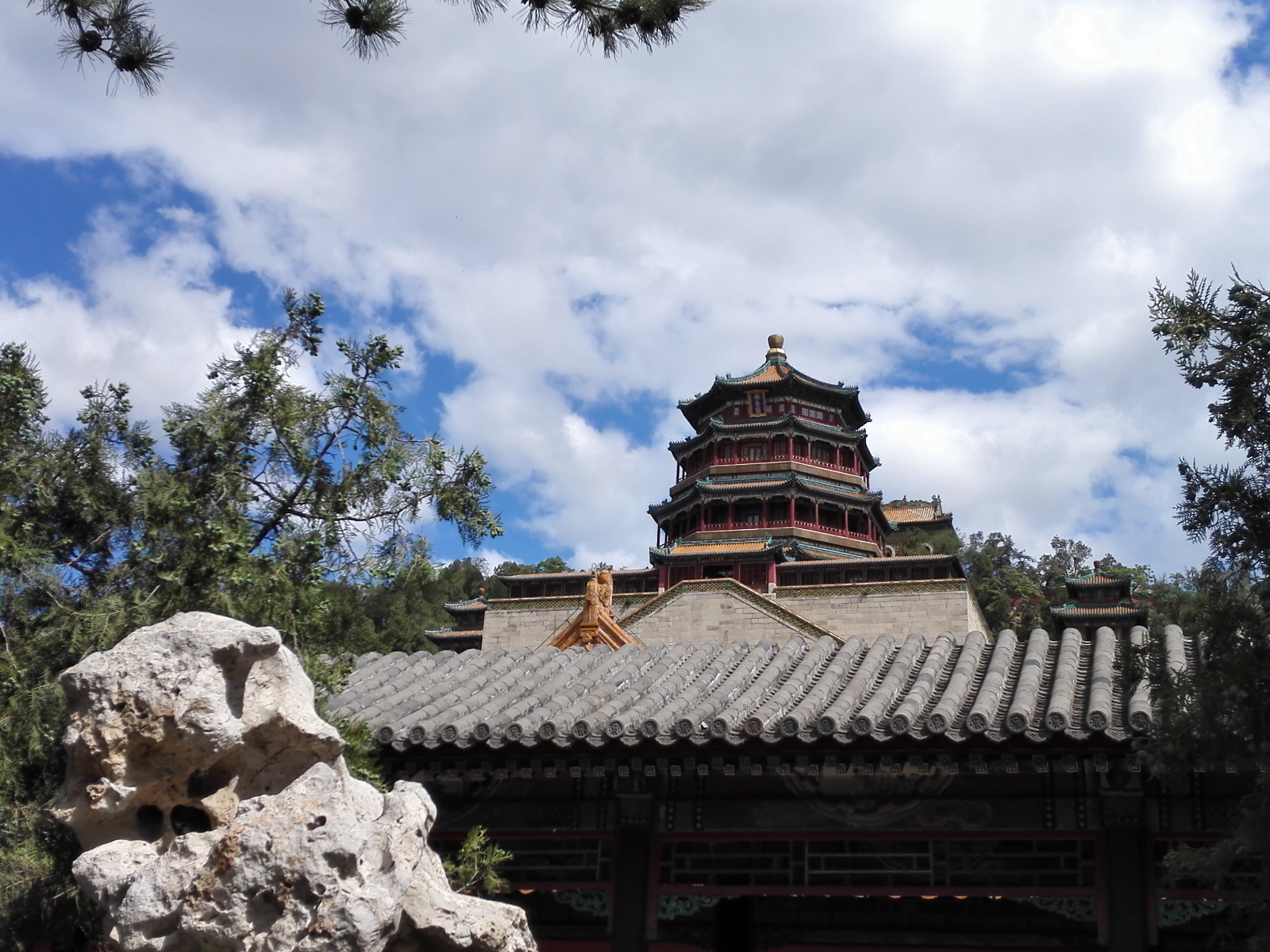
Ten years of iPhone photographs transform Beijing’s Summer Palace into a personal archive of changing seasons, light, memory, and time.
***
Ten years ago, I got my first iPhone. Since then, every upgrade has also been an iPhone. So for the past decade, all my photos have been stored on my phone and in iCloud, always ready to revisit.
Among them is a sizable collection of photos of the Summer Palace.
I’ve lived in Haidian since my university days. After graduating, every company I’ve worked for has also been in Haidian, and every place I’ve rented has been there too. What’s even more interesting is that all these locations lie along a north-south road, no more than 3 kilometers apart at their furthest. The Summer Palace sits roughly 5 kilometers from my usual range of activity—about a 12-minute drive or a 25-minute bike ride.
By Beijing standards, it can practically be considered the park next door to home (or the office).

Thanks to the convenient access and my inexplicable fondness for the place, I’ve visited the Summer Palace on and off over the years. On days I get off work early, I’ll go catch the sunset; when the weather is especially nice, I’ll take a lunchtime stroll; on snowy days, I’ll go admire the winter scenery; on days I play hooky, I’ll go relax… Each time I visit, I casually snap a few photos. Over time, they’ve accumulated into a large album.
It’s worth noting that I’m not a professional photographer. All photos are straight out of the iPhone camera (across iPhone 6s/8/12/16), with no color grading or post-processing. Through these casual snapshots from an ordinary visitor, I hope to give you a glimpse of the true beauty of the Summer Palace—though in reality, it’s even more stunning than the photos suggest.
Basic Information
The Summer Palace is a 5A-rated scenic attraction and is crowded year-round. Weekends, school holidays, and major public holidays such as National Day and Spring Festival are especially busy.
Admission Tickets
From April 1 to October 31 is peak season, with opening hours from 06:00 to 20:00 (last entry at 19:00). The main gate ticket costs 30 RMB (excluding additional attractions such as the Tower of Buddhist Incense and Suzhou Street). From November 1 to March 31 is off-season, with opening hours from 06:30 to 19:00 (last entry at 18:00), and tickets cost 20 RMB. Tickets can be purchased via the mini program “Summer Palace Official Online Ticketing,” and there are also ticket counters at the entrance.

For visitors based in Beijing or those planning multiple visits, the Beijing Park Annual Pass is also a great option. For just 100 RMB per year, it grants multiple entries to the main gates of major attractions such as the Summer Palace, Temple of Heaven, Jingshan Park, and the Botanical Garden. This is something I buy every year. It used to be a physical card, but now it’s a digital QR code within the “Beijing Yikatong” app, making entry very convenient.
Entrances and Exits
The Summer Palace has multiple entrances. The most popular and convenient ones include Beigongmen (North Palace Gate), directly accessible via Subway Line 4, close to Suzhou Street, the Tower of Buddhist Incense, the Long Corridor, and the Marble Boat. There are also Donggongmen (East Palace Gate) and the New Palace Gate on the eastern side, accessible by bus (routes 332, 584, 374, 74, etc.). These are near the main scenic areas and Kunming Lake; entering through the New Palace Gate, you’ll immediately see the famous Seventeen-Arch Bridge and the Bronze Ox—perfect photo spots. Entering through any of these gates allows you to cover all major attractions within a relatively short distance.

If you’re a frequent visitor or want to avoid crowds, you can choose the Ruyi Gate in the southeast or the West Gate in the southwest (accessible via the Xijiao Line). These are slightly removed from the main scenic areas but are excellent for leisurely walks and appreciating the beauty of imperial gardens. If you’re specifically heading to the Jade Belt Bridge, entering from the West Gate and heading north along smaller paths is a convenient option.
As for me, I usually enter through the New Palace Gate and head toward Ruyi Gate, walking 2–3 kilometers along the southeastern side of Kunming Lake before exiting through the West Gate. This route is never too crowded, offers a reasonable walking distance, and features beautiful scenery. If needed, you can also exit at any point along the way—it’s very convenient.
Best Time to Visit
Finally, a note on timing. The Summer Palace is busy year-round, and each season offers its own charm. If you had to pick a quieter time, the coldest weekdays in winter (when temperatures are below freezing) tend to have fewer visitors. Dress warmly, and you’ll enjoy a peaceful daytime experience. During the pandemic, I often took walks there, witnessing many tranquil and breathtaking everyday scenes—memories that remain vivid.
Within a single day, early mornings and evenings are undoubtedly the best. I’m not much of a morning person and have never entered at dawn, but older family members say that around 6–7 a.m., before the crowds arrive, the park is incredibly quiet and pleasant— their favorite time to visit. Personally, I recommend arriving just before the last entry time—before 6 p.m. in the off-season or before 7 p.m. in peak season. On one hand, for those of us who finish work late, as long as you make it in before closing, you can still enjoy a full hour before the park shuts, with most tourists already gone—leaving only locals and a few dedicated photographers. On the other hand, this is often when the sunset and evening scenery are at their most beautiful—the very reason I keep coming back.
Next, I’ll use simple, straight-out-of-camera phone photos to showcase some lesser-seen views of the Summer Palace.
Afterglow at Sunset
Southerners who have long lived in northern China may share the same feeling as I do: the blue of the northern sky is something rarely seen in the south. Especially on clear days with clouds, the sunset in the evening is absolutely worth watching.
Coupled with Beijing’s rainy summers, in July and August the sky often suddenly darkens in the afternoon, followed by an unexpected downpour. If the skies clear up by evening, that day’s sunset will almost certainly dominate everyone’s social feed. Whenever such weather appears, I prepare in advance—finish my work early and head to the Summer Palace to catch the sunset.
The first sunset photo of the Summer Palace in my phone is a very classic scene:

Three minutes later, on the Seventeen-Arch Bridge:

At 17:09 that day, the sun had dipped behind the Western Hills, leaving only colorful clouds across the sky:

Sometimes, after the sun sets, the sky darkens quickly; other times, once the sun fully disappears below the horizon, the western sky bursts into vivid red clouds, as if the entire world has been softly painted over—utterly dreamlike. A few days ago, I went to the Summer Palace again. The daytime weather was mediocre, so I didn’t expect much. I rushed there after work and managed to enter just before closing, at first only seeing a rather “ordinary” sunset:

The weather forecast showed sunset at 18:15 that day. Right on cue, as the sun slipped behind the hills, red clouds illuminated the sky, and a few girls beside me couldn’t help but exclaim in awe:

Soon the sky deepened in color, the warm red glow bringing a sense of calm and comfort. I couldn’t help but think: what a beautiful day.

My album contains many such “Magic Time” moments—each one a joy to revisit. Here are a few more particularly stunning examples. On this day, the clouds stole the show—what shape do you think they resemble?

On this day, the sunset glow was incredibly saturated. If the photo already looks like this, I must have been completely immersed in it at the time—especially during the pandemic:

My album also preserves some full sequences, capturing the entire progression of a sunset:

Of course, not every visit to the Summer Palace brings such beautiful scenes. One particularly memorable time was a weekend evening in late spring. I entered the park just before 6 p.m. The sky was thick with clouds. Although sunlight broke through gaps in the clouds, forming cone-shaped beams, I still felt a bit disappointed, thinking there would be no good sunset that day.

But just as I was about to leave, within a matter of minutes, the sunlight suddenly pierced through the clouds and shone onto the Tower of Buddhist Incense, giving me renewed hope.

For nearly an hour afterward, the clouds gathered and dispersed unpredictably—sometimes revealing the sunset, sometimes hiding it. My mood rose and fell along with it. Finally, at the moment of sunset, the long wait paid off with a breathtaking view.

Of course, I was never alone. At every sunset moment, there was always a group of elderly photographers beside me, equipped with long lenses and professional gear, quietly watching the same sunset together.

Blue Hour Night
In terms of quantity, sunsets are what I’ve photographed the most. But in terms of preference, I’m even more drawn to what comes after—the gradual darkening of the sky, as the Summer Palace slowly fades into the night.
Let’s start with an overall impression: this set of photos directly follows the sunset series above. At 19:37 that day, the overall tone of the sky shifted abruptly from red-orange to a pale blue. Apart from the direction of the sunset, the rest of the scene resembled an ink wash painting (see the middle image in the first row): the sky, mountain silhouettes, and water surface all shared a deep blue palette, differing only in intensity.

As blue hour sets in, the surface of Kunming Lake appears even more tranquil than during the day. Perhaps it’s because the distant mountains, clouds, and pagodas all turn into silhouettes, creating a stronger sense of calm.

At this time, there are very few visitors left in the park. The occasional passerby is quietly admiring or photographing the scenery—hardly anyone speaks loudly or laughs, adding another layer of stillness to the atmosphere.

Before closing, the park repeatedly plays soft background music and announcements. The lingering melodies, paired with scenery that is almost fading into darkness, create an unreal, dreamlike feeling.

Recently, I noticed that after night falls, various structures within the Summer Palace—including the arches of the Seventeen-Arch Bridge—are illuminated. The lights reflect off the dim lake, creating a subtle harmony. I can’t quite remember when this change began. While it has softened the once profound sense of quiet mystery, it has also introduced a different kind of charm.
This photo was taken from the south side of the Seventeen-Arch Bridge looking north, with the illuminated Tower of Buddhist Incense in the distance:

Ten minutes later, taken from the north side of the bridge looking south. As the sky darkens further, the lights shimmer across Kunming Lake, appearing both dignified and dazzling—evoking Van Gogh’s Starry Night series:


Once, I stayed until it was completely dark before leaving the park (still within official opening hours). When all human voices had faded, leaving only the sound of water and my own footsteps, I felt a slight sense of unease—but even more so, a deep reverence for nature, as if I had fully become part of it in that moment.
If you’re interested, try visiting during peak season when the park closes at 8 p.m. In September or October, pick a day when sunset comes relatively early, and linger a little longer in the Summer Palace. Experiencing it under moonlight will surely leave a lasting impression. Overall, the park is quite safe, but it’s still best to stay alert—and ideally, go with a companion.
Winter Scenes
As mentioned earlier, winter is the off-season for the Summer Palace. Combined with Beijing’s strong winds and low temperatures, visitor numbers drop significantly during the coldest days. Compared to spring, summer, and autumn, I actually prefer visiting the Summer Palace on clear winter days during the daytime—and over the years, I’ve captured quite a few beautiful scenes.
This photo captures a perfectly ordinary winter noon—entering from the West Gate and walking toward the Jade Belt Bridge, facing the Western Hills. This route is less crowded and the scenery is relatively understated, making it ideal for casual strolls. Just remember to wear a hat, or your head will freeze numb.

In recent years, Beijing’s air quality has improved noticeably. In earlier times, winter smog was severe, so I especially cherished the rare days of good weather. Whenever the weather looked promising, even during a short lunch break—and even if it meant skipping a meal—I would come to the Summer Palace for a quick walk and some time with nature. This habit has continued to this day, and I suppose it’s a bit of a “luxury complaint.”
Some photos are special not because of the scenery, but because of the moment and state of mind when they were taken. For example, when I took this photo, the entire country was at one of the strictest stages of pandemic control, right on the brink of reopening. I was overwhelmed by constant streams of negative news online, leaving me mentally exhausted. Then I had an idea—since I couldn’t go to the office anyway, why not come to the Summer Palace instead? This image was taken at the same location and angle as the previous one, except the lake hadn’t frozen yet. You can faintly see a black swan on the left. Watching these carefree creatures play in the water brought me a sense of relief.

In winter, sunsets in Beijing come very early. By the time I leave work, it’s often already pitch dark—another day gone in a blur. This photo left a deep impression on me: it was taken on the last day of 2021, a Friday afternoon. That day, I had no motivation to work, feeling like I had wasted yet another year. At the very least, I wanted to do something meaningful before it ended—leave behind a memorable closing moment. So I skipped work and went to the Summer Palace. To my surprise, the sunset that day was exceptionally beautiful, the sky glowing with a warm orange hue, as if the whole world was gently embracing me. I love that sunset dearly—it gave 2021, a rather heavy year, a precious moment of beauty.

Every winter, once the ice reaches a certain thickness, the park allows visitors onto designated areas of Kunming Lake. The ticket prices are a bit steep though. This winter, the current rates are: simple ice sleds (wooden boards requiring both hands and feet to move) at 50 RMB with no time limit, and ice bicycles (similar to children’s four-wheeled bikes) at 100 RMB with no time limit. I’m not very athletic, and despite living in Beijing for years, I’ve never ventured onto the ice—I’m afraid of falling.
The final set of photos holds a particularly important place in my album.


The sky that day was unbelievably blue. I compared it with other photos taken before and after—there’s absolutely no color adjustment. The location was near the North Palace Gate, at the rarely visited Back Lake of the Summer Palace. Even though the trees were mostly bare, the sky was a vivid blue, and the water was crystal clear. Whenever I show these photos to friends, some think they were taken in Jiuzhaigou, others in Xinjiang (I haven’t been to either, so I can’t say how similar they are), but no one believes they were taken in Beijing—let alone in the middle of winter.
Since then, I’ve revisited the Back Lake many times in winter, but I’ve never seen the same light and scenery again. It truly was a fleeting moment, and I’m incredibly grateful to have captured it, allowing me to revisit it again and again.
Conclusion
As mentioned above, once you’ve lived in Beijing long enough, no matter the season, there will always be days when the weather feels almost unreal in its perfection. For people like me, stuck in the pressures of big-city life, these moments offer a rare chance to breathe. That’s why I keep returning to the Summer Palace—wandering, taking photos, and simply being.
Over the past decade, many of the Summer Palace photos in my album are quite similar or repetitive. They take up a significant amount of storage space, even pushing me to upgrade my iCloud plan just to keep them accessible. My family often complains that I never clean up my photo library, that there’s too much clutter—but deep down, I simply can’t bring myself to delete any of them. To me, these captured moments are my real life. In between work hours, or after finally finishing a long day, these scenes and the experiences they bring have healed me, giving me the strength to return to the endless routine of daily work with renewed energy.
One last note: many people might notice that I haven’t shown the classic “Summer Palace icons” like the Tower of Buddhist Incense, the Long Corridor, or the Marble Boat. I do have plenty of those in my album. But what I wanted to share more is the Summer Palace as a place of everyday leisure—a park near home that has accompanied me for over a decade—rather than a distant, prestigious 5A tourist attraction.
Thank you for reading. If any photo has moved you, feel free to download it—I would be honored. And if you have a park near your home or workplace that you often visit, don’t hesitate to take photos. Over time, you too may build an entire album filled with beautiful moments.
Share:

Exploring technology, digital culture, and better ways to live and work.