
Tag: MacBook Neo

  • SSPAI Morning Brief: PlayStation Tests Personalized Game Pricing as China Approves Its First Brain–Computer Interface Medical Device

    SSPAI Morning Brief: PlayStation Tests Personalized Game Pricing as China Approves Its First Brain–Computer Interface Medical Device

    Morning Brief

    1. China’s market regulator cracks down on misleading ads with “big claims and tiny disclaimers”
    2. CCTV’s 3.15 Gala exposes “data poisoning” attacks on large AI models
    3. PlayStation Store tests dynamic pricing, with different prices for different users
    4. Adobe reaches settlement with the U.S. Department of Justice over deceptive subscription cancellation practices
    5. MacBook Neo rated the most repairable Apple laptop in 14 years
    6. China approves its first brain–computer interface medical device
    7. Other News Worth a Quick Look

    China’s market regulator cracks down on misleading ads with “big claims and tiny disclaimers”

    On March 13, China’s State Administration for Market Regulation (SAMR) issued a notice titled Notice on Strengthening the Regulation of Prompting Language in Advertisements, launching a six-month campaign to clean up related advertising irregularities.

    The notice requires:

    • Cracking down on misleading “big headline, tiny disclaimer” advertising. Ads that use hard-to-read small text to indicate restrictions or unfavorable information will be targeted; in serious cases they may be classified as false advertising;
    • Investigating cases where required prompting language is missing or intentionally weakened. Advertisements for pharmaceuticals, health supplements, and similar products must clearly display legally required warnings; AI-generated content must also be clearly labeled. Unauthorized use of another person’s likeness may be deemed false advertising;
    • Investigating advertisements that use absolute language. Terms such as “No.1” or “Best” will be strictly scrutinized. If unclear industry scope definitions lead to consumer misunderstanding, such ads may be classified as false advertising;
    • Strengthening oversight of cited claims and advertiser self-verification. Citations must indicate their sources; when advertisers use their own data as proof, timeframes, regions, and other limiting conditions must be clearly stated. Distorting data, presenting probabilistic conclusions as certainty, or omitting limiting conditions may all constitute false advertising;
    • Enhancing supervision of major advertising distribution channels. Internet platforms and outdoor advertising publishers must fulfill their responsibilities and ensure that disclaimers and prompt information are prominently displayed in advertising designs.

    CCTV’s 3.15 Gala exposes “data poisoning” attacks on large AI models

    On March 15, China Central Television’s annual “3.15 Consumer Rights Gala” exposed a black-market industry chain dedicated to “poisoning” AI large models and manipulating their outputs.

    The report explains that GEO originally refers to marketing optimization for generative AI search results, similar to SEO during the traditional search engine era. However, some illicit service providers are exploiting Generative Engine Optimization (GEO) techniques to flood the internet with fake promotional articles. These articles interfere with how AI models gather and cross-validate information, allowing companies to manipulate AI outputs so that advertisements or fabricated claims appear as the “standard answers” recommended by AI to consumers.

    During the program, industry insiders demonstrated the process. They randomly purchased a piece of software called the “Liqing GEO System” and fabricated a fictional smart wristband named Apollo9. The GEO software immediately generated promotional articles containing absurd claims such as “quantum entanglement sensors” and “black-hole-level battery life,” then automatically published them across multiple self-media accounts. Within two hours, major AI models had already scraped these posts. When users later asked for smart band recommendations, the AI repeated the fabricated promotional claims verbatim. After publishing additional fake product reviews generated by the GEO system, two AI services began recommending the wristband near the top of their responses within three days.

    The report revealed that the growing demand for GEO services has led to the emergence of numerous companies and platforms specializing in mass content publishing. These operations handle bulk posting requests, automatically releasing hundreds of machine-generated spam articles every day and earning tens of yuan per article.


    PlayStation Store tests dynamic pricing, with different prices for different users

    According to the PlayStation price tracking website PSprices, the PlayStation Store is conducting large-scale A/B testing of dynamic pricing. The testing has been quietly underway for more than four months and expanded in March to the United States—PlayStation’s largest market—covering over 70 regions worldwide across Europe, the Americas, and Asia, and involving more than 190 games. Japan is the only major market not included in the test.

    The testing was discovered through analysis of backend API data. Under the dynamic pricing system, players are randomly divided into groups. Some selected users see exclusive discounted prices lower than the standard retail price when browsing the same game, with discounts reaching up to 27.8%. Games included in the dynamic pricing test range from popular third-party titles by major publishers such as 2K and Rockstar to key first-party releases including Marvel’s Spider-Man 2, God of War: Ragnarök, and Helldivers 2.

    Data released so far suggests that Sony has created multiple test groups targeting different markets and user segments to evaluate various discount levels. This personalized pricing has also appeared in specific promotional events. For example, during a recent sale, ordinary players saw a 25% discount for Helldivers 2, while some users in experimental groups were offered discounts as high as 56%.


    Adobe reaches settlement with the U.S. Department of Justice over deceptive subscription cancellation practices

    On March 14, Adobe agreed to pay a $75 million fine and provide $75 million worth of free services to affected users to settle a lawsuit filed by the U.S. Department of Justice over allegations that it concealed subscription cancellation penalties.

    The lawsuit began in 2024, with the core dispute focusing on Adobe hiding expensive early termination fees within supplementary clauses or hyperlinks in user agreements. If users canceled an annual subscription plan midway, they could be charged 50% of the remaining subscription cost, often amounting to several hundred dollars. Adobe was also accused of creating complicated phone-based customer service processes that deliberately made cancellation more difficult. At the time, the Department of Justice argued that Adobe’s practices violated the Restore Online Shoppers’ Confidence Act, which is intended to prevent deceptive billing practices in online services.

    Under the settlement agreement, Adobe did not admit to any wrongdoing. The company has not yet clarified which users will qualify for the free service compensation or what form it will take, stating only that eligible users will receive notifications. Adobe also emphasized that it has improved its sales processes in recent years, making cancellation terms clearer at the time of purchase.

    The settlement is also seen as another instance of the Trump administration scaling back consumer protection lawsuits initiated during the Biden era. Previously, the Federal Trade Commission and the Department of Justice reached settlements in major cases involving Amazon Prime subscriptions and Ticketmaster’s ticketing services.


    MacBook Neo rated the most repairable Apple laptop in 14 years

    On March 13, iFixit released a teardown report for Apple’s budget laptop MacBook Neo, awarding it a repairability score of 6 out of 10 and calling it “the most repairable MacBook in 14 years.”

    The teardown revealed significant changes to the internal design. The most notable update is the complete abandonment of Apple’s long-used glued-in battery, replaced instead with a battery tray secured by 18 screws. This design greatly reduces the difficulty and risk of battery replacement. The move is believed to prepare Apple for upcoming European Union regulations set to take effect in 2027, which will require batteries in portable devices to be replaceable. Tests also showed that the device no longer imposes software restrictions on non-original parts. After replacing components such as the display, battery, or even the Touch ID fingerprint module, users only need to run Apple’s official calibration software for proper compatibility, without triggering warnings about non-genuine parts.

    Other internal components of the MacBook Neo also demonstrate a higher level of modular design. The USB-C ports and 3.5 mm headphone jack are separate modules, meaning they can be replaced individually without swapping out the entire motherboard. The disassembly process for the display antenna and hinges has also been significantly simplified. In the control area, the keyboard still requires removing 41 screws but has moved away from the previous riveted structure. Meanwhile, the trackpad has dropped its force-touch functionality, making it easier to repair and cheaper to replace.


    China approves its first brain–computer interface medical device

    According to Bloomberg, on March 13 China’s National Medical Products Administration approved the country’s first commercial invasive brain–computer interface (BCI) product. The device was developed by Neuracle and is designed to help adult patients with partial paralysis caused by spinal cord injuries improve hand grasping ability by controlling a robotic glove with their thoughts.

    The approved system integrates an implanted brain sensor, a robotic glove, signal decoding algorithms, and related medical software. It has previously been tested on 36 patients. Unlike devices such as Elon Musk’s Neuralink, which implant electrodes directly into the cerebral cortex, Neuracle’s sensor is placed outside the brain’s outermost membrane. This approach is relatively less invasive, but because it has fewer signal detection channels, the current system is limited to patients who still retain some upper-arm function. It cannot yet enable more advanced interactions, such as allowing fully paralyzed patients to browse the internet or play games.

    Brain–computer interfaces have been identified as one of six strategic emerging industries in China’s latest five-year plan. Authorities have pledged to streamline regulatory approval processes and are already working on guidelines for potential medical insurance reimbursement. Following news of the first commercial product approval, shares of related companies—including Sanbo Brain Science, Innovational Medical, and Nanjing Panda Electronics—have all surged by more than 10%.

    Investment and financing activity in the global brain–computer interface sector is also accelerating. Last week, another Chinese company competing in the Neuralink space, StairMed, completed a 500 million RMB funding round led by Alibaba and plans to conduct 40 additional human implant procedures this year. Chengdu-based Gestala, which is developing alternative BCI technologies, also announced a 150 million RMB seed round. In the United States, Science Corp recently raised $230 million to advance the commercialization of its implantable devices.


    Other News Worth a Quick Look

    • On March 14, 360 held a launch event in Beijing, unveiling the so-called “360 Secure Lobster” client and the “360 Secure Lobster Box” hardware terminal, along with a security product called “360 Lobster Guardian” designed specifically to address OpenClaw security issues. 360 claims this is the first OpenClaw agent product in China designed around a “security mode.” The company also promoted the solution as addressing what it describes as the four major obstacles hindering OpenClaw adoption—“difficult installation, difficult maintenance, instability, and security risks.” According to 360, the Secure Lobster product line provides a comprehensive “fully prepared out-of-the-box, all-around protection” solution aimed at allowing ordinary users to benefit from the technology and achieve what it calls “Lobster freedom.” Zhou Hongyi personally helped install and deploy “360 Secure Lobster” for users at the company’s headquarters campus.
    • According to The Information, ByteDance has paused the global release of its latest AI video generation model, Seedance 2.0, due to copyright disputes with major Hollywood studios. The model had originally been scheduled to open to global users in mid-March this year.
    • Mark Gurman reports that:
      • Apple is deeply adapting iOS 27 for a foldable iPhone, introducing split-screen multitasking to the iPhone for the first time. Because the foldable panel must be purchased from Samsung at a high price, combined with a complex hinge mechanism and premium materials, the device will be very expensive;
      • Apple’s first smart home device with a 7-inch display, originally scheduled to launch in March this year, has been delayed to September due to ongoing development delays in the new version of Siri and related AI features;
      • Liquid Glass will not undergo major changes in iOS 27. Although Alan Dye, the vice president who led the design, left with several key team members for Meta late last year, the interface has been in development for years and is deeply integrated into Apple’s ecosystem. His successor Steve Lemay will focus primarily on optimization;
      • Apple will not consider equipping the MacBook Neo with high-end components such as touch displays within the next three years.
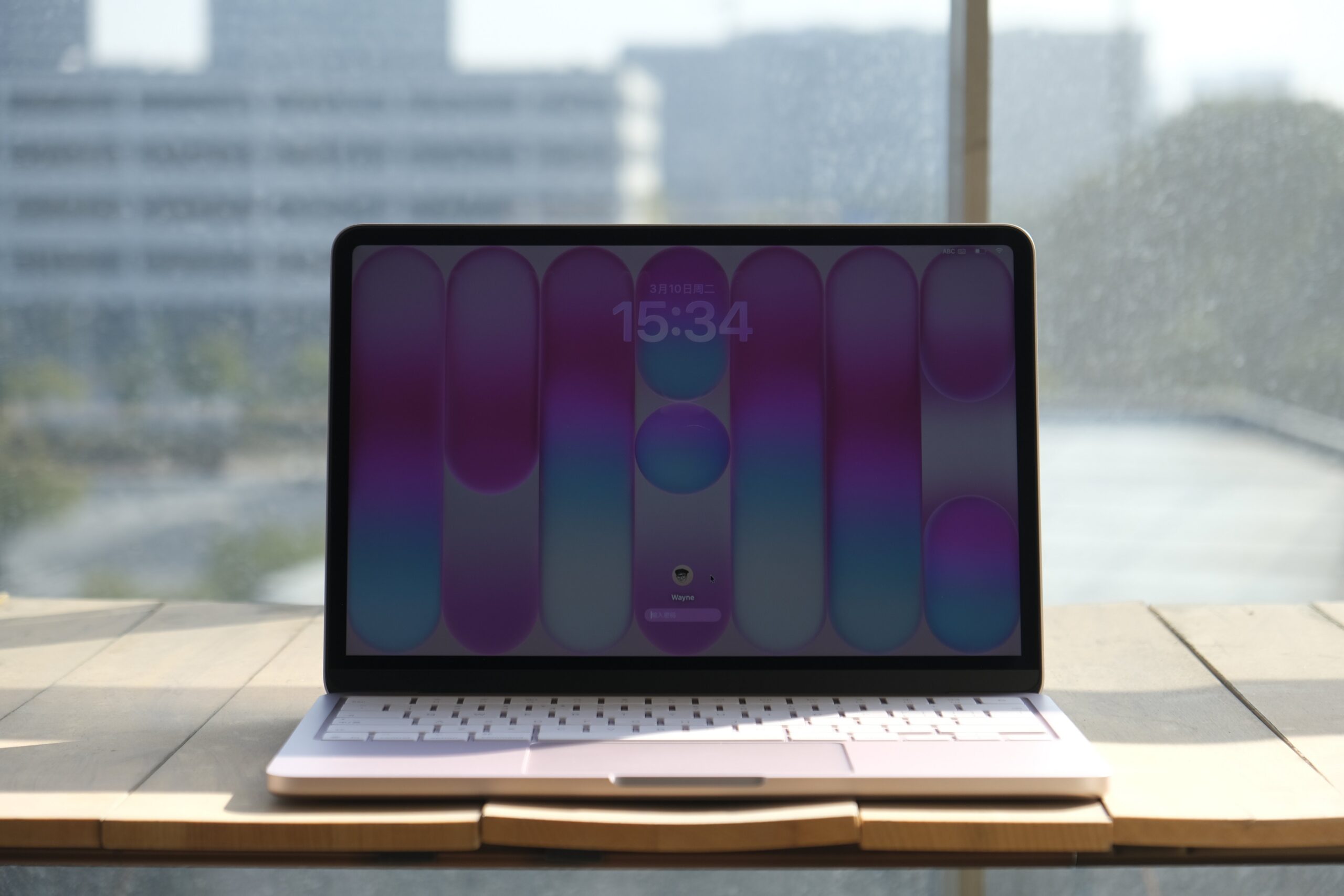
  • MacBook Neo Hands-On: Apple’s Most Affordable MacBook Yet

    MacBook Neo Hands-On: Apple’s Most Affordable MacBook Yet

    Equipped with 8 GB of memory, 256 GB of storage, no fingerprint unlock1, a display that doesn’t support the P3 wide color gamut, and even powered by a chip originally used in smartphones—it’s hard to imagine this is a laptop released in 2026. Yet this is exactly what Apple’s long-anticipated new member of the Mac family looks like: the MacBook Neo.

    Let’s start with the design. The MacBook Neo is one of the few Macs in recent years to feature a colorful lineup of finishes. It comes in four options: silver, peach pink, citrus yellow, and indigo blue. From the color choices alone, you can tell Apple put considerable thought into the visual identity of this new model.

    Take the peach pink unit I have on hand as an example. In addition to the unibody aluminum chassis finished entirely in pink, the keyboard has also been customized to match the device color. On the peach pink model, the keys have a subtle pink tint, and even the rubber feet on the bottom of the chassis are pink to complete the look.

    On the software side, beyond the exclusive matching wallpapers designed for the four color variants of MacBook Neo, Apple has also added a new option in System Settings under “Appearance” > “Theme” color called “This Mac.” Selecting this option automatically sets the system accent color to match the color of your current MacBook Neo. This option does not appear on other Mac models.

    When it comes to weight, many people had assumed that the long-rumored Mac equipped with the A18 Pro chip would revive the ultra-thin 12-inch display design. Instead, the MacBook Neo feels far more conservative than expected in its external design.

    The overall look of the MacBook Neo continues the family design language seen on the current MacBook Pro and MacBook Air, with slightly softer transitions along the edges. The device’s footprint is roughly comparable to a 13-inch MacBook Air, although the Neo is slightly smaller in both width and depth, resulting in a more compact body.

    When I first picked up the MacBook Neo at Apple’s launch event, I realized the device didn’t feel quite as light as I had imagined. The official specifications published later on Apple’s website confirmed this impression: although the MacBook Neo has a more compact footprint, it is actually 0.14 cm thicker than the similarly sized MacBook Air. The weight difference is minimal, but technically the Neo is slightly heavier as well.

    So if you were hoping for a brand-new Mac laptop that would push portability even further, the MacBook Neo might not meet that expectation. That said, this doesn’t mean the device isn’t portable. For daily commuting or carrying it around, it’s still a lightweight Mac notebook. The portability advantages that define the MacBook Air remain present here, and the colorful finishes might even make you more inclined to take it with you wherever you go.

    The MacBook Neo features a 13-inch Liquid Retina display with 500 nits of brightness. Unfortunately, whether for cost reasons or to differentiate it from other Macs, the display only supports the sRGB color space rather than the wider P3 color gamut. P3 offers broader color coverage and can produce richer, more accurate colors when viewing photos or working on design projects.

    You can watch Apple’s technical explanation video to better understand the advantages of P3 compared with sRGB, or try web tools such as Wide Gamut to see the visual differences between the two color spaces on a supported device.

    For reference only.

    That said, aside from this limitation, the MacBook Neo’s display still maintains Apple’s usual high standards. For most everyday usage scenarios, you likely won’t notice a significant difference compared with the displays on other Mac notebooks.

    The typing experience on the MacBook Neo’s color-matched keyboard feels identical to other Mac laptops. Whether it’s the key travel or the tactile feedback when pressing the keys, I couldn’t detect any meaningful differences. However, the situation changes once you move to the trackpad.

    If you’re familiar with Macs, you’ll know that both MacBook trackpads and Apple’s Magic Trackpad have long used the Force Touch system. This technology relies on pressure sensors to detect varying levels of force, while the Taptic Engine simulates the feedback of a physical click through precise vibration.

    The MacBook Neo, however, returns to a traditional mechanical trackpad design. The feedback experience is noticeably different. With Force Touch, the simulated click feedback feels tighter and more precise. With the mechanical trackpad, you can clearly feel the physical travel of the click, and the feedback isn’t quite as crisp. Personally, I still prefer the feel of the Force Touch trackpad.

    Fortunately, the trackpad on the MacBook Neo still supports most of the gestures and interactions found on modern Mac trackpads. You can perform nearly all the familiar macOS touch operations. However, there is one thing to note: because a mechanical trackpad cannot detect pressure, the single-finger force-click gesture used for look-up actions has reverted to the older three-finger tap method on the MacBook Neo.

    When it comes to ports, the MacBook Neo only includes two USB-C ports on the left side of the chassis, supporting USB 3 and USB 2 speeds respectively. The USB 3 port supports DisplayPort output, allowing you to connect an external monitor. You also don’t need to worry about mixing up the two ports—if you plug a high-speed external SSD into the slower USB 2 port, the system will automatically display a reminder. Finally, the MacBook Neo also includes a 3.5 mm headphone jack on the lower left side of the chassis, though it does not support high-impedance headphones.

    For audio, the MacBook Neo’s dual speakers are positioned along the lower sides of the device and support Dolby Atmos playback and spatial audio. In actual use, the multimedia performance is fairly good, but the overall sound layering feels somewhat thin. This is especially noticeable in the vertical soundstage, where the audio tends to feel more like it’s spread across a flat plane, lacking the depth found on other MacBook models.

    In terms of performance, the MacBook Neo is currently the only Mac that does not support configurable hardware options. Aside from choosing a color, the only customizable option is storage capacity. The combination of 8 GB of memory and the A18 Pro smartphone chip has also led many people to question its everyday performance and overall user experience.

    First of all, although the MacBook Neo uses the A-series chip originally designed for the iPhone, both the A-series and M-series chips share the same ARM architecture. This means you don’t need to worry about application compatibility. Whether it’s native macOS apps or iOS / iPadOS apps that support Mac, they all run smoothly on the MacBook Neo.

    The A18 Pro chip used in the MacBook Neo was originally introduced with last year’s flagship iPhone 16 Pro, and its performance is already at a desktop-class level. Based on several benchmark runs I performed on the MacBook Neo, the highest results I recorded were a single-core score of 3468 and a multi-core score of 8104. The single-core score actually surpasses the M3 chip, while the multi-core performance is noticeably weaker, roughly comparable to the M1.

    I also used the MacBook Neo to edit a 4K 60 fps video project composed of more than ten clips. The final video length was 1 minute and 40 seconds, and exporting the project took around 3 minutes and 30 seconds. During the editing process, whether manipulating the timeline or using more demanding features such as the magnetic mask, the MacBook Neo maintained a generally smooth experience. However, the waiting time during heavy processing was more noticeable compared with models equipped with higher memory capacity.

    The real pressure appears during the export phase. While exporting, switching windows, invoking Spotlight, or interacting with other applications resulted in noticeable stutters. Checking Activity Monitor revealed that Final Cut Pro and related video encoding services had already pushed the 8 GB of unified memory close to its limit, which in turn affected the overall multitasking smoothness of the system.

    There is no doubt that the A18 Pro chip in the MacBook Neo is fully capable of handling everyday video editing or running some less demanding games. For light creative work, performance itself is not the main issue. What truly limits the experience is the lack of headroom caused by the 8 GB of memory, especially during sustained high-load tasks such as exporting video.

    Although it may seem like I’ve pointed out many shortcomings of this new Mac device, most of those comparisons were made against existing Mac notebooks. The MacBook Neo was never intended to replace the MacBook Air or other models. Instead, its goal is to lower the entry barrier and bring the refined design and rich application ecosystem of macOS to more users.

    From its pricing and positioning, the MacBook Neo is essentially an entry-level laptop—what we might traditionally call a “netbook.” Yet this netbook offers better design, a stronger ecosystem, and better performance than many products in the same category.

    Especially in the current industry environment where memory prices continue to rise, many rumors suggest that more brands may reduce or even abandon entry-level laptop product lines in the future. Because of that, a product like the MacBook Neo actually feels quite rare.

    Of course, I wouldn’t recommend choosing the MacBook Neo impulsively unless you are already certain that it will meet your needs for the next two or three years. In my opinion, the MacBook Neo is a Mac with a very clearly defined target audience and usage scenario. For older family members, it’s a computer that is simple and reliable to use; for children, it could also serve as an excellent first Mac for exploring the world of computers.

    1. The MacBook Neo features Touch ID fingerprint unlocking exclusively on the 512GB storage model. The 256GB model includes a function key lock. ↩︎
  • SSPAI Morning Brief: Apple Unveils MacBook Neo as OpenAI Prepares New AI Model

    SSPAI Morning Brief: Apple Unveils MacBook Neo as OpenAI Prepares New AI Model

    Morning Brief

    1. Apple introduces MacBook Neo
    2. Claude Code launches voice mode
    3. Setapp allows individual app purchases or subscriptions
    4. OpenAI confirms an upcoming new model
    5. Keychron releases the B11 Pro foldable keyboard
    6. ASUSTOR launches the flagship NAS AS7224RDX

    Apple introduces MacBook Neo

    On March 4, Apple officially unveiled the long-rumored “colorful entry-level” MacBook, with the new lineup named MacBook Neo.

    Further viewing: Hands-on photos of MacBook Neo from SSPAI

    MacBook Neo is powered by the A18 Pro processor, comes standard with 8GB of memory and a 13.0-inch Liquid Retina display, and features one USB 3 port and one USB 2 port. The device supports up to 16 hours of streaming video playback. It weighs 1.23 kg and includes a dual-speaker system with spatial audio support, Wi-Fi 6E, Bluetooth 6, and a 1080p FaceTime HD camera. The base model includes 256GB of storage, while the 512GB version additionally comes with Touch ID.

    MacBook Neo is available in four colors: silver, peach pink, citrus yellow, and indigo blue. The 256GB version is priced at 4,599 yuan, while the 512GB version costs 5,299 yuan. The product will officially go on sale on March 11. Source

    Product appearance images, provided by the news source

    Claude Code launches voice mode

    On March 3, Anthropic announced the gradual rollout of a new Voice Mode in its programming tool Claude Code, signaling that the developer-favored concept of “intuitive programming” is evolving toward a more efficient era of “voice programming.”

    The voice module is built directly into the underlying architecture of Claude Code. After receiving beta access, users will see a prompt prominently displayed on the welcome screen inviting them to enable the feature. During actual use, developers only need to press and hold the space bar on the keyboard to speak and input development requests, then release the key to quickly send the voice command to the AI for execution.

    In terms of pricing, Anthropic emphasized that the voice interaction feature will not incur any additional subscription fees. As the feature rolls out more broadly, users on the existing Pro, Max, Team, and Enterprise tiers will all be able to experience this new capability designed to improve development efficiency at no extra cost. Source


    Setapp allows individual app purchases or subscriptions

    On March 3, the MacPaw team announced that it will introduce new purchasing options for its Setapp platform, including standalone subscriptions and one-time purchase plans for specific apps. Under the new model, applications such as Bartender, Downie, and AlDente Pro, along with MacPaw’s own apps like CleanMyMac, Moonlock, and Gemini 2, will offer a variety of subscription and purchase plans, including monthly, yearly, and one-time purchase options. These purchase or subscription plans can all be accessed through Setapp, without requiring users to subscribe to the full Setapp service.

    Currently, more than 60 apps support the new purchase and subscription options, and the list of participating applications will be updated and announced regularly in the future. Source


    OpenAI confirms an upcoming new model

    On March 4, shortly after launching the GPT-5.3 Instant model, the OpenAI team stated on social media that GPT-5.4 “will arrive sooner than you think.” Since the GPT client shows that the older 5.1 model will be discontinued on March 11, some users speculate that OpenAI may officially release version 5.4 around that time. Source


    Keychron releases the B11 Pro foldable keyboard

    On March 4, the Keychron brand introduced the B11 Pro foldable portable keyboard. The product features a flat Alice layout, which is more ergonomic than the traditional horizontal layout, while remaining compatible with macOS, Windows, and Linux. The B11 Pro adopts an inward-folding design, with an ABS body and a matte black PU leather back. It uses scissor-switch mechanisms and comes with concave ABS keycaps. In terms of connectivity, the keyboard supports tri-mode connections including USB-C wired, 2.4GHz wireless, and Bluetooth 5.3 wireless, with a “dual 1kHz” polling rate. The entire keyboard weighs 258g and includes a built-in 250mAh battery rated for up to 138 hours of battery life, supporting automatic power-off when folded and automatic power-on when unfolded. The price is set at $64.99. Source

    Product appearance image, photo sourced from news outlets

    ASUSTOR launches the flagship NAS AS7224RDX

    On March 3, ASUSTOR, a subsidiary of ASUS, announced the launch of its 4U rackmount flagship NAS, the AS7224RDX (Lockerstor 24R PRO Gen2), featuring 24 drive bays. The AS7224RDX is powered by an AMD Ryzen 7 PRO 7745 eight-core processor and provides 24 SATA bays supporting either 3.5-inch or 2.5-inch drives. It also includes PCIe Gen5 ×8 and PCIe Gen5 ×4 expansion slots, one M.2 2280 PCIe Gen5 ×4 slot, two 10GbE network ports, and two 1GbE network ports.

    In addition, the device features four DDR5 UDIMM memory slots supporting up to 192GB of ECC memory, and comes preinstalled with 16GB DDR5-4800 ECC memory and a 32GB SATA DOM. It is powered by a pair of 550W Platinum redundant power supplies and equipped with four 60mm cooling fans. The system also provides four USB-A 5Gbps ports and one HDMI port for service purposes. Source

    Product appearance images, provided by the news source