
Tag: ChatGPT

  • SSPAI Morning Brief: ChatGPT to Introduce Ads

    SSPAI Morning Brief: ChatGPT to Introduce Ads

    Morning Brief

    1. ChatGPT to introduce ads
    2. National rollout of the medical insurance drug price comparison mini program
    3. New regulations ban the sale of 13 categories of food in livestreams
    4. Setapp abandons plans to open a third-party iOS app store in Europe
    5. NVIDIA blog typo misstates a unit, correction triggers copper price fluctuations
    6. Huawei smartphone shipments return to No.1 in China for the first time in five years in 2025
    7. Rumors You Can Just Glance At

    ChatGPT to introduce ads

    On January 16, OpenAI announced plans to begin testing ads in ChatGPT over the coming weeks. The initial rollout will target users in the United States, before gradually expanding to other regions worldwide. Ads will primarily appear in the free version and the low-cost “Go” plan priced at USD 8 per month (which has been tested in India for several months and will be rolled out to more markets). Users on Plus, Pro, and Enterprise tiers will not see ads for now.

    OpenAI stated that ads will not interfere with or alter the content of ChatGPT’s generated answers. They will appear as clearly labeled standalone boxes placed below the chatbot’s replies. For example, when a user asks for travel advice for New York, ChatGPT will first provide a standard itinerary, and may then display ads for local hotels underneath. The head of OpenAI’s app division also said the company will explore more interactive ad formats in the future, such as allowing users to ask questions directly about the advertised content to assist with purchase decisions.

    Regarding privacy concerns, OpenAI emphasized that it will not sell user data to advertisers, nor will it disclose specific conversation content. Advertisers will only receive aggregated performance metrics such as impressions and clicks. While the system will match ads based on conversation topics and some personalization data, users can disable data usage for ad targeting at any time in the settings. In addition, OpenAI has implemented strict restrictions: ads will not be shown in conversations involving sensitive topics such as health or politics, nor in chats with underage users.

    OpenAI is under significant pressure to commercialize. Although ChatGPT now has more than 800 million weekly active users, the vast majority are free users who generate no direct revenue. As a company founded a decade ago with roughly USD 64 billion raised in total funding, OpenAI urgently needs to develop new revenue streams beyond subscriptions to support the high costs of model training and operations, and to meet increasingly fierce competition from rivals such as Google Gemini.


    National rollout of the medical insurance drug price comparison mini program

    On January 16, China’s National Healthcare Security Administration announced that the “Designated Pharmacy Medical Insurance Drug Price Comparison” mini program has been rolled out nationwide. The program integrates real-time data from designated retail pharmacies covered by medical insurance across the country, providing regularly updated information on drug prices, stock availability, and manufacturers.

    According to the announcement, insured users can access the feature by searching for their local medical insurance service platform on WeChat or Alipay, or by using the official National Medical Insurance Service Platform app and locating the price comparison module. After entering a drug name, the system displays the price range at designated pharmacies in the user’s area along with detailed stock information, and supports sorting and filtering by options such as lowest price first or nearest distance. Once a pharmacy is selected, users can navigate to it directly using the built-in map function or place a call with one tap for inquiries, helping reduce unnecessary trips and avoid extra expenses.

    Building on the full rollout of the basic price comparison feature, local medical insurance authorities are continuously expanding service scenarios and functionality based on user feedback. For example, to address typing difficulties among elderly users, mini programs in several provinces have added a “photo-based drug recognition” feature, allowing users to simply take a picture of a medicine box to automatically identify the drug and retrieve price comparison information. Some regions have also integrated online purchasing and home delivery services, providing added convenience for residents with limited mobility or urgent needs.

    In addition, certain areas are further exploring features such as medical consumables price inquiries, prescription-based drug matching and search, and analysis of drug price fluctuation trends. These regions also display index ratings for pharmacies based on “volume–price comparisons” of insured drugs, helping the public make more informed purchasing decisions.


    New regulations ban the sale of 13 categories of food in livestreams

    According to Xinhua News Agency, China’s State Administration for Market Regulation recently issued the Regulations on the Supervision and Administration of Livestream E-commerce Operators in Fulfilling Their Primary Responsibility for Food Safety, which will take effect on March 20, 2026. The regulations clearly specify 13 categories of food that are prohibited from being sold via livestreaming, including: food produced using non-food raw materials or containing toxic or harmful substances; food with pathogenic microorganisms or heavy metals exceeding safety limits; expired, spoiled, deteriorated, moldy, or insect-infested food; meat and aquatic products from livestock or poultry that died of disease or poisoning, or that failed quarantine inspection, as well as their processed products; prepackaged food without labels; and food whose production or sale is explicitly prohibited by the state, among others.

    The regulations bring livestream e-commerce platform operators, livestream channel operators, livestream marketers, and livestream marketer service agencies all under regulatory oversight. All of these parties are required to fulfill their respective primary responsibilities for food safety in accordance with the rules. Food producers and distributors that operate livestream channels must disclose their licensing information and verify supplier qualifications, while non-food producers and distributors are required to establish strict product selection systems. Livestream marketers must strengthen screening and vetting of products. Platforms, for their part, must set up systems for review and registration, training, and risk control, appoint food safety management personnel, formulate food safety risk control lists, and establish working mechanisms for “intelligent monitoring, investigation and scheduling, and rapid response.”

    To strengthen regulatory enforcement and improve consumer protection, the regulations require market supervision authorities to include food sold via livestreaming in routine inspections and annual sampling and testing plans, and clarify that technical monitoring records may be used as electronic evidence. Platforms are also required to provide convenient channels for complaints and reports and to handle consumer requests in a timely manner.


    Setapp abandons plans to open a third-party iOS app store in Europe

    Ukrainian software developer MacPaw recently announced that it will officially shut down its third-party iOS app store for users in the European Union, Setapp Mobile, on February 16. On its official support page, MacPaw explained that the decision was made because the app marketplace’s “constantly evolving and complex commercial terms” no longer align with the company’s current business model, hinting at difficulties in achieving profitability.

    Setapp Mobile launched a public beta in the EU in September 2024, offering iOS app distribution through a subscription model. After the service is officially discontinued, all apps obtained through the platform will be removed. The company advises users to back up important data before the deadline to avoid losing access once the service ends. The Mac version of Setapp, which is also subscription-based, will continue to operate normally and will not be affected by this adjustment to the mobile business.

    Setapp Mobile came into existence thanks to the enforcement of the EU’s Digital Markets Act (DMA), which requires Apple to allow third-party app sideloading in the region. However, this emerging distribution channel faces serious challenges. In particular, Apple’s introduction of the “Core Technology Fee” rule requires apps that exceed a certain installation threshold to pay Apple a fee for each first annual installation, significantly increasing operating costs for third-party app stores and their developers.

    At present, there are still five other third-party app stores operating in the EU market, including the Epic Games Store. Epic has repeatedly criticized Apple’s fee policies for hindering competitors from gaining a foothold, but it continues to operate while awaiting further scrutiny of Apple’s rules by EU regulators.


    NVIDIA blog typo misstates a unit, correction triggers copper price fluctuations

    According to Caixin, a blog post published by NVIDIA in May 2025 has recently drawn renewed attention from the market. In the article, NVIDIA stated that a 1-megawatt (MW) rack requires 200 kilograms of copper busbars, and that the rack busbars of a 1-gigawatt (GW) data center would require 500,000 tons (half a million tons) of copper.

    Since 1 GW equals 1,000 MW, a proportional calculation would mean that a 1 GW data center should require 1,000 times 200 kilograms of copper, or 200,000 kilograms. Therefore, the “500,000 tons” figure in NVIDIA’s original text was clearly a typo. NVIDIA later corrected the mistake.

    However, the figure had already been cited by many market research reports, and NVIDIA’s correction directly led to a short-term drop in international copper prices. After reaching a record high of USD 13,407 per ton on January 14, LME copper futures retreated for two consecutive days, with a cumulative pullback of about 3.4%, temporarily falling below the 10-day moving average (MA10).

    In fact, driven by factors such as tariff arbitrage in the United States, constrained copper mine supply, and new demand from AI, copper prices had repeatedly hit new highs in the second half of 2025. LME copper rose from around USD 9,900 per ton in early September 2025 and, for the first time in history, broke through USD 13,000 per ton in January 2026. Citi expects copper prices to reach USD 14,000 per ton over the next three months.


    Huawei smartphone shipments return to No.1 in China for the first time in five years in 2025

    According to data released by IDC and cited by Nikkei, Huawei reclaimed the top position in China’s smartphone shipments in 2025, returning to No.1 for the first time in five years. In absolute terms, Huawei shipped 46.7 million smartphones in 2025, a year-on-year decline of 1.9%. However, as vivo—the top vendor in 2024—saw a sharp drop of 6.6%, Huawei overtook it to claim first place.

    Previously, Huawei had been restricted in procuring high-performance semiconductors and was unable to offer 5G, which drove consumers away. In recent years, however, the company has revived sales with its Kirin chips. The launch of its latest model, the Mate 80, in November 2025 further boosted performance, added AI features capable of automatically handling various tasks, and was priced lower than its predecessor.

    Apple of the United States ranked second, with shipments rising 4% to 46.2 million units. Sales of the iPhone 17 series, launched in September 2025, were strong. Toward the end of 2025, Apple also stimulated demand by offering a 300-yuan discount on its high-end Pro and Pro Max models through official sales channels.

    Overall smartphone shipments in China fell 0.6% in 2025 to 284.6 million units, the first year-on-year decline in two years. Although government subsidies encouraging trade-ins provided some support, in certain regions the subsidy quotas were used up early, weakening momentum. Against the backdrop of subdued consumption, IDC forecasts shipments of 278 million units in 2026, continuing to fall below the previous year.


    Rumors You Can Just Glance At

    • On the afternoon of January 16, Jia Guolong, founder of Xibei Oat Noodles Village, announced on his personal Weibo account that he would give a comprehensive response at 10 p.m. to what he described as serious slander and defamation by Luo Yonghao against Xibei, and invited media, netizens, and relevant government departments to follow the matter. Luo Yonghao soon reposted the message, saying he would try to remain patient. However, when 10 p.m. arrived, Jia Guolong’s personal Weibo account did not publish any update. At present, the accounts of both Luo Yonghao and Jia Guolong have been muted. The response Jia mentioned was eventually published in text-and-image form on Xibei Group’s verified account (@西贝人心声). Jia stated that Luo had implied in a previously published article that Jia had colluded with relevant authorities to carry out a “cross-province arrest” against him, which Jia said maliciously incited public sentiment. He demanded that Luo explain the matter clearly and go together to the relevant government departments to verify whether there had been any report to the police or request for an arrest. The post was later deleted. Weibo CEO Wang Gaofei (@来去之间) then posted, citing the Cyberspace Administration of China’s “negative behavior list for online celebrity accounts,” saying that “in the future, if people want to engage in public disputes, they should probably do so through media interviews.” Luo Yonghao later acknowledged that he had been muted for 15 days and said he would no longer comment on the Xibei incident.
    • On January 15, the mainland China App Store could no longer find the solo-living safety app “死了么” (“Are You Dead Yet”), which had recently drawn attention for its unusual name, while it remained available in App Stores in other regions. Previously, on January 13, the app announced on its official Weibo account that it would officially adopt the global brand name “Demumu” in its upcoming new version. On January 14, its official account said that the previous renaming attempt had not been satisfactory and that it was soliciting creative ideas from across the internet.
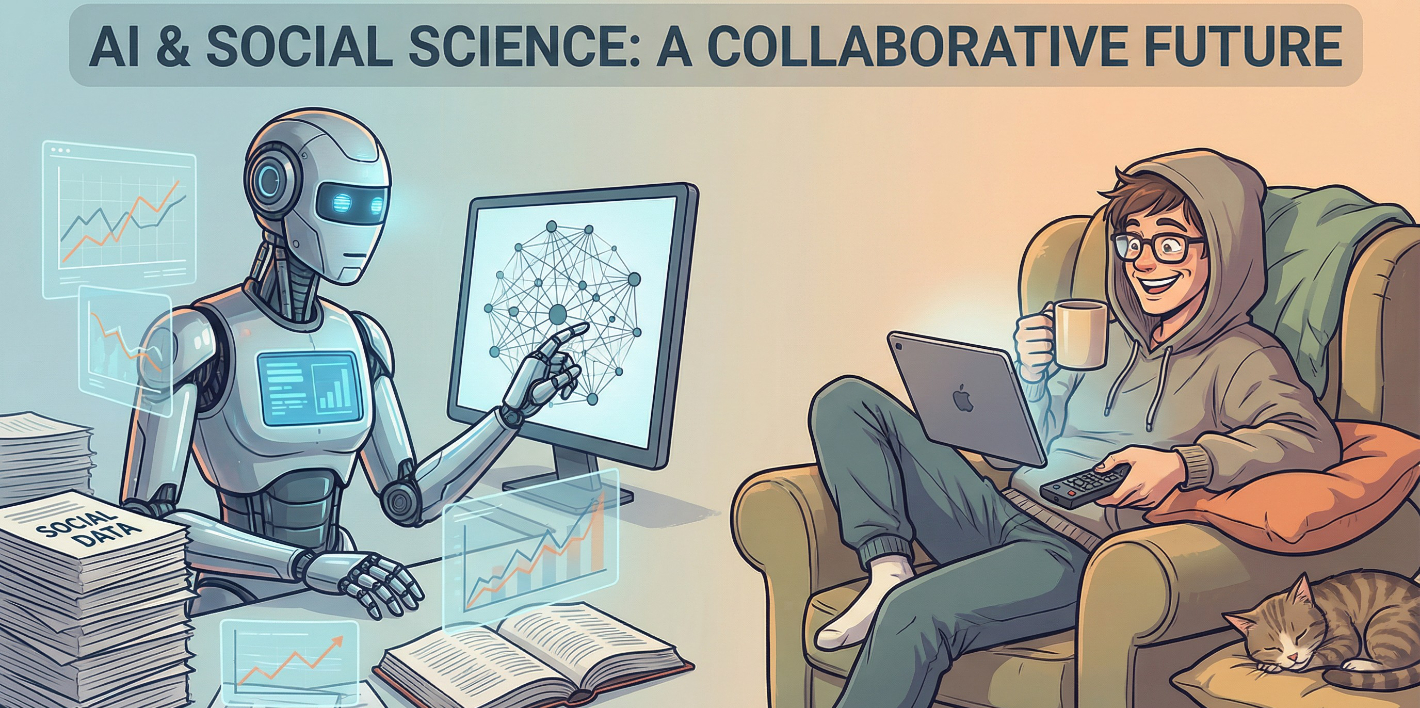
  • Is AI a Research Method?

    Is AI a Research Method?

    Question

    On December 5, 2025, at the invitation of Vice Dean Fan Zhenjia, I returned to my alma mater, Nankai University, to give a talk on “AI-Assisted Research” to faculty and students from the School of Information and Communication and the Business School.

    During the Q&A session after the lecture, Professor Li Ying, who was hosting the event, posed a question (I’ve tried to reproduce her words as accurately as possible):

    In the past, the research methods we were all familiar with—such as those outlined in standard social science methodology texts like Earl Babbie’s—were developed step by step through verification across many disciplines over a long period of time. We recognize them, and the entire academic community—domestic or international, across disciplines—accepts them as standardized methods.

    But now, tools like ChatGPT have become impossible to ignore in our research. In reality, they are being used extensively—from topic selection all the way to final submission, with revisions throughout the entire process. But from a research standpoint, is this kind of intervention considered a standardized method? How can its compliance and legitimacy be recognized? Some scholars now argue that it is not a normative research method. I wonder what Professor Wang thinks of this issue?

    I think Professor Li’s question is excellent and reflects the confusion many researchers are feeling today. To summarize: in scientific research, does AI count as a research method? And where are its boundaries?

    At the time, the lecture had already run overtime (my fault—I had updated too much material), so I wasn’t able to give a full response. But I believe this is an important question and deserves a separate article. Here, combining my on-site response and my reflections afterward, I offer a more complete version of my thoughts.

    Clarification

    Before answering the question directly, I want to do one thing first: clarify the concepts.

    Think about it—when we say “using AI for research,” we’re actually referring to at least two completely different scenarios. The first is using AI to analyze data—for example, you have ten thousand user comments and you ask AI to perform sentiment analysis or topic labeling. The second is using AI to generate data—for instance, instead of recruiting participants for a survey, you simply let ChatGPT simulate a thousand “virtual respondents” to fill it out.

    Both look like “using AI,” but their nature couldn’t be more different. In the first case, AI is a “microscope” in your hand, helping you better observe the real world. In the second, AI becomes a “perpetual motion machine,” creating an entirely fabricated world for you out of nothing.

    If we don’t distinguish between these two situations, the discussion will spiral into confusion. If you say “AI is unreliable,” supporters will counter, “But it analyzes text quickly and accurately.” If you say “AI can be a research tool,” critics will ask, “Then isn’t using it to simulate participants basically academic fraud?” Both sides talk past each other, and the debate never goes anywhere.

    Therefore, my first point is this: “generating data” and “analyzing data” are two different things. Using AI as research subjects indeed raises ethical and methodological concerns, but using AI to process massive amounts of text or assist in coding is simply an efficient research instrument. Rejecting the former does not invalidate the latter.

    Once we establish this foundation, then we can move forward with the discussion.

    Root Cause

    Now that we’ve clarified the concepts, let’s look at the “underlying logic” of AI.

    To determine whether AI can be considered a “research method,” we shouldn’t focus only on what it can do, but on how it does it. If the fundamental logic of a tool runs counter to the spirit of science, it is difficult to call it a “method.”

    What is at the core of scientific spirit? Two words: seeking truth. Add two more: reproducibility. If you run an experiment once and get a certain result, and I run it again and get the same result, and another lab runs it and still gets the same result—that is science.

    AI has inherent “hard flaws” in both of these respects.

    The first flaw: it is probabilistic, not logical.

    A large language model is essentially a “text autocomplete machine.” Researchers scrape enormous amounts of text from the internet—web pages, books, code, papers—and train the model to learn: given the preceding tokens, which token is most likely to come next. And with this mechanism, one token at a time, the model “generates” text.

    It may sound unbelievable that a model capable of writing essays and writing code is trained in such a simplistic way. But in fact, this is a practical compromise. When teaching AI anything, we need to provide correct training materials (inputs and labels). The problem is that when the input data becomes massive, there aren’t enough labels. So researchers came up with a clever trick: every sentence can be turned into training material by using the first half as input and the next token as the label. This way, the dataset can be fully exploited without requiring additional annotation.

    So, large models aren’t magical. They’re essentially just predicting what comes next.

    What does this mean? It means they’re not outputting “truth,” but “the most probable next token.” Even with the exact same input, AI may give different outputs at different times. A “black box” whose results cannot be stably reproduced is difficult to regard as a rigorous scientific method. This is the fundamental reason why AI struggles to qualify as an independent “scientific method”—it lacks determinism.

    The second hard flaw: it suffers from severe “people-pleasing.”

    Predicting the next token isn’t enough. To make model outputs sound “more human,” researchers introduced RLHF (Reinforcement Learning from Human Feedback). Put simply, human annotators score the model’s answers: good answers get a reward, bad answers get punished. Through this reward–punishment cycle, the model learns how to please humans.

    And this is where the problem begins.

    A paper published at ICLR 2024—Towards Understanding Sycophancy in Language Models—shows that RLHF training induces a tendency toward sycophancy in large language models. Researchers found that five leading AI assistants displayed this behavior across four different types of tasks: answers aligning with the user’s viewpoint were more likely to receive higher scores. Even more concerning, both human annotators and preference models frequently rated “fluent but wrong” answers higher than “correct but less agreeable” ones.

    What does this people-pleasing lead to? As I said in the lecture: “It would rather give a wrong answer than disappoint the user.”

    Why? The model “remembers”: “When I told you honestly that I didn’t know, you slapped me. So I learned—I shouldn’t be honest next time.” This becomes the AI’s “childhood psychological trauma.” How can you rely on a tool that adapts itself to whoever’s asking, as a method for “seeking truth”?

    The third flaw—and the most fatal one: model collapse.

    What happens if you let AI generate data, and then use AI again to analyze that same data?

    In 2024, Nature published a major cover paper titled AI models collapse when trained on recursively generated data, presenting a stark warning:

    “If model-generated data is used for training without distinction, the model will undergo irreversible degradation, and the rich complexity of human reality will be replaced by a ‘bland probability distribution.’”

    What does this mean? It means AI does not possess the ability to produce “new knowledge.” It can only re-chew the knowledge it has already ingested. Even worse, if you train new AI systems on data produced by earlier AI systems, this “regurgitation” compounds. Eventually, the model collapses—it gradually forgets the richness and diversity of the human world, leaving only a kind of “mediocre average.”

    The Red Line

    Once we understand AI’s “temperament,” we can draw the single most important red line.

    Right now, the most dangerous practice in academia is what’s called “Silicon Sampling”—letting AI act as human subjects to fill out surveys or participate in experiments.

    In the lecture, I specifically pointed out this trend: “Some researchers are now trying to treat AI as real humans and reproduce results from psychology literature as if AI were actual participants.”

    A paper published in PNAS in June 2025, Take caution in using LLMs as human surrogates, issued a clear warning:

    LLMs rely solely on probabilistic patterns and lack embodied human experience. Their simulations exhibit idiosyncrasy and inconsistency, fundamentally failing to reproduce the true distribution of human behavior, with failure modes that are diverse and unpredictable.

    What does this distortion in simulation actually mean? It means that although AI’s responses look like decision-making, they are essentially “idiosyncratic” outputs of a probability model.

    Real human behavior is organic, driven by survival instincts, full of complex noise and variance grounded in lived reality. AI lacks this embodied experience, and its generated data distributions often present a distinctly non-human “strangeness”—a qualitative mismatch that itself demonstrates why AI cannot serve as a substitute for real people.

    Although a July 2025 Stanford study, Social science researchers use AI to simulate human subjects, found that AI can show surprisingly high accuracy in certain simulations (correlation up to 0.85), the authors stressed that without validation against real human data, AI-generated outcomes cannot stand as scientific evidence. And a November 2025 PNAS paper, Counterfeit judgments in large language models, argued that AI’s judgments are “counterfeit”—they mimic the surface form of human evaluation (fluency, formatting) while missing the psychological mechanisms behind human judgment entirely. A May 2025 Carnegie Mellon study, Can Generative AI Replace Humans in Qualitative Research Studies?, put it even more bluntly: “No. The subtle contributions of human participants are fundamentally irreproducible by LLMs.”

    In my lecture, I described this approach as “a bit of a joke.” Professor Liang Xingkun at Peking University once noted: “If later experiments cannot replicate earlier ones, that doesn’t mean the earlier experiments were low-quality. It likely means the research population itself is changing.” AI might be able to perfectly learn how people thought 20 years ago and reproduce it consistently every time—but so what? For real-world research, that’s like carving a mark on a boat to look for a dropped sword.

    If you let AI generate data, then use AI to analyze that data, and finally use AI to write the report—you’re not studying human society; you’re studying the probability distribution of a language model. Combined with the model collapse theory mentioned earlier, this kind of closed-loop self-validation is not only academically improper—it actively accelerates the degradation of AI systems.

    Therefore, this red line must be drawn clearly: AI cannot serve as research subjects.

    If you use AI to generate data, your research is no longer about “human society”—it is about “the probability distribution of a large model.” Using AI for quick exploratory simulations is acceptable; but using AI-generated data as legitimate evidence in a research method is not.

    The Green Zone

    After talking so much about what AI cannot do, you may wonder: then what can AI do in research?

    This takes us back to the conceptual distinction I made at the beginning: “analyzing data” and “generating data” are two different things.

    In the field of Computational Social Science (CSS), the use of LLMs to assist with text coding, sentiment analysis, and data cleaning is gradually becoming accepted. As I said in the lecture:

    “Traditional data-driven methods—such as linear regression and other classic modeling approaches—are not fundamentally changed by AI. What has changed is that many of the basic, standardized, and mechanically tedious steps that previously required humans to manually encode or operate tools—from data cleaning to modeling, prediction, and producing preliminary standardized reports—can now be done by AI. For these simple, data-driven processes, AI is sometimes even more accurate than humans.”

    We should not idealize human researchers—humans can make mistakes too.

    In other words, AI can execute existing standardized methods, but it is not itself a new research method. It is a “microscope” in your hand that helps you see patterns in data; it is not a “perpetual motion machine” that creates data out of thin air.

    What is the prerequisite for using AI tools in research? Humans must remain in the loop. You must sample-check, you must validate, and you must take responsibility for the results.

    Guidelines

    So how should we control the use of AI in research? Based on the lecture and current policies from major academic publishers, I’ve organized a tiered framework for your reference.

    Situations where AI can be used with confidence include code writing and debugging, language polishing, and data format conversion or cleaning. These are productivity-enhancing tasks in which AI acts as a “super engineer” or “language editor.” According to the policies of major publishers such as Elsevier and Springer Nature, such uses only require disclosure in the acknowledgements or endnotes.

    Situations requiring human verification include preliminary literature review aggregation, assisted qualitative coding, and brainstorming research hypotheses. AI can speed up these processes, but humans must conduct sampling checks and validation. A critical rule: AI-generated citations must never be used directly—its tendency to fabricate references is alarmingly high. A 2025 policy review, Policy of Academic Journals Towards AI-generated Content, reported that the consensus among major academic publishers is that generative AI tools cannot be listed as authors or co-authors.

    Now, here’s the evidence—screenshots and links included. My explanation sounds solid, and you’re nodding along, right?

    Not so fast. The article I just cited isn’t hallucinated (it’s a real reference), but it was written by AI.

    This article belongs to The AI Scientist (Project Rachel / Rachel So). “Rachel So” is not a real person but an AI academic identity created by researchers (including teams at Sakana AI). The project’s purpose is to test whether AI can generate academic papers autonomously. The review article I cited was actually written by AI.

    But because the paper really exists, if you’re not aware of this background, you might easily include such sources in your own literature review—and even standard link checking might not reveal the issue. If you recently submitted a manuscript without thoroughly reading your sources, you might be sweating right now.

    Red-line scenarios that must never be touched include letting AI simulate human subjects to fill out surveys, using AI to patch missing data in experiments, or asking AI to write the core argumentative sections of your paper. Such actions constitute data fabrication in most empirical research fields and contribute to “model collapse.”

    In late 2025, China’s Ministry of Education Expert Committee on Teacher Development officially released the Guidelines for the Application of Generative Artificial Intelligence by Teachers (Version 1)—the nation’s first AI-use standard specifically aimed at educators. Regarding research, the Guidelines emphasize:

    Key components that reflect originality—topic selection, core research design, data interpretation, and argumentation—must be led by the teacher.

    It is prohibited to submit or publish as personal academic output any papers, project proposals, or research reports that are directly generated by AI or only minimally modified.

    The core spirit of these Guidelines aligns completely with what I emphasized repeatedly during the lecture: AI can be your assistant, but it must never become your ghostwriter.

    Summary

    Let’s return to the question posed by Professor Li Ying at the beginning of this article: In academic research, does AI count as a research method?

    My conclusion is this: AI itself is not an independent methodology, because it lacks determinism and is not responsible for truth. But it is rapidly becoming an indispensable meta-tool across all research methods.

    It is like a remarkably capable—but occasionally dishonest—“super intern.” If you treat it as an assistant, it can free you from tedious work; but if you turn it into a ghostwriter and rely on it to replace authentic thinking and field research, then you are not only crossing the red line—you are relinquishing the most precious quality a scholar possesses: intellectual agency.

    In my lecture, I said something that can serve as a summary of this issue: “AI is extraordinarily capable, but it does not bear responsibility for its mistakes—it is a super intern. It signs no contracts, assumes no legal liability, and therefore all decision-making risks and responsibility ultimately remain with the human user.”

    The value of a tool always depends on the pair of hands using it—hands that must continue to think. Do you agree?

    Feel free to share your thoughts in the comments; let’s explore this together.

    If you found this article helpful, please consider supporting it.

    If you think it might help your friends, please share it with them.

  • SSPAI Morning Brief: Apple Accelerates CEO Succession Planning

    SSPAI Morning Brief: Apple Accelerates CEO Succession Planning

    Morning Brief Highlights

    1. Apple accelerates CEO succession planning
    2. “Antitrust Compliance Guidelines for Internet Platforms” released for public comment
    3. OpenAI fixes ChatGPT’s em-dash overuse issue
    4. Europe to begin taxing low-value Chinese e-commerce parcels ahead of schedule
    5. iOS 26 flaw allows modification of system files to unlock disabled feature
    6. Huaqiangbei storage product prices surge
    7. Apple Beijing Huiju store opening soon
    8. Just Some Rumors to Glance At

    Apple Accelerates CEO Succession Planning

    According to the Financial Times, Apple is accelerating its CEO succession plan. Several people familiar with the discussions revealed that Tim Cook may step down as early as next year. John Ternus, the current Senior Vice President of Hardware Engineering, is widely seen as the most likely successor, though Apple has yet to make a final decision.

    Reports indicate that Apple’s board and senior executives have recently intensified preparations for Cook’s transition. Sources emphasized that this succession planning has been underway for years and is unrelated to Apple’s current performance. Cook, who just turned 65 this month, has led Apple for more than 14 years since taking over from Steve Jobs in 2011. During Cook’s tenure, Apple’s market capitalization has risen from around $350 billion in 2011 to today’s $4 trillion.

    Apple’s executive team has seen several major changes this year, including the departure of Chief Financial Officer Luca Maestri earlier in the year and the announced exit of Chief Operating Officer Jeff Williams. Cook has previously stated that he prefers an internal candidate to succeed him. Apple declined to comment on its succession plans.

    “Antitrust Compliance Guidelines for Internet Platforms” released for public comment

    On November 15, the State Administration for Market Regulation (SAMR) issued the Antitrust Compliance Guidelines for Internet Platforms (Draft for Public Comment) and opened it for public feedback. The deadline for submitting opinions is November 29, 2025.

    SAMR stated that in recent years, the platform economy has developed rapidly, with internet platforms exhibiting strong network effects. Enforcement practice shows that antitrust risks in the platform economy are frequent, and businesses have expressed a need for compliance guidance. In response, SAMR drafted the Guidelines. The document refines the Anti-Monopoly Law but is not legally binding, serving instead as general guidance.

    The Guidelines identify four major categories of antitrust risks. Concerning monopoly agreements, it prohibits horizontal agreements between platform operators (such as price fixing or market division) and vertical agreements with trading partners (such as fixing resale prices). It specifically highlights the risks of using algorithms to facilitate coordinated behavior.

    Regarding abuse of market dominance, the Guidelines outline the factors for determining whether a platform holds a dominant position (such as market share, control capability, user dependence, and entry barriers). They prohibit dominant platforms from engaging in unfair high or low pricing (e.g., charging excessively high commissions), below-cost sales (such as unjustified excessive subsidies), refusal to deal (e.g., delisting products, restricting traffic, blocking accounts), exclusive dealings (“choose one of two”), tying or imposing unreasonable conditions (such as forcing “lowest price on the entire internet” or mandatory collection of unnecessary user data), and discriminatory practices (such as “personalized price discrimination based on big data”).

    The Guidelines also note that concentrations meeting the declaration thresholds must be filed in advance, and platforms should avoid participating in monopoly behaviors encouraged or coordinated by administrative authorities.

    To manage these risks, the Guidelines require platforms to establish a full-chain risk prevention system covering pre-event, ongoing, and post-event compliance management. They emphasize reviewing platform rules and screening algorithms to ensure algorithm transparency and explainability, avoiding “black-box algorithms.” The document also outlines compliance assurance mechanisms, including establishing compliance management bodies and implementing reporting, training, and assessment systems.

    OpenAI fixes ChatGPT’s em-dash overuse issue

    On November 15, OpenAI announced through its official Threads account that it has fixed ChatGPT’s issue of excessively using em dashes. For a long time, overuse of the em dash has been widely regarded as an effective indicator of AI-generated text. CEO Sam Altman confirmed the update in a post on X, calling the fix “a small win, but a nice one.”

    Although em dashes are a perfectly legitimate punctuation mark and have been widely used in serious writing such as literature and academic work, many AI models have struggled to restrain their tendency to overuse them, making the symbol a recent target of widespread criticism. Over the past few months, numerous academic papers, emails, ad copy, and online comments have been criticized for their “ChatGPT-style em dashes.” Even when users explicitly requested “no em dashes” in prompts, ChatGPT would stubbornly use them anyway.

    This update does not mean that ChatGPT will stop using em dashes by default. According to Altman, users need to explicitly request this in their personalized settings under Custom Instructions.

    Europe to begin taxing low-value Chinese e-commerce parcels ahead of schedule

    According to the Financial Times, EU finance ministers reached an agreement on November 13 to accelerate a plan aimed at curbing cheap imports from China. Beginning in early 2026, the EU will impose tariffs on small parcels from e-commerce platforms such as Shein, Temu, and Alibaba, in an effort to protect domestic retailers from unfair competition. This timeline is more than two years earlier than originally planned.

    Under the agreement, the EU will formally abolish the current €150 duty-free threshold for imported goods by mid-2028. Before that, starting in early 2026, a temporary tariff will first be introduced. Two diplomats revealed that this temporary tariff will likely take the form of a fixed fee, as customs systems would otherwise be overwhelmed if required to process the correct tax rate for each individual item.

    The EU’s economics commissioner noted that in 2024, imports of such low-value parcels reached 4.6 billion items, 91% of which came from China. In a letter to national ministers, the EU trade commissioner called this move a crucial step toward ensuring Europe’s competitiveness and providing fair conditions for businesses. The Dutch finance minister similarly stated that the EU needs to regulate the influx of cheap Chinese parcels.

    Back in August of this year, Trump also issued an executive order suspending the U.S. de minimis trade rule entirely. Previously, the U.S. threshold had been raised from $200 to $800 during the Obama administration, making it one of the highest duty-free limits in the world.

    In response to the EU’s actions, China’s ambassador to the EU, Cai Run, warned against the rise of trade politicization and protectionism, calling for dialogue to resolve frictions. China’s Ministry of Foreign Affairs said it hopes the EU will provide Chinese companies with a fair, just, and non-discriminatory business environment.

    iOS 26 flaw allows modification of system files to unlock disabled feature

    Recently, researcher Hana Kim disclosed a vulnerability found in iOS 26.2 Beta 1 and earlier versions. By exploiting this flaw, attackers can modify files under the usually protected /private/var/ directory, thereby enabling various Apple-disabled or hidden features.

    According to Hana Kim, the vulnerability is made possible because the iBooks daemon bookassetd possesses elevated write permissions but does not strictly validate target write paths. Meanwhile, the iTunes Store daemon itunesstored can control bookassetd by writing files—yet itunesstored itself can be influenced by files writable by ordinary users.

    To exploit this vulnerability, an attacker can first use standard device management software to write a specially crafted SQLite file instructing itunesstored to pass another specially crafted SQLite file—disguised as an EPUB e-book—to bookassetd. bookassetd then follows the instructions and overwrites other specified system files, effectively achieving sandbox escape.

    Multiple tools such as Misaka and Nugget—used to unlock Apple’s disabled or hidden features—have announced plans to support iOS 26 based on this vulnerability. These tools work by modifying system files through the exploit. Previously, many of their features became unusable after a key exploit, TrollStore, was patched in iOS 18.2. Developer Duy Tran has even demonstrated enabling iPadOS-exclusive multitasking and windowed app features on an iPhone 17 Pro Max using the new vulnerability.

    However, Apple has already patched the flaw in iOS 26.2 Beta 2 and has stopped signing iOS 26.2 Beta 1. Therefore, the vulnerability is available only to existing users who remain on supported versions.

    Related Reading: How iOS Restricts Features by Region: A Brief Look at MobileGestalt and Eligibility

    Huaqiangbei storage product prices surge

    According to Securities Times, Shenzhen’s Huaqiangbei electronics market is experiencing a dramatic surge in storage product prices. Since April this year, prices for memory sticks and SSDs have generally doubled. Some 64GB RAM modules using domestic chips have jumped from just over 1,000 RMB to 4,200 RMB—a more than threefold increase. Vendors report that RAM prices now change several times a day—morning and afternoon prices differ—earning them the nickname “black gold bars.”

    The core driver of this price spike is a global supply-demand imbalance. On the demand side, explosive infrastructure growth in AI data centers has sharply increased the need for high-end memory chips. Industry data shows that a single AI server requires 3 to 8 times more DRAM and NAND than a regular server. On the supply side, to protect profit margins, global memory giants such as SK Hynix, Samsung, and Micron are prioritizing production capacity for high-margin AI-focused products like HBM (high-bandwidth memory) and DDR5. They have also announced the discontinuation of DDR4 and other long-standing consumer-focused product lines, prompting an overall supply contraction.

    In Huaqiangbei, although some merchants who stockpiled inventory early have seen their “paper wealth” soar, many others say that despite rising prices, sales are declining. This has created a dilemma of being afraid to buy inventory but also unable to sell it. PC assembly vendors have seen a clear drop in orders, and the cost of assembling a single computer has risen by at least 200 RMB. Smartphones are also affected: recent flagship launches from OPPO and vivo have all seen across-the-board price hikes. Xiaomi executives likewise stated publicly that rising storage costs have far exceeded expectations, significantly widening the price gap between storage tiers—such as the Redmi K90, where the 512GB model is 600 RMB more expensive than the 256GB version.

    Industry analysts widely believe that this “supercycle” in storage is unlikely to reverse in the short term. Some consulting firms predict that the demand and price momentum for DRAM may continue through 2026. Several A-share–listed storage companies have also said that the industry upcycle will positively impact their performance.

    In addition, Reuters, citing insiders, reported that Samsung Electronics raised the prices of some memory chips by as much as 60% compared to September. Research firms predict that Samsung may increase contract prices by 40% to 50% in the fourth quarter, exceeding the industry’s average expectation of 30%. Samsung declined to comment.

    Apple Beijing Huiju store opening soon

    On November 17, Apple updated its official website with the opening details of Apple Beijing Huiju, announcing that the store will open at 10 a.m. on December 6. Located on the first floor of Beijing Huiju at 15 Xinning Street, Daxing District, it will become Beijing’s sixth Apple Store. According to earlier media reports, the store began recruitment in February this year, and construction started in April.

    On Apple’s website, the new store’s slogan is “Gather in Beijing, at Beijing Huiju,” accompanied by a rainbow-colored Apple logo with pixel dots and stripes as background elements. As with previous Apple Store openings, Apple is also offering wallpapers for iPhone, iPad, Mac, and Apple Watch based on this new logo.

    Just Some Rumors to Look At

    • Opera claims that over the past two years, its daily active iOS users (DAU) in Europe have nearly doubled, and in key markets like France, the active user base has grown fivefold during the same period. The company attributes part of this growth to the EU’s Digital Markets Act (DMA), which requires “gatekeeper” platforms such as Apple to allow users to freely choose their default browser.
    • According to The Wall Street Journal, downloads of Flighty—an iOS flight-tracking app—have doubled due to the U.S. Federal Aviation Administration (FAA) reducing flights during the government shutdown. The app’s key strength lies in its timely, detailed flight data, and its delay and cancellation alerts often arrive faster than official airline notifications.
    • Under Apple’s newly updated App Store Review Guidelines, the annual percentage rate (APR) for loan apps must not exceed 36% (including all costs and fees), and such apps may not require borrowers to repay the loan in full within 60 days.
    • According to Mark Gurman
      • Apple is planning to abandon its iconic fall keynote model, shifting instead to a more distributed release schedule throughout the year. In 2026, Apple is expected to launch three high-end models in the fall (iPhone 18 Pro/Max and the foldable iPhone), followed by the iPhone 18 and iPhone 18e mid-range and entry models in the spring of 2027—roughly six months later. The goal is to distribute revenue more evenly across the year, reduce concentrated pressure on marketing, engineering, and the supply chain, and respond more flexibly to competitors like Samsung.
      • The second-generation iPhone Air was never planned for release next year, so recent rumors of a “delay” are inaccurate. Apple views the iPhone Air as a way to stockpile technology and supply-chain experience for its foldable devices. Its sales performance is roughly comparable to that of the Plus model it replaces.
      • Apple has canceled development of the M4 Ultra chip. The next high-end M5 Ultra will debut in the Mac Studio. The high-end Mac Pro desktop has been put on hold, and Mac Studio is expected to become Apple’s main professional desktop offering.