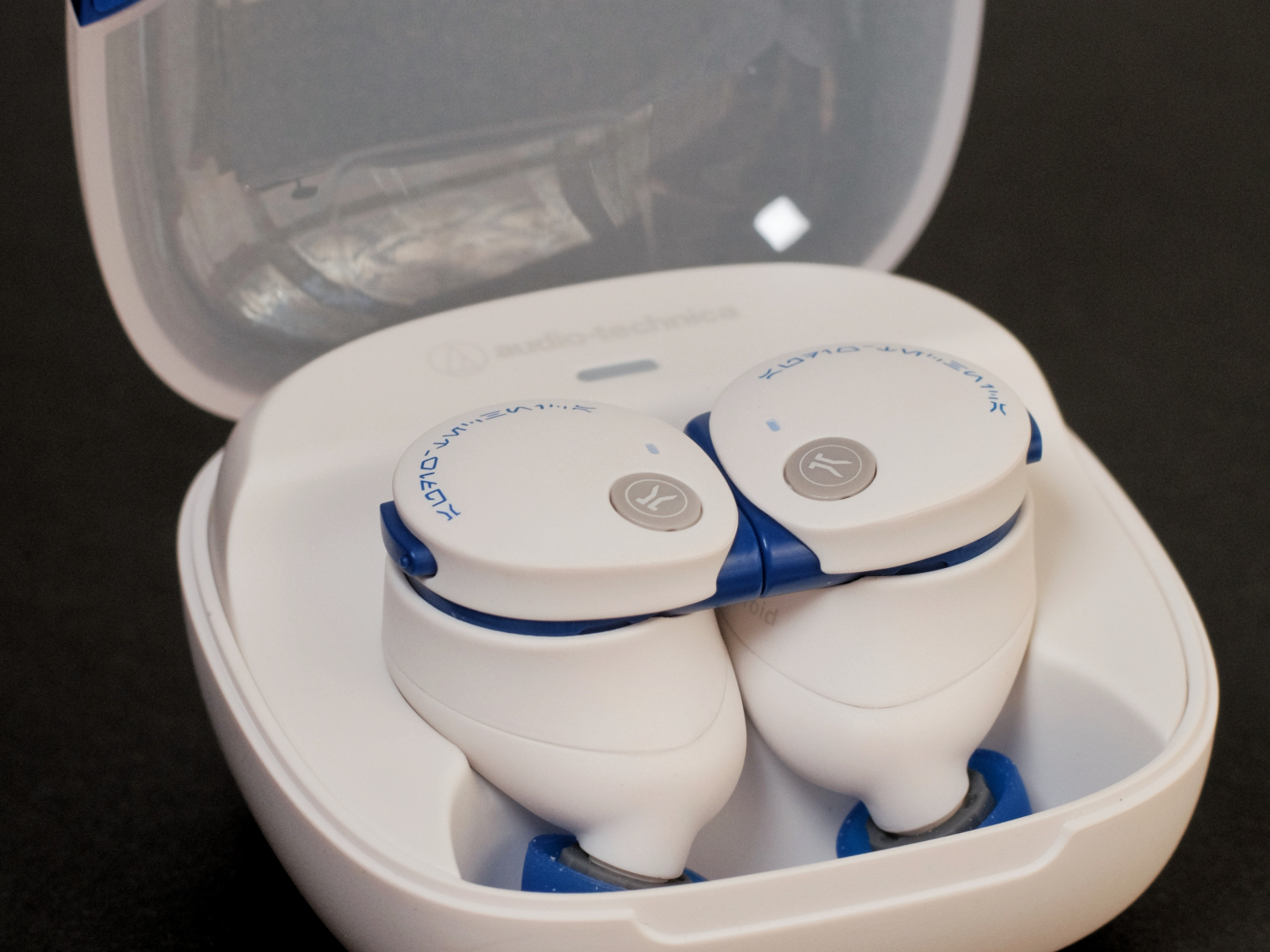
Tag: Audio-Technica ATH-CKS50TW2

  • Kali LP-UNF: My Top Entry-Level Desktop Speaker

    Kali LP-UNF: My Top Entry-Level Desktop Speaker

    Some time ago, I finally added a pair of speakers to my desk, the LP-UNF from Kali Audio. This choice put a pause on my long-standing dilemma of choosing desktop speakers. To be honest, as a novice in the world of desktop speakers, even after studying a lot of Hi-Fi theory and dabbling with headphones and microphones, I still felt a sense of “all skills lost” when it came to speakers.

    When I opened e-commerce platforms and searched for “desktop speakers,” I was met with a chaotic scene: various shapes, different sizes, from flashy desktop ornaments with RGB lights to black boxes that looked like they came from a laboratory in the last century. But after researching, stripping away those fancy marketing terms, the real deciding factors for the user experience are always just three things: sound performance, functional configuration, and usage scenarios.

    Based on this understanding, I started my selection process. Below, I’ll follow this purchasing path and discuss why I ultimately chose the LP-UNF, and its real-world usage experience over this period.

    Thinking Behind Choosing Speakers

    If you care about the sound of the speakers themselves, then whether it is categorized as audio-visual entertainment or work monitoring, it must first be a proper speaker. Sound is essentially the vibration of air, which means that the speaker must have sufficient internal volume (matching the driver size and stroke) to allow the low frequencies to unfold naturally, while also having sufficient cabinet rigidity to avoid the cabinet itself from resonating and producing noise. This is the basis of cabinet design. Suitable sound drivers and reasonable crossover logic are also key to making the speaker sound good. And standardized interfaces and power supply design are directly related to the stability of the speaker system and the reliability during long-term use.

    Only when these prerequisites are met can you buy sound that is “worth the price,” even if it’s just a little more, within a limited budget – and this is the first step to avoiding “just making a sound.” This often means that you need to compromise on the appearance of the speaker, or increase the budget to gain more freedom – but for new players, I do not recommend raising the budget too high at the beginning. After all, most high-priced speakers have a significant depreciation in the used market, and the liquidity is not as good as other digital products.

    Regarding the budget, even professional-looking monitor speakers are no longer out of reach in terms of price; however, there are still not many truly reliable choices within 1000 yuan (per pair). The reason is not complicated – the cabinet, drivers, amplifier, and power supply all consume real costs, and there is almost no room for “compression.” Within the thousand-yuan range, I personally recommend more common domestic multimedia desktop speakers. Being able to provide a complete cabinet structure, clear driver configuration, and relatively standardized power supply and interface design at a cost of a few hundred yuan is itself a great test of supply chain integration capabilities. In this regard, domestic manufacturers who have been deeply involved in the PC multimedia speaker market for a long time have unique advantages.

    My budget is 2000-3000 yuan (per pair), this price range can buy some brands of entry-level models, and it is also the price range that I think is more suitable for starting to dabble in speakers. To be honest, in this price range, every competitor is very persuasive.

    This includes newcomers like Adam D3V, which has been frequently recommended on various content platforms in the past year and has quickly gained popularity; professional players like IK iLoud Micro Monitor, which are known for their portability and extreme volume control; and gatekeepers like JBL LSR305P MkII, which have been tested by the market for a long time.

    But after repeated weighing, I finally purchased this pair of white Kali Audio LP-UNF for about 2100 yuan.

    Frankly speaking, I hesitated before placing the order. Compared to a group of big brands, the name Kali Audio sounds too unfamiliar. But after in-depth understanding, I realized that this young brand is not “of unknown origin.” It was founded by Charles Sprinkle and Nate Baglyos, former core members of JBL, and the team was deeply involved in the research and development of flagship studio monitors such as the 7 Series and M2. So Kali is more like a branch differentiated from the JBL monitoring system.

    It is also because of this that although Kali’s products appear rough and casual in design: naming product series with place name abbreviations (such as LP Lone Pine, IN Independence, SM Santa Monica), and the appearance is so straightforward that there is almost no modification. But I still have high expectations for their product strength, after all, they have a famous teacher, which is one of the reasons why I finally chose LP-UNF.

    Next, I will combine my desktop environment to verify what value a desktop speaker should provide in this price range from three aspects: sound performance, user experience, and appearance design, and why I finally chose it.

    Sound Performance

    If I could only choose one of the most direct and core reasons, the most impressive thing about LP-UNF is undoubtedly its sound performance. Overall, as a proper monitor speaker, the LP-UNF’s three-frequency orientation is relatively restrained and balanced, and the mid-frequency performance is undoubtedly the best.

    Vocals and most instruments are in a natural, coherent, and moderately dense position, without being deliberately protruding or obscured by low or high frequencies. Sounds with extremely strong transients and obvious dynamic fluctuations, such as snare drums or various percussion instruments, will leap out of the speakers crisply, but this “impact” is not based on exaggerated edge or stimulating high frequencies, but a clean, fast, and controllable presentation. It does not pursue gorgeous or pleasing listening experiences, nor does it deliberately render texture, but truthfully explains the onset, intensity, and decay process of the sound itself in its entirety. Regarding low frequencies, almost all content mentioning LP-UNF does not hesitate to praise its low-frequency extension capabilities. Objectively speaking, this evaluation is not groundless – whether it is the frequency response parameters given by the official or the actual listening experience, the performance of LP-UNF in low-frequency diving does exceed my conventional expectations for desktop speakers.

    Another advantage in sound is the noise floor. Kali’s early products (such as the first generation) had a bad reputation for noise floor control, which also became my concern. However, thanks to Kali’s continuous research and iteration in Class D amplifiers and overall circuit design in recent years, the noise floor problem has been greatly improved since LP-6 V2, and the noise floor of LP-UNF is also very low, even lower than some small speakers I auditioned in offline audio stores. Not to mention the JBL LSR305P MkII, which was originally on my shopping list. Admittedly, as a classic entry-level speaker, its listening impact and transient performance are very good, but its noise floor is still relatively obvious after getting close.

    In terms of soundstage, the most common problem in a desktop environment is that the “speaker feel” is amplified. The soundstage is not really spread out in the space, but more like it is directly “pushed” out from a certain cabinet or a specific driver. LP-UNF can still construct a fairly open soundstage in desktop near-field listening conditions, and the control of imaging and soundstage integration is quite good. Even when listening closely, there is no obvious speaker feel. However, if we talk about whether there are more powerful players in this size and price range, I have auditioned a set of DALI KUPID (丘比特) systems before, which is more shocking in this regard. However, as a passive speaker, its user experience belongs to a completely different category, and the budget is estimated to be doubled.

    After briefly discussing the sound performance, let’s talk about its appearance design.

    Appearance Design

    In terms of styling, compared to compact desktop speakers that take the exquisite and compact route, the design of LP-UNF can be said to be quite rough. It is difficult to make a good impression at first glance in the white background display pictures on the e-commerce page – the shape is simple, and the plastic feel is almost overflowing the screen. The all-black front panel, the large waveguide structure, and the layout of the indicator light and touch area are all repeatedly emphasizing the “function first” orientation.

    However, after actually getting it and putting it into the desktop environment, this pair of speakers gradually revealed some design details worth seeing.

    As a 4.5-inch speaker with a front-facing bass reflex port and does not pursue a compact design, the LP-UNF is a “big guy” among desktop speakers. Taking the size of common books as a reference, the width of a single speaker is close to two 16-open books side by side, and the height is about equal to a thick magazine standing upright, but the LP-UNF does not appear clumsy on the desktop.

    The side of the speaker adopts a continuous curved transition, and the top and bottom are also slightly inwardly convergent. This geometric “inward contraction” visually weakens the sense of volume, and from the front, the cabinet appears to be slimmer than the actual size. On the back of the main speaker, the interface and EQ adjustment panel are integrated, and the instructions for use are silk-printed above, which is very intuitive and easy to use.

    What really caused my emotional fluctuations was mainly the front of the speaker.

    On the driver panel, Kali outlined two concave curves that highlight the “graceful” waist. Perhaps it is intended to emphasize the existence of the driver itself through visual guidance, or it may be an attempt to regain a little “design sense” as a desktop speaker. As for the effect, it is up to the individual. Between the tweeter and the woofer is a spindle-shaped LED light bar. In normal working conditions, a blue dot will stand in the center of the light bar, and plus and minus symbols are printed on both ends of the light bar, corresponding to the multi-function touch area on the front panel. Operations such as volume adjustment, mute, Bluetooth pairing, and left and right channel switching will be intuitively reflected through the changes of the light bar.

    Compared to its predecessors, this light bar is not only bigger and thicker, but also has more functions. From a usage perspective, this design is indeed intuitive and practical. Common operations are concentrated on the front panel, so you don’t have to reach behind the speaker to fumble; compared with the traditional front knob, the touch solution is not absolutely superior, but it is convenient enough in the desktop scene. It’s just that if you expect it to add much aesthetic value to the desk setup, you might as well imagine such a picture – when you sit in front of the monitor, that blue “eye” is quietly watching you. What comes to my mind is probably only the laser eye in X-Men that is ready to go, or the electronic eye in Terminator that is ready to lock the target at any time.

    Moving the line of sight down along the woofer, you will encounter Kali’s proud “family design” – the iconic smiling bass reflex port. The practicality of the front bass reflex port in the desktop environment is beyond doubt, and it is friendly to placement. However, compared to the slit-type front bass reflex design that brands such as Audioengine deliberately weaken, Kali chose the opposite route – the size is not small, the shape is straightforward, so that you will unconsciously fall on this “smiling” opening again and again during use, and even produce a feeling that it is showing off: “Hey, my bass reflex port is very big.” I can almost imagine the undisguised smugness of the designer when he finalized this “iconic” shape.

    Seriously, staring at this bass reflex port for a long time will indeed inexplicably produce an impulse to reach into it. Perhaps humans are born with a nearly suicidal desire to explore caves, and this “smile” happens to be as deep as the secret passage to the spider’s nest in Coraline, or the Mouth of Truth in Roman Holiday that cuts off lies. A curved channel used to eliminate port noise and compression has created a fear of staring into the abyss.

    The Kali brand nameplate is embedded at the bottom of the panel. The three-dimensional electroplated characters reflect slightly in the light, showing a restrained sense of coldness against the matte white panel. This is probably the only design on the entire pair of speakers that attempts to show identity through decoration. It’s just that Kali’s icon design is really “techie” enough. The two intersecting waveforms look like phase diagrams taken from a certain oscilloscope, with the four capital letters KALI underneath, square and unadorned.

    Forget it, let’s talk about the more important user experience – including the points that satisfy me and the uncomfortable complaints.

    Advantages and Disadvantages

    As a monitor speaker, the biggest advantage of LP-UNF in use is the convenience of connection. Whether it is directly connected to the computer via USB, or connected to professional equipment via TRS or RCA, or connected to mobile phones and tablets via Bluetooth, it can be easily handled. The design of the main and auxiliary speakers is also very intuitive: almost all interfaces and adjustment functions are concentrated on the main speaker, and the auxiliary speaker only needs a four-pin cable to work, and the power supply is only connected to the main speaker. If you have been deeply involved in the Hi-Fi metaphysics of selecting amplifiers, choosing decoders, and worrying about signal cables, then LP-UNF can almost be said to be completely immune to these troubles. The active design means that there is no need for an external amplifier, the built-in DAC saves the cost of messing with the decoder, and the USB direct connection allows the digital signal to directly enter the processing link of the speaker, avoiding unnecessary analog conversion – and there is no need to buy any single crystal copper silver-plated or alloy audio cables, an ordinary USB data cable is enough. You can put more energy on the actual listening experience and desktop layout, instead of being overwhelmed by complex hardware combinations.

    As a desktop speaker, its acoustic performance is also very solid. Whether it is paper parameters or the actual near-field listening experience, it is worthy of the word monitor. If you are here for sound, LP-UNF will never disappoint you. It provides a very cost-effective balance between professional monitoring capabilities and diversified connection methods. It is really difficult for you to buy a pair of players with such a balanced configuration and “worry-free” in the 2000 yuan price range.

    So, what is the price?

    to control costs and volume, the cabinet of LP-UNF does not use the fiberboard or solid wood board commonly used in traditional monitor speakers, but chooses injection-molded plastic. Of course, with the progress of manufacturing technology, plastic cabinets are not necessarily equal to “cheap” – by using high-density engineering plastics, increasing the wall thickness, and strengthening the internal rib design, you can also obtain quite good rigidity and resonance control. But unfortunately, LP-UNF does not belong to this type of product. Although the white paint visually conceals a lot of cheapness, when tapping the cabinet, you can clearly feel a relatively crisp and empty feedback, rather than the relatively stable dull sound of a good cabinet. For cheap entry-level models, such a cabinet trade-off is itself understandable.

    But the problem is that LP-UNF is quite “greedy” in sound performance. Larger drivers and longer strokes allow it to push more and heavier air; at the same time, in near-field desktop environments, these low-frequency energies are more likely to couple with the desktop and walls, and the plastic cabinet does not have enough density to reduce resonance. The result is that in small rooms or with poor placement, the low frequencies will appear thicker, slightly muddy, and even produce buzzing in certain frequency bands.

    From this point of view, the low-frequency capability of LP-UNF is more like a double-edged sword: in a suitable placement and environment, it can provide much more diving and volume than ordinary desktop speakers; but if the space is limited and the acoustic conditions are poor, it is also easier to expose the problems in the low-frequency design.

    These problems are not impossible to improve. By reasonably adjusting the acoustic environment of the room, optimizing the speaker placement, or using EQ adjustment appropriately, these low-frequency problems can be alleviated to a certain extent. But in the end, this is a design flaw. But since you want to spend less money to get better sound, you will inevitably have to toss around a bit.

    Summary

    If you are like me, have a small budget, don’t want to mess with the front-end system, and want to get solid sound, then Kali Audio’s LP-UNF is definitely one of the excellent choices in this price range.

    On this basis, if you have higher requirements for appearance design, messing with entry-level passive speakers such as DALI KUPID may be another more comfortable path. If the budget is increased and you have higher pursuit of sound, I privately recommend the Focal studio series. Compared to its well-known and expensive civilian Hi-Fi series, its professional monitoring line is not well-known in China, but the sound-to-price ratio is definitely worth it, and it is an excellent choice on the advanced road.

    Finally, although I complained a lot in the previous article, even if time goes back, I would probably still bring it back to the desktop. Kali doesn’t dislike me for being poor, so I naturally have no reason to dislike it for being “plastic.” What’s more, in this audio market where metaphysics is rampant, it is a kind of romance to have such a simple and even down-to-earth brand.

    Of course, this romance has a prerequisite, as long as it doesn’t raise the price.

  • Audio-Technica ATH-CKS50TW2 Review: Big Bass ANC Earbuds with Exceptional Battery Life

    Audio-Technica ATH-CKS50TW2 Review: Big Bass ANC Earbuds with Exceptional Battery Life

    This is TDS Studio’s seventeenth article on SSPAI, once again released as an all-platform exclusive.

    Faced with such a complex model name, it’s only right that we begin an Audio-Technica review by explaining the naming. CKS indicates the Solid Bass series, which emphasizes low frequencies; 50 places it in the mid-range tier; and TW2 means it’s a true wireless model and the second-generation mainline entry in this series. That explanation sounds straightforward enough—but in reality, the CKS50TW2 is actually the third-generation product in the lineup. The progression goes roughly like this: CKS5TW → CKS50TW → CKS50TW2. One defining trait that runs through this series is its notably strong single-charge battery life, rather than an all-out focus on sound performance like the TWX7 or CKR7TW lines. This time, we borrowed the Star Wars Edition CKS50TW2 purchased from Version V; we previously mentioned this release in RKTALLK Episode 059, while the standard retail version had appeared earlier. Many thanks to Version V for the loan.

    Package & Accessories

    The retail packaging of the CKS50TW2 follows Audio-Technica’s familiar white-based design language, while the Star Wars Edition comes with a bespoke design and is priced USD 30 / JPY 3,520 higher than the standard version. Inside the box, you’ll find a short USB-C to USB-A charging cable and four sizes of ear tips.

    Design, Fit & Acoustic Structure

    Including both the standard retail colors and the Star Wars special editions, the CKS50TW2 is currently available in seven colorways: the retail off-white, black, and dark green, plus the Star Wars editions—R2-D2 white/blue, Darth Vader black/red, Grogu light green, and Mandalorian silver-gray. Notably, the Mandalorian version appears to have been sold via a limited-time lottery on the official store and is currently unavailable.

    All seven variants feature a semi-transparent charging case lid. The R2-D2 white/blue version we have uses a frosted white semi-transparent lid, paired with a pure white base that has no warm or cool tint, accented only by blue detailing around the magnetic latch. The case can be opened and closed with one hand, though it feels a bit lightweight. The earbuds rest flat inside the case, with the LED indicators also located within.

    The earbuds themselves use a “buds”-style in-ear design. In fact, within Audio-Technica’s TWS lineup, only the TWX series adopts a stem-style “pods” design—everything else uses this buds form factor. The CKS50TW2 housings are fairly large. Compared with the familiar CK3TW, they’re noticeably bigger by about two sizes, and larger than models like the recently reviewed LinkBuds Fit, WF-1000XM5, and AZ100—roughly on par with the TE-ZX1. That said, the inner side of the housing features some contouring, so the portion that actually contacts the concha and cymba isn’t extensive. Much of the visible faceplate sits above the surface of the ear. As a result, unless you have particularly small ears, the CKS50TW2 is reasonably comfortable to wear. Side-lying use, however, is essentially out of the question.

    The two earbuds can magnetically attach to each other via a set of contact points and also integrate a Hall sensor. This design is quite rare in the TWS space but is common—almost standard—in neckband-style Bluetooth earphones. The reason Audio-Technica chose this structure ties directly into the model’s excellent battery life, which we’ll discuss later. In any case, thanks to the reliable magnetic connection, you’re unlikely to lose a single earbud when carrying them outside the case; the two snapping together feels reassuringly secure.

    The CKS50TW2 is rated IP55 for dust resistance and splash protection, meaning light rain and regular workout sweat should pose no real problem.

    Control & App

    The circular ornament on the faceplate is not a touch surface. Control is handled via a physical button located toward the front edge on the rear side of the housing. It supports single, double, and triple presses, as well as two long-press durations, all of which can be customized in the app. You can also adjust the button response speed. At the default setting, there’s about a one-second delay when pausing playback, while other actions feel relatively snappy.

    Notification sounds are naturally a major highlight for a co-branded product. On the R2-D2 version, system events such as power on/off, connection, disconnection, low battery, noise-canceling toggles, and mode changes are all accompanied by R2-D2 voice samples. Both clarity and volume are more than adequate.

    Like the TWX7 and others, the CKS50TW2 uses Audio-Technica’s Connect app for control and fine-tuning. The default interface is laid out clearly, though the settings section packs in many options without further sub-categorization. Fortunately, the UI is intuitive. Below is an overview of the main screens and a closer look at what each function does.

    On the main page, the features are arranged as follows: ambient sound control, equalizer, low latency, timer, soundscape, and playback controls. The custom settings page is divided into Audio Settings and System Settings. All told, the range of controls available via the Connect app is extensive—more detailed than most TWS control apps I’ve used.

    The Private Timer is a standalone countdown tool independent of the system timer. It offers three alert tones and supports countdowns longer than one minute, making it handy for reminders during long listening sessions or as a simple alarm when wearing the earbuds for a nap.

    Sound Scape

    As with the TWX7, the CKS50TW2 supports the Sound Scape feature. To recap, many manufacturers—and even iOS itself—offer similar functions. For example, iOS “Background Sounds” includes three types of white noise plus ocean, rain, and stream sounds. Audio-Technica’s implementation, however, is a bit different. Apple’s background sounds are already among the better-sounding options in this category, with file sizes exceeding 60 MB and a fairly natural listening experience. Audio-Technica’s Sound Scape samples, on the other hand, are recorded using the company’s own professional microphone lineup.

    Sound Scape can be used in conjunction with the timer mentioned above. By default, it offers thirteen sounds: three white noises, four “healing” sounds, and six natural soundscapes.

    In the white noise category, beyond standard white noise and pink noise, there’s also “Quiet Office,” which sounds like a calm office with air conditioning running. The sense of space isn’t cramped, and the proportion of AC noise can be freely adjusted. Combined with active noise canceling, it creates a surprisingly convincing environmental simulation. It can be useful for those who work better with ambient sound—assuming you don’t mind AC noise.

    The natural sound category includes six options, all rendered with convincing realism and a strong sense of space. In the ocean soundscape, the stereo imaging of waves rolling in is particularly impressive. Wind in a forest is notoriously difficult to record, yet the sound of wind moving through leaves is recreated here with notable fidelity. I won’t go into each one in detail—you can try them yourself in person.

    More distinctive are the four sounds categorized as “healing.”

    “Rejuvenation” blends synthesized choral vocals with forest ambience, flowing water, and birdsong. “Tranquility” is built on pad-style synthesizer tones, lightly accented with natural sounds. “Journey” also uses pad tones, but with slower, subtler pitch changes, resulting in a deeper, more subdued feel. “Serenity” sounds fuller and richer, combined with subtle effects—very much the kind of audio you might listen to at night. In short, these are well suited for meditation, breathing exercises, and similar scenarios, carrying a clear sense of zen-like calm.

    Beyond the features shared with the TWX7, the Star Wars edition of the CKS50TW2 adds three exclusive custom sound effects: random R2-D2 sounds, white noise from inside the Millennium Falcon, and cockpit signal tones from an X-wing fighter. All are fun and surprisingly authentic. As a fan of another niche sci-fi IP myself, I can’t help but say—if there’s ever a Doctor Who collaboration with a TARDIS interior soundscape, I’d buy it without hesitation.

    ANC, Transparency & Call

    Thanks to its relatively large housings, the CKS50TW2 already offers decent passive isolation. Compared with the TWX7, however, the overall improvement in noise cancelation isn’t just down to passive isolation—it also reflects tangible progress in active noise cancelation. This may be the first time an Audio-Technica mainstream product has made me think its ANC is genuinely “quite good.” With ANC enabled, the CKS50TW2 noticeably suppresses steady low-frequency noise, and it also does a respectable job of reducing the lower body of human voices. While in very noisy environments you can still sense a gap in effective bandwidth coverage compared with most Skyline Level models, it’s already very usable in practice. On top of that, ear pressure is reasonably well controlled, with no obvious discomfort.

    As for wind noise, the CKS50TW2 doesn’t include a dedicated wind-noise reduction mode. In real-world testing, however, wind interference was only mildly noticeable when facing away from strong wind. Wind coming from the front or sides is largely cleaned up once ANC is enabled, barely affecting normal listening—an area where it performs quite satisfactorily.

    In transparency mode, the naturalness of ambient sound is good, with no deliberate boosting of specific frequency bands. Although there is still some roll-off in the high frequencies and it’s not a fully high-fidelity passthrough, among Japanese brands aside from Sony, this places it firmly in the top tier. The wearer’s own voice does sound slightly muffled, something to keep in mind during conversations. Wind noise in transparency mode isn’t particularly severe either, becoming noticeable mainly when the wind comes from the side or behind.

    The talk-through feature also carries over. Audio-Technica defines this as automatically switching to transparency mode and lowering music volume when enabled. You can adjust it in three levels within the app.

    For calls, pickup volume is moderate, and clarity is usable though not outstanding. In carrier-network call tests, voices remain somewhat emphasized even in noisy environments. The tonal character sounds a bit muffled, but stability is good. Wind noise during calls depends heavily on direction: frontal wind has minimal impact, while side or rear wind introduces more noticeable interference.

    Overall, the CKS50TW2’s noise cancelation is practical and well-rounded. It doesn’t excel dramatically in any single area, but its combined ANC performance, wind-noise handling, and transparency naturalness all place it toward the upper end of the Fine Level tier. That said, the depth of active noise cancelation doesn’t offer a strong advantage over similarly priced competitors and still trails the Skyline Level group. For everyday use, however—especially when combined with its passive isolation—it’s more than sufficient. Taking everything into account, we believe the CKS50TW2’s overall noise-cancelation performance earns it a place in the TDS Noise Cancelation Pyramid at the In-Ear Fine Level, with an above-average ranking within that tier.

    Connection & Battery

    It doesn’t support high-bitrate codecs, so we tested it under AAC as usual. In our standard signal test environment, paired with the Xperia 5 III using AAC, packet loss and stuttering were minimal whether WLAN was on or off. At a distance of 7 meters with a load-bearing wall in between, there was no noticeable increase in stuttering, while packet loss began to meaningfully affect the experience at around 9 meters.

    In terms of latency, it supports a dedicated low-latency mode. Following our test procedure—AAC codec, Xperia 5 III as the source, and streaming video playback—subjective latency with low-latency mode enabled stayed under half a syllable at normal speech speed. This is perfectly usable for most video viewing and gaming scenarios that don’t demand ultra-tight synchronization. Without low-latency mode enabled, latency exceeded half a syllable and became more noticeable.

    Battery life is where things get truly impressive. Official figures list 15h/25h of continuous playback from the earbuds alone (ANC on/off), and up to 40h/60h total with the charging case (ANC on/off)—frankly, staggering numbers. During our loan period, it wasn’t feasible to run a single uninterrupted test of that length, but several simplified half-cycle tests largely confirmed the claims. Whether it’s Audio-Technica or AVIOT, non-flagship sound-focused models still seem wildly “overpowered” when it comes to single-charge endurance.

    In charging tests, the CKS50TW2 was able to charge steadily at a power level of around 1.2 W, with no issues regarding PD support. It also supports wireless charging. Below are the results of the wireless charging test.

    Charging TypeChargerAudio-Technica ATH-CKS50TW2
    Qi WirelessTESTV “KuaiLeNengLiang” Teardown Test PadFront charging position: 2 W; rear charging position: no charging
    Qi WirelessLǜli Qi2 2-in-1 W702Primary charging position: 1 W; secondary charging position: no charging
    WiredAnker Nano II 100 WAll three ports supported; input power stable at around 1.2 W
    Third-Party Charging Compatibility Test Results

    Driver, Sound Modes & Codec

    The CKS50TW2 is equipped with a 9 mm dynamic driver. Supported codecs include SBC, AAC, and LC3.

    In our previous article on the TWX7, we mentioned that when enabling the equalizer, Audio-Technica displays a specific prompt indicating that the sampling rate will be limited to 48 kHz. The impact of EQ on sound is well known, and limiting the sampling rate to enable EQ is a reasonable trade-off. With the CKS50TW2, however, the highest supported codec is AAC, so this prompt no longer appears. The five default presets are Original, Bass Boost, Clear Vocal, V-shaped, and Treble Enhance, and their sonic effects largely align with what their names suggest.

    The custom equalizer allows adjustment across five frequency bands with a ±12 dB range. You can also independently set left/right channel balance in the app, as well as fine-tune volume in 16-step, 32-step, or 64-step increments—particularly useful for users who find one volume step too loud and the next too quiet.

    Sound Description

    Based on ANC off, AAC codec, and default sound mode.

    The low end has slightly elevated quantity, with generous thickness and fullness. Elasticity is good, and sub-bass extension is acceptable. Decay is not especially fast, leaving some residual reverberation. There is a noticeable sense of ambience and bloom, but it never feels excessive. The bass presentation is very much in line with what you’d expect from a bass-focused series, yet in most everyday tracks it doesn’t come across as overpowering. It recalls the tuning approach of earlier Audio-Technica CKS wired earphones—rather than simply piling on energy, it presents bass with a thick, relaxed texture. Bass imaging is on the larger side, and instruments with fundamentals in the lower mids exhibit a slight forward tilt.

    In the midrange, vocals are positioned relatively close, with slightly larger mouth shapes and limited emphasis on fine articulation. Texture takes priority over line definition, with moderate thickness. Grain is smoothed out, resulting in generally good overall smoothness. There is a mild warm coloration; the tonality isn’t strictly neutral, but it also avoids any sense of energy buildup. Throat tones are well behaved, breathiness is sufficient, and details like saliva sounds are polished and kept from protruding. Sibilance is present but softened—audible without being sharp or piercing. Overall, vocals are not dark, with a subtle lift in brightness that seems designed to balance the bass-forward character.

    For instruments, texture again takes precedence over sharp outlines. Among strings, violins, violas, and guitars lean slightly warm, with plucked and bowed details that aren’t particularly forward or attention-grabbing. Cellos feel a bit loose in body definition and occupy a larger portion of the soundstage. Brass instruments convey a good sense of power; trumpets and other brightness-dependent instruments have adequate sparkle but roll off relatively early. Woodwinds show a slight enhancement in airiness, with a natural presentation. Harmonic content is relatively rich. In percussion, kick drums have a clear presence, snares decay a bit slowly, and cymbals are bright enough without sounding harsh or overly metallic.

    Treble overall has moderate brightness, though the upper-mid transition region is somewhat thickened. The response is generally smooth, without pronounced sharp peaks. Ultra-high-frequency extension is not particularly strong, with an earlier and steeper roll-off compared with the TWX7.

    Soundstage width is average. The forward-leaning imaging of the low and lower-mid frequencies makes the space feel less expansive, with a noticeable sense of boundaries. Both horizontal and vertical dimensions feel just sufficient rather than spacious. Combined with a decent sense of height, the overall spatial shape resembles a spindle. Separation between vocals and instruments isn’t especially strong, though coherence is good. Resolution doesn’t stand out at the sub–¥1,000 RMB price point, falling into a second-tier level of detail for its class. It sounds less clear than the TWX7, but this restrained sense of “resolution” contributes to a more fatigue-free, listenable presentation. Dynamics are adequate, while transient response is unremarkable.

    Overall Impression

    Compared with the TWX7 we discussed earlier, the CKS50TW2 doesn’t devote all its effort to sound tuning. Instead, it positions itself as a product with a wide range of interesting and practical features. The ANC performance is a pleasant surprise, and the sound tuning suits mainstream listening preferences, though it doesn’t stand out in terms of versatility or technical prowess. Its real strengths lie in its exceptionally long battery life, stable connectivity, and thoughtful functional details.

    The standard retail version has remained stably priced below ¥18,000 JPY for an extended period. The Star Wars collaboration edition carries only a modest premium, and at the time of writing, some retailers are even offering discounts that bring it close to the standard version’s price when converted to RMB. For readers who can accept a small premium, this makes it a genuinely interesting option.

    KT MARK at the time of evaluation:

    Audio-Technica ATH-CKS50TW2: IV (Recommend)

    TDS ANC Pyramid

    Audio-Technica ATH-CKS50TW2: In-Ear Fine Level

    For details on the KT MARK rating system and our “non-interference in evaluation” policy regarding commercial interests, please search for TDS Studio Rating Standards & Content Notes V202502 on major search engines.

    KingTsui, TDS Studio
    Feb 2026

    It’s a TDS production.

    Some images are sourced from Audio-Technica. All other content is original. Unauthorized reproduction or imitation of content or structure is prohibited. All rights reserved.