As in previous years, toward the end of the year I reviewed my annual spending using Qianji’s statements and a Notion database. Based on my actual usage throughout the year, I then consolidated everything into this annual favorites list. On the one hand, this serves as part of my year-end self-review; on the other, it’s also a relaxed and enjoyable way to share and exchange thoughts with everyone in the sspai Matrix community.
Before officially getting started, I want to clarify four points:
- All of the products mentioned were purchased with my own money; there is no brand collaboration involved, so please feel free to read with confidence;
- “Lightweight” is a new idea I introduced this year. Before buying anything, I ask myself: if I had to move to a new city and start a new life next month, would I bring this item with me;
- When selecting my annual favorites, I try to prioritize products that are either “highly cost-effective” or genuinely “eye-opening.” Expensive products don’t really need my recommendation—everyone already knows how good they are;
- This year, I experimented with using AI to create the accompanying images, making the article look a bit more polished overall. Of course, this also has its downsides: the lack of real-world photos makes the piece feel slightly less “human.” I’d really appreciate any feedback you have on this.
Digital Products
Since this is an article for the sspai Matrix community, let’s start with what many of you are probably most interested in: digital products.
Angry Miao Infinity Mouse
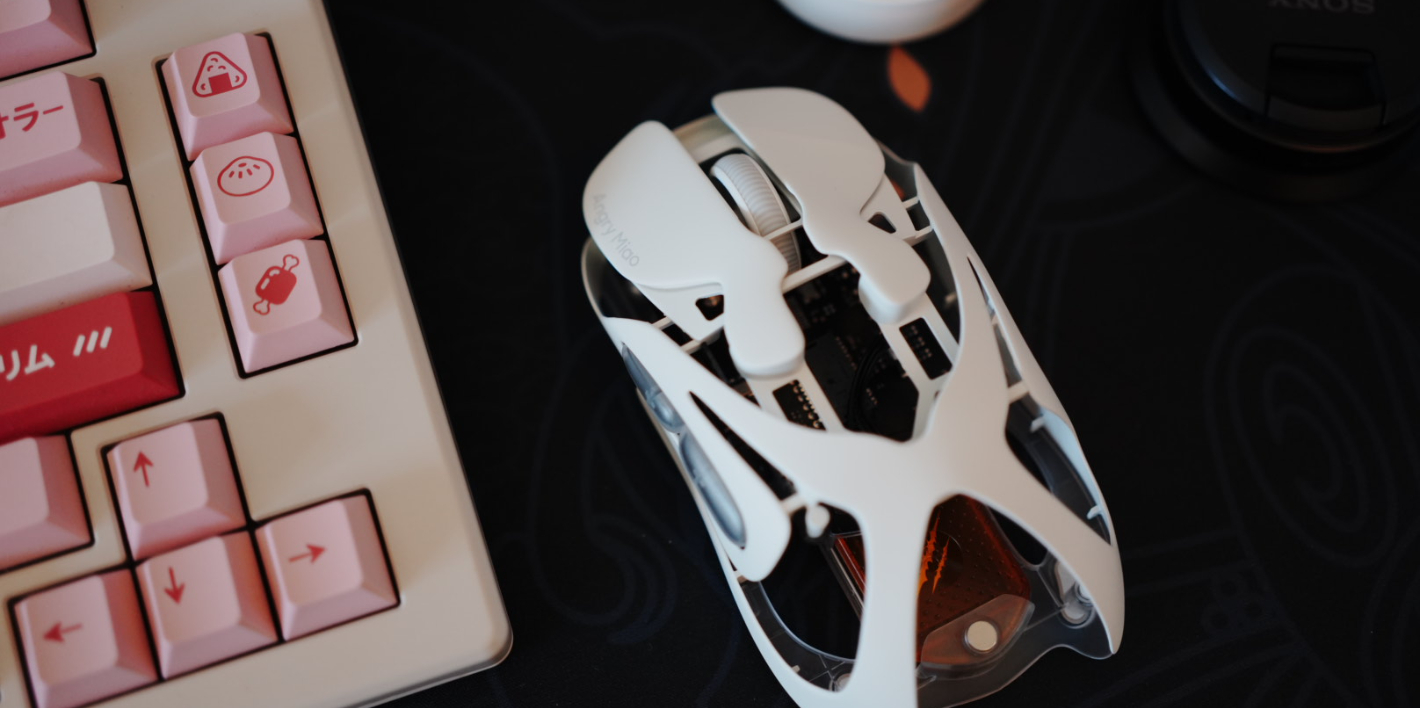
I put the Angry Miao Infinity Mouse in first place because it’s my personal choice for hardware of the year. I also want to give a quick shout-out to Tao—back in early August, he managed to snag the new Cloud White version as a birthday gift for me. Nearly five months have passed, and every time I use the Angry Miao Infinity Mouse, I still get that “can’t put it down” feeling.

The biggest difference between the Angry Miao Infinity Mouse and a typical mouse lies in its battery-swap design (something NIO car owners will probably appreciate even more). Angry Miao designed two hot-swappable magnetic batteries: one attaches to the mouse for normal use, while the other attaches to the 2.4G receiver module and charges in real time. Swapping batteries takes less than two seconds from start to finish, so you never have to worry about the mouse running out of power. I’d go so far as to call it a “genius-level design.”
Beyond the core battery-swap system, the design of the Angry Miao Infinity Mouse also hits my aesthetic sweet spot. Inspired by the Cloud White colorway from Isle of Dogs, it features a UV-coated finish and a hollowed-out magnesium-aluminum alloy body. Combined with its ultra-light weight of 49 grams (39 grams in wired mode), it delivers top-tier performance in both looks and hand feel.
If you’re considering the Angry Miao Infinity Mouse for gaming, there’s no need to worry about performance. It’s equipped with the PAW3950 sensor, offering 30,000 CPI native sensitivity, 750 IPS tracking speed, and 50G acceleration. The 2.4G receiver supports up to an 8000 Hz polling rate. As for the switches, it uses TTC Orange Dot optical switches V2, with the switch lifespan extended to hundreds of millions of clicks. The Angry Miao Infinity Mouse also supports the AM Master driver platform, allowing you to customize button mapping, RGB lighting effects, DPI settings, macros, and more.
NuPhy Node 75
Because my daily workflow involves both a desktop computer (for work) and a MacBook Air (for personal use), I needed an external keyboard that could connect to two machines at the same time. This not only saves what is already limited desk space, but also avoids the hassle of constantly swapping keyboards. Last month, I happened to see someone on Weibo sharing NuPhy’s low-profile keyboard, the Node 75. Both the price and the design fit my needs perfectly, so I picked it up for 325 RMB.

The biggest drawback of the WOB Rainy75 I used before was its weight. It was inconvenient to move around on the desk and couldn’t be placed on top of the MacBook Air’s keyboard area for use. As a result, I was constantly picking up and putting away this heavy chunk of aluminum, occasionally bumping into other items on the desk in the process. The NuPhy Node 75, on the other hand, is made entirely of plastic, which naturally makes it much lighter and a perfect fit for my needs. It’s easy to pick up and store, and in daily use I simply place it directly on the MacBook Air’s keyboard area, saving desk space. Even when I occasionally need to use Touch ID, lifting such a lightweight keyboard is effortless. I connect it to the MacBook Air via Bluetooth and to the desktop via the 2.4G receiver, switching quickly with FN + number keys, which is very convenient. One thing worth mentioning is that switching to 2.4G mode is almost instantaneous, with virtually no latency. Switching to Bluetooth takes about one to two seconds to reconnect, which is still acceptable.
I chose the low-profile version of the NuPhy Node 75 (Super Red switches, 45 gf). The typing feel is well-balanced: quiet enough for office use, yet not as soft and bouncy as the low-profile optical switches on the ROG Azoth RX LP. The retro white design is also very clean and understated, making it low-key enough for an office environment without drawing too much attention from colleagues. The dot-matrix design on the top of the keyboard is another highlight. The dot-matrix light on the left indicates the currently connected device, while the dot-matrix area on the right can be slid to adjust the system volume. It’s genuinely practical rather than a gimmick.
Anker Capsule Power Bank
As iPhone batteries have grown larger and battery life optimization has continued to improve, I’ve found that iPhones released in recent years can basically cover a full day of use for me. As a result, power banks have become more of an optional accessory—something I only really need for occasional business trips or travel. A product in the form factor of the Anker Capsule Power Bank fits this kind of usage perfectly.

This Anker power bank measures 77 × 36 × 25 mm and weighs just 100 grams, so it’s no burden at all even when carried in a pocket. The 2900 mAh capacity isn’t enough to fully charge an iPhone, but it’s more than sufficient for an emergency top-up. It also comes with a built-in Type-C connector, allowing you to plug it in and charge directly, eliminating the need to carry a cable and avoiding the awkward “dangling power bank” situation.
Mac mini M4
Since its launch last year and its subsequent inclusion in national subsidies, the Mac mini M4 has enjoyed an excellent reputation. I bought the “16 GB + 256 GB + 10-gigabit Ethernet” version earlier this year for around 4,000 RMB, which I already thought was a great deal. I didn’t expect that during the 618 shopping festival, with national subsidies and education discounts stacked together, the price would drop to below 3,000 RMB—arguably the most cost-effective Apple product ever.

Turning to the Mac mini M4 itself, performance upgrades are clearly the main highlight. With the M4 chip and a 16 GB base memory configuration, the Mac mini has transformed from an entry-level macOS experience machine into a standard Mac that’s powerful enough for most people. On top of that, the Mac mini M4 now supports HDMI-CEC and HDMI 2.1. For LG C4 users like me, this means enjoying a 4K HDR display with a 120 Hz variable refresh rate, along with synchronized sleep and wake control between devices—an excellent overall experience.
Pixel 9 Pro
The Pixel 9 Pro I bought in January may be the most emotionally conflicted piece of tech I’ve owned this year. In fact, before buying a Pixel, I had already managed my expectations—and that’s also why, despite being a long-time Google fan, I had put off buying a Pixel phone for so many years. Next, I’ll talk in detail about my love-hate relationship with the Pixel 9 Pro.

First of all, a major reason I finally decided to buy the Pixel 9 Pro was its design. In my view, this is the first generation where Pixel can truly be called “good-looking.” I don’t like large foreheads, and I don’t like rear fingerprint sensors. While it’s true that the Pixel 9 series’ display (uniform narrow bezels on all four sides, flat panel) and frame design (flat edges, polished metal) look very similar to the iPhone 14 Pro series, good design often converges. At the same time, the Pixel 9 Pro is lighter and has more rounded edges, making its in-hand feel far superior to Apple’s Pro lineup.
Second, stock Android is undoubtedly the core selling point of this phone. On the Pixel 9 Pro, I get to experience the latest features and UI interactions of pure Android. Every time I unlock the phone, there’s a refreshing, almost uplifting feeling. Gemini deserves special mention here: the leading model combined with deep, system-level integration turns Pixel phones into a benchmark for AI hardware in today’s market. The only issue is that, as someone deeply invested in the Apple ecosystem, it’s very difficult for the Pixel to become my primary phone. The lack of seamless sharing, the inability to pair with an Apple Watch, and the absence of certain ecosystem-exclusive apps are all very real constraints. Of course, this isn’t a problem with Pixel or Android itself, but rather an ecosystem choice dilemma faced by me as a regular consumer.
Finally, there’s the unavoidable and unsolvable issue of localization. As everyone knows, Pixel has never officially entered the mainland Chinese market, so 5G doesn’t work properly. Google also tightened restrictions even further in an October system update this year. Initially, with help from @Clyde, I enabled 5G connectivity through Root and tools like PixelIMS and Network Signal Guru. Later, I managed to “keep it alive” using Shizuku and an IMS plugin. The problem is that 5G enabled through these methods is unstable, and I frequently encountered dropped data connections and call failures. The final straw for me was emergency calling: once, after getting into a traffic accident while driving and needing to call the police, I discovered that my Pixel couldn’t dial emergency numbers like 110 or 122 at all.
As a result, the Pixel 9 Pro became my favorite phone—yet one I rarely use. Eventually, I restored it to factory settings, with no OEM unlocking and no Root. This way, I can normally use features like Google Wallet and Pixel Studio, and easily update to the latest version of stock Android without flashing. I take the Pixel 9 Pro with me when traveling abroad, using it for contactless payments, navigation, photography, and public transportation. But once I’m back home, the Pixel 9 Pro’s greatest role may simply be serving as an emotional connection between me and Google.
Clothing & Accessories
This year can be considered the first year in which I seriously reflected on my personal style, everyday outfits, and systematically learned about fabrics, materials, and functional use cases. With Tao’s help, I carried out a “carpet-bombing” cleanup of my wardrobe, recycling everything that didn’t fit, was worn out or faded, or had strange, mismatched styles. What remained were only the pieces I genuinely like and am willing to wear. When adding new clothing, in addition to brand, price, and fit, I also consider fabric characteristics and how each piece fits into an overall layering system. Using the “three-layer clothing system” as a foundation, I make targeted additions to fill specific gaps.
Watch the Wind — Three Pieces
I’ve actually known for a long time that Uncle Bo has been running his own clothing brand, but due to price and design considerations, I never pulled the trigger. During this year’s Singles’ Day sale, however, a post he shared on social media gained some traction and reminded me of the brand. I checked out this year’s releases on the Taobao store and found a few pieces that suited me quite well, so I ended up ordering three items over time. None of these are from this autumn/winter’s new releases, though—I haven’t managed to snag anything since Drop 5. Hopefully Uncle Bo will produce more in the future.
The piece I’m most satisfied with is the WtW half-placket pullover fleece mid-layer. It uses a 160 gsm lightweight fleece fabric that balances warmth and lightness very well. I especially like the half-placket collar design: it looks distinctive, and the snap closure is more convenient than either zippers or buttons.

The second piece is the WtW stretchable, machine-washable merino wool fitted base layer. The fabric is composed of 96% merino wool and 4% elastane, and with a fiber diameter of 19.5 microns, it’s very comfortable even when worn directly against the skin, without the itchiness commonly associated with regular wool. In terms of fit and design, this piece is more stylish than comparable products from Icebreaker, and it works fine even when worn on its own—unlike Icebreaker pieces, which tend to look more like thermal underwear. That said, the construction quality isn’t as good as Icebreaker’s. After one hand wash, I noticed significant seam tape peeling at the edges. At 350 RMB, it’s about 130 RMB cheaper than the Icebreaker Oasis 200, so it really comes down to personal trade-offs.

The third piece is the WtW garment-dyed lightweight dynamic insulated half-placket sweatshirt. It uses the increasingly popular PrimaLoft Active Evolve fabric (95 gsm version) from the past couple of years. As a mid-layer, it’s impressively lightweight while still offering decent warmth. For me, though, the half-placket design on this piece feels a bit restrictive, and visually it’s not as appealing as the half-placket pullover fleece mid-layer mentioned earlier.

Lululemon ABC Flannel Elastic-Waist Pants
Lululemon is a brand that offers almost no value at full retail price, but once you pick things up at deep discounts during shopping festivals, it becomes a clear “worth it.” After reorganizing my wardrobe this year, I realized that all the pants I had left were either too thick or too thin—nothing suitable for temperatures around 10°C. That’s when I set my sights on these Lululemon ABC flannel elastic-waist pants. I paid 479 RMB after the Singles’ Day discount; the regular price outside of promotions is 1,080 RMB. Even more interestingly, this pair is actually a new release for the winter of 2025.

In terms of fit, these pants lean toward a business-casual style. They’re made from brushed flannel fabric with a small amount of wool added, giving them a soft and comfortable feel. When worn directly against the skin in winter, they don’t have that “instant chill” sensation. I especially like wearing them on workdays: the relaxed cut is particularly important for long hours of sitting at a desk, and they’re also very easy to style. The “Heathery Black Pine” color looks more like black indoors, but under bright outdoor light, it takes on a subtle dark green tone.
OriginalGear Evolve Multi-Purpose Pants
In winter in the Jiangsu–Zhejiang–Shanghai region, I try to get by with just a single pair of pants. Only when temperatures drop to around freezing and I really can’t take it anymore do I consider adding long underwear. The biggest problem with long underwear is that it’s hard to balance comfort, warmth, and looseness. That’s why the OG Evolve pants—ultra-light yet warm—completely changed my winter pants-wearing habits.

The OG Evolve multi-purpose pants use PrimaLoft Active Evolve fabric (95 gsm), with a CLO value above 0.55. The entire pair weighs around 100 grams, almost perfectly balancing lightness, thinness, and warmth at the same time. The material is also very skin-friendly, making it comfortable to wear directly against the skin.
Of course, PrimaLoft Active Evolve isn’t without its drawbacks. Its biggest weakness is wind resistance—or rather, the lack of it. Even indoors, walking around at home wearing only the Evolve pants, I can feel a noticeable chill on my legs. Because of this characteristic, the Evolve pants are actually better suited for layering. At home, I usually throw on a pair of lounge pants over them. Outdoors, I layer an Arc’teryx Gamma Pant on top for wind protection. This combination easily fends off the “winter magic attacks” of the Jiangsu–Zhejiang–Shanghai region. If I could offer one suggestion to OG’s founder, it would be to make the pants slightly longer in the next iteration.
Speaking of PrimaLoft Active Evolve, some of you might be curious how it compares to Polartec Alpha Direct. I actually own a pair of Alpha Direct pants from another domestic brand. The cut and overall weight are similar to the OG Evolve pants, but the price is nearly double. To put it simply: when stationary, their warmth is about the same; when moving, Alpha Direct has better breathability; in terms of comfort, PrimaLoft Active Evolve feels more skin-friendly. For me, that makes PrimaLoft Active Evolve the more cost-effective choice.
Smartwool Merino Wool Socks
I actually mentioned Catman’s wool socks in last year’s annual recommendations, but after wearing them for a while, I realized they have two major drawbacks. One is poor breathability—they make my feet sweat easily. The other is that once my feet sweat, they become very slippery. As a result, they’ve basically been demoted to winter house socks. Still unwilling to give up, I picked up a pair of the famously well-regarded Smartwool socks while shopping at Paddy Pallin in Melbourne this year, just to hit the free-shipping threshold. There were so many styles that I didn’t do any research and simply chose one at random.

The first time I wore them after returning home, I was convinced that Smartwool truly deserves its reputation as the “god of wool socks.” First, the fit is excellent—the socks conform well to the shape of the foot, and the wool isn’t itchy at all. They’re comfortable and snug, forming a stark contrast with Catman’s wool socks. Second, Smartwool socks are anti-slip. Since they’re designed specifically for outdoor activities, this is something you don’t have to worry about at all. Finally, they’re sweat-absorbing and odor-resistant. To test this, I wore the same pair for five consecutive days, and there was genuinely no noticeable odor (at a normal distance—not by sticking my nose right up to them). The only issue is the price: at full retail, they’re hard to justify. When they’re discounted by half, though, they’re well worth buying via overseas shopping.
Montane PROTIUM XT Fleece
To be honest, I hesitated for quite a while about whether to include this piece. Before Links and Li Xian released their hiking video in Kulagangri, this “British Maotai” brand was still relatively niche in the outdoor world. But starting from the third day after the video went live, the “Li Xian same model” effect kicked in. The PROTIUM XT fleece and the “custard bun” KAMEN XT down jacket quickly sold out.

My original reason for buying this fleece was to fill a gap in my mid-layer lineup—a hooded fleece. My Patagonia R1 Air is a fleece jacket, and on windy winter days, I really want a warmer hood when heading out. A hooded fleece fits this scenario perfectly.
Once I had it in hand, I realized the PROTIUM XT fleece was much thicker than I expected—thicker even than Tao’s Patagonia R2 CrossStrata—yet it costs only about half to two-thirds of the price. This means that in addition to serving as a mid-layer, the PROTIUM XT can also be worn directly as an outer layer when the wind isn’t too strong. One morning in Zhejiang, with temperatures around 3°C, I tried heading out wearing a combination of “PROTIUM XT fleece + a POLARTEC PolarSport fleece sweatshirt + Icebreaker Oasis 200 merino long-sleeve base layer.” The warmth and insulation were excellent—I even broke a sweat after finishing a bowl of soy milk for breakfast.
As a British brand, Montane is actually quite reasonably priced in the UK. Some colorways of the PROTIUM XT fleece sell for as little as £65 on third-party platforms, making it possible to get one at a relatively low price through overseas shopping or purchasing agents. Prices on the domestic Tmall flagship store are slightly higher than on Montane’s UK official site, but still well within a reasonable range—unlike some other popular outdoor brands where the price gap between domestic and overseas markets is huge.
As for downsides, personally I find Montane’s tailoring and finishing not quite on par with top-tier brands like Arc’teryx or Patagonia. That said, considering the price, I’m perfectly willing to accept this relatively minor difference.
Home & Daily Essentials
Tanita Body Weight Scale
I’ve actually bought quite a few so-called smart body fat scales. Setting aside build quality and data accuracy, their “smart” features basically boil down to connecting to various apps and giving you a health analysis based on weight and body fat. Without exception, those apps are all incredibly annoying—crammed with shopping malls, communities, and check-in features—and syncing data to HealthKit is also a hassle.

So I decided to go back to basics. No more body fat measurements, no more health diagnostics, no more data syncing. I just wanted a simple, straightforward scale. After some searching, I ordered this Tanita scale, and after using it for a year, I’ve been very satisfied. First, the design is extremely minimalist—completely different from those smart body fat scales—and it blends in nicely at home without looking out of place. Second, the all-plastic body means that stepping on it barefoot in winter doesn’t feel icy cold. By contrast, smart body fat scales usually have four metal contact areas, and stepping on those barefoot in low temperatures is genuinely freezing. Finally, saying goodbye to all those bizarre apps also means saying goodbye to data anxiety. All I need is a simple number showing my weight.
Hero Thunder Distribution Tool (WDT Needle)
I’ve always been pretty laid-back when it comes to coffee distribution, so channeling during extraction was almost inevitable. I figured I’d buy a cheap distribution needle—basically just a few steel wires stuck into a cork. To be honest, the results were terrible, and it still couldn’t achieve even distribution. Of course, there are plenty of expensive options on Taobao. Press down on them and the needles rotate automatically, achieving very even distribution by design, since vertical movement is eliminated and only horizontal concentric rotation remains. But at around 300 RMB, I really couldn’t bring myself to buy one.

So instead, I found a lower-cost alternative in the same category. It replaces the downward pressing action with manual rotation, costs only 62 RMB, and works very well—one of those results that’s immediately intuitive and easy to understand.
Feather Double-Edge Razor Blades
I might be one of the few people left who still sticks with a manual razor. Since college, I’ve used various Gillette razors, but honestly, they were never that great. Around 2018, on a former colleague’s recommendation, I bought a Rockwell razor on Amazon. It’s very old-school, with replaceable blades, and it shaves smoothly and cleanly. However, after Amazon exited the Chinese market, I could no longer buy replacement blades for the Rockwell.

That changed this year when I found Feather’s Tmall flagship store. Seeing that five blades cost just 30 RMB, I decided to give them a try. To my surprise, these Feather double-edge blades fit my Rockwell razor perfectly and perform beautifully—smooth and clean shaves, a perfect replacement for the original Rockwell blades. At this rate, it looks like I’ll be able to use this Rockwell razor for the rest of my life.
Qinghexun Air Purifier Filters
After moving into a new office building last year, I was worried about formaldehyde, so I moved one of my Xiaomi air purifiers from home to my desk and kept it running 24/7. The problem is that official Xiaomi filters are too expensive. I tried buying third-party filters on Xianyu—they were cheap, but I never really felt at ease using them. Later, I happened to come across the brand Qinghexun on Xiaohongshu. I learned that it’s a subsidiary of Beijing Hengjianlun, a strategic partner of Toray in Japan, with its own dust-free production facilities and seven filter production lines. Their filters are compatible with various Xiaomi air purifier models and use Toraymicron triple-protection filter paper from Japan’s Toray. That convinced me to place an order on Taobao.

Once the filters arrived, I could tell immediately that even the packaging was on a completely different level compared to the small workshop products I’d seen on Xianyu. The filter itself looked well made, and the RFID chip was perfectly recognized by my Xiaomi air purifier. During the Double 12 sale, I stocked up on two more Pro All-in-One flagship filters, which support antibacterial, anti-mold, antiviral, anti-allergen functions, as well as formaldehyde removal. Calculated out, each filter cost just 86 RMB.
Xiaomi Air Circulation Fan
Because my apartment is on the top floor and the bedroom faces south, it cools down very slowly in summer even with the air conditioner on. As someone with fairly high demands for a good sleep environment, I decided to add a circulation fan to address the persistently high indoor temperature. After some comparison, I chose the Xiaomi Air Circulation Fan for three reasons: first, the design is quite minimalist and doesn’t look out of place in the bedroom; second, it runs very quietly—when sleep mode is enabled at night, it’s almost inaudible; third, it can be integrated into HomeKit via Home Assistant and the official Mi Home plugin, allowing me to turn the air conditioner and fan on or off together with a single tap in the Home app or via Siri.

As a circulation fan, the Xiaomi Air Circulation Fan also met my expectations perfectly. On the one hand, it helps disperse the cold air blown out by the air conditioner, preventing it from quickly sinking to the floor. On the other hand, it directly lowers the surface temperature of the body. With the low airflow in sleep mode, there’s no need to worry about getting chilled.
Food & Wellness
Yourongnaida Coffee Beans
Ever since I downed two cups of Yourongnaida’s Saturday-limited cold brew (Panama Altieri Mimosa Geisha) in one go back in June, Yourongnaida has basically supplied almost all of my coffee beans for the second half of the year. I checked my Taobao order history and realized that since June, I’ve bought 19 bags of Yourongnaida beans—safe to say I’m a loyal fan.

For espresso blends, you can buy the seasonal limited editions without overthinking it. They’re slightly more expensive than the regular blends, but the quality is consistently high. I’ve bought everything from the spring and summer editions all the way through the fall and winter ones, with multiple repeat purchases for each season—never a miss. For pour-over beans, I recommend a cost-effective option with a very distinctive flavor: Colombia Milan Estate Caturra anaerobic washed. It works well for pour-over and SOE Americanos. The first time I tried this bean was at Slab Town, where I ordered a combo featuring it—the hot Americano left a particularly strong impression. I won’t recommend the expensive beans, because expensive beans are almost always good, and don’t really need recommending.
Code Black Coffee Beans
For international beans, I’d like to recommend the Australian brand Code Black. When Tao and I were in Melbourne, we visited a Code Black café in person, and both the milk-based drinks and cold brew were excellent. So when I came back to China, I brought home a bag of the Santuario Project, a Colombian SOE. I’ve used it for Americanos, pour-over, and cold brew, and it’s been great every time—so good that even Tao, who usually doesn’t like black coffee, really enjoyed it.

Later on, I bought another bag through an Australian proxy: Code Black’s Ex-Wife espresso blend. It’s a blend of beans from Brazil, Guatemala, and Ethiopia, and the overall impression is very balanced. It works equally well for milk-based drinks and black coffee. If it weren’t for the long proxy shipping times, this would be a blend I’d repurchase endlessly.

Guanghua Silver Rice Vermicelli
As non-Cantonese, Tao and I learned about this rice vermicelli from Houpi Orange. After trying it once, there was no turning back—we’ve been repurchasing it ever since.

In terms of texture, silver rice vermicelli is quite similar to the rice noodles from my hometown. However, it has a slightly rougher bite, and even if you cook it longer, that texture remains. This is completely different from the softer, chewier texture of my hometown’s rice noodles. As for cooking methods, it works well boiled or stir-fried. I usually boil it—it cooks very quickly, is low in calories, yet surprisingly filling. This makes it an excellent staple for fat-loss meals. Just add some beef and vegetables, plus half a spoon of garlic crisp oil, and the scale starts dropping fast. For storage, just keep it in a cool place. Since it’s dehydrated and vacuum-sealed, there’s no need to worry about spoilage. One pack per meal—just cut it open and toss it into the pot.
Midea Dishwasher UP2Pro
Tao and I had wanted to buy a dishwasher for a long time, but our old apartment didn’t have space reserved for a built-in model, and countertop models often involve complicated plumbing and drilling, so we kept putting it off. This year, however, considering the upcoming arrival of a baby and the need to thoroughly clean and sterilize tableware and baby bottles, we finally decided to get one. After looking around, we chose the Midea UP2Pro dishwasher. With national subsidies and various discounts, it cost less than 1,400 RMB, and it supports three installation methods: countertop, semi-built-in, and wall-mounted.

Before the installer arrived, we cleared off the kitchen countertop and made space next to the sink, where there happened to be a power outlet. When the installer came, he told us that drilling into a stainless-steel sink is quite difficult and suggested drilling into the marble countertop instead. We agreed. In the end, the setup involved drilling a single hole for the inlet hose, while the drain hose was inserted directly into a small compartment of the sink, saving us from having to drill a second hole.
The Midea UP2Pro supports features like one-touch baby-care sterilization washing and one-touch hot-air drying. On the control panel, you can directly select modes such as fruit and vegetable wash, baby-care wash, quick wash, intensive wash, and standard wash. In the Midea app, there are additional options like eco wash, self-cleaning, and seafood wash. In daily use, we usually give the dishes from all three meals and our coffee cups a quick rinse, load them into the dishwasher, and after dinner run a “quick wash,” which takes 30 minutes, followed by up to two hours of drying as needed. We’re extremely satisfied with both the washing and drying results—the dishes come out very clean, with almost no water marks. Ever since we bought the Midea UP2Pro, our willingness to cook at home has increased significantly. It ensures food safety, saves money that would otherwise go toward eating out or ordering takeout, and even helps us improve our cooking skills—truly a win on all fronts.
Decathlon EL520 Elliptical Trainer
Whenever Tao and I go to the gym for cardio workouts, the elliptical is always our first choice. So when it came time to choose home fitness equipment, an elliptical was our top priority as well. Compared with a treadmill, an elliptical takes up less space and weighs less, making it easier to transport and install. After considering factors such as stride length, flywheel weight, and brand after-sales support, we ultimately chose the Decathlon EL520 elliptical trainer. Once we had narrowed it down, we went straight to a Decathlon brick-and-mortar store to try it out. After the trial, we were very satisfied with the stride length, stability, and smoothness, so we placed an order on Taobao.

The morning after placing the order, the unit was delivered directly to our home, and in the afternoon an installer came to set it up. The entire installation took about 30 minutes. We’ve been using it ever since without any issues. Using an elliptical at home is probably one of the most suitable forms of exercise: it doesn’t disturb downstairs neighbors, and you can work out while watching TV, which greatly reduces the boredom of cardio. It’s now become a daily must-do activity for both Tao and me.
That wraps up my 2025 annual favorites. If you have any questions or other recommendations, feel free to share and discuss them in the comments.