Tag: OPPO

  • Mid-Range True Wireless Earbuds Roundup and Recommendations (2025 Year-End Edition) – TDS Unfiltered Thoughts

    Mid-Range True Wireless Earbuds Roundup and Recommendations (2025 Year-End Edition) – TDS Unfiltered Thoughts

    True Wireless Earbuds

    This article is TDS Studio’s fifteenth piece on SSPAI, and as always, it debuts across all platforms simultaneously.

    We previously hinted that we planned to publish a mid-range TWS comparison during the Double 11 period. However, right in the middle of testing, vivo and iQOO released their updated TWS models, so we added the new contenders to the lineup. That pushed our schedule back a bit — thanks for your patience.

    Our selection criteria for the five contenders this time were as follows: First, their original retail prices fall within the 300–500 RMB range — shopping-festival discounts or government subsidies are not considered. Second, the models must be popular choices within this price segment. Third, we need to have covered their experience before (though not necessarily on SSPAI; coverage of their previous generations also counts). Following the usual logic of TDS REVIEW’s wireless comparisons, we focused on six major categories: fit and comfort, controls and app experience, signal performance, battery life, overall ANC performance, and sound quality. All evaluations are based on the newest firmware available at the time of writing. We removed redundant sections related to design, packaging, and spatial audio performance — the latter being something most products in this price bracket don’t do particularly well anyway.

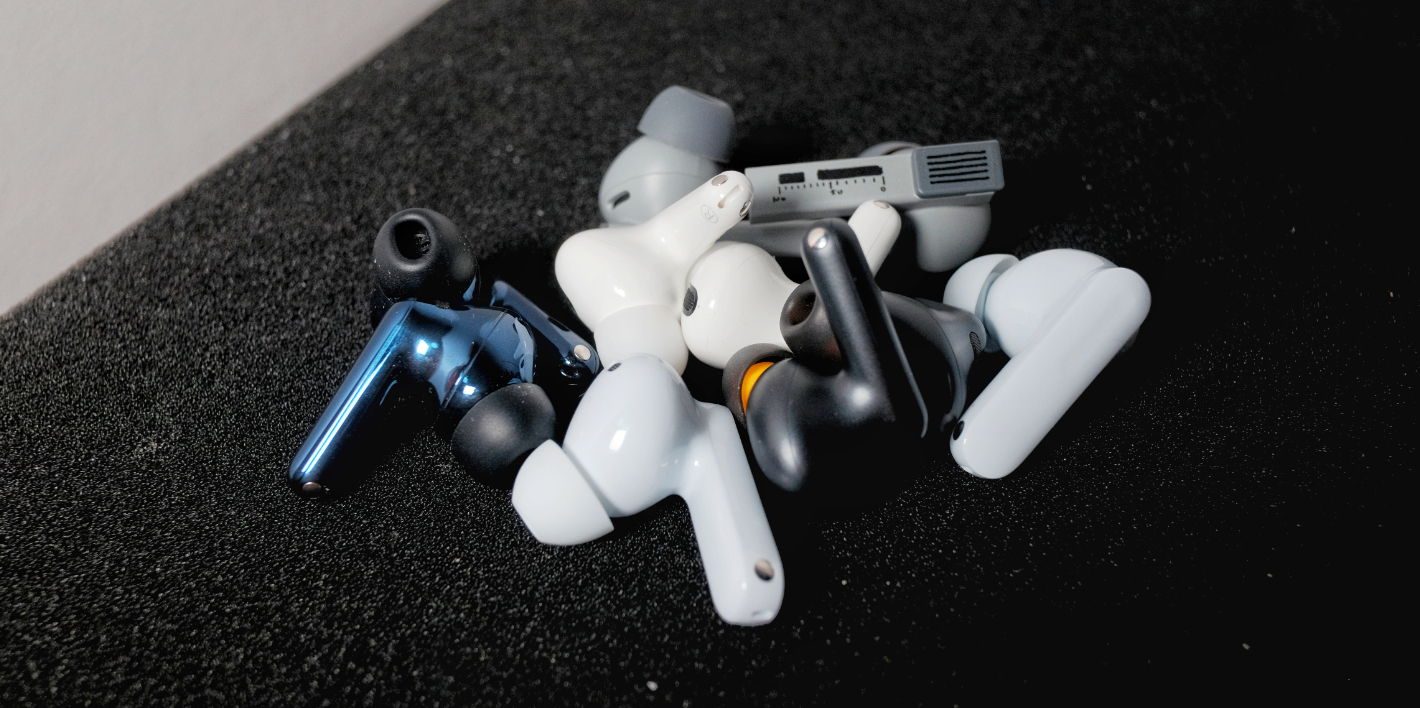
    Our lineup this round includes: vivo TWS 5 / iQOO TWS 5 — the latest models, with the vivo TWS 5 represented by the Hi-Fi edition. For context, iQOO’s TWS lineup used to correspond with vivo’s numbering: TWS 1 aligned with vivo’s third generation, TWS 2 aligned with vivo’s fourth. This year, both brands jumped directly to the fifth generation in sync. We have previously reviewed the iQOO TWS 2, which we introduced as a strong example of low-frequency noise reduction and wide codec support. For this round, we focus on the subtle differences between the two TWS 5 models, and where they have progressed or regressed compared with their predecessors. OPPO Enco Free4 is included because — prior to the release of the TWS 5 series — it was the unavoidable ANC benchmark in this price range. Moondrop’s Dreamback 2, meanwhile, is the essential pick when discussing sound quality in this segment. With these five models, we cover old vs. new, different strengths, and a diverse lineup.

    We also maintain long-term evaluation notes for many other models consistently sold within this price tier — including TEZO Que, vivo TWS 4, Edifier Lolli Pro 5, Beats Solo Buds, CMF Buds 2 Plus, TOZO NC20, Redmi Buds 6 Pro, Sony WF-C510, BGVP Q3, among others. These may be referenced in the comparison summary, and you’re welcome to discuss any specific questions in the comments.

    Fit

    All five earphones in this comparison use a stem-style pods design. The shells of the Enco Free4 and Dreamback 2 are noticeably fuller vertically than the AirPods Pro 2, which means they occupy more space in the concha and feel more present when worn. The three vivo/iQOO models are nearly identical in shell structure and are flatter by comparison, closer to the AirPods Pro 2. Their horizontal length isn’t significantly different from one another, so for users with larger auricles or conchas, the Enco Free4 and Dreamback 2 may feel more substantial and secure — while users with smaller ears may find the AirPods Pro 2 and vivo-series models much easier to adapt to.

    Overall, all five models use relatively conventional shell shapes and should fit most people well. If you have small ears, the vivo models are the safest choice. If your pods-style TWS earphones tend to slip out during daily wear, remember to choose the glossy version — matte finishes actually feel more slippery.

    Controls

    The TWS 2 uses a control area located toward the front of the stem, supporting pinch gestures and vertical sliding. In real-world use, it’s very difficult to trigger correctly — sliding is often misread as a playback command before your finger even moves. In the current firmware, the required pinch force is higher than that of similar implementations from Apple, Xiaomi, Baseus, and others. Another issue is the delayed feedback tone, which makes the interaction feel less responsive.

    Both TWS 5 models use a touch-sensitive area on the upper outside of the stem — a more traditional design. Feedback responsiveness has improved significantly compared with the previous generation, though there’s still a slight perceptible delay. The default volume of voice prompts isn’t very loud, though it is clear enough — just remember to increase it in the app.

    The Free4 also uses a touch area on the upper outside of the stem, with a clear groove design. The stem itself is flat, so touching or pressing it never feels awkward. Feedback is quick, and the default prompt volume is moderate yet clear — you can even change the prompt sound or adjust its loudness. Wear detection is also reasonably responsive, and even frequent on-off actions rarely lead to misdetection.

    The Dreamback 2 uses a touch area on the upper part of the stem. Out of the box, both sensitivity and recognition accuracy are excellent, and the controls feel very responsive. Thanks to a newly added physical bump in the structure, blind operation accuracy is also improved. Voice prompt clarity is good, and you won’t have trouble hearing notifications in most environments. Unfortunately, the Dreamback 2 does not include a wear-detection sensor.

    App Features

    All five products come with their own apps, and we tested them on third-party Android systems.

    The vivo earphones app and OPPO/OnePlus’s “Huanlü” app share a similar UI style with their respective system interfaces. One issue with vivo’s app is that when multiple earphones are connected, sometimes only one device’s settings can be adjusted, and even after the audio output has switched to another earphone in the background, the app may still fail to recognize the correct device. Occasionally, after a device successfully connects and its status is shown, the settings may remain unadjustable for a long time due to a bug.

    The main features worth introducing are two sound-related options. The first is DeepX Stereo Sound—though called “stereo,” it’s essentially a frequency-band adjustment based on the original audio, similar to an EQ. The different modes generally match their names in terms of perceived sound, and they’re worth trying.

    The second is Personalized Hearing Compensation, which seems to tailor audio output based on the user’s hearing condition. There are three default presets, designed according to age groups—presumably because hearing degradation patterns vary across ages. But to be honest, judging from the quality of the sample audio, the perceived compensation is minimal. As for the custom compensation option, it determines whether certain frequency bands need boosting by testing your ability to recognize subtle tones. Still, with the sample tones provided, it feels like the compensation does almost nothing—since I can clearly hear all the test tones anyway.

    The Huanlü app allows seamless switching between sound effects when the device is connected to two sources simultaneously, which is very convenient for users who frequently switch between a phone and a computer. My only complaint about Huanlü is that the reboot and reconnection time during firmware updates can be somewhat inconsistent. As for the equalizer, the Enco Free4 supports ±6 dB adjustments across six frequency points, though it does not offer any Q-factor controls.

    As for the so-called “AI features,” the vivo Earbuds app and OPPO’s Huanlü app do not have these capabilities built in, so they still rely on OriginOS / ColorOS for support. Third-party systems cannot access these features.

    The Moondrop app interface is comparatively more minimalistic. Introduced alongside the Dreamback 2 during the launch event were Moondrop’s AI Tuning Assistant and the interactive DSP that first appeared on the Space Travel 2. You can now adjust three gain levels, three presets, and access a graphical EQ interface that supports tuning five frequency bands from +3 dB to –12 dB, along with Q-value adjustments. However, it’s important to note that DSP tuning is currently unavailable under LDAC / LHDC. Fortunately, after switching back to LDAC, all previously configured DSP settings are preserved.

    A new addition is AI Lab, also known as the Moondrop Yuki AI Tuning Assistant. It allows natural-language conversations and uses an online large model to interpret your intentions. You can tell it the subjective direction you want to adjust toward, or even ask it to emulate the sound signature of another headphone model. It will offer EQ suggestions based on its database and can even explain the subjective listening changes corresponding to those EQ settings. In our tests, asking it for simulations returned surprisingly complete and thoughtful recommendations.

    In summary, among all the companion apps, OPPO’s Huanlü is currently the most stable in day-to-day use, while Moondrop’s app offers the richest set of sound-related features.

    Noise Cancellation, Transparency, and Call Quality Overview

    Setting aside existing noise-cancellation reviews, this section focuses purely on comparison. Following the usual TDS REVIEW workflow, we tested the earbuds subjectively across several environments, including:

    1. Subway commute scenarios with loud, stable low-frequency noise and some human voices, used to judge differences between modes and low-frequency noise-reduction depth
    2. Busy café environments dominated by human voices and complex noise, used to judge noise-cancellation bandwidth
    3. Quiet library scenarios without obvious stable noise, used to evaluate noise floor and ear pressure
    4. Street-corner scenarios with complex but generally low-pressure noise and occasional sudden peaks, used to evaluate the naturalness of transparency mode
    5. Wind-noise simulation, speech scenarios, and call-simulation tests

    Noise-Cancellation Depth

    In terms of overall perceived noise reduction, all five earbuds are very usable in common daily environments such as public buses, subways, subway stations, and shopping malls. With deep ANC enabled and without choosing specific scenario-based modes, the strongest low-frequency performance comes from the sibling duo: iQOO TWS 5 and vivo TWS 5 Hi-Fi Edition. They most noticeably suppress stable low-frequency noise, approaching the level of AirPods Pro 2.

    Next is the iQOO TWS 2. Its perceived low-frequency depth is close to the first two, but its mid-low-frequency attenuation is slightly weaker. When we previously recommended it, its peak low-frequency ANC performance was a major reason. Following that is the OPPO Enco Free4. Its overall low-frequency ANC depth is not as aggressive as the three vivo-system models.
    Lastly, the Moondrop Space Travel 2 shows a more balanced ANC depth overall, though its low-frequency and mid-low-frequency transitions are not as pronounced as the others.

    Noise-Cancellation Bandwidth & Mid-Frequency Performance

    All five earbuds demonstrate clear improvement in ANC bandwidth, and all can cover the main vocal frequency range to a significant extent—though generally still slightly behind the AirPods Pro 2.

    After direct comparisons, we believe the best bandwidth coverage and mid-frequency attenuation still come from the vivo/iQOO TWS 5 models. Next are the Moondrop Space Travel 2 and OPPO Enco Free4. The iQOO TWS 2 ranks last.

    The two TWS 5 models perform well in both bandwidth extension and mid-frequency attenuation. The Enco Free4 has bandwidth coverage similar to the Space Travel 2, but its mid-frequency noise-reduction perception is stronger, reducing more vocal energy. The iQOO TWS 2, being a previous-generation product, already lagged behind the Free4 in mid-frequency depth during earlier evaluations, and within these five models it remains the weakest performer in this category.

    Ear Pressure Control

    In terms of actual ear pressure experience, the lightest is the Shuiyueyu Dreamback 2, which uses feedforward noise cancellation and has a moderate depth of noise cancellation, resulting in almost no noticeable ear pressure and allowing for longer, more comfortable listening. The next in line is the iQOO TWS 2, which, in its initial firmware, already had minimal ear pressure, and the current firmware has improved this further. The OPPO Enco Free4 and iQOO TWS 5 have a moderate ear pressure feel, which is more noticeable compared to the first two. For first-time noise-cancelling headphone users, this might be more perceptible. The worst ear pressure control is on the vivo TWS 5 Hi-Fi version, which may be due to it being a new product, and there is still significant room for improvement in its ear pressure management.

    Wind Noise Suppression

    In terms of wind noise suppression, all models were tested under their default noise cancellation settings without any dedicated wind noise suppression mode. The Enco Free4 performed excellently, automatically adjusting to a lower depth of noise cancellation when wind noise was detected. The effect on wind noise suppression is quite noticeable, and it quickly returns to the original noise cancellation depth once the wind disappears. The vivo TWS 5 and iQOO TWS 5 also have adaptive capabilities, but their response times are a bit slower than the Free4, and some wind noise still remains after the adjustment.

    The Dreamback 2 and iQOO TWS 2 are relatively average in wind noise suppression in their default modes, but the Dreamback 2 has a dedicated manual wind noise suppression option. When enabled, it provides the strongest wind noise reduction among these five models, although this comes at the cost of further reducing noise cancellation depth. Therefore, considering the overall noise cancellation experience and wind noise suppression, the Enco Free4 is sufficient for most scenarios, while those who want to avoid wind noise affecting their listening experience can opt for the Dreamback 2 with the wind noise suppression feature activated.

    Transparency Mode / Ambient Sound

    In terms of ambient sound reproduction, the iQOO TWS 2 gives a noticeably “screened” feel, while the others are similar in terms of naturalness. Among them, the iQOO TWS 5 and Enco Free4 have a slight emphasis on high frequencies, creating a peak-like effect, while the Dreamback 2 has more emphasis on human voices. The adaptive logic of both TWS 5 models can trigger frequent adjustments, especially when the environment’s noise falls into a completely different frequency range, creating a lagging adjustment effect.

    In terms of voice clarity, the Free4 and both TWS 5 models are better, with almost no muffled feel to the speaker’s voice, while the Dreamback 2 and TWS 2 have a more noticeable muffling effect.

    Call Performance

    For calls, we tested in a mobile operator’s VoLTE environment. The best call clarity is from the Shuiyueyu Dreamback 2, followed by the OPPO Enco Free4, with the Free4’s voice slightly thinner in tone. The iQOO TWS 5’s call noise cancellation is not as effective at suppressing surrounding noise as the vivo TWS 5 Hi-Fi version, but both are comparable in performance, though the sound is more muffled. The iQOO TWS 2 has less muffling but overemphasizes low frequencies, making sibilant sounds and breath noises more pronounced.

    Overall Noise Cancellation Assessment

    Overall, all five products meet the basic standard required for daily commuting, representing a significant improvement compared with sub-¥500 models from just a few years ago. From the perspective of noise cancellation perception alone, we recommend prioritizing the two TWS 5 models and the Enco Free4. If you care more about comfortable noise cancellation, minimal ear pressure, and the least impact on sound quality, the Dreamback 2 is the better choice.

    Compared with the iQOO TWS 2, the new TWS 5 models show clear improvements: deeper mid-to-low-frequency noise reduction, better adaptive behavior, improved wind-noise handling, and largely resolved background noise issues. The Free4 provides a balanced approach, paying equal attention to wind-noise control and cancellation depth. Dreamback 2 does not achieve the same cancellation depth as the new models from major smartphone brands, but its lower ear pressure and feedforward ANC—designed to minimize distortion of the sound—make it ideal for users who prioritize comfort and audio integrity. Ultimately, your choice should depend on your own needs and usage scenarios.

    In this same price segment, the Edifier Lolli Pro 5 and TOZO NC20 also offer strong noise-cancellation depth, while the BGVP Q3 and Beats Solo Buds prioritize passive isolation—great options for users who do not need active noise cancellation but prefer the buds-style fit.

    Connectivity & Battery Life

    Signal Stability

    iQOO TWS 2:

    Equipped with Qualcomm’s second-generation S3 audio platform, the TWS 2 already has a strong foundation for reliable wireless performance, which is reflected in real-world usage. Under Snapdragon Sound + aptX Adaptive at 96 kHz, as well as LDAC in “Best Effort” mode, its connection to an Xperia 5 III remains very stable, with no disconnections and only rare stutters. However, with WLAN enabled and LDAC pushed to 990 kbps, stuttering and packet loss become quite common.

    vivo TWS 5 Hi-Fi Edition / iQOO TWS 5

    When connected to the standard test device Xperia 5 III using LDAC in “Signal Priority” or “Best Effort” mode, both models exhibit very few stutters or packet loss regardless of whether WLAN is enabled or disabled. Even at a distance of 5 meters with a load-bearing wall in between, performance remains largely stable without noticeable degradation. Only when the distance exceeds around 6.5 meters through a wall do stutters and dropouts begin to appear.

    On the same device, switching to “Sound Quality Priority” mode changes the situation slightly. In RF-dense environments, enabling LDAC Sound Quality Priority may cause occasional stutters, which become a bit more frequent when WLAN is active. When both conditions—wall obstruction and WLAN enabled—occur together, packet loss increases further. In extremely congested environments such as train stations, noticeable stuttering is expected.

    For LHDC testing, we used the LHDC One standalone transmitter—the standard testing device that supports the full LHDC-V 1 Mbps specification. With a wall and roughly 9 meters of separation, dropouts occur. Without obstruction at around 10 meters, stability is generally not an issue. For users of the Hi-Fi edition, we recommend switching to LHDC in complex wireless environments.

    OPPO Enco Free4

    As a TWS earphone that supports the LHDC-V 1 Mbps specification, the Enco Free4 was tested using the LHDC One standalone transmitter. However, just as some users previously experienced with the Enco X2, when connected to the universal LHDC transmitter, the Free4 only engages the older LHDC mode at a 48 kHz sample rate.

    Under LHDC 48 kHz and AAC, the Free4’s basic signal stability is acceptable. When connected to the Xperia 5 III, dropouts occur at around 5 meters with a wall in between. Without obstructions, stability is generally fine within a 10-meter range. As for “Fluid Bluetooth,” it is only available when paired with an OPPO smartphone.

    ShuiYueYu DreamBack 2

    When connected to the standard test device Xperia 5 III using LDAC in “Signal Priority” or “Best Effort” mode, both WLAN on and off, there is minimal stutter or packet loss. Even at a distance of 5 meters with a load-bearing wall between, the performance remains stable with no noticeable increase in stuttering. It is only after 7 meters of separation with a wall that stuttering and packet loss become apparent.

    With the same device, switching to “Sound Quality Priority” mode causes occasional stuttering in signal-dense areas when LDAC Sound Quality Priority is activated. This effect is slightly increased when WLAN is on. When both wall obstructions and WLAN are active, packet loss and stuttering increase further. In highly signal-dense environments, such as train stations, there is noticeable stuttering.

    Under LHDC 48kHz, packet loss and stuttering occur at around 8.5 meters with a wall in between. Compared to the first generation, DreamBack 2 shows a significant improvement in signal stability. In daily usage, you can reliably use LDAC or LHDC, but in signal-dense areas where your phone isn’t kept close, switching to AAC is more reliable.

    For all five of the tested earphones, after switching to AAC, the test results with both Xperia 5 III and iPhone 14 were stable, even when WLAN was on or off, ensuring smooth signal performance over considerable distances.

    Latency

    Following our latency testing process, in a traditional Bluetooth (non-LE Audio) environment, when low-latency mode is enabled, the connection to the standard test devices Xperia 5 III (LDAC, aptX series, AAC), LHDC One (LHDC), and iPhone 14 (AAC) was tested with streaming video playback. The subjective experience is as follows.

    Battery Life & Charging

    For battery life support, our standard testing procedure is as follows:
    Connect to the Xperia 5 III using LDAC in “Best Effort / Signal Priority” or AAC codec, enable ANC, disable spatial audio and low-latency mode, keep all other settings at default, set volume to 50%, and continuously play streaming music (Apple Music Lossless) and podcast programs (Xiaoyuzhou). Playback continues until one side of the earbuds fully depletes its battery.
    Each earbud undergoes at least three full test cycles to avoid anomalies caused by single-sample outliers.

    Sound Performance

    Specifications

    Subjective Evaluation – iQOO TWS 2

    Based on ANC off, LDAC codec, all sound effects disabled.

    The low frequencies have a moderate amount, with slightly emphasized thickness and fullness. You can sense a mild mid-bass hump. Sub-bass extension is decent, with good elasticity. Attack and decay speed are moderate, with very minimal lingering resonance. Atmosphere is not overly colored, and smearing is minimal—just enough to set the tone. Instruments with fundamentals in the lower midrange do not lean forward excessively.

    The midrange places vocals at a slight distance, with a slightly smaller mouth shape than usual. In most tracks, you will not encounter an exaggerated “big mouth” effect, and the imaging is refined. TWS 2 presents vocals with a slightly textured, weightier quality. It handles male and female voices similarly well, though it suits thicker vocal timbres slightly better, while maintaining only a moderate amount of grain. The throat region is slightly elevated in presence, with more breathiness and some retained sibilance. Vocal transparency is good—there is no muffled coloration.

    Regarding instruments, their texture and definition do not lean strongly in any particular direction. For string instruments such as violins, violas, and guitars, body resonance is not heavily emphasized, while bowing and plucking details are a bit pronounced but not protruding unnaturally. Cellos have a solid sense of body, but still slightly thinner than standard. Electronic instruments—synths, electric guitars—can sound relatively stimulating. Brass instruments have adequate grandeur; trumpets and other bright brass exhibit slightly elevated brilliance. Woodwinds perform reasonably and without surprises. Harmonics are not the most natural, but the quantity is quite sufficient for this price range. Percussion presence is appropriate, though upper-frequency impact—especially from cymbals—can feel somewhat sharp.

    The treble region has moderate brightness overall, with detectable peaks in certain bands that add刺激感 to cymbals and similar transients, occasionally affecting long-term listening comfort. Fortunately, it stops just short of turning into “shattered glass.” Upper-treble extension is impressive for this price class, with roll-off not arriving too early, though still a bit faster than ideal.

    Soundstage size is not large but remains well-structured, with relatively equal width and depth. Vocal–instrument separation is decent, and overall coherence is maintained. Resolution is above average for its class, with a slightly emphasized “sense of detail.” Dynamics are good, and transients are responsive.

    Additional Note: Differences Between iQOO TWS 2 and vivo TWS 4 Hi-Fi Edition

    Subjective Evaluation – vivo TWS 5 / iQOO TWS 5

    Based on ANC off, LDAC codec, Hi-Fi edition, all sound effects disabled.

    The low frequencies have a moderate amount, with some added thickness and fullness. Elasticity is decent, and sub-bass extension is good. Attack and decay speeds are moderate, retaining a light touch of resonance. The overall ambience has mild bloom and a slightly richer character. In default tuning, the TWS 5 Hi-Fi edition delivers a rather solid low end—less in quantity than the Enco Free4 and TWS 4 Hi-Fi edition, but with healthier energy distribution, while still clearly leaning toward a pop-oriented tuning. Instruments with fundamentals in the lower midrange lean forward slightly.

    In the midrange, vocals sit relatively close but not “in your face,” with a moderate mouth size and good refinement. The tuning emphasizes vocal texture more than contour definition. There isn’t a strong preference toward male or female vocals, but the earbuds tend to suit more robust, firm, and energetic vocal timbres; lighter voices may sound slightly thickened. Grain is noticeably polished, delivering decent smoothness. Timbre coloration is perceptible, leaning a bit warm. The throat region is slightly elevated, with a touch more breathiness. Details like saliva sounds are highlighted, and sibilance is mildly present. Overall vocal transparency is moderate, without artificial brightness.

    For instruments, most are also rendered with texture taking priority over definition. String instruments—violins, guitars, violas—have some thickness, sounding fuller rather than sharp or attention-grabbing. Bowing and plucking details are improved from the previous generation, but not heavily emphasized. Cellos have a moderate sense of body, slightly oversized in spatial proportion. Brass instruments offer decent grandeur, though trumpets and other bright brass lean a bit conservative. Woodwinds have acceptable air and a touch of added thickness. Harmonic content is relatively abundant. In percussion, the kick drum is prominent, snares decay at a moderate speed, and cymbal brightness is moderate without harshness.

    The treble region overall is not very bright, though there are mildly emphasized peaks. Upper-treble extension is average, with a slightly quick—but not prematurely early—roll-off. Compared to the TWS 2, upper-band energy is more conservative across the board.

    Soundstage is moderate in size with clear boundaries, maintaining some width and depth. Combined with a reasonable sense of “height,” it forms a fairly full, flattened-sphere-like space. Separation between vocals and instruments is acceptable, and overall cohesion is good. Resolution is aligned with expectations for this price tier, slightly improved from the previous generation, with only a mild emphasis on “perceived detail.” Dynamics are good, and transients are average.

    Additional Note: Differences Between iQOO TWS 5 and vivo TWS 5 Hi-Fi Edition

    Compared with the previous generation’s noticeable differences, the TWS 5 lineup is much closer this time. The iQOO TWS 5 adds a bit of thickness in the upper midrange and lower treble, giving some instruments a more pronounced attack and adding a touch more “sweetness” to vocals. Low-frequency solidity and prominence are slightly reduced compared to the vivo model. Broadly speaking, both share a similar tuning style; the vivo Hi-Fi edition sounds a bit warmer, while the iQOO variant leans slightly more colored in the upper mids/treble—nothing drastic. In contrast to standard mode, the Hi-Fi edition’s “Master Pro” profile sounds even more neutral and balanced.

    Subjective Evaluation – OPPO Enco Free4

    Based on ANC off, AAC codec, Dynaudio edition “Ultimate Sound,” Golden Sound disabled.

    The low frequencies have slightly elevated quantity, with notable thickness and fullness. Elasticity is decent, and sub-bass extension is average. Attack and decay speed are moderate, but there is a noticeable amount of lingering resonance. The ambience has little smearing yet still sounds rather rich. The default tuning of the Enco Free4 makes the low end feel a bit overwhelming in the head. The quality itself isn’t bad—there’s no mushiness—but for a lot of recent Western pop, the bass is simply too showy. Low-frequency instruments are pushed prominently forward. Instruments with fundamentals in the lower midrange lean heavily toward the front.

    In the midrange, vocals sit slightly close, with moderate mouth size and a somewhat emphasized refinement. Vocal texture is not prioritized as much as contour definition; thickness is limited, and lines are clearly drawn. There’s no strong leaning toward male or female vocals, but in general the tuning favors lighter, more delicate vocal timbres—rough, grainy, thick voices tend to lose their character here. Timbre coloration is minimal, especially in the upper midrange of the vocal fundamental, where accuracy is decent. Grain is noticeably polished, making the sound quite smooth. The throat area sits at a normal height, but breathiness is slightly more abundant. Sibilance is mildly present, and some mouth-noise details (saliva, lip sounds) can stand out. Overall vocal transparency is relatively high without artificial brightness.

    For instruments, the Enco Free4 generally balances texture and contour—except for instruments with lower fundamentals, which can sound distinctly off. In the string family, violins, violas, and guitars have an appropriate thickness, with bowing/plucking details mildly emphasized. Cellos feel physically solid, though disproportionately enlarged in the soundstage. Brass has decent power (especially under the Dynaudio tuning), and trumpets or other bright brass have sufficient sparkle. Woodwinds maintain decent timbre accuracy, but the sense of air feels unnatural—too tense and overly highlighted rather than rich. Harmonic content is insufficient and less natural. In percussion, the kick drum is over-present, snares are tightened aggressively, and cymbals skew bright with some metallic tinge.

    Treble brightness is moderate-to-slightly-bright, with both overall sparkle and discernible localized peaks—not the smoothest treble. Upper-treble extension is acceptable; even with AAC there is some retained top-end detail. Under LHDC the roll-off is less abrupt.

    The Enco Free4 creates a space that isn’t congested, offering reasonable width and depth with fairly sharp edges and low diffusion. Combined with mildly compressed height, the soundstage forms a slightly flattened, moderately sized sphere. Separation between vocals and instruments is decent—vocals don’t drown despite the strong bass. Cohesion is average. Resolution ranks upper-mid within the sub-¥500 TWS category, with some emphasis on “perceived detail.” Dynamics and transients are respectable.

    Overall, the Enco Free4 is a classic “fun tuning” with excessive bass and elevated ends on both sides of the spectrum—immediately impressive, but difficult to listen to for long. I strongly recommend reducing low-frequency gain or switching to the “Pure Vocal” preset.

    Additional Note: Differences Among Free4 Preset Tunings

    Among the three defaults in the regular (non-Dynaudio) version, “Pure Vocal” is the one I recommend—its bass quantity is the most restrained of the three. However, it also introduces problems: cymbals become more aggressive, brass instruments gain sharper metallic overtones, and vocal breathiness is more pronounced. In terms of frequency balance, though, it’s the healthiest. Compared with the regular version, the Dynaudio edition adds the “Dynaudio Signature” profile, which still retains heavy bass and adds some looseness to the texture. There’s also added room-like reverberation. Honestly, it still isn’t a particularly healthy tuning.

    Subjective Evaluation – Moondrop Dreamback 2

    Based on ANC off, LDAC codec, default “Pop” sound profile, medium gain.

    The low frequencies have moderate quantity, with neither notable thickness nor fullness. Elasticity is good, and sub-bass extension is excellent. Attack and decay lean slightly fast, with very little lingering resonance. Of the three sound modes, this one offers the strongest ambience, though smearing and richness are still relatively low. Dreamback 2’s bass has commendable layering and contributes supportive weight without drawing excessive attention. Even in the “Pop” profile—its highest bass-gain option—the energy distribution remains fairly healthy. Instruments with fundamentals in the lower midrange do not tilt forward.

    In the midrange, vocals sit relatively close with a slightly large mouth size and high refinement. Dreamback 2 balances texture and contour well; thickness is moderate, and lines are outlined with some emphasis but not excessively. There’s no strong male/female vocal bias, and it generally suits voices that aren’t too thick or grainy. Grain is lightly polished, giving overall smooth presentation. Timbre coloration is minimal, with only subtle adjustments in the upper mids—neither warm nor cold. The throat region sounds natural, breathiness is mildly highlighted, and mouth-noise details come forward a bit without harming listenability. Sibilance is only noticeable in extreme cases. Vocal transparency is quite high with a slight lift in brightness, yet the tonality remains natural.

    For instruments, most maintain a balance between texture and contour, with slight brightening in some cases. In strings—violins, guitars, violas—thickness is moderate, and bowing/plucking details are clear and sufficiently present. Cellos have realistic body and proportional size within the space. Brass has respectable power, and trumpets or other bright brass gain adequate brightness (sometimes slightly too much in certain modes). Woodwinds have good air and decent naturalness. Harmonic content is plentiful for a true wireless earphone. In percussion, the kick drum has moderate presence, snare decay is quick, and cymbals are generally bright without sharpness—metallic overtones stay controlled.

    Treble is fairly bright with notable overall energy. Smoothness is respectable, with peaks somewhat polished down. Upper-treble extension is very good for a TWS, with roll-off neither early nor abrupt.

    The soundstage is moderate in scale, with slightly sharp boundaries and respectable width and depth. Combined with a reasonable sense of height, Dreamback 2 in its Pop tuning produces a slightly flattened spherical sound field. Separation between vocals and instruments is strong for a TWS, and overall coherence is intact. Resolution is very good thanks to the excellent driver, with a mild emphasis on “perceived detail.” Dynamics and transients are solid.

    Additional Note: Differences Among Dreamback 2 Preset Tunings

    All three profiles mainly adjust bass levels. My preferred option is the default “Pop” tuning mentioned above. The “Standard” and “Monitor” profiles progressively flatten the low end. Compared with the first-generation Dreamback’s default tuning, Dreamback 2’s default brings a bit more upper-mid gain, resulting in slight added brightness.

    Sound Trends of Other Models in a Similar Price Range

    TEZO Que: A pleasing balance with good vocal texture. This tuning suits podcast listeners well and also delivers a natural impression for most pop and electronic genres, without particularly strong coloration or emphasis.

    Edifier Lolli Pro 5: A fuller, rounder sound with solid mid-bass quality and firm instrumental body. It follows a mildly V-shaped tuning.

    beats Solo Buds: Bass elasticity is good with added fullness, vocals are refined, and treble brightness is moderate. Overall energy is a bit concentrated, still fitting into a lightly V-shaped profile.

    CMF Buds 2 Plus: Prominent, highly elastic low frequencies—this is a clearly bass-focused tuning.

    TOZO NC20: Treble extension is better than CMF’s, and bass quantity is slightly more restrained. It represents a mild V-shaped, pop-oriented tuning.

    Redmi Buds 6 Pro: The stock tuning has noticeably elevated bass. It is a classic “V-shape,” though with lower technical performance than CMF.

    Sony WF-C510: A traditional Sony-style tuning for their lower-midrange dynamic models—thicker mids and bass, less treble presence, a warm tone, and overall average technicalities.

    BGVP Q3: Among all listed models, its technical performance ranks second only to Dreamback 2. As the only dual-mode wired/wireless TWS, its bass is tight and focused, vocals maintain both good listenability and some transparency, and treble smoothness is acceptable.

    Summary and Recommendations

    Overall, the five main units we selected this round all exceed the average standard. The lineup is based partly on survey data we gathered earlier on Weibo and partly on our own judgment, while doing our best to avoid exaggeration or unfair comparisons.

    The noise cancellation performance of the vivo TWS 5 and iQOO TWS 5 is excellent. The sound performance of both versions is generally fine, but it’s recommended to choose your preferred sound profile, as the default mode tends to emphasize both ends of the frequency spectrum. There are no major issues with cross-platform compatibility or signal performance. The Hi-Fi version has good support for LHDC and LDAC, making it a top choice for Android users prioritizing noise cancellation in this price range.

    The OPPO Enco Free4 also delivers solid noise cancellation performance, making it one of the most comprehensive noise-cancelling options in this price range, just below the TWS 5. However, the default sound profile emphasizes the bass quite a bit. There are some compatibility issues with LHDC on different devices, so it’s recommended for users of Oppo and OnePlus devices, or those within the OPPO ecosystem.

    The iQOO TWS 2 is technically a previous-generation product, but it’s still quite easy to find. It’s a representative of the mid-to-low-range phone brands that started to emphasize deep bass noise cancellation. Compared to the same generation vivo TWS 4 series, it has well-calibrated sound. With good support for LDAC and aptX Adaptive, it remains a solid noise cancellation option for users with Qualcomm-based SoC phones, but it’s not as highly recommended as the first two.

    Shuiyueyu Menghui 2 is the only one among these models that prioritizes sound quality. Its overall noise cancellation perception is slightly weaker compared to the others, but its noise cancellation has minimal impact on the sound quality. The sound performance is very high, and it also offers a highly flexible tuning function. It’s the only model in the sub-500 RMB price range that supports spatial audio rendering (see our TDS REVIEW of Menghui 2) and wireless charging. This model is recommended for users who prioritize sound quality, with noise cancellation as a secondary feature.

    This is our mid-range TWS comparison for the end of 2025. Compared to the previous two mid-range comparisons, the general level of the models has improved. It’s clear that after hitting a bottleneck in active noise cancellation depth, competition has shifted back to the relatively low-to-mid price market. This comparison covers fewer points than a standard TDS REVIEW, which is something we’ve been thinking about. We’d love to hear your feedback on the aspects you’d like to see in future comparisons in the comments section.

    KT MARK and Noise Cancellation Pyramid:

    Past products are included, and those that should be downrated in the current market context are marked with an asterisk. The table shows the updated ratings.

    For information about the KT MARK scoring system and our “no interference with evaluations” principle, please search for “TDS Studio Scoring Criteria and Content Explanation V202502” on mainstream search engines.

    KingTsui, TDS Studio
    Nov 2025
    It’s a TDS production.

    All content is independently created; please do not plagiarize or copy the structure. All rights reserved.

  • SSPAI Morning Brief: Alibaba’s Qianwen App Enters Public Beta, UNISOC Launches T9300 5G SoC, and More

    SSPAI Morning Brief: Alibaba’s Qianwen App Enters Public Beta, UNISOC Launches T9300 5G SoC, and More

    Morning Brief Highlights

    1. Alibaba’s Qianwen App Enters Public Beta
    2. UNISOC Launches the T9300 High-Performance 5G SoC
    3. Ministry of Public Security Flags 40 Mobile Apps for Illegal or Irregular Personal Data Collection
    4. OPPO Unveils the Reno15 Series Smartphones
    5. TGA 2025 Game Awards Nominees Announced
    6. Google DeepMind Releases the WeatherNext 2 Model
    7. Google Play Adds “Where to Watch” Feature
    8. Cities: Skylines II Switches Development Teams
    9. Just a heads-up on the small rumor mill—nothing to take too seriously.

    Alibaba’s Qianwen App Enters Public Beta

    On November 17, Alibaba announced that its AI assistant app, Qianwen, has entered public beta. Built on Alibaba’s Qwen model, the app aims to become an AI assistant that “can chat and get things done.” Looking ahead, Alibaba plans to integrate a wide range of everyday scenarios into the Qianwen app — including maps, food delivery, ticket booking, office tools, learning, shopping, and health services — turning it into an all-in-one entry point. The app will also be updated with the latest and most powerful Qwen models as soon as they become available. The public beta version of the Qianwen app is now available in major app stores. An international version for global users will also be launched soon. Sources.

    UNISOC Launches the T9300 High-Performance 5G SoC

    On November 16, UNISOC officially listed its T9300 high-performance 5G SoC on its website. The chip is built on a 6nm process and features an octa-core CPU architecture with A78 performance cores clocked at up to 2.4GHz. It comes with a dual-core Mali G57 GPU, high-speed UFS 2.2 storage, and LPDDR4X memory. The T9300 supports dual-SIM 5G standby and the latest Android 16, and integrates the 7th-gen Vivimagic imaging engine with support for 200-megapixel sensors and 144Hz high-refresh displays, along with Hi-Fi-grade audio. It also includes the UNISOC Miracle Gaming engine for mobile gaming. For displays, it supports FHD+ 144Hz and 1.5K 90Hz modes, HDR10+, VideoPQ dynamic contrast adjustment, VRR adaptive refresh rate, blue-light reduction, sunlight and night-mode eye protection, and intelligent resolution switching. It has also passed Netflix certification. In imaging, the chip uses the 7th-gen Vivimagic engine with a new 7th-gen quad-core ISP, supporting 200MP sensors, 32MP@25fps ZSL, and 20+20MP dual-camera setups. It offers strong noise-reduction capabilities, supporting hardware MFNR multi-frame noise reduction, hardware TNR temporal noise reduction, and a new 3A 5.0 algorithm. For connectivity, it supports 2G through 5G multi-mode networks, 3GPP R17, integrated NR NTN satellite communications, 5G MBS broadcast, 5G NR with both SA and NSA modes, dual-SIM dual-VoNR, and VoWiFi. Additional features include enhanced full-scenario coverage technologies and AI-driven intelligent network switching. Sources.

    Ministry of Public Security Flags 40 Mobile Apps for Illegal or Irregular Personal Data Collection

    On November 17, the National Cybersecurity Notification Center reported that between September 28 and October 16, 2025, the Ministry of Public Security’s Quality Supervision and Testing Center for Computer Information System Security Products detected 40 mobile applications involved in illegal or improper collection and use of personal information. The identified issues include: failure to list the purposes, methods, and scope of personal information collection and use one by one (16 apps); failure to inform users of the purpose when requesting permissions that allow access to personal information (1 app); collecting personal information before obtaining user consent (2 apps); collecting personal information beyond the scope authorized by users (16 apps); personal information protection policies describing data collection beyond what is necessary for related functions (1 app); declared permissions in configuration files exceeding the necessary scope for related functions (2 apps); actual collection of personal information beyond what is necessary for related functions (10 apps); failure to provide users with channels or features to file personal information–related complaints (5 apps); failure to provide specific ways for users to correct or supplement their personal information (3 apps); failure to provide specific ways for users to delete their personal information (3 apps); failure to provide channels or methods for users to delete their accounts (1 app); including unreasonable conditions or extra requirements in the account deletion process (1 app); failure to provide options to exit or disable personalized content display (1 app); and advertisements that mislead or deceive users (2 apps). Additionally, out of 34 apps listed in the previous notice, 9 failed to correct the identified issues upon reinspection and have been removed from app stores. Sources.

    OPPO Unveils the Reno15 Series Smartphones

    On November 17, OPPO launched the Reno15 series, including the Reno15 and Reno15 Pro, with a focus on Live Photos and livestreaming features.

    The OPPO Reno15 is powered by the Dimensity 8450 chipset and features a 6.32-inch 1.5K 120Hz display. It comes with a 6200mAh battery supporting 80W SuperVOOC fast charging and 80W UFCS unified fast charging. The device is rated IP69 for water and dust resistance. The rear triple-camera system includes a 200MP equivalent 24mm f/1.8 OIS wide camera, a 50MP equivalent 16mm f/2.0 ultra-wide camera, and a 50MP equivalent 80mm f/2.8 OIS telephoto camera, supporting up to 3.5× optical zoom. The Reno15 is available in three colors: Luli Brown, Aurora Blue, and Starlight Bow, priced from 2,999 RMB (12GB+256GB) to 3,999 RMB (16GB+1TB).

    The OPPO Reno15 Pro also uses the Dimensity 8450 chipset and features a larger 6.78-inch 1.5K 120Hz display. It has a 6500mAh battery with 80W SuperVOOC fast charging and 80W UFCS unified fast charging. It also carries IP69 protection and shares the same camera setup as the Reno15. The Reno15 Pro comes in Luli Brown, Honey Gold, and Starlight Bow, priced from 3,699 RMB (12GB+256GB) to 4,799 RMB (16GB+1TB). Alongside the phones, OPPO also released accessories such as a magnetic stand selfie stick and a magnetic ring-fill light. Sources.

    TGA 2025 Game Awards Nominees Announced

    On November 18, The Game Awards 2025 (TGA) announced its list of nominees. Six titles have been nominated for Game of the Year: Light & Shadow: Expedition 33, Death Stranding 2: On the Beach of the Dead, Donkey Kong: Banana Boost, Hades II, Hollow Knight: Silksong, and Kingdom Come: Deliverance II. Among them, Light & Shadow: Expedition 33 leads with 12 nominations, making it the most nominated game in TGA history. The awards ceremony will take place on December 11 in Los Angeles. Sources.

    Google DeepMind Releases the WeatherNext 2 Model

    On November 17, Google DeepMind and Google Research released the WeatherNext 2 weather prediction model. WeatherNext 2 delivers forecasts eight times faster, with resolution reaching up to one hour. The model is now available on Earth Engine and BigQuery, and weather forecasts in Google Search, Gemini, Pixel Weather, as well as the Google Maps Platform Weather API, have all been upgraded to WeatherNext 2. Sources.

    Google Play Adds “Where to Watch” Feature

    According to Android Authority, Google Play has begun adding a new “Where to Watch” feature on store pages. Users can directly search for streaming shows, and Google Play will display information about the program along with buttons that link straight to the platforms where it is available, allowing playback with a single tap. This feature significantly reduces the time users spend searching for specific shows. Sources.

    Cities: Skylines II Switches Development Teams

    On November 17, the development team behind Cities: Skylines II announced that publisher Paradox Interactive and developer Colossal Order have ended their partnership of more than ten years. The statement noted that the decision was made jointly by both teams to ensure the strongest possible future for the Cities: Skylines franchise. Starting in early 2026, development of Cities: Skylines II will be handed over to Finland-based Iceflake Studios, a Paradox Interactive–managed studio. Before the transition, Colossal Order will complete the bicycle patch and the beta version of the editor asset manager. Sources.

    Just Some Rumors to Glance At

    At the “JD Wine Tasting Event” on November 17, Richard Liu announced the launch of the standalone JD Food Delivery app and the “never-to-be-commercialized” JD Reviews. He also introduced “Qixian Coffee,” which will exclusively use fresh milk, with 3–5 new stores opening each week. The goal is to achieve basic coverage across major districts in Beijing by the end of this year. Sources 1 2

    At the 2025 Honor Carnival event, Honor showcased a prototype of the HONOR ROBOT phone. Its core design involves retracting a gimbal-style camera beneath the glass back panel of the device. Sources.

    In an 8-K filing submitted to the U.S. Securities and Exchange Commission on November 14, Logitech confirmed that data had been stolen in July by the Cl0p ransomware group through an Oracle E-Business Suite vulnerability. The specific information stolen has not been disclosed. Sources.

    Weibo user Yiyi Tech posted close-up photos of two versions of the Huawei Mate80 Pro packaging box. The images indicate that different versions of the Mate80 Pro will feature either the Kirin 9030 or Kirin 9030 Pro chipset. Sources.

    The X platform has begun rolling out its new end-to-end encrypted “Chat” feature to replace traditional direct messages. However, X emphasized that the system lacks protection against man-in-the-middle attacks and does not encrypt metadata. Sources.

  • Chasing the Light: A Retrospective on Automatic Exposure Technology in Cameras

    Chasing the Light: A Retrospective on Automatic Exposure Technology in Cameras

    Introduction

    Perhaps few people — myself included — would have guessed that the inspiration for this article came from a single controversial moment at a product launch event.

    It was October 15, 2025. OPPO, brimming with confidence, unveiled its latest flagship lineup — the Find X9 Series. With lenses covering multiple focal lengths and featuring Danxia-inspired color reproduction, the company made no attempt to hide its ambitions in mobile imaging. The collaboration with the legendary camera brand Hasselblad further fueled its confidence to aim higher. So, much like its competitors before it, OPPO boldly declared that “you don’t need to bring a camera when traveling,” demonstrating its prearranged success live on stage — and it was precisely this demonstration that sparked debate.

    The Moment That Defined the Launch — and the Spark Behind This Article

    When confronted with this scene, some saw it as another triumph of computational photography — a victory that preserved the convenience of smartphones while pushing technical boundaries. But to others, it was nothing less than a disrespectful mockery of professional-grade cameras worth tens of thousands of yuan. When I first saw the image, I resonated with the latter view. The Canon R7, it seemed, was not performing at the standard one would expect. Why such a conclusion? The key lay in a small, easily overlooked icon at the upper-left (or lower-left) corner of the viewfinder — not the familiar Tv (S), Av (A), or M mode used by photography enthusiasts, but rather the forgotten green symbol: “A+” — the Advanced Automatic Mode. This mode was once the “teacher” of the digital camera era, the very starting point of countless people’s photographic journeys. Yet today, it stands at the center of a heated professional debate. The contrast is as striking as it is thought-provoking.

    Canon’s Official Explanation of Scene Recognition in the EOS R7 Advanced Automatic Mode

    Compared to today’s smartphones — which combine ultimate convenience with rapid iterative intelligence — the automatic exposure algorithms of cameras may seem outdated. Yet, if we look back to an era when every setting had to be manually adjusted and even natural conditions could constrain a photographer’s creativity, it was precisely this “not-so-smart” starting point that opened the door to the world of photography for countless people. Behind it lies a grand, turbulent saga of technological evolution. So, let us set aside needless debates for a moment and step into this fascinating history together.

    Section I: The Development of Light Metering Components

    The concept of light metering in photography dates back to 1844 and has evolved for nearly 180 years. Its origin can be traced to the discovery that different photosensitive materials respond differently to light exposure. In the early days, determining proper exposure relied either on specialized devices that required visual inspection or purely on personal experience. It wasn’t until the 1930s that the invention and popularization of photoelectric components provided the technological foundation for objective light measurement.

    The selenium photocell — verified as the earliest photoelectric element used for photographic light metering — was suitable for both external handheld light meters and built-in camera systems. Its core principle lay in the photoelectric effect: the stronger the external illumination, the greater the generated electric current. By connecting the selenium cell to an ammeter, the degree of needle deflection could then accurately indicate the intensity of the surrounding light.

    Schematic Diagram of a Selenium Photocell Illuminance Meter, from  https://www.pwsannong.com/c/2016-04-13/549946.shtml

    The selenium photocell, which required no external power supply and had a spectral response similar to that of the human eye, became an effective means of directly measuring illumination. For this reason, when used in built-in camera metering systems, its surface was often covered with a cluster of small lenses resembling the compound eyes of insects. This design limited incoming light and prevented mirror reflections on the photocell surface, giving early automatic exposure cameras their distinctive appearance, as shown below.

    Olympus PEN-EE

    The first-generation Olympus PEN-EE, released in August 1961, featured a ring of selenium photocells around the lens. These cells were mechanically linked to the camera’s internal components, allowing the aperture to be adjusted automatically based on the preset film sensitivity and ambient light conditions. Combined with its zone-focus design (similar to the “SNAP” mode on Ricoh GR cameras) and a fixed shutter speed of 1/60s, users only needed to compose their shot and press the shutter button. Moreover, its affordable price and the ability to shoot twice as many frames thanks to its half-frame format made the PEN-EE one of the most popular early automatic cameras. In other cameras or external light meters that adopted different linkage mechanisms, the selenium photocell similarly allowed users to achieve precise exposure control—much like using an exposure scale in today’s manual mode.

    As time went on, the limitations of selenium photocells became apparent. Prolonged exposure to strong light caused degradation and inaccurate readings; their sensitivity to low-light conditions was poor; and they required a certain physical size to function properly. To overcome these issues, smaller and more sensitive cadmium sulfide (CdS) photoresistors were introduced. For example, as shown in the Leica–Minolta CL below, the metering probe positioned in front of the shutter curtain used a CdS cell.

    Leica–Minolta CL

    In exposure metering applications, CdS (cadmium sulfide) photoresistors required external power. The system converted changes in their resistance (the stronger the light, the lower the resistance) into voltage or current signals to drive the display. Although CdS cells solved the size limitations of selenium photocells, their sensitivity to low light was still less than ideal. They also suffered from a critical flaw known as the “strong light memory effect”: after measuring bright light, if they immediately measured dim light, the displayed result would read artificially high due to response lag—leading to underexposure of darker subjects.

    This inherent defect ultimately limited their range of applications, confining them mostly to mid- and low-end automatic cameras. In high-end models, CdS elements were gradually replaced by superior silicon photodiodes (SPD) and their improved variant, gallium phosphide photodiodes (GPD). The metering systems built on these technologies remain in use in modern digital SLR cameras today.

    Silicon Photodiode (SPD)

    Like selenium photocells, silicon photodiodes (SPDs) generate a current proportional to the intensity of incoming light. However, because the current produced by SPDs is extremely weak, it must be amplified by an externally powered operational amplifier before being processed by subsequent circuits. SPDs deliver stable and outstanding performance in both bright and dim lighting conditions. They not only overcome the “strong light memory effect” of CdS photoresistors but also offer a smaller physical footprint, making them ideal light-sensing components. The only drawback of SPDs is their excessive sensitivity to red light, which necessitates the use of a blue correction filter in front of the sensor. This flaw was later resolved with the introduction of gallium phosphide photodiodes (GPDs).

    From a technical standpoint, digital SLRs—restricted by the optical paths formed by the pentaprism and mirror assembly—continued to rely on discrete autofocus and metering subsystems even in their later years. In contrast, the mirrorless camera architecture pioneered by the Micro Four Thirds (M4/3) system consolidated all these functions within the CMOS image sensor itself. It’s important to note, however, that the accuracy of metering depends not only on the sensor’s intrinsic performance but also on its placement—a topic we will explore in the next section.

    Section II: TTL — The Decisive Breakthrough

    TTL stands for “Through the Lens.” Its principle lies in measuring the light that passes directly through the camera lens. By unifying the optical path, this method eliminated the inaccuracies of external light meters and perfectly adapted to interchangeable lens systems, thereby becoming the standard for modern cameras. It is worth noting that all in-camera TTL metering systems are reflective—that is, they measure the brightness of light reflected from the subject rather than the light incident upon it.

    Diagram of Reflective Light Metering Principle

    Although Zeiss Ikon had already introduced a twin-lens reflex camera, the Contaflex 860/24, in 1935 with an integrated TTL metering system and even secured a patent for it, the widespread adoption of the technology did not occur until the 1960s. The key driver behind its popularization was progress in the semiconductor industry, which made it possible to produce compact photosensitive components. One of the earliest mass-produced SLR cameras equipped with built-in TTL metering was Tokyo Kogaku’s Topcon RE Super, launched in 1963.

    Tokyo Kogaku Topcon RE Super

    Another representative among the “earliest” models was the renowned and highly successful Pentax SP, which remains celebrated as a classic entry-level camera for film photography. Its full name, “Spotmatic,” originates from a pioneering concept: at Photokina 1960, Pentax showcased a prototype camera equipped with a TTL system similar to today’s spot metering technology.

    Pentax Spotmatic (SP)

    During my research, I discovered that the question of “who was first” had once sparked considerable debate. The consensus today is that Pentax took the lead in showcasing a prototype, while Tokyo Kogaku (Topcon) was the first to mass-produce and release a camera equipped with TTL metering. The Pentax SP was officially released in 1964, and its metering system differed entirely from that of the Topcon RE Super.For cost and market considerations, the production version of the Spotmatic abandoned the prototype’s mechanical spot-metering structure. Instead, it adopted a center-weighted average metering system, with two CdS photoresistors placed beside the viewfinder inside the pentaprism. A similar mechanical design later appeared in the Leica-Minolta CL mentioned in the previous section. The concept of positioning metering cells beside the viewfinder also became common in later film and even digital SLR cameras with built-in metering systems, as shown below.

    Tokyo Kogaku, however, firmly believed that the metering element should be placed directly behind the lens. To achieve this, the RE Super made a groundbreaking move: it positioned a CdS sensor behind the reflex mirror, and through finely etched patterns on the mirror’s surface, redirected about 7% of the incoming light toward the sensor — all while maintaining sufficient brightness in the viewfinder.This innovative design became an important blueprint for the evolution of subsequent TTL systems. Ironically, despite being technologically ahead of its time — even capable of full-aperture metering, which was remarkable for that era — the RE Super struggled in other functional aspects, leaving its overall competitiveness behind that of Pentax, Nikon, and others. Coupled with Tokyo Kogaku’s worsening financial situation in later years, the Topcon brand ultimately withdrew from the camera market in 1977.

    Internal structure of a Topcon camera, clearly showing the etched lines on the front of the reflex mirror that direct light toward the metering sensor.

    To address the challenge of metering under instantaneous light sources such as flash, the industry began exploring a new concept — measuring the reflected light directly from the film surface. This concept was finally realized by Olympus in 1975 with the launch of the OM-2, featuring a system called “TTL Direct.”

    When the shutter was pressed, and the mirror lifted while the front curtain opened to expose the film, the metering sensor — indicated by the green area in the diagram below — received the light reflected off the film surface. To ensure accuracy, the OM-2’s shutter curtain was specially coated to match the film’s reflective properties, enabling precise flash exposure measurement.

    TTL Direct System Diagram(Source: wetpixel.com – Fundamentals of TTL Strobe Control by Pavel Kolpakov)
    Olympus OM-2, where the specially coated shutter curtain can be seen in this image.

    Even in the digital era, TTL remains a proven, stable, and highly reliable metering paradigm. For most compact digital cameras and mirrorless systems, while independent metering modules are no longer required, their exposure systems still adhere to the core philosophy of TTL — analyzing the light that passes directly through the lens and reaches the image sensor. This foundational concept of “Through the Lens” metering continues to serve as the technical cornerstone for the evolution and diversification of modern metering modes.

    Section III: The Rise of Multi-Zone Metering Technology

    As TTL metering systems matured—thanks to the optimization of sensor placement and sensitivity—classic modes such as spot metering and center-weighted average metering became firmly established. Yet, the real world’s ever-changing lighting conditions and photographers’ growing need for creative flexibility demanded even more sophisticated solutions. To meet these needs, a new concept emerged: metering that could intelligently evaluate multiple areas of the frame simultaneously.

    In March 1966, Minolta released an improved version of its first SLR with built-in metering, the SR-7, naming it the SR-T101. It introduced a TTL metering system called CLC (Contrast Light Compensation), whose core innovation lay in two vertically aligned CdS light sensors. These sensors could simultaneously measure highlights and shadows within the scene, then output a compensated exposure value. Specifically, the lower sensor was made twice as sensitive as the upper one, giving priority to proper exposure of foreground subjects. This allowed for more accurate exposure in high-contrast scenes. The achievement not only enhanced the shooting experience in complex situations—such as landscapes with bright skies—but also became widely regarded as the direct prototype of modern multi-zone metering technology.

    Minolta SR-T101

    The true transformation of multi-zone metering came with the introduction of microcomputers. These brought algorithmic logic into photography, enabling cameras to rapidly and precisely process complex variables from both the environment and user input.

    In 1983, Nikon launched the FA SLR camera, which would go on to win the following year’s European Camera of the Year award. It featured a metering system called AMP (Automatic Multi-Pattern), powered by a built-in microcomputer that analyzed data from two SPD (Silicon Photo Diode) sensors located at the left and right sides of the viewfinder. Each SPD sensor was divided into three detection zones, working in tandem to divide the entire frame into five metering regions. This innovation made the FA the world’s first camera to implement matrix metering. Subsequent models like the Nikon F-801 and F4 refined and expanded upon this system, carrying forward the legacy of the FA’s groundbreaking multi-zone metering technology.

    Nikon FA

    In the diagram below, the fundamental conceptual difference between two metering modes becomes clear: in section A, the Nikon FA divides the frame into five separate zones, evaluating each independently; whereas in section B, center-weighted average metering treats the entire frame as a single whole. The latter is constrained by the technical framework discussed in the previous section—it can only compute an overall brightness average, making it ineffective for complex scenes with uneven lighting distribution.

    Nikon FA AMP Metering System Diagram, excerpted from mir.com.my

    From that point onward, matrix metering (also known as evaluative metering) became established as a mainstream technological paradigm, coexisting with traditional modes such as spot metering. Driven by the rapid advancement of integrated circuits, its evolutionary trajectory clearly pointed toward finer scene segmentation and more intelligent exposure analysis.

    For instance, the Canon EOS 620 released in 1987 integrated previously separate light sensors into a single component divided into six zones for evaluative metering. By 1994, the EOS-1N featured an internal metering sensor capable of analyzing 16 zones. Fast-forward to 2014, the EOS 7D Mark II incorporated a 150,000-pixel RGB metering sensor that divided the frame into 252 zones, with each zone consisting of roughly 600 pixels for exposure evaluation. This trend was also reflected in Minolta’s “Honeycomb Metering” and Nikon’s continuously refined Matrix Metering System, which together compose a technological epic chronicling the evolution of automatic exposure control.

    EOS 7D Mark II Independent Metering Sensor Specifications, from exclusivearchitecture.comhttps://exclusivearchitecture.com/03-technical-articles-DSLR-02-02-metering-sensor.html

    The diagram below shows the real-time display function of the “Honeycomb Metering System” on the Minolta Alpha 7 film camera. In this system, black areas indicate underexposure, white areas represent overexposure, and the numerical values inside each hexagonal cell correspond to the exact number of stops by which that specific region is over- or underexposed. This metering system was also featured in the Konica Minolta Alpha 7 Digital and Alpha 5 Digital, as well as Sony’s first DSLR, the DSLR-A100, continuing the legacy of Minolta’s innovative exposure technology.

    Real-time display of the Minolta Alpha 7 “Honeycomb Metering System”

    Section IV: The Foundation of Calculation — APEX

    Looking back at the previous sections, the internal logic of technological evolution becomes clear: photosensitive elements and optical design laid the groundwork for hardware, while microcomputers and integrated circuits endowed cameras with intelligence, allowing the experience of earlier generations to be efficiently reused through automation. Within this process, the selection of a universal and practical exposure reference system became a crucial step.

    After a long process of refinement, the APEX system, proposed in 1960 by the American Standards Association (ASA), ultimately prevailed. The letter “A” in APEX stands for “Additive”, hence it is also known as the “Additive System.” Serving as a comprehensive framework for exposure calculation in film photography, APEX was widely adopted throughout the industry.

    At the heart of the APEX system lies EV (Exposure Value), which represents all combinations of aperture and shutter speed that produce the same exposure. The fundamental formula is EV = Av + Tv, or equivalently, Bv + Sv.

    • Av (Aperture Value) and Tv (Time Value) correspond directly to the “Av” and “Tv” modes found on Canon cameras today.
    • Sv (Speed Value) can be derived from the ISO sensitivity setting.
    • Bv (Brightness Value) represents scene luminance, where L is brightness and K is a calibration constant.

    A detailed formula and calculation example are shown in Figure below1. For those interested in the mathematical details, further reference materials are highly recommended.

    APEX Calculation Formula, from PetaPixelhttps://petapixel.com/2024/11/18/how-the-defunct-apex-system-inspired-aperture-and-shutter-priority-modes/

    What truly matters is understanding that the APEX system provided both photographers and cameras with a unified, simplified framework for exposure calculation. Its core innovation was the abstraction of exposure into a single EV value—meaning that any aperture–shutter combination producing the same EV would yield an identical exposure. In the film era, this allowed users to adjust just one variable (aperture or shutter speed) while the camera automatically computed the other—a concept that directly gave rise to Aperture Priority and Shutter Priority modes. As digital cameras evolved, ISO sensitivity became an adjustable variable as well, enabling far greater flexibility within the same conceptual framework.

    Inside a camera, automatic exposure calculations are typically described using what is known as a “program line.” For example, the diagram below illustrates the program line of the Minolta Alpha 7000, which depicts how the camera calculates exposure when using ISO 100 film in Program Auto (P) mode.

    Program Line of the Minolta Alpha 7000

    In this diagram, the horizontal axis represents shutter speed, while the vertical axis represents aperture. The diagonal lines across the grid correspond to EV (Exposure Value) levels. For a given EV value, the intersection point between the green and black lines indicates the aperture–shutter combination that achieves that specific exposure. For instance, in this chart, the combinations F2.8 at 1/1000s, F5.6 at 1/250s, and F11 at 1/60s all yield an exposure value of EV = 13.

    Different manufacturers design their automatic exposure programs with distinct computational logics. This variation becomes especially apparent in interchangeable-lens systems, where cameras adjust their strategy according to lens focal length and aperture. For instance, the Minolta Alpha 7000 employed separate program lines for wide-angle, standard, and telephoto lenses: at EV 13, the corresponding exposure settings were F8 at 1/125s, F5.6 at 1/250s, and F4 at 1/500s, respectively—each optimized to maintain consistent exposure across varying focal lengths.Canon’s early EOS 650 and EOS 620 models even featured the ability to match exposure programs to specific lenses, a sophisticated capability that anticipated the adaptive metering systems of later generations.

    Exposure Program Lines for Three Lens Types on the Minolta Alpha 7000

    Section V: From Mechanical to Electronic, From External to Internal

    To all readers who have followed along this far—please accept my sincere gratitude. As outlined in the preceding sections, every prerequisite for automatic exposure was now in place: ideal hardware, reliable algorithms, and sufficient computing power awaited their unification. This final push would fully open the doors to a new era of camera development—one that would liberate image-making from professional confines and grant ordinary people the power to capture fleeting moments.

    Among the milestones of this transition, Canon’s AE-1, released in April 1976, stands as an undeniable classic. It was the first camera to replace traditional mechanical linkages with integrated circuits and a microprocessor, thereby realizing shutter-priority automatic exposure through electronic computation. This innovation reduced the number of mechanical components by over 300 parts2, significantly cutting both manufacturing costs and failure rates.

    Thanks to its novel electronic operation, compact body, affordable price, and highly successful marketing campaign, the AE-1 captured the spirit of the market perfectly. It ultimately sold 5.7 million units, becoming one of the best-selling SLR cameras in history. Its success not only revolutionized the camera industry but also rescued Canon from the brink of bankruptcy. Five years later, in 1981, Canon released its successor—the AE-1 Program—which introduced a new fully automatic program exposure mode, allowing the camera to autonomously determine both aperture and shutter speed. This advancement marked a decisive step toward the intelligent automation that defines modern photography.

    Canon AE-1

    The success of the AE-1 established the irreversible trend toward electronic cameras. In this new technological landscape, the Nikon FA—previously mentioned in Section III in the context of multi-zone metering systems—emerged as a high-end embodiment of this shift, pushing electronic integration even further. It featured an industry-leading 1/4000s electronically controlled shutter, along with every automatic exposure mode available at the time. Combined with its renowned AMP multi-pattern metering system, the FA came to be regarded as a culmination of Nikon’s cutting-edge technologies, a showcase of engineering excellence. Its sales performance ranked just below Nikon’s professional flagship, the legendary F3.

    Shutter speed and exposure mode dials on the top plate of the Nikon FA

    Unfortunately, the brilliance of the FA was short-lived. Just one year after its debut, the camera industry was completely reshaped by the Minolta Alpha 7000, a groundbreaking model that marked a new era. As the world’s first mass-produced autofocus SLR, it compelled the global industry to rethink what a camera could be. The name “Alpha” became synonymous with technological revolution—a legacy that would endure even after the brand changed hands, continuing to define innovation in photography. It is worth noting, however, that the Alpha 7000’s historical significance was primarily founded on its autofocus system. The key breakthrough in automatic exposure technology would instead arrive with its successor: the Alpha 7700i, released in May 1988. Outside Japan, this camera was known as the Dynax 7000i or Maxxum 7000i, representing the next major evolution in the automation of photography.

    Minolta Alpha 7700i

    The Alpha 7700i further enhanced autofocus performance, surpassing even the Canon EOS 650/620 in focusing speed. Its autofocus system employed three CCD sensor arrays, allowing it to achieve precise focus on both horizontally and vertically oriented subjects. The metering system also underwent a significant redesign—five of its six zones were concentrated toward the center, effectively emulating a “spot-linked metering” approach to optimize exposure for the main subject.However, the true milestone of the Alpha 7700i lay not in its hardware improvements, but in the introduction of the “Creative Expansion Card” system—known in Japan as the “Artistic Function Card”.

    This innovation went beyond a simple hardware upgrade; it effectively endowed the camera with a “software soul.” By inserting different Creative Cards, users could instruct the camera to enter specific scene modes or unlock unique functions. The system could not only adjust exposure parameters but also actively control lens focus movement, pioneering the concept of software-expandable functionality in cameras—an idea far ahead of its time.

    A complete lineup of Creative Expansion Cards for the “Artistic Function Card” system

    Inspired by Minolta’s Creative Expansion Card system, Canon introduced its own innovation in March 1990 with the release of the EOS 10, which featured a program auto-exposure system centered around the “ART CODE” barcode. Using a dedicated scanner, users could scan barcodes printed in a companion preset book, instantly loading the corresponding shooting parameters into the camera. The camera would then automatically adjust its settings, allowing users to capture images that closely resembled the sample photos shown in the barcode book.

    Canon EOS 10
    EOS 10, ART CODE Preset Barcode Book and Dedicated Scanner (the pen-shaped object on the right)

    From the perspective of technological history, creative cards and barcodes were transitional solutions unique to a certain era. Yet for every user, the scenarios that evolved from them may have become the gentle starting point of their photographic journey. At that moment, technology faded into the background, serving only one pure purpose — to help you capture a fleeting instant. Whether or not photography remained a part of your life afterward, that moment — clumsily yet earnestly preserved by it — has already become eternal.

    EOS R7 Scene Mode Menu

    Epilogue

    “Light — finally within reach.” — Nikon FA advertising slogan

    From exposure to focus, one barrier after another has fallen, and the right to record life has been passed down, delivered into the hands of millions of ordinary people. History reminds us not to forget the path we came from; the future urges us to stay aware of where we stand now. Thus we, once mere chasers of light, have become its masters — the creators who shape it.

    By understanding the journey that led us here, we recognize the origins of the tools in our hands. By looking toward this era, we see more clearly the direction we are heading. This is a grand epic written by humankind — the story of how we moved from pursuing light to commanding it. And in the vast river of photography, this is but one chapter among many.

    At this very moment, perhaps it’s time to let go of all technical debates. Because the best camera will always be the one in your hands, eager to capture life — and it now waits quietly, ready for your next spark of passion.


    • Header image from Pixabay, taken by user “peterscode.” The main text has been refined with AI assistance.
    • This article references earlier works from websites such as Xitek and Zhihu columns — heartfelt thanks to those creators for their insights.
    • If you find any errors in this text, feel free to point them out in the comments section.
    1. In the aperture value formula (Av), N represents the f-number. In the shutter speed value formula (Tv), t represents the shutter speed in seconds, and D is the denominator of that speed.In the sensitivity value formula (Sv), S represents the ISO sensitivity level. In the brightness value formula (Bv), if ambient brightness is measured in candelas, the constant K = 11.4. ↩︎
    2. This claim comes from Canon’s official promotional materials. ↩︎