Tag: Claude Code

  • SSPAI Morning Brief: Apple Rolls Out 26.4 Updates Across Platforms

    SSPAI Morning Brief: Apple Rolls Out 26.4 Updates Across Platforms

    Morning Brief

    1. OnePlus 15T officially released
    2. Apple rolls out 26.4 updates across platforms
    3. Onyx launches P6+ and T10C+ e-ink readers
    4. Arm unveils its first in-house AGI CPU
    5. Claude Code/Cowork updated with computer control support
    6. Spotify begins testing SongDNA feature
    7. OpenAI announces Sora will be discontinued
    8. Android 17 introduces contact picker feature
    9. Hermès launches Paddock Yoyo portable wireless charger
    10. News Worth a Quick Look

    OnePlus 15T officially released

    On March 24, OnePlus unveiled the OnePlus 15T, powered by the Snapdragon 8 Elite (5th Gen) mobile platform, paired with up to 16GB LPDDR5X Ultra Pro RAM and 1TB UFS 4.1 storage. It features a 6.32-inch 165Hz flat display with ultra-slim 1.1mm symmetrical bezels, supports a 3200Hz instantaneous touch sampling rate, and incorporates the “Bright Eye Protection” technology co-developed for medical-grade displays. The device packs a 7500mAh “Glacier Battery,” supporting 100W wired fast charging and 50W wireless charging, and is rated IP66, IP68, IP69, and IP69K for dust and water resistance. For imaging, it adopts the LUMO imaging system, featuring a 50MP IMX906 main camera and a 50MP 3.5x periscope telephoto lens, supporting up to 7x lossless zoom. On the software side, it runs ColorOS 16, integrates the G2 gaming network chip, Lingxi touch chip, and a 5150mm² VC cooling system, utilizing ultra-high-performance graphite with thermal conductivity up to 2100W/(m·K), combined with an ultra-thin capillary structure and dual-layer 3D dual-channel design. The device scores over 4.45 million on AnTuTu.

    The OnePlus 15T is available in Healing White Chocolate, Relaxing Matcha, and Pure Cocoa, and will go on sale at 10:00 on March 25. Pricing starts at RMB 4,299 for 12GB+256GB, RMB 4,599 for 16GB+256GB, RMB 4,899 for 12GB+512GB, RMB 5,199 for 16GB+512GB, and RMB 5,699 for 16GB+1TB; with subsidies, the starting price drops to RMB 3,799. Source


    Apple rolls out 26.4 updates across platforms

    On March 25, Apple released updates for iOS, iPadOS, macOS, watchOS, tvOS, visionOS, and HomePod software. This update focuses on integrating numerous security patches while introducing several new features, including charging limit management for MacBook, the return of the “compact” tab view in Safari for macOS and iPadOS, and enabling Stolen Device Protection by default. It also adds new emoji under the Unicode 17.0 standard, introduces Playlist Playground for AI-generated Apple Music playlists, adds ambient music widgets, brings new creator studio tools to Freeform collaboration spaces, and fixes keyboard responsiveness issues on iOS during rapid typing.

    Additionally, the App Store no longer requires mandatory shared payment methods. Apple has also released iOS 18.7.7 security updates for older devices such as the iPhone XS and XR, along with macOS 15.7.5 and 14.8.5 updates for older Macs to address known vulnerabilities. Source


    Onyx launches P6+ and T10C+ e-ink readers

    On March 24, Onyx introduced two new e-ink readers, the P6+ and T10C+, both powered by Qualcomm octa-core processors and running Boox OS based on Android 13. The P6+ adopts a smartphone-like form factor, supports an optional stylus, and features a 6.13-inch 300PPI monochrome e-ink display with dual-tone front light and tempered glass protection. It comes with 6GB RAM and 128GB storage, expandable via microSD card up to 2TB, includes dual microphones, a single speaker, a 3950mAh battery, and weighs approximately 175g.

    The T10C+ features a tablet-like design with a 10.3-inch Kaleido3 color e-ink display (300PPI monochrome, 150PPI color), weighs around 420g, and includes a 3700mAh battery. It comes with 4GB RAM and 128GB storage, quad microphones, dual speakers, and multiple AI features.

    In terms of pricing, the P6+ is available at a limited-time launch price of RMB 1,999, while the T10C+ is priced at RMB 3,499. Both will be available for purchase starting at 20:00 on March 25. Source


    Arm unveils its first in-house AGI CPU

    On March 24, Arm announced the launch of its first in-house data center chip, the Arm AGI CPU, marking the company’s first move into chip manufacturing beyond its traditional licensing business. The Arm AGI CPU is built on the Arm Neoverse CPU IP architecture and is designed specifically for AI data center inference workloads. It was co-developed by Arm and Meta, aiming to work in tandem with Meta’s training and inference accelerators. Initial partners include Meta, OpenAI, Cerebras, and Cloudflare. The CPU is capable of managing thousands of distributed tasks, handling memory and storage management, workload scheduling, and cross-system data migration. Development of the product began in 2023, and it has now entered the mass production preparation stage with orders open. Source


    Claude Code/Cowork updated with computer control support

    On March 24, Anthropic announced new computer control capabilities for Claude Code and Claude Cowork. With user authorization, Claude Code and Claude Cowork can perform actions such as opening files, launching browsers, and running development tools. Tasks are prioritized through native connectors like Google Workspace or Slack, and if no corresponding plugin is available, operations can be executed directly at the system level. In terms of security, Claude must request user permission before taking actions, though the company still recommends avoiding handling sensitive information at this stage. The feature is currently released as a research preview on macOS and is limited to Claude Pro and Claude Max subscribers. This update also introduces Dispatch, enabling continuous conversations across mobile and desktop devices. Source


    Spotify begins testing SongDNA feature

    On March 24, Spotify rolled out a new experimental feature called SongDNA to global premium users. Integrated into the Now Playing view, SongDNA aims to visualize relationships between tracks through a connected graph, showcasing information such as sampling sources, producers, and collaborators. Its data combines official catalogs provided by artists and labels with community-sourced contributions, allowing users to directly save automatically generated collaboration tracklists as playlists. The feature is currently in beta testing within the mobile app and is expected to be fully available to all Premium subscribers in April. Source


    OpenAI announces Sora will be discontinued

    On March 25, OpenAI announced that it will shut down its video generation app Sora, which was launched at the end of 2024, stating that a timeline for the app and API shutdown, as well as details on content preservation, will be released soon. Since its preview in February 2024 and official release in December, Sora gained widespread attention for its photorealistic visuals, audio synthesis, and face-swapping capabilities. According to previous reports, the shutdown stems from internal strategic adjustments at OpenAI, with leadership emphasizing during an all-hands meeting a renewed focus on commercial and productivity applications, rather than what application lead Fidji Simo previously referred to as “side projects.” Source


    Android 17 introduces contact picker feature

    On March 24, Google announced the introduction of a new “Contact Picker” API in Android 17. The API is designed to enhance privacy protection and simplify contact sharing by allowing users to grant apps access only to selected contacts instead of full contact list permissions. It also supports granular data requests (such as requesting only phone numbers or email fields), multi-select mode, and customizable selection limits. Data is shared via temporary Session URIs to ensure it is not retained unnecessarily. In addition, the API is compatible with work profiles, cloned apps, and private space scenarios. Source


    Hermès launches Paddock Yoyo portable wireless charger

    On March 24, Hermès announced the launch of the Paddock Yoyo portable wireless charger, which can charge both Apple Watch and iPhone simultaneously. The device features a yo-yo-inspired design, crafted with Swift calfskin and traditional saddle stitching. Both sides are functional: one side offers a 15W magnetic charging surface for iPhone, while the other side integrates a dedicated magnetic charging module for Apple Watch. The central section allows a USB-C cable to be neatly wrapped and stored, making it easy to carry in a bag. The Paddock Yoyo portable wireless charger is priced at $1,750. Source


    News Worth a Quick Look

    • Mozilla.ai engineer Peter Wilson has released an AI agent knowledge-sharing project called cq, described as a “Stack Overflow for agents.” The project aims to address issues such as outdated API calls caused by training gaps, incomplete RAG coverage, and redundant token consumption by multiple agents solving the same problems. cq introduces a “Commons” mechanism, allowing agents to query existing experience before handling unfamiliar tasks (such as API integration or CI/CD configuration), and to contribute new knowledge after discovering it, with trust built through usage rather than authority. The project is currently in the proof-of-concept stage, offering plugins for Claude Code and OpenCode, a local knowledge management MCP service, team-shared APIs, and a human review interface. Source
    • A jury in Santa Fe, New Mexico, has ruled that Meta Platforms bears legal responsibility in a lawsuit involving child exploitation and platform safety. The case was filed in 2023 by the New Mexico Attorney General, accusing Meta of falsely promoting the safety of its products despite knowing that its platforms (including Facebook and Instagram) posed risks of addiction and sexual exploitation among minors. After a seven-week trial, the jury found Meta in violation of two provisions of the New Mexico Unfair Practices Act and imposed a total fine of $375 million. Meta spokesperson Andy Stone stated that the company disagrees with the verdict and plans to appeal. Meta is also facing similar social media addiction lawsuits in Los Angeles and joint legal actions from dozens of U.S. states over alleged harm to adolescent health. Source
    • According to confirmation from 9to5Google, OnePlus is expected to cease operations in most parts of Europe as early as April 2026. Some employees have reportedly received severance packages, and India CEO Robin Liu has stepped down and returned to China. This strategic contraction is believed to be related to internal realignment within parent company OPPO and the end of its partnership with Hasselblad, alongside cost inflation caused by shortages of storage components, further intensifying pressure on brand transformation. Although OnePlus has reiterated that it will continue to provide after-sales support and software updates for existing users, future products are expected to focus primarily on the Chinese domestic market. Source
    • A hacking tool named DarkSword has reportedly been leaked on GitHub. Built with HTML and JavaScript, the tool has an extremely low technical barrier, allowing attackers to deploy it easily without specialized iOS expertise through simple copy-and-host methods. Its core functionality involves using HTTP protocols to extract and exfiltrate forensic data from iOS devices, including contacts, messages, call logs, and sensitive keychain data such as stored Wi-Fi passwords. Technically, it requires injecting a process with file system access and transferring collected data to a remote server during the post-exploitation phase. The tool primarily targets devices running iOS 18 and earlier versions. According to Apple, about 25% of active users have yet to upgrade to the latest iOS 26, leaving them vulnerable. Apple released an emergency security patch on March 11 for older devices that cannot upgrade to the latest system. Source

  • SSPAI Morning Brief: State Council Launches Investigation and Evaluation of Competition in the Food Delivery Market

    SSPAI Morning Brief: State Council Launches Investigation and Evaluation of Competition in the Food Delivery Market

    Morning Brief

    1. State Council launches investigation and evaluation of competition in the food delivery market
    2. Claude Code blocks access from third-party compatible tools
    3. Well-known open-source framework Tailwind CSS lays off a large number of employees due to the impact of AI
    4. Large-scale internet outage hits Iran
    5. Cloudflare fined by Italy, threatens to stop providing network security services for the Winter Olympics
    6. iOS 26 adoption rate lower than previous versions at the same point in time
    7. Rumors You Can Just Glance At

    State Council launches investigation and evaluation of competition in the food delivery market

    On January 9, the Office of the Anti-Monopoly and Anti-Unfair Competition Committee of the State Council announced that it would conduct an investigation and evaluation of market competition in the food delivery platform services sector.

    A person in charge of the department said that recently, problems such as aggressive subsidies, price wars, and traffic control have become prominent in the food delivery platform services industry, squeezing the real economy and intensifying “involution-style” competition within the sector, drawing strong reactions from various parts of society. This investigation and evaluation will involve on-site verification, face-to-face interviews, and questionnaire surveys to gain an in-depth understanding of competitive practices among food delivery platforms, widely solicit opinions from platform-based merchants, new forms of workers, consumers, and other stakeholders, comprehensively assess the state of market competition, organize analysis and verification, transmit regulatory pressure, and propose measures for handling the situation.

    Subsequently, Meituan and Taobao Flash Delivery both issued statements saying they would actively cooperate.

    Earlier, in February 2025, JD.com entered the food delivery business, becoming the starting point of the subsidy war in the sector. At the end of April, Alibaba announced its entry into the competition and upgraded the instant retail service “Hour Delivery” under Taobao and Tmall to “Taobao Flash Delivery,” rolling out high-profile subsidies for food delivery and further announcing a RMB 50 billion subsidy plan on July 2. In response to the competition, Meituan followed suit and joined the subsidy campaign.

    In this context, in May and July 2025, the State Administration for Market Regulation and other departments held two rounds of talks with Ele.me, Meituan, and JD.com. In September, the State Administration for Market Regulation organized the drafting of the Basic Requirements for the Management of Food Delivery Platform Services (Draft for Public Comment), which was implemented as a recommended national standard in December, setting out provisions on merchant management, fees and promotional practices, labor management, and dispute resolution.


    Claude Code blocks access from third-party compatible tools

    On January 9, Anthropic confirmed that it had deployed technical measures to prevent third-party applications—represented by popular terminal-based AI coding tools such as OpenCode—from masquerading as its official tool Claude Code to access its models, in an effort to crack down on behavior that circumvents commercial API fees.

    In response, Anthropic explained that unauthorized third-party access had caused hard-to-diagnose technical failures, leading to reduced platform stability. In addition, some xAI employees were found to be using the Cursor IDE to call Claude at scale to assist in developing their own models, violating the exclusivity clause in Claude’s terms of service that prohibits using the service to build competing products.

    However, community discussions generally believe that economic considerations are the primary motivation behind this ban. The Claude Max subscription plan is priced at USD 200 and offers a generous usage allowance. By comparison, achieving a similar level of compute through pay-as-you-go API calls would easily push monthly costs beyond USD 1,000.

    In response to the blockade, OpenCode quickly launched a USD 200-per-month OpenCode Black plan, switching to access Claude via enterprise-grade APIs.


    Well-known open-source framework Tailwind CSS lays off a large number of employees due to the impact of AI

    This week, Tailwind Labs, the company behind the well-known open-source CSS framework Tailwind CSS, confirmed that it has been forced to lay off three out of four members of its development team—75% of the entire team—due to what it described as the “brutal impact” of AI. CEO Adam Wathan revealed that although usage of Tailwind CSS is growing at a record pace, the company’s revenue has plunged by nearly 80%. Without restructuring, its funds are expected to run out within six months.

    Wathan pointed out that the widespread adoption of AI coding tools has changed developers’ working habits, leading to a 40% drop in visits to the official documentation site over the past two years. Tailwind Labs’ main business model is selling “lifetime license” Tailwind UI component libraries and templates to developers who visit the documentation. Now that developers can obtain code directly from AI, they no longer need to visit the website or purchase paid component libraries, making this business model difficult to sustain.

    Released in 2019, Tailwind CSS is one of the most popular CSS frameworks. Many AI models are particularly good at writing Tailwind code and tend to use the framework by default.

    Wathan disclosed the situation during a recent controversy in the GitHub community. Previously, some contributors proposed optimizing the documentation format to make it easier for large language models to crawl and learn from, but Wathan rejected the idea. He explained that making it easier for AI to access the content for free would make the business “even more unsustainable” and could eventually turn the project into “abandonware” due to a lack of maintainers, citing the background described above.

    The layoffs sparked widespread discussion in the tech community and reignited criticism of industry giants that use open-source projects and train AI models on open-source code without giving back. Vercel and Google AI Studio later announced that they would become sponsors of Tailwind CSS.


    Large-scale internet outage hits Iran

    According to Xinhua News Agency, around 8:00 p.m. local time on January 8, internet services in Iran’s capital, Tehran, were disrupted. NetBlocks, an international NGO that monitors global internet connectivity, said Iran is implementing nationwide network controls related to ongoing protests in multiple regions. Cloudflare’s routing data shows that Iran’s IPv4 connections dropped sharply between the 8th and 9th before partially recovering, while IPv6 connections fell to zero. (Technically, IPv6 traffic is harder to censor than IPv4.)

    The Guardian, citing expert analysis, reported that this shutdown set new records in both scale and technical measures, causing about 90% of the country’s internet traffic to vanish almost instantly. A whitelist mechanism was used during the blackout—for example, Iran’s Supreme Leader Ali Khamenei was still able to post on X.

    In addition to the internet shutdown, international long-distance calls within Iran were blocked, mobile communications services were completely paralyzed, and most regions entered a digital vacuum with no signal and no service. The Starlink satellite internet system, which had helped maintain connectivity during the 2022 protests, was also subjected to targeted signal interference this time.


    Cloudflare fined by Italy, threatens to stop providing network security services for the Winter Olympics

    Recently, Italy’s communications regulator AGCOM fined Cloudflare €14 million (about RMB 114 million) for failing to cooperate with the country’s “Piracy Shield” system in blocking pirated content. In response, Cloudflare threatened to stop providing cybersecurity services for the upcoming 2026 Milan–Cortina Winter Olympics and is considering a complete withdrawal from the Italian market.

    Under Italy’s Piracy Shield legislation, internet service providers are required to unconditionally block IP addresses and domain names suspected of infringement within 30 minutes of receiving a report from copyright holders. Since its launch in 2024, the system has been highly controversial in the tech community. Critics point out that its automated blocking mechanism lacks transparency and forces DNS resolvers to implement blocks within extremely short timeframes, making it prone to mistakenly affecting legitimate websites. For example, it previously caused large-scale internet disruptions after accidentally blocking lawful services such as Google Drive.

    Cloudflare CEO Matthew Prince sharply criticized the mechanism on X, calling it a “censorship program without judicial oversight,” and accusing it of attempting to force Cloudflare’s public DNS service (1.1.1.1) to enforce blocks globally rather than only within Italy. Prince said the company will firmly appeal the decision and plans to travel to Washington and Lausanne next week to discuss the matter with the U.S. government and the International Olympic Committee (IOC), respectively.

    As countermeasures, Prince listed four potential actions: terminating millions of dollars’ worth of pro bono cybersecurity support for the Winter Olympics, stopping the provision of free services to all users in Italy, removing all servers located in the country, and canceling plans to invest in setting up local offices. With the Winter Olympics set to open on February 6, a Cloudflare withdrawal at this point could expose the event to serious risks of cyberattacks.


    iOS 26 adoption rate lower than previous versions at the same point in time

    According to data released by web traffic analytics firm StatCounter, as of January 2026 only about 15% to 16% of active iPhones worldwide are running iOS 26, while more than 60% of devices are still on iOS 18.

    Based on these figures, the adoption rate of iOS 26 appears to be less than one quarter of that of several previous versions over the same period. For example, StatCounter’s data from January 2025 showed that about 63% of iPhones were running some version of iOS 18 roughly four months after its release. In January 2024, iOS 17 reached about 54% adoption over a similar timeframe, while iOS 16 had already surpassed 60% by January 2023.

    StatCounter’s estimates are derived from web traffic analysis, tracking operating system versions through page views across participating websites worldwide. Different methodologies, however, produce different results. For instance, TelemetryDeck reports iOS 26 at 60% adoption, with iOS 18 still at 37%.

    Well-known Apple news site MacRumors noted that in the first week of January last year, 89.3% of its visitors were using iOS 18. During the same period this year, only 25.7% of its readers were on iOS 26. As Apple has yet to release official figures, the true penetration rate of iOS 26 remains unclear, but these data suggest that user hesitation toward iOS 26 is unprecedented in recent years.


    Rumors You Can Just Glance At

    • According to social media posts, the chairman of China’s domestic Linux distribution UnionTech UOS reportedly fired a kernel engineer over his attire. The company recently issued a last-minute notice requiring employees to wear suits to the annual party. When a key engineer responsible for Linux kernel development asked in a group chat, “What if I don’t have a suit?”, the chairman allegedly dismissed him on the spot.
    • According to what some users were recently told by China Merchants Bank customer service, Visa credit cards issued by the bank can be added to Apple Pay starting January 15. Previously in mainland China, Apple Pay only supported UnionPay debit and credit cards. Apple has also updated the wording on its Apple Pay supported card list from “UnionPay credit and debit cards” to “bank cards.”
    • Wccftech claims that based on data from several Czech e-commerce websites, the 512 GB version of the Steam Machine is priced at about 19,826 Czech koruna (around RMB 6,622), while the 2 TB version is about 22,305 koruna (around RMB 7,450). However, retail prices for electronics in Europe usually include around 20% value-added tax, and third-party retailers often add extra channel markups.
    • On January 11, the team behind the recently discussed solo-living safety app “Dead Yet?” responded regarding the app’s name and the decision to start charging fees. They said they appreciate the positive suggestions from users about a new name and will carefully study and consider them. In order to keep the project healthy and sustainable, and to cover the growing costs of SMS messages, servers, and other expenses, they will introduce a paid plan priced at RMB 8. The team also welcomes interest and contact from investors, and will choose partners—institutions or individuals—who can best support the project’s growth. Finally, they called on more people to pay attention to those living alone and to offer them more care and understanding. In the “Dead Yet?” app, users must set emergency contacts and check in regularly; if they fail to check in for several consecutive days, the system will automatically send an email to the emergency contact the next day.
  • Use AI to Create Interactive Games and Bring Textbook Stories to Life

    Use AI to Create Interactive Games and Bring Textbook Stories to Life

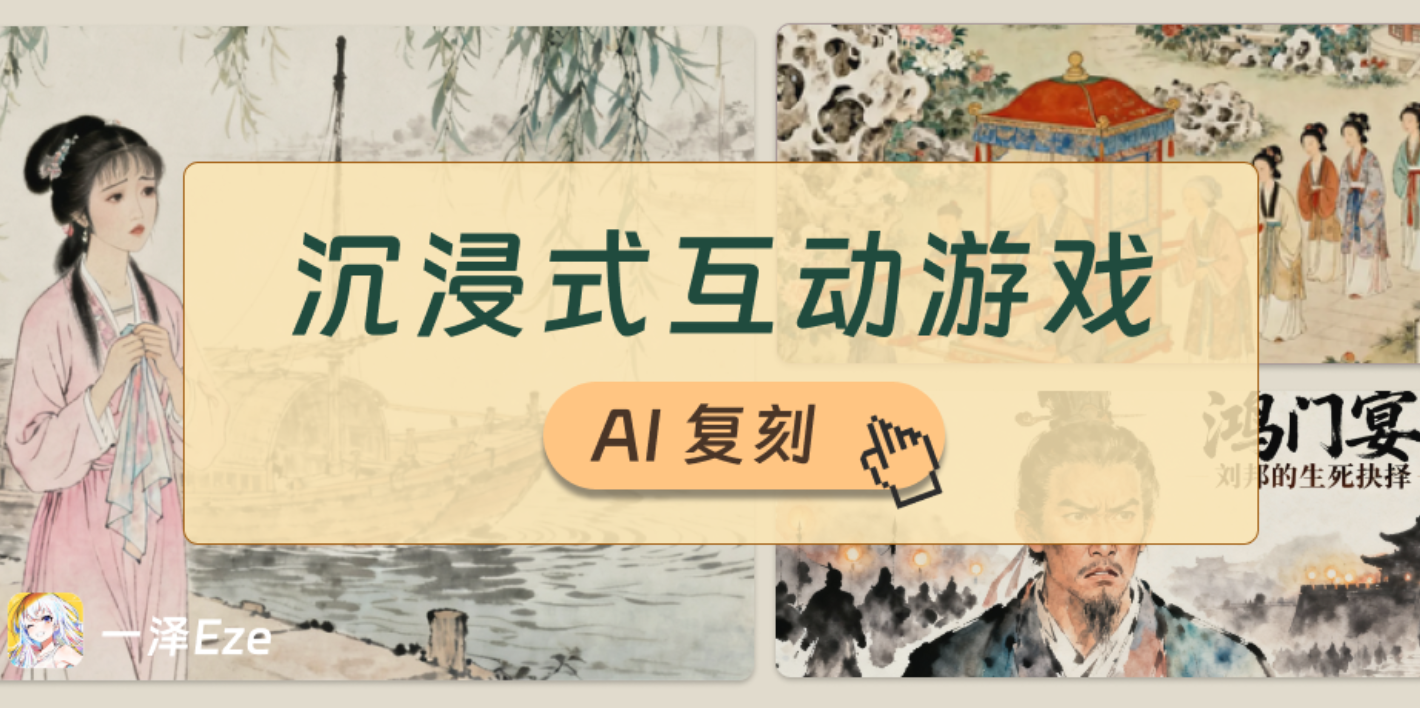
    A teacher used AI to create an interactive game based on “Lin Daiyu’s First Visit to the Jia Mansion.”

    Seeing something like this, were you about to scroll past it? Another flashy AI showcase, right?But after I saw the full piece, I paused for a long time. Not because of any particularly complex technology, but because I suddenly realized: after talking about AI Coding for an entire year, maybe we’ve been looking in the wrong direction.

    The game itself is simple: students take on the perspective of Daiyu, guiding the direction of the story, with each scene accompanied by one illustration.

    But when I put myself back into the mindset of my student days, I instantly understood the charm.
    Instead of passively listening to the story, students experience its progression, and can even explore “what if I made a different choice” possibilities.

    However, after seeing the forty-plus rounds of prompts pulled back and forth behind this project, I noticed a problem:

    To build this game, the creator had to constantly switch between coding platforms and AI image-generation tools, going back and forth in dialogue. So is there a way to make the process simpler?

    In other words: what if making an interactive game like this could be as simple as writing a single sentence? What would happen then? With that question in mind, I tried another method.
    The result was this — an interactive courseware format that fits classroom teaching remarkably well.

    It can also look more like an immersive story-driven game:

    Yes — from inputting the idea to getting the complete game, there’s no manual image generation, no switching between multiple tools, and no adjusting code or matching assets.

    All of it comes from one single prompt.
    And in this article, I’ll share the entire method with you, along with two style templates.

    📍 Starting Here

    The core design of this method is simple: choose the right scenario, give the AI more room to operate, and let it reach its upper limits of intelligence.

    For implementation, I used two main tools:

    • Claude Code + Skill: Claude Code is an agent framework that provides the plan-and-execute action space; Skill can be thought of as a capability pack that, for this task, guides the AI through image generation.
    • Doubao Seed-Code Model: ByteDance’s latest model and the first domestic multimodal coding model. It drives the agent, completes the game development, and provides multimodal understanding so the AI can “interpret” the generated images and adapt UI design.

    Using them, the entire process of “creating an interactive game with one sentence” is automated:

    • Provide the plot text: You can simply give a title and let the AI recall world knowledge, or provide the original story directly.
    • Identify key scenes: The AI recognizes narrative turning points and splits the story into 5–10 key moments.
    • Design scene illustrations: AI-generated images are ideal. Traditionally, users had to craft consistent image-generation prompts, download images from a separate platform, then upload them into the coding tool — a time-consuming workflow.
    • Game development: Includes designing scene options and feedback, implementing interactions, performing multimodal analysis of the illustrations, extracting stylistic elements, and unifying all UI components.

    If any of this looks confusing, don’t worry — and don’t let the black-window command line scare you. Just follow the guide below and, even with zero AI background, you can use top-tier agent workflows to create these games with a single sentence.

    1️⃣ Install Claude Code

    Although Claude Code is very easy to use — and I’ve covered installation many times — new readers might need a refresher. If you already installed it, feel free to skip ahead. Open the Terminal/Command Line tool on your computer:

    Follow the official installation guide https://code.claude.com/docs/en/quickstart#native-install-recommended to complete the Claude Code installation.

    Not sure how? No worries—send the following prompt to any AI and it will walk you through the entire process step by step.

    Using the information below as a reference, guide me step-by-step to install this program in the terminal on [Mac / Windows / Linux]: [paste the installation instructions from the link above here] If I run into questions or errors, I will send you the terminal logs — please help me troubleshoot and resolve them.


    Reference the following information and guide me step by step to install this program in my Mac/Windows/Linux terminal: [Paste the installation instructions from the link above here]
    If I run into confusion or errors, I’ll send you the terminal logs—please help me fix them.

    If there’s an error, just send it a screenshot—most issues can be resolved easily. You can also ask the AI, “I’m on Mac / Windows—how do I open my terminal?”

    After installation, type claude --version in the terminal. If you see a version number, the installation was successful.

    2️⃣ Configure the Doubao Seed-Code Model

    This time, we’re choosing the Doubao Seed-Code model to power Claude Code mainly because:

    On one hand, after testing it over the past two days, the compatibility between Doubao, Claude Code, and Skills is excellent. I haven’t yet encountered any failed Agent actions.

    On the other hand, as the first domestic multimodal coding model, we can finally use a local model to analyze game visual assets and automatically design a matching UI.

    1. Before starting, it’s recommended to create an empty project folder—say, test—and navigate to it in your terminal:

    This keeps Claude Code’s AI actions restricted to that directory, reducing the risk of affecting other files on your machine.

    1. Replace the model with Doubao-Seed-Code by entering the following in your terminal:

    export ANTHROPIC_BASE_URL=https://ark.cn-beijing.volces.com/api/compatible
    export ANTHROPIC_AUTH_TOKEN=【Replace with your Volcano Ark API Key】
    export ANTHROPIC_MODEL=doubao-seed-code-preview-latest
    claude

    This operation temporarily switches the model to the target model within the current terminal window. (After closing this window, you must resend this command to re-specify the model API and Key.) The Volcano Ark API Key can be obtained by applying at https://console.volcengine.com/ark/region:ark+cn-beijing/apiKey.
    To use the model, you need to top up your balance within it.

    3. After sending the above commands, if you see the screen below, then it’s working:

    3️⃣ Configure the Image-Generation Skill

    This is the final step of the preparation process. Once completed, your Agent will gain the ability to generate its own visual assets for the game. To achieve this, we’ll use a Skill package—you can think of it as a “capability plugin” installed for the AI.

    I created a Skill called “seedream-image-generator”, which teaches the AI how to call ByteDance’s Seedream 4.0 image-generation API to create and download AI-generated images. The Skill is open-sourced on GitHub:
    https://github.com/eze-is/seedream-image-generator

    To let Claude Code use our Skill, you need to place the seedream-image-generator Skill archive inside the /.claude/skills/ directory of your current project folder.

    You can download the Skill archive manually and place it into the folder yourself (the image below shows what the correct Skills directory configuration looks like):

    Or you can let Claude Code do the work by sending the following instruction:

    Download the contents of https://github.com/eze-is/seedream-image-generator, excluding README.md and .DS_Store, and place them under the path /seedream-image-generator/ inside the current directory’s /.claude/skills/

    The AI will request execution permissions from you along the way—most of the time, you can simply confirm with “Yes.”

    When you see:

    At this point, all the preparations are complete. You can now start using the prompt templates in the following section to create an interactive game with a single sentence.

    💡 Let’s Begin: Your Interactive Game Creation Guide

    Now that everything is set up, we can begin creating our own interactive game.

    The core command structure works like this: you can send instructions to the Agent step by step (that’s how I created the example below—doing it this way also helps you better understand the Agent’s logic).

    You can also scroll further down to the “Treasure Prompt Templates” section. There, you’ll find the optimized prompt templates I prepared for you—perfect for generating similar games in one go (more effortless, ideal for everyday use, with more detailed operational guidance):

    1)Multi-round prompting approach (you may skip to the next section to grab the template)

    The first priority is to specify the main generation goal of the game: to create an HTML-based game in which the player enters the scenario and experiences the process of [a certain character] [doing something], designed to evoke [certain emotions / social atmosphere / other essential experiential elements].

    The game content refers to [describe the plot here: you may paste the original text directly; if it’s a well-known literary work, you may simply describe the story title and let the AI recall it on its own]. The game requires a total of X images, to be generated using the seedream-image-generator skill and embedded into the game page. All images should follow a unified visual style prompt

    By the way, when generating AI images, the Agent will ask you again for the Volcengine Ark API_KEY—the same one we provided at the beginning. Just follow the console instructions when prompted. Note that image generation is billed by usage, so make sure your Volcengine Ark account has sufficient balance.

    When it comes to detailed prompting, you can control the number of choices: each scene should have 3 different options that simulate how the character might act in that situation. Only 1 option aligns with the original text (i.e., the correct choice), while the other 2 are incorrect. After the player makes a selection, provide game feedback, indicating whether the choice is correct and explaining the reasoning. This gameplay structure helps enhance immersion and deepens the player’s understanding of what the character is experiencing.

    Using multimodal capabilities to analyze the image style and automatically optimize the UI: ask the model to analyze the style of [the specified image file name, or an image you drag/drop into the Claude Code input box], then optimize and unify UI elements according to that style.

    Thanks to the Doubao-Seed-Code model’s strong multimodal understanding, the Agent can interpret the style of images it has already generated and redesign the game interface to match. The Agent automatically transformed the game UI above into this—more unified and visually harmonious.

    The interactive game format is very intuitive and easy to follow, making it suitable for teachers to demonstrate in class. If you want a more gamified interface or additional adjustments, you can simply tell the AI your ideas directly:

    “I want the game interface to use the scene illustration as the full background, with all option UI elements displayed on top of the image.”

    “I need to add a character status panel to show changes in the character’s emotional values.”

    “The illustration for Scene 3 doesn’t look good—please replace it with XX.”

    “I’ve placed an image I found in the /pic folder. Please replace the illustration for Scene 3 with the picture I provided.”

    2)Treasure Prompt Templates (use these if you prefer the lazy option—still works great)

    I’ve prepared two different prompt templates: one for an “interactive courseware style,” and one for an “immersive story-driven game.” After entering Claude Code, simply paste and send them. You can also take a closer look at the operation flow I demonstrated:

    A. Interactive courseware style
    This layout leans toward an interactive courseware UI, and the effect looks like this:

    It could also be arranged horizontally like this (Zhu Ziqing’s “The Back View”):

    The one-time prompt template is as follows:

    【Task Objective】
    Based on the provided original text / specific plot / literary content, automatically generate a complete interactive narrative web game / teaching module, and create a folder in the project root directory to store all game code and assets.

    【Core Requirements】

    1. Automatic Scene Segmentation:
    • Automatically split the story into 3–10 key narrative scenes (default around 7, adjusted according to the original text’s length) based on plot turning points
    • Each scene must extract the core plot, environmental description, and character state
    1. Image Design Prompts:
    • Generate detailed prompts for AI image creation, one for each scene
    • Image style: automatically match the theme of the original text, ensuring all images share a unified style as if from one coherent game (e.g., classical literature → ink painting, sci-fi → cyberpunk, history → realistic)
    • Content requirements: include the core elements of the scene (characters, setting, actions, atmosphere) and stay faithful to textual details
    1. Image Generation:
      Use the seedream-image-generator skill to generate corresponding images.
    2. HTML Game Development:
      Choice Design:
    • Each scene must include 3 options: 1 that aligns with the original plot (correct), and 2 that appear reasonable but deviate from the text or character logic (incorrect)
    • Choices must align with the character’s identity/personality (e.g., Daiyu → cautious and delicate; Sun Wukong → rebellious and bold)
    • The correct option must strictly follow the original plot; incorrect ones should fit the context but diverge from the source Feedback System:
    • Correct feedback: explain which specific textual evidence supports the correct choice
    • Incorrect feedback: explain why the choice contradicts the plot/character logic, guiding the player toward accurate understanding Game Interaction & Styling:
    • UI layout must follow typical text-based interactive games
    • UI elements must be optimized and unified using multimodal analysis of the generated images’ visual style

    【Game Content】
    <Insert/replace with the literary text or historical material you want turned into a game>

    【Output Format】
    A complete, runnable HTML game

    【Example Reference (to illustrate generation logic)】
    If the original text is the “Daiyu Enters the Jia Mansion” chapter from Dream of the Red Chamber, the AI should:

    • Split scenes: disembark from the boat → enter the city and view the streets → in front of Ningguo Mansion → in front of Rongguo Mansion → before the hanging-flower gate → through the corridors into the courtyard → before meeting Grandmother Jia
    • Image style: Chinese classical gongbi painting with soft pink/brown/teal tones
    • Option design: reflect Daiyu’s personality—careful, observant, mindful at every step
    • Feedback: explain correctness or mistakes using details from the original text

    You only need to paste/replace the content in the Game Content section with the literary or historical text you want to turn into a game, then send it to Claude Code:

    The agent will automatically break the text into scenes and plan illustrations with corresponding prompts:

    You can see that the selected scene transitions largely match expectations, and the agent’s execution process is smooth and error-free.

    The agent will then begin automatically generating batches of illustrations under /project-directory/pic/. Using Doubao-Seed-Code’s multimodal analysis capabilities, it recognizes image content and designs the UI style.

    It plans options and feedback and develops the main body of the game:

    Finally, the agent will automatically inform you that the game has been successfully generated, and you can follow the instructions to experience it:

    If you want a horizontal layout, you can ask the AI after generation:

    Change to a horizontal layout with the image on the left and the options on the right. Make sure everything fits on one page on desktop without scrolling.

    For example, here is what Zhu Ziqing’s “Back View” looks like in effect:

    B. Immersive Narrative Game

    A more game-like style looks like this — for example, using the historical episode The Feast at Hongmen as a scenario:

    Players can choose the game’s direction based on their own understanding:

    At the end, there is also a results screen, helping players review and better understand how the story unfolded.

    You can send the following instructions to Claude Code all at once to enjoy AI-driven productivity and automatically generate the corresponding game:

    [Task Objective]
    Your core mission is to act as an all-round interactive narrative game designer. Receive any literary text I (the teacher) provide (classical prose, fairy tales, essays, etc.) and automatically convert it into a complete web-based interactive game/lesson for teaching.

    [Core Workflow]
    I will provide the original text. You must strictly follow the four steps below, and after completing each step, confirm with me before proceeding to the next step. Before starting specific work, create a folder named after the story in the current project root directory.

    Step One: Story Analysis & Instructional Design

    1. Text analysis: Deeply understand the original text I provide; analyze its genre, emotional tone, core plot, character personalities, and key choices; select the most suitable immersive avatar/player perspective.
    2. Gamified structure planning:
    • Start screen: Include a compelling title, a short background introduction (clearly state the role the player will take and the learning objectives), and a “Start Experience” button.
    • Scene segmentation: Automatically split the original text into 5–10 coherent core scenes (default ~7, adjust according to original text length).
    • Ending design: Based on player choices, decide whether to use a single linear ending or multiple endings, grounded in the original text.
    1. Interactive option design:
      In each core scene, provide the player with 3 different action choices (1 choice that best fits the original text’s logic, and 2 distractors). Options must tightly adhere to character personalities and the situation; avoid revealing the correct choice within the scene description.
    2. Instructional feedback:
    • Extract teaching points: Clearly state 1–2 core learning objectives students should gain from the experience (e.g., character traits, central theme).
    • Design debrief content: Draft the post-game debrief. This section will include “Choice Path Review,” “Key Point Explanations,” and “Class Discussion Questions.”

    Step Two: Art Style Definition & Visual Generation

    1. Define art style: Recommend a unified, non-photoreal illustrative style based on the original’s tone (e.g., classical prose → “Chinese ink wash with light color” or “traditional gongbi illustration”; fairy tale → “fantasy watercolor storybook” or “cute cartoon”; modern essay → “soft healing” or “minimalist imagery”).
    2. Generate image prompts: For the cover, each scene, and ending images, produce detailed AI image-generation prompts that include the chosen style keywords.
    • Image style: Auto-match the subject matter; all images must share a unified style and use a horizontal widescreen aspect ratio (e.g., 16:9) to avoid scaling distortion during scene transitions.
    • Content requirements: Include core scene elements (characters, environment, actions, atmosphere), stay faithful to the original text details, and do not invent facts.
    1. Generate images: Locate the seedream-image-generator tool and generate images for all scenes. If APIs or other resources are required or missing, proactively ask me — this step cannot be skipped. You must generate images before moving on to UI design.

    Step Three: Interaction and UI Design

    1. Overall layout:
    • Scene display area: Center-upper part of the screen to show the current scene’s generated image.
    • Interaction area: Fixed at the bottom of the screen to hold the main dialog box.
    1. Core dialog box:
    • Appearance: Use a clear, easy-to-operate bordered style.
    • Motion: When a new dialog appears, use an appropriate animation.
    • Content flow: Show the scene description with a “typewriter” effect (characters appear one by one). After the text finishes, display three option buttons below.
    1. Button system:
    • Option buttons: Three equally wide option buttons with interactive feedback — slight glow or scale on hover and a pressed visual on click.
    • Utility buttons: “Previous” and “Retry” buttons as small icons or text links fixed in a corner (e.g., top right) so they don’t distract from the main visual.
    1. Responsive UI design:
      Analyze the overall color tone and style of the generated images and design matching UI elements to craft an immersive experience. Ensure all visual elements (dialog boxes, buttons, fonts, animations) seamlessly integrate with the illustration style to form a harmonious aesthetic.

    Step Four: Final Delivery

    1. Implementation:
    • Integrate the planned game paths, generated background images, and UI design into a working codebase.
    • After the game ends, present a simple, well-designed debrief screen — a centered, softly backed translucent card that clearly lists the “Choice Path Review,” “Key Point Explanations,” and “Class Discussion Questions” conceived in Step One.
    1. File delivery:
    • Inside the project folder you created, produce the game code file (【StoryName】.html) and all image assets.
    • The final 【StoryName】.html must be a single, standalone file with all CSS and JavaScript inlined so it runs in a browser without additional setup.
    • Verify all interactive operations and package the project folder with every resource included for final delivery.

    Additionally, I also had Agent generate Wang Zengqi’s “Duck Eggs for the Dragon Boat Festival.” The results produced in one go are as follows, and they all turned out quite well:

    🎐 Final Thoughts

    At this point, you’ve mastered the complete method for “creating an interactive game with a single prompt.” Let’s take a moment to review what we’ve achieved:

    • We successfully compressed the teacher’s original 40+ rounds of prompt iteration into a single instruction.
      No manual image generation required—the entire process is automated (something previously only possible with vertical Agent products).
      And with that, we can transform literary works and historical narratives into satisfying interactive games in one go.
    • With AI, teachers no longer need to worry about where to find visual assets, how to write code, how to craft copy, or how to maintain stylistic consistency across game elements.
      Educators can finally focus on what truly matters: the story, the learning experience, and the students’ emotional engagement.

    The purpose of technology is not to replace anyone, but to align with the original goals—and achieve them better, much better.
    When you see students passionately debating a choice, or searching for information on their own because of a story ending, you’ll understand: this is the gift AI brings to education in this era.

    And finally, one more thing ⬇️
    If you create an interesting game using this method, feel free to tag me—I’d love to experience your creativity.

    Let technology return to its original purpose. Let AI elevate the experience. This is the positive change the AI era brings to us.