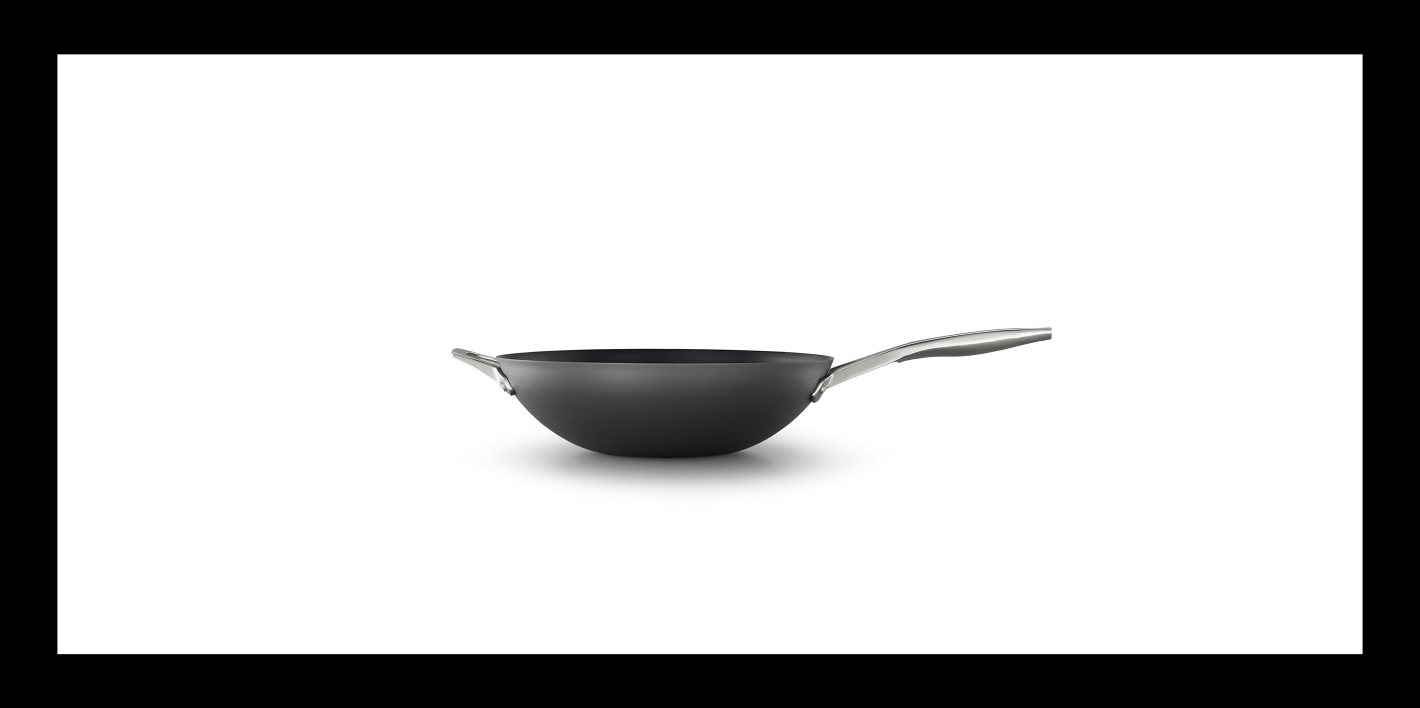
Category: Kitchenware

  • What Editors Are Buying: New Stuff Vol. 237

    What Editors Are Buying: New Stuff Vol. 237

    @Lotta: Kodak Charmera Blind Box

    • Reference price: ¥196

    When Kodak first announced Charmera, it quickly sparked a wave of attention online, to the point where its price was once speculated up to around ¥300 and it was still in short supply. At the end of last year, I spotted a Charmera on display in the window of a camera store on the streets of Macau, but after asking the staff I learned there was no stock available, so I had to give up. It wasn’t until shortly before the Lunar New Year that I happened to notice the price on Taobao had dropped quite a bit. With discounts applied, it could be purchased for under ¥200, which felt quite attractive to me.

    I ended up pulling the gray version. Although it’s not as recognizable as the one on the box cover, nor as special as the transparent hidden edition, it gives me a strong early-Apple vibe. The gray-white shell paired with the rainbow stripe design feels genuinely retro. Even though Charmera is only about the size of a keychain, the body still includes a super tiny viewfinder cutout to enhance the retro aesthetic. However, this “viewfinder” is really just a hole without any optical design, so naturally it doesn’t have much practical use.

    Left: Fujifilm X-E4, Right: Kodak Charmera

    Charmera features a lens with a 35mm equivalent focal length, capable of shooting photos at 1080×1440 and recording video at 30fps. But the actual image quality can be summed up in one word: terrible. Or perhaps more accurately, we shouldn’t have any expectations for its image quality in the first place. If you approach it with that mindset, the output actually feels like it “has the vibe.”

    While the Y2K aesthetic has returned to the spotlight and many people are trying various ways to recreate that “retro” feeling, Charmera is the kind of device where photographing it works, but using it to photograph others doesn’t quite. If you treat it as a retro accessory integrated into your outfit, it might add some character to your photos. But if you expect it to capture images that are both retro and sharp, that’s a very tall order.

    Although the image quality is poor, the built-in filters and frames help make up for it somewhat. In particular, the four Kodak-style frames are quite fun to use.

    If you evaluate Charmera by the standards of a typical camera, I think that would be unfair. Its positioning is closer to that of a low-resolution toy in the era of high-definition imaging. Wear it as a pendant, and when you spot something interesting, simply pull it out and take a quick shot without any pressure—perhaps that’s exactly the meaning of its existence.

    Even though the image quality isn’t great, it really is fun to play with. Especially during the holidays, pulling out such a quirky little gadget in front of relatives naturally makes everyone want to try taking a photo with it just to see what happens. Compared to everyone sitting alone in corners scrolling on their phones, using something like this to bring people together might be exactly what many people seek when they talk about nostalgia.

    All in all, I think Charmera is a little gadget with very clear strengths and weaknesses. If you’re buying it purely for photography, it simply can’t compete with a smartphone. But for me, the emotional value it provides already makes it worth the price. By the way, knockoff versions have already appeared on Taobao. The image quality is roughly the same, but they lack Kodak’s four signature frames. Considering some of them are priced at over ¥180, you might as well just buy the real Charmera instead.

    @Clyde: Xiaomi BE3600 Pro Wired Version

    • Reference price: ¥1507.90

    Let me put the disclaimer first: I’m aware that Xiaomi has “cut corners” on some router models like the BE6500 Pro and AX3000T. I still chose Xiaomi anyway, mainly because I’m lazy.

    After tinkering with VLANs, single-cable multiplexing, and IPTV setups for half a year, I finally got a bit tired of it all. One night, when my Redmi AX6s rebooted again due to performance issues, I decided to take the easy route without drastically changing my setup habits and ordered the Xiaomi BE3600 Pro wired version that had been sitting in my shopping cart for quite a while.

    The installation and configuration weren’t too difficult. The main router goes into the weak-current cabinet and connects to the optical modem. After connecting each AP panel through wired networking, you can install them according to the network port locations in each room. Here, the Xiaomi BE3600 Pro wired version offers a bit of convenience for those who prefer the lazy route—you can either have an installer come over, remove the existing wall network panel, re-terminate the cable with an RJ45 connector, and mount the AP panel directly onto the wall like a regular network outlet; or you can take the lazy option and simply connect it and stick the panel onto the existing wall outlet using the adhesive backing included with the device.

    For example, I chose the lazy way.

    For most AP panel products, heat dissipation is an unavoidable issue. Xiaomi equips the BE3600 Pro wired version’s AP panel with a small fan, and you can choose “Balanced Mode” or set temperature thresholds for fan activation and shutdown through the Mesh node management page in the web interface. Perhaps because the weather isn’t too hot right now, even the AP panel installed in the corner of my bedroom hasn’t produced any fan noise noticeable during late-night quiet hours.

    But it does get warm. I measured it with a Pixel 9 Pro (Google: see, the temperature sensor does come in handy!). With my Mac connected via Ethernet, the AP panel runs at around 42–45°C in a room temperature of roughly 20°C—similar to how a Pixel 9 Pro feels after about ten minutes of gaming. It’s not exactly comfortable to touch, but fortunately you don’t need to keep holding it all the time.

    As for coverage, I bought a bundle with one main router and four sub nodes. For a 90-square-meter apartment this is actually a bit excessive, but since I didn’t plan the network port locations very well when reserving cables earlier, I had to rely on quantity to ensure full coverage. This also ties into another reason I stuck with Xiaomi: there are already quite a few Mi Home ecosystem devices in my house. The main router of the 3600 Pro wired version can act as a Mi Home smart hub, featuring the “Automation Geek Version” (essentially a graphical, web-based automation editor), and it can run local automation commands even when the internet connection is down.

    Meanwhile, each AP panel can also function as a Bluetooth Mesh gateway for connecting Mi Home devices. Placing one in every room allows nearby smart devices to connect directly, which means one less gateway device—and potentially one more available power outlet or Ethernet port. That kind of integration is something I really appreciate.

    In terms of personal usage habits, the BE3600 Pro wired version also supports customizable port functions. With a simple setup, the Ethernet port on the living room AP panel can be configured to connect a set-top box for IPTV. The problem is that each AP panel only has one 2.5GbE port. While using it for IPTV doesn’t affect the panel’s wireless and AP functions, other devices in the same area won’t be able to connect via Ethernet unless you add a switch and configure VLANs again… which basically puts you back where you started. Fortunately, both speed test websites and macOS’s built-in networkquality tool show pretty good results so far—maybe because it’s still relatively new and hasn’t been “downgraded” yet (laugh).

    Another complaint is that Xiaomi’s router software experience is currently quite fragmented. Some settings you can’t find in the Mi Home app might appear in the web interface, and vice versa. Also, even though Xiaomi releases new router models every year, the web interface UI still looks exactly the same as it did more than a decade ago—when will it finally become a bit nicer and more user-friendly?

    @Microhoo: RS 5 Camera Stabilizer

    • Reference price: ¥3899

    As a struggling student who nevertheless loves buying stationery, once I decided to move beyond still photography and try shooting video, I often found myself longing for a cool and imposing camera stabilizer. The reason I kept hesitating was that these devices all wear the intimidating label of “professional.” From balancing to the various stabilization modes, everything feels a bit overwhelming—especially when I’m still figuring out basic camera movements, making it hard to feel confident about carrying around such a large piece of equipment.

    DJI has probably seen plenty of beginners like me who feel a bit intimidated, so with the RS 4 Mini they tried adding a small intelligent tracking module. This makes it possible to track subjects easily even without strong shooting skills or camera movement techniques. Still, it wasn’t perfect. On the one hand, it could only recognize people, which was somewhat limiting. On the other hand, the lack of a monitoring system meant that automatic tracking always carried a bit of uncertainty. But I believed DJI wouldn’t leave it there. The significance of this feature isn’t just simplifying tracking—it also reflects a broader vision of making creative tools more accessible, allowing beginners to start easily with professional equipment and gradually refine advanced skills through use. Sure enough, the RS 5 that followed, although positioned as a professional and even commercial production tool, may actually be the most beginner-friendly camera stabilizer yet.

    The RS 5 naturally continues and further enhances the small intelligent tracking module introduced on the RS 4 Mini. Not only can it now track any type of object, but for clearly identified human subjects the tracking distance has been extended to 10 meters, and it can quickly reacquire the subject even after they briefly leave the frame.

    What meets my expectations most is that DJI now displays the tracking module’s captured view directly on the RS 5’s touchscreen. This allows you to preview the tracking status in real time, quickly tap on the screen to select or switch tracking targets, and simultaneously control the stabilizer’s gimbal movements.

    In real-world use, people and animals are the subjects that the system recognizes and maintains tracking on most reliably. But if the background is relatively clean, even small objects like pots and pans can be tracked accurately—though you may need to adjust movement speed and avoid interference, otherwise the system might lose the subject.

    During tracking, besides keeping the subject centered, you can also customize the composition by placing the subject to the left or right of the frame. There is a small drawback, however: because the tracking module is positioned slightly offset from the camera lens, the image shown on the touchscreen differs from the actual footage captured by the camera. This means perfect centering cannot be guaranteed, and when using more flexible compositions there’s an even greater chance that the subject may slip out of the camera’s actual frame. This offset isn’t much of an issue when using wide-angle lenses, but when shooting at longer focal lengths it requires careful attention.

    Based on my understanding, the tracking module likely uses a wide-angle lens, meaning its field of view is probably much larger than the camera’s. DJI could potentially address this through a firmware update by adding a calibration step, allowing users to align the touchscreen preview with the camera’s actual shooting perspective before filming.

    Beyond intelligent tracking, another improvement on the RS 5 that is extremely beginner-friendly is the addition of fine-adjustment knobs on all axis arms. However, I do hope DJI might reconsider the name “fine adjustment,” because “balancing knobs” might be a more accurate description.

    When I first saw them, I assumed they were merely a small convenience—useful for precise positioning once the balancing was already roughly done—but not something that fundamentally solved the stabilizer balancing problem. In reality, though, they greatly improve balancing efficiency. Compared with the traditional method of manually sliding the arms back and forth, these knobs require less force and offer greater precision, which is especially helpful for beginners who haven’t yet developed muscle memory with stabilizers. Even so, I still hope future camera stabilizers will eventually support automatic balancing like smartphone gimbals—that would truly be revolutionary.

    Another improvement on the RS 5—perhaps less targeted at beginners but greatly enhancing the user experience—is the addition of electronic control buttons on the briefcase handle. This significantly improves ease of operation when shooting from low angles. If you’re already experienced with stabilizers and don’t find the previous two features particularly exciting, this detail will likely still prove very useful.

    As for other improvements such as the new-generation stabilization algorithm and motor efficiency upgrades, I won’t go into too much detail. My experience with stabilizers is still limited, so I can’t comprehensively describe every iterative improvement. What I can say with confidence is that if you’re like me—someone trying a camera stabilizer for the first time and hoping for the lowest barrier to entry with the highest efficiency—starting with the RS 5 is definitely a good choice.

    @Luzhongnan: Gejiano 7-Place Countertop Dishwasher

    • Reference price: ¥2100

    This year during the Lunar New Year, I tried a different approach when buying gifts for relatives. Instead of passing along those well-traveled “aged” gifts that have already circulated through several households, I figured it would be more practical to use the government subsidy program to buy trendy home appliances that could genuinely improve the lives of the elders. I learned that my relatives’ kitchen had plenty of space, so placing a countertop dishwasher wouldn’t be a problem. I had also heard from other relatives that a certain brand’s dishwasher worked well, so it seemed like a natural choice. While searching for the same model, I discovered a new 2025 version with a seven-place capacity and a stainless steel interior. With the national subsidy applied, it cost just over ¥2100, so I placed the order without much hesitation.

    JD Logistics was extremely fast—it arrived on the third day. For large appliances like this, the purchase price usually includes on-site installation service, but if you install it yourself you can request a partial refund from customer support. In my case, I got ¥50 back. I was initially worried that the elders might struggle with installation, but they were actually eager to give it a try and get some exercise. As soon as the package arrived, they unpacked it themselves. The installation turned out to be very simple: just place the machine on the countertop and connect two water hoses. Aside from the included drain hose being slightly too short, everything went smoothly.

    The white exterior looks quite clean and refreshing on the countertop, and loading bowls and chopsticks feels very convenient. In comparison, the built-in dishwasher at my own home—where you have to bend down to load it—suddenly feels incredibly clumsy. The seven-place capacity is more than sufficient for the daily meals of three elderly people, and there’s even room for a small pot after the dishes are loaded. On days when fewer plates are used, accumulating them for a once-a-day wash is also perfectly feasible. During the initial test run, some yellowish material appeared inside the machine. At first I thought I had received a second-hand unit with rust inside, but customer service explained that it was moisture residue from the softener resin and could be cleaned off with toothpaste. That explanation was a new one for me.

    The real reason dishwashers are hard to give up once you start using them is that they harness the power of industrial automation to achieve a level of cleanliness that traditional hand washing and dish soap can hardly match, all while consuming only a small amount of water, electricity, and detergent. My argument to persuade the elders was simple: “After dinner, you should go out for a walk—let the dishwasher handle the dishes and free up your time.” After three rounds of fruit-and-vegetable washing and two standard wash cycles, even the old bowls stained by years of herbal medicine residue came out clean. At that point, the elders finally agreed to keep this “white intern” around.

    The main drawback, however, is that the elders unanimously feel the drying performance is insufficient. On several occasions, there was still moisture left after the drying cycle. If it could dry thoroughly every time, it could fully replace the dish sterilizer cabinet sitting beside it. The product page claims it can function as a sterilizer cabinet and supports a 168-hour fresh-air storage mode, but during actual operation the fan noise is quite noticeable. At night it becomes unpleasant enough that you have to turn it off manually.

    Returning to the beginning, impulsive purchases sometimes bring unexpected consequences. The machine itself is labeled entirely in Chinese, and the outer packaging simply lists a trading company from Guangdong. I’m almost certain that this “Gejiano” is a white-label product. Searching the internet reveals no meaningful information about the brand. At this point, the recommendation algorithm unexpectedly came to the rescue: it suggested a seven-place dishwasher from Royalstar. Apart from the logo, the exterior design and product page looked exactly the same. The only thing that slightly comforted me was that the Royalstar model didn’t qualify for the national subsidy, so its final price was noticeably higher than the one I bought. With that thought, I decided to let it go.

    If any SSPAI readers have used other reliable countertop dishwashers, feel free to recommend them in the comments—after all, there are still plenty of relatives in the family who need gifts.

  • CES 2026 Roundup: The Weird and Wonderful Stuff You Might Have Missed

    CES 2026 Roundup: The Weird and Wonderful Stuff You Might Have Missed

    If last year’s CES was still half about showing off muscle and half about goofing around, then this year’s show is fully powered by the strong winds of AI. Everyone is desperately trying to “do something wild,” to the point where, without a bit of absurdity, it’s hard to leave any impression at all in the sea of people.

    Some of these stunts actually come with decent ideas behind them, and a few have even turned into real products. But the overarching theme this year is obviously AI: AI can be slapped onto anything. In 2025, when everyone has outsourced their imagination to prompts, conventional products instead start to reveal a different kind of beauty—one that doesn’t rely on AI to exist.

    So what flashy new gadgets did CES 2026 bring us? Here’s a roundup of some of the more unusual “memory points.”


    Dell’s laptop: undoing a “betrayal of the ancestors”

    Last year, Dell made what many would call a decision that betrayed its lineage: renaming its product lines to Dell, Dell Pro, and Dell Pro Max, claiming this would make it easier for customers to find the AI PC that suited them (it didn’t). Perhaps after seeing big brother Microsoft’s Copilot struggle over the past year, Dell suddenly realized that whether the name sounds like Apple’s or whether it has AI positioning doesn’t really matter—the only thing that matters is sales.

    So the XPS, which had been put in the coffin for a year, was lifted back out at CES 2026.

    As for the specs, nothing special—pretty standard. The design is the classic XPS look. Pricing-wise, the XPS 14 starts at USD 2,049 (about RMB 14,310), and the XPS 16 starts at USD 2,199.99 (about RMB 15,365). Dell also said an Ubuntu version of the XPS 14 will be available later, which should be a bit cheaper.


    Aqara’s smart lock lets you walk in without even noticing

    But you still feel tired when you get home from work, right?

    At CES 2026, Aqara unveiled the world’s first Apple Home smart lock with UWB support: the Smart Lock U400. Thanks to its ultra-wideband chip, if you’re using an iPhone or Apple Watch, the door will automatically unlock as you approach—no need to say “open sesame.” Once you’re inside, it even locks itself for you.

    Of course, Android users don’t need to feel left out. It also supports fingerprint, NFC, and passcode unlocking, and uses the Matter over Thread protocol, so it can join ecosystems like Google Home, Home Assistant, and Samsung SmartThings.

    All in all, UWB has been in smartphones and wearables for years now, and it’s about time it unlocked more truly “frictionless” scenarios in smart homes. Hopefully, Aqara—long known for its close ties with Apple—can use this smart lock to nudge other manufacturers as well.


    Sony’s console highlight wasn’t at CES

    Probably feeling that the PS5 is already five years old and the market is getting a bit tired, Sony rolled out a brand-new color lineup for its controllers and consoles on January 8: The Hyperpop Collection.

    In plain terms, that means limited-edition, high-saturation reskins for DualSense controllers and PS5 Slim console covers—in Nintendo red, Xbox green, and Sony blue. Patch it up, repaint it, and sell it for another year.

    As for pricing, the console covers are USD 75 (about RMB 524), and the controllers are USD 85 (about RMB 594). Want a PS6? Keep dreaming. All I know is that a friend who just bought a PS5 Pro is grinding his teeth right now, because Sony almost simultaneously launched a new model called CFI-7100B01. Not many changes—just some optimizations to performance, cooling, and noise control, plus a bit more battery life for the bundled DualSense controller, while keeping the overall price the same.

    He’s probably mad that Sony didn’t bother to announce something this important at CES for everyone to hear about, huh?

    Lenovo squeezes an ultrawide “beltfish screen” into a laptop

    At CES 2026, Lenovo showcased the Legion Pro Rollable, a gaming laptop with a roll-out display. The key feature: once you open it, you can physically adjust the screen size—from the original 16 inches horizontally expanding to 21.5 or even 24 inches.

    According to Lenovo, the screen has three modes: 16 inches is “Focus Mode,” 21.5 inches is “Tactical Mode,” and 24 inches is “Arena Mode.”

    Image: The Verge

    But honestly, compared with hardcore gamers, I think this machine would sell better to office workers commuting on the Beijing–Shanghai high-speed rail or flights. The three sizes could just as well be renamed “Boss Mode,” “Manager Mode,” and “Corporate Drone Mode.” Also, the Legion Pro Rollable is still only a concept for now, and there’s no word yet on whether it will actually go on sale.


    Intel’s new chip, supposedly with longer battery life

    This year at CES, Intel unveiled its new Core Ultra 300 series processors based on the Intel 18A (2 nm) process. Intel claims that its top-end X9 388H model delivers up to 60% higher multi-threaded performance, 77% better gaming performance, and battery life extended to as much as 27 hours.

    Wait a second—why did Thunderbolt 5 turn into Thunderbolt 4…

    Congratulations: in the past, you could still apply for an x86 Windows laptop and use “no power on the plane” or “the computer is lagging” as excuses to delay the urgent task your boss suddenly dumped on you. In the future, you might—still be able to use the same excuses. After all, specs on paper are one thing; Windows is another.


    This Dutch company is also here to grab a piece of “Teacher Luo’s underwear”

    DuRoBo, a company from the Netherlands, unveiled a phone-sized (6.13-inch) e-reader called Krono at CES 2026. Judging by its looks alone, there’s nothing particularly special about it, and its specs—6 GB RAM + 128 GB storage, running Android 15—can only be described as just barely adequate.

    But unlike traditional e-ink readers in the past, it integrates an AI assistant called Libby. With a press of the button on the left side of the device, you can easily record voice notes, and the AI will transcribe them into text.

    You really have to admit: once you put AI into “Teacher Luo’s underwear,” it can feed quite a few tech companies.


    This Samsung speaker looks like a MagSafe power bank

    After getting a taste of success in home-decor-friendly products with its Frame TVs and wall-art Bluetooth speakers, Samsung this time launched a new Wi-Fi speaker lineup at CES aimed at blending into living-room interiors: Music Studio 5 and Music Studio 7.

    The Music Studio 5 comes with a 4-inch woofer and a tweeter, while the Music Studio 7 features a 3.1.1-channel spatial audio system and supports 24-bit/96 kHz high-resolution audio, and can link up with other Samsung speakers for synchronized playback.

    But I really want to know whether the designer of the Music Studio 7 once looked over at the desk next door during work slacking time and noticed a MagSafe power bank.


    My house isn’t big, but cleaning has gone 3D

    When robot vacuum cleaners were first born, they were basically round plates with a few wheels. But this design has an unsolvable problem: it can’t handle height differences or stairs. For households with split-level floors or multi-story villas, if you want to be lazy and not sweep the floor yourself, you have to buy one for every floor.

    To address this, Roborock and MOVA (Dreame) offered two very different solutions—one adds legs, the other adds wings. Roborock’s G-Rover claims to be the “world’s first wheeled-legged robot vacuum,” combining multiple sensors and AI navigation to automatically climb up or down when it encounters stairs or changes in floor height.

    MOVA Pilot 70 goes one step further: why not just give it wings like a drone?

    While these technologies do solve a major long-standing problem for robot vacuums, in terms of their core job—cleaning—there doesn’t seem to be much new to talk about. Or is it that today’s cleaning problems are already too trivial for mopping robots to really show their skills? If you’re using one, share your thoughts in the comments.

    It turns out Kindle is what puts nail technicians out of work

    Anyone who gets their nails done regularly knows the drill: it takes time and damages your nails. Now iPolish claims to solve this with “digitally color-changing nails.”

    Using material technology derived from Kindle e-readers, iPolish has created a nail product that can change color under certain conditions. It charges via a companion wand, pairs with your phone, and can switch among more than 400 colors in just five seconds.

    Most importantly, compared with other expensive, borderline-abstract gadgets at CES, this one is actually pretty affordable. The starter kit costs only USD 95 (about RMB 663) and includes two different nail shapes, while replacement sets start at just USD 6 (about RMB 42).

    This might be the product from CES 2026 that I most want to get…


    AI has Tony—maybe this really works

    A friend once described Google I/O by saying, “even stray cats passing by have to shout ‘AI.’” At CES 2026, the message is: even hair clippers are AI.

    You’ve probably experienced getting a “bowl cut” from Teacher Tony at a barbershop. But with these clippers called Glyde, you can block Tony and cut the hairstyle you want at home. Just pick your desired style in the Glyde app, put on a positioning cap, and ask someone to hold the clippers for you. During the haircut, the AI automatically controls how far the blades extend, trimming only the parts needed according to your preset style preferences.

    That said, the clippers currently seem suitable only for short hair. Glyde still can’t be used alone—you need someone else to hold them—and it’s unclear whether the app supports fine-grained settings like trimming bangs.


    You don’t need a sledgehammer to kill a chicken, but I do need ultrasound to cook

    This time, Seattle Ultrasonics brought us an ultrasonic knife called the C-200. When you press the orange button on the handle while cutting, the blade vibrates more than 30,000 times per second, making it much sharper—while your hand feels nothing unusual at all.

    The ultrasonic knife is priced at RMB 2,712 and will start shipping in March this year.

    Of course, for environmental reasons, the knife doesn’t come with a USB-C charging cable. Think wired charging for a knife isn’t elegant enough? Then you can buy a storage + wireless charging set to magnetically mount the knife on the wall, priced at RMB 3,288.


    From desk setups to showing off your “partner”: AI moves onto your desktop

    At CES 2026, Razer unveiled a 3D holographic AI assistant called Project AVA, which can display five different characters as holographic projections on your desk.

    Razer says Project AVA is a desktop AI companion. Built on last year’s concept of an esports AI coach, it can stay by your side 24/7, “bridging the gap between virtual assistants and physical companionship.”

    Similar products also exist, such as Lepro Ami from China. It doesn’t use holographic projection, but instead relies on a curved OLED display.

    I can’t help but wonder: after AI takes over the world, will it start putting humans into bottles to play with too?


    So… Rolex or Apple Watch? What a dilemma

    According to the creator of this watch strap, David Ohayon, speaking at CES, he absolutely hated having to decide every morning in his mansion whether to wear a Rolex or an Apple Watch. Now, he no longer has to.

    If you happen to own both a Rolex and an Apple Watch, this USD 400 (about RMB 2,800) strap might be worth considering. It lets you wear both watches on the same wrist—one to tell the time, the other to track your activity (and maybe check whether the more expensive watch is more accurate).

    If your finances are even stronger than those of the people who buy those framed TVs mentioned earlier, you can also opt for the titanium version, priced up to USD 700 (about RMB 4,885, not including the smartwatch or the Rolex). And if you’re not using an Apple Watch, versions for Samsung, Google, and Fitbit are also available.

    I think the next step for this guy is figuring out how to stop the strap from pinching arm hair on both sides.


    CES’s ultimate oddball: the anti-AI lamp, Light Saver

    I’ll admit that AI is indeed great and capable of many things. But when it comes to AI devices inside the home, most of them rely on cameras to collect data. Imagine if your fridge, speakers, clothes-folding robot, robot vacuum, picture frame, and desktop companion all had cameras. One day your home might get hacked—or the AI might awaken—and all these devices could suddenly “defect.”

    sPresto thought about this tricky problem too, so they introduced an “anti-AI” lamp called Light Saver. It’s designed specifically to disable the cameras in these devices by emitting light that is harmless to human eyes but interferes with camera sensors, rendering them unable to capture images.

    Light Saver is suitable for places that value privacy, such as homes, hotels, hospitals, and archives, helping prevent secret filming. And considering that “this year’s CES probably couldn’t even happen without AI,” sPresto’s anti-AI lamp almost feels like a sharp, rebellious outlier in an age obsessed with playing it smooth.


    At this price, the frame itself is part of the art

    At CES 2026, more than one company launched smart picture frame products.

    For example, Fraimic introduced its Smart Canvas color e-ink smart frame, which looks almost like a physical print. The smaller size is 13.3 inches, priced at USD 399 (about RMB 2,791); the larger one is 31.5 inches, priced at USD 999 (about RMB 6,990). Add the RMB 20 print I bought on Taobao, and who’s to say what’s hanging on the wall isn’t a piece of art with some real value?

    Another company, Vinabot, released a picture frame that can move—and even talk. They say the inspiration comes from the magical portraits in Harry Potter. All you need to do is upload a photo and a simple prompt, and the person in the frame can come to life and chat with you, including deceased celebrities or loved ones. As for the price, Vinabot says it will launch on Kickstarter soon, starting at USD 299 (about RMB 2,086) after a 40% discount.

    Both frames can generate images directly via large AI models based on your needs.

    But at this point, I don’t know why, I suddenly thought of the idle iPad Air sitting in my hands.


    By the time I finish a shower, I’ve already made a fortune

    There’s a common way to describe how fast Wall Street tycoons make money: in the time it takes you to do XXX, they’ve already earned an N-digit sum.

    Superheat brought a hot water heater built on a similar idea to CES 2026. It doesn’t use fire, electricity, or natural gas to heat water, but Bitcoin-mining ASIC chips instead. Their thinking is that mining chips generate so much heat anyway—rather than struggling to dissipate it, why not use that heat to warm water?

    What if you hit the jackpot while taking a shower?

    Superheat says the installation cost is USD 2,000 (about RMB 13,967.5), and its power consumption is about the same as a regular water heater—basically free crypto mining.

    To be fair, the design of this heater does look great, very Jonathan Ive-like. I’d recommend domestic manufacturers take notes.


    For emotional companionship, cute may matter more than realistic

    Perhaps as people have grown increasingly lonely in recent years, many products designed to provide emotional value with AI have also appeared at CES.

    For instance, Takway brought an egg-shaped virtual pet, similar to a Tamagotchi. After you buy it, you first have to incubate it for two days, then it “hatches” and “grows” a cute little face. Next, you have to take care of it for a while and raise it into an adult egg—otherwise it dies and everything resets.

    Once it grows up, it can take care of itself and keep you company. It will even go out on its own, then come back and tell you where it went and what fun things it did. (Hmm? Why does that sound so familiar?)

    You can also buy little outfits to dress it up.

    When it reaches 51 years old, it won’t die anymore—unless you stop charging it. No idea how they came up with that setting.

    Another similar product is the bionic panda Anan. It comes from Shenzhen and is designed to provide companionship for the elderly and people with cognitive impairments, as well as timely reminders to prevent forgetfulness. It can also collect certain data to help caregivers understand the health condition of those being cared for.

    Compared with making those very abstract humanoid robots, I think this approach is pretty good.

    After all, eggs and pandas are much cuter, right?

    Conclusion

    That wraps up our CES 2026 roundup. Given the limited space, many major and interesting products didn’t make it in. As for some of the truly abstract, hopelessly AI-obsessed creations—like an ice maker that uses AI to reduce workplace noise—we won’t dive into those here either.

    Feel free to share in the comments the CES 2026 moments that left the deepest impression on you, along with your spiciest takes. And here’s hoping next year’s CES will be even more fun.

  • Searching for Calphalon Commercial: Does the Perfect Cookware Really Exist?

    Searching for Calphalon Commercial: Does the Perfect Cookware Really Exist?

    Prologue

    Author’s Note: This article is not a buyer’s guide or a product review. It is nowhere near sufficient as a purchasing reference, nor is it intended to offer any form of shopping advice. The purchasing channels and market conditions mentioned here are based on the North American context and may differ significantly in mainland China. I do not recommend purchasing antique cookware under any circumstances for everyday use.

    Editor’s Note: However, considering that Black Friday is the best time of year to buy imported cookware, we’re sharing this piece during the shopping season in hopes that it may offer you new perspectives and points.

    Sometimes I feel that cooking and photography share certain similarities—not in their specific techniques, but in the relationship between the cook, or the photographer, and their tools. Compared with most engineers and artists, whose skills often seem to operate independently of their instruments (as in the familiar saying “a skilled calligrapher does not choose the brush”), this relationship is more complex. Such stories are plenty, and Calphalon (commonly transliterated as “卡福莱” in Chinese, though I’ll stick to Calphalon here to avoid ambiguity) is in many ways a pioneer of this narrative. By contrast, vehicle operators or assembly-line workers often have simpler relationships with their tools, their skills deeply intertwined with specific models of planes or cars. Cookware and cameras, at times, feel almost like prosthetic extensions—replaceable, yet intimately connected to the body.

    Perhaps for that reason, although my cooking skills are far from impressive, I’ve always harbored a certain emotional attachment to my cookware. I always spend extra time comparing options with minute differences; I tend toward the “buy the best within budget” principle; even with cheap tools, I rarely make impulse purchases; and no matter how imperfect a new piece of cookware turns out to be, I always feel a strange urge to care for it. This article largely stems from that mindset. If I were to summarize it in a sentence, it would be: “I bought a new pan.” Except the process involved a few unexpected discoveries, and the temporary obsession that led me to them took a noticeable—if modest—toll on my mental well-being. I suspect I’m not the only one interested in this fading branch of cookware craftsmanship, so I’m writing it down to share with like-minded readers.

    The origin of this piece is simple: the coating on my nonstick wok began peeling, and I needed a replacement. I’m aware that in most cookware discussions, nonstick pans are often viewed as inferior to more “fundamental” materials such as stainless steel or cast iron. I’ve used plenty of those as well, and I recognize the logic behind the criticism. But for spoiled modern humans—especially after I moved and found myself stuck with an electric cooktop far harder to control than gas—the convenience of a nonstick pan, with its slightly cheap feel yet near-zero learning curve, is overwhelmingly appealing.

    So when I first went looking for a replacement wok, I intended to buy another nonstick one. Even considering their inherently limited lifespan, the one I was using died far too quickly. While searching for a “higher-end” (read: pricier) nonstick pan, I noticed the Calphalon brand.

    A bit of history

    Calphalon is an American brand, and its nonstick pans aren’t particularly extraordinary in themselves. In my view, their biggest selling point is the lifetime warranty. For cookware destined to wear out, the promise of a free replacement (which is indeed true—there are plenty of success stories online) makes the higher price seem somewhat justified.

    Calphalon’s Warranty Details

    Another selling point of this pan is its “Hard-Anodized” construction. According to the product description, this process involves hard-anodizing the surface of the aluminum body and then applying a coating over the oxidized layer, making it more durable than typical nonstick coatings. My strongest association with the term “anodized aluminum,” before this, actually came from the manufacturing process of MacBook shells.

    Steve Jobs introducing the MacBook Air in 2008

    But while I was hesitating, the model I originally wanted to purchase sold out during Black Friday (yes, this is how delayed my writing is). By the time it restocks, the price will likely have returned to its original level. So I had to continue searching for alternatives.

    The nonstick model I originally intended to buy

    While browsing people’s reviews of hard-anodized aluminum cookware, I came across a Reddit user named DMG1. In a thread where someone asked for help identifying a set of Calphalon pots and pans, he replied:

    Commercial Aluminum are the original pieces from Calphalon. Basically they are bare anodized aluminum, so just the aluminum and zero non-stick coatings of any kind (which is rare because most modern anodized pans are also non-stick coated). Calphalon made these up til about the early 2000’s, discontinued it, then brought it back roughly around 2010 for another year or two and it’s been dead ever since.

    Around the year 2000, Calphalon’s main products were bare hard-anodized aluminum cookware. Unlike today’s “hard-anodized aluminum pans,” those earlier products had no Teflon coating—food was cooked directly on the anodized aluminum surface.

    In fact, Calphalon was the inventor of this cookware technology. Founder Ronald Kasperzak established the company in 1963 to produce aluminum cookware, and in 1968, he began using hard-anodized surface treatment. DMG1 is clearly an enthusiast of this series. Beyond knowing the company’s history inside out, he frequently listed the advantages of bare hard-anodized aluminum:

    • Durability: anodized aluminum is extremely hard (the “sapphire glass” used in high-end watches and phone screens is a form of aluminum oxide).
    • Chemical stability: virtually non-reactive with food, no health concerns, no rusting.
    • Excellent thermal performance: similar to regular aluminum, which conducts heat better than iron or stainless steel while remaining lighter.

    Although my cooking skills are average at best, I’ve cooked at home for many years—a poor student collects too much stationery—so I at least know a thing or two about different cookware materials. If this material is really that good, then why have I never heard of it?

    Maybe it had drawbacks I didn’t yet know. After checking various sources, here’s what I found: compared with cast iron, carbon steel, stainless steel, and other uncoated metals, hard-anodized aluminum doesn’t have a truly “infinite” lifespan. The anodized layer can wear down after years of use or misuse, but under normal conditions, it lasts many years—far more reliable than modern nonstick pans. DMG1 also mentioned that although hard-anodized surfaces are hard, they can be brittle; strong impacts can chip or crack them. Once the surface is damaged and the raw aluminum underneath is exposed, the pan loses chemical stability and becomes vulnerable to reactions with acidic foods or detergents, accelerating the wear of the surface. Additionally, while hard-anodized aluminum is often marketed as “having some nonstick qualities,” it is still nowhere near Teflon—only slightly better than iron, stainless steel, and bare aluminum.

    These drawbacks are real but not disqualifying. Plenty of cookware can’t handle hard impacts (ceramic, glass, enamel, and more), and plenty of materials react with food or stick easily (frankly, everything except nonstick coatings is more or less the same in that regard).

    Buy

    Whatever the reasons behind the decline of hard-anodized aluminum cookware, what I had learned by this point was more than enough to tempt me into buying one. And in a way, it wasn’t even surprising: much like those era-defining brands whose names became synonymous with their product categories (Xerox, Google, Band-Aid, Scotch tape…), Calphalon (Commercial) had been the mainstream brand of hard-anodized aluminum cookware from birth to obsolescence. So if I wanted to buy a piece, it was as simple as searching one brand name.

    Earlier I only mentioned the brand name Calphalon. Since 1992, that has been the company’s official name as well as the umbrella brand for all its cookware. But the product I wanted to buy predates 1992, which means things get slightly more complicated. As the company’s own website notes, Calphalon was originally called Commercial Aluminum Cookware Company (editor’s note: roughly “Commercial Aluminum Cookware Company”; hereafter shortened to Commercial). The company was founded in 1963 by Ronald Kasperzak, and its original focus was manufacturing aluminum cookware for commercial use.

    Early Calphalon (Commercial Aluminum Cookware Company) bottom stamp

    Information about Kasperzak himself is extremely scarce online, but he must have been a sharp, inventive mind. Just five years after founding the company, in 1968, he successfully applied the then aerospace-industry-exclusive process of hard-anodizing aluminum to cookware. The result was aluminum pots and pans with a hard-anodized surface that were far more stable and abrasion-resistant than ordinary aluminum cookware. Kasperzak named the new product line Calphalon, and it became Commercial’s flagship series. The actual product naming evolved over the years, but for simplicity, unless otherwise noted, Calphalon Commercial in this article refers collectively to all hard-anodized aluminum cookware produced by Commercial or Calphalon.

    Kasperzak also had another insight that now seems remarkably forward-thinking: promoting commercial-grade cookware to home users. In an article about the New York cookware retailer Broadway Panhandler, I unexpectedly came across a rare personal anecdote about Kasperzak. Norman Kornbleuth, founder of Broadway Panhandler, had been friends with Kasperzak since youth (Kornbleuth was Polish-American; judging by the surname, Kasperzak likely was too). Kasperzak encouraged him to expand his inherited business—which supplied cookware to commercial kitchens and the military—into retail, so that ordinary families could use robust, long-lasting commercial cookware.

    From today’s perspective, commercial cookware isn’t automatically suitable for home use—these products often ignore weight and aesthetics, skew large in size, and don’t always emphasize convenience details. But associating “durable” with “commercial-grade” remains a highly effective marketing strategy even now. For instance, here on SSPAI I’ve seen people recommending industrial-grade PDU power strips, and in recent years, the trend of buying semi-prepared foods from restaurant supply wholesalers follows the same narrative. Calphalon was simply one of the earliest brands to leverage it.

    In the end, Kasperzak’s invention and marketing approach were undeniably successful. In 1992, the name Calphalon was elevated from a product line to the official company name. Their cookware was hugely popular among both home cooks and commercial kitchens. In my research, I often saw old-school chefs commenting that they had used Calphalon Commercial cookware for decades at work. And because of that, despite being twenty or thirty years old (or even older), these pans still exist in large numbers; on eBay you can occasionally find new-old-stock pieces at reasonable prices. That meant my search could be something closer to a relaxing secondhand treasure hunt—fortunately—rather than archaeological excavation.

    eBay Search Results for Commercial/Calphalon Used Cookware

    A quick search on eBay makes one thing immediately clear: having been produced from the 1960s all the way into the early 21st century, Calphalon Commercial cookware comes in an astonishingly complete range of forms. From basic Western-style saucepans and skillets, to roasting pans, to full-on Chinese woks — and yes, I even came across a colander made of hard-anodized aluminum.

    A hard-anodized aluminum colander

    At this point in my research, I hadn’t forgotten my original mission — a wok — and was immediately captivated by one particular listing marked simply as Wok (visible in the earlier eBay screenshot, second row, second from the right).

    This wok hit my aesthetic preferences almost perfectly. Its form is that of a classic round-bottom Chinese wok with a small flat base. The entire surface is smooth, dark-gray anodized aluminum. The handle is cast aluminum in a silver tone, attached with traditional rivets. While it isn’t one-piece cast like many modern-day cast-iron pans, nor seamless like certain high-end, vacuum-welded pans, the three large rivets look solid and trustworthy. Unfortunately — and this was a dealbreaker — the diameter was only 8.5 inches (about 21.5 cm), far too small to function as my primary wok.

    Detail of the cast-aluminum handle and riveted joint

    I continued searching and found several similar alternatives. The first was a roughly 30 cm wok — a perfect size — but it came with a wooden handle and an extra helper handle. For my relatively lightweight home-cooking needs, the extra hardware felt bulky and less convenient to clean.

    12-inch Chinese-style wok

    The next option was a more modern iteration, also 30 cm in diameter, likely from Calphalon’s Calphalon One series — an attempt from the mid-2000s to resurrect hard-anodized aluminum cookware. Here, the cast-aluminum or wooden handle had been replaced with a sleek polished stainless steel handle, featuring Calphalon’s patented (and still used) “Cool V” design to prevent excessive heat transfer. Although it still had a helper handle, the overall design was much more streamlined. However, whether due to limited production or because these pans are still actively in use, Calphalon One woks are fairly rare on eBay, and none were available in a condition I felt happy with. And although I know perfectly well that stainless steel handles are superior in longevity and heat resistance, I couldn’t shake my fondness for the old Commercial series’ cast-aluminum handles with their subtly textured, poured-metal aesthetic.

    12-inch Chinese Wok, Later Version

    Other options I found included a 10.5-inch (about 26.5 cm) wooden-handled wok (no cumbersome helper handle, but simply too small), a 14.5-inch (about 36.5 cm) double-handled wok (too big, and I know I’m not skilled enough to handle a two-handled wok), and a 13-inch (about 33 cm) double-handled flat-bottomed “wok” (though given its shape, it was probably originally meant for paella; aside from the double handles, which I’m not great with, it was otherwise pretty ideal). But at the end of the day, this is an American brand — the Chinese-style wok options are extremely limited.

    Then I thought: since I’m stuck using an electric cooktop anyway, and my primary tasks are searing and stir-frying, a skillet should work just fine. And that opened the floodgates — rounded edges, straight edges, large, small, deep, shallow — even oval ones (presumably for fish) and square ones. It didn’t take long for me to settle on a 12-inch (about 30.5 cm) medium-depth skillet. This model seems to be relatively common; I quickly found one in near-mint condition (I honestly suspect it had never been used — cookware shows unmistakable marks after even a single meal), plus a flat aluminum lid, all for forty dollars. It didn’t include the very cool domed hard-anodized lid, but wok lids aren’t that important to me anyway — and an opaque metal lid is far less practical than a cheap glass lid I could buy for a few bucks.

    12-inch skillet (seller’s listing photo)

    Is it good?

    The package arrived a few days later. Almost the moment I lifted the pan out of the box, I understood why I had struggled to find a single-handled wok of the right size — the weight.
    Twelve inches isn’t even especially large, but the pan weighs nearly two kilograms, hardly lighter than a thick stainless-steel pan. As a reasonably healthy adult male, even I find one-handed operation slightly strenuous. Under these circumstances, a deeper, larger wok or sauté pan — with even more material — would be impractical without a helper handle. Fortunately, the weight isn’t unbearable, and most of the time during cooking the pan won’t need to be lifted off the stove. So this is a manageable, minor flaw.

    The exterior craftsmanship is exactly what I expected: the cast-aluminum handle and the pan body are extremely solid, virtually indestructible, with no part that flexes even slightly under force. The oversized rivets and the almost comically thick walls exude that old-school American industrial “materials are cheap, use more” ethos — yet the finish is refined where it should be smooth, textured where it should be rough. The overall build quality is excellent.

    Handle detail and wall-thickness close-up

    As cookware, the most important test is of course how it performs in actual cooking. After using it for a few months, I think I can now give a relatively fair evaluation of the cooking experience with hard-anodized aluminum.

    First, let’s talk about compatibility across cooking scenarios. Different cookware materials all have their own quirks: we know cast iron dislikes acid, stainless steel dislikes salt, nonstick coatings dislike high heat. In this regard, hard-anodized aluminum is miles ahead. It doesn’t fear acid or alkali, doesn’t fear high temperatures, doesn’t fear corrosion, and doesn’t fear metal utensils. And because the handle is also cast aluminum, you can put the whole pan directly into the oven just like a roasting pan. As long as the anodized layer remains intact, it can handle practically any cooking task—extremely reliable. Even today, the only material that can really match it would be high-grade stainless steel with excellent salt-corrosion resistance.

    As for thermal performance, although aluminum is highly conductive, the pan’s extremely thick body makes it heat more like stainless steel or cast iron—slower to warm up, with strong heat retention—rather than the thin-walled carbon-steel woks more familiar in Chinese kitchens. This means that for Chinese-style stir-frying, temperature control feels a bit less intuitive, and preheating takes longer. On the flip side, this makes it excellent for searing—steaks turn out beautifully—and you can easily move it from stovetop to oven when needed. The solid cast-aluminum handle has impressive heat resistance as well: although it eventually gets hot during long simmering, for ordinary stir-frying and searing it stays only mildly warm and can be held by hand the entire time.

    Nonstick performance is where things get complicated. Marketing for hard-anodized cookware has historically been all over the place—some brands outright called it “nonstick,” others used carefully phrased claims like “more nonstick than regular pans.” After real use, I can say with confidence: hard-anodized aluminum does not inherently have nonstick ability beyond what any smooth metal surface offers. If you manage “hot pan, cool oil” correctly, you can get it to behave similarly to stainless steel, but compared to a thin carbon-steel wok it is still harder to control. And compared with true nonstick coatings—well, there’s simply no comparison. Any reputation it once had as “somewhat nonstick” likely stems from an era before modern nonstick coatings matured, when the concept of “nonstick cookware” was still fuzzy and, compared to rough cast iron, a smooth anodized surface certainly seemed less sticky.

    Putting all this together, even readers who have never handled such a pan should now have a fairly accurate mental picture: using it feels very much like using a stainless-steel pan.
    Its weight, thermal characteristics, and tendency to stick are all similar; it’s also very easy to clean, and any detergent or scrubbing tool—including steel wool—can be used as long as the anodized layer remains intact. It’s also dishwasher-safe. For tough burnt-on residue or caramelized oil stains, Bar Keepers Friend (active ingredient: oxalic acid) works amazingly well—almost instant results. Hard-anodized aluminum has excellent corrosion resistance, so unless you leave it soaking in highly acidic or alkaline foods for long periods, it’s perfectly fine. There is a 2004 Amazon review written by a chef—not a positive review, but in my opinion it summarizes this type of cookware extremely well. I’ll borrow an excerpt as a fitting conclusion to this review section:

    As a former professional chef, cookware retailer, and loyal Calphalon user for the past twenty years, I’d say this: I’m giving this product only three stars because Calphalon has greatly overstated its performance. As you might imagine, I own all kinds of cookware—French copper, stainless steel, cast iron, anodized aluminum nonstick—you name it.

    This pan is expensive, yet it doesn’t live up to what Calphalon promises its buyers. The advantages it offers are nowhere near enough to replace a copper pan for tasks requiring precise temperature control and proper browning, nor can it replace cast iron for high-heat cooking, nor even a traditional nonstick pan, which handles nearly everything else.

    For the past fifteen years I’ve been using Calphalon’s nonstick pans because they use thicker aluminum, their nonstick coating lasts longer, and they don’t degrade at higher temperatures as easily as competing brands (and they brown food quite well). My first set lasted seven years before I replaced it—at that point the coating had started to get tacky and the outer “paint” had worn off from heavy use. My second set has lasted eight years and is nearing the end of its life. I was looking for a new nonstick set and had hoped that Calphalon One would offer the easy cleaning and food-release performance their marketing advertised.

    These pans simply do not release food the way nonstick pans do, and they should not be marketed as such. Cleaning the exterior is only marginally easier than the Professional and Commercial series (copper pans are easier to clean and look better afterward). However, the new handles are indeed more comfortable to grip and better balanced. As for how long this new coating will last after an accidental overheating event (which happens to everyone), we’ll just have to wait and see.

    If you follow the instructions and clean both the inside and outside with Bar Keeper’s Friend (which I’ve used for over eight years), cleaning is indeed fairly simple. Permanent discoloration usually comes from failing to remove the oil film on the outside of the pan after each use. Also, very fine steel wool (grade 0000) works extremely well on baked-on stains that accumulate over time.

    If what you want is true traditional nonstick performance, do not buy this pan.
    But if you want something easier to clean than stainless steel, lighter than copper or cast iron, and with a durable coating, then this pan is a good choice.

    Conclusion

    After going through all this trouble only to end up with a pan that, in actual use, isn’t dramatically different from stainless steel—well, I’m still not disappointed.

    It’s beautiful and incredibly sturdy. Even after more than half a year of use, a quick wash is enough to make it look nearly brand-new again. The hard-anodized aluminum surface has that stone-meets-metal texture you rarely find in modern cookware. It’s also genuinely versatile: in my current kitchen with an electric radiant cooktop, this one pan can handle stir-fries, searing, and even shallow braising without issue. And honestly, the price was a steal—US$39 before shipping, which was already “expensive” only because I needed it urgently and didn’t bother waiting. In today’s Taobao terms, that’s about the price of a mid-tier stainless steel skillet or a fairly nice domestic nonstick pan.

    As for build quality, material feel, and cooking experience, I’d say it easily holds its own next to the pricey Fissler 1810 stainless steel stockpot sitting beside it on my stove. And one benefit of buying older gear (same with fountain pens, in my experience) is that you sometimes stumble upon unbelievable bargains.

    A few months after writing the first half of this article, I found another piece from the same series—a nearly unused small saucepan—for three Canadian dollars at a nearby charity thrift shop. I bought it with the mindset of “at this price, worst case it’s just a toy,” but its actual usage rate surprised me. It’s perfect for boiling eggs in the morning, blanching vegetables or simmering beans (my new obsession), and reheating leftover soup from the night before.

    The little pot I later found in a thrift store

    So, the final lingering question: if hard-anodized aluminum isn’t some miracle material but certainly isn’t inferior to today’s popular options, why did it vanish? There’s no definitive answer, but I would guess timing.

    Many readers have likely heard claims that exposure to aluminum is linked to Alzheimer’s disease—a suspicion that emerged in the 1960s–70s and gradually solidified into common belief. Although modern research has not conclusively shown any significant correlation between everyday aluminum cookware and Alzheimer’s, and although hard-anodized aluminum—with its thick, stable oxide layer—poses even less theoretical risk, the public anxiety at the time undoubtedly hurt the market for aluminum cookware (another cookware brand, Anolon, even addresses this on their website). And if the actual performance gap between anodized aluminum and stainless steel isn’t huge, manufacturers naturally gravitated toward the material with fewer controversies.

    Meanwhile, nonstick cookware (PTFE/Teflon) and hard-anodized aluminum emerged around the same era—the 1960s. By the early 2000s, nonstick technology had matured, and new alternatives like ceramic coatings appeared in response to health concerns about early-generation Teflon. From the consumer perspective, pans with dramatically superior nonstick performance were simply more appealing.

    But they are still really nice pots and pans. Whether it’s electronics or cookware, I always long for a market full of diverse, characterful products—not an endless lineup of competent but homogeneous ones.